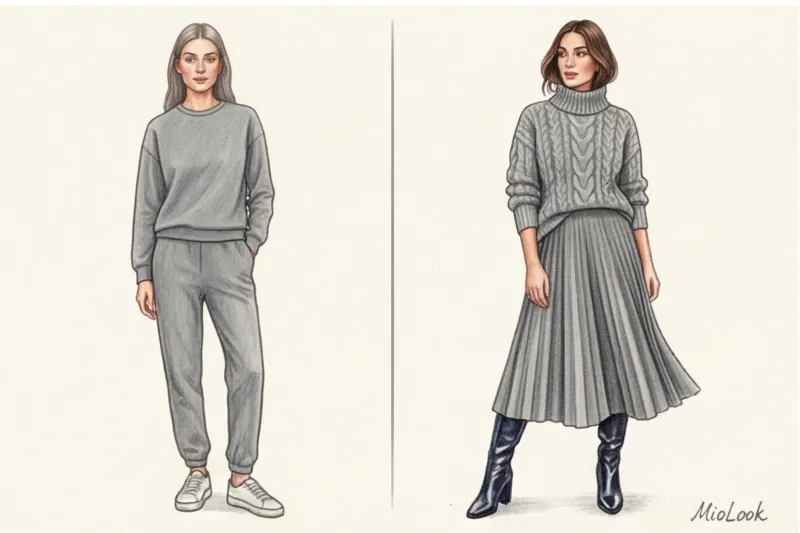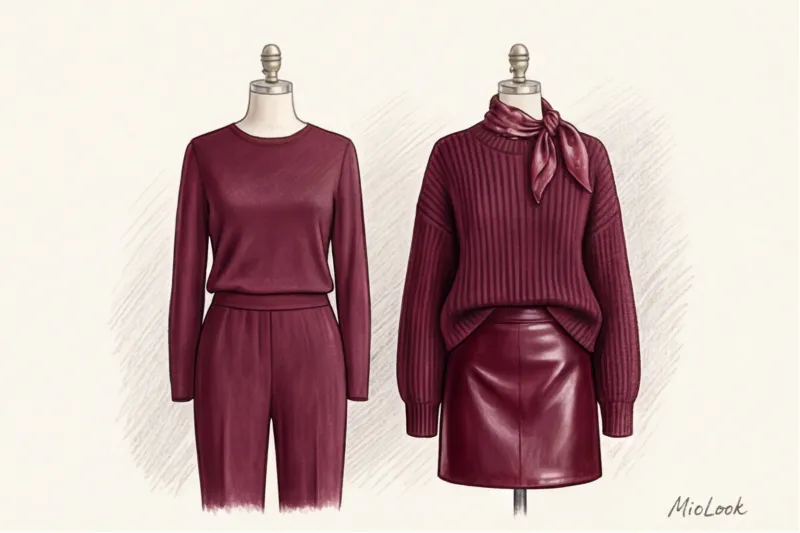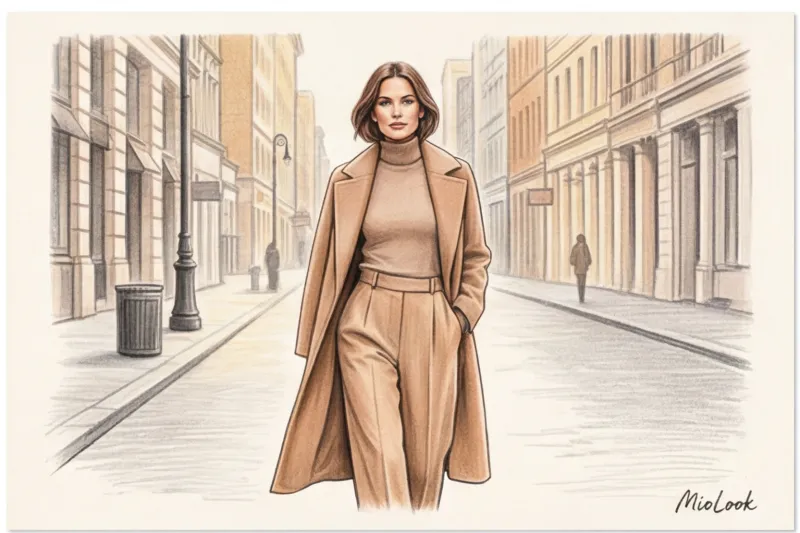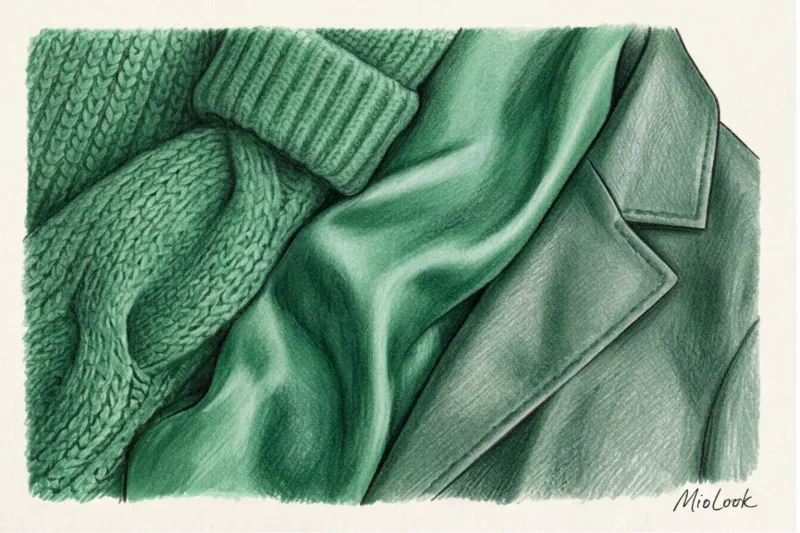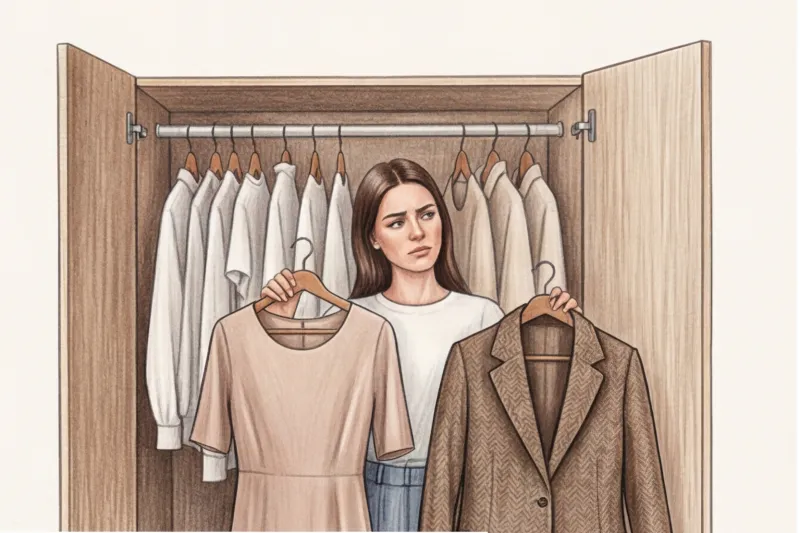
A few years ago, Beatrice, a leading architect from Milan, approached me. When we opened her closet, I saw exactly 40 black items. All of them were made of smooth cotton, basic viscose, and fine wool. “I want to look like a confident professional, but I end up looking like a tired waitress from a cheap trattoria,” she sighed. Beatrice’s problem wasn’t the color. Her wardrobe was critically lacking tactile depth. If you want to put together a luxurious look monochrome look with a combination of textures should become your main stylistic formula.
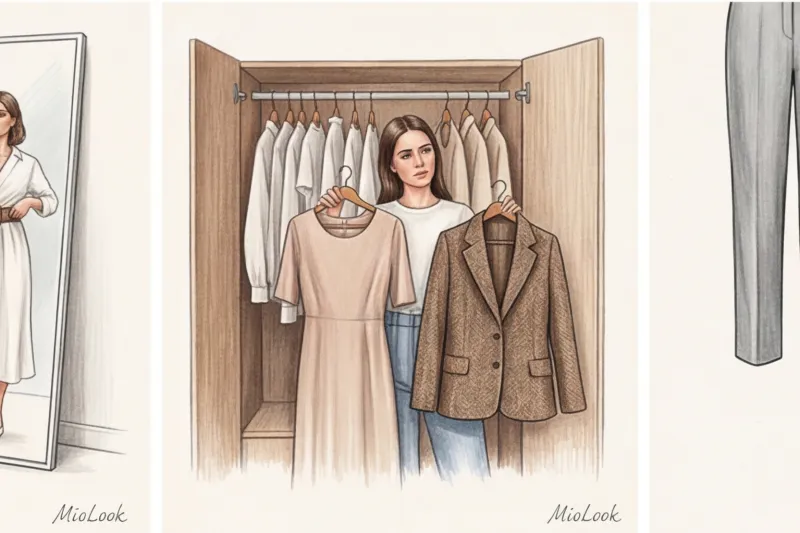
Clothing isn't just fabric; it's physics. More specifically, optics. The way a material absorbs or reflects light determines whether your outfit looks like it costs €50 or €1,500. We covered the fundamental rules for creating an expensive wardrobe in more detail in our guide. How to Create an Expensive Look: Combining Textures in Clothing , and today we will delve into saving monochrome.
The Physics of Style: Why Your Monochrome Look Looks Like a Uniform
Let's dispel one of the most persistent myths: wearing clothes of the same color doesn't automatically make you elegant. If you wear a matte cotton T-shirt (approximately 150 g/m²) with similarly matte polyester trousers, to the human eye, you'll appear as a single, flat blob of color.
Over 12 years as a stylist, I've conducted hundreds of wardrobe analyses. Most recently, I analyzed users' digital closets through an app. MioLook , I came up with a frightening statistic: 90% of women wear clothes of absolutely the same, "dull" texture. This is precisely what reveals the cheapness of the clothes.
When light falls on basic matte cotton, it's simply absorbed. There's no highlight, no shadow, no depth. The eye doesn't catch the details, and the figure's proportions are visually blurred. A luxury wardrobe is always built on tactile depth—the desire to touch a garment, to feel the difference between cool silk and warm cashmere.
A Stylists' Secret Formula: How Texture Combinations Work in Clothing
Fashion houses specializing in "quiet luxury" (The Row, Loro Piana, Max Mara) rarely use flashy prints or complex color blocking. Their secret lies in the mathematically calculated contrast of surfaces.
All clothing can be roughly divided into two global categories:
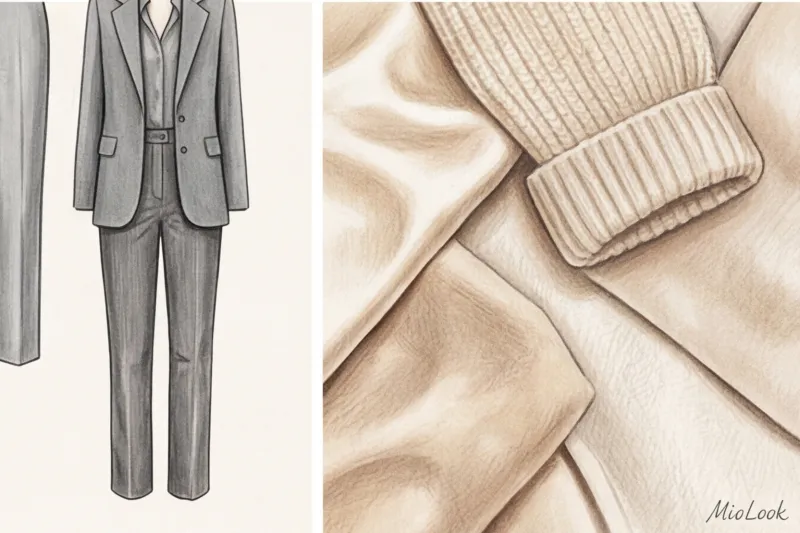
- Reflectors: Satin, silk, patent leather, smooth leather, and lurex reflect light, create highlights, and draw attention.
- Absorbers: Suede, cashmere, bouclé, corduroy, and matte wool absorb light, creating deep, cozy shadows.
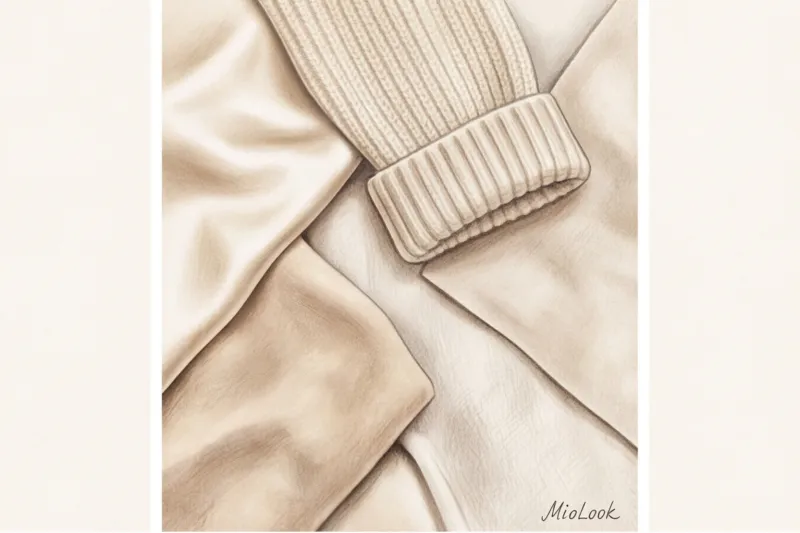
The formula for the perfect outfit is: Base (matte) + Accent (shiny) + Depth (shaggy or textured). By playing with the contrast of heavy and light, you create dynamism.
3D Wardrobe Rule: At least three materials
Why aren't two textures often enough? Two textures are a pair, but three is a well-thought-out concept. Try pairing smooth cotton, crisp leather, and fluffy cashmere. You'll see how your look instantly acquires a runway-ready sheen.
Your perfect look starts here
Join thousands of users who look flawless every day. Upload your items, and artificial intelligence will create stylish outfits.
Get access — €0.99 onceTotal Black: How to Save the Most Insidious Monochrome from Boredom
Now here's a counterintuitive insight that often shocks my clients. It's a common misconception that "black is always slimming." In fact, all-black, made from a single matte fabric (like heavy knits), creates a heavy, monolithic look. Research into optical illusions in clothing shows that such "solid" black visually adds up to 3 kg to the figure and accentuates age-related changes in the face. This is especially critical when we're discussing style for women over 40.
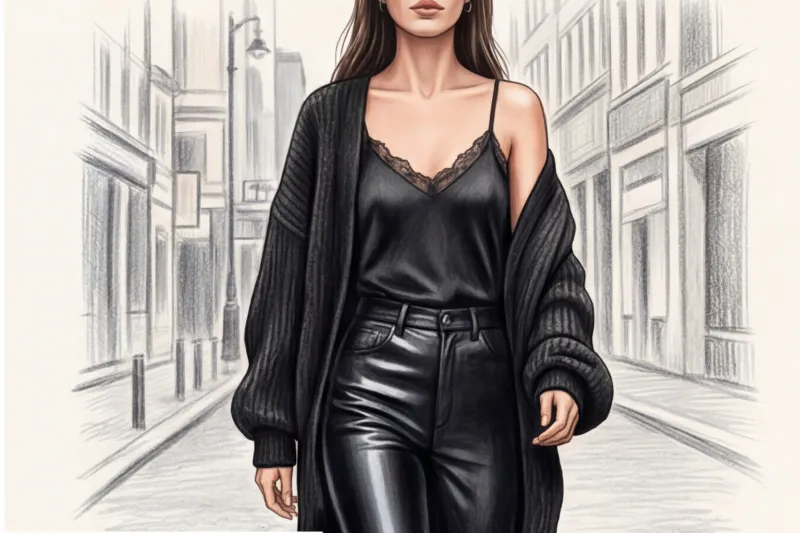
To elevate a black monochrome look with a combination of textures, add a touch of shine. Think of Beatrice from the beginning of this article: we swapped her cotton pants for leather ones (matte sheen), and her basic T-shirt for a silk top, layering a voluminous cashmere cardigan over the top. Same black pieces, but the look has changed dramatically.
My formula for saving black: thick matte knitwear + translucent flowing skirt (chiffon or organza) + hard glossy leather shoes.
Dangerous Beige: How to Avoid Getting Lost in a Light Monochromatic Look
Beige monochrome poses another danger: it can make you look pale and dull. Light, matte fabrics without texture blend into your skin tone.
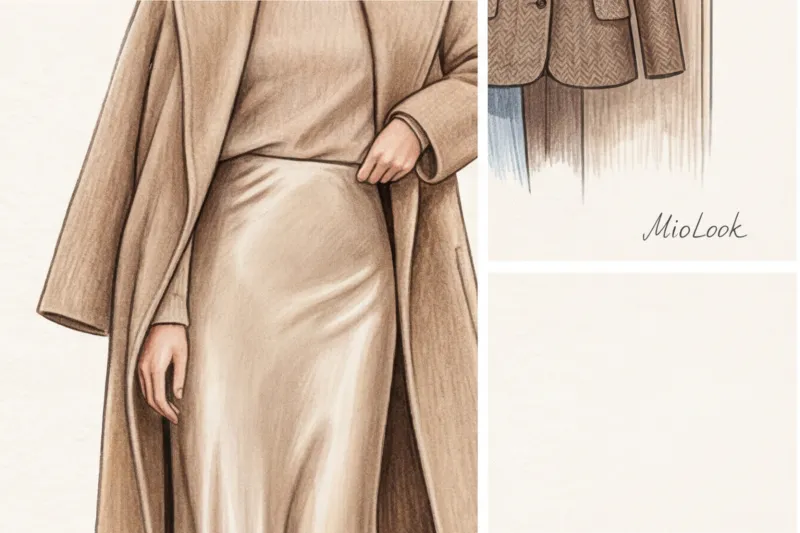
As lighting expert and fashion photographer for Vogue magazine (2023) notes, a camera lens can "eat" up to 30% of the volume of light, matte garments. That's why, when choosing images for a business photo shoot in a studio , I always insist on textured beige.
Add a touch of color to lighter pieces with chunky knits, corduroy, or tweed. Mixing temperatures also works beautifully: the cool, icy sheen of a silk blouse contrasts luxuriously with a warm, fluffy mohair sweater in the same shade of ecru.
Fail-Safe Formulas: 3 Perfect Texture Mixes for Every Day
If you're standing in front of your closet and don't know where to start, use these ready-made templates. They work 100% of the time, regardless of your budget—whether it's mass-market or premium for €500.
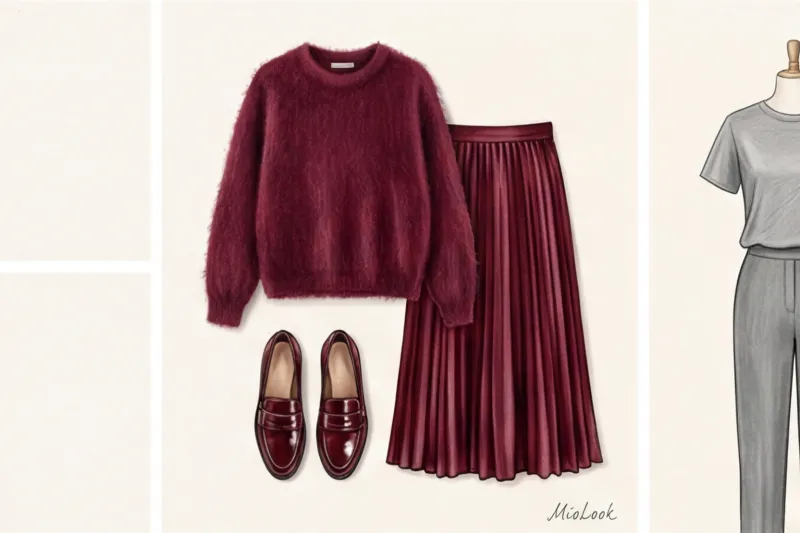
- Office (Smart & Sharp): A matte wool suit + a flowing silk blouse + a crisp leather belt. Smooth, shiny, and structured come together to create the look of a competent expert.
- Smart Casual for Weekends: Heavy denim + fluffy cardigan + soft suede shoes. Rough, fuzzy, and matte. Perfect for brunch or a trip to the gallery.
- Evening elegance: Satin slip dress + voluminous boucle jacket + patent leather shoes.
"My favorite Mediterranean formula is flowing, delicate silk paired with rough, slightly distressed leather. It always looks confident and sexy, but without the slightest hint of vulgarity," says Isabella Garcia.
Access to MioLook for €0.99 — one-time payment
A smart AI stylist will create the perfect look based on your items. Stop racking your brain over outfit combinations in the morning!
Get access — €0.99 onceMain mistakes: when a combination of textures breaks the silhouette
As much as I love experimenting, there are strict rules here. Combining textures can either save your figure or visually deform it. Let's be honest: this WON'T work if you ignore your own body architecture.
- Mistake 1: Glare in problem areas. Light, shiny fabrics (satin, patent leather, sequins) visually widen the garment. If you're trying to hide your tummy, a satin blouse is your worst enemy in this area. Use matte, absorbent fabrics (heavy cotton, matte wool) to visually narrow the waist or hips.
- Error 2: Visual noise. Using more than four active textures in one look turns you into a patchwork quilt. Three is ideal, four is the maximum.
- Mistake 3: Seasonal dissonance. You can't just wear thin summer linen with heavy winter fur or thick tweed. There's a huge gap between the two. You need a "transitional base"—for example, a dense, medium-stiff cotton.
Stylist checklist: how to create a fun monochrome look in 5 minutes
How can you apply this knowledge to real life? Next time you're getting ready for work or a meeting, go through these four steps.
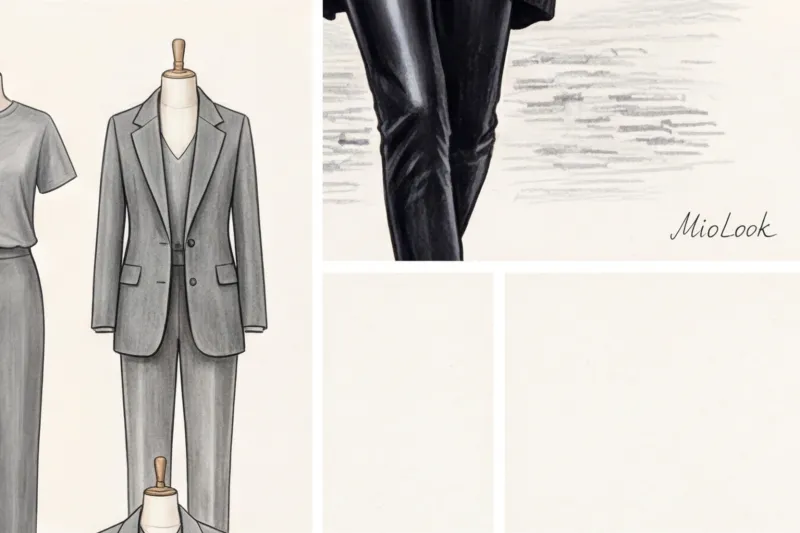
- Step 1: Choose a base color and the bulkiest matte piece in your outfit (for example, gray wool trousers).
- Step 2: Add a piece with the opposite reflectivity. Matte wool calls for a silk top or a glossy leather shirt.
- Step 3: Introduce a third texture through accessories. If the base is smooth, choose a suede bag. If the outfit is loose and fluffy, choose a rigid patent leather bag with a clear geometric shape.
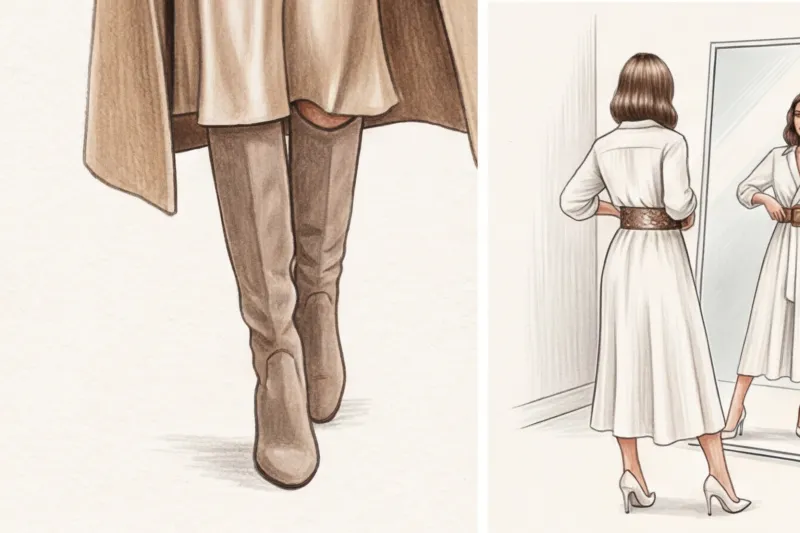
- Step 4: The Pro Trick. Take a photo of yourself in the mirror and apply a black and white filter. If your outfit blends into a single gray blob, you've failed. If you can clearly see the edges of your clothes, highlights, and shadows, the look is a success!
Style isn't about the size of your wallet or blindly following trends. It's about noticing details that others miss. Start thinking of your wardrobe not as a collection of colors, but as a collection of different surfaces, and you'll forget about the problem of "nothing to wear" forever.