The Anatomy of Deception: Why "Sale Points" Deprive Us of Logic
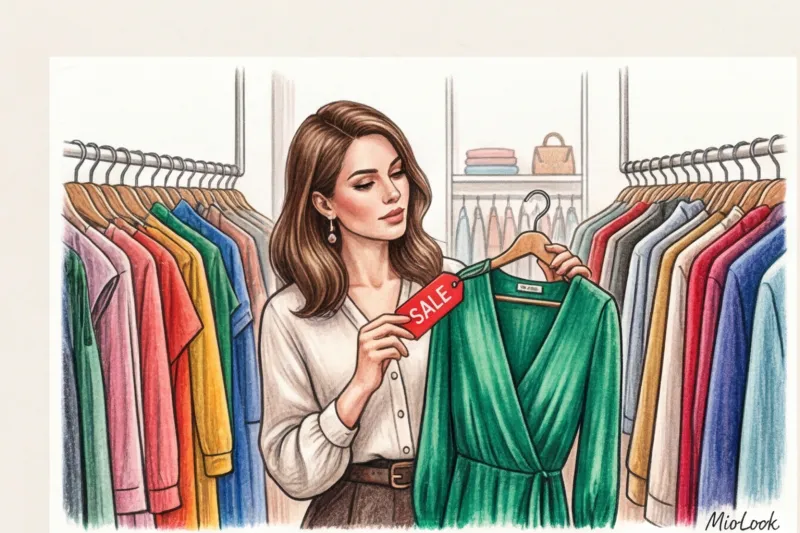
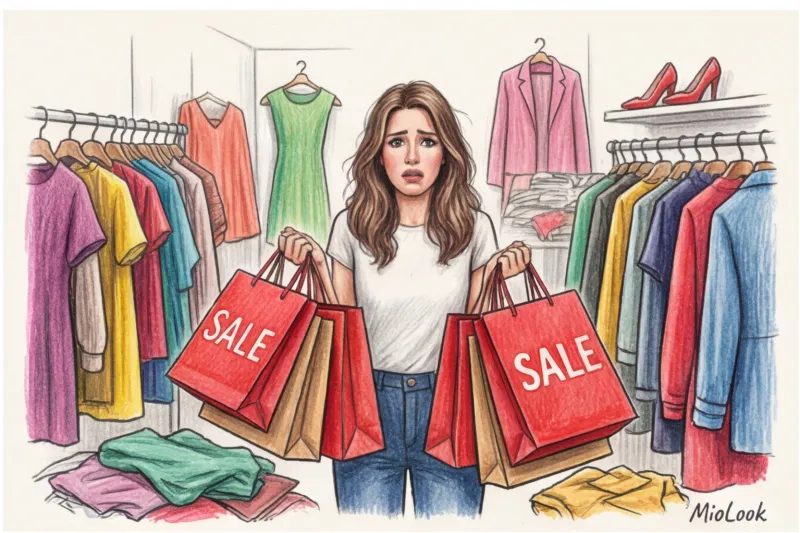
I remember that day in Milan like it was yesterday. I was holding an acid-orange patent leather baguette from a well-known premium brand. I've never worn orange. As a colorist and stylist, my wardrobe has been honed over the years and consists of deep emerald, sapphire, and complex beige shades. But there was a huge red tag on the bag: a crossed-out €850 and an enticing €190. I bought it. The bag sat in its dust bag for three years, never seen before, before I resold it for next to nothing.
This professional failure forced me to thoroughly study the underbelly of sales. We've already covered the fundamental rules of seasonal sales in our the complete guide to smart shopping Today we'll go further and examine the specific mechanics of deception.
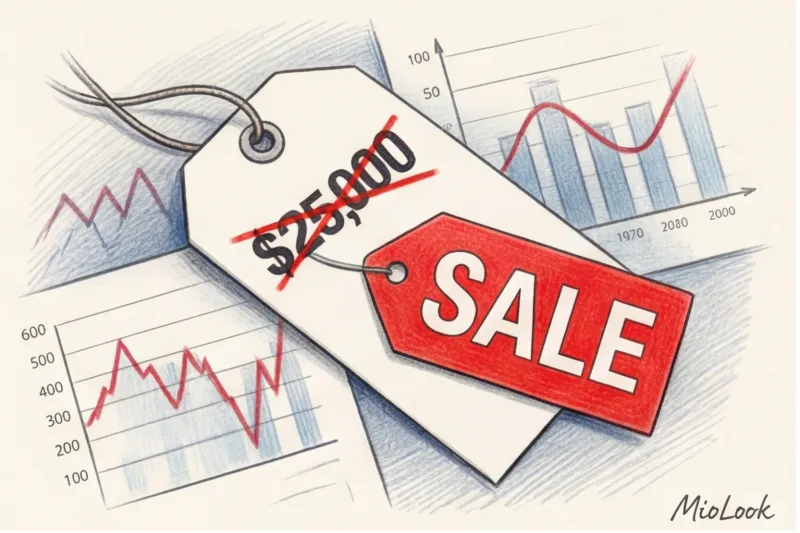
Why do we even make these purchases? The answer lies in color science and neuroscience. Brands never put sale price tags on soothing blues or neutral grays, according to research. Journal of Business Research (2023), the aggressive color red in retail physiologically accelerates the buyer's heartbeat and creates an artificial sense of panic - the effect of "you have to buy it now, or others will take it."
Added to this is the cognitive "anchoring effect." Our brain clings tenaciously to the first (crossed-out) digit. Seeing the crossed-out €200 and the new price of €50, you psychologically buy not the €50 item, but the "saved" €150. And marketers are well aware of this vulnerability.
Access to MioLook for €0.99 — one-time payment
A smart AI stylist will select the perfect look and help you avoid impulse purchases.
Get access — €0.99 onceHow to Check a Discount for Authenticity: 3 Tools for Smart Shopping
Trusting crossed-out price tags in the era of algorithmic pricing is an unaffordable luxury. The question is, How to check the authenticity of a discount , should be the first step before any transaction. Forget about intuition, use numbers.
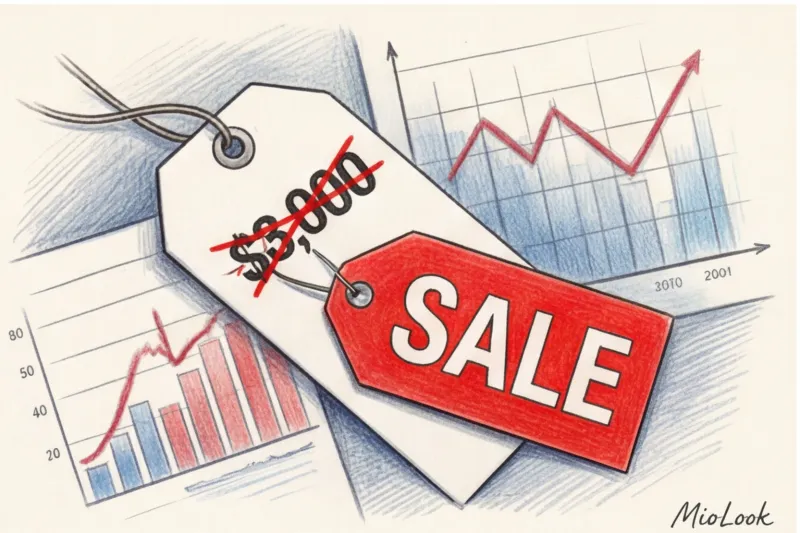
1. The 30-day rule and price dynamics. According to WGSN analytics agency statistics for 2024, up to 60% of mass-market brands artificially inflate the base price of their products three to four weeks before Black Friday. A dress cost €80, but in October, its price is raised to €120, and then, in November, it's ceremoniously "reduced" to €70. The difference is negligible, but the illusion of a bargain is colossal. Add items to your cart a month before the sale starts and lock in the realistic starting price.
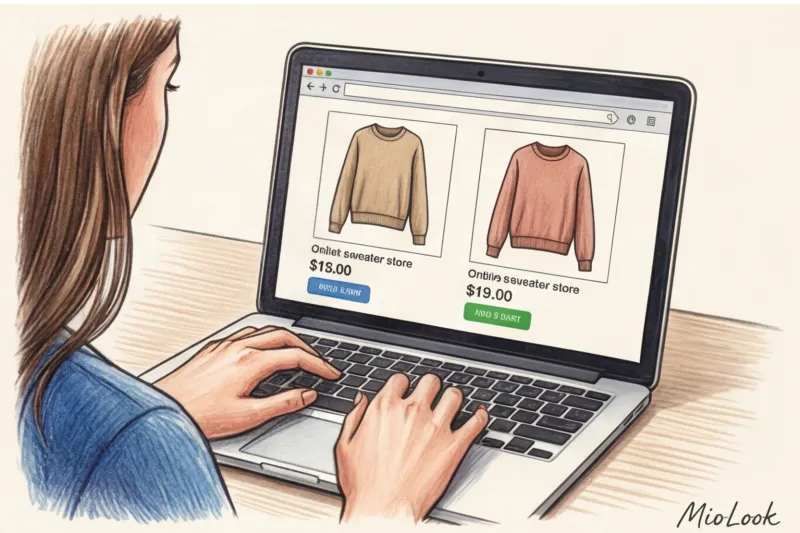
2. Search by photo and article number. Never buy an item from a marketplace or multi-brand online boutique without first running a visual search. Often, the same jumper from Mango or COS is cheaper on the official website, without any discounts, than from a middleman with a "40% discount."
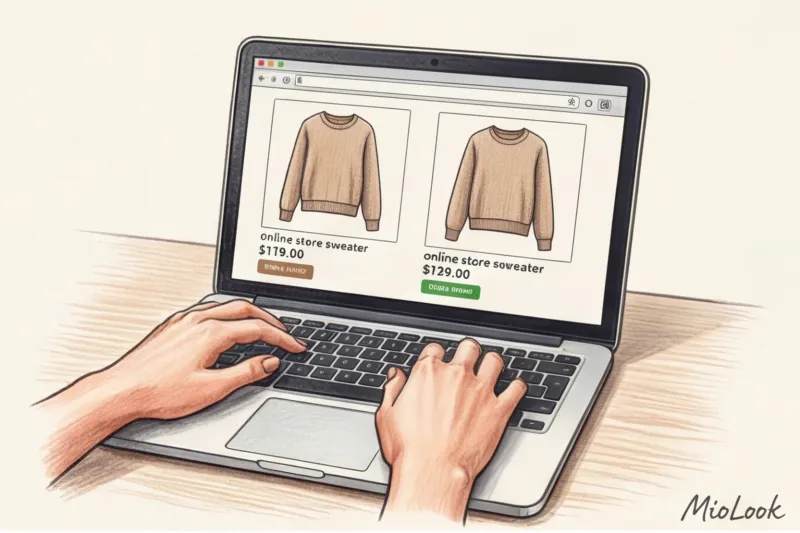
3. Tracker extensions. If you buy from major international platforms, install price dynamics plugins. They display a price chart over the past six months. It's immediately clear whether you're looking at a fair discount or a regular price just dressed up in red.
The Hidden Truth About Outlet Stores: Items Designed for Sale
Over my 12 years as a stylist, I've shattered many of my clients' illusions, but this one is the most painful: outlet stores have long ceased to be warehouses for last year's collections. As McKinsey analysts note in their fashion market reports, today 30% to 80% of the assortment in outlet towns is tailored specifically for them.
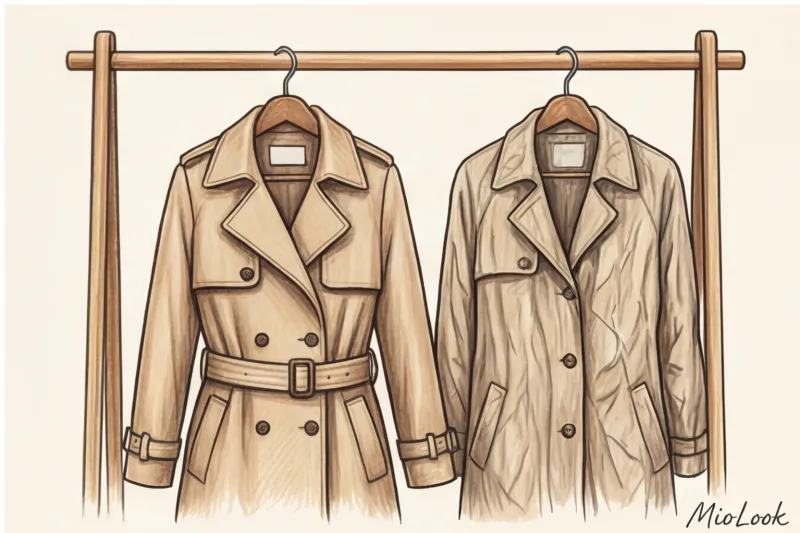
This is called a ruler. Made for Outlet The brand uses the same patterns, but drastically cuts down on materials. I can, with my eyes closed and just by touch, distinguish a trench coat from a premium brand's main line from its outlet version.
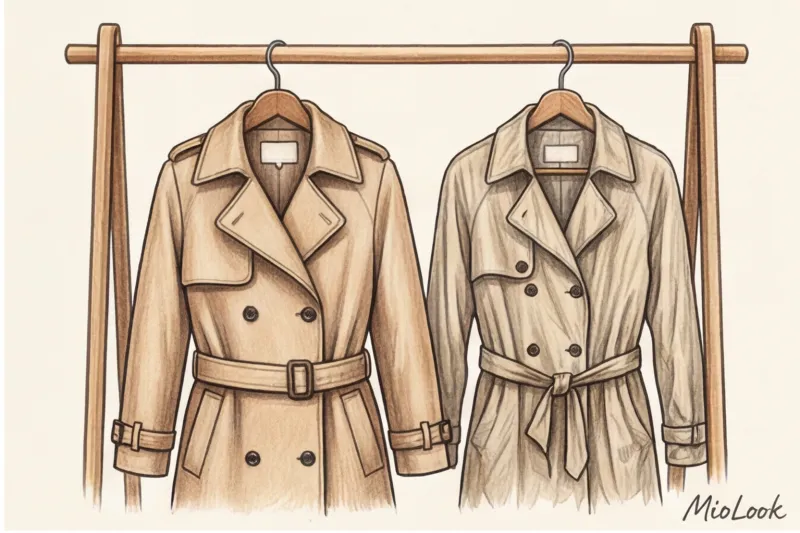
Instead of dense cotton (180 g/m² and above), you'll get a thin blend that will pill within a month. Instead of a breathable viscose lining, you'll get squeaky 100% polyester. You think you're buying luxury at a 60% discount, but in reality, you're buying mass-market fare at a fair price, just with a fancy tag.
Checklist for quality control of items on sale
If you find yourself at a discount center or a major sale, turn on the auditor mode:
- Print combination: A quality garment will have stripes or checks that perfectly match the side seams and pockets. Outlet lines don't waste time on this painstaking cutting process.
- Weight and density: A good jacket or coat has weight. If the fabric is loose and see-through, leave it at the store.
- Fittings: Run your finger along the zipper. The metal should be smooth and the slider should move without snagging. Cheap plastic painted to look like brass will peel after the first dry cleaning.
The Mathematics of Style: Why a 90% Discount Is Worse Than a 20% Discount
Sounds counterintuitive, right? But let's do the math. The key to a conscious wardrobe is Cost Per Wear (cost per wear) The formula is simple: we divide the price of the item by the number of times you wear it.
Let's imagine two scenarios. First, you buy a trendy sequined top with an 80% discount for just €20. You wear it once to a corporate New Year's party, after which it sits in your closet like dead weight. Your CPW = €20 per outing.
Scenario 2: You find a perfectly tailored wool-blend jacket in a basic color for €150 with a modest 15% discount. You wear it to the office, meetings, and dinners 50 times a year. Your CPW = €3 per outing.
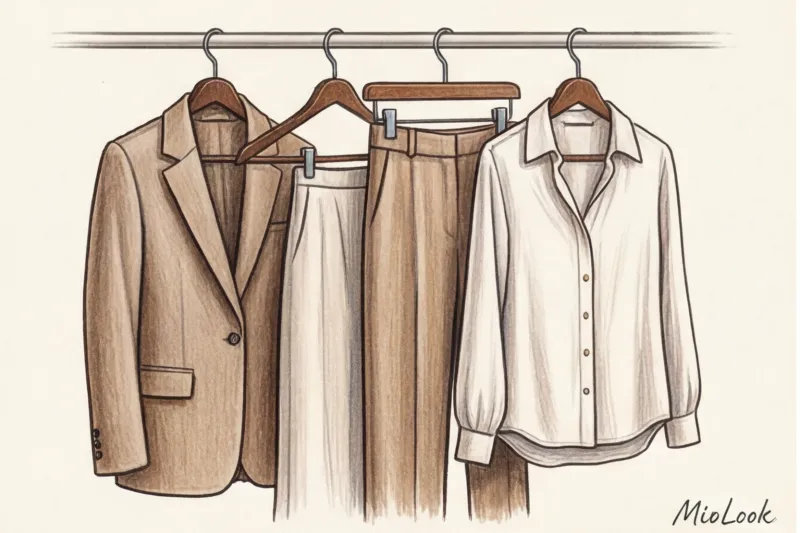
Extreme discounts of 70–90% are almost never offered on popular, basic, and well-cut items. The maximum discounts are reserved for unsaleable items: complex prints, poor fits, faulty patterns, and acidic shades that have gone out of style.
"The true value of a discount isn't measured in the euros saved at the checkout, but in how often you use the item after purchase. A cheap item you don't wear has cost you too much."
This rule has only one fair limitation. CPW Math doesn't work If you truly need a one-off, statement piece for a specific event (for example, a photo shoot in a certain style), and you agree in advance to wear it only once. In the other 99% of cases, consider the cost of the occasion.
Your perfect look starts here
Join thousands of users who look flawless every day with MioLook. Upload your wardrobe and plan your looks.
Get access — €0.99 onceStylist Filter: 5 Questions That Will Save Your Budget
During shopping assistance, I literally forbid clients from going to the checkout until they answer five specific questions. You can use this checklist yourself when creating your own budget capsule wardrobe:
- Would I buy this at full price? If the answer is "no," it's the discount you like, not the clothes themselves. Put them back.
- Does this match my palette? As a certified colorist, I see this all the time: a cool-toned woman buys a warm mustard-colored blouse simply because it's on sale, and then wonders why her face looks tired.
- Will I be able to create at least 3 looks with her? Mentally go through your closet. If a new skirt requires a new top, different shoes, and a special bag, that's not a discount—it's a financial black hole.
- Doesn't this duplicate what I already have? A third grey turtleneck won't make your style any more interesting, even if it cost €15.
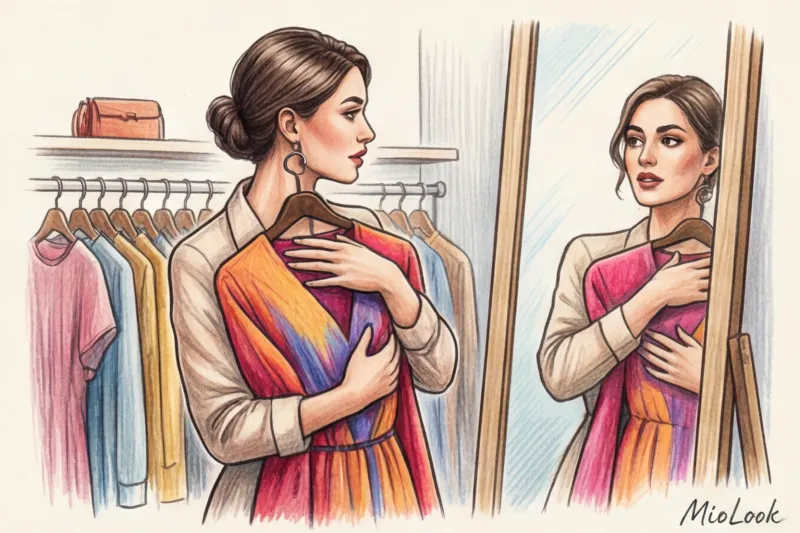
- Does it fit my REAL lifestyle? We often buy clothes for a fantasy version of ourselves ("I'll start going to the theater every weekend"). Buy for the life you live today.
Summary: Turning Sales into Investments
Discounts are a brilliant marketing tool. But we're quite capable of taking control and using them to our advantage. Sales are great when you approach them with a cool head and a clear shopping list, not in search of a random dopamine rush.
The key rule of smart shopping is: strategy first, purchase second. Take stock of what you already own, identify missing pieces, and hunt for them. Digital assistants are indispensable for this.

To avoid having to keep everything in your head, digitize your things in an app MioLook When you're tempted to grab another unwanted sweater during the sale, simply open your virtual wardrobe. You'll clearly see that you don't need a fifth sweater, but a good pair of basic trousers is truly worth the investment. Happy (and mindful) hunting!