Why the Traditional Wardrobe Budget No Longer Works
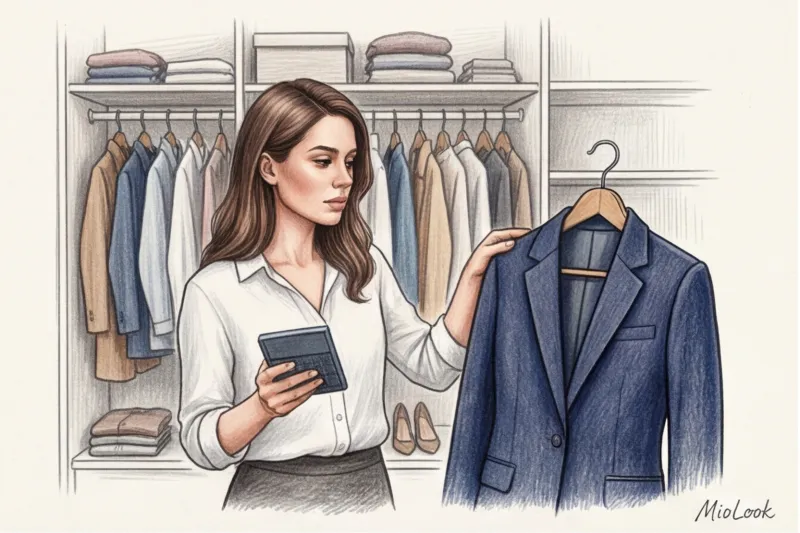
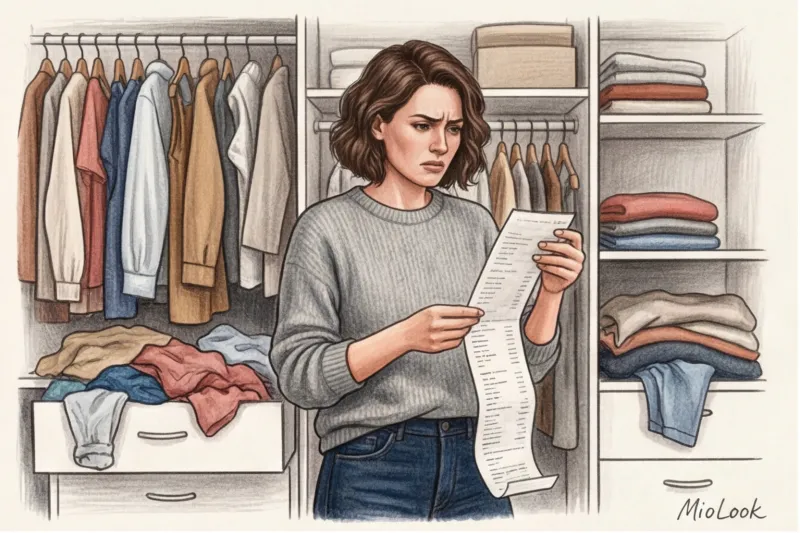
In my styling practice, every other client begins with the same phrase: "I have a full closet, but I absolutely have nothing to wear, even though I budget for new items every month." According to industry data (and my professional experience confirms this daily), the average consumer wears only 20% of their wardrobe 80% of the time. This figure proves that classic wardrobe budget , which we are used to planning blindly, allocating a conditional fixed amount per month, is absolutely ineffective.
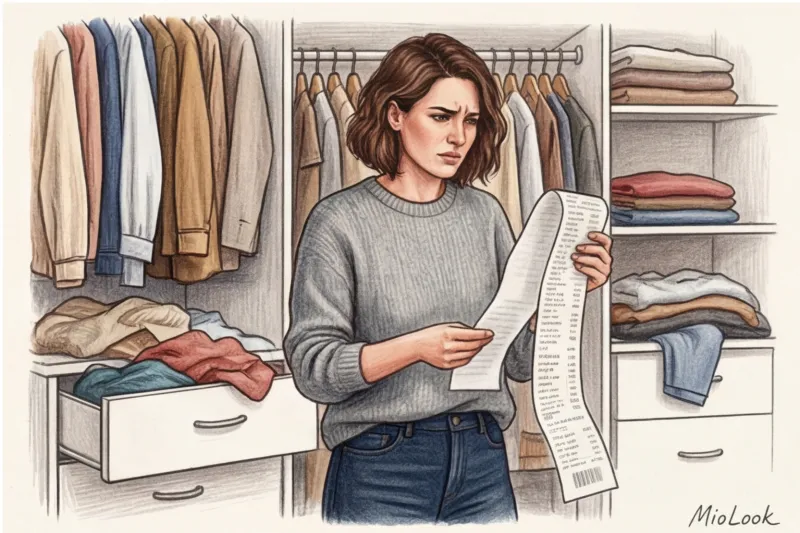
Let's deconstruct the illusion of a "cheap" shopping cart. Imagine your internal shopping limit is €150 per month. Psychologically, your brain wants to get as many physical items as possible for that amount of money. Instead of setting aside that amount and buying an impeccably tailored jacket made of thick, natural wool in two months, you head to a high-street store. There, you pick up three or four items of dubious quality: a thin cardigan, a T-shirt whose seams will fall apart after the first wash, and yet another pair of trendy trousers for one season.
This is classic emotional shopping. It provides a quick dopamine rush when you check out at the checkout, but it's completely inferior to rational investing. Emotional purchases rarely form a capsule, don't go well together, and almost always end up in that "dead" 80% of the closet.
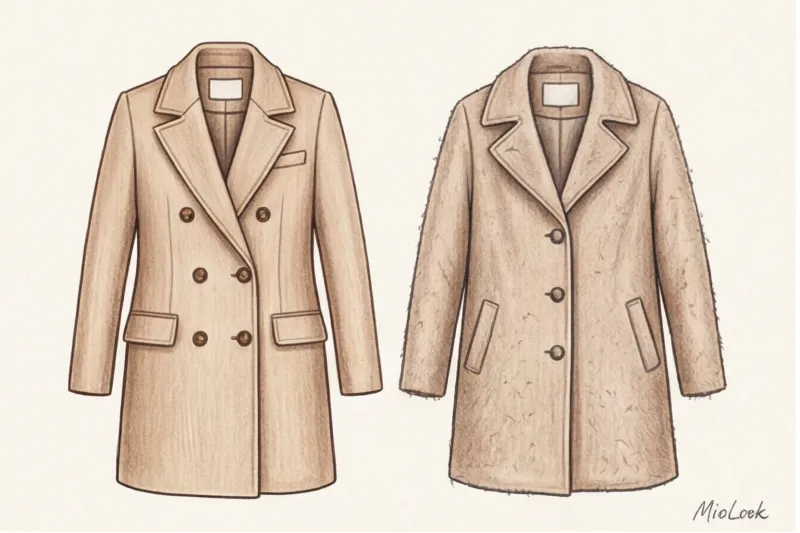
As a fabric expert, I always encourage people to look beyond the price tag, because understanding basic textile science completely changes how they view the numbers on the tag. A 100% acrylic sweater for €30 isn't a bargain. It doesn't retain heat, will quickly become covered in stiff pills, and will become misshapen due to the fiber's lack of elasticity. Meanwhile, a high-quality merino wool pullover for €140 will last you five to seven years, maintaining its classy texture. I discussed in more detail how fabric quality influences the visual perception of an outfit in my article about secrets of a status wardrobe.
Here we come to the most important term of conscious consumption - the concept of the life cycle of a thing ( Garment Lifecycle ). The price you pay in the store is just the starting point. The actual life cycle includes the durability of the fiber, the frequency and cost of maintenance (e.g., regular dry cleaning), the durability of the fittings, the possibility of repair, and, finally, the resale potential on resale platforms.
To break the vicious cycle of one-day purchases, you need to stop counting the money you spend and start analyzing your real assets. I recommend first digitizing your belongings through MioLook — this way you can clearly see which fabrics and styles truly earn their value over years, and which have fallen victim to thoughtless monthly limits.
Cost Per Wear (CPW) 2.0 Formula: Calculating the Real Cost of an Item
Have you ever calculated how much a "bargain" purchase on sale actually costs you? Wardrobe math can be ruthless. Most of us are used to relying on the basic price-per-outlet formula: Cost Per Wear (CPW) The concept sounds flawless: we simply divide the cost of an item by the number of times we plan to wear it. Buy a pair of jeans for $100, wear them 100 times—each wear costs $1. Sounds like the perfect tool for sustainable consumption, doesn't it?
The problem is that this classic calculation is a complete illusion. The classic CPW index deceives us because it exists in a sterile vacuum. It ignores the laws of physics, the daily friction of fabrics, the inevitable coffee stains, and sprained elbows. The biggest mistake is that it doesn't take into account that clothing requires regular maintenance. Over the years of studying textile production and working with sustainable fashion principles, I've come to the conclusion that proper planning wardrobe budget This can only be done with the help of an updated metric. I call it CPW 2.0.
CPW 2.0 Formula: (Original price + Cost of fitting + Total maintenance costs) / Actual number of times before loss of marketability.
If you apply this formula to your latest purchases, the difference in results is guaranteed to amaze you. What seemed like a budget-friendly solution often turns out to be your most expensive item.
Hidden costs: dry cleaning, fitting and maintenance
Let's look at a specific scenario. You buy a trendy, oversized polyester-blend jacket at a high-street store for $50. The price seems ridiculous. But the sleeves are a bit long, and the shoulder line isn't perfect—a visit to a tailor will cost at least $20. Cheap synthetics instantly absorb body odors and environmental odors, and machine washing a structured jacket is absolutely forbidden: the cheap fusible interlining (doublerin) will bubble upon first contact with water.
You'll need to have this jacket professionally dry cleaned at least once a month. With an average dry cleaning cost of $15, you'll pay $90 for six months of active wear. The total cost of ownership skyrockets: $50 + $20 + $90 = $160. Due to the harsh chemicals used in cleaning and the low twist of the threads, the jacket will lose its shape after 20 wears. Your actual CPW 2.0 cost is $8 per wear.
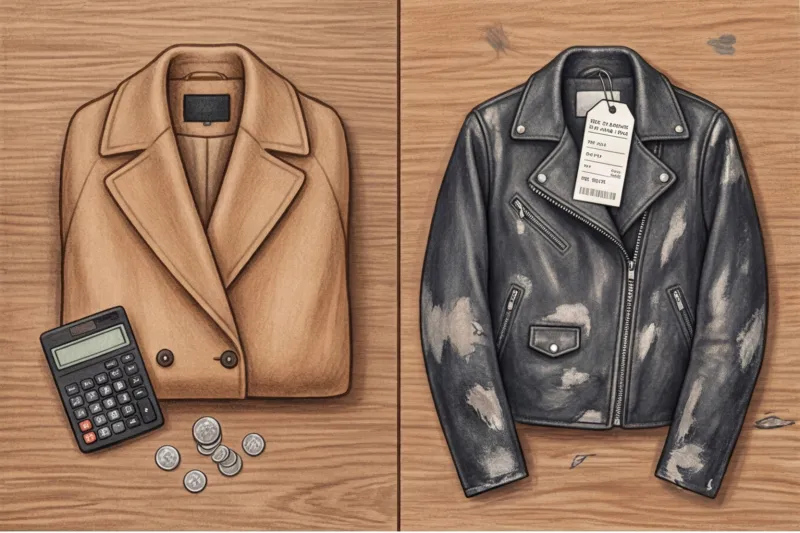
Now let's compare the cost of ownership over two years for two blouses. The first is a basic silk blouse for $180. Unless you're prepared to meticulously hand-wash it with special liquid enzymes, silk will require regular professional cleaning. Let's say you dry-clean it 12 times a year at $12—that's $288 over two years. The total cost is $468.
The second blouse is made of viscose Ecovero (an eco-friendly and high-tech alternative to traditional viscose) costs $90. This fabric drapes beautifully, has a refined matte sheen, and is breathable, yet machine washable on a delicate cycle at 30 degrees Celsius. Care costs are virtually zero. Even if you wear both blouses 50 times, the CPW 2.0 silk blouse will cost $9.36, while the Ecovero blouses will only cost $1.80. You're not only saving the planet from unnecessary chemicals, but also saving hundreds of dollars.
Access to MioLook for €0.99 — one-time payment
A smart AI stylist will select the perfect look, analyze how items can be combined, and help calculate the real cost of your wardrobe.
Get access — €0.99 onceFabric Factor: How Composition Affects Durability
I often hear clients firmly believe that 100% natural ingredients are a guarantee of quality and the best investment. As a textile expert, I'm forced to challenge this myth: when it comes to durability, the "organic only" rule doesn't apply to all wardrobe items.
Let's consider office trousers. Classic trousers made of 100% fine wool sound prestigious, but let's be practical. With daily wear and constant friction against an office chair, pure wool will wear through the inner thighs or stretch out the knees within a single season. However, a blended fabric containing 80% wool and 20% nylon (polyamide) behaves completely differently. According to laboratory textile tests, the addition of synthetic nylon increases the tear and abrasion resistance of wool fabric by almost 40%. These trousers will retain their original shape and last for 3-4 years. Their initial price in the store may be higher, but when converted to CPW 2.0, they are several times more affordable than 100% wool.
The exact opposite situation occurs in knitwear. Pilling is the main killer of your clothing investment. Cheap cashmere and acrylic are a financial black hole. Fast-fashion manufacturers use short-fiber raw materials (fibers less than 28 mm long) to create "affordable cashmere." Because of their insufficient length, these fibers simply cannot be held in the yarn twist—they instantly fray at the surface under the slightest friction. You buy a $100 sweater, wear it five times, and it becomes covered in untidy fuzz. Your CPW 2.0 price skyrockets to $20 per wear.
Acrylic sweaters priced at $30–$40 are even worse: the stiff synthetic pile clumps into dense balls that are virtually impossible to machine-cut without creating snags. Meanwhile, a high-quality long-staple merino wool jumper for $150 will remain perfectly smooth even after 50 washes, reducing your cost per garment to a reasonable $3.
- Micro-withdrawal for shopping: Synthetics are not absolute evil if they serve their purpose structural function (like nylon in trousers or elastane in thick jeans to maintain shape).
- But in basic, bulky knits, where warmth and softness are essential, cheap synthetics and short fibers are guaranteed to destroy your budget, forcing you to buy a new item every month.
Strategic Planning: How to Calculate an Annual Wardrobe Budget
Imagine you manage the corporate finances of a small company. Would you allocate funds for the purchase of expensive equipment haphazardly, simply because you had a bad day or happened to see a bright discount banner? It sounds absurd, but paradoxically: this is precisely the emotional scenario most women use to shape their decisions. wardrobe budget.
The transition from spontaneous monthly spending to strategic annual planning is a real watershed between a "closet overflowing" and a "perfectly functioning wardrobe." In 2022, I conducted a professional experiment: I switched a focus group of twelve of my regular clients to a strict annual clothing planning system. We put a stop to chaotic shopping and allocated our finances 12 months in advance. The results amazed even me: over the course of a year, their total wardrobe spending decreased by exactly 30%, yet the quality, visual costliness, and status of their looks increased dramatically. Instead of five acrylic jumpers that were once worn, their closets now contained structured jackets made of thick merino wool and impeccable cashmere coats.
"A rational wardrobe begins where the power of the crossed-out price tag ends and the mathematical calculation of needs begins."
How does it work technically? I strongly recommend using the classic financial "envelope method" or opening separate smart savings accounts in your banking app. Let's say you've set a comfortable limit of €2,500 for the year. You divide this amount by 12 and transfer about €208 monthly into the dedicated account. The key rule of the game: you pay for clothes, shoes, accessories, and even tailoring services. exclusively From this "envelope." If the target account balance is close to zero, any shopping is put on hold until next month. Behavioral psychology proves that virtual separation of money from the main salary account immediately turns off the desire to make an emotional purchase.
The 70/20/10 Rule in Financial Allocation
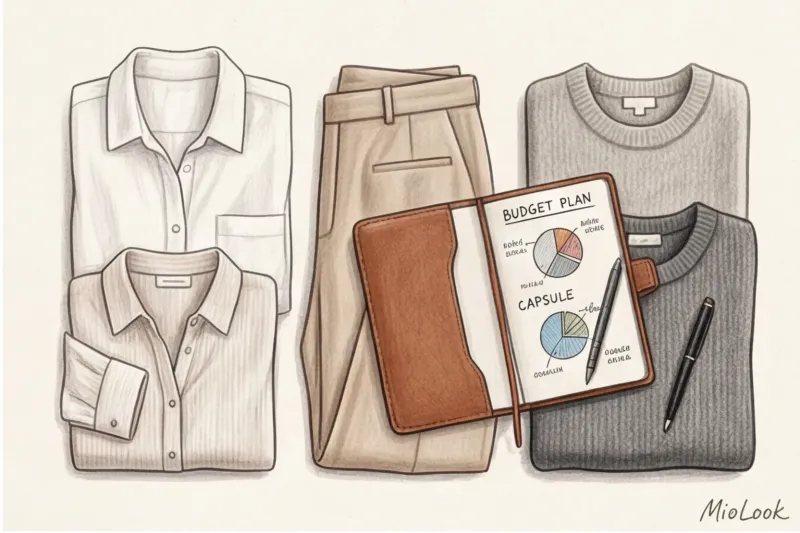
Accumulating the required amount in an envelope is only half the battle. The next, far more important step is wisely allocating your assets. Based on regular reports from the analytical agency WGSN on consumer habits, I've adapted a classic business rule of investing to suit modern realities. The formula 70/20/10 — this is your personal safeguard against impulsive spending and a guarantee that things will work for you for decades.
- 70% of the budget is the structural base. This is the foundation of your style. It includes quality wool coats, high-quality shoes (genuine leather or high-tech alternatives), framed bags, perfectly tailored suits, and denim. These items won't go out of style in six months. If your annual budget is €2,500, then €1,750 should go toward these "heavy" items in the premium or solid mid-range segment (for example, COS, Massimo Dutti, or niche local brands). Think of the aesthetics of The Row or Loro Piana—their philosophies are built on a strong foundation.
- 20% of the budget is style-forming items and macro trends. This is where statement silk blouses, knitwear in the season's key colors (remember the recent boom in Peach Fuzz, according to Pantone), unusual hardware, and geometric cuts come into play. These are the very clothes that make a dry base current, individual, and "tasty."
- 10% of the budget is for experiments and microtrends. Asymmetrical tops, glasses with crazy plastic frames, rhinestones, or ultra-fashionable chunky hair clips. This is your financial safety net for safely scratching your shopping itch. This share can safely be spent on fast-fashion retailers like Zara or H&M, without expecting durability or exceptional fabric composition.
The secret to the "nothing to wear" problem is that women intuitively invert the pyramid: they spend 70% of their money on current trends, and then complain that they have nothing to wear with their new neon skirt because they didn't spend money on a sleek, basic, well-cut long sleeve top.
Asset Audit: Taking Stock Before Shopping
No chef would order a month's worth of groceries without first checking the contents of their refrigerators. The same uncompromising logic applies to food styling. Creating a financial plan without first digitizing your own pantry is a guaranteed way to lose money.
According to statistics we gather during practical wardrobe reviews, the average city dweller wears only 20-30% of her clothes. The rest are so-called "blind spots" and duplicates. During one of our audits, a client and I discovered six pairs of nearly identical black pleated trousers on the back shelves, bought in a shopping frenzy, while a comfortable light sweater for a relaxed weekend was completely missing. A thorough audit immediately reveals such gaps.
To prevent the inventory process from turning into a multi-day slog on the floor among mountains of clothes, I strongly recommend automating it. Use smart wardrobe feature in the MioLook app For in-depth analysis of your current assets. By uploading photos of your items, you'll receive visual statistics: how many bottoms you have, how many tops, and what color schemes predominate. Algorithms will help identify missing connecting elements to create complete capsule collections.
Only after complete digitalization do you gain the moral right to create a shopping list. When you clearly see on your smartphone screen that you already own three gray sweaters in varying states of wear, you simply can't bring yourself to pay for a fourth. You realize that it makes more sense mathematically to put those €150 toward a budget for those leather loafers you truly need.
Textile Science for Smart Shopping: What's Really Worth Paying For
Have you ever wondered why a blouse from a renowned fashion house for €800 and a mass-market model for €30 can be made of exactly the same material—100% polyester? According to the Business of Fashion (2023) industry report, more than 60% of the cost of premium items today is determined by marketing budgets and logo status, not by unique materials. A high price has long ceased to be an unconditional guarantee of durability. True value lies not in the brand name tag, but in the technical architecture of the garment itself.
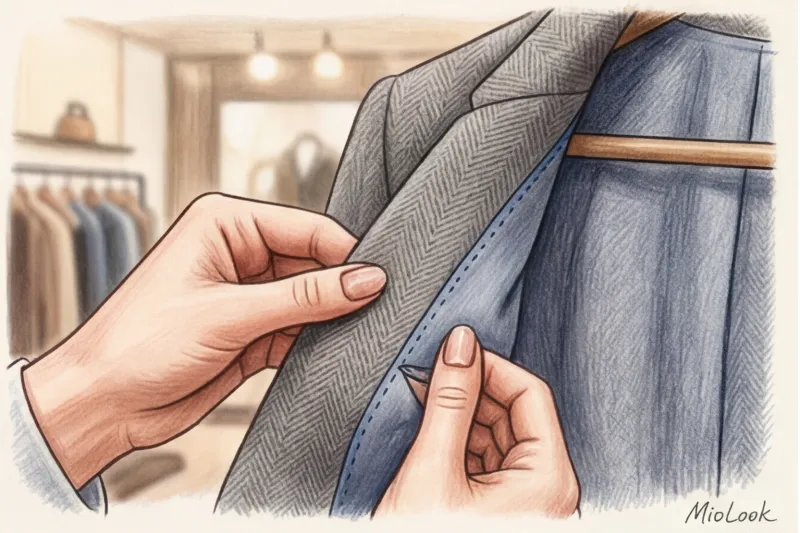
If your goal is to protect your wardrobe budget from regularly spending money on replacing quickly worn-out items, train yourself to look at the inside of the garment. The main indicator of quality lies in the construction details, and the first thing to check is the stitch count. Clothes made to last for years have 4-5 stitches per centimeter of stitching. Fast fashion factories reduce this to 2-3 stitches to speed up the process, which causes the seams to literally unravel after a few washes. Pay attention to the finishing of the inner seams as well: instead of a loose basic overlock, look for a closed French seam or an aesthetically pleasing bias binding. Check the interfacing of collars and lapels on jackets separately. A properly selected fusible or interfacing will ensure that the collar will not bubble unattractively after the first dry cleaning, but will retain its impeccable shape.
Hardware serves as an infallible litmus test for the entire production cycle. Finance departments at mass-market brands always skimp on it first. Therefore, if a trench coat or suit vest is adorned with heavy buttons made of natural horn, textured corozo, or iridescent mother-of-pearl, it truly justifies the high price. A manufacturer who has invested in expensive and complex hardware simply won't attach it to low-quality fabric.
But how can you quickly evaluate the fabric itself? I'll share some insider stylist knowledge: you can determine the potential durability of a material in exactly 10 seconds, right in the store. First, perform a rigorous wrinkle test. Squeeze the edge of the fabric tightly in your fist for 10 seconds, then release it quickly. If the material remains wrinkled, like a sheet of paper, the garment will look unkempt after just an hour of office wear. Next, check the weave density by holding the fabric up to a bright light in the store. If a basic cotton T-shirt or wool suit has a loose structure and is clearly see-through, the threads will quickly deform under their own weight, stretching the knees of trousers or distorting the side seams.
Access to MioLook for €0.99 — one-time payment
Start creating perfect looks with the help of artificial intelligence and plan your wardrobe without unnecessary spending.
Get access — €0.99 onceSmart Shopping Formulas: Protecting Your Budget from Impulse Buying
Even the most perfectly planned wardrobe budget will fall apart if you go shopping without a clear strategy. According to a 2023 study in the Journal of Consumer Research, over 60% of clothing purchases are driven by momentary emotional impulses rather than genuine need. To prevent my clients from relapsing into the debilitating "closet full, nothing to wear" syndrome, I introduce three strict filters into their routine before sending them on their own shopping spree.
The first line of defense is a shopping list like a professional stylist Writing "I need pants" or "I want a new blouse" in your notes is a surefire way to lose money. Your brain will latch onto anything that even remotely fits this abstract category. Formulate your need as narrowly as possible, specifying the color, cut, composition, and length in advance. Instead of general phrases, write: "I need a pair of straight-leg, mid-rise, camel-colored wool trousers." This kind of detailing works like blinders: you simply stop noticing the cropped black polyester culottes on the rails, no matter how attractive the discounts.
The second filter is strict compatibility matrix My golden rule is: we only take an item to the checkout if we can create three complete looks with it right now, using only the items we already own.
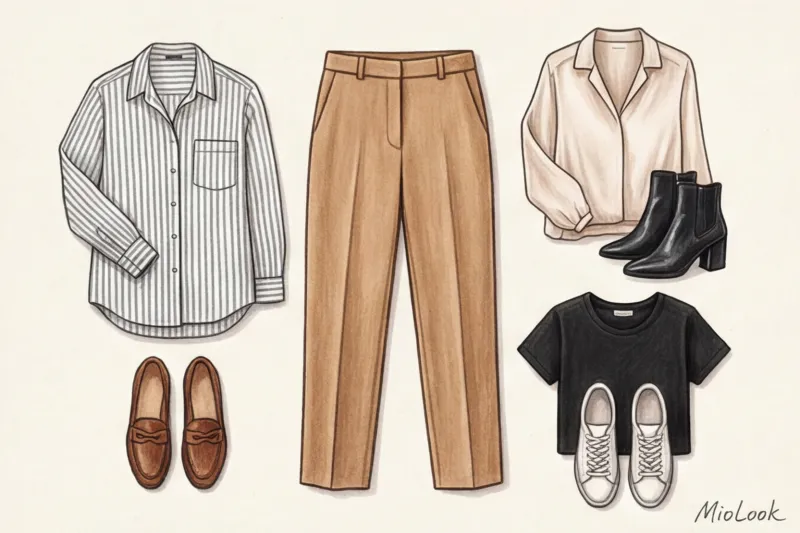
If you need to buy "that perfect blouse" and a specific pair of shoes to integrate a new skirt, that's not an investment, but a hidden financial pitfall. To avoid having to keep your entire wardrobe in your memory, I recommend downloading the database to your smartphone. For example, using the look-creation feature in MioLook , you can take a photo of a potential purchase right in the fitting room and virtually combine it with your usual items. Can't put together three confident outfits? The item goes back on the hanger.
The third, most difficult algorithm to master is One Night Rule This is an artificially created physical pause between selection and payment. How can this be implemented technically? In a physical boutique, you ask the salesperson to put the selected item aside until tomorrow morning. Online, you fill your shopping cart, close the browser tab, and go to bed. Overnight, dopamine levels, which spiked with the anticipation of owning a new €150 item, return to normal. The neocortex and rational thinking kick in. Of the ten women who implemented this algorithm, eight admit that the next morning they confidently remove up to 70% of the items from their virtual shopping cart.
Brand Traps: How Sales Ruin Your Wardrobe Budget
I'll let you in on the biggest secret of retail, one that's rarely mentioned in the glossy magazines: a seasonal sale isn't a generous gift to loyal customers. In reality, a sale is an emergency tool for brands to overcome their own planning errors, illiquid patterns, and simple overproduction. And more often than not, it's the mistakes of others that you pay for.
According to neuromarketing research (specifically, the work of behavioral economist Dan Ariely), the sight of a crossed-out red price tag triggers a sharp release of dopamine. Our minds physiologically perceive the crossed-out €150 next to the new price of €49 not as an expense of €49, but as a clear "win" and a gain of €101. It's this optical illusion that drives even the most rational women to buy things that completely clash with their everyday style.
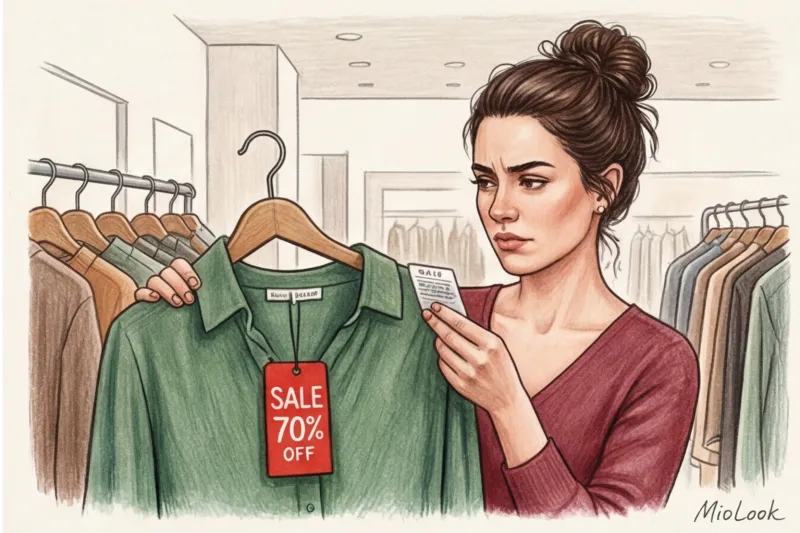
The mass market masterfully manipulates our perception through decoy effect and artificial scarcity. You've probably noticed the aggressive algorithms of online platforms: countdown timers, flashing banners, or notifications like "14 people are currently viewing this item." By creating false competition, retailers intentionally block the analytical part of your brain. Moreover, next to a patently inadequate synthetic blouse for €20, a brand will display a mediocre top on sale for €15. Compared to a more expensive and inferior item, this purchase will seem incredibly logical.
Think of the rails during the winter sales: most often, they're filled with sweaters made of squeaky acrylic or dresses made of thin polyester. Factories produce such materials in huge quantities, with their business model initially based on selling them during the mass discount period. Buyers are hypnotized by the "-70%" tag and don't even look at the composition, even though the actual cost of this fabric barely reaches €3.
"Anything bought on the impulse of a discount and that doesn't fit you perfectly will end up costing you more than a premium exclusive."
Let's calculate the real mathematical cost. Let's say you succumbed to the hype and bought a complexly cut jacket for €80 instead of €250. But the shoulder line is a bit tight, and the cool undertone of the fabric makes your face look tired. You'll wear it exactly once to a casual meeting, after which it will settle in your closet forever. Your Cost Per Wear (CPOW) will be €80. For comparison, a pair of basic, perfectly-fitting, dense wool-blend trousers, bought for full price of €130 and worn 60 times per season, will cost you only €2.10 per wear. Compromising on the fit for the sake of a discount increases the real cost of the item by 10, even 40 times!
As a textile expert, I am categorical on this issue: we only buy items on sale that were already on our wishlist at least a month. To protect your finances, I recommend digitizing your current database and needs in advance. MioLook When a brand announces a 50% discount, you simply open the app, consult your strict list of missing capsule items, and pick up the desired item. No more spontaneously surfing through discount pages.
Your perfect look starts here
Join thousands of users who look flawless every day and don't overspend on sales with MioLook.
Get access — €0.99 onceGoing Green Saves Money: The Connection Between Sustainability and Your Wallet
It's funny how often the term "sustainable fashion" is associated with exorbitant prices on basic organic cotton t-shirts. However, true eco-friendliness isn't about buying new items with green tags, but about radically changing the way you use what's already produced. When you stop viewing clothing as disposable, one-season items, your wardrobe budget magically stops bursting at the seams. Conscious consumption naturally cuts out up to 80% of waste simply because you begin to evaluate a piece's potential years in advance, preferring to repair quality essentials rather than impulsively throwing them away and replacing cheap ones.
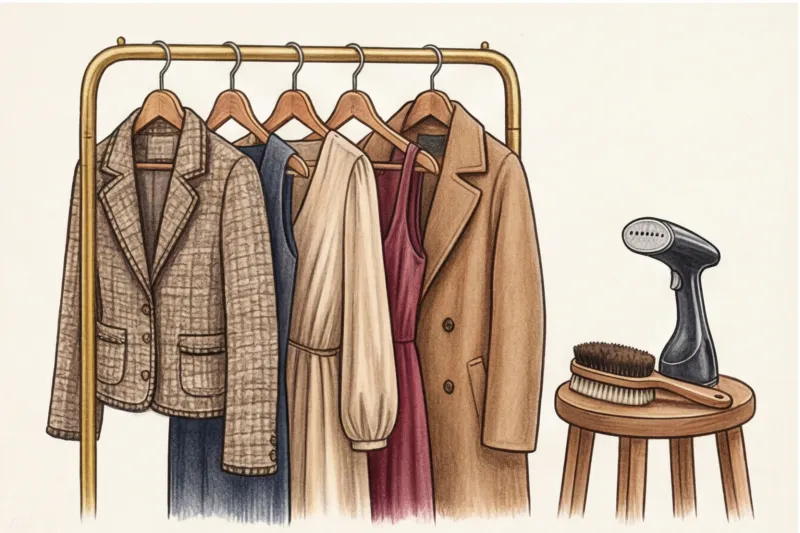
The primary tool for a financially savvy stylist today is the secondary market. According to a comprehensive 2024 report by the platform ThredUp, the global resale market is growing 15 times faster than traditional clothing retail. And this makes perfect mathematical sense. Why spend €150 on a squeaky polyester jacket at yet another fast-fashion store when you can find a vintage wool Max Mara blazer in perfect condition for the same price on resale platforms like Vestiaire Collective? You get premium craftsmanship, natural fabric that won't pill after a month, and an impeccable fit for the price of a new, one-off item.
Moreover, reselling works both ways, transforming a closet from a liability into an asset. I always teach my clients to consider purchases from the perspective of their wardrobe's liquidity. This is what's called "cashback on clothing." If you invest in the right brands and materials, you can always get some of your money back. Items made of 100% silk, dense cashmere, or smooth leather, as well as recognizable timeless silhouettes from Acne Studios, Totême, or The Row, retain their residual value perfectly. Unlike acrylic blends or thin viscose, which depreciate financially as soon as the store tag is removed.
A wardrobe with high liquidity is a financial safety net for your style. When buying something, always ask yourself: "Will anyone want to buy this from me in three years?" If the answer is no, you're likely looking at a bad investment.
By selling items that no longer fit your lifestyle or have changed sizes, you can easily recoup up to 30% of your original wardrobe budget and reinvest that money. For this system to work smoothly, you need to clearly understand what exactly is hanging on your hangers. Try digitizing your items through inventory function in the MioLook app As soon as analytics show that a specific sweater or skirt hasn't been worn in more than a year, this is a clear signal to monetize the dead stock, freeing up both space and funds for truly necessary purchases.
Checklist: 5 Steps to Creating a Personal Wardrobe Financial Plan
Theory is dead without practice. According to the Institute of Behavioral Economics (2023), 85% of people learning new financial literacy strategies revert to old impulse buying patterns if they don't take concrete action within the first 24 hours. To transform your wardrobe budget from an abstract concept to a working investment tool, I've prepared a rigorous step-by-step algorithm. It won't be the most enjoyable half hour of your life, but it will forever change your relationship with your clothes.

- Step 1: Record your current expenses for the last 6 months. Take off your rose-colored glasses and open your bank's app. Filter transactions by categories like "Clothing," "Shoes," and "Accessories." Add it all up, down to the last cent. One of my clients from Berlin was absolutely certain she was spending around €150 a month on clothes. Hard math revealed hidden microtransactions at online sales that were eating up almost €450 a month. Write down your actual number—that's your starting point for an audit.
- Step 2: Calculate your personal Cost Per Wear 2.0 index for your three favorite and three least favorite items. Take three items from your closet that you wear constantly (for example, a heavy wool jacket or your favorite leather loafers) and three that you've worn only once (that impulsively bought sequin dress or that uncomfortable synthetic top). Calculate their actual cost per outing, taking into account dry cleaning and tailoring. This stark financial contrast is more sobering than any business coach.
- Step 3: Compile the capsule core and identify gaps. It's impossible to plan future purchases without knowing your current assets. I highly recommend digitizing your database using an app. MioLook Visualizing your closet on your smartphone screen instantly highlights stylistic gaps: you'll clearly see that you absolutely don't need a sixth pair of straight-leg jeans, but you're desperately missing a high-quality, structured belt that could tie together thirty different outfits.
- Step 4: Set an annual budget using the 70/20/10 rule. Determine a comfortable annual budget based on your income. Let's say it's $2,000. Divide it immediately: $1,400 (70%) will go toward fundamental structural items (a high-quality fall coat, cashmere knitwear, shoes), $400 (20%) will go toward style-defining pieces (a blouse with a complex cut or in the season's hottest color), and $200 (10%) can safely be set aside for micro-trends to satisfy your thirst for novelty without breaking the bank.
- Step 5: Form a strict wish list with fabric quality criteria. Forget vague statements like "I need light-colored pants." Your list should read like a no-compromise specification for the buyer: "Ivory palazzo trousers, natural waist, at least 70% worsted wool, cupro or viscose lining, internal seams finished with bias binding." Why is this important? Because a cheap polyester lining will negate any breathability of good wool. With such a list, you become completely immune to mass-market marketing manipulation.
Financial discipline in fashion isn't about restrictions, rigid frameworks, or boring asceticism. Frankly, this systematic approach initially provokes internal resistance in most of my clients, but the end result makes all the effort worth it. True stylistic freedom lies in the ability to walk into a premium boutique and, without a shadow of a doubt, buy a flawless Mongolian cashmere sweater for €600. And do so not because you're succumbing to momentary emotion, but because you know for certain that this investment will earn you every cent, won't pill in a month, and will last you a decade. Plan wisely, read the composition on the backing labels, and invest only in what makes you confident.
Guide Chapters
Where to sell used clothes and earn money shopping
Cleaning out your wardrobe can be a real money-maker if you approach it wisely. Learn how to profitably sell unwanted items and build a basic capsule wardrobe without spending a fortune.
Clothing Tracking App: How AI Saves You Money
A digital wardrobe isn't just a pretty catalog; it's your personal financial director. Find out how smart inventory management can save you from impulse purchases.
Clothing Care: Costs and Hidden Wardrobe Expenses
When buying an inexpensive item, we rarely consider the cost of maintaining it. Find out how the hidden "wardrobe tax" is eating into your budget and how to avoid it.
Smart Shopping Tips: How to Stop Buying Unnecessary Items
How to stop buying unnecessary things on sales and start investing wisely in your wardrobe. We explore common mistakes and the formula for mindful shopping.
Cost per wear: how to calculate the cost of clothing
Why do cheap items cost more than brand-name essentials? Learn how the Cost Per Wear formula helps you stop wasting money.