Two years ago, Anna, a brilliant art director and founder of a branding agency, came to me for a consultation. She was desperate: her team was creating stunning, bold visual concepts, but she kept failing final pitches to major investors. When I asked her to show me what she usually wears to pitch her projects, everything fell into place. From her suitcase, she pulled out a classic, absolutely bland beige suit from a mass-market store and a formal white shirt.
"I'm going to see bankers and investors," she justified herself. "I have to look serious."
And this is the main trap creative professionals fall into. By donning a corporate clerk's uniform, a creative person commits nonverbal suicide. You sell innovation, unconventional thinking, and visual flair, but your clothes scream, "I think in cliches and am afraid to step outside the box." We discussed the basic principles of building such a wardrobe in more detail in our the complete guide to creative business style , but today I want to talk about the fundamental difference in approaches.
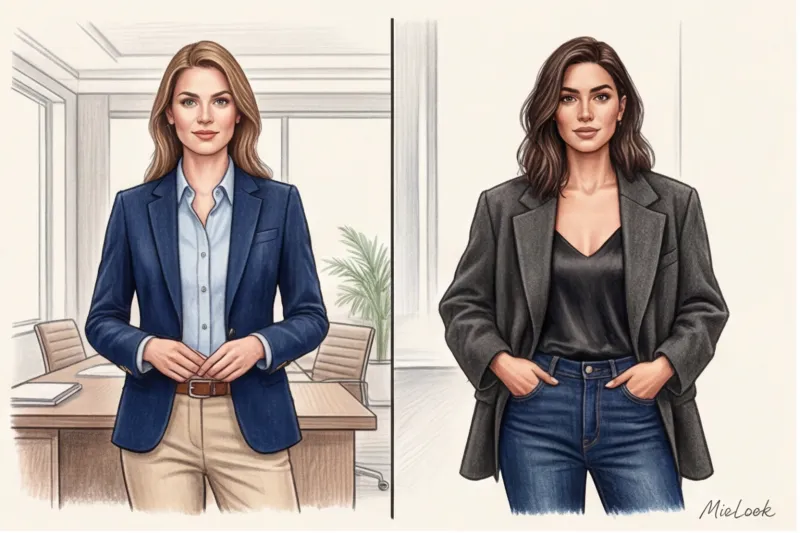
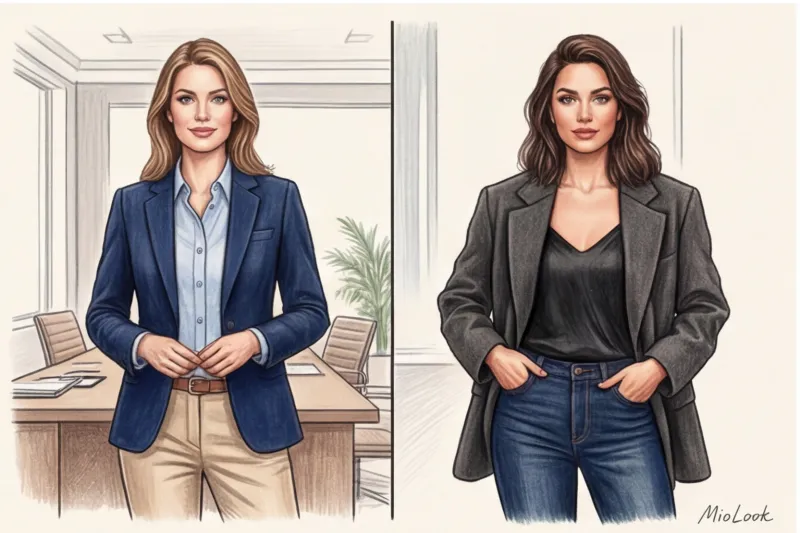
The Anatomy of Dress Codes: The Key Difference Between Smart Casual and Business Casual
To understand how to manage impressions, it is necessary to clearly distinguish between two concepts that are often (and mistakenly) used as synonyms. The main thing The difference between smart casual and business casual It's not about the list of permitted items, but about the level of formality, the architecture of the cut, and the amount of individuality you can tolerate.
Business Casual: The Language of Corporate Security
Historically, business casual is a descendant of "casual Fridays," when clerks were allowed to remove their ties and trade wool suit trousers for cotton chinos. The paradigm of this style remains strictly conservative. The color palette is limited: navy, gray, beige, and muted blue.
The signal this dress code sends is: "I am systematic, predictable, respect subordination and play by the rules." It's a wonderful, practical tool for lawyers, financial analysts, and top managers of traditional corporations. But for someone in the arts or design, it's too sterile.
Smart Casual: Elegant Freedom
Unlike its formal cousin, Smart Casual takes its cue not from a business suit but from everyday comfort, which is then elevated in status through premium textures and sophisticated tailoring. Here, a mix of opposites reigns supreme: smooth, flowing silk sits alongside coarse, textured wool, and a cashmere sweater sits alongside leather trousers.
This is where denim really comes into its own. But, as I always tell my clients, smart casual jeans aren't the kind you wear when walking your dog. They're made from heavyweight raw denim, at least 12 ounces, in a deep indigo shade, with no fraying, rips, or contrast stitching. The hallmarks of this style are: "I am self-confident, value my own comfort, but have impeccable taste.".
Access to MioLook for €0.99 — one-time payment
A smart AI stylist will select the perfect look for your work tasks, taking into account the dress code.
Get access — €0.99 onceWhy Classic Business Casual Is Killing Creative Sales
Let's return to the myth that you need to dress "like an investor" when meeting with an investor. Science says otherwise.
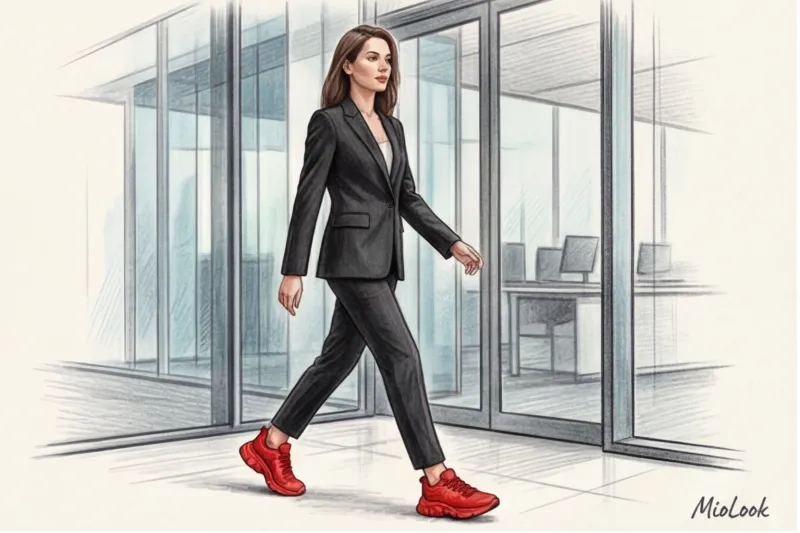
In 2014, Harvard Business School researchers Francesca Gino and Silvia Bellezza published a landmark paper on the so-called Red Sneakers Effect Their research proved something counterintuitive: a slight, deliberate violation of the expected dress code in a professional environment makes others perceive a person as more prestigious and competent.
"People believe that those who dare to break conventional rules of appearance have sufficient social capital and power to not fear judgment," the researchers concluded.
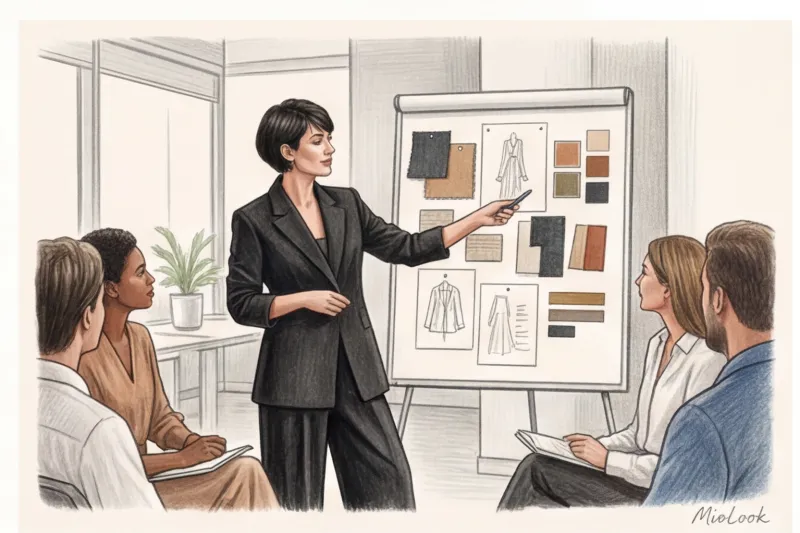
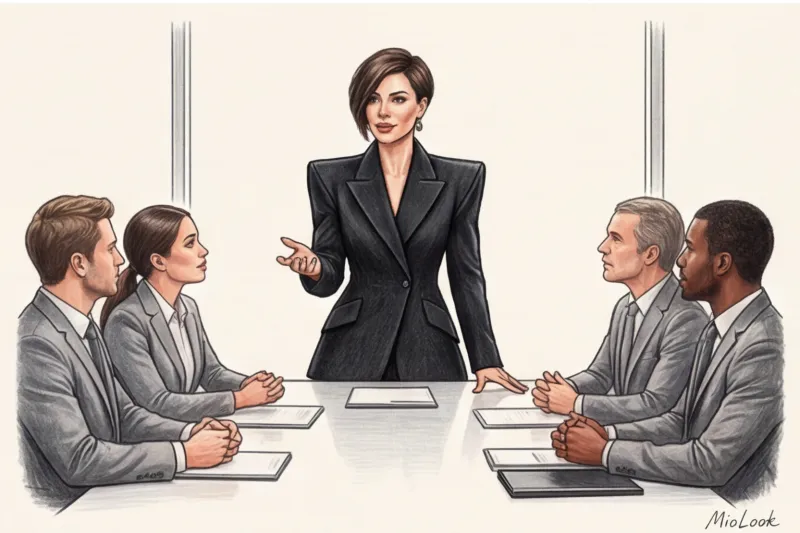
When Anna (my client at the beginning of this article) swapped her "safe" beige suit for a deconstructed asymmetrical jacket in thick black wool, layered over a silk top and accessorized with The Row loafers, her sales conversion rate doubled. She stopped looking like a junior bank manager and began projecting visionary status.
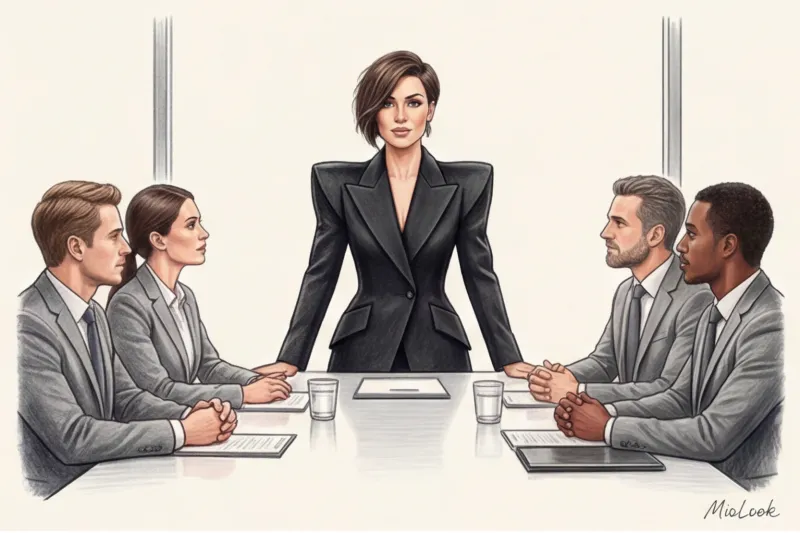
Of course, there are limitations here. This advice doesn't work If you're going to a government meeting with strict protocol, wearing "red sneakers" will be considered disrespectful. But for negotiations with private businesses, it's a powerful signal of expertise.
Investing Wisely: How to Build a Foundation for Creative Smart Casual
Over 12 years of working in luxury styling, I've discovered a golden rule: a creative wardrobe should be built on an investment approach. Forget about quantity. We need textures you want to touch and lines you want to look at.
Let's count Cost-per-wear (cost per exit) A €150 mass-market polyester jacket will lose its shape after the first dry cleaning. You'll wear it 10 times (€15 per wear) and feel unsure. A designer Italian wool jacket (for example, from Jil Sander or Lemaire) for €1,200 will last you at least 5-7 years. With 150 wears, it costs only €8 per wear. And each of those 150 wears will work in your favor. expert image.
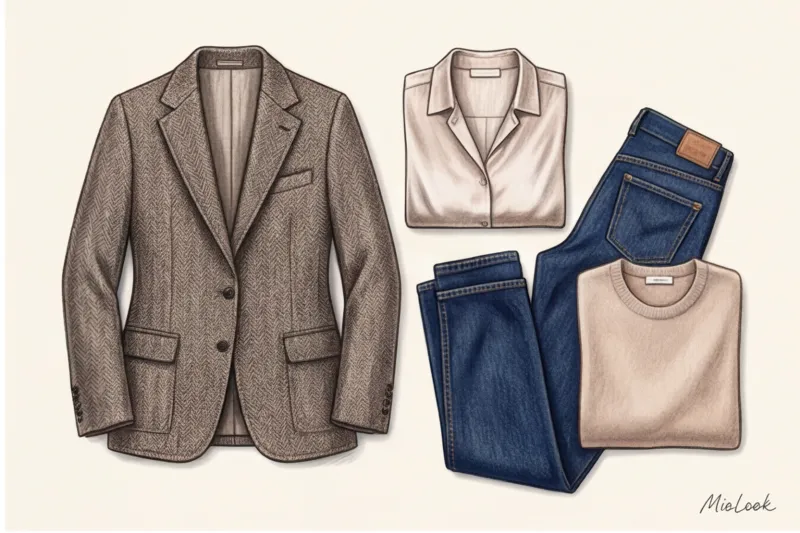
What exactly should you pay attention to when choosing:
- Architectural cut instead of bright color: Save neon shades for street style. Complexity should be achieved through geometric elements—exaggerated shoulders, asymmetrical hemlines, and intricate draping.
- Tactile fabrics: Avoid polyester. Look for cupro (it flows better than viscose), dense mulberry silk (19+ mammy), and merino wool. They reflect light differently and immediately signal a premium quality.
- Shoes as a foundation: A creative person can wear sneakers, but they shouldn't be Asics running shoes. Opt for minimalist leather sneakers (in the spirit of Common Projects) or suede loafers.
Your perfect look starts here
Join thousands of users who look flawless every day with MioLook by digitizing their wardrobe.
Get access — €0.99 onceThree formulas for the ideal image for different creative niches
The creative class is diverse. What's perfect for a motion designer might look odd on a PR director. I've divided the approaches into three main aesthetics that have proven effective in practice.
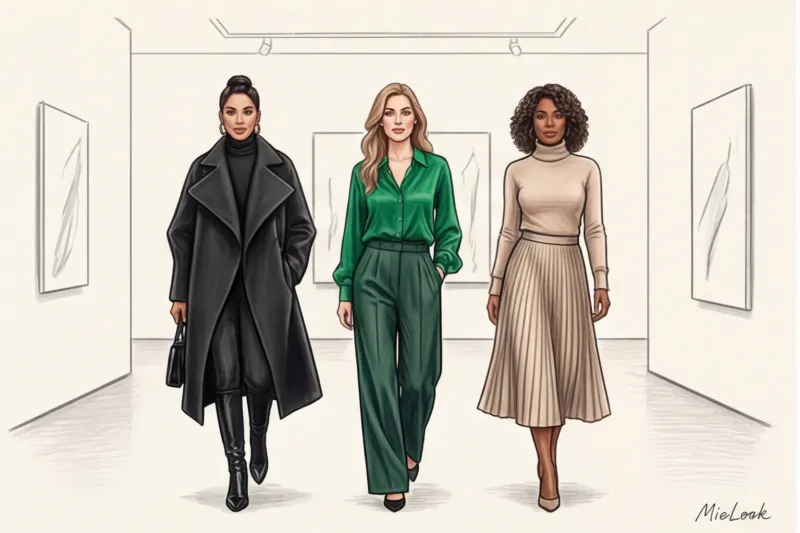
For designers and art directors
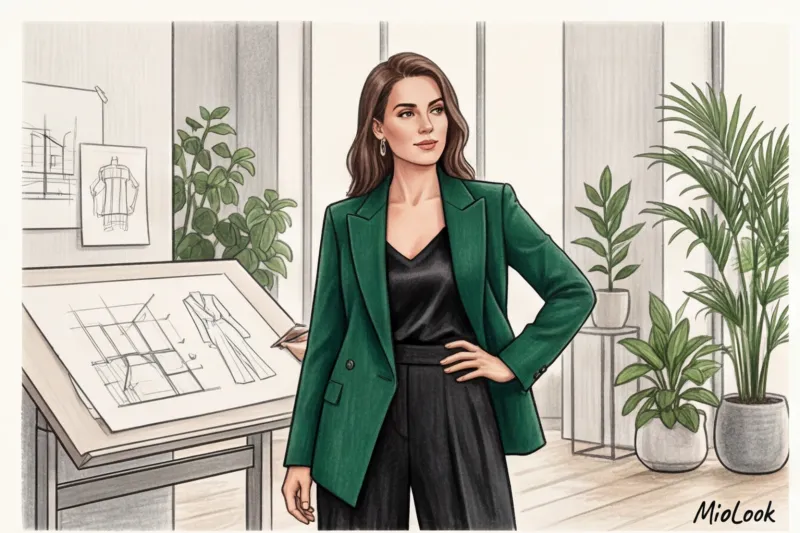
Your clothes shouldn't clash with your portfolio. The ideal choice is all-black, but enhanced with textures. Mix matte wool, smooth leather, and lightweight silk in a single look. Emphasize the avant-garde cut of a shirt or jacket (think of the aesthetics of Maison Margiela or Yohji Yamamoto). This minimalism demonstrates high visual intelligence.
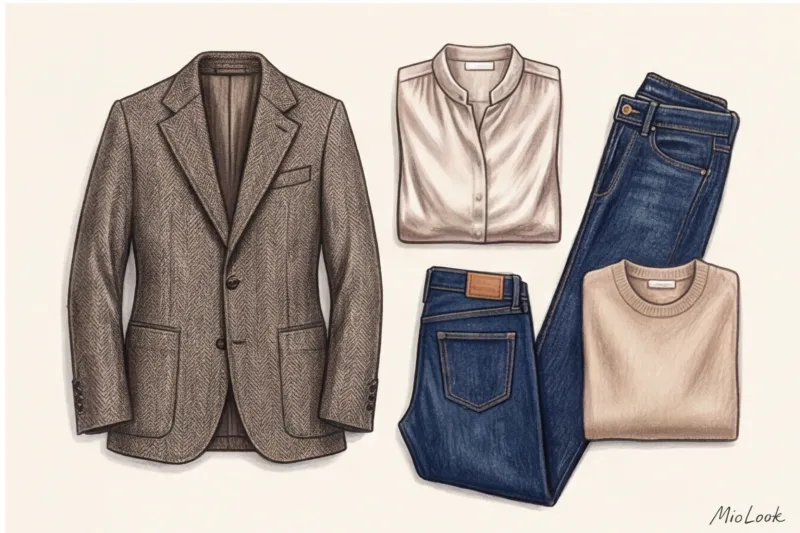
For PR specialists and producers
Your goal is to exude energy, dynamism, and be approachable. Color blocking works well here, but in refined shades: deep emerald paired with navy blue or wine with a hint of camel. Wide-leg palazzo pants in flowing fabric, high-quality cashmere knitwear, and comfortable, classy shoes (smooth leather loafers) are perfect for frequent meetings and city commutes.
For architects and interior stylists
Your work revolves around space and materials, and your clothing should reflect this. Choose a natural, muted palette (terracotta, sage, ivory, undyed linen). Focus on bold, tactile fabrics: suede, bouclé, and heavy cotton. Create layered looks with clean, geometric silhouettes.
Accessories as a Status Marker: Where You Shouldn't Skimp
In the world of investment wardrobes, there's an unbreakable rule: you can save money on a basic white T-shirt (buy a great heavy cotton one at Uniqlo or COS), but your accessories must be impeccable. In relaxed smart casual, they act as status anchors.
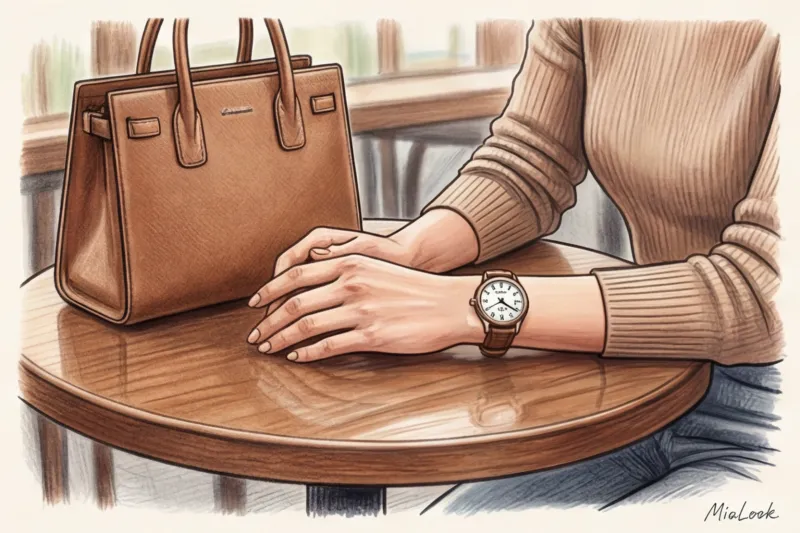
Pay special attention to your watch. Yes, we live in the digital age, and smartwatches are incredibly convenient. But from a style standpoint, an Apple Watch with a silicone strap will instantly elevate your look. Swiss watchmaking—mechanical movements on a leather strap or a simple steel bracelet (like the Cartier Tank or basic Jaeger-LeCoultre models)—says more about you than any resume. They demonstrate your appreciation for tradition and craftsmanship.
The second anchor is status bag For work meetings, choose a rigid, structured bag made of thick calfskin. Avoid shapeless tote bags. The bag's clean, geometric shape instantly brings structure and discipline to even the most casual look with jeans and a cardigan.
And don't forget about eyewear. The right eyeglass frame is the quickest way to highlight your intelligence. Ditch the subtle, thin metal temples for a statement horn or acetate frame.
A stylist's checklist: how to check your look before an important pitch
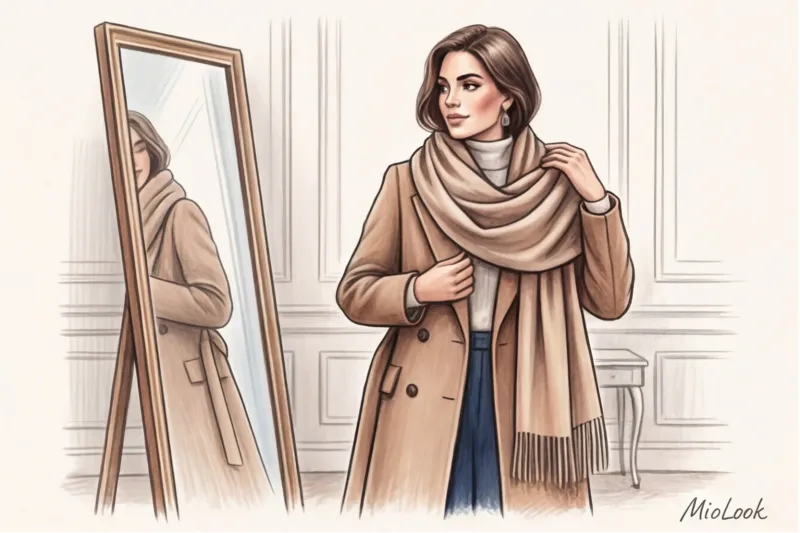
Before you leave the house for an important presentation, stand in front of the mirror and run these four quick tests through your image. Incidentally, my clients often use image analysis function in MioLook to make sure you've made the right choice.
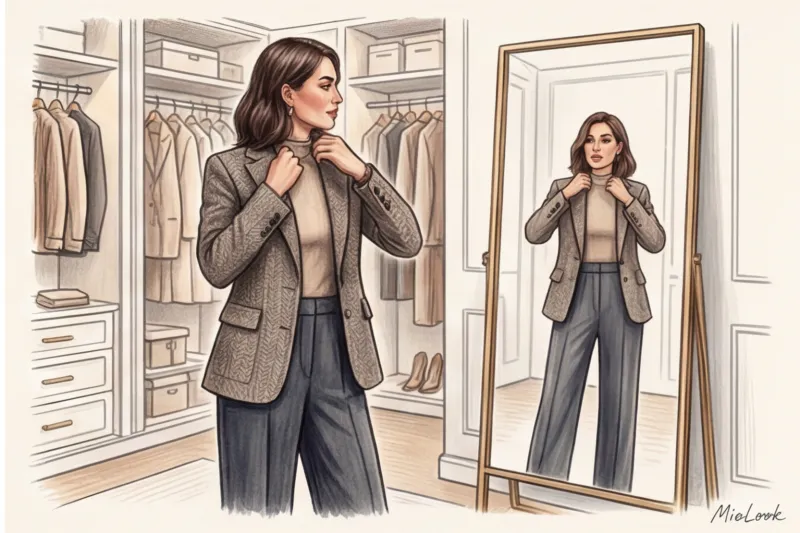
- Structure test: Is there at least one piece in the silhouette that holds its shape? It could be a thick jacket, a structured bag, or shoes with a defined toe. If everything hangs and flows, you look homey.
- The rule of three textures: Count the materials. Cotton + cotton = boring. Cotton + leather + wool = a look you want to look at. Good smart casual should have at least three different textures.
- Bank Clerk Test: Do you look like you're about to file your taxes? If so, immediately swap out one classic piece (like tailored trousers) for something more relaxed (like high-quality dark denim).
- Freelance Artist Test: Are you too relaxed? Does your appearance inspire confidence in your time management skills and ability to meet deadlines? If in doubt, throw on a straight-cut jacket over the top.
Summary: Your wardrobe is your calling card.
For a creative, choosing between smart casual and business casual isn't simply a choice between jeans and pleated trousers. It's a choice between being a contractor and being an equal partner and visionary.
Stop dressing for the job you have and start dressing for the paychecks you want. Invest in quality materials, sophisticated tailoring, and impeccable accessories. Let your appearance sell your ideas, intelligence, and taste even before you open your mouth at a presentation.