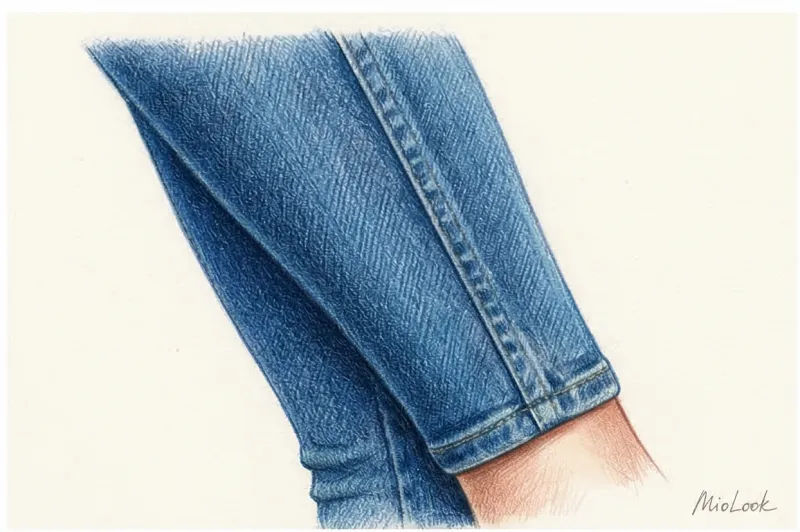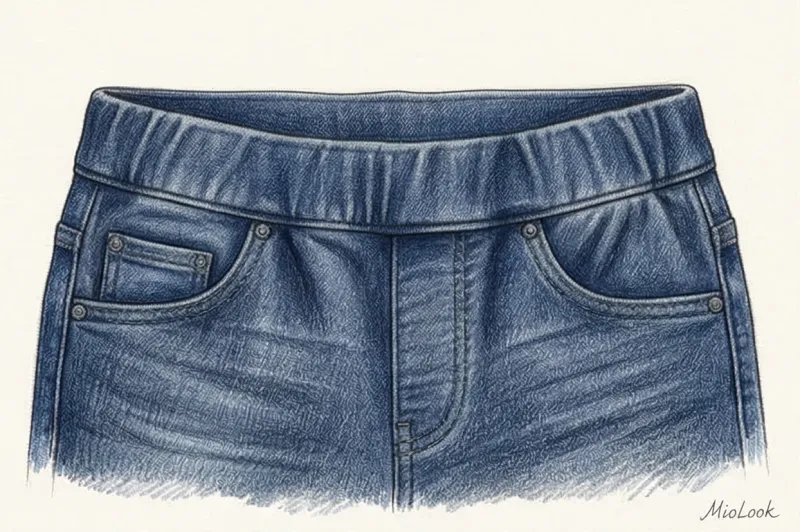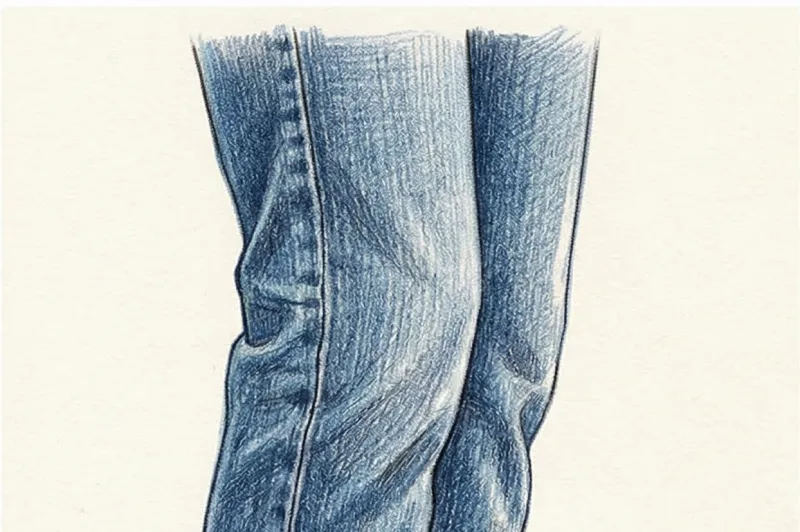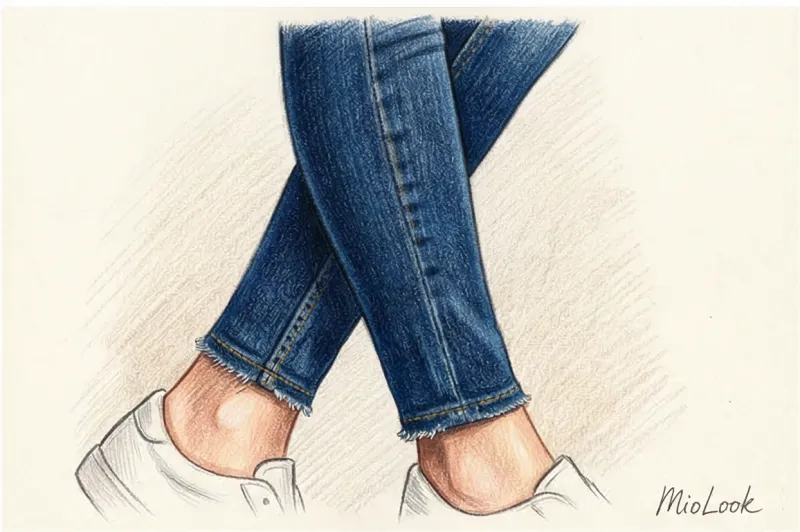
Skinny jeans are tight denim trousers that fit closely along the entire leg from the hip to the ankle. The cut features a narrow leg opening and uses stretch fabrics with elastane to create a second-skin effect. People wear them daily as a reliable base for casual and layered outfits.
What Are Skinny Jeans
Skinny jeans represent a specific category of denim designed to replicate the natural contours of the wearer's legs. The name itself derives directly from the English word "skinny," accurately reflecting the intended tight fit. While the broader concept of narrow trousers dates back to the slim pants of the 1950s worn by rock and roll pioneers, the modern iteration of skinny jeans reached its absolute peak in the 2000s and 2010s. This surge in popularity was heavily driven by indie rock culture, which championed a sleek, rebellious aesthetic. Today, they remain a foundational garment, offering a streamlined base for countless outfit combinations.
Fabric and Construction
Achieving a skin-tight fit without severely restricting movement requires specific textile engineering. Traditional rigid denim, made entirely of cotton, cannot accommodate the biomechanics of a human stride when cut this closely to the body. To solve this, manufacturers blend cotton with synthetic stretch fibers like elastane, spandex, or Lycra. The standard elastic content ranges between two and five percent.
This precise ratio allows the material to stretch comfortably as you walk, sit, or bend, while possessing enough recovery to snap back to its original shape. A proper skinny fit also demands a specialized pattern design. The drafting process must account for the natural curvature of the calves and the exact circumference of the ankles to prevent the fabric from twisting or sagging.
Distinctive Features of the Skinny Cut
The primary defining characteristic of the skinny cut is its uncompromising anatomical adherence to the lower body. When properly sized, these trousers eliminate almost all excess fabric. You will not see heavy folding under the knees, sagging in the groin area, or bunching around the thighs.
Modern styles accommodate various body types by offering multiple waist heights. While the early 2000s were dominated by extremely low-rise designs that sat on the hip bones, contemporary standards favor high-rise or mid-rise waists. These higher cuts provide better support, elongate the leg visually, and offer a more comfortable daily wearing experience.
Beyond classic blue or black cotton denim, brands frequently experiment with alternative materials. You can find skinny trousers crafted from faux leather, suede, and heavy knit blends. Some designs incorporate shortened zippers at the bottom hems. This functional detail makes it much easier to pull the narrow leg openings over the heels, especially when dealing with thicker, less forgiving fabrics.
Skinny vs. Slim Fit
Shoppers frequently confuse skinny jeans with slim-fit jeans, but the two silhouettes behave differently below the knee. A slim fit follows the line of the thigh closely but drops straight down from the knee, leaving a noticeable gap between the fabric and the calf. Skinny jeans continue to taper aggressively past the knee, hugging the calf muscle and wrapping tightly around the ankle.
Key Characteristics of Skinny Jeans
| Feature | Description |
|---|---|
| Fit | Extremely tight from the hip down to the ankle |
| Leg Opening | Narrow, designed to hug the ankle closely |
| Material | Denim blended with 2-5% elastane or spandex for stretch |
| Waistline | Available in high-rise, mid-rise, and low-rise |
| Season | Year-round, depending on the weight of the fabric |
Color Variations and Washes
The visual impact of skinny jeans changes dramatically depending on the chosen wash and color. Classic dark indigo and solid black washes offer the most versatile and formal appearance, easily transitioning from daytime casual wear to evening outfits. These darker shades also provide a visually slimming effect, enhancing the streamlined nature of the cut. Light blue washes, acid washes, and distressed details with rips or frayed hems lean heavily into a relaxed, weekend aesthetic. For a bolder statement, coated denim mimics the sleek texture of leather, adding a subtle sheen that elevates the garment for nightlife or edgy street-style looks.
How to Style Skinny Jeans
Creating successful outfits with tight denim relies heavily on mastering the balance of proportions. Because the bottom half of the body appears highly defined and streamlined, the top half requires thoughtful volume management.
Balancing Proportions with Tops
Fitted bottoms pair exceptionally well with voluminous, relaxed, or structured tops. Oversized blazers with strong shoulder pads create a striking contrast against narrow legs. Loose chunky knit sweaters, oversized men's shirts, and draped blouses also work perfectly. This contrast prevents the overall outfit from looking like workout gear and adds a layer of intentional styling.
In layered outfits, skinny jeans act as a neutral, unobtrusive backdrop. They allow long trench coats, straight-cut wool coats, or flowing shirtdresses to take center stage without adding unnecessary bulk to the lower half of the silhouette. When paired with longer tops like tunics or mid-thigh hoodies, skinny jeans visually function much like leggings. However, thanks to the heavier density of denim fabric, visible seams, and functional pockets, they maintain the structured appearance of full-fledged trousers.
Choosing the Right Footwear
The narrow ankle opening dictates specific footwear choices. Skinny jeans are widely considered the absolute best trouser style for wearing with tall boots. Because there is no excess fabric at the hem, they tuck effortlessly into tube boots, classic equestrian jockey boots, or dramatic over-the-knee boots without creating uncomfortable or unsightly creases around the calves.
When styling them with shorter shoes, the tight ankle can sometimes make the feet look disproportionately large. You can easily balance this visual effect by selecting chunky footwear. Thick-soled loafers, heavy lace-up combat boots, or oversized platform sneakers add necessary weight to the bottom of the outfit, grounding the look and complementing the tight fit of the jeans.