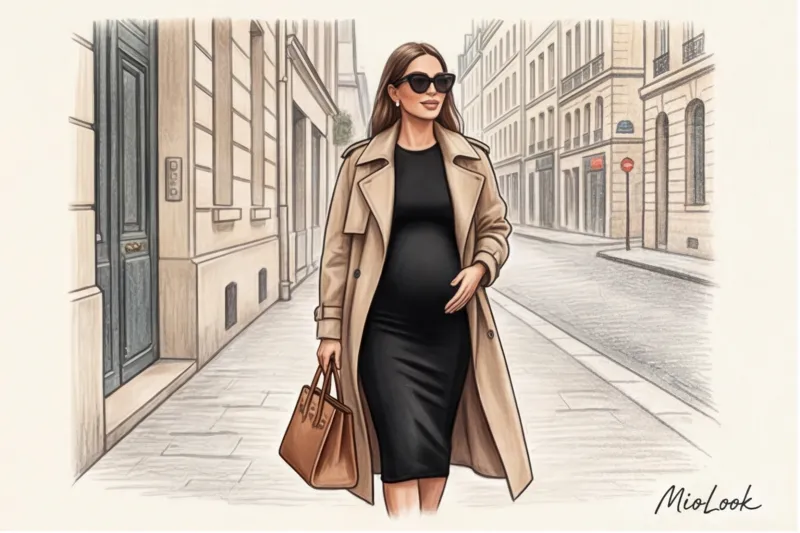
According to a confidential study by the analytical agency WGSN (2023), 70% of items from specialized maternity departments are worn by women less than 15 times in their lifetime. Consider this figure. We spend huge budgets on wardrobes that will become obsolete faster than you can remove the tags. When my clients learn they're expecting, their first impulse is to buy up half the maternity section. And my main task as a stylist is to stop them in their tracks. Today, we'll uncover the biggest secret of fashion insiders: How to wear regular clothes during pregnancy , without wasting an ounce of style or a cent.
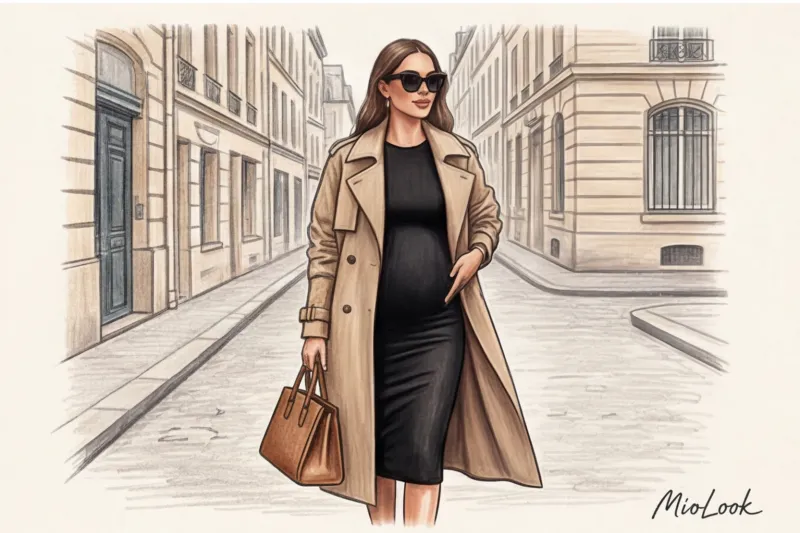
I have already discussed the basic approach to forming such capsules in more detail in our The complete guide to a capsule wardrobe for pregnant women But today we'll go further and deconstruct the very architecture of the cut.
The Illusion of "Pregnant" Departments: Why Your Style Shouldn't Go on Maternity Leave
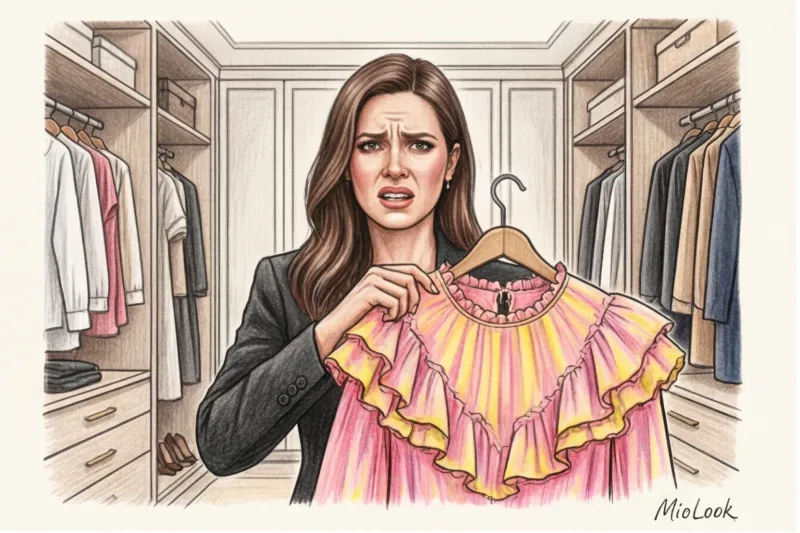
For years, the maternity clothing industry has been selling us the same infantile silhouette: drawstrings under the bust, empire-line dresses, ruffles, and endless gathering at the sides. One of my clients, Anna, a partner in a major architectural firm, once told me, "In these clothes, I feel like a giant pink cupcake, not an executive." And she's absolutely right.
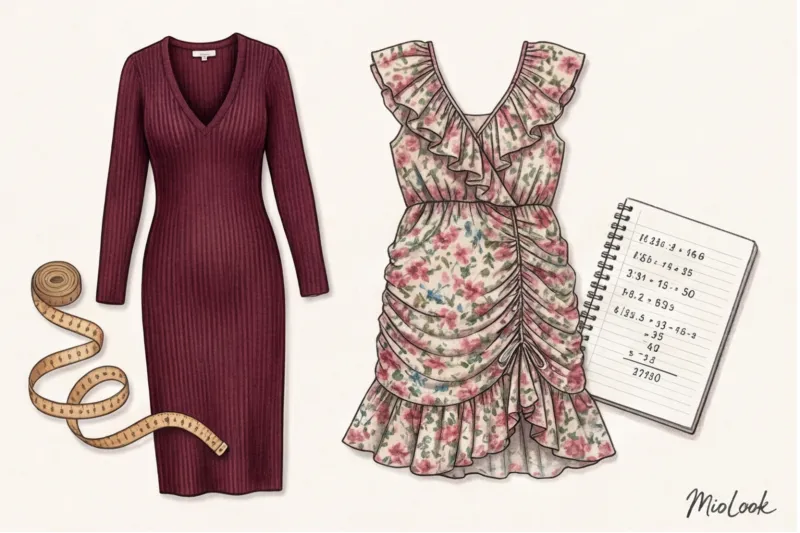
Your wardrobe is a reflection of your professional and personal identity. Losing this visual voice for nine months means voluntarily giving up a part of yourself. It's also a matter of basic financial literacy. Buying a COS or Massimo Dutti cashmere sweater for €150–€200 in a size L will pay for itself ten times faster than a €100 tailored dress you'll hate by the third trimester.
Your perfect look starts here
Join thousands of users who look flawless every day with a smart AI stylist.
Get access — €0.99 onceCutting Architecture: How to Wear Regular Clothes During Pregnancy Without Losing Shape
The main stereotype I've been fighting for over 10 years working at European Fashion Weeks is that pregnancy supposedly requires an immediate switch to tracksuits and leggings. The trick is simply understanding the physics of fabric and how to wear everyday clothes during pregnancy, using the laws of proportion.
The Bias Cut: Madeleine Vionnet's Brilliant Legacy
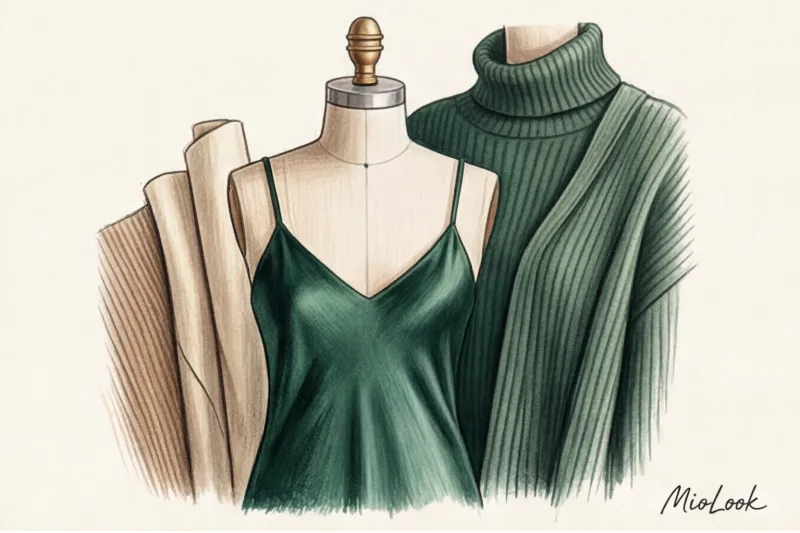
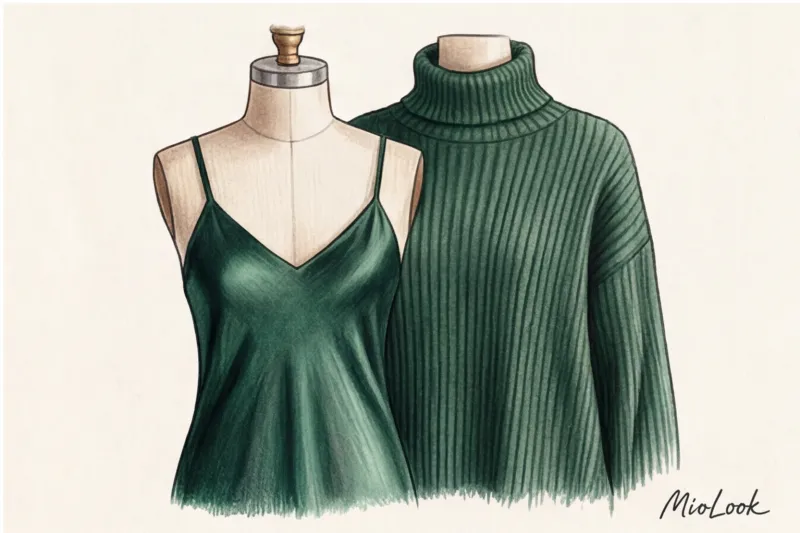
In 1922, the great Madeleine Vionnet revolutionized the world by cutting fabrics at a 45-degree angle to the grain. Thus was born the famous bias cut What's so magical about this maternity dress? The bias-cut fabric offers incredible flexibility. It stretches precisely where volume appears (on the stomach and chest), and falls elegantly where it doesn't.
A bias-cut silk slip dress is your best investment. It will hug your belly in your eighth month and return to its original flowing form after delivery. But there is an important limitation here: This trick only works with natural silk with a density of 19 momme or higher or with heavy viscose. Cheap bias-cut polyester will simply stand upright and highlight every crease.
High-density knitwear: the "rebound" rule (Fabric Recovery)
When we talk about knitwear, the key term is Fabric Recovery — the coefficient of shape recovery. Why does a cheap cotton noodle dress stretch out at the stomach and remain a permanent "bubble"? Because it lacks an architectural framework.
- The ideal formula: dense viscose, merino or tencel + strictly 2–5% elastane or spandex.
- Fabric weight: Look for items with a knit density that does not allow underwear to show through (usually these are items weighing at least 300 g/m²).
This dress, from the regular premium mass market segment (in the range of €80–150), will expand with you and return to its original shape after washing.
Access to MioLook for €0.99 — one-time payment
A smart AI stylist will select the perfect look from your items and suggest additional purchases.
Get access — €0.99 once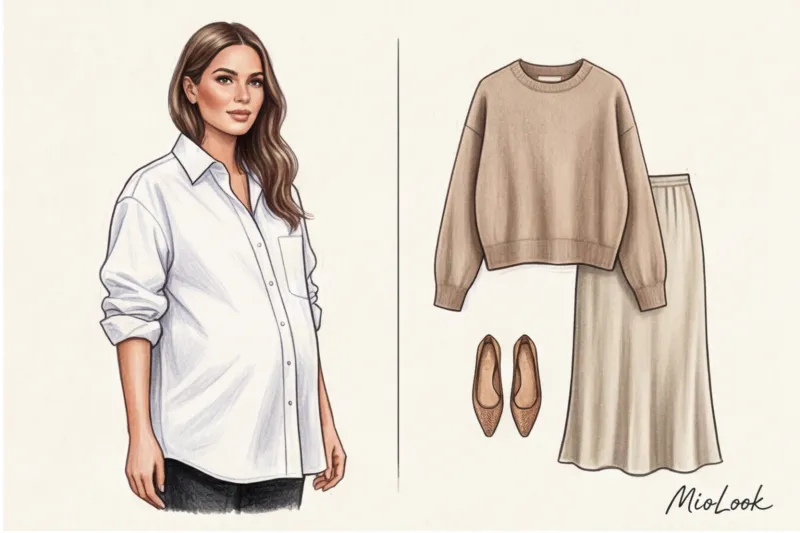
Wardrobe Math: The Size-Up Strategy vs. Shapeless Oversize
Now let's bust the most popular myth. Oversized clothes are the worst enemy of a pregnant figure. When you wear a shapeless top, your body is visually defined by its widest point (your protruding belly). You appear monumental.
Simply buying a women's item three sizes too big is a fatal mistake. The armholes will sag, the bust dart will slip, and you'll look like you're wearing someone else's clothes. The right strategy is called smart size-up.
"To maintain the fragility of your silhouette as your volume increases, you need strong points of support. The most important of these is the shoulder line"—this is a rule I repeat in every master class.
How can this be achieved in practice? Go to the men's department. A men's shirt made of thick poplin in a size S or M will fit you perfectly: the shoulder seam will be slightly dropped (called a drop shoulder), the collar will hold its shape, and the length will be long enough to cover your midriff. The same goes for men's cashmere jumpers—they have straight armholes that don't bunch up at the chest.
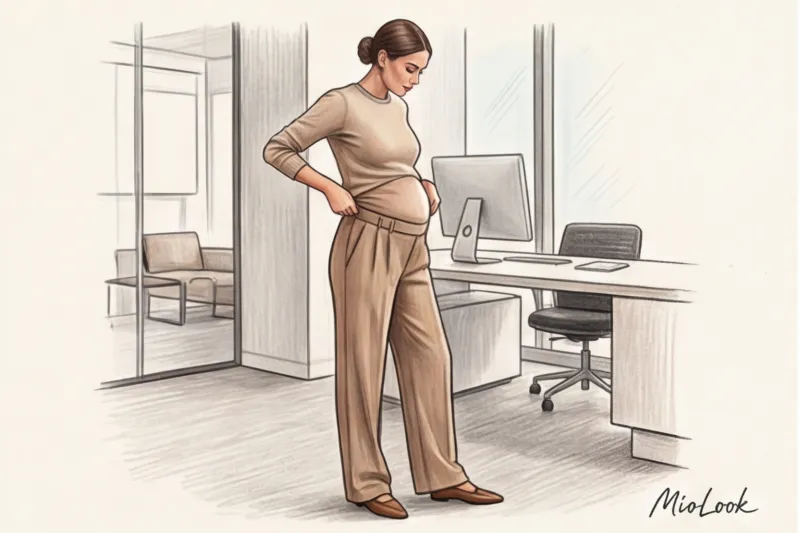
Trouser Question: Elegant Alternatives to Jeans with a Belly Insert
Jeans with a stretchy knit belly panel are comfortable for a stroll in the park, but completely unacceptable if you need to look classy at a business meeting. So what about business bottoms?
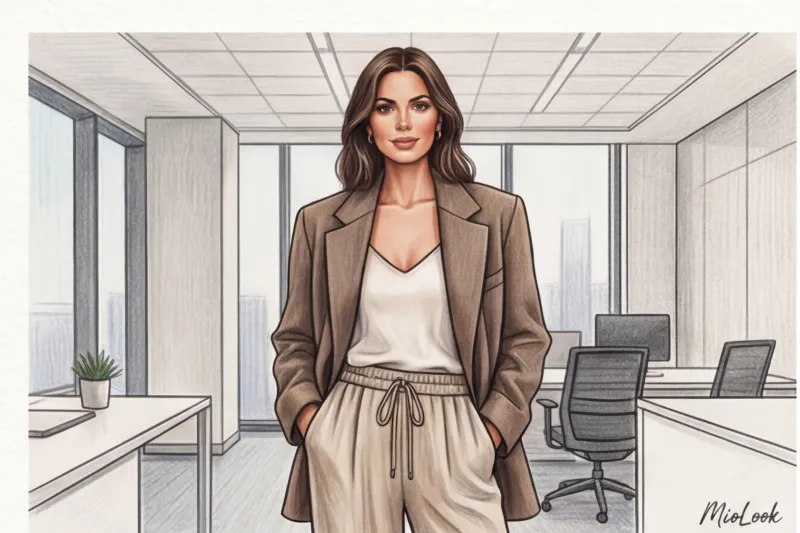
Here, the Y2K aesthetic comes to our aid, bringing the low-rise back to the catwalk. Men's suit trousers or wide, low-rise palazzos look brilliant. under belly. You buy flowing wool trousers a size larger, fit them at the hips, and wear them with longer shirts or knitwear.
Another lifesaver is skirts and trousers with an elastic smocked waist. Brands like COS or Arket (priced €70–€130) always feature silk or viscose A-line skirts with drawstrings. These can be worn high under the bust in the third trimester and then slung down to the natural waistline after giving birth.
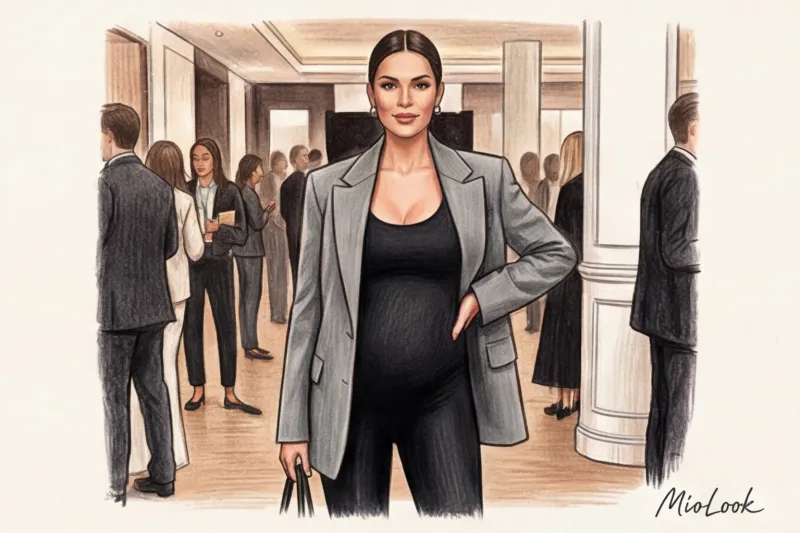
Layering and verticals: fashion insiders' secret weapon
Watching pregnant fashion editors (like Eva Chen or Julia Restoin-Roitfeld) backstage at Paris shows, I've developed a perfect formula for mastering proportions. They never hide their bumps. They embrace them. frame.
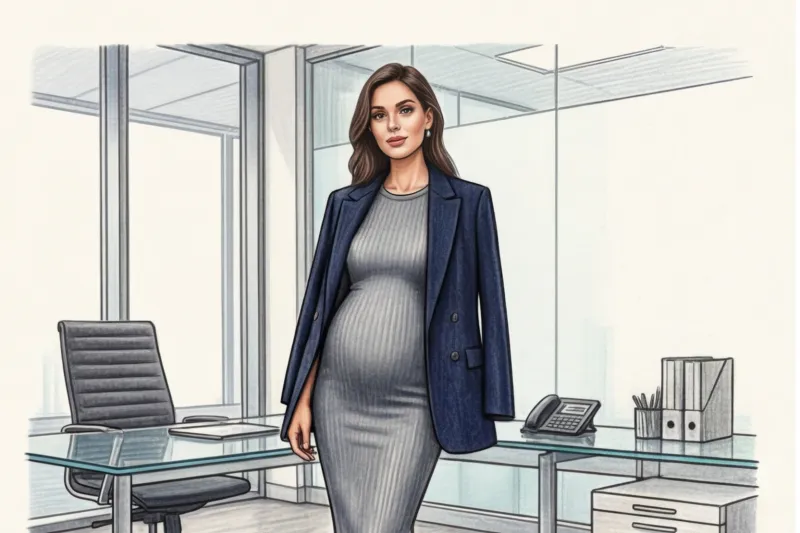
The formula sounds like this: narrow elastic base + structural second layer Wear a fitted knit midi dress with a classic men's blazer or straight coat, leaving it unbuttoned. The unbuttoned jacket creates two distinct vertical lines that visually trim away excess width at the sides and elongate your height.
During this period, the focus should shift to the portrait area. Statement vintage earrings, a silk scarf around your neck, perfect hairdo, and well-groomed skin will convey your status far more than the logo on your bag. If in doubt, How to correctly place accents on your face I recommend studying the rules for combining accessories in the portrait area.
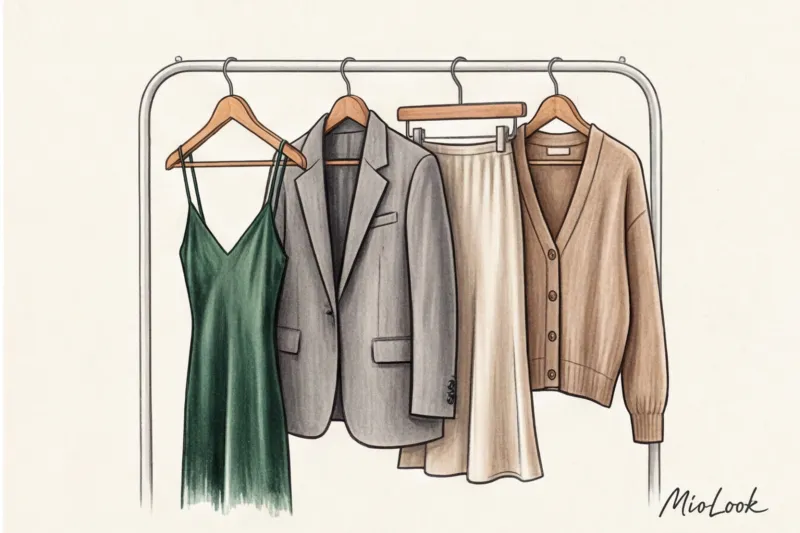
Checklist: 6 common things that will work brilliantly for all 9 months
To make it easier for you to take stock before you go shopping, I've compiled a list of six basic wardrobe items that will cover 90% of your needs:
- Slip dress (bias cut). Look for a thick silk that will glide smoothly over your figure.
- Men's shirt made of thick cotton. Order 1-2 sizes larger than your pre-pregnancy size. Wear loose or tie in a knot above your belly.
- Ribbed knit midi dress. The secret is in the presence of 2-5% elastane for shape “memory”.
- Suit palazzo trousers. With elastic at the back or low-rise fit under the belly.
- Structured elongated blazer. Wear it strictly unbuttoned to create vertical lines.
- Pleated skirt with elastic waistband. It stretches brilliantly in width, while maintaining the graphic nature of the folds.
Before you go to the store, upload photos of your items to the app MioLook Artificial intelligence will help analyze your current wardrobe and show you which jackets and dresses you already own can be styled to complement your new figure.
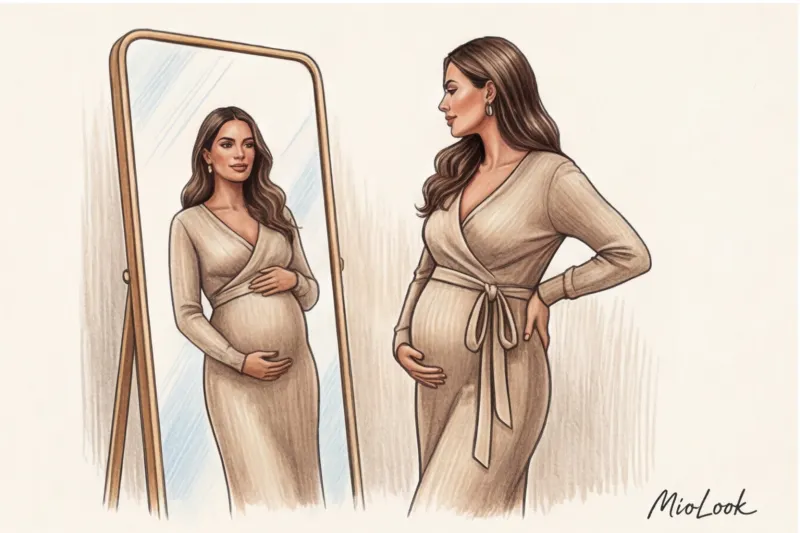
Stylist's Summary: Your Style Is More Important Than Your Temporary Size
Pregnancy isn't a reason to put your personal brand on hold. It's the perfect time to reassess your relationship with clothes and learn to appreciate architectural cuts, quality fabrics, and flawless lines. Invest in premium materials and smart silhouettes, not cheap, throwaway pieces with tags.
A woman's body changes, but your taste remains the same. And remember: you don't have to hide in shapeless fabrics. You have every right to look luxurious, modern, and completely your own style, no matter what month you're pregnant.