Why "quick hairstyles for moms" are primarily about hair health
I remember how, four months after my daughter was born, I glanced in the hallway mirror and froze: my once-thick mane had turned into a dull, thinning mass, and a frightening short fuzz had formed along my hairline. And you know what my daily solution was? I simply tied all this splendor back with a tight elastic band at the crown of my head, because it was faster that way. When we search quick hairstyles for moms We usually think solely about saving time. But after 12 years of working as a stylist and studying the structure of hair fiber in depth, I've learned a hard lesson: speed of styling shouldn't come at the expense of damaging your hair's health.
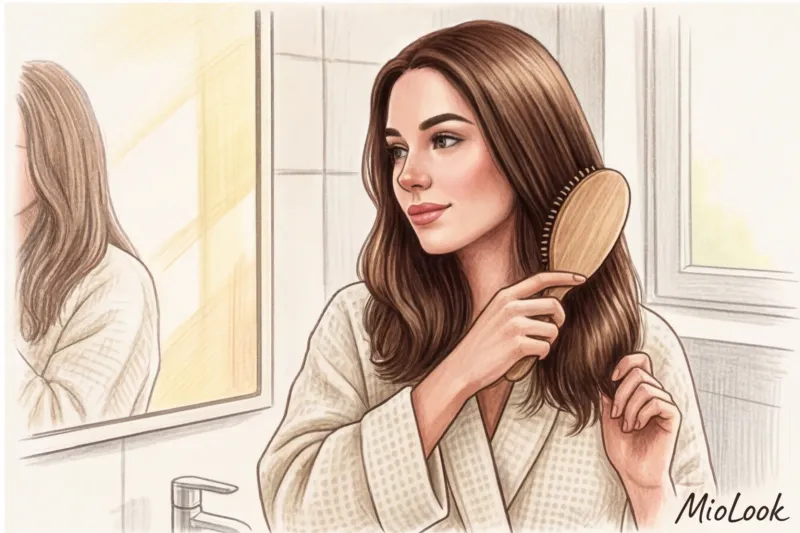
According to the American Academy of Dermatology (2023), up to 50% of women experience intense postpartum hair loss, a condition known in trichology as Telogen Effluvium Let's examine the physics of this process. During pregnancy, skyrocketing estrogen levels artificially prolong the anagen (active growth) phase. Your hair literally "freezes" in its prime, not falling out at the expected time. However, after childbirth, hormonal levels plummet, and a huge percentage of follicles simultaneously enter the telogen (resting and shedding) phase. After 3-4 months, that dreaded "hair loss" begins.
It's during this vulnerable period that a complete lack of time forces us to make fatal mistakes in our hair care. One of my clients told me how she brushed her wet hair with a hard plastic brush for 30 seconds while her baby cried in a bouncer. This is a recipe for disaster. A wet hair shaft, deprived of the protection of sebum, can stretch to 30% of its original length, as the hydrogen bonds within the cortex are broken at this point. If you apply brute physical force, the cuticle (the top scaly layer) is irreparably damaged. The result is massive breakage along the entire length. If you doubt the safety of your basic habits, I strongly recommend studying the material on How to wash your hair properly.
During the first year of motherhood, your primary self-care goal is not to maintain your pre-pregnancy habits but to adapt to the new reality. Hair health and integrity are now more important than complex hair shapes.
A focus on minimizing mechanical damage should be the foundation of your new beauty routine. Investing in a proper silk scrunch or safety clip for €15–25 will pay for itself many times faster than expensive salon treatments to restore lost follicles. In the app MioLook We regularly select express styling algorithms for our clients that are based on the principle of careful handling of texture, and competent leave-in hair care helps protect strands from friction throughout the day.
The Mommy Bun Myth: Why It's Ruining Your Hair
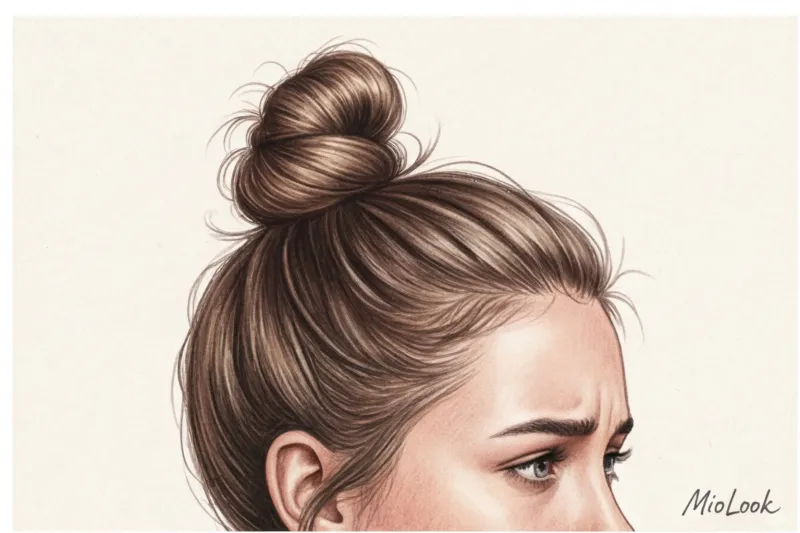
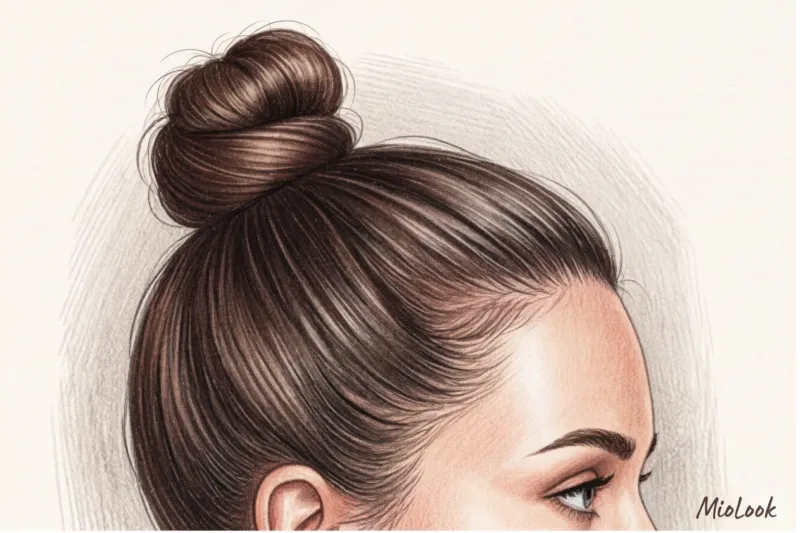
Let's be honest about the biggest "offender" in every other new mother's arsenal. A high, messy, tightly pulled-back bun seems like the perfect solution: the hair is out of the way, the neck is exposed, and it only takes five seconds. But from a biomechanical perspective, it's a real time bomb.
When you pull a mass of hair with an elastic band at the same point day after day, chronic tension (traction) occurs. The follicle experiences constant microstress, and blood circulation around the bulb is disrupted. In medicine, this phenomenon is called traction alopecia With systematic tension, the hair follicle gradually becomes depleted, and the follicle opening becomes scarred. Hair may never grow back in this area—this is how bald spots form at the temples and along the hairline.
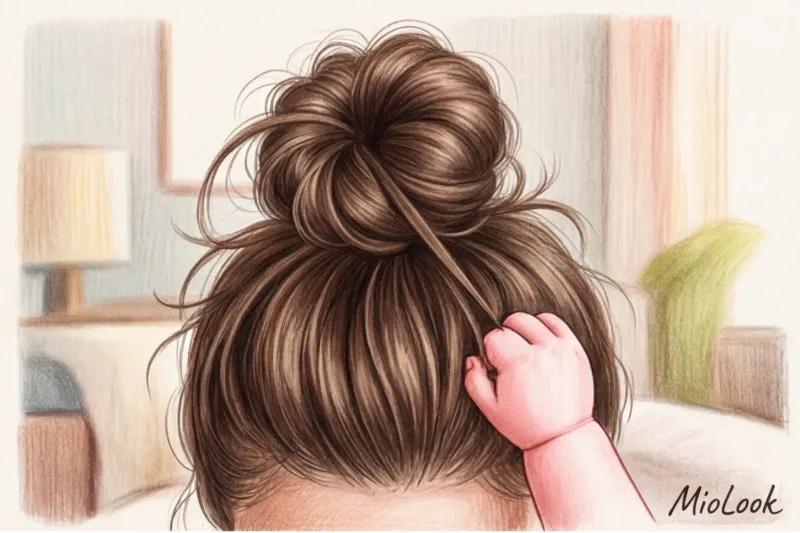
Our children make the situation catastrophically worse. You've probably noticed how babies aged 6 to 10 months instinctively love to grab hold of their mother's hair. Your high bun is the perfect, tight target for their clinging fingers. The child yanks sharply at the braided structure, and the full force of this tug is transmitted directly to the weakened roots. This causes deep microtrauma to the scalp and literally rips hair from the follicles, which are already in the unstable telogen phase.
But even more frightening is the habit of sleeping with your hair in that same bun. "I'm so tired by the evening that I just fell into bed without taking my hair down"—I hear this phrase constantly during consultations. We toss and turn reflexively while sleeping. The harsh friction of the cotton pillowcase combined with the tension from the elastic band acts like sandpaper, fraying the hair shaft. In the morning, you take off your bun and see broken ends stuck to the elastic band. Giving up this destructive habit is your first and most important step to healthy hair while on maternity leave.
Basic Beauty Routine: How to Wash Your Hair Less and Still Look Well-Groomed
Did you know that daily cleansing of hair thinned after childbirth increases hair breakage by almost 20%? According to trichological studies, harsh surfactants in shampoos strip away not only urban dust but also the natural lipid mantle. As a result, we get caught in a vicious cycle: the scalp becomes stressed, starts producing sebum at double the rate, the roots get dirtier faster, and we shower again.
For a new mom, adjusting the frequency of hair washing isn't just a way to save 40 minutes of precious time, but a necessary step to restore the hydrolipidic balance. A physiologically healthy scalp requires 3 to 4 days for a complete lipid barrier renewal cycle. To smoothly increase the interval between washes, I recommend gradually shifting the schedule—adding one day every two weeks. Yes, your roots may feel stale for the first few days, but your sebaceous glands quickly adapt to the new, more gentle regimen.
You can retrain your scalp in just a month if you stop drying it out with harsh cleansing and volumizing sprays. Your hydrolipid barrier is your follicles' main protector.
Of course, during this transition period (and beyond), it's tempting to reach for the "magic wand" of aerosol dry shampoo. But let's carefully read the ingredients on the back of the can. In 90% of cases, you'll see isobutane, propane, and Alcohol Denat (denatured alcohol). The damage of aerosol dry shampoos containing alcohol on thinning hair is catastrophic. Alcohol acts as a solvent—it literally draws the remaining moisture from the cuticle, making the hair shaft as brittle as dry autumn glass. With regular use, the area where the spray is applied (usually the crown) causes hair to break right at the root, creating a dandelion effect.
Over the course of my practice, I've helped dozens of clients with sensitive scalps find safe alternatives to mass-market products. Eco-friendly alternative powders based on rice starch and arrowroot have been a real revelation for many. In 2022, I switched most of my clients to them, and the results are amazing: itching is completely eliminated, flaking disappears, and volume lasts longer.
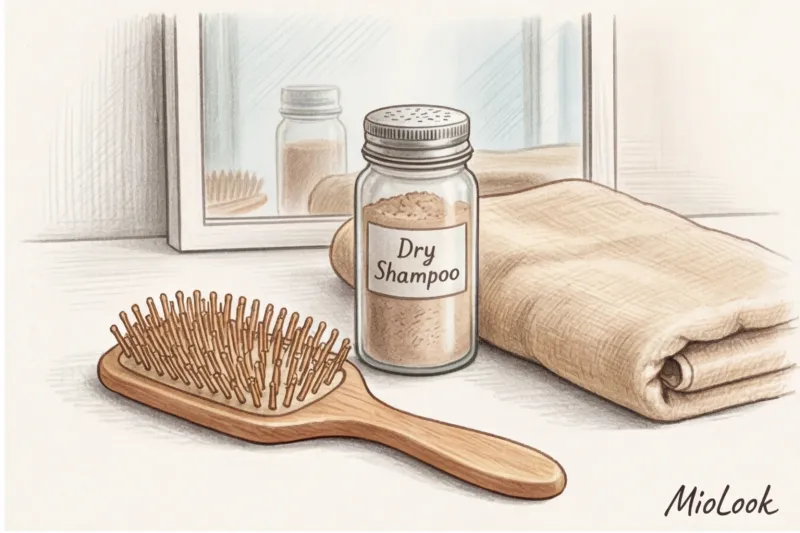
Arrowroot is a natural absorbent that soaks up excess sebum without disturbing the skin's microbiome. Using this powder may be a little unusual, but the process is simple:
- Apply a small amount of powder to your fingertips or a wide makeup brush.
- Using light patting movements, distribute through the partings.
- Critical step: Leave the product for 3-5 minutes to allow the starch to work.
- Comb your hair thoroughly with a mixed bristle brush.
The cost of a good organic powder ranges from €15–€35, but a jar lasts at least six months, as the product does not contain a propellant and is applied in microdoses.
Access to MioLook for €0.99 — one-time payment
A smart AI stylist will select the perfect look for every day, taking into account your time and wardrobe.
Get access — €0.99 onceNighttime care that works while you sleep
Sleep is perhaps the only time a new mother can hold her baby and allow her cosmetics to work undisturbed. And a successful nighttime skincare routine begins not with jars, but with textiles.
The benefits of silk pillowcases have long been proven by dermatologists, but for hair, they're a real game-changer. Traditional cotton is an excellent absorbent. It literally draws moisture from the hair cuticle overnight, and its rough texture creates microfriction. When you toss and turn in your sleep, the cotton fibers catch on the hair cuticle, causing split ends. Natural silk (ideally Mulberry, 19-22 mm thick, costing between €40 and €70 per pillowcase) ensures smooth sliding. The difference in friction coefficient is dramatic: reduced friction and retained moisture in the cuticle allow you to wake up without tangles at the back of your head.
The second essential step in your evening routine is applying lightweight, leave-in serums to your ends before bed. Look for ingredients such as squalane, jojoba oil, or ceramides. Apply just a pea-sized drop to damp or dry ends. Overnight, the lipids penetrate deep into the hair structure, sealing microdamage. Unlike morning application, nighttime use eliminates the risk of overloading your hair before bed.
And finally, the simplest trick that will transform your messy head into neat texture. A nighttime braid, as a way to get a finished style in the morning without heat tools, is the foundation of many quick mom hairstyles. If you create a loose French braid from the nape of your neck onto slightly damp hair and secure the end with a soft, silky scrunch, you'll have the perfect base in the morning. All you have to do is let your hair down, fluff the roots with your fingers and a drop of arrowroot powder, and your soft, natural beach waves are ready. No curling irons, no hot air, and no wasted 20 minutes in front of the mirror.
Quick Hairstyles for Moms: 5 Safe Options in 3 Minutes
"Babies have an uncanny ability to find the most vulnerable strand near their face and pull it with the force of a weightlifter." This is a joke from one of my clients, but there's a frightening amount of truth in it. When we style our hair every day, we often act automatically, forgetting that the geometry and physics of styling directly affect the thickness of our hair. Ideal quick hairstyles for moms must pass a strict three-criteria filter.
Firstly, it's absolutely safe for the mother – there's no tension at the roots, so as not to provoke traction alopecia. Secondly, it's out of reach of baby's clinging fingers (no loose front strands during the period of active exploration). Thirdly, the hairstyle leaves no structural kinks in the hair after being let down. As a stylist, I always say: kinks are a microtrauma to the cuticle, which over time will lead to split ends.
Let's look at five basic algorithms that take minimal time but save the quality of your hair. If you want to integrate them into your personalized care plan, I recommend checking out MioLook — there we help you sync your choice of hairstyles with your face type and wardrobe.
1. Topsy Tail Technique
This is a genius, simple way to look elegant without the hassle. Gather your hair into a low, very loose ponytail at the nape of your neck using a silk elastic band. Then, using your fingers, part your hair in half just above the elastic band, creating a "window," and pull the entire ponytail through it from top to bottom. The result? An elegant bun that visually resembles an intricate updo. The key: the weight is distributed across two twisted sections, and the elastic band itself doesn't compress the hair shaft, completely eliminating kinks.
2. Low loose bun with U-shaped pins
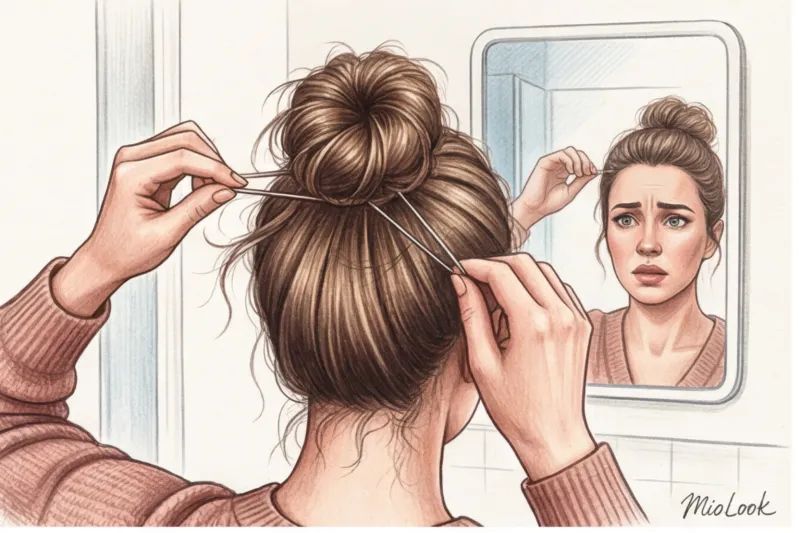
Forget about tight hair ties. The design of a proper bun is based on hold, not constriction. Gather your hair into a low ponytail with your hands (without an elastic), twist it loosely into a rope, and create a spiral at the nape of your neck. Instead of dozens of small bobby pins, use one or two large U-shaped bobby pins (French pins). The ideal pin is 10–13 cm long. Insert it with the teeth facing upward, catching the edge of the bun and the hair near the scalp, then flip it over and push it through. The bun will stay in place all day thanks to the intertwining of the strands, and in the evening, you'll unravel beautiful, soft waves.

3. Lazy braid
While a classic braid requires skill and time, a twisted braid takes just 40 seconds. Divide the low ponytail into two sections, twist each section to the right, and then intertwine them to the left. The different directions will prevent the braid from unraveling. Secure the end with a soft elastic band. This style keeps the hair as close to baby's arms as possible and protects the ends from chafing against clothing.
4. Silk ribbon knot
When you need to quickly transform a casual look into something suitable for a Zoom call or a trip to a cafe, gather your hair into a low ponytail, secure it with a headband, then fold the ponytail in half (with the ends facing the back of your head), and wrap the headband around the resulting loop. Natural silk has a coefficient of friction of almost zero, so the cuticle remains closed and smooth.
The right "crab": salvation without damage to the structure
The fifth, and perhaps most popular, tool in the arsenal of new mothers is the claw clip. However, there's a major problem here. Standard plastic clips from mass-market stores, with their sharp, uneven teeth, literally saw through hair.
Every time you lean back in a chair or sofa with a cheap plastic clip on your head, its sharp edges, under pressure, pierce the lipid layer of your hair. Furthermore, fragile plastic often has seams from the casting that can catch and break strands. A good clip is an investment that will cost you around €15–€30, but will save you hundreds of euros on restorative masks.
How to choose a safety clamp:
- Material: Look for cellulose acetate (an eco-friendly plastic used to make high-quality eyeglass frames) or dense matte rubber. They're flexible and perfectly smooth.
- Teeth shape: The ends must be rounded, polished, without a single burr.
- Size: The crab should capture the entire volume of hair, without requiring preliminary tightening with an elastic band.
French Twist Technique in 30 Seconds:
To prevent the hairpin from pulling your hair down and causing headaches, use proper weight distribution. Gather your hair at the back of your head with your hand. Begin to tightly twist it into a roll, simultaneously lifting it up along your head. Once the roll is tightly against the back of your head, fold the loose ponytail in half and tuck it inside the resulting "roll." Now comes the most important part: open the hairpin wide and grab the entire roll so that the teeth touch your scalp and close on the other side of the roll.
In this position, the clip doesn't hold a single strand, but distributes the weight of the entire hair mass evenly across the back of the head. This ensures that your roots don't hurt by evening. More safe everyday styling options can be found in in our application , adjusting the filters to your length and thickness.
Smart Accessories: What Should a New Mom Invest in?
We can regularly buy premium restorative masks for €80, but all their benefits are instantly negated by one unfortunate swipe of a cheap rubber band. According to a 2023 report by the Institute of Trichology, up to 60% of cases of acquired hair breakage in postpartum women are associated not with vitamin deficiency, but with regular mechanical damage from improperly selected hair clips. When the body's resources are already depleted, minimizing external trauma to the cuticle becomes a top priority.
Hair Guillotine: The Dangers of Metal Staples
If you still have those basic, thin rubber bands with a metal clip in your makeup bag, throw them in the trash right now. The metal clip acts like a miniature guillotine. When you pull one of these bands (especially in a hurry, with one hand while the other is busy with your baby), hairs inevitably get caught in the tight micro-gaps between the metal and the elastic base.
What happens next? When you remove the elastic, a micro-tear occurs in the cuticle, causing the hair to break off exactly halfway down. Replace them with seamless, dense microfiber alternatives. Yes, they stretch and lose their shape faster, but at least they never cut the hair shaft.
Keratin Affinity: Why Mulberry Silk?
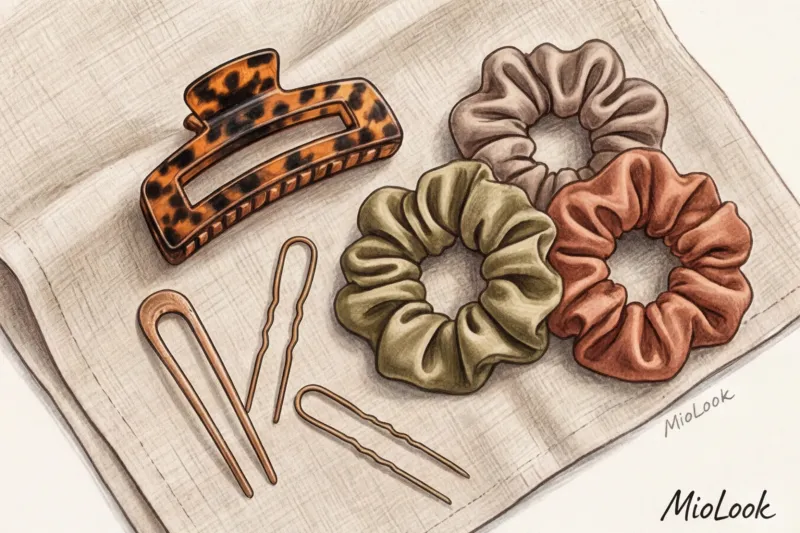
A true game-changer for creating safe quick hairstyles for moms These are silk scrunchies (bulky elastic bands) made exclusively from natural Mulberry silk. Let's take a closer look at the physics of the process.
Regular cotton and inexpensive synthetics have an extremely high coefficient of friction. Under a microscope, cotton fiber looks like rough sandpaper. Furthermore, cotton is highly hygroscopic—it literally draws natural moisture from the hair shaft. Mulberry silk operates on a completely different principle. Its thread is completely smooth, and the silk proteins (fibroin and sericin) are 97% similar in amino acid composition to the keratin found in human hair.
When removing the silk scrunchie, the coefficient of friction approaches zero: the fabric delicately glides over the cuticle, gently smoothing the keratin scales, rather than lifting them against the direction of growth.
A high-quality 19-22mm scrunchie will cost between €15-€30, but this is a small investment that dramatically reduces the need for frequent trims. Just be sure not to confuse natural silk with polyester satin, which has a shiny appearance but can static and is impermeable.
Access to MioLook for €0.99 — one-time payment
Start creating perfect images with the help of artificial intelligence
Get access — €0.99 onceWood Magic: Static and Microcirculation
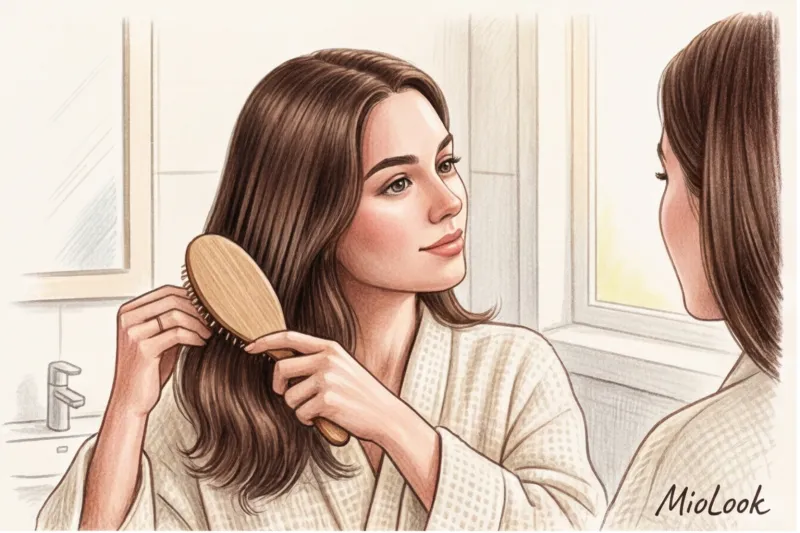
Finally, it's important to reconsider your daily brushing tools. Plastic brushes with hard, cast-in teeth and sharp seams are the number one enemy of thinning hair. An alternative I recommend considering is classic, wide-toothed wooden combs carved from solid sandalwood, ash, or beech.
Wood fundamentally does not accumulate static electricity. It is static electricity that causes hair scales to bristle, causing strands to catch and break. Furthermore, the rounded wooden teeth provide a gentle, non-traumatic scalp massage, stimulating blood flow to the follicles without the risk of micro-scratches on the sensitive scalp.
In the appendix MioLook When we help clients develop a smart wardrobe, we always emphasize: quality basic accessories are the foundation. A good hand-polished comb costs around €20–40, but it allows you to safely distribute natural sebum throughout your hair, creating a natural protective barrier.
Integrating care into life with a baby: multifunctionality
According to the analytical agency WGSN (2023), the global trend toward sustainable development in the beauty industry has radically changed consumer habits: today, 68% of women consciously reduce the number of products on their bathroom shelves. When a baby arrives, this eco-friendly approach ceases to be just a trendy concept and becomes a harsh necessity. This is where Multitasking beauty — a philosophy of using one quality product to meet several basic needs at once.
"Minimalism in cosmetics reduces the risk of contact dermatitis in both mother and baby. The fewer different formulas that come into contact with your skin and hair, the lower the likelihood of a cross-allergic reaction during close physical contact with your baby," note experts from the European Society of Contact Dermatitis (ESCD).
When creating quick hairstyles for moms, we often encounter the problem of frizzy, dry ends that make even the most carefully styled hair look untidy. Instead of buying specialized silicone serums, consider universal organic conditioners. Products based on unrefined shea butter, squalane, lanolin, or beeswax are excellent for both intensively nourishing dry areas of mom's skin (like elbows or cuticles) and protecting the hair structure.
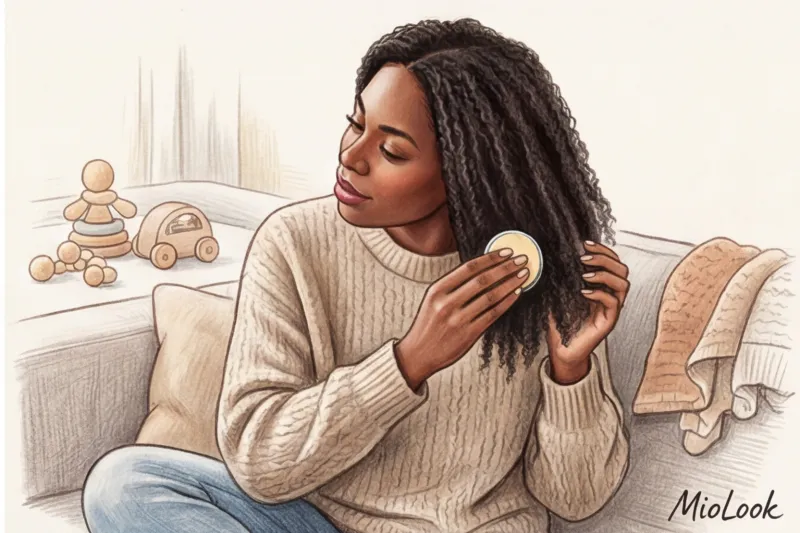
The steps are minimal: rub a pea-sized amount of the product between your palms, apply it to dry areas of your body, and use the microscopic residue on your fingers to lightly smooth the ends of your hair before tying it into a low ponytail or bun. A high-quality, pure, multi-purpose conditioner typically costs between €20 and €40, but it's worth the effort of three or four plastic bottles.
Another revolution in time optimization is the transition to solid shampoo bars In terms of safety around newborns, this is one of the best choices on the market today. Unlike liquid alternatives, solid formulas do not contain water, meaning they don't require harsh preservatives (such as parabens) to inhibit bacterial growth. Furthermore, they are simply safe to use around newborns: a curious toddler won't accidentally spill or swallow the foaming liquid during bath time.
Let's be honest: solid shampoos require a certain adaptation period. Due to the lack of harsh surfactants, they don't produce the thick lather you're used to from the first wash. However, my client Anna recently shared a telling story: after a month of using a solid shampoo made with mild coconut sulfate (SCS), her hair stopped frizzing at the roots, and the interval between washes increased by a day. A bonus was that it's completely eco-friendly (paper packaging) and incredibly cost-effective—one bar, costing around €15, fully replaces up to three standard plastic bottles.
Forming such a minimalist base requires a thoughtful approach. In our application MioLook We help our clients create not only a smart wardrobe but also a compact beauty capsule where care and style work in tandem, freeing up precious time for more important things.
Checklist: An Overview of Accessories for Quick Hairstyles
Right now, I suggest putting theory aside and conducting a practical audit. Go to the mirror and empty the contents of your basket of styling tools onto the table. My experience as a stylist shows that 80% of these items sit there for years, simply being used out of inertia. They are the ones that often sabotage your attempts to create a gentle and beautiful hairstyle. Let's stick to the bare minimum that actually works to preserve the hair's structure.
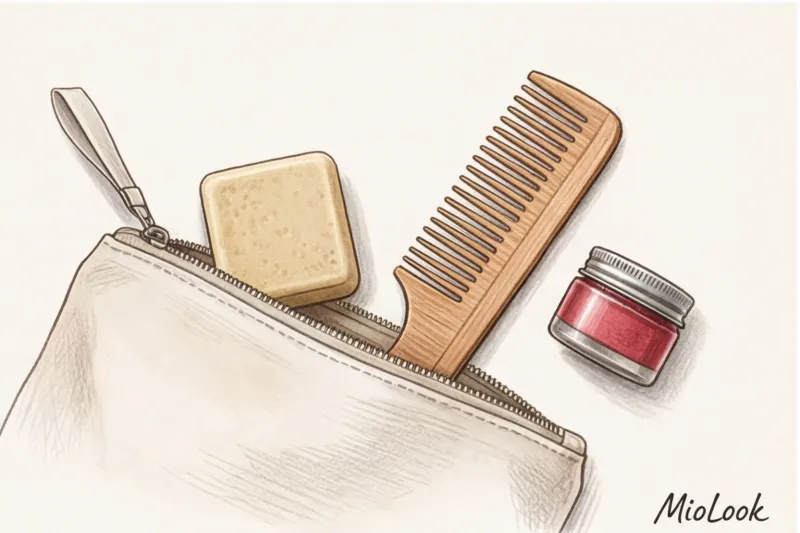
What you need to ruthlessly remove from your makeup bag:
- Hard combs. If the protective massage balls on your brush's plastic bristles have come loose, throw it away immediately. It causes micro-scratches on the epidermis and tears thinning strands.
- Tight elastic springs. Contrary to marketing myths about their safety, these silicone coils become entangled in the fine hair (baby hair) that grows back en masse during the postpartum recovery period.
- Aggressive styling. Extra-strong hold hairsprays and thick mousses contain denatured alcohol (Alcohol Denat) as the top ingredient. They draw moisture from the cortex, turning hair into brittle straw that breaks at the slightest tension.
What needs to be added to the basic routine:
- 2-3 silk scrunches. A basic set (for example, one large one for home and a couple of mini versions for outdoors) will provide a soft hold without pinching.
- Quality crab. Look for products made of smooth cellulose acetate rather than molded plastic with rough seams on the teeth. A decent clip usually costs between €15 and €30, but it will last for years and distribute the weight of your hair evenly.
- Dry shampoo powder. A great alternative to aerosols. Life hack: apply this powder directly to your partings with a fluffy makeup brush—it will add volume without drying out your scalp.
Finally, a critical point - checking the length and shape of the haircut Many young mothers desperately cling to their hair length out of fear of change, ignoring the natural process. Thinning, split ends constantly tangle, requiring aggressive brushing and pulling.
Recently, I had a client who spent every morning frustratingly trying to tie her porous hair into a neat bun. We decided to remove 5 cm of dead volume and create a tight, even blunt cut. This step dramatically changed the situation: the thickness of her hair doubled, and her "quick hairdos for moms" took exactly one minute instead of fifteen. Removing excess dry mass from the ends is the most reliable investment in saving your time.
If you're unsure whether to update your shape, you can virtually try on the new length using algorithms. MioLook - this will help you assess how a fresh cut will balance the proportions of your face without any real risks.
Your ideal image
it begins Here
Join thousands of users who look flawless every day with MioLook.
Get access — €0.99 onceConclusion: Self-care without guilt
Have you ever noticed how the industry often sells us two polar, equally destructive images of motherhood? At one extreme is a perfectly coiffed woman in cashmere, as if she stepped off the cover of a glossy magazine; at the other, a tired mother who has completely forgotten about herself. The truth, as always, lies in the middle, and finding this balance is often hindered by the notorious feeling of guilt. According to the Institute of Perinatal Psychology (2023), over 68% of new mothers experience underlying anxiety when spending time or money on personal care. We readily fork out €50 for a new developmental mat for a baby, but hesitate to invest €30 in a safe silk scrunchie for ourselves.
Let's set the most important rule of the new routine once and for all: beauty shouldn't require hours in front of the mirror, which is something your mom doesn't have. I constantly remind my clients that if your basic daily styling takes more than four minutes, it's not because you're disorganized, it's simply because your beauty routine is ineffective. Ditch complicated braids and heat treatments in favor of a smart base that can be created in just a few swipes.
The second, and perhaps most difficult, psychological step is accepting the new textures and conditions of your hair as part of a natural journey. After childbirth, hormonal fluctuations dramatically alter the structure of the follicle. Your once perfectly straight locks may begin to frizz and curl, and your thick locks may begin to thin. In addition, so-called "mummy hair" (short hairs growing back along the hairline where they once fell out) inevitably appears, sticking out in all directions.

Instead of slathering that fuzz with harsh hairspray or straightening it with a 200-degree iron, trying to force your way back to your pre-pregnancy self, change your tactics. My favorite life hack for such situations: use a clear peptide-infused brow gel. One swipe of the brush will tame those unruly baby hairs around your face without damaging their growth or leaving you with a messy look.
Your new stylistic compass focuses on quality materials and health as the foundation of style. This is where the "less is more" principle works flawlessly. Smooth Mulberry silk pillowcases, carefully polished eco-friendly plastic for safe hair clippers, and natural root powder work passively for you, keeping your cuticles tight and moisturized even when you're busy with your child.
To completely relieve yourself of the burden of daily morning decisions, I recommend digitizing your routine. By uploading your current accessories and favorite quick-fix options to MioLook app , you can create ready-made looks in seconds. A smart algorithm will help you find harmonious clothing combinations and quick styling tips that you can easily bring to life with your toddler on your hip.
"Self-care while on maternity leave isn't a marathon to restore your old self. It's a careful introduction to your new self: busier, but also wiser in choosing what really works."
Your micro-step for today: Give your makeup bag a "date with reality." Put away curling irons, heavy styling tools, and hard brushes—their presence in plain sight only makes you feel guilty about not using them. Keep exactly three things on your counter: a high-quality, well-shaped curling iron, a silk elastic band, and a soft wooden comb. Quick mom hairstyles aren't a compromise. They're a sign of deep respect for your time and the body that just completed the hardest work in the world.
Guide Chapters
A neural network will help mothers on maternity leave choose a haircut based on a photo.
Ready to cut your hair into a boyish style because you're tired? A stylist with 12 years of experience explains how to choose the perfect maternity haircut without tears or regrets.
Comfortable everyday hairstyles for mothers on maternity leave
How to style your hair so your baby can't get to it, and you'll look stylish? We explore safe hairstyles for moms that will protect you from pain and alopecia.
Quick Facial Skin Care: A Beauty Routine for Moms
Forget about lengthy spa rituals. A realistic and scientifically proven beauty routine that will restore a healthy complexion to busy moms.
How to Make a Messy Bun: 3 Ways Without Damaging Your Hair
Tired of pulling your hair tight and losing it due to tight hair ties? A stylist shares three quick ways to create the perfect bun in 45 seconds without damaging your roots.
Multifunctional Cosmetics: Beauty Minimalism for Moms
Tired of spending hours getting ready after having a baby? We'll show you how to pack a minimalist makeup bag so you can look refreshed in just a few minutes.
7 Ideas: Quick Hairstyles for Dirty Hair in 5 Minutes
No time to wash your hair before work? A stylist shares the secrets of Mediterranean women: 7 elegant hairstyles for dull hair in just a few minutes.
No-Styling Haircuts: Top Options for Moms
Cutting your hair short after giving birth is a common beauty mistake. Find out from a stylist which haircuts truly require no styling in the morning.
How to hide dark circles under the eyes: stylist secrets
Heavy concealer only highlights tiredness. Learn a professional makeup technique that will restore your face's freshness after a sleepless night.
Quick 5-Minute Everyday Makeup for Moms
Forget about a long morning routine. We'll show you how a new mom can refresh her face in 5 minutes using multifunctional cosmetics.
5 Quick Hairstyles for Women with Hair Loss
Struggling with postpartum hair loss? A stylist shares 5 safe and quick styling tips to help you elegantly conceal the problem without damaging your follicles.