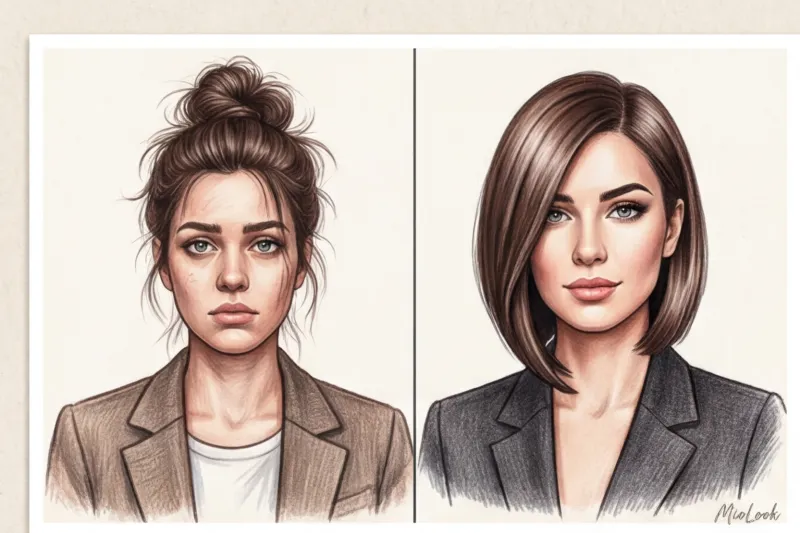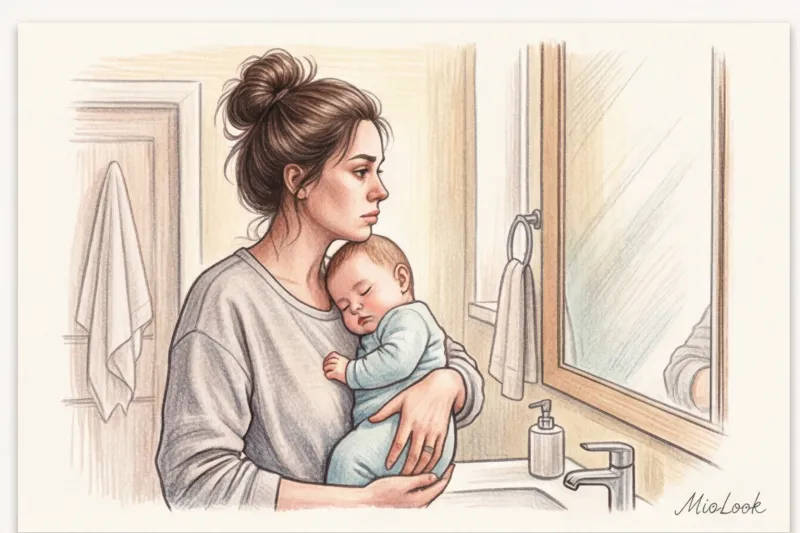
I remember that moment perfectly. It was three in the morning, the baby had finally fallen asleep, and I was looking in the bathroom mirror at my dull bun, which I hadn't unbraided for three days. Only one thought was pulsing through my head: "Tomorrow I'll go and cut it all into a boyish style. It will be comfortable." So I did. And it was the biggest beauty mistake of my entire life.
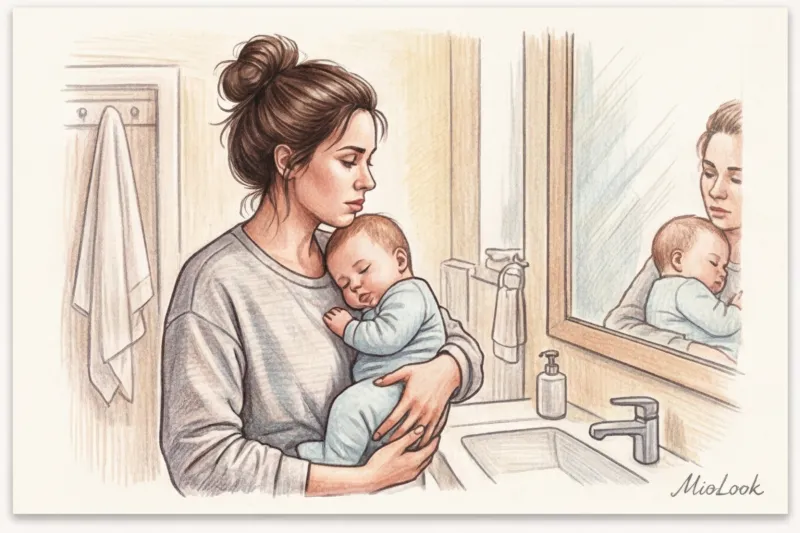
As a stylist and colorist with 12 years of experience, I should have known better. But hormonal fluctuations and chronic sleep deprivation shut down rational thinking. That's why today I implore my clients on maternity leave to leave their hair lengths alone when they're tired. Especially now. Choose a haircut from a photo using a neural network It can be done in just a couple of minutes, saving you from months of growing out an unsuccessful shape.
We've already discussed the physiology of these changes in more detail in our complete guide: Quick Hairstyles for Moms: Hair Health and Beauty And today I'll teach you how to evaluate the results of a virtual try-on, not as an enthusiastic user, but through the eyes of a professional hairdresser.
The "quick fix" trap: why you shouldn't get an impulsive haircut while on maternity leave
The first months of motherhood are a period of total loss of control over your body. Clothes don't fit, your schedule is unpredictable. A haircut seems like the few things we can change in an hour. But this is where harsh physiology comes into play.
According to the American Academy of Dermatology (AAD), approximately 50% of women experience telogen effluvium (TEF) 2-4 months after giving birth. Your usual hair thickness changes before your eyes. That thick fringe you had before pregnancy suddenly turns into three thin strands.
Hair grows at a rate of only 1–1.5 cm per month. If you choose the wrong shape, it will take about two years to grow out a "comfortable bob." Trying on your hair virtually is a game changer—it gives you the dopamine rush of novelty without depriving you of your hair in real life.
Busting the myths: what length is actually the most practical?
The most dangerous and persistent myth of maternity leave is this: "I'll cut it short so the baby won't twitch and it'll be comfortable." Let's be honest. Comfortable for whom? Men who wash their hair with shower gel in two minutes?
"A short, unstyled women's haircut doesn't look edgy; it looks like you just rolled out of bed. And not in a romantic sense of the word."
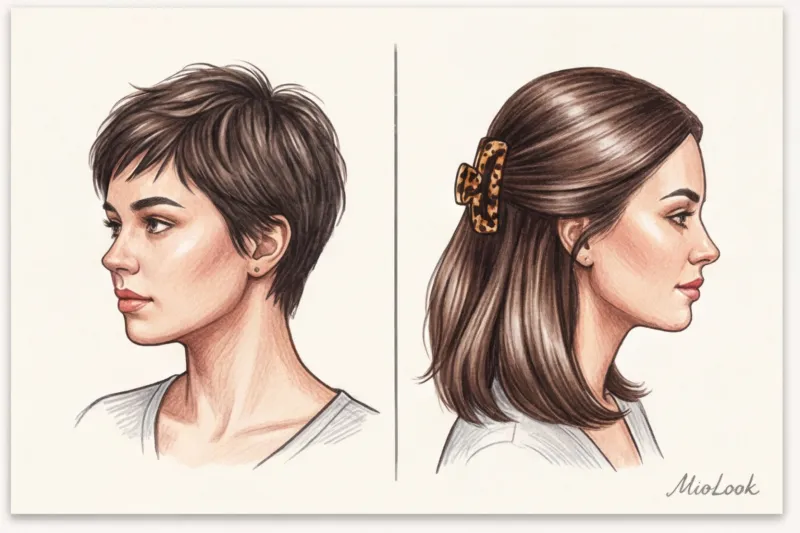
Short hair (like a pixie) doesn't pull down under gravity. It sticks up. To achieve a Pinterest-worthy pixie, you'll need to wash your hair every morning and use a texturizing paste or wax. Do you have an extra 20 minutes for that when your baby is screaming in the bouncer?
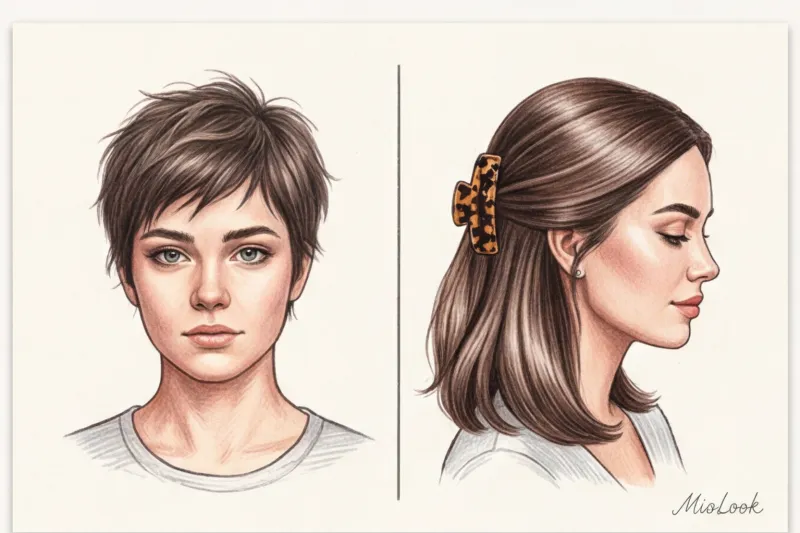
The other extreme is a straight, graphic bob that reaches just below the chin. As soon as new hair begins to grow (that same post-baby fuzz), the bob will begin to frizz at the roots and lose its trapezoid shape.
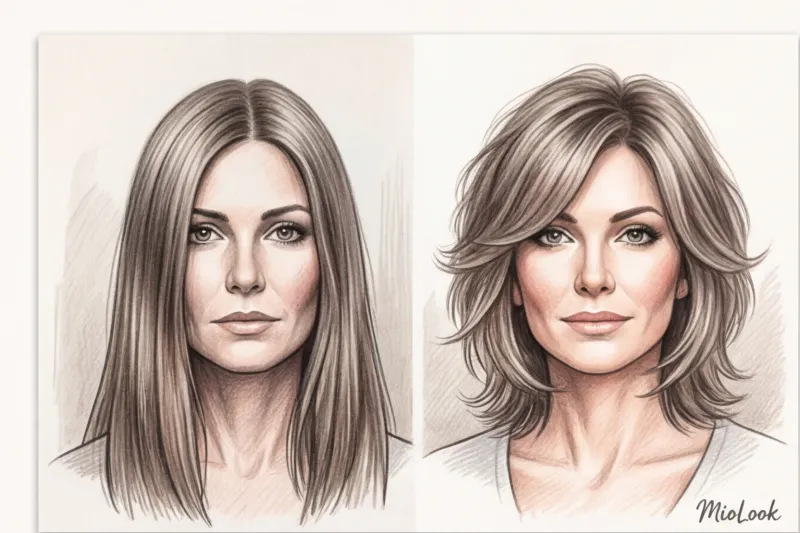
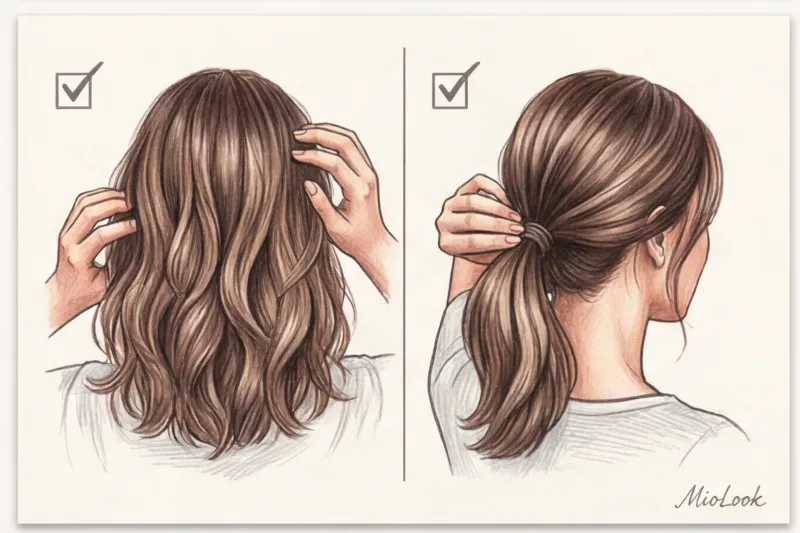
The real salvation, according to the principles of the legendary Vidal Sassoon's haircut architecture, is the length Mid-length (at the collarbone or just below the shoulder blades) with a neat inner cut. Why? The length allows the hair to lie flat under its own weight. And most importantly, you can twist your hair into an elegant crimp in 5 seconds, making it look like a deliberate style.
Your perfect look starts here
Join thousands of users who look flawless every day with MioLook. Preview the length beforehand!
Get access — €0.99 onceHow to choose a haircut from a photo: The MioLook neural network in action
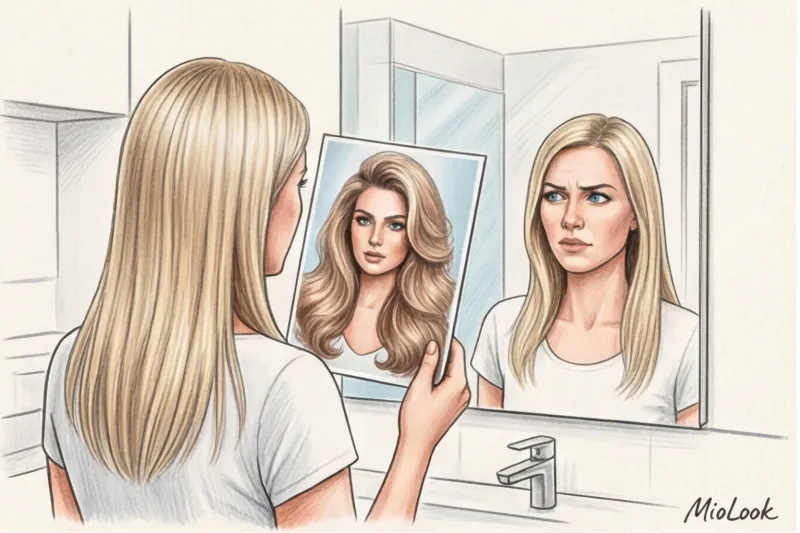
Artificial intelligence can't read minds. If you upload a selfie taken from the bottom up, in a dimly lit hallway, with a big smile on your face, the algorithm will distort your proportions. Your face will appear wider, your chin will appear larger, and you won't like any suggested shape.
To select a haircut from a photo, a neural network MioLook requires the right "canvas".
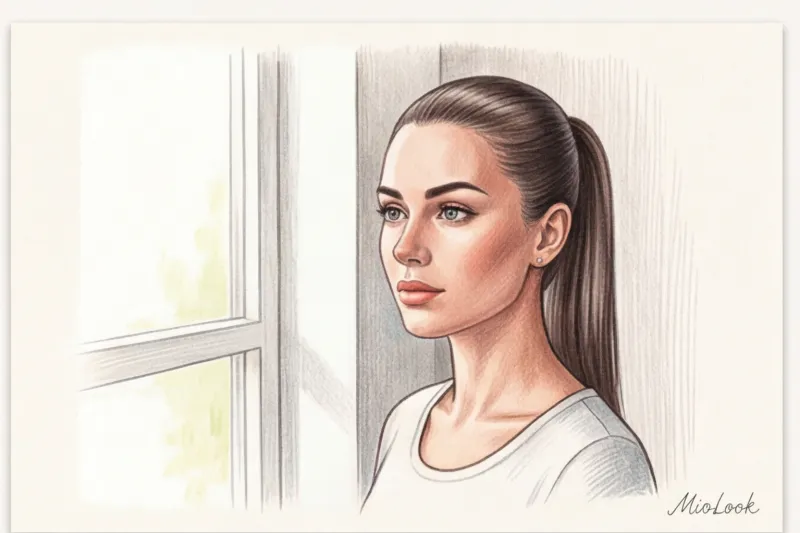
- Light: Only frontal light from the window. No overhead lamps (they create shadows under the eyes, visually aging the face).
- Angle: The camera is strictly at eye level.
- Hair: Comb your hair back smoothly and gather it into a tight ponytail. The neural network needs to see your hairline.
- Makeup: Minimal or no contrast. The algorithm values your natural contrast.
When experimenting with filters, search for "layered haircut," "lob," or "shaggy." Avoid harsh, geometric shapes.
Checklist: How to evaluate generated options
Once you receive a beautiful picture from AI, ask yourself three sobering questions:
- Can I put this hair into a bun in 5 seconds? If the front strands are too short, they will fall out and get into your eyes.
- Does this shape require brushing? Asymmetrical bobs are beautiful, but without a blow-dry they look like uneven ends.
- What will this haircut look like in 3 months without correction? While on maternity leave, going to the salon is a luxury. A good shape should "grow out beautifully."
Haircut Architecture and Face Shape: What AI Is Hiding
The neural network paints an ideal scenario for you. It doesn't know that your hair is porous and frizzes in humidity, or, conversely, glassy and doesn't hold volume. Furthermore, the AI doesn't account for puffiness, which affects 80% of women who have recently given birth.
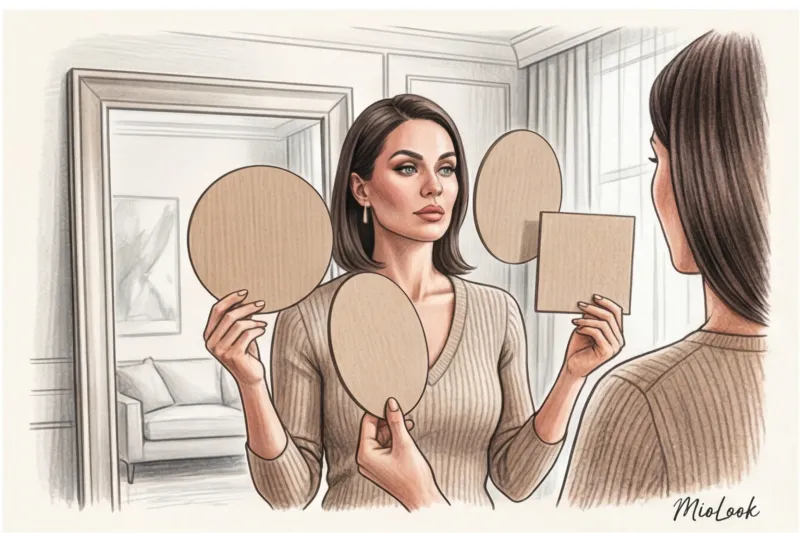
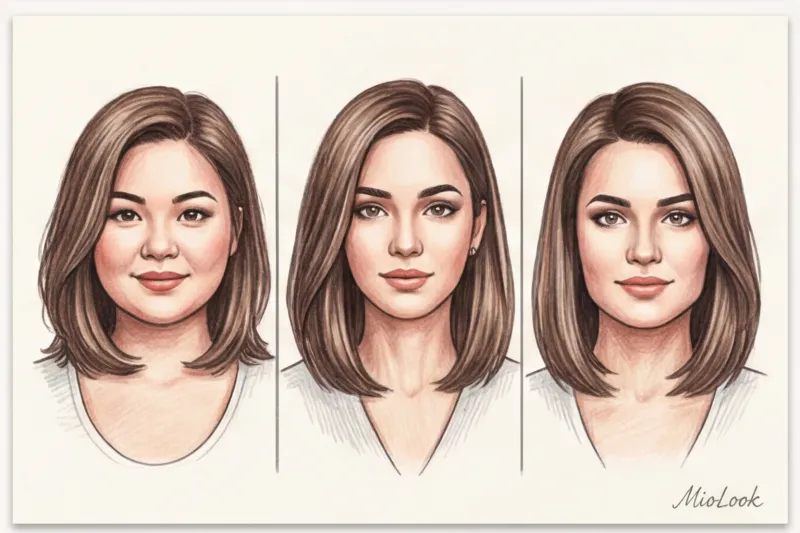
This is where facial analysis comes into play. If your face is currently rounder or puffier due to lack of sleep, you should definitely avoid cutting your hair at cheek or chin level—this will create a visual horizontal line and make your face appear wider. Choose a length below your collarbone in the app.
Bangs are a whole other story. Artificial intelligence loves to add Brigitte Bardot-style curtain bangs. They look incredibly sexy. But in practice, nine out of ten of my clients on maternity leave pin their bangs back with bobby pins by the second week. Why? When you bend over (to feed, lift, or change a child), hair instantly falls into their eyes and mouth. Bangs are a definite no-no, unless you're prepared to style them every morning.
Ready to get started risk-free?
Try the MioLook plan for free—no strings attached. Try on dozens of looks without cutting a centimeter.
Get access — €0.99 onceColor as an illusion of volume: tips from a colorist
A haircut is only half the battle. If your hair has started to thin, the right color can work as an optical illusion. A completely dark color (especially black or cool chestnut) is your enemy during this period. The dense, dark texture contrasts with your fair scalp, and any thinning in the parting becomes visible from a mile away. Plus, dark hair color accentuates dark circles under the eyes.
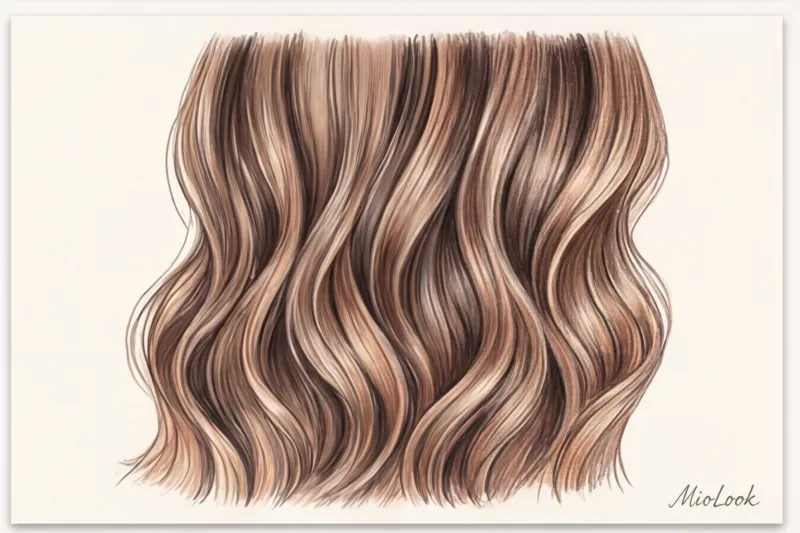
The secret to visual thickness is multidimensionality. Use a neural network to try balayage or contouring (face-framing) techniques. Light highlights visually expand the space, creating a 3D effect on the hair. Yes, a high-quality, complex coloring at a good salon will cost between €100 and €250, but the key is that it grows out completely unnoticeably. You won't have to touch up your roots every month; retouching your color every six months is sufficient.
From Smartphone Screen to Hairdresser: An Action Plan
You've found the perfect image in the app. What's next? Never demand a perfect match from your hairdresser. The neural network generated the image from pixels, while a hairdresser works with living matter.
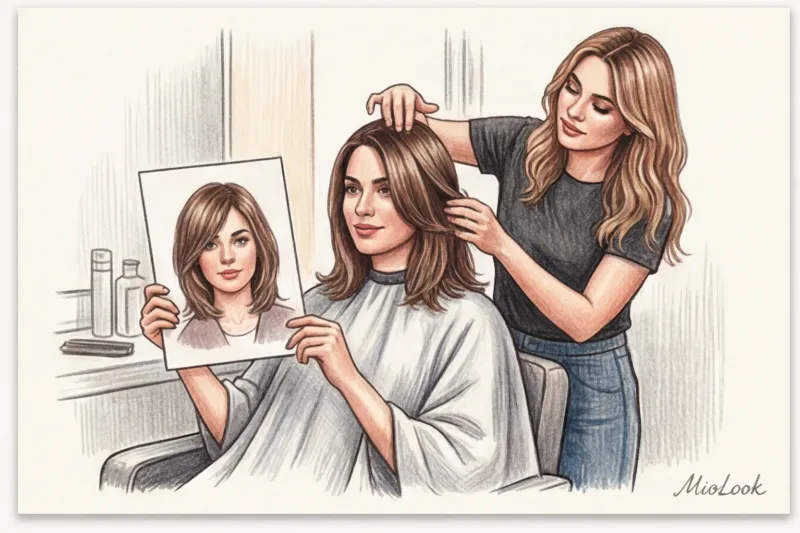
Show the master the result and ask the right questions:
- "Will this shape work with my hair texture if I don't blow dry it?"
- "Will I be able to pull this length into a ponytail?"
- “What will the back of my head look like in 4 months when I can’t come for a correction?”
A smart approach to your beauty routine while on maternity leave isn't about sacrificing beauty for convenience. It's about strategically using technology. Let neural networks make decisions for you on your smartphone screen, so you can enjoy your reflection in the mirror in real life, even if you've only slept three hours.
Try MioLook
A smart AI stylist will create the perfect look for you. Save time and stress while on maternity leave.
Get access — €0.99 once