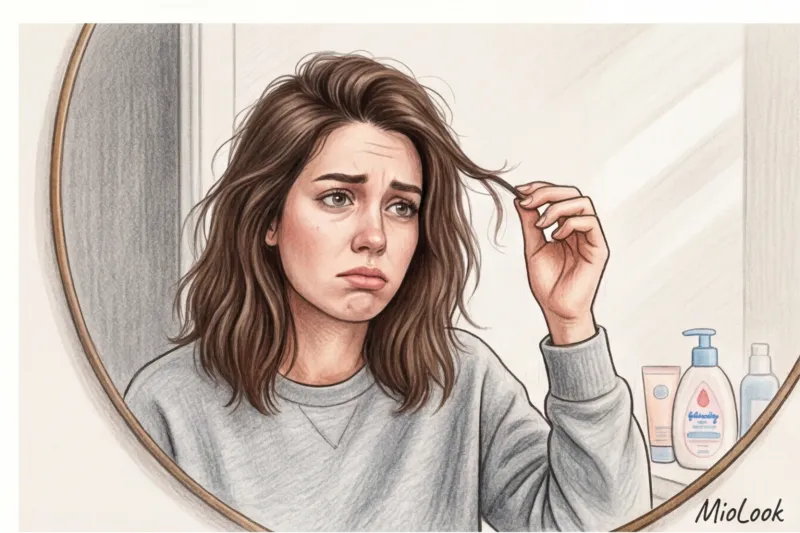
It's a classic scenario I've been observing for years: the baby turns three or four months old, accumulated fatigue reaches its peak, and hair begins to treacherously cling to the brush. At that moment, the new mother experiences an overwhelming urge to go to the salon and chop it all off. It seems that short hair will solve all problems: no length, no worries.
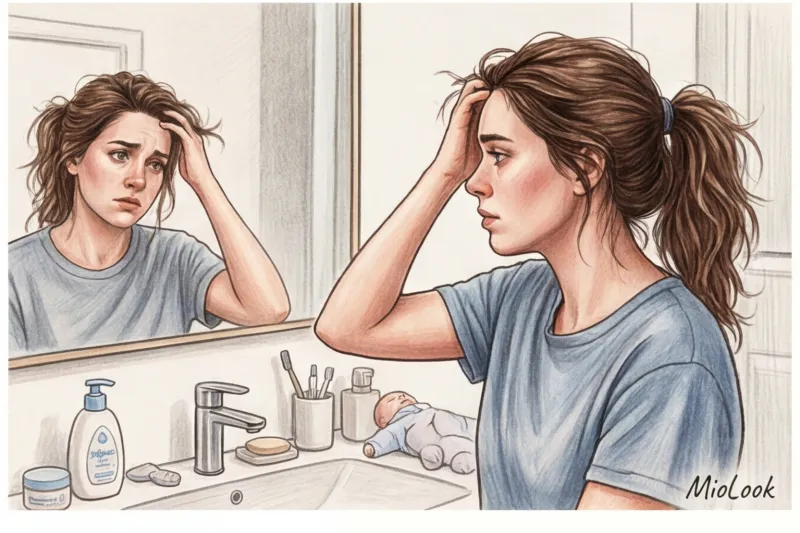
But as a stylist with 14 years of experience, I have to warn you: this is one of the main beauty pitfalls of maternity leave. Often, it's short hair that requires daily washing and the use of texturizing pastes to avoid looking like a dandelion. If your goal is to wake up looking well-groomed, you need haircuts that don't require styling , and this is a concept that is built on correct geometry, and not on an extremely short length.
We have provided more information on comprehensive care and hairstyles during maternity in our complete guide to quick hairstyles for moms Today, I want to debunk the myth that "cutting it short" is the only solution, and tell you how to choose a shape that will work for you, not against you.
The Short Hair Myth: Why a Boyish Haircut Isn't Always the Best Option for Moms
In my practice, eight out of 10 women on maternity leave come to me with the request: "Olena, just cut it all off, I can't take it anymore." I always ask them to wait a week and have a coffee before making a decision. Why? Because a spontaneous pixie cut or an ultra-short bob often leads to tears in front of the mirror the next morning.
When you cut your hair very short, you lose the option of simply putting your hair in a ponytail. Now Necessarily Hair needs to be styled. A short length reveals all the frizz that was previously smoothed out by the weight of the hair. Furthermore, about 50% of women experience telogen effluvium after childbirth—an intense hair loss caused by a sharp drop in estrogen levels. This is normal, but a short haircut will treacherously highlight thinning hair at the temples and the new fluff sticking out along the hairline.
"Aggressive, quick styling of short hair with a blow dryer and brush daily damages already weakened follicles. You're trying to save time, but end up wasting it fighting unruly strands."
Short haircuts that require no styling exist, but they only suit women with ideal hair thickness and a specific growth direction. For most, the key isn't the length, but the right cutting technique.
The Anatomy of a Smart Haircut: How Geometry Replaces Brushing
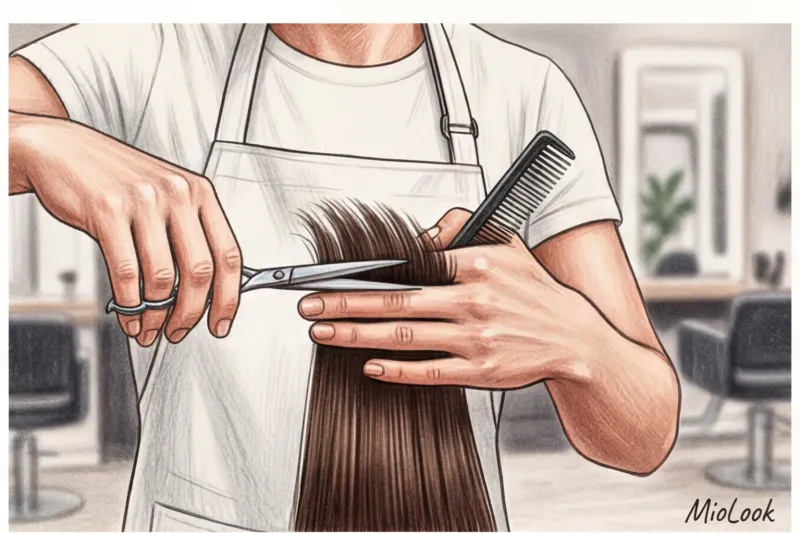
Let's talk about the physics of hair. The concept of a haircut that lives its own life and looks great wasn't invented today. In the 1960s, the genius Vidal Sassoon revolutionized hairdressing by introducing the precise geometric cut. Its essence lies in the fact that the shape is maintained through perfectly measured cutting angles, not by backcombing and gallons of hairspray.
What makes a haircut smart?
- Natural fall: The stylist takes into account how your hair falls apart on its own, without being pulled by a comb.
- Avoiding aggressive thinning: Thinning the ends with special scissors is the main enemy of postpartum hair. Thinning thins the edges, causing frizz at the slightest humidity.
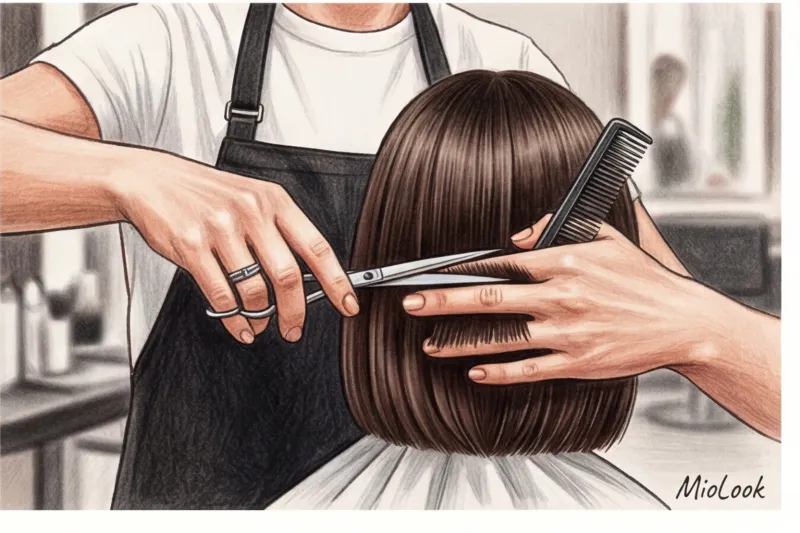
- Tight cut: A smooth, solid edge visually restores volume to thinning hair. Under its own weight, it lies flat and doesn't require straightening with a flat iron.
A precise geometric haircut from a qualified stylist will hold its shape for 8 to 12 weeks without adjustments. Yes, a top stylist at a good salon will cost €60–€150, but that's an investment in your spare half hour each morning.

Ideal options for straight and fine hair
If you have naturally straight, glassy, or fine hair that's become even more fragile after pregnancy, choppy styles are strictly contraindicated. Fair warning: the currently trendy mullets and dramatic layers will look like unkempt, hanging feathers if left unstyled.
Your best friends:
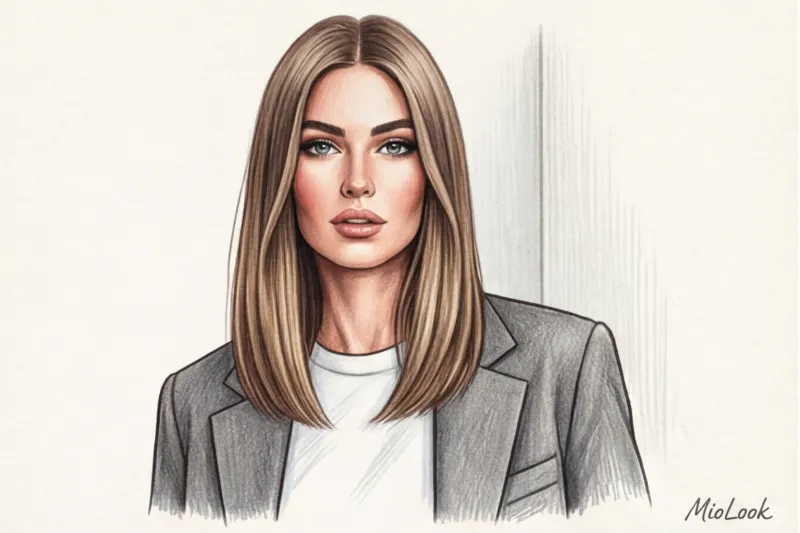
Blunt bob (a bob with a straight cut). This is an absolute favorite for visually thickening fine hair. The straight cut angle (without graduation at the back) makes the hair appear twice as thick. The ideal length is just below the chin, to create a more defined jawline.
Extended curtain bangs (French bangs). If hair loss is severe at the temples (forming a so-called "bald spot"), a classic, thick fringe won't work. However, a longer, curtain-style fringe that falls out at the sides is the perfect camouflage for growing short hair. It softly frames the face, even if you've pulled your hair back into a ponytail.
Invisible layers. If your hair is completely lacking volume, your stylist can create inner layers—short strands hidden beneath the main mass of hair at the crown, lifting it up but leaving the ends thick.
Your ideal image begins Here
Not sure if a blunt bob will suit you? Try out the new haircut virtually. Join thousands of users who look flawless every day with MioLook.
Get access — €0.99 once
Salvation for curly and porous hair: texture solutions
Curly and porous hair has its own set of rules. Hormonal fluctuations during and after pregnancy often alter the curl pattern: curls may become looser, or, conversely, straight hair may become frizzy. Trying to counteract this with a straightener can lead to burnt ends.
One of my clients with 3A curls spent an hour every evening straightening her bob. We switched up the technique: I gave her a dry cut. This is crucial for curls—the stylist needs to see how the hair contracts in its natural state, not when it's wet and stretched.
What to choose for a porous structure?
- Extended Shaggy (Shag). This is a haircut that's literally made to be tousled. The less you try to style it, the better it looks. The natural fluffiness here is a feature, not a flaw.
- Layered bob for curls. Proper graduation prevents the “triangle” effect on the head, when all the volume accumulates at the ends.
By the way, if you want to understand how your natural texture will look with the new shape, upload your photo to MioLook The AI analyzer takes into account your face type and suggests the most harmonious proportions.
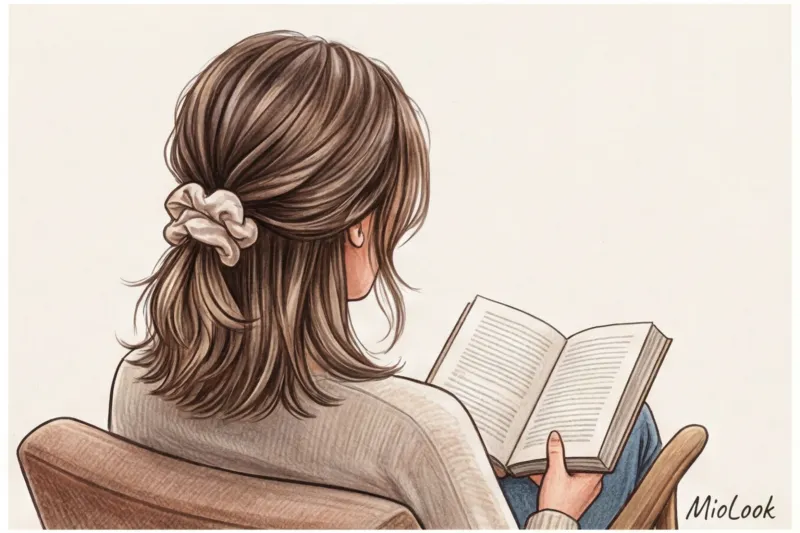
Midi length (forehead and collarbone): the golden mean for maternity
If you're not ready for a radical change, my professional advice: stick with a collarbone-length cut. This is called a long bob. Over 14 years of working in the hairdressing industry, I've learned that this is the most adaptable cut for new mothers.
Why does it work? Firstly, the midi length allows you to create a safe low ponytail in 5 seconds, just when your little one decides your hair is the best toy. You can use soft silk scrunchies that won't create tension at the roots.
Secondly, this length is absolutely versatile. It looks chic with a basic hoodie on the playground and elegant with a jacket for a night out or a work meeting. You won't have to worry about how to incorporate this hairstyle into your wardrobe.
Ready for change without risk?
Try the MioLook free plan—no commitments required. Our intelligent AI stylist will create the perfect look based on your complexion and body type.
Get access — €0.99 once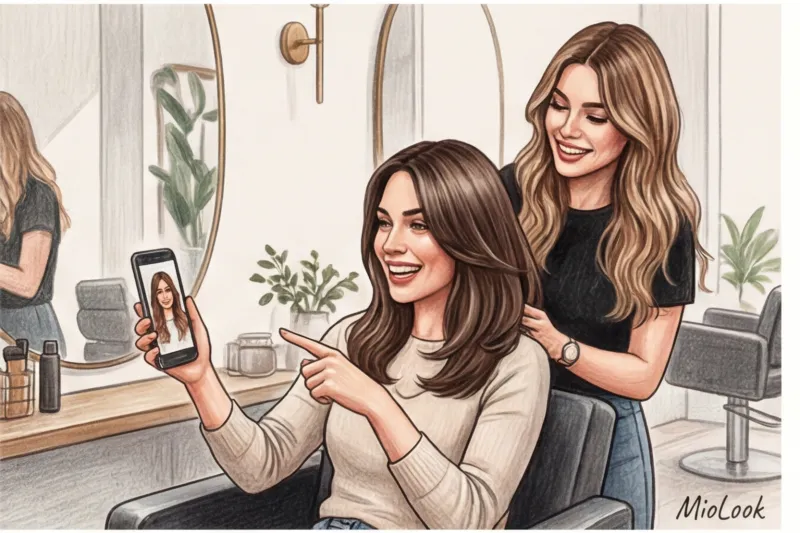
Pre-salon checklist: how to explain your goals to the stylist
Many salon disappointments stem from language differences. You say "I want volume," and the stylist gives you a choppy cascade that, without 40 minutes of brushing, hangs like dull icicles.
To protect your interests, use this checklist when communicating with a stylist:
- Say the passphrase: "I won't blow-dry my hair at home at all. Please cut it naturally." This will immediately eliminate half the inappropriate techniques.
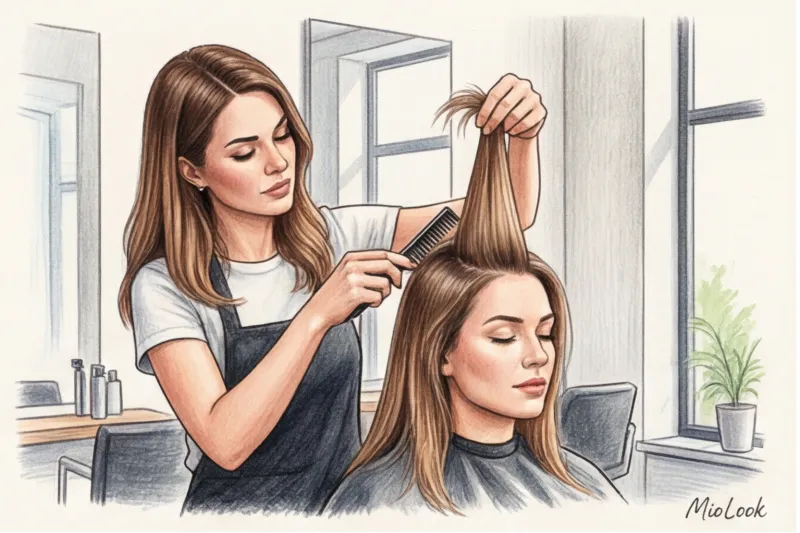
- Perform a density test: Gather your hair into a ponytail right in the chair and show your stylist the actual volume of the ponytail. This will help them accurately assess whether layers are necessary.
- Please indicate problem areas: Be honest about where your hair is falling out the most, or where you've seen new hair growth.
- Disable thinning: Be direct: “I’m restoring thickness, please don’t use thinning scissors or a razor, I need a straight, tight cut.”
A competent hairdresser will always listen to these requests. If a hairdresser insists that "the bob won't work without thinning," it's time to look for another specialist who is proficient in English precision cutting techniques.
Minimalism in Care: A Beauty Routine That Saves Time
Even the best haircut in the world needs the right background. No-styling haircuts aren't about giving up on care; they're about replacing damaging heat styling with proper care. The focus shifts from blow-drying and straightening to quality washing and drying.
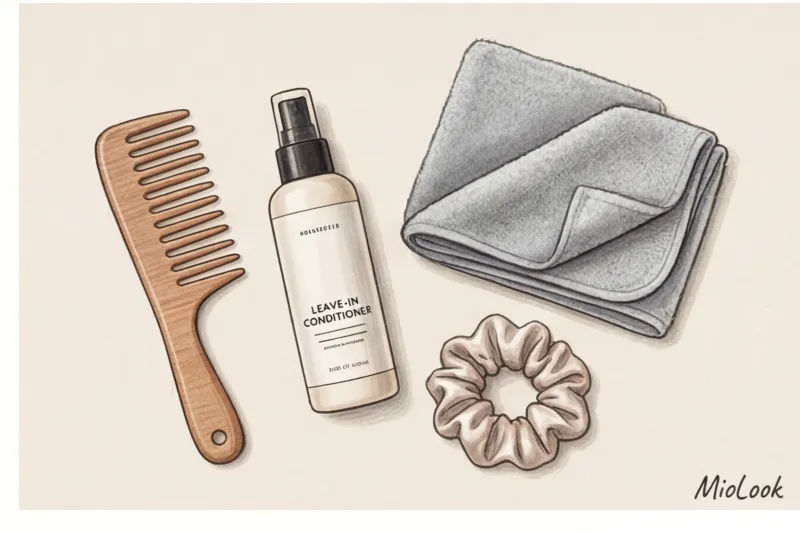
Start with the air-drying method. The main mistake is rubbing your hair aggressively with a terry towel after a shower. This ruffles the cuticle, causing your hair to dry frizzy. Invest in a special microfiber towel (budget options cost around €10-15). Simply blot your hair, squeezing out excess moisture.
Ditch hairsprays and harsh foams in favor of a leave-in conditioner or spray. A good leave-in conditioner, typically €20–€40, contains heat protection, moisturizing ingredients, and provides lightweight hold without stickiness. Apply a pea-sized amount to damp ends, comb through with a wide-tooth comb, and leave to air dry.
And don't forget about passive styling at night. Swapping your cotton pillowcase for a silk one isn't a whim, but a practical solution. Silk doesn't absorb moisture from your hair and doesn't create friction, so you wake up with smooth hair instead of a tangled mess.
Delegate your attractiveness to a well-cut haircut and high-quality, yet simple, care. You're a young mother, and your time is your most precious resource. Spend those 30 minutes in the morning enjoying a calm cup of coffee, not struggling with unruly locks in front of the mirror.