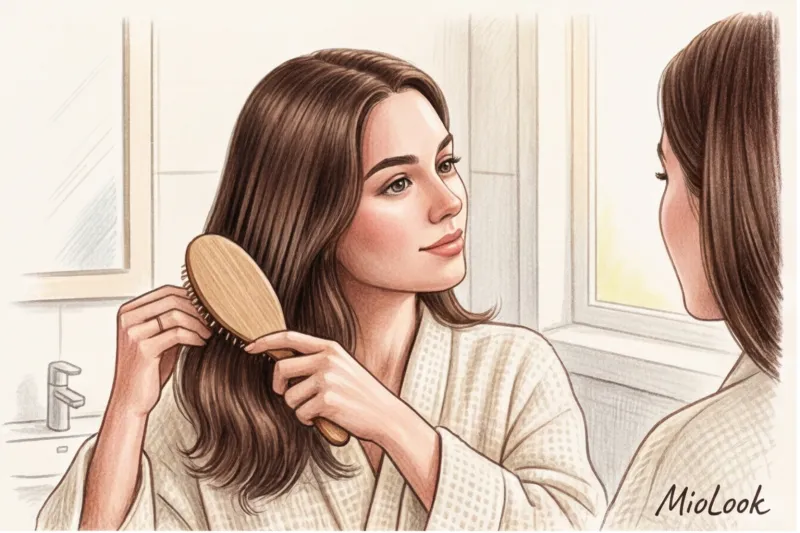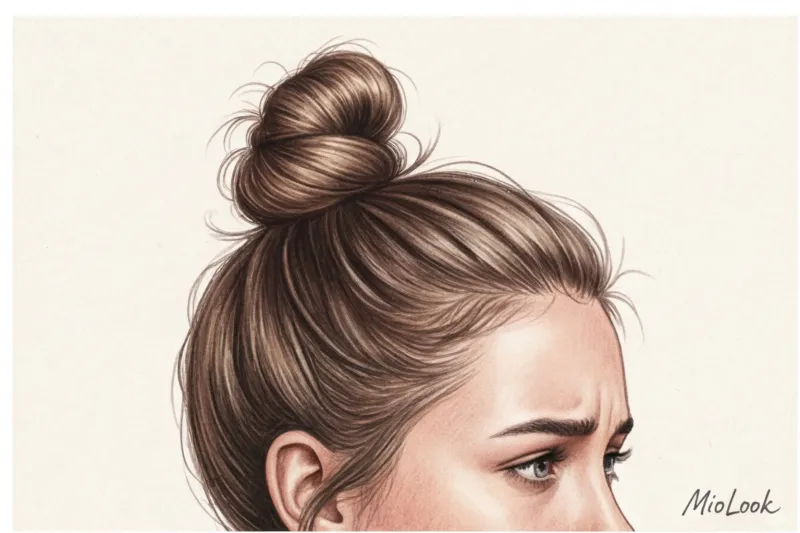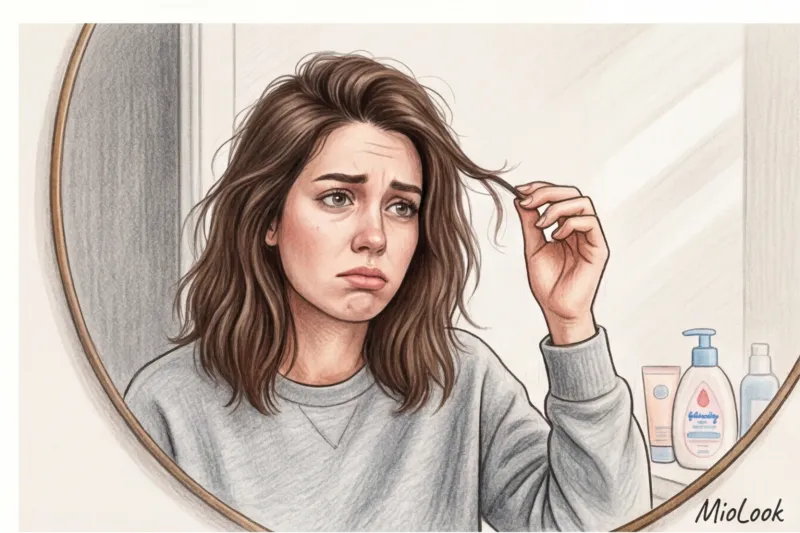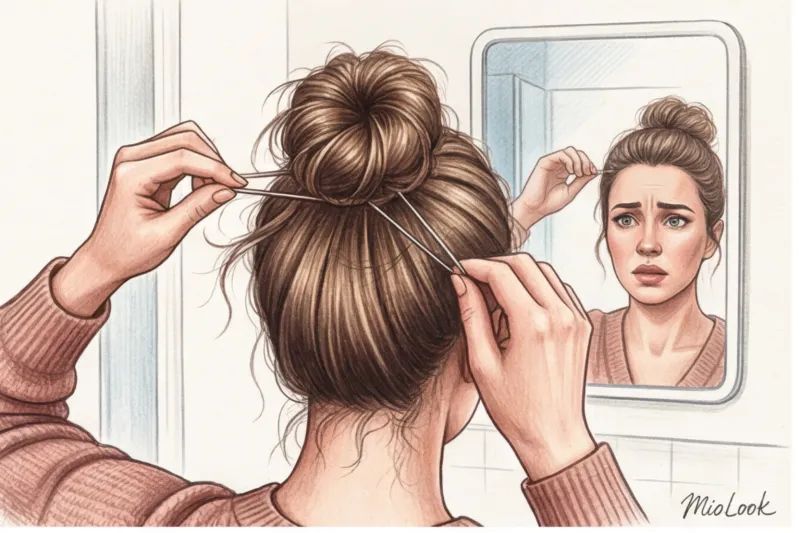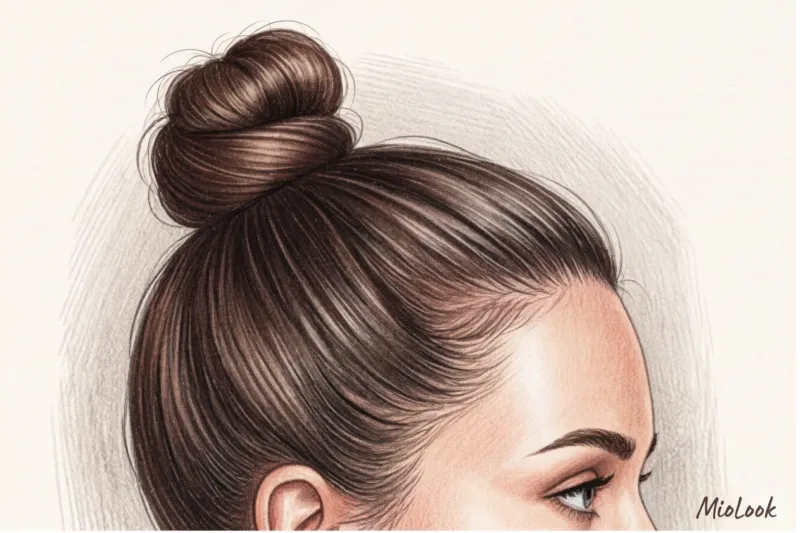
I still remember that morning. It had been exactly four months since my son was born. I walked up to the mirror, brushed my hair back with a familiar motion, and froze: there were gaping, half-empty patches at my temples, and a frighteningly large clump of hair remained in my hands. My first, completely reflexive urge was to grab the tightest hair tie and tie the rest into a tight bun at the back of my head—just to avoid having to look at it.
As a stylist with 14 years of experience, I knew the theory well, but in practice, I encountered the same shock as millions of other women. Unfortunately, this is precisely where we make the biggest mistake. Instead of minimizing stress on the follicles, we begin mercilessly pulling them, disguising thinning with backcombing, and dousing them with harsh hairspray. We've covered basic care during this period in more detail in our complete guide— Quick hairstyles for moms: hair health and beauty.
In this article, I won't be recommending complicated salon hairstyles. We'll be looking at safe and elegant ones. hairstyles for hair loss in women , which take three minutes, protect weakened roots and help you feel confident every day.
Why does the usual "mom bun" make the problem worse?
According to statistics, up to 50% of women experience intense hair loss after childbirth. In trichology, this is called Telogen Effluvium — a hormonal shift that causes hair that was delayed in its growth phase during pregnancy to begin to fall out en masse.
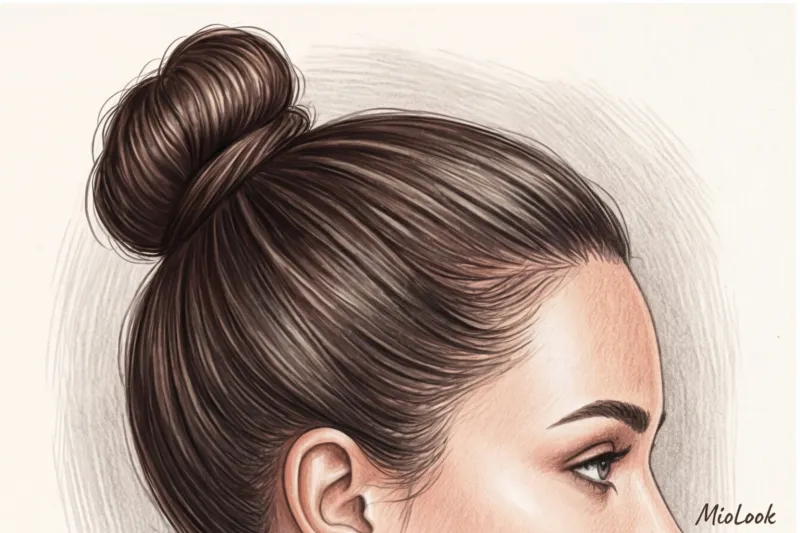
Now imagine: the follicle is already weakened, the hair ready to leave the head at the slightest breath of wind. So what do we do? That's right, we create the famous messy bun (a messy bun on top of the head). This is the worst enemy of thinning hair.
By creating a tight high bun, you deal a double blow. Hormonal hair loss is compounded by traction alopecia Hair loss due to constant mechanical tension. The greatest tension is exerted on precisely those areas that suffer most after childbirth: the temples, the forehead, and the parting. The myth that a tight elastic band "holds" hair loss better costs thousands of women hair loss every year.
Access to MioLook for €0.99 — one-time payment
A smart AI stylist will select the perfect look based on your features and appearance type.
Get access — €0.99 onceThe main rules for creating a hairstyle for hair loss in women
Before we get into specific styles, let's lay out three basic styling principles that I literally force my clients to learn while on maternity leave.
Zero tension rule. If after you've pulled your hair back you feel a slight "lifting" of your facial skin (you know, that free lifting effect), you should immediately undo your hair. There shouldn't be any resistance at the roots.
Be careful with wet hair. According to the American Academy of Dermatology (AAD), wet hair can stretch up to 30% of its length. This is when it's most vulnerable. Never tie wet hair into a tight ponytail—it will tighten as it dries, literally ripping it out by the roots.
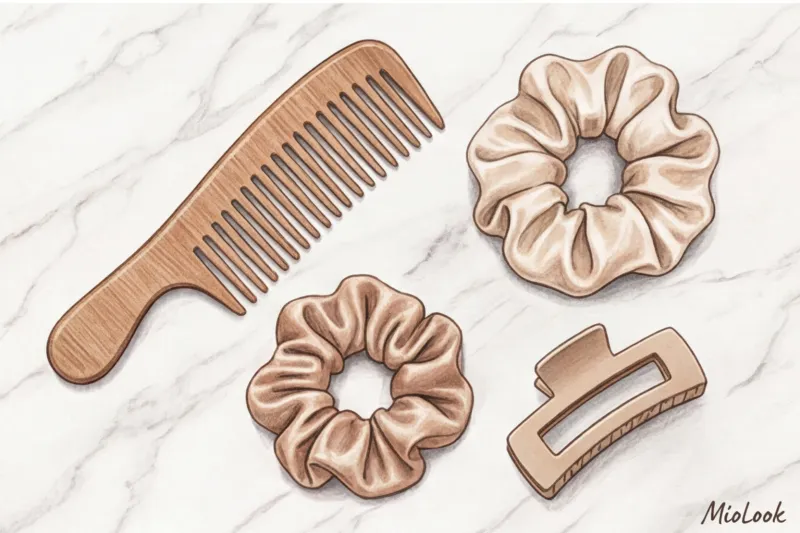
Revision of accessories. Throw away sharp-edged metal hairpins and tight silicone springs. Your go-to materials for the next six months are silk, soft plastic, and wood.
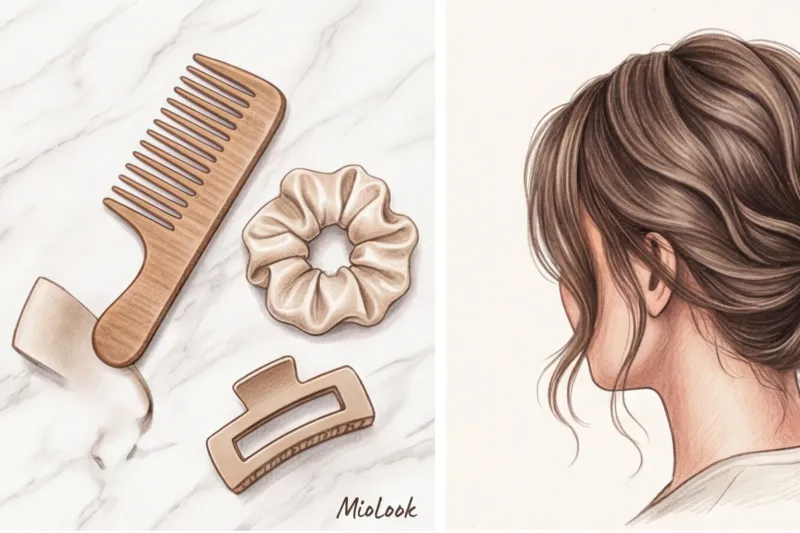
5 Quick and Safe Hairstyles to Conceal Thinning Hair
These options take no more than 2-3 minutes. They create visual volume without heat, making it look like you spent half an hour getting ready, rather than trying to get ready with your left hand while brewing coffee with your right.
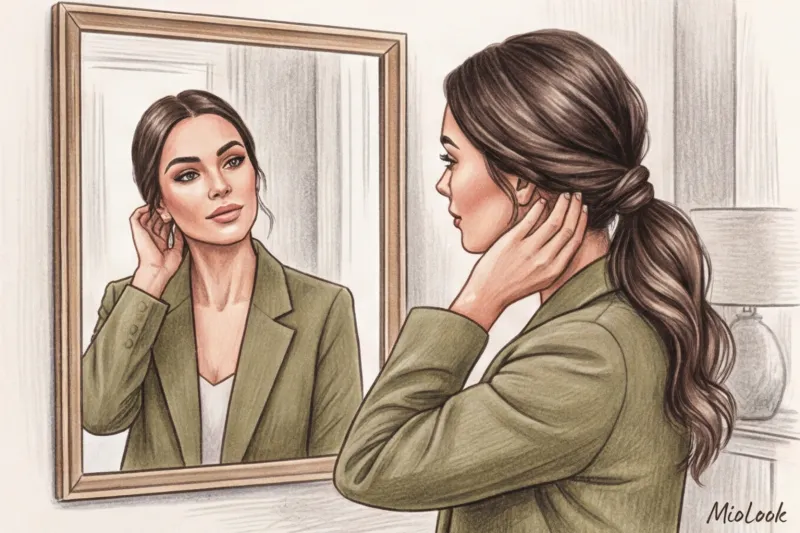
1. Low textured ponytail with silk elastic
The perfect alternative to a high ponytail. Gather your hair at the nape of your neck, not combing it back. The key here is release of strands Gently pull a few fine hairs at the temples and above the ears. This will create a soft frame for your face and completely hide any stray hairs at the edges. Be sure to use a wide silk elastic band (excellent basic options can be found at Slip or in premium mass-market lines for €15-25)—it glides through your hair without damaging the cuticle.
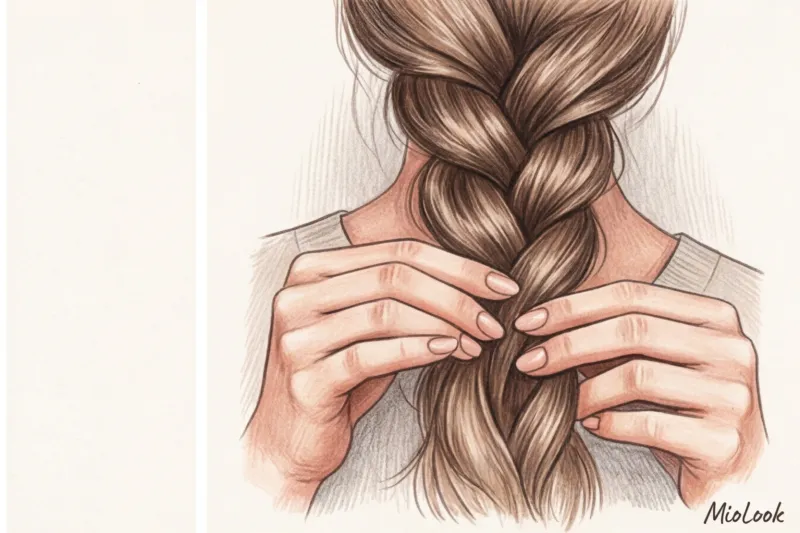
2. Loose French braid to the side
Asymmetry is the best friend of fine hair. By braiding your hair to one side, you draw attention away from your thinning center part. Stylists' secret: braid your hair loosely, then gently "pull" each section apart with your fingers. This will visually increase the thickness of your braid by two or three times.
3. Imitation of a headband from your own strands
One of my favorite techniques for clients with severely damaged temples. Separate two front strands (about 3 cm wide), pull them back under the main body of hair, and secure them at the nape of the neck with two crisscross pins. The top hair will cover the design. This creates the illusion of a tight edge. Important limitation: This trick doesn't work well on very short layered haircuts, where the strands simply won't reach the back of the head.
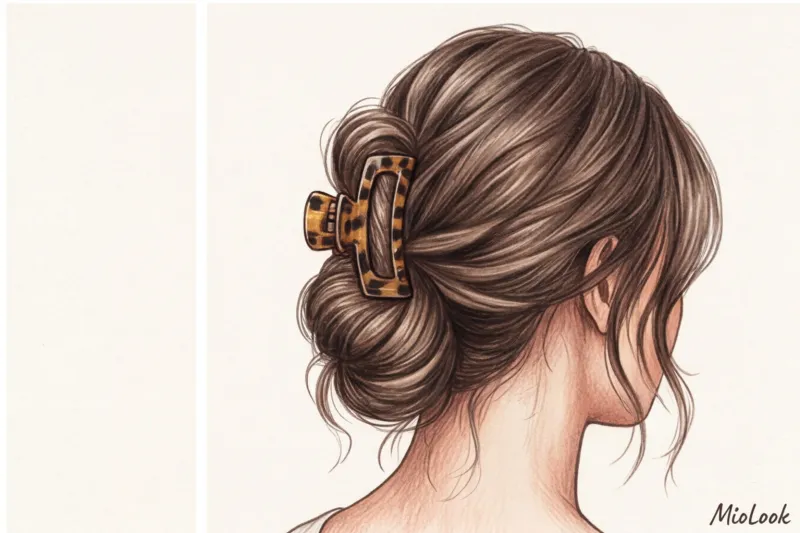
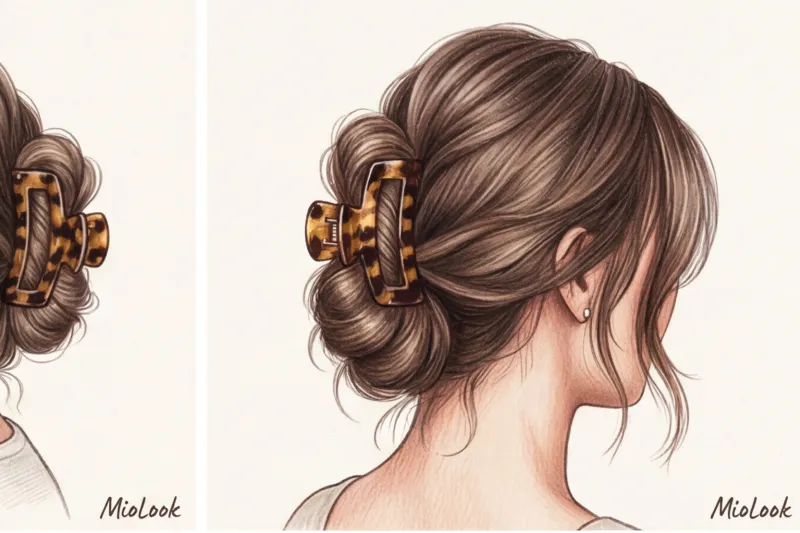
4. Soft bottom bun with a crab
Forget about hair ties. Twist your hair into a loose bun at the nape of your neck, fold it in half, and secure with a plastic clip with rounded teeth. The clip distributes the weight of your hair evenly and prevents any tugging.
5. Deep side parting with a slight wave
Hair loss is most often noticeable in a center parting. Moving the parting 3-4 centimeters to the side instantly adds volume at the roots, as the hair falls in an unusual direction. Lightly spray the roots with a texturizing spray (not hairspray!)—for example, a budget-friendly salt spray for €10-€15—or dry shampoo. By the way, if you're unsure which side of the parting will flatter your features, upload a photo of yourself to MioLook — a smart AI algorithm will suggest the optimal asymmetry specifically for your face.
Your perfect look starts here
Join thousands of users who look flawless every day with the MioLook AI stylist.
Get access — €0.99 onceStylish Accessories: How to Save Your Look While Your Hair Grows Out
The period when new hair begins to actively grow is often more annoying than the hair loss itself. A "halo" of 2-3 centimeter-long, protruding hairs forms on the scalp, making it impossible to style. Don't try to slick them back with gel—it looks unnatural and makes your hair look dirty.
Wide fabric headbands are your savior. This season, they've truly moved from the realm of children's accessories to wardrobe staples. COS, Massimo Dutti, and &Other Stories always have excellent cotton or viscose options in the €15–€35 range. Choose sophisticated, elegant shades: camel, olive, deep burgundy, or classic black. A headband will tame any growing hair and add a touch of class to your look.
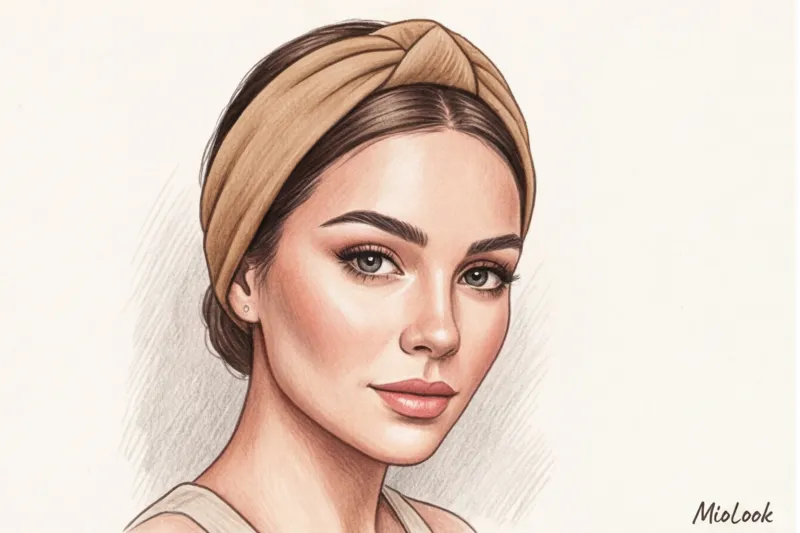
"A silk scarf (bob), tied like a bandana or woven into a ponytail, not only protects from the sun and chafing, but also instantly elevates a simple jeans-and-white-T-shirt look into the category of 'quiet luxury.'"
The Connection Between Hair and Style: Why a Well-Groomed Head is More Important Than New Clothes
One of my clients once complained, "I bought an expensive cashmere suit so I could push the stroller in style, but I still look worn out." We looked at her photo: a beautiful suit, trendy sneakers, and... a bun pulled back at the back of her head with hair sticking out in all directions and greasy roots.
In the capsule wardrobe concept, a hairstyle is as essential as a good jacket. If your hair looks unkempt or painfully tight, it devalues any outfit, even the most expensive one. Soft, healthy (even if not too thick at this stage) hair, styled without tension, conveys self-love. This is the first step toward re-entering society after the first months of motherhood.
Ready to update your style?
Try the MioLook plan for free—no commitments required. Create your perfect capsule in just a few clicks.
Get access — €0.99 onceChecklist: Checking your installation for safety
Right now, if your hair is up, ask yourself four questions:
- Does your scalp or hair roots hurt when you take your hair down in the evening?
- Are there deep, hard creases left in the strands of hair after the elastic is removed?
- Do you pull out 2-3 hairs every time you pull the clip?
- Do you feel relieved when you let your hair down?
If you answered "yes" to any of these questions, your hairstyle is damaging your hair. Postpartum hair thinning is temporary, and your follicles will eventually recover (usually by 9-12 months postpartum). Your goal now is to avoid interfering with them and causing irreversible traction alopecia.
Remember the most important thing: during the recovery period, gentleness is always more important than speed, and healthy roots are more important than the illusion of a thick ponytail. Choose softness, use the right accessories, and you'll get through this stage beautifully and without damage.