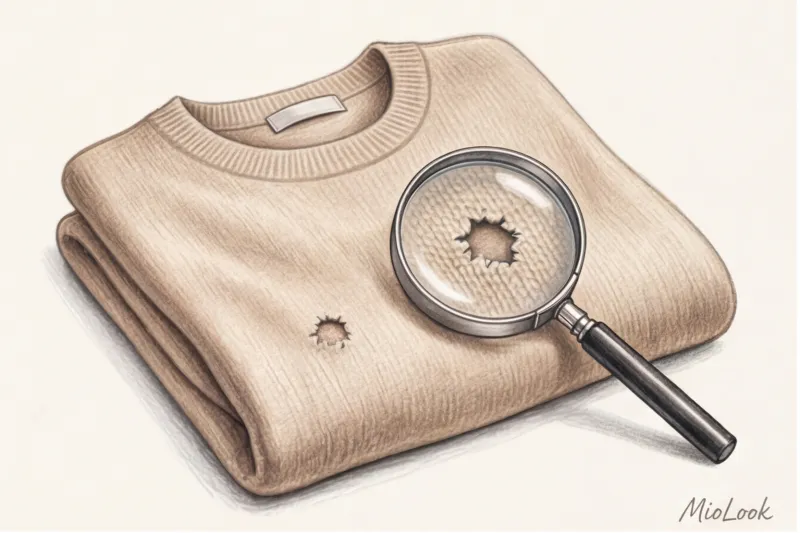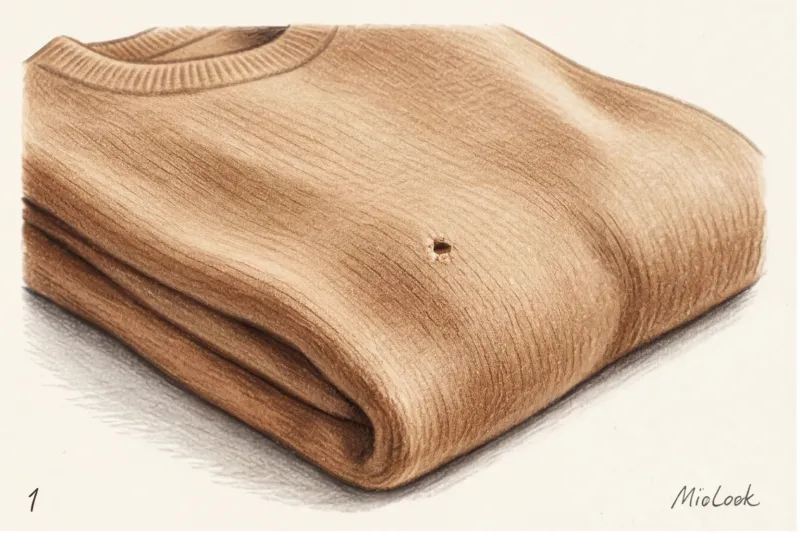
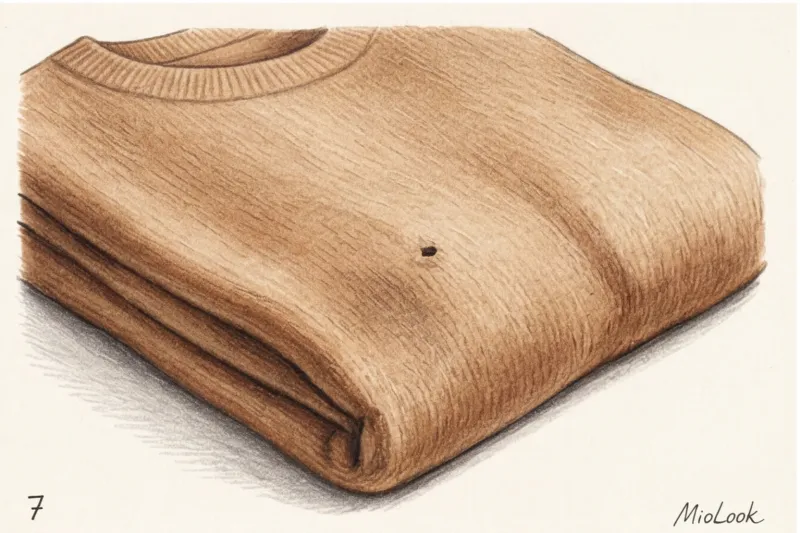
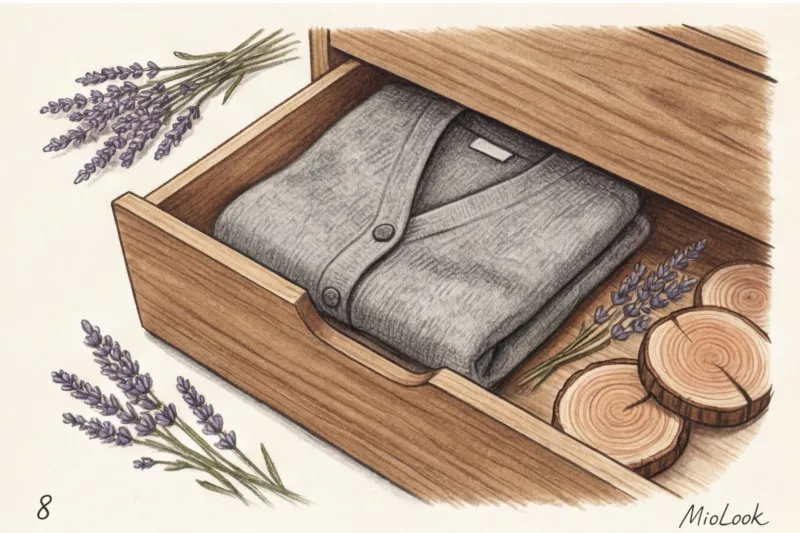
One day, a client of mine called me in tears. We'd been putting together her perfect fall capsule for over a year, and the crown jewel of the collection was a vintage Loro Piana baby cashmere cardigan. When she pulled it down from the top shelf of her closet in September, there was a neat hole right in the chest, right in the most visible place. The worst part? The entire drawer smelled like premium French lavender sachets.
This case from my practice forever changed my approach to seasonal storage. If you are looking for an answer to the question, How to protect woolen items from moths , it's time to forget about old wives' tales. In this article, we'll discuss wardrobe protection using the terms of risk management and museum conservation. After all, when it comes to knitwear worth hundreds (or even thousands) of dollars, a bunch of dried grass isn't the answer.
Incidentally, moths don't attack every sweater. We've covered more about why these pests are so fond of premium yarn and how to evaluate it correctly in our comprehensive guide: How to Choose Quality Cashmere: Stylists' Tips Now let's figure out how to protect these investments.
Anatomy of the Problem: Why Moths Choose Your Most Expensive Knitwear
To defeat an enemy, you need to understand its physiology. Butterflies flying around the apartment (clothes moths, or Tineola bisselliella ) — this isn't a problem at all. Adults simply don't have mouthparts. They don't eat your clothes. They're looking for a place to lay their eggs.
According to entomological studies, a female moth lays between 50 and 300 microscopic eggs at a time. The caterpillars that hatch from these eggs are the real monsters. Their main food is keratin, the protein that makes up hair, feathers, and natural wool.
Over 12 years of sorting through wardrobes, I've discovered a pattern: the more expensive the item, the higher the risk. It's much easier for larvae to digest the finest cashmere down fiber (14-15 microns) than coarse sheep's wool (30 microns). A larva can chew a hole through premium knitwear in just 2-3 weeks.
"The main trigger for moths is a 'dirty base.' Microscopic particles of epidermis, sebum, or drops of perfume left on a sweater after even one short wear act like monosodium glutamate for the larvae. They purposefully seek out places with such contamination."
The biggest myth of stylists: why lavender and cedar no longer save your wardrobe
Let's be honest: the home accessories industry sells us the illusion of safety. Cedar balls and sachets of cloves and lavender work only as a weak repellent for adult butterflies. They simply confuse them with their pungent scent.
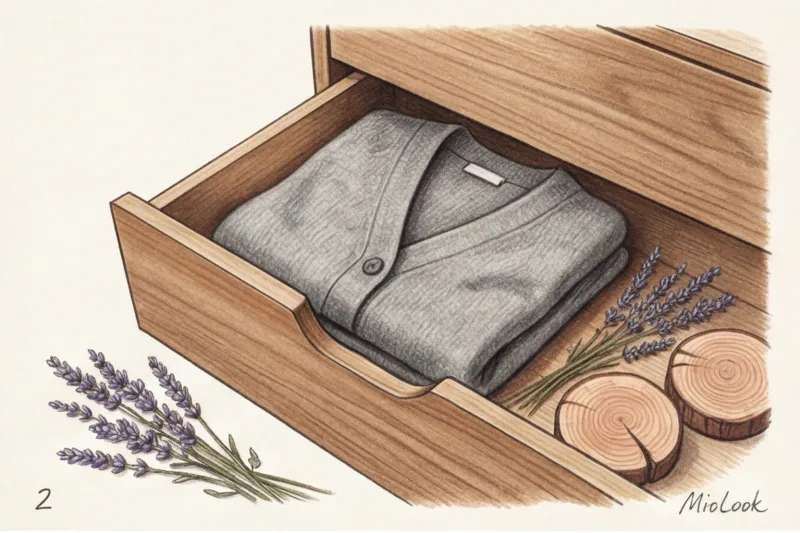
But here's the harsh truth: if a butterfly has already laid eggs in the folds of your favorite sweater, lavender won't kill them. The larvae will hatch happily and eat the cashmere right there on the herbes de Provence cushion. The essential oils in natural repellents completely evaporate within 3-4 weeks, leaving you with a false sense of security.
As for mothballs, please eliminate them from your arsenal forever. Besides being recognized as a toxic carcinogen, their pungent odor permeates the very structure of the product. your capsule wardrobe so deep that even double dry cleaning is not always able to remove it.
Ready to digitize your wardrobe?
Try MioLook: A smart AI stylist will choose the perfect look for you and help you keep track of seasonal items.
Get access — €0.99 onceHow to Protect Woolen Items from Moths: Museum Conservation Protocol
The Textile Conservation Institute uses strict protocols to protect historical garments. I've adapted these rules for modern home environments. Remember: you can't just pick up a winter sweater and put it on the back shelf. Preparation is necessary.
Zero Wear Rule: Wash and Dry Clean Only
Never, under any circumstances, put away for summer storage anything you've worn even once. Even if you just wore it to the office.
Dry cleaning with perchloroethylene or modern hydrocarbon solvents performs a vital function—it not only removes stains but also chemically destroys any potential moth egg masses. For delicate basic items that can be hand-washed, use special cashmere shampoos containing lanolin.
Shock Therapy: Why Freeze Premium Cashmere
If the item is clean, but you suspect the closet has already been in contact with a pest, apply thermal shock. Moth larvae and eggs do not survive extreme temperatures.
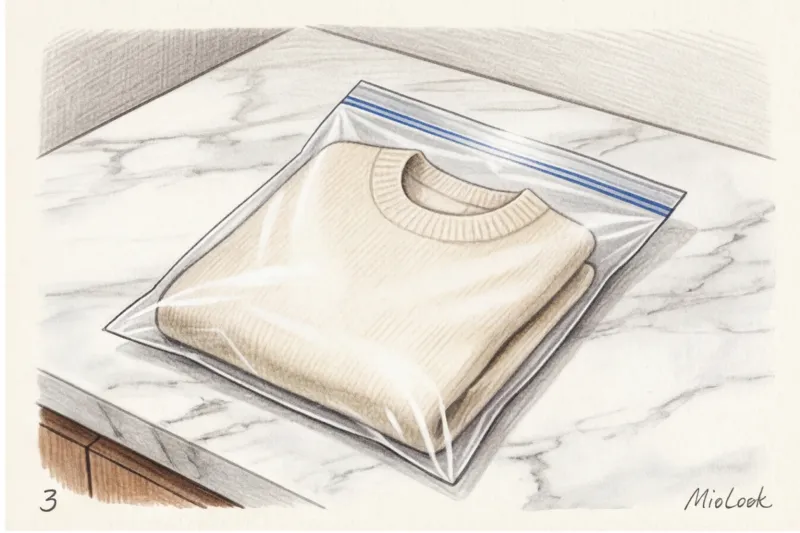
How to do it right (museum method):
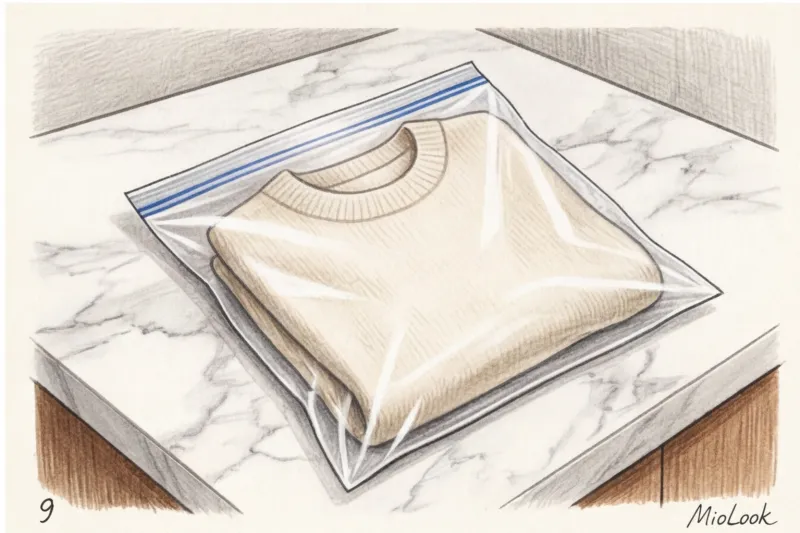
- Place the dry, clean sweater in a tight zip-lock bag.
- Critical: Squeeze out as much air as possible and seal the bag tightly.
- Place in the freezer at -18°C for at least 72 hours.
- Get the package out, but don't open it , until the item has completely warmed to room temperature. If you open it immediately, condensation will settle on the icy fibers, and the cashmere may become felted.
Storage Architecture: How to Pack Your Things to Keep Moths Out
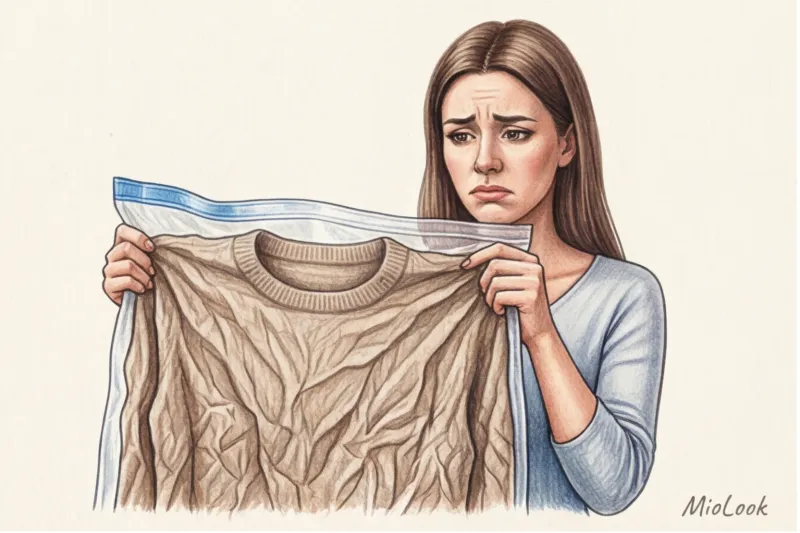
A common mistake my clients make is trying to save space by using vacuum bags. office smart-casual wardrobe Vacuuming expensive knitwear is a slow death. Vacuuming flattens the threads, breaks the pile, and permanently deprives long-fiber cashmere of its natural airiness (ply). After six months in a vacuum, a sweater will look like a cheap rag.
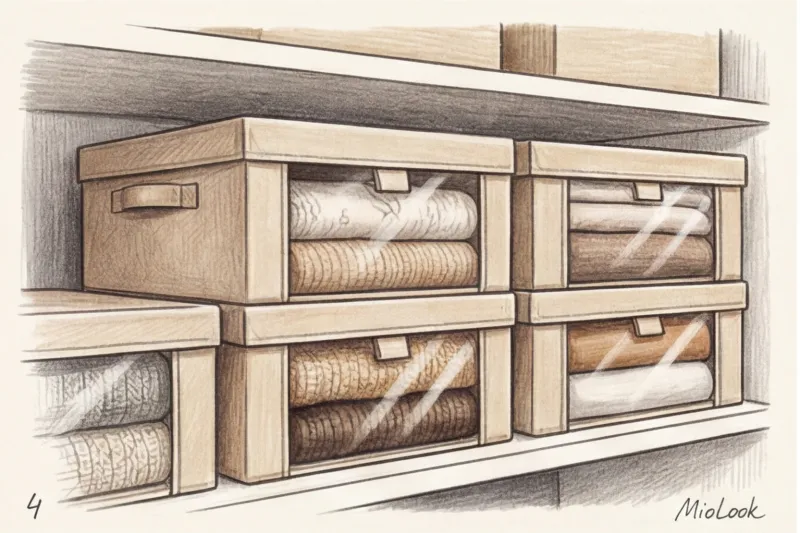
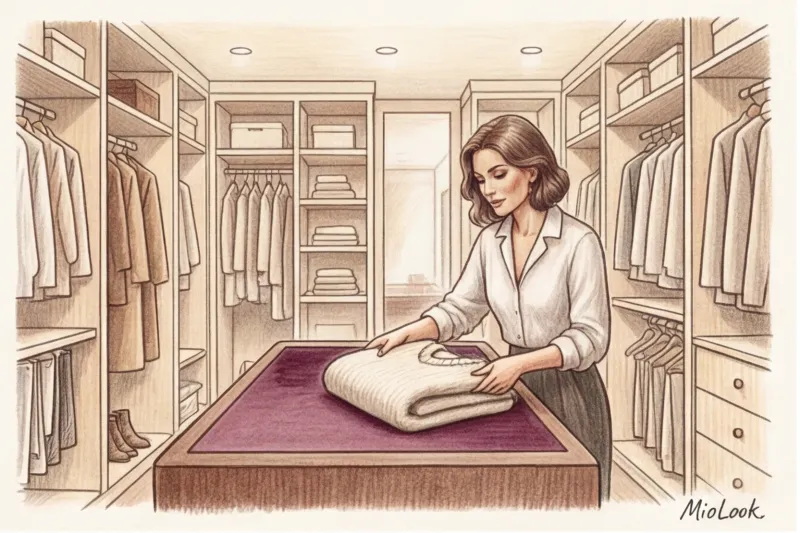
The correct storage architecture looks like this:
- Breathable materials: Use bags made of thick cotton or high-quality spunbond. They allow air to pass through, preventing the fur from suffocating, but their weave is too tight for moths.
- Insulation: Every premium sweater or wool suit should be kept in its own separate storage compartment. If you bought an infested vintage item and put it in a shared storage compartment, isolation will save the remaining 90% of your wardrobe.
- Shape stability: Store heavy knitwear only folded (flat storage). On hangers, it will stretch under its own weight within a couple of months.
Your perfect look starts here
Join thousands of users who look flawless every day with MioLook. Plan your capsule wardrobe and manage it with just one click.
Get access — €0.99 onceModern and effective moth repellents: my professional top picks
Last year, I conducted a personal experiment: I spent six months monitoring the effectiveness of pheromone traps in three different areas of my dressing room. The results completely changed my arsenal of protective measures.
Here's what really works today:
- Pheromone traps: This isn't a means of extermination; it's the perfect monitoring system. Cardboard triangles with a sticky layer release the scent of the female. Males flock to them and become attached. This interrupts the breeding cycle and, most importantly, reveals the scale of the problem. If the trap is empty, you can sleep soundly.
- Sections with permethrin or transfluthrin: Modern chemicals that actually kill insects, not just scare them away. Most of them are now odorless.
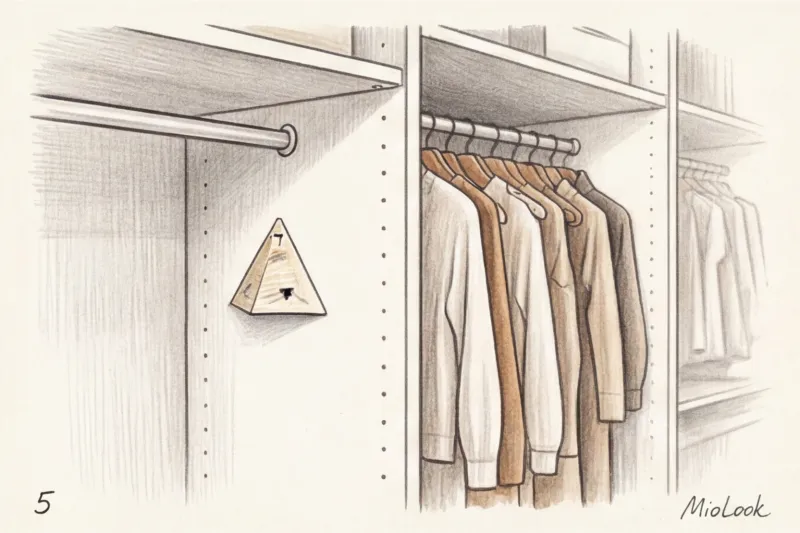
What not to do: Never place chemical sections directly on clothing. The active ingredients can react with fabric dyes and leave yellow stains on light-colored wool. Attach them to the walls of a closet or a clothes rail.
Checklist: A Digital Routine for Protecting Your Wardrobe Before Summer
Panic at the sight of a hole eaten away usually stems from a lack of system. To transform wardrobe protection from stress into a manageable routine, I recommend a digital approach.

Implement a quarterly audit (every three months) into your life. Wipe down dark corners of shelves with a damp cloth and soapy water—moths hate light, movement, and cleanliness.
Technology is a great help here. In the app MioLook I mark the status of each seasonal item: I add tags like "Dry-cleaned April 15" or "Put away in trunk." I also set a reminder to replace pheromone traps—they only work for 8-12 weeks, after which they become useless pieces of cardboard.
Treat your wool wardrobe not as a pile of clothes, but as an investment portfolio. High-quality cashmere and merino wool increase in price every year. By spending two hours on proper preservation in the spring and $15 on modern traps, you guarantee your investment will survive until the next cold weather in perfect condition.