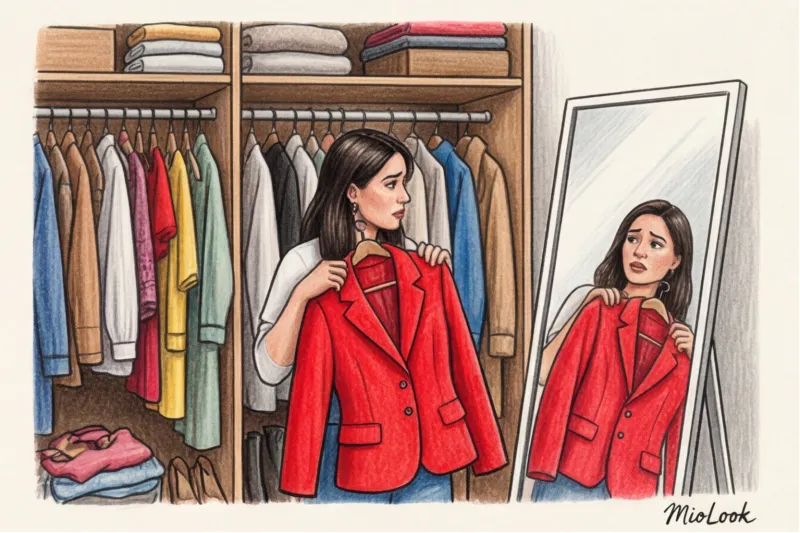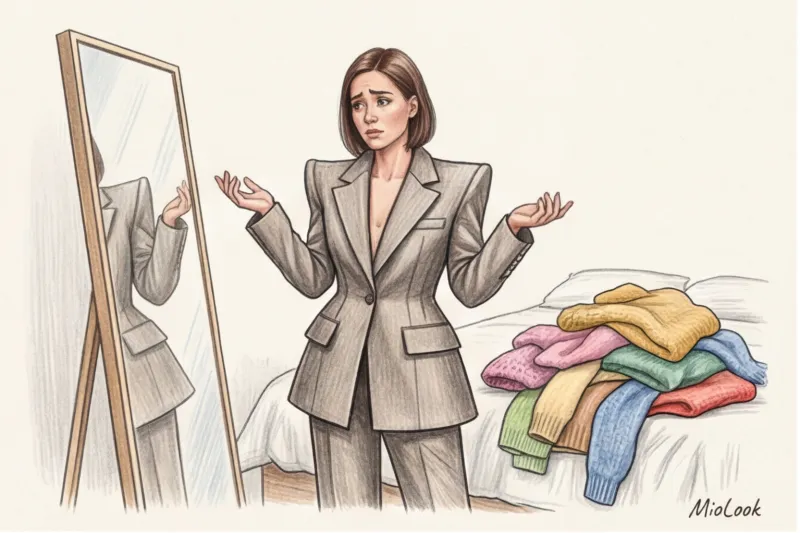
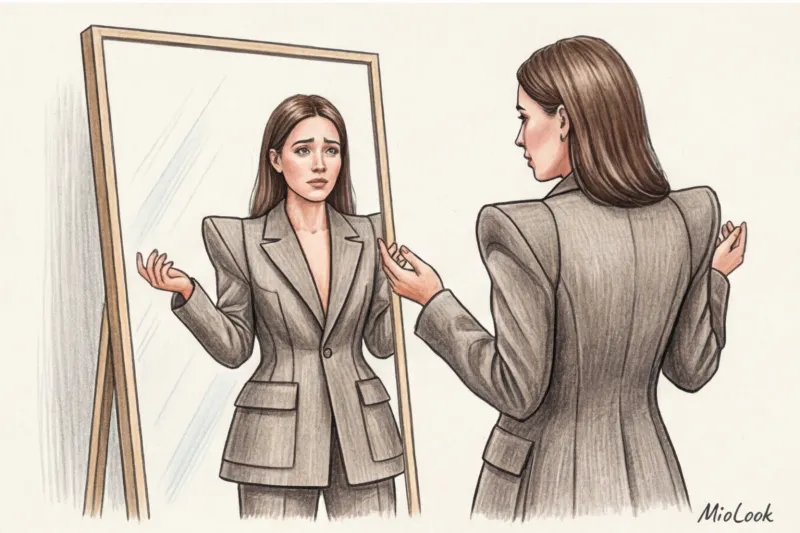
I once had a client who had just been appointed CFO of a major IT company. We put together an impeccable, high-status wardrobe for €4,500—formal three-piece suits, architectural jackets in thick wool, silk blouses. A month later, we met for coffee, and she... showed up wearing her old, slightly stretched cashmere cardigan. "Camilla, I feel like I'm wearing a costume in these new clothes. I put them on and physically can't concentrate on work," she admitted.
I talked in more detail about the systemic approach to such transformations in our A complete guide on how to completely change your clothing style without spending too much But today we'll look at the dark side of this process.
Main mistakes when changing your image It's not that you chose the wrong style of pants or the wrong shade for your skin tone. The problem almost always lies in the psychology of transition and a simple disregard for "wardrobe math." Let's explore why trying to wake up "as a new person in new clothes" usually ends with a closet full of clothes with tags and a return to your favorite worn-out jeans.
The Leverage Effect: Why Radical Image Change Mistakes Lead to Stress
There's a huge difference between dressing up and truly changing your style. When you go to a store and buy a ready-made total look from a mannequin, you're buying someone else's look. Your body, accustomed to a certain range of motion in knitwear, suddenly finds itself confined to a rigid corset or thick taffeta.
In 2012, researchers at Northwestern University (USA) introduced the term into scientific circulation enclothed cognition (embodied cognition). Scientists have proven that clothing doesn't just decorate us—it literally dictates how we feel and behave, influencing cognitive processes. If the texture of the fabric, the weight of the garment, or the silhouette radically mismatches your usual shape, the brain perceives it as a foreign object. You don't look stylish—you look constrained.
"The most expensive item in your wardrobe is a tight suit that robs you of your natural grace. Style begins where tension ends."
Feeling like an impostor in new clothes is a completely normal physiological reaction. For a new aesthetic to take hold, your nervous system needs to adapt to it, and that can't happen overnight.
Costume vs. Reality: The Moodboard Trap
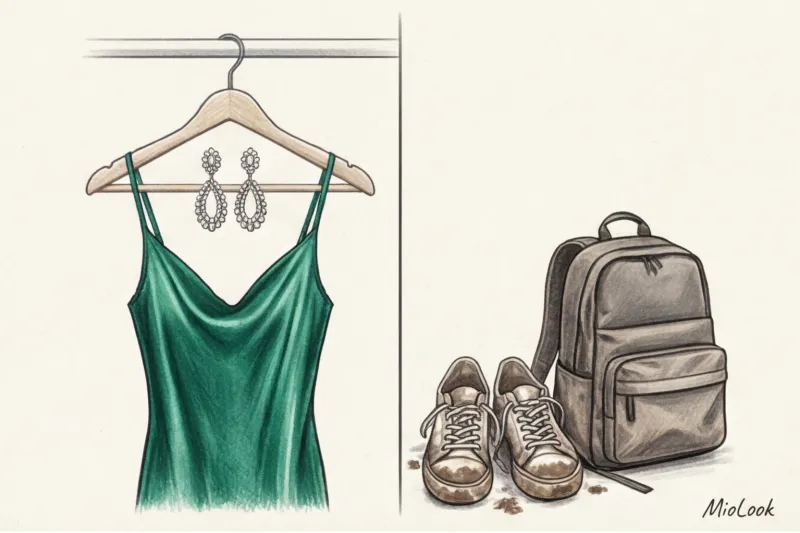
You've probably collected Pinterest folders full of perfect looks: French chic, silk slips, stiletto pumps. The problem is, online images are static, and you are not. The mood board trap forces us to find your own clothing style for a fantasy version of yourself who dines at a Michelin-starred restaurant every night instead of running through the slush to pick up your child at kindergarten.
When buying decorative items, we ignore our own body language. If your usual posture is to sit with your legs tucked under you in a chair, a tight pencil skirt made of thick tweed will become an instrument of torture for you, no matter how much it costs.
Your perfect look starts here
Join thousands of users who look flawless every day with the smart AI stylist MioLook.
Get access — €0.99 onceBurning Bridges: The Illusion of a Clean Slate and Environmental Disaster
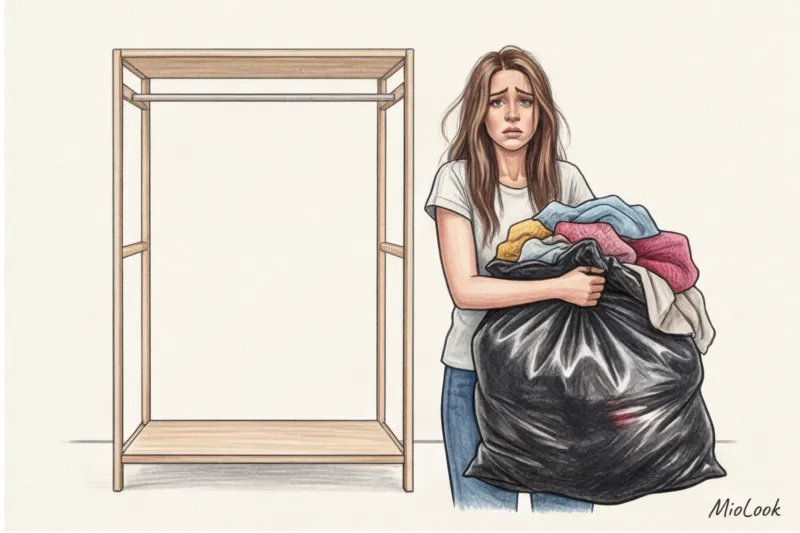
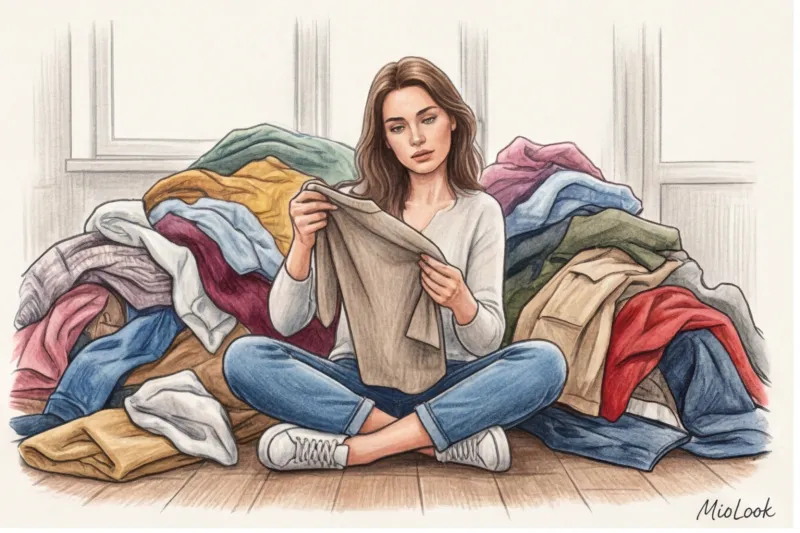
Do you know what advice incompetent newbie stylists give most often? "Collect all your old clothes in trash bags, throw them away, and start over." This is the most destructive and, frankly, harmful advice you can receive.
Your old, "unfashionable" wardrobe is your lifeline. It's a stylistic bridge, without which a new look will feel like a strange uniform. If you wear new trousers of an unfamiliar cut, a new statement shirt, and new shoes all at once, the likelihood of leaving the house like that is slim to none. Your brain simply refuses to accept it.
Beyond the psychological stress, emotional wardrobe purges have a colossal impact on the environment. According to a 2023 report by the Ellen MacArthur Foundation, the lifespan of active clothing has decreased by 36% over the past 15 years. We throw away usable items in a frenzy of "zeroing out," only to buy cheaper alternatives a month later when we realize we have nothing to wear to go shopping.
An old turtleneck that seems boring is essential for "calming down" your bold new faux leather jacket. A base from a past style is the canvas on which we'll paint a new aesthetic.
Ignoring wardrobe math and lifestyle context
A successful style change always starts with an audit of your calendar, not just checking trends. Statistics are merciless: up to 70% of clothes bought in the mood of "wanting to become a new person right now" are never worn more than once. The reason is a catastrophic mismatch between the new style and the actual time allocation.
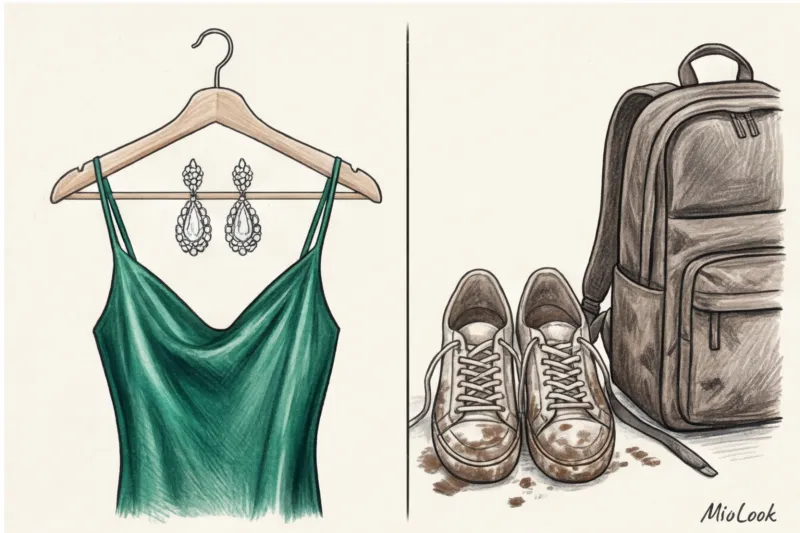
Let's do the math. Let's say your budget for starting your renovation is €1,000. You invest €400 in a luxurious evening dress and shoes, even though you work remotely 80% of the time and walk the dog. You'll wear this outfit a maximum of twice a year.
There is an ironclad formula for calculation in stylistics - Cost Per Wear (CPW) , or cost per wear. The formula is simple: divide the price of an item by the number of days you wear it.
Scenario A: A silk suit for €300, worn twice = €150 per outing.
Scenario B: A perfectly fitting pair of tight jeans for €120, worn 100 times = €1.20 per outing.
Investing the lion's share of your budget in bold style markers before you've built a new everyday foundation is financial suicide.
The dangers of ready-made capsules "out of the box"
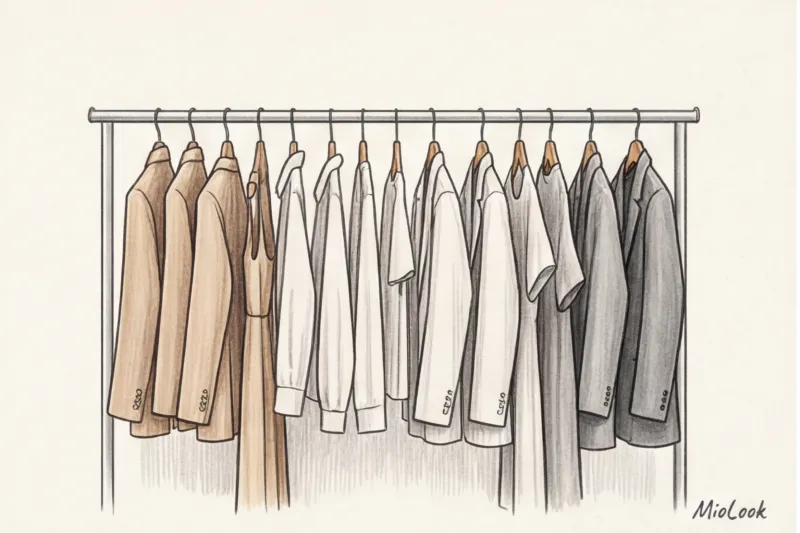
I have to make an important confession here: ready-made solutions are not suitable for everyone. This rule does NOT apply if you need something urgently. put together a strict capsule wardrobe For a new position with a strict corporate dress code (for example, at a bank). In this case, template solutions will save you time.
But if we're talking about finding individuality, buying a ready-made capsule "from a fashion blogger" will kill your personal style. Such capsules lack air and variety. The "beige trench coat + white shirt + straight jeans" template robs your wardrobe of flexibility, turning it into a uniform you'll tire of in exactly three weeks.
Access to MioLook for €0.99 — one-time payment
A smart AI stylist will select the perfect look for you, taking into account your body shape and your current lifestyle.
Get access — €0.99 onceStylistic Bridge Strategy: Evolution Instead of Revolution
Over 12 years of covering Paris and Milan Fashion Week, I've noticed something striking. Do you know how true industry insiders—magazine editors and buyers—dress? They almost never wear a head-to-toe runway look.
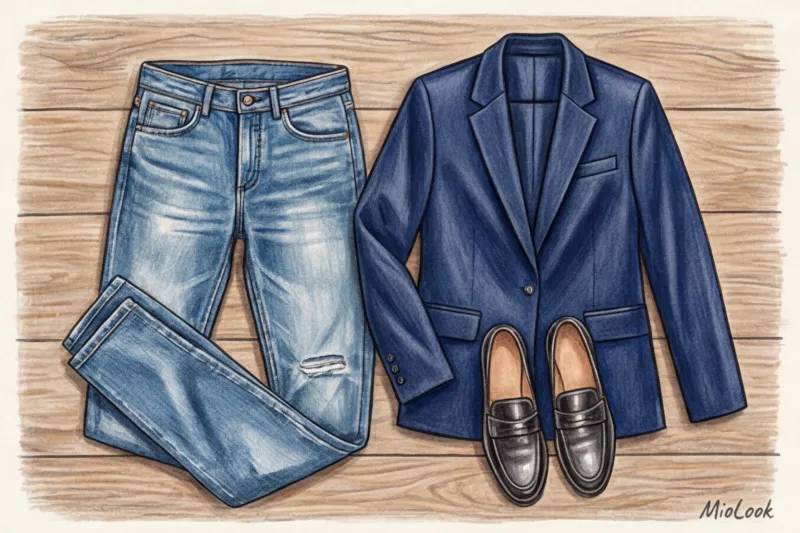
Their secret lies in the 80/20 mathematical rule. The ideal, comfortable style transition requires a look that's 80% familiar comfort and only 20% innovative. They take one trendy piece (for example, a structured jacket with exaggerated shoulders) and integrate it into their usual basics—worn jeans and a simple white T-shirt made of high-quality cotton.
Counterintuitive tip: If you want to make a big style change, don't change everything at once. Use the "one new thing" method. If your style archetype If your look requires a shift from sporty to elegant classics, start with your shoes. Swap your sneakers for leather loafers, keeping your usual jeans and sweatshirt. Once the loafers feel right, swap the sweatshirt for a cashmere sweater. This evolution will happen seamlessly, but it will transform you beyond recognition.
Checklist: 5 questions for a stylist before buying something for a new look
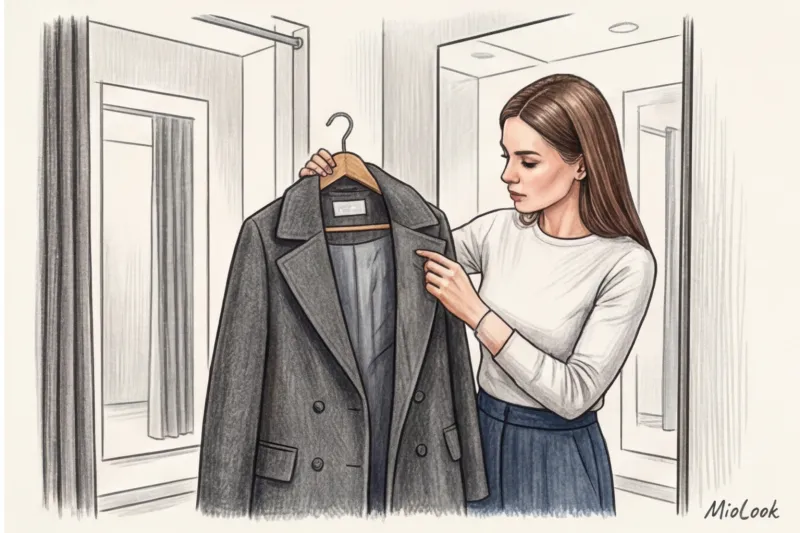
To avoid making mistakes and wasting money when changing your look, I ask my clients to ask themselves five questions right in the fitting room before they go to the checkout:
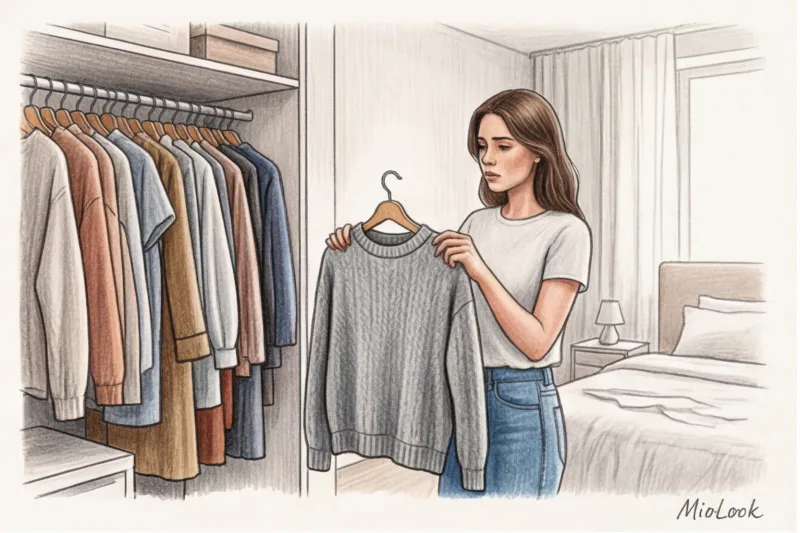
- Will I be able to wear this item with three items from my OLD wardrobe? If the answer is “no, I’ll have to buy new pants, shoes and a bag for it,” the item stays in the store.
- Does the texture of the fabric match my usual pace of life? When choosing linen trousers or thin viscose, ask yourself: are you ready to spend 20 minutes every morning steaming if you are used to putting on wrinkle-free denim in two seconds?
- Did my gait and posture change while wearing this item? Take a few steps around the fitting room, sit on a pouf, and raise your arms. If you feel like you're moving unnaturally, it's because the fabric and cut are dictating your own rules.
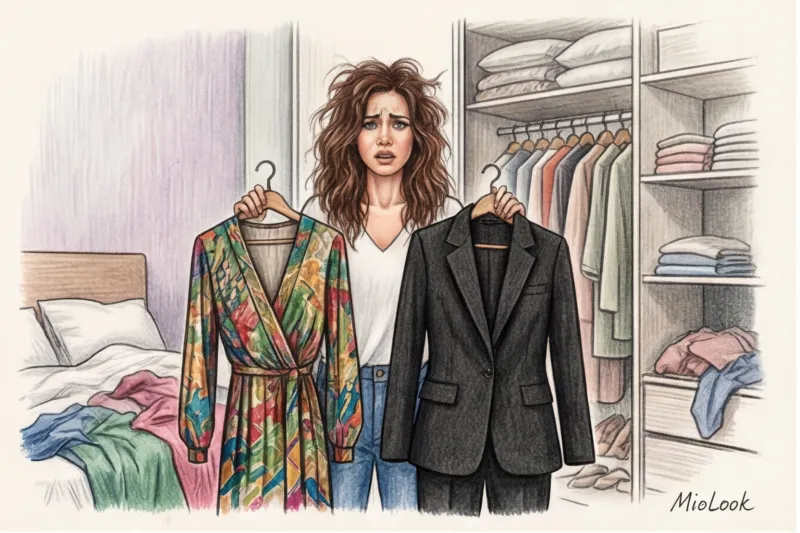
- Am I buying this for the real me or for the "fantasy version" of me? Honestly assess where you'll go this week. Not just something abstract like "to the theater someday," but in the next seven days.
- How will this piece adapt if I decide to tone down the new style? Can you wear this tailored jacket not with pleated trousers, but over a simple white T-shirt and sneakers?
Summary: Why a proper image transition takes 3 to 6 months
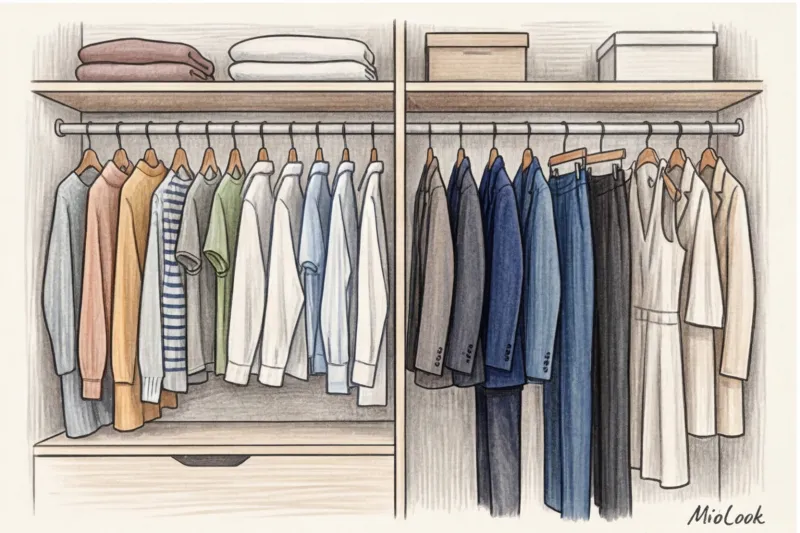
Abandon the Hollywood illusion of a "one-weekend" transformation. Like in those movies where the heroine takes off her glasses, puts on a red dress, and instantly becomes a femme fatale. In reality, clothes are an extension of our personality, a second skin. And your psyche needs time to catch up with your new look.
A successful image transition is a process that typically takes 3 to 6 months. During this time, you have time to experience different scenarios in your new clothes, break in your shoes, get used to your new reflection in store windows, and, most importantly, collect compliments that will cement your new look as secure and successful.
Don't rush to throw out the past. Take small steps, try new textures, and be sure to digitize your wardrobe. Use the virtual wardrobe feature in the MioLook app , so you can clearly see how new elements combine with your existing base. Changing your style shouldn't be stressful, but an exciting journey to your best self.