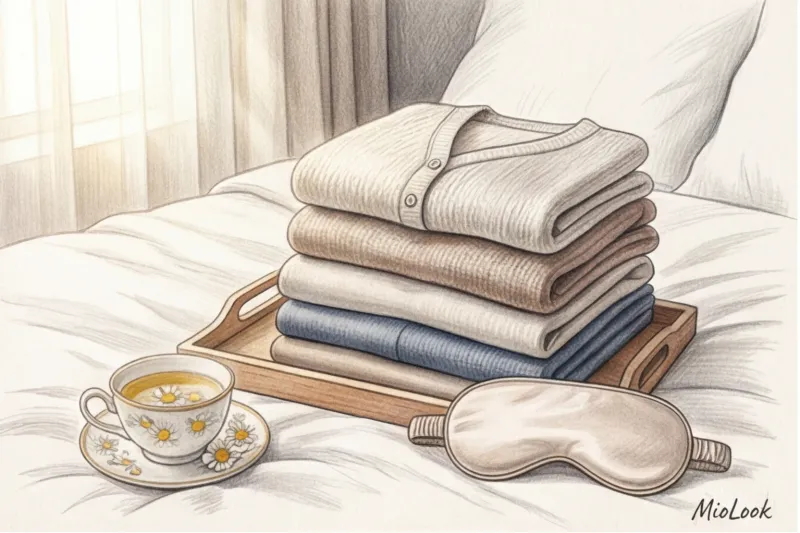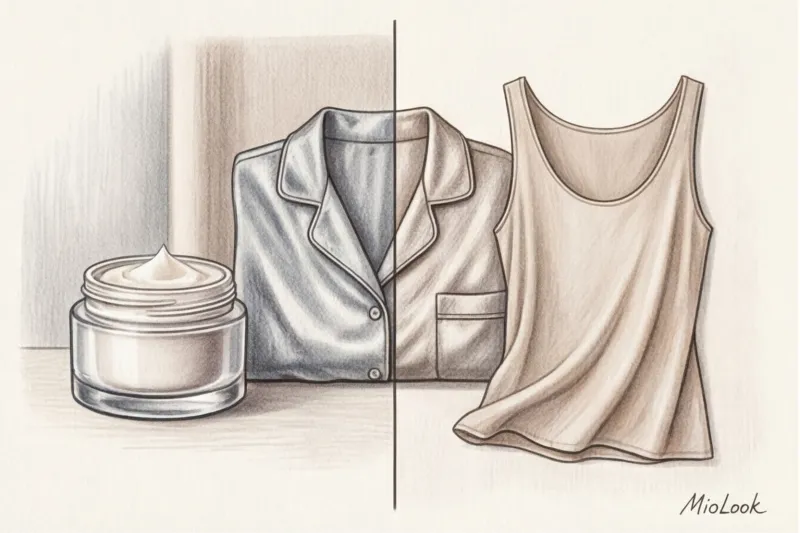
About a year ago, a client named Anna came to me. She had spent over €300 on dermatologist consultations and over-the-counter ointments trying to get rid of "mysterious rashes" on her back and shoulders. Doctors were at a loss, changing her skincare routine, and putting her on a strict diet. The solution turned out to be ridiculously simple: during a wardrobe review, I asked Anna to show me what she wore to bed. It was a beautiful but old nightgown made of thick polyester with rough lace on the shoulder blades. Once we replaced it with smooth lyocell, her back cleared up within two weeks.
As a practicing stylist, I constantly encounter women who are willing to invest hundreds of euros in a daytime wardrobe and luxury cosmetics, but sleep in faded T-shirts or cheap synthetics. However, the right pajamas for sensitive skin — it's not a luxury, but basic hygiene and the foundation of your well-being. We discussed the architecture of a nightwear wardrobe in more detail in our A complete guide on how to choose pajamas for healthy sleep and beautiful skin Today, I want to explore a specific, practical problem: how to dress a hypersensitive body so as not to itch all night, and why the "100% cotton" label is often a blatant lie.
Why pajamas for sensitive skin are more important than expensive night cream
Somnologists use a great term - Bedding Microclimate (bed microclimate). This is the tiny space between your skin, pajamas, and blanket. According to the National Sleep Foundation, deep sleep requires a drop in body temperature of approximately 1–2 degrees Celsius. This cooling process occurs through the release of moisture.
During eight hours of sleep, an adult produces 200 to 250 ml of moisture. Imagine a glass of water. If you're wearing polyester or cheap acrylic pajamas, this moisture doesn't evaporate. It stays on your skin, mixing with sebum and creating the perfect breeding ground for bacteria.
The second problem is microfriction. When you toss and turn in your sleep (and we do this up to 40 times a night), the stiff fabric acts like soft sandpaper. If the skin barrier is already compromised by dermatitis, eczema, or simply dryness from central heating, eight hours of such microfriction will negate the effect of any soothing lotion.
Access to MioLook for €0.99 — one-time payment
A smart AI stylist will select the perfect look for home and outdoors.
Get access — €0.99 onceThe 100% Cotton Myth: Which Fabrics Really Relieve Itching and Irritation
Think a regular cotton T-shirt is the answer? I'm sorry to disappoint you. As a stylist, I often see mass-market brands manipulating naturalness. Yes, cotton breathes. But do you know how inexpensive cotton is treated to keep its shape and wrinkle less on store shelves?
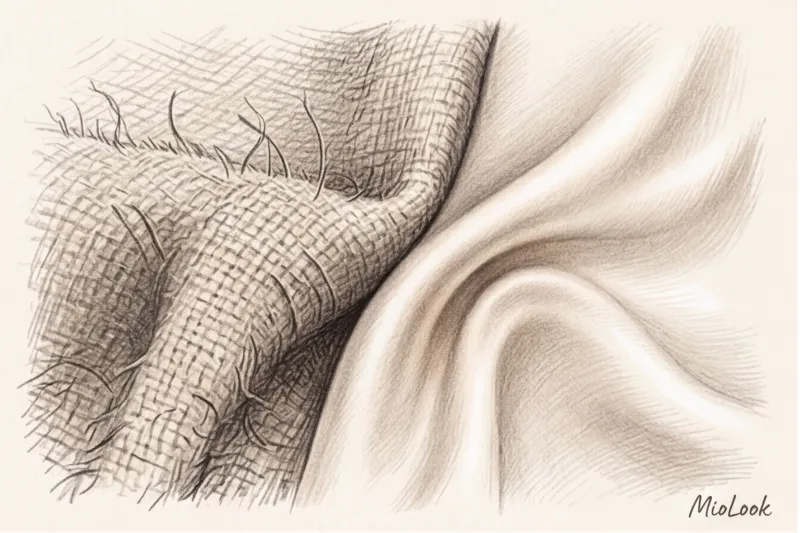
It's often impregnated with formaldehyde resins (which are what give it the "non-iron" effect). It also contains harsh chemical dyes. For those with sensitive skin, it's these impregnations, not the fiber itself, that are the main allergy trigger. Furthermore, under a microscope, the thread of regular carded cotton appears rough, with protruding microfibers. For healthy skin, this is imperceptible. For inflamed skin, it's torture.
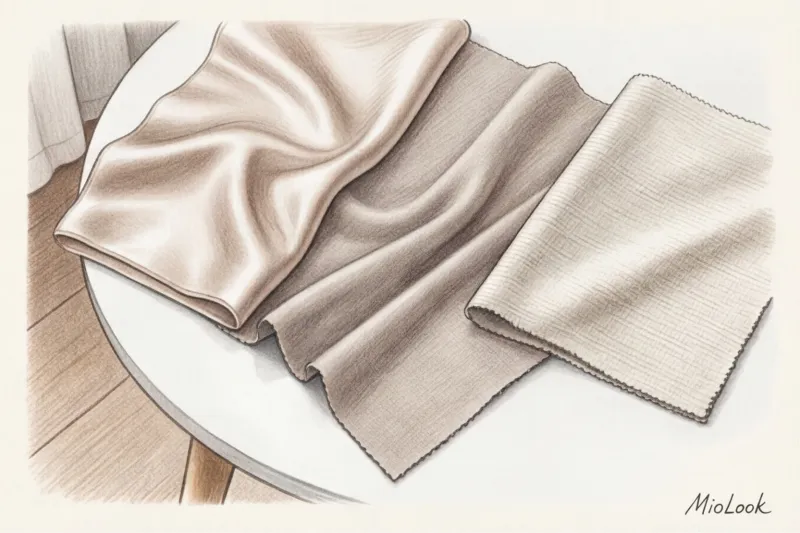
Tencel (Lyocell) and Modal are the new leaders for sensitive skin
If you want to put together a truly safe capsule for your home (by the way, this is conveniently done through the smart wardrobe function in MioLook ), pay attention to the new generation of artificial fibers. Don't confuse them with synthetics!
AND modal fabric , And Tencel (also known as lyocell) are made from natural wood (beech and eucalyptus, respectively), but using a technological process. Their main advantage for sensitive skin is the absolute, benchmark smoothness of the thread. TENCEL™ fibers absorb 50% more moisture than regular cotton and instantly wick it away. Your skin stays dry all night.
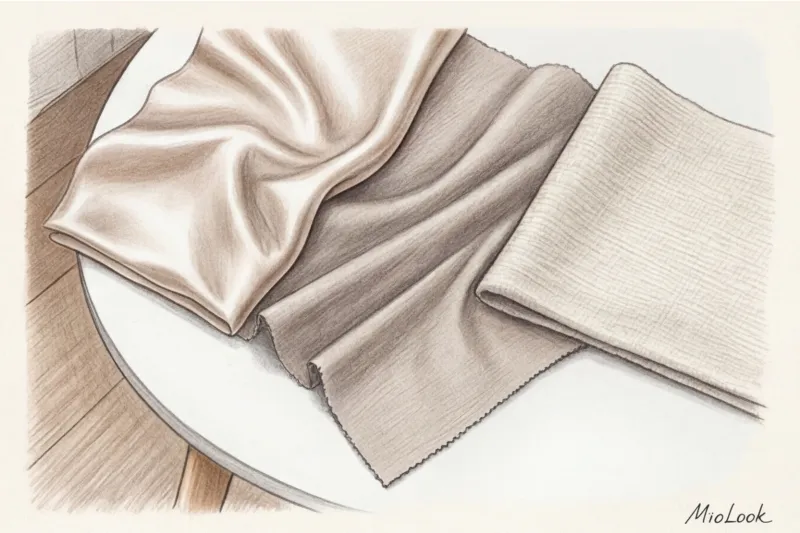
Natural silk: an investment in smoothness and coolness
Silk is a protein composed of 18 amino acids similar to those found in human epidermis. Dust mites are physically unable to infest natural silk, making it an ideal choice for those with asthma and severe allergies.
But there's a strict rule: never confuse natural silk with cheap polyester satin (often labeled "silky touch" or "silk satin" in mass-market stores). Polyester has the same shine, but it creates a greenhouse effect. Real silk is expensive (pants will cost at least €100-150), but for those with severe neurodermatitis, it's literally a cure.
Your perfect look starts here
Join thousands of users who look flawless every day with MioLook, starting with their wardrobe at home.
Get access — €0.99 onceThe devil is in the details: seamless patterns, tags, and toxic dyes
Fabric is only half the battle. The construction of pajamas can ruin the magic of expensive materials. When I'm shopping, I always make clients do the "wrist test": turn the pajamas inside out and press firmly against the inside seam of your wrist. If you feel even the slightest scratch, the item stays in the store.
For sensitive skin, look for flatlock seams or seamless technology (seamless underwear). If the seams are regular, they should be finished with soft threads (textured polyamide threads are often used; they are as soft as down).
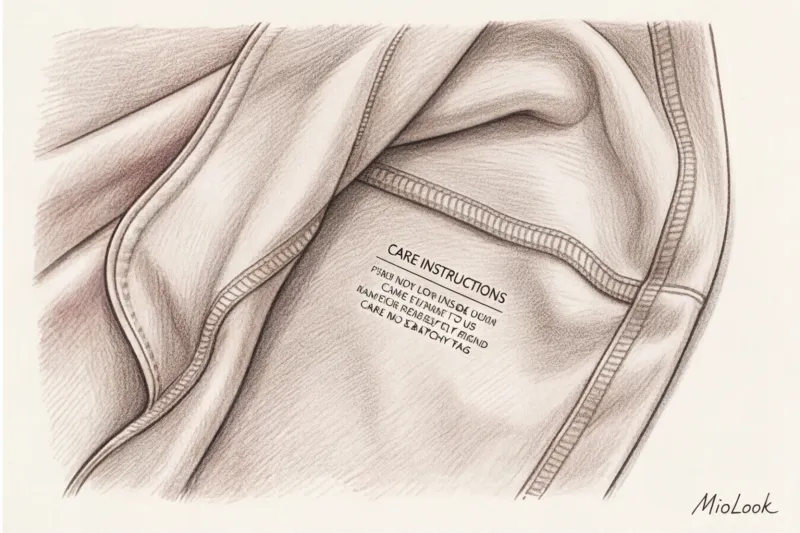
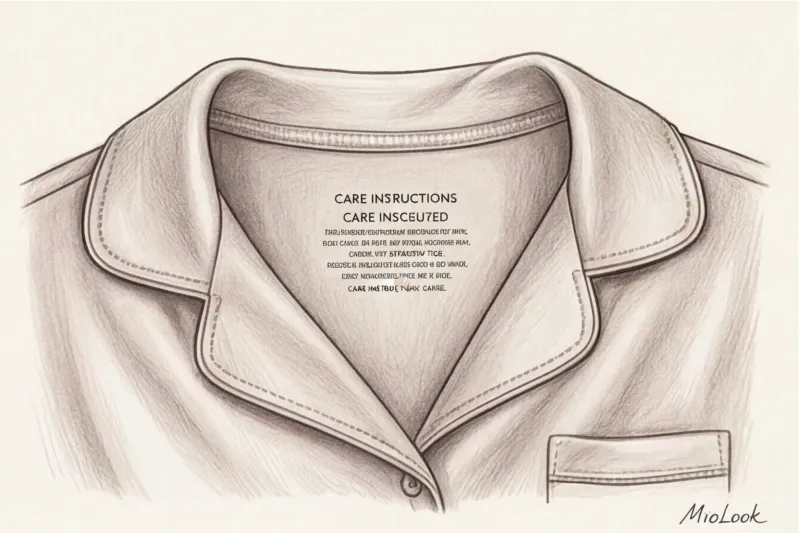
Enemy number one is sewn-in tags on the collar and side seam. I don't understand brands that sew rigid cardboard tags onto delicate modal. They should be cut off with nail scissors right down to the root (don't rip them off, otherwise you'll be left with sharp corners!). The ideal option is when the size and composition are printed directly on the fabric.
Also pay attention to the color. The richer and darker the fabric (black, deep blue, burgundy), the more chemical dyes and fixatives it contains. For hypersensitive skin, undyed fabrics (raw canvas) or light pastel shades (milky, ecru, dusty pink) are the best choices.
Where to Find the Right Sleepwear: A Review of European Brands
You don't have to overpay for specialized medical brands. There are excellent lines in the European mass market and mid-market segments, if you know where to look.
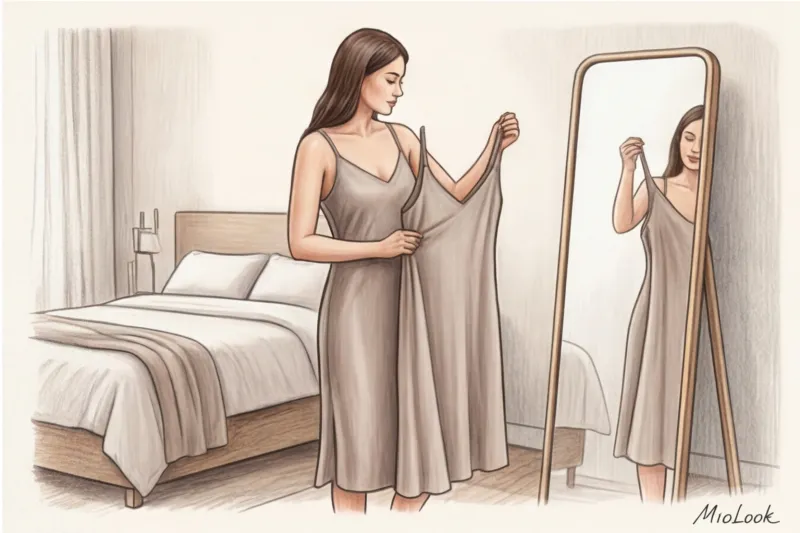
Oysho and Zara Home. Their Premium line is the only one worth checking out. Oysho makes gorgeous, minimalist sets made from 100% lyocell. The fabric flows, feels cool on the skin, and looks classy. The price range is quite reasonable: a shirt and trousers will cost you around €40–€60.
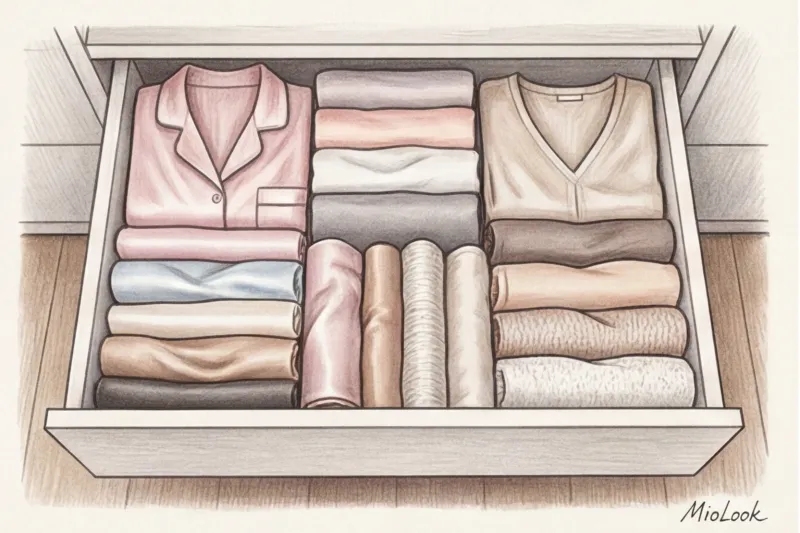
Intimissimi. Their signature pieces are basic long sleeves and pants made from a modal-cashmere blend (around €50–€80 per set). They're a winter savior: incredibly soft and warm, yet still lightweight. Fair warning: This fabric is prone to pilling when rubbed. After six months of active wear, the set will lose its formal appearance, but the softness will remain.
COS and &Other Stories. If you prefer eco-friendly fabrics for clothing and Scandinavian minimalism. COS makes excellent nightgowns from certified organic cotton, which is not treated with harsh chemicals during production. Prices start at €80.
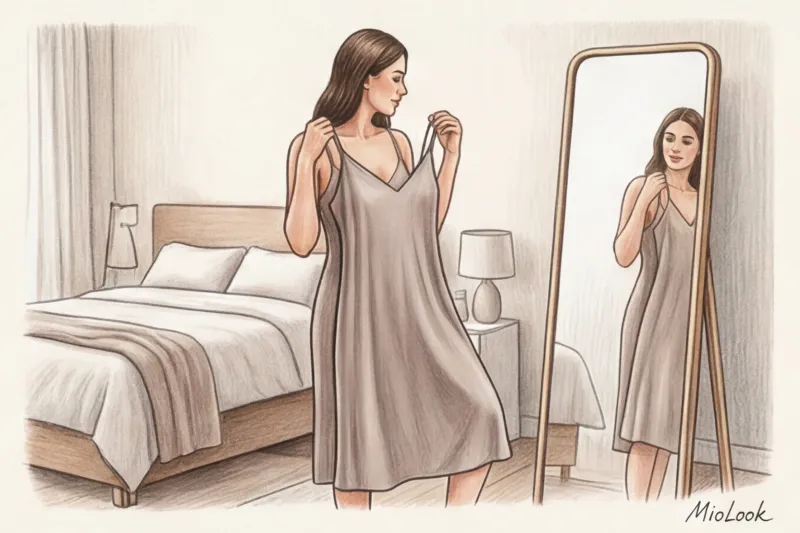
Stylist Checklist: Choosing the Perfect Pajamas for Sensitive Skin
Keep these rules in mind for your next lingerie shopping trip. Any "no" from this list is a reason to skip the purchase.
- Compound: Yes – Tencel™, Modal, natural silk, certified organic cotton. No – polyester (even 5%), acrylic, hard linen (save that for summer dresses).
- Cut: Oversized clothing only. There should be some air between the skin and the fabric. No tight elastic bands at the waist or ankles (they restrict lymph flow).
- Details: No lace inserts in tight areas (chest, back, hips). Lace, even expensive, always has a textured finish.
- Fittings: Avoid metal buttons, snaps, and zippers (a common cause of contact allergy to nickel). Only mother-of-pearl, plastic, or no fasteners at all.
Ready to clean out your wardrobe?
Try the MioLook plan for free—get organized and create stylish capsules without any commitment.
Get access — €0.99 onceFatal Mistake: How We Ruin Hypoallergenic Pajamas When Washing
I've seen dozens of cases where clients bought a luxurious lyocell set, only to complain three months later that the fabric had become itchy. The problem wasn't the brand, but the washing machine.
Regular detergent with aggressive enzymes washes out the smoothness from viscose fibers, turning delicate modal into a hard washcloth. How to properly wash delicate items in a washing machine Entire manuals have been written, but for pajamas there are two golden rules.
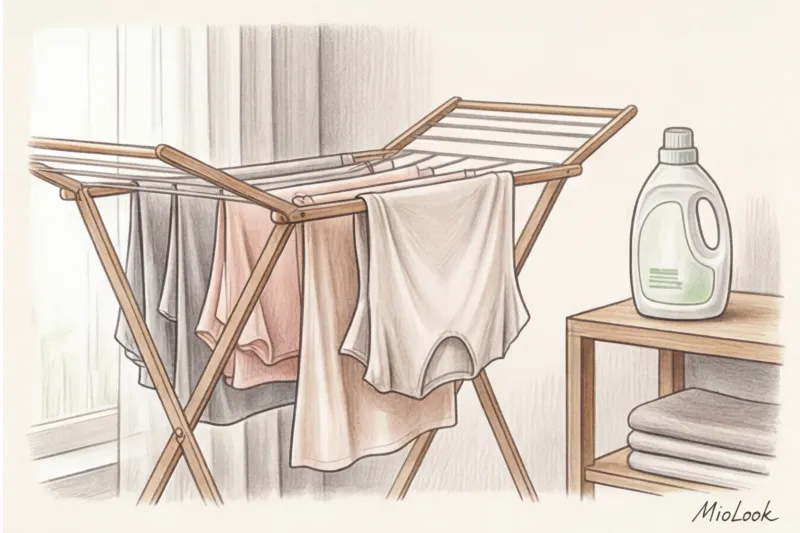
First: use only liquid eco-friendly detergents (gels) for delicate fabrics. They rinse completely out of the fibers, unlike dry powder granules, which get stuck in the weave and cause itching.
Second, and most counterintuitive: categorically refuse fabric softeners Yes, they advertise "incredibly soft." In practice, fabric softeners coat the fibers with a waterproof silicone film. Pajamas stop absorbing moisture (the same moisture we talked about at the beginning) and lose all breathability. If you want to soften the water, add half a cup of regular white vinegar to the rinse cycle. The odor will be gone, and the fabric will be impeccably soft.
To sum it up: quality sleepwear isn't about lace and seduction; it's about physical comfort. If you stop buying five cheap synthetic sets and invest those €100-€150 in two proper lyocell or high-quality modal pajamas with flat seams, you'll notice the difference within the first night. Your skin is capable of being grateful; you just need to stop messing it up.