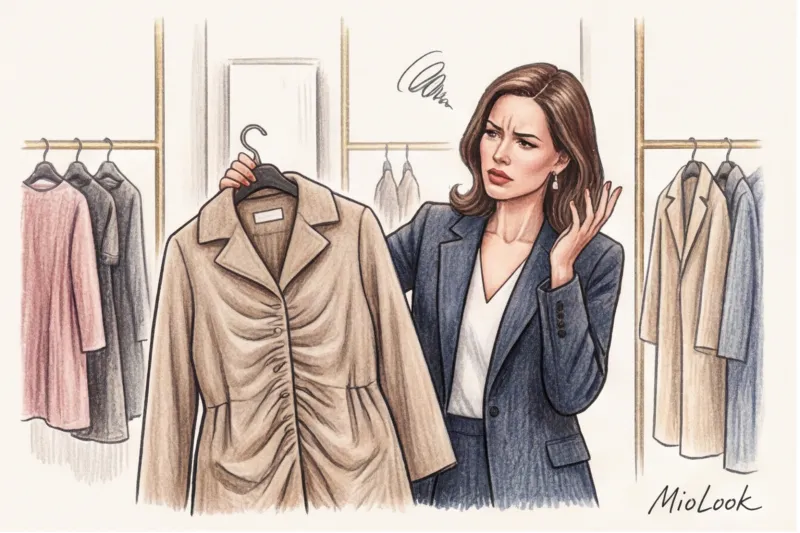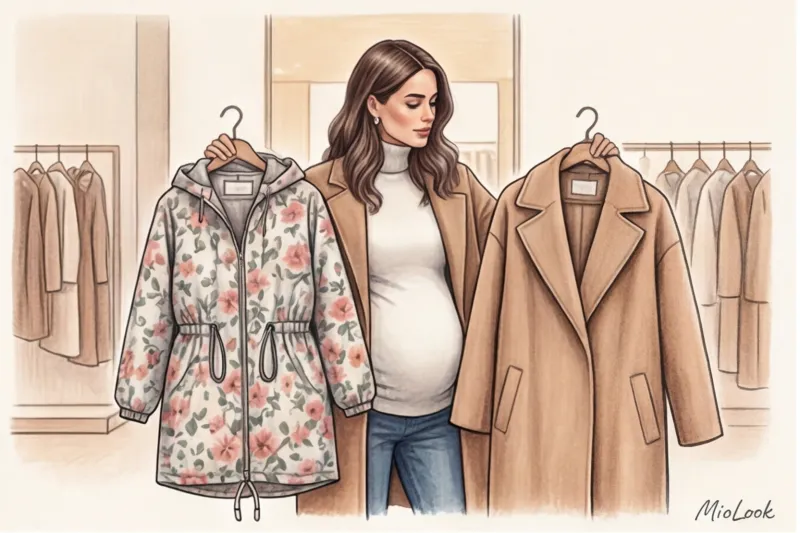
Four years ago, my client Anna, eight months pregnant, stood in the fitting room of a high-street store, barely holding back tears. She was wearing a typical maternity jacket with a special "belly pad." It made Anna's figure look like a shapeless ball, the fabric creaked uncomfortably, and the drawstring under her bust visually added ten kilograms. That day, we made a radical decision: we left the jacket in the store and went to a boutique to buy a classic camel wool robe coat. Spoiler: Anna still wears it today, four years after giving birth.
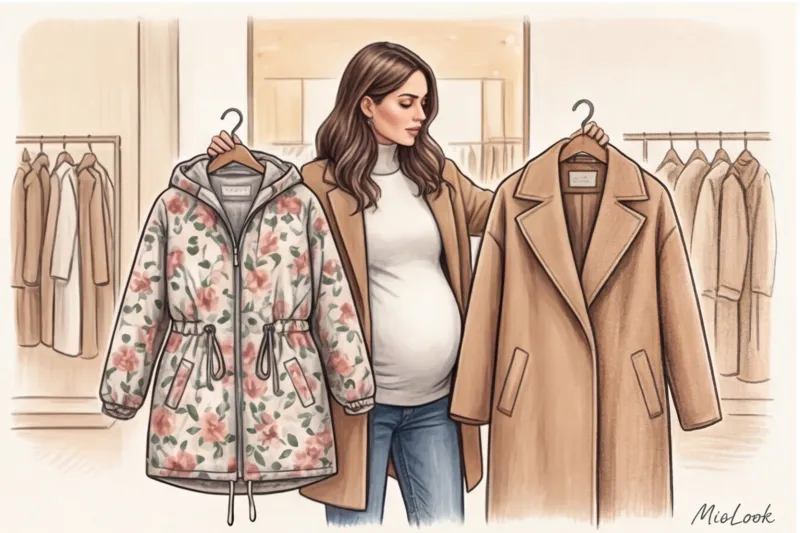
As a stylist, I constantly encounter the same misconception: women believe that outerwear for the 3rd trimester It should definitely be purchased in specialized departments for expectant mothers. But wardrobe mathematics and the laws of style say otherwise. We've already discussed the anatomy of cut in more detail in our The complete guide to stylish maternity outerwear , and today I want to prove to you why buying things with the "maternity" label in the last months is most often a waste of money.
Why Special Outerwear for the Third Trimester Is a Marketing Myth
The maternity clothing industry is built on women's fears of body changes. Brands offer quick and often low-quality solutions, knowing you'll only need the item for a few months. Let's calculate the profitability using the Cost-Per-Wear formula (cost per outfit).
The average specialized winter jacket costs around €150. During the third trimester, you'll wear it for a maximum of 60-90 days. After giving birth, its specific cut (flared hem, gathers) will make it unsuitable for regular wear. Bottom line: one jacket costs around €2.
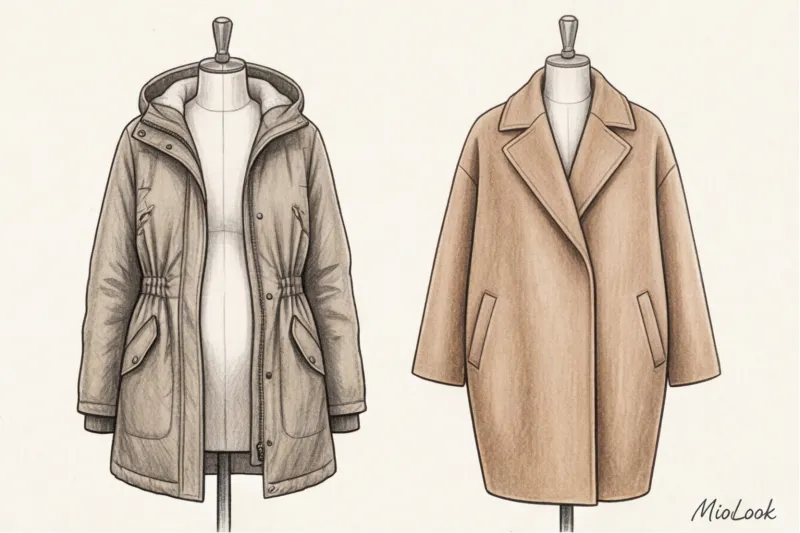
Now let's take a high-quality wool robe coat or a well-tailored oversized down jacket from the regular collection for €400. You'll wear it for three months before giving birth and for at least four to five seasons afterward. With 500 days of wear, the cost per garment drops to €0.80. The difference is clear.
"Investing in quality fabrics and architectural cuts always pays off better than buying disposable synthetic items designed solely to accommodate a growing belly."
Furthermore, maternity brands often skimp on ingredients. If you look at the labels, you'll see a preponderance of polyester and cheap acrylic. I wrote in detail about how to recognize low quality based on other details in my article about 10 Signs of Cheap Clothing.
Your perfect look starts here
Join thousands of users who look flawless every day with MioLook. Create a smart wardrobe that adapts to your changing needs.
Get access — €0.99 onceWhat to look for in fabric composition: warmth without pressure on the spine
In the final months of pregnancy, your center of gravity shifts, placing enormous strain on your lower back. An extra 500–700 grams from your winter jacket can cause back pain in the evening. Your goal is to maximize your body temperature while minimizing your weight.
According to a 2023 study in the Textile Research Journal, alpaca and cashmere fibers, due to their hollow structure, retain heat 30–40% more effectively than dense sheep's wool or cheap synthetic padding, while weighing significantly less.
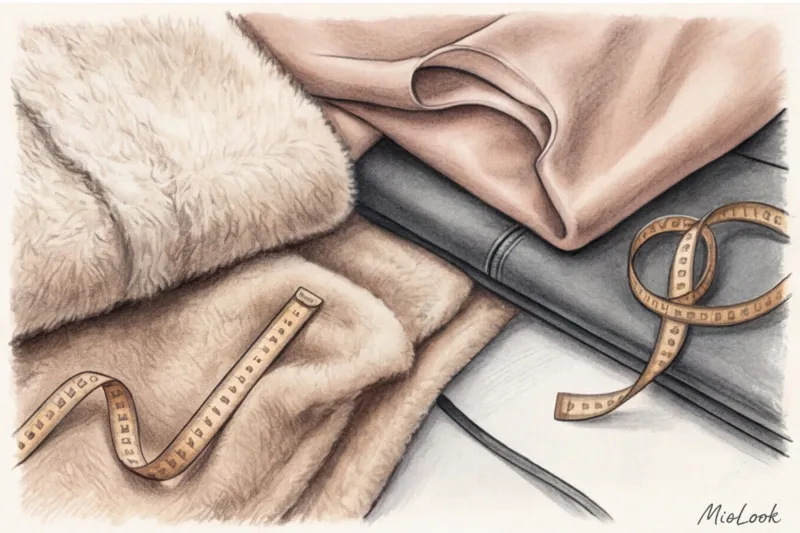
- Alpaca and cashmere: A coat containing these fibers (even if they are only 15-20% in the composition) will be light as a cloud, but will warm you better than heavy cloth.
- Merino wool: Excellent balance of price and quality. It's flexible and drapes beautifully.
- Eco-friendly insulation materials: If you're choosing a down jacket, look for high-tech membranes or eco-down (such as Sorona or Thinsulate). They create a thin layer that won't make you feel fluffy but will protect you from the piercing wind.
Selecting the right materials is the foundation. Be sure to brush up on your knowledge by checking out our article: Fabric composition for clothing: which one is better to choose?
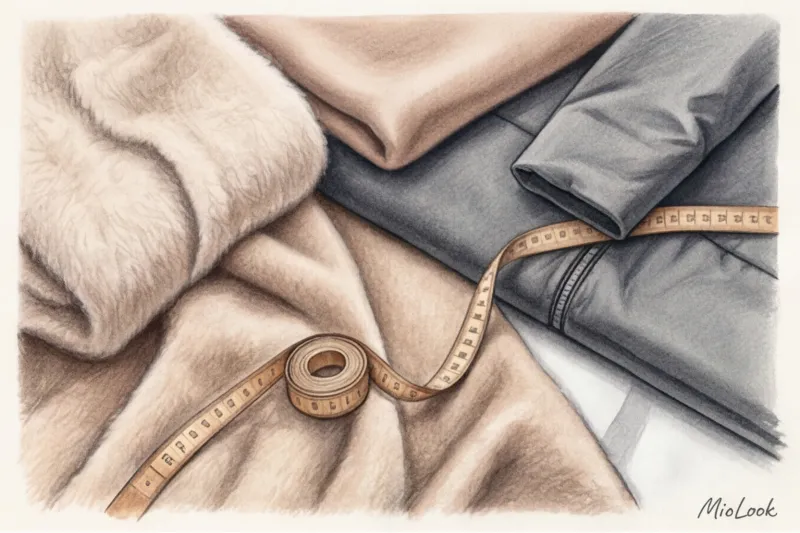
4 Perfect Outerwear Styles for the 3rd Trimester (That You'll Wear Later)
Giving up specialized jackets doesn't mean you have to suffer from discomfort. Regular collections from brands (from COS and Massimo Dutti to premium labels) offer styles that perfectly suit a changing figure. To avoid getting the proportions wrong and to see how a piece will fit in your current wardrobe, I always advise my clients to upload photos of planned purchases to MioLook - this saves a lot of time and nerves.
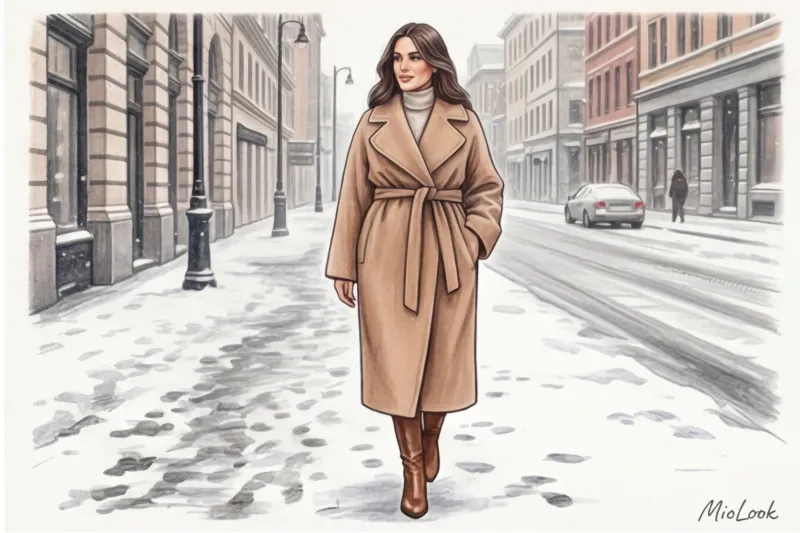
1. Wrap coat
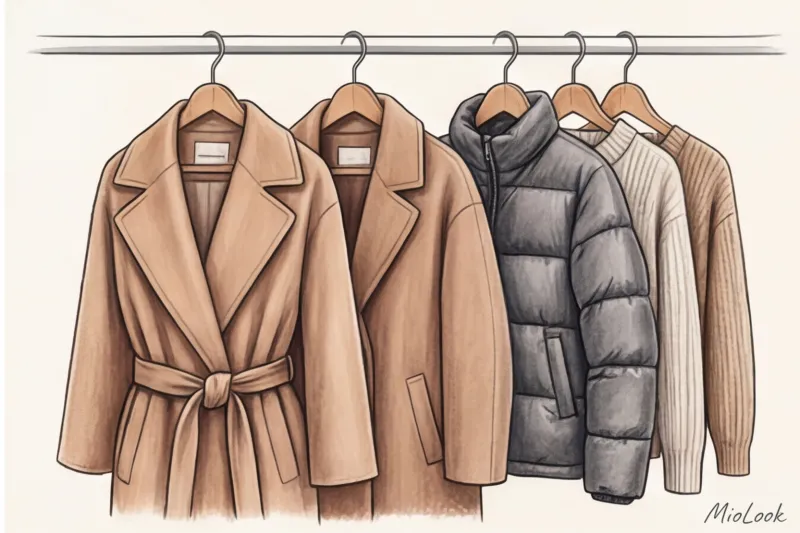
My absolute favorite and a major investment. The lack of a rigid fastening, buttons, or zippers allows you to adjust your waist size down to the millimeter. In your ninth month, you simply tie the belt just above your belly, creating an elegant empire silhouette. The soft drape conceals figure flaws, and the V-neckline elongates your figure.
2. Cocoon jacket
An architectural cut that dates back to the 1950s (thanks to Cristóbal Balenciaga). The cocoon's unique feature is that it initially offers extra volume at the waist and hips, but tapers toward the bottom. This means the hem of the jacket won't flare out and allow cold air to reach the stomach.
3. Oversized straight-cut down jacket
A straight cut with ample air volume is a great alternative for casual wearers. The key: the down jacket should have a matte finish (a sheen visually increases volume) and be free of horizontal stitching that would cut into the figure.
4. Capes and ponchos
If you travel by car or live in a region with mild winters, a thick wool cape will be a lifesaver. It doesn't restrict the abdominal area at all and looks incredibly classy. Incidentally, this element is often used when creating basic wardrobe for short women , as it creates a continuous vertical line.
Access to MioLook for €0.99 — one-time payment
A smart AI stylist will select the perfect look from your clothes, taking into account any changes in your figure.
Get access — €0.99 onceAn important rule for the shoulder seam for oversized clothing
This is the biggest mistake 90% of women make: they simply buy something three sizes too big. This is disastrous for your silhouette.
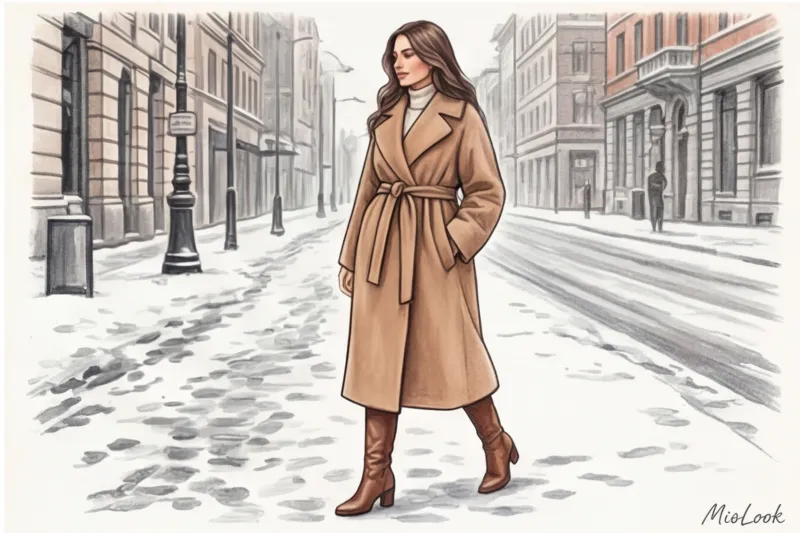
The difference between a properly oversized garment and a second-hand item is armhole lines Even if the coat is very voluminous at the waist, the shoulder seam should either sit squarely on your natural shoulder or have a deliberately deep drop (like a batwing). If the seam simply slips 3-5 centimeters, the look instantly goes from classy to sloppy.
A Secret Stylists' Trick: How to Wear Regular Clothes in the 9th Month
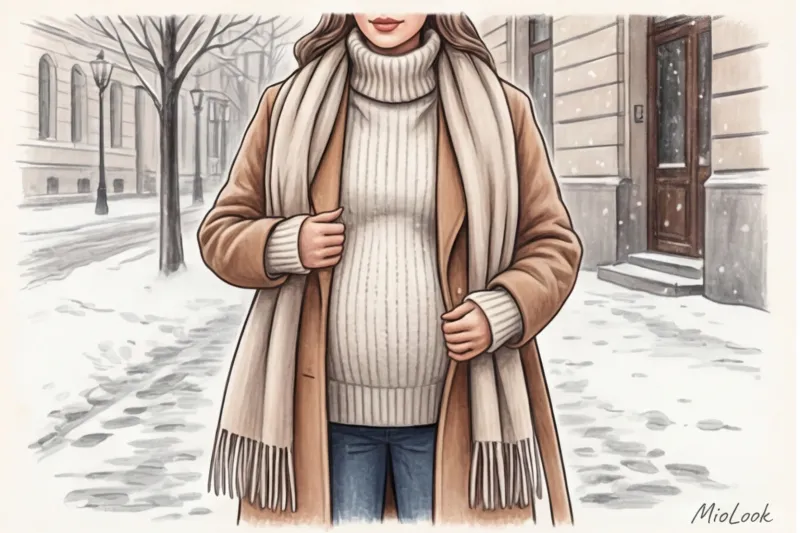
What should you do if your third-trimester outerwear stops buttoning a couple of weeks before your due date, and you absolutely don't want to buy new clothes for the next 14 days? Use a trick that every fashion influencer uses.
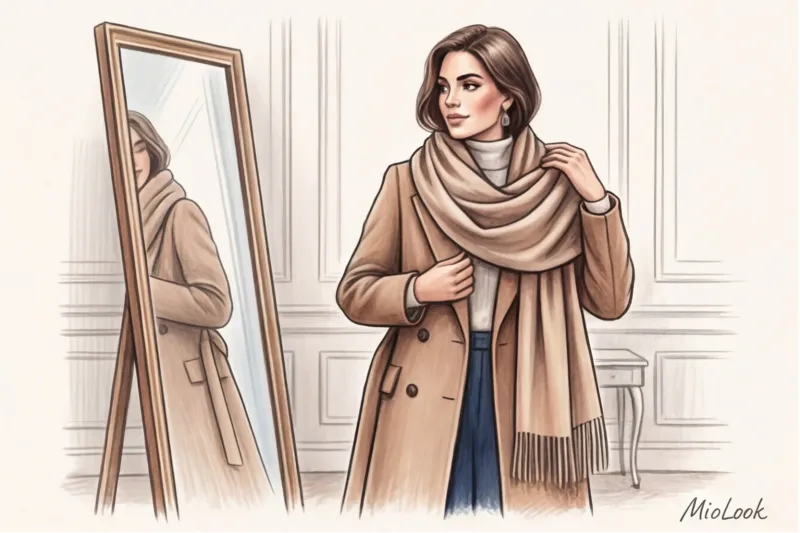
Wear your coat or jacket unbuttoned. The two vertical flaps of an unbuttoned coat create a sharp, vertical optical line that's incredibly slimming and streamlined.
But how not to freeze?
- Wear a thick base layer: a cashmere sweater or a quality merino turtleneck.
- Use thermal underwear (we wrote about the layering rules in detail in the article about The stylist's 3-layer rule ).
- Drape a large, thick scarf made of natural wool over your coat. Drape it so it covers your chest and stomach, securing the ends under your coat collar.
Let me make it clear right away, honestly outlining the boundaries of this method: this technique is categorically doesn't work , if you're facing an hour-long walk in -20°C temperatures. But for a simple "walk from your car to the office or clinic" in a European winter, this is the most elegant solution.
Checklist: Test drive outerwear in the fitting room
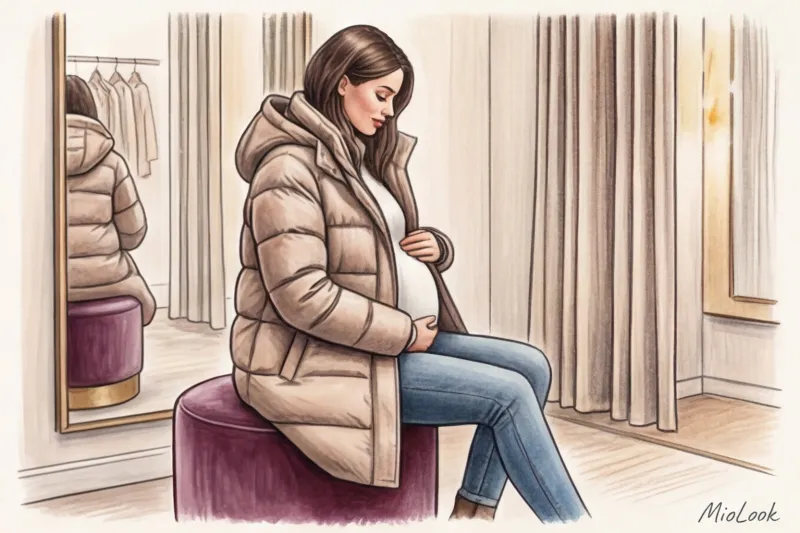
A pregnant woman's physiology requires a special approach to fitting. What seems comfortable in front of a mirror while standing can turn out to be a torture device when you get in the car. Here's my professional checklist:
- Sit with your jacket buttoned up. This is the most important rule. The bottom edge of the zipper or button shouldn't dig into your lower abdomen, and the collar shouldn't choke you when you try to take a deep breath.
- Check the ease of fastening. At 8-9 months, bending over to the hem of a long down jacket to get the tight zipper is a challenge. Look for two-way tractor zippers that slide like butter, or large snaps.
- Lining slip test. When putting on a winter coat over a thick sweater, you shouldn't feel any resistance. Pay attention to the lining material: cupra or viscose are ideal. Cheap polyester not only generates static electricity but also slows down your hand movements. Check out our secrets of quality lining fabric before shopping.
Summary: Smart Investments in a Mom-to-Be's Wardrobe
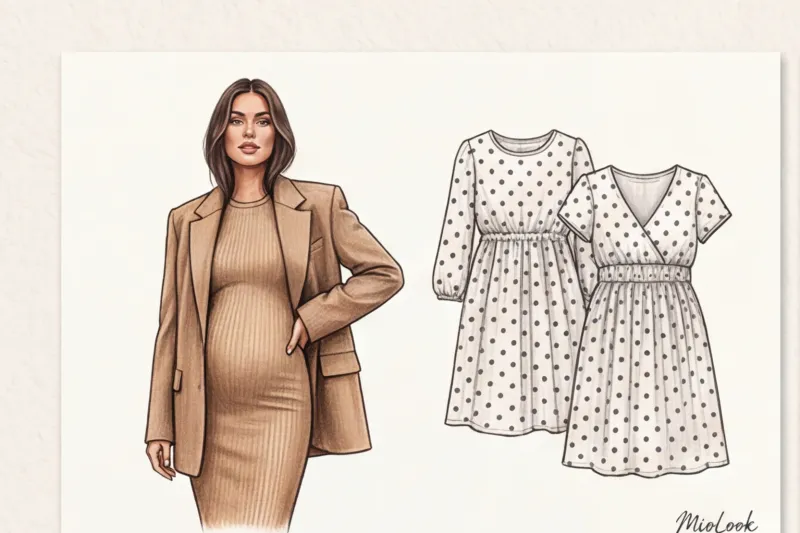
Pregnancy isn't a reason to abandon your style DNA and hide behind shapeless synthetics. The right outerwear for the third trimester is a high-quality piece from a regular collection with a well-thought-out composition (alpaca, cashmere, or membrane) and an architectural cut (robe or cocoon), which will remain relevant even after the baby is born.
My advice for today: before heading out to the store to buy something new, take a look through your current fall/winter wardrobe. It's quite possible that the perfect oversized coat from a couple of years ago is already hanging in your closet—you just need to style it correctly.
Ready to get started?
Try the MioLook plan for free—no commitments required. Organize your closet and create stylish looks every day.
Get access — €0.99 once