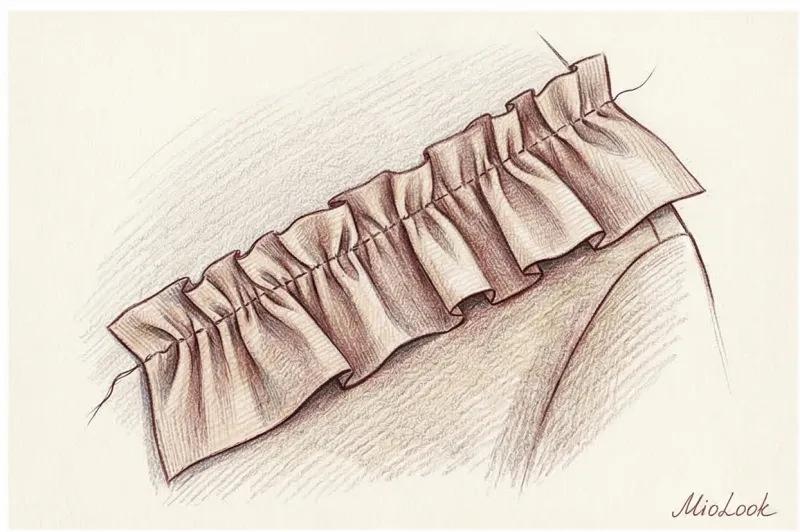
A frill is a decorative garment detail consisting of a straight strip of fabric gathered or pleated along one edge. It is always cut on the straight grain from cotton, silk, or chiffon to create additional volume and texture. Designers use this trim to finish necklines, cuffs, and hems.
What Are Frills in Clothing?
Understanding the construction of garments helps you choose pieces that flatter your silhouette. Frills in clothing serve as structural and decorative elements that transform a basic pattern into a dynamic design. By manipulating a simple straight strip of fabric, tailors create three-dimensional waves that catch the light and add movement to the silhouette.
Historically, these gathered strips indicated social status and wealth, as they required extra fabric and meticulous hand-stitching. Today, they remain a staple in both haute couture and everyday ready-to-wear collections. You will find them adorning the hems of summer skirts, framing the button plackets of romantic blouses, and adding flair to evening gowns. Their primary function is to introduce texture and draw the eye to specific areas of the body, making them a powerful tool for visual balance.
The Difference Between Frills and Ruffles
Shoppers and even some retailers often use terms interchangeably, but understanding the difference between frills and ruffles is essential for grasping garment construction. The distinction lies entirely in how the fabric is cut and where the gathering seam is placed.
A frill is cut along the straight grain of the fabric. The tailor sews a gathering thread strictly along one edge and pulls it tight. This creates a piece with one flat edge attached to the garment and one wavy, free-hanging edge.
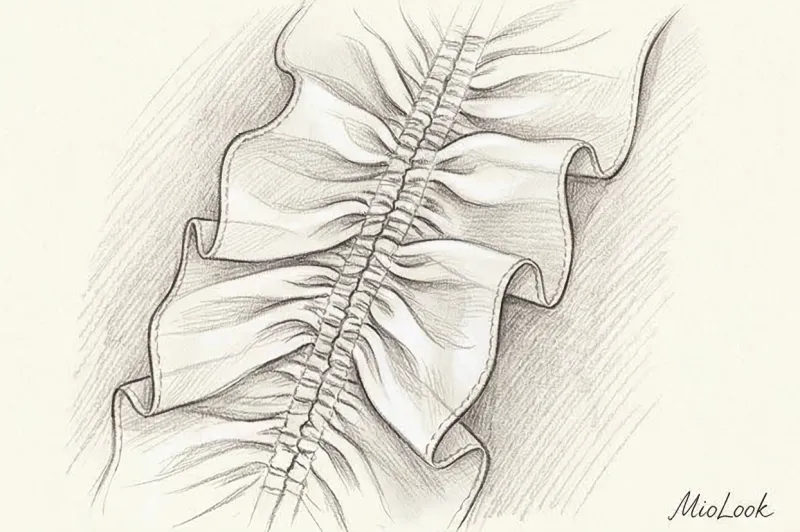
A ruffle is also cut from a straight strip of fabric, but the gathering seam runs directly down the middle. When attached to the garment, a ruffle produces two free-hanging, wavy edges that mirror each other. This creates a fuller, more centralized volume compared to the directional flow of a frill.
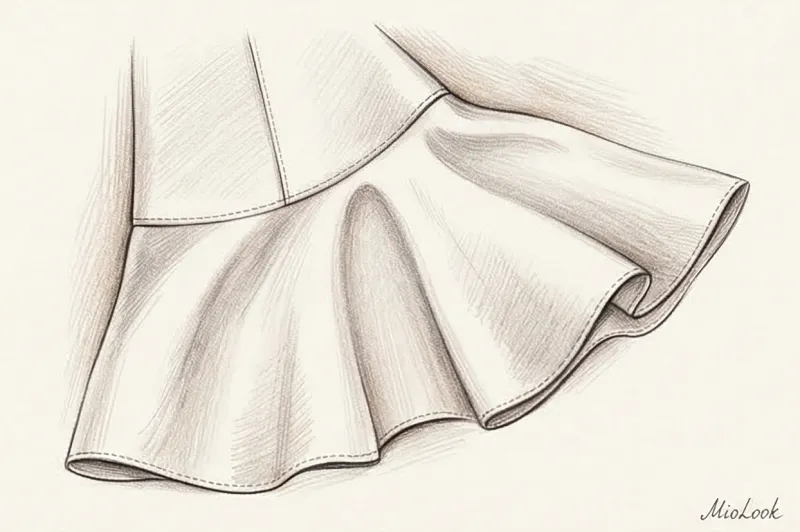
Another related term is the flounce. Unlike the other two, a flounce is cut in a circular or spiral shape. It relies on its geometric cut rather than a gathering thread to create soft, cascading waves. Flounces drape smoothly without the bulky seam allowance typical of gathered straight strips.
Common Types of Frills in Garments
Depending on the desired aesthetic and the fabric used, designers employ several techniques to form these decorative edges. The method of folding or gathering dictates the final look of the garment.
- Gathered: A straight strip of fabric is evenly pulled together with a single thread along the edge. This technique produces soft, chaotic waves. It works best with lightweight materials and is a defining feature of breezy summer dresses and casual blouses.
- Pleated: Instead of pulling a thread, the fabric is folded into precise, uniform pleats before being sewn down. These can be sharp knife pleats or structured box pleats. Pleated variations offer a crisp, tailored appearance, frequently seen on tuxedo shirts, school uniforms, and structured cotton garments.
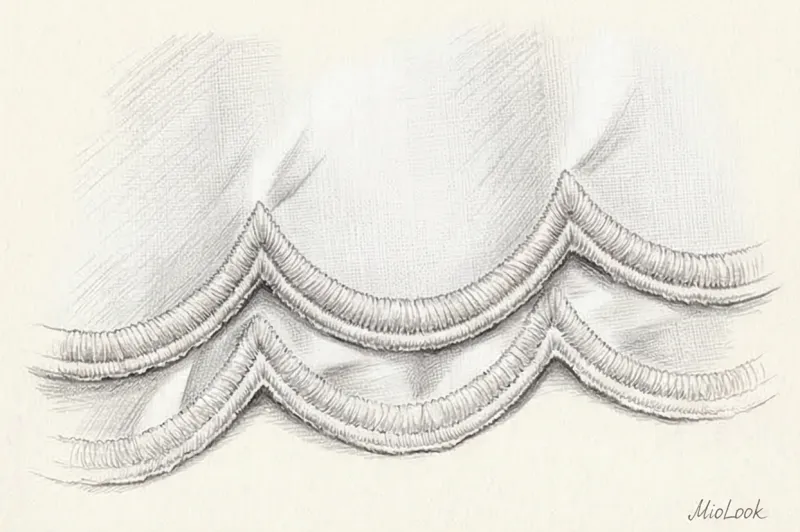
- Multi-tiered: Several rows are sewn overlapping one another. This cascading effect builds significant volume and movement. Tiered constructions dominate bohemian maxi skirts and dramatic evening wear.
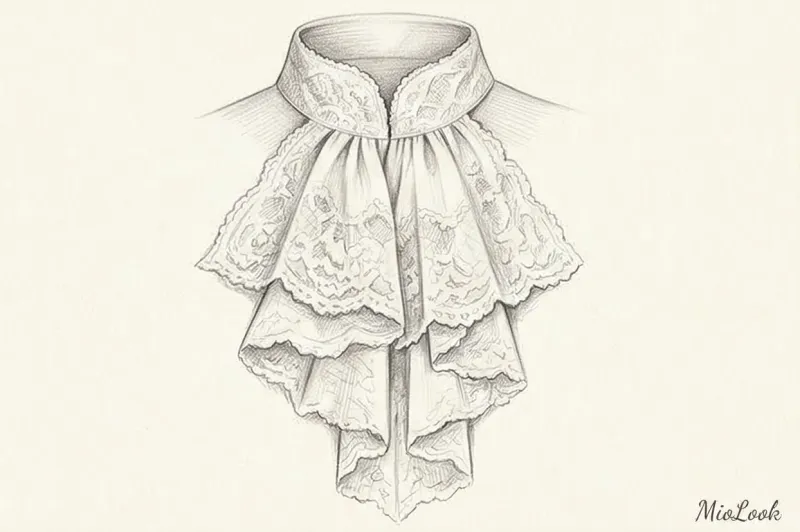
- Edging: Narrow, subtle strips used primarily to finish raw edges. They provide a delicate decorative border along necklines, armholes, or cuffs without adding overwhelming bulk to the silhouette.
Key Characteristics of Frill Details
The behavior of this decorative element depends heavily on its construction and the chosen textile. The table below outlines the standard characteristics of different applications.
| Type | Typical Width | Best Fabrics | Visual Effect |
|---|---|---|---|
| Gathered | 2 to 10 cm | Chiffon, silk, lightweight cotton | Soft, organic volume with fluid movement |
| Pleated | 1 to 5 cm | Poplin, stiff cotton, linen | Structured, geometric, and tailored |
| Multi-tiered | 10 to 20 cm per tier | Tulle, organza, georgette | Dramatic expansion and cascading texture |
| Edging | Under 2 cm | Lace, fine cotton, satin | Subtle, refined border finishing |
Styling Rules for Outfits with Frills
Integrating voluminous details into an everyday wardrobe requires a strategic approach to proportions and textures. Because these elements naturally draw attention and add bulk, they must be balanced to maintain a cohesive look.
The primary rule of proportion dictates that a voluminous top should be paired with a streamlined bottom. If you wear a blouse featuring bold, cascading details down the front, balance it with straight-leg trousers, tailored pencil skirts, or classic denim. Avoid pairing a heavily detailed top with a tiered skirt, as the competing volumes will overwhelm the figure.
Mastering texture contrast elevates the outfit from basic to sophisticated. Romantic, airy details crafted from translucent chiffon or fine silk look exceptionally striking when juxtaposed with dense, utilitarian materials. Try pairing a delicate silk top with raw denim jeans, smooth leather trousers, or a heavy wool blazer. This contrast tones down the inherent dressiness of the garment, making it perfectly suitable for daytime wear.
You can also incorporate these details into a strict business wardrobe if you control the scale. Small, neat edging on a stand-up collar or subtle pleated cuffs peeking out from under a structured blazer add personality without violating office dress codes. The key is to choose crisp fabrics like white poplin and keep the width of the trim minimal.