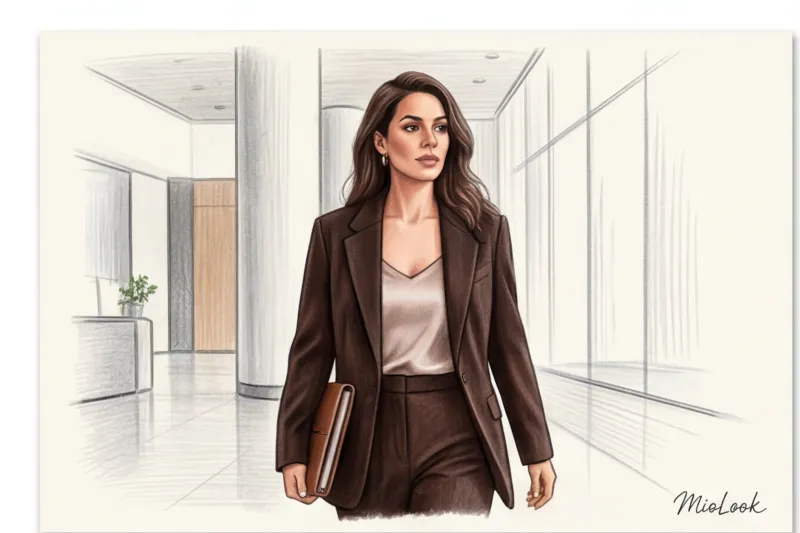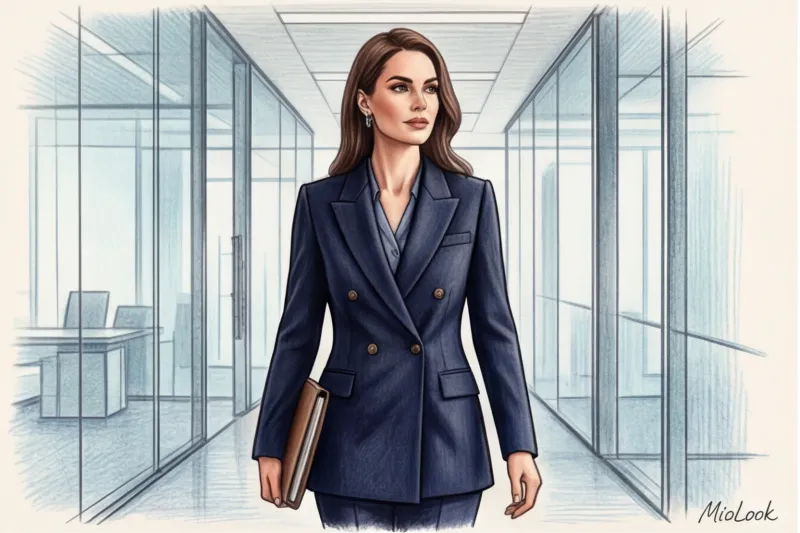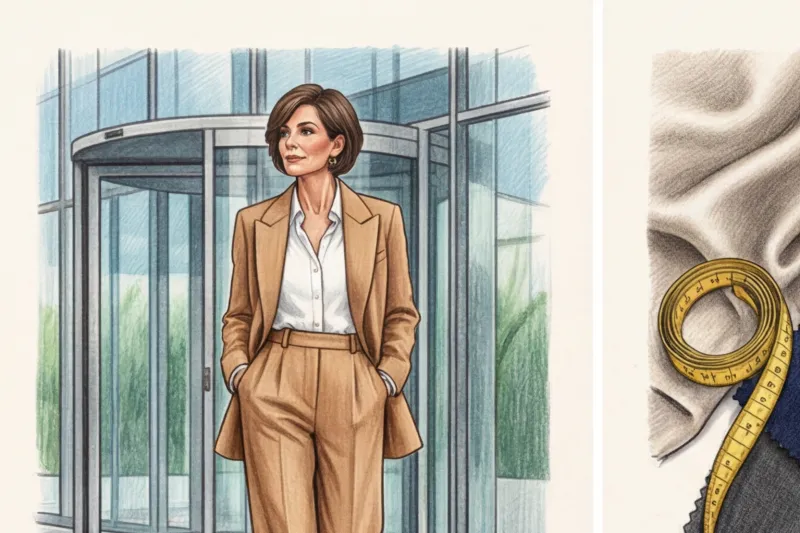
A client, a top manager at a large corporation, once approached me. She honestly admitted that she had spent over €5,000 on formal suits from luxury brands, but the results were disappointing. Looking in the mirror, she saw an ordinary bank clerk, not a confident business owner. The problem lay not in the price tags or her figure, but in an outdated approach to formal attire.
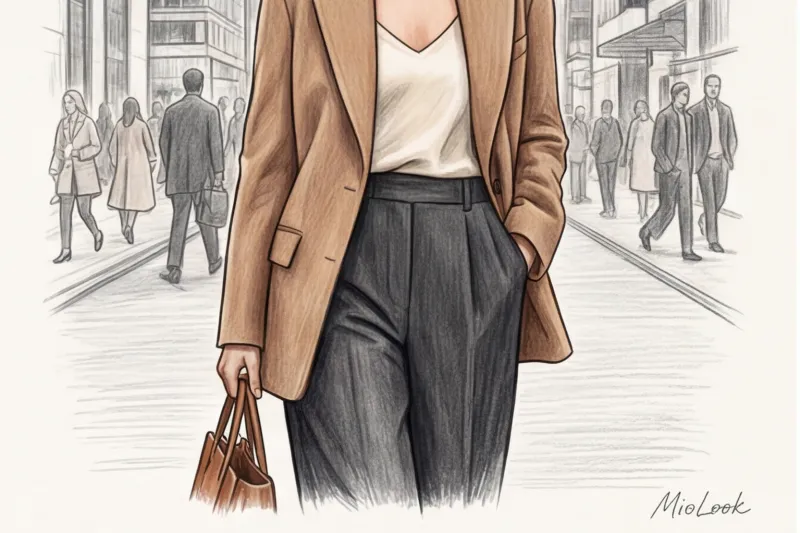
We're used to thinking that a formal look is a white shirt, buttoned up, and a fitted jacket. But today classic clothing style for women operates under completely different rules. In this article, I'll show you how, using architectural cutting, the rule of texture clashes, and clever micro-styling, you can make your business wardrobe luxurious, classy, and, most importantly, comfortable.
New Reality: How Classic Women's Clothing Has Changed
The pandemic has forever changed the DNA of formal attire. According to McKinsey's "State of Fashion 2024" report, we're witnessing a global shift toward a hybrid wardrobe. Strict dress codes are giving way to a smarter format, where comfort is no longer synonymous with sloppiness. We discussed why the "clean" office-cor aesthetic no longer works in our a complete guide to women's clothing styles.
The main rule of the new classics: rigor is achieved through the architecture of the cut, not through a tight fit. The difference between "looking like a performer" and "looking like a leader" lies in volume and airiness. If your jacket restricts your movements when you raise your hand for coffee, it doesn't add status to you; it conveys constraint.
Business attire today isn't armor that's hard to breathe in. It's your professional avatar, designed to work for you, not drain your energy by midday.
Your perfect look starts here
Join thousands of users who look flawless every day with MioLook. Artificial intelligence will help you digitize your closet and create looks for any work week.
Get access — €0.99 onceThe Rule of Three Textures: A Secret Technique of Practical Stylists
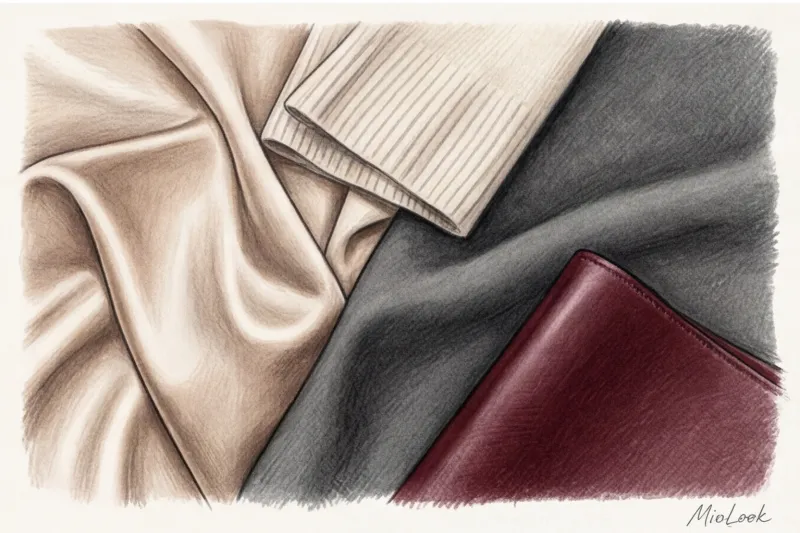
Have you ever noticed why influencers' looks seem complicated and expensive, even when they're wearing basic items? The secret is conflict of materials Monotextured looks, where smooth, fine wool sits next to equally smooth cotton, almost always look flat and boring.
For an image to come to life, it must contain at least two (or better yet, three) different textures:
- Matte vs. Shiny: heavy matte crepe and flowing wet silk.
- Smooth vs. Shaggy: dense suiting fabric and fluffy cashmere or suede.
- Dense vs. translucent: tough leather and weightless cupra.
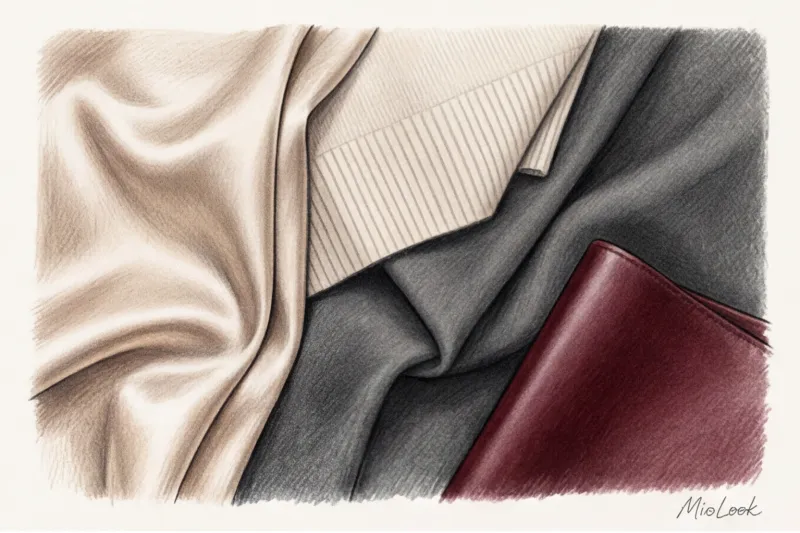
In my experience, adding just one piece with a bold texture (for example, a bouclé jacket or high-quality faux leather trousers) has saved dozens of boring office looks. You can use the third layer rule in clothing to seamlessly incorporate a complex texture: for example, by layering a textured tweed jacket over a silk blouse.
The Main Myth of Classics: Why a Basic Fitted Shirt Will Forgive You
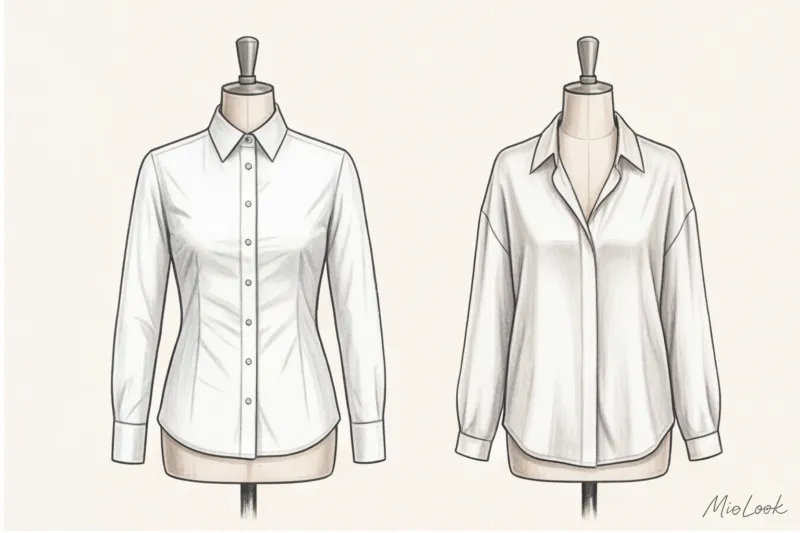
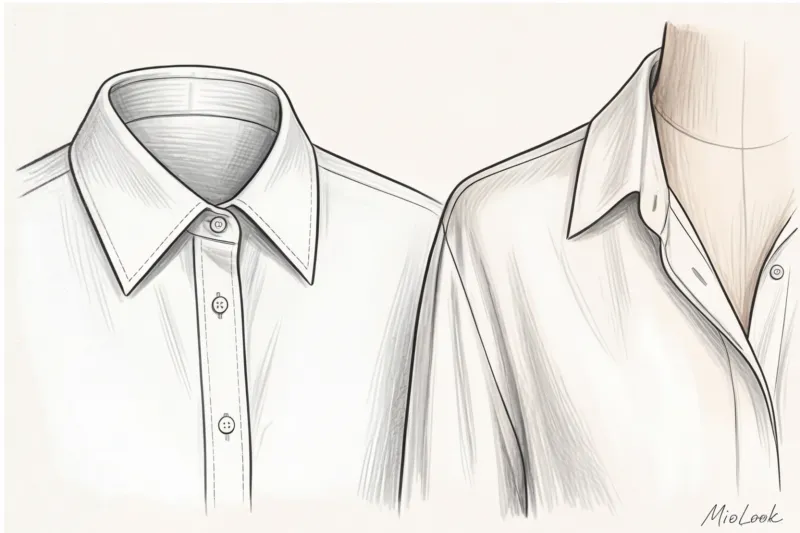
It's time to dispel one of the most persistent stereotypes: a fitted white cotton shirt with a stiff collar is not a "universal basic." It's the most dangerous item in a business wardrobe. In 90% of cases, it makes the look flat, cheap, and reminiscent of the 2000s office uniforms.
Modern classics require some air between the body and the fabric. What should you buy instead of the notorious fitted shirt? You have two options:
- Loose poplin shirt "off the shoulder" (oversized) She conveys relaxed confidence.
- A flowing blouse made of thick silk or viscose. It creates that very play of light and drapes softly under the jacket.
Don't forget about micro-styling. Simply putting on a shirt isn't enough. Casually roll up the sleeves to mid-forearm, unbutton one more button than strictly required (if the neckline allows), and tuck in your top with a slight flare. These millimeters and nuances make the difference between "putting it on" and "styling it up."
Ready to start your wardrobe audit?
Try the free plan—no commitments required. Upload your essentials to MioLook, and our smart AI stylist will show you how to pair them.
Get access — €0.99 onceWardrobe Investment Portfolio: What You Shouldn't Skimp On
Over 12 years of working as a stylist, I've learned a hard and fast rule: fast fashion in the business sector is always a waste of money. Mass-market fashion is great at selling trendy T-shirts, but it's not up to par with architectural tailoring.
Let's count Cost-per-wear (CPW) A basic polyester jumper from a mass-market store for €50 will lose its appearance after 3-4 washes. Its CPW is around €12-16 per wear. A high-quality cashmere jumper for €400, which you'll wear 100 times over three seasons, will cost you only €4 per wear. Investing in premium fabrics is mathematically more profitable.
What's the difference between cheap and expensive tailoring? Italian tailoring techniques include properly applied canvas lapel closures, which ensures the jacket collar sits smoothly and doesn't wrinkle like cardboard. A high-quality viscose lining, rather than squeaky polyester, allows the garment to breathe and drape gracefully over the figure.
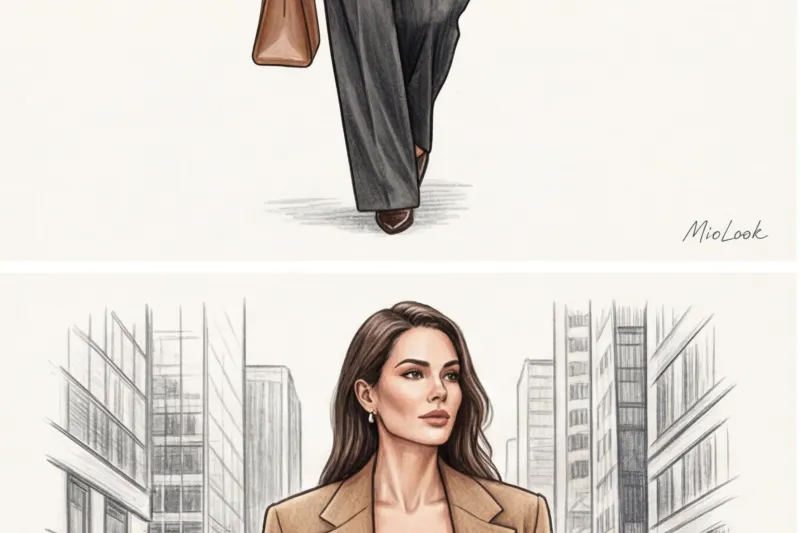
Architectural jacket and correct trousers
A jacket is the foundation of your business look. A frightening statistic from my experience: about 80% of women buy jackets one size too small for fear of "losing their femininity" or looking too big. The paradox is that a tight jacket that bursts at the seams in the back visually adds pounds, while a straight-cut jacket with dropped shoulders makes the figure appear frail.
When choosing trousers, pay attention to the length and fabric. Cropped 7/8 lengths are giving way to full-length pants (so-called puddle pants, which gather slightly at the shoe). The fabric should be of a high density (for example, wool at least 250 g/m² with 2-5% elastane), otherwise, by the end of the first workday, telltale, elongated blisters will appear on the knees.
Status fittings and accessory group
You know what instantly cheapens even a decent suit from Zara or H&M? Plastic buttons. Replace them with horn, mother-of-pearl, or high-quality metal ones at your local tailor, and the item will look three times more expensive.
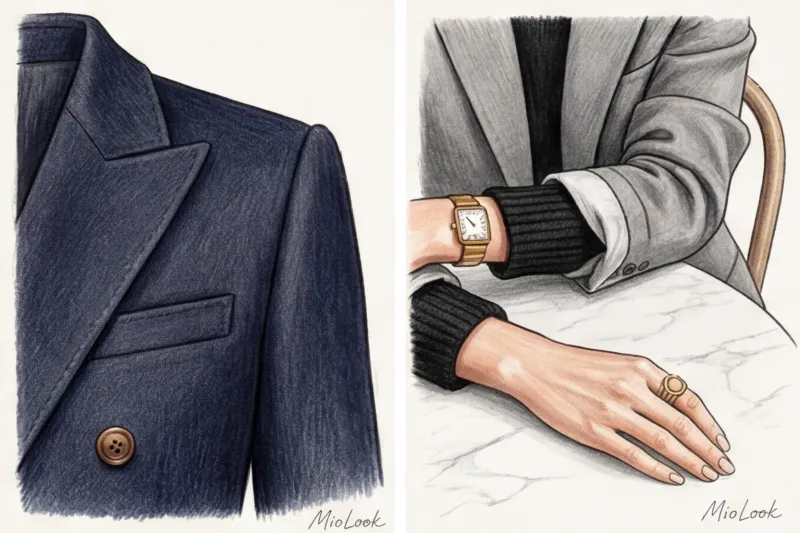
The devil is in the details. Avoid bucket bags in the office—invest in a structured bag that maintains its shape even when empty. Choose leather belts without gigantic, flashy logos. And remember that a simple mechanical watch on a leather or steel strap remains a powerful signifier of professionalism and status.
5 Legal Ways to Freshen Up a Formal Look (Without Breaking the Dress Code)
Even if your HR department strictly monitors employee appearance, you always have some room to maneuver. Let me clarify right away: if you work in a protocol department, a court, or a conservative bank, it's best to skip point five (asymmetry). But for 90% of modern offices, these layered and stylish techniques will work flawlessly.
- Monochrome in a non-standard palette. Replace the usual black, gray, and white palette with deep, luxurious shades: dark chocolate, rich burgundy, butter, or dark pine. A total look in mocha is incredibly aristocratic.
- Shoe game. Classic pumps are great, but predictable. Try sturdy loafers, tailored men's derbies, or elegant slingbacks with a curved heel.
- Modern jewelry. A traditional "strand of pearls" can add 10 years to your age. Opt for sculptural minimalism: crushed metal, large stud earrings, and geometric cuff bracelets.
- Smart layering. Wear a thin cashmere turtleneck under a loose shirt and layer a jacket over it. Or tie a contrasting sweater over your shoulders over a suit. This creates a sophisticated, tailored silhouette.
- Asymmetry within the bounds of decency. A top with a delicate asymmetrical neckline (for example, revealing only one collarbone), worn under a strict, tightly buttoned jacket, creates a beautiful intrigue without violating business ethics.
Access to MioLook for €0.99 — one-time payment
A smart AI stylist will select the perfect look from your items and suggest how to integrate new trends into a strict dress code.
Get access — €0.99 onceChecklist: A Stylist's Audit of Your Business Wardrobe
Theory is dead without practice. Open your closet this evening and do a quick inventory. Put it aside (or get rid of clothes that are too small for you ) all the shirts that cut into the armpits, and jackets that you can't wear anything thicker than a silk T-shirt under.
Do a quick check: if you can't comfortably wear a thin cashmere sweater under your favorite office blazer, it's too small. Save it for other, non-work situations.
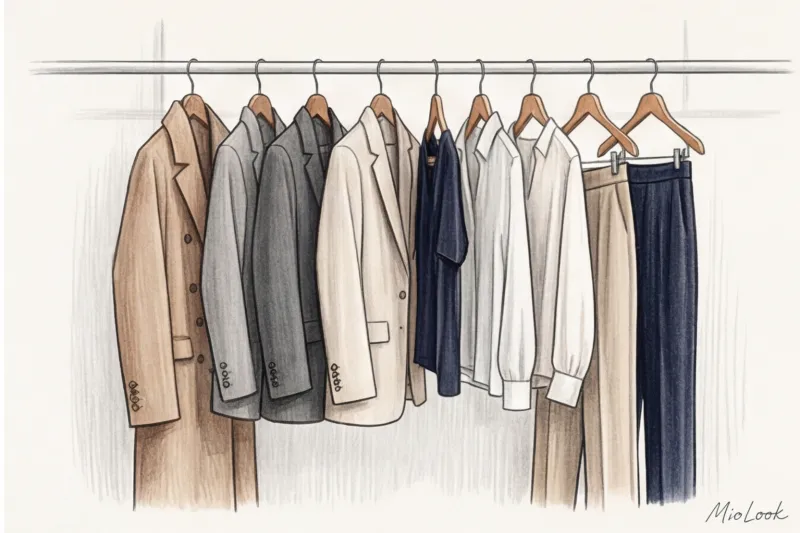
Aim for the 70/30 rule: let 70% of your business capsule be a flawless, perfectly fitting base of neutral shades with just the right amount of volume, and 30% be statement pieces with interesting textures or complex colors. Digitize the resulting base with MioLook applications - this way you will always see what elements are missing for a complete picture.
And remember the most important thing: modern business classics should serve your comfort and emphasize your professional expertise. If clothes turn you into a faceless function or make you slouch in discomfort, it's a bad investment, no matter how much it costs.