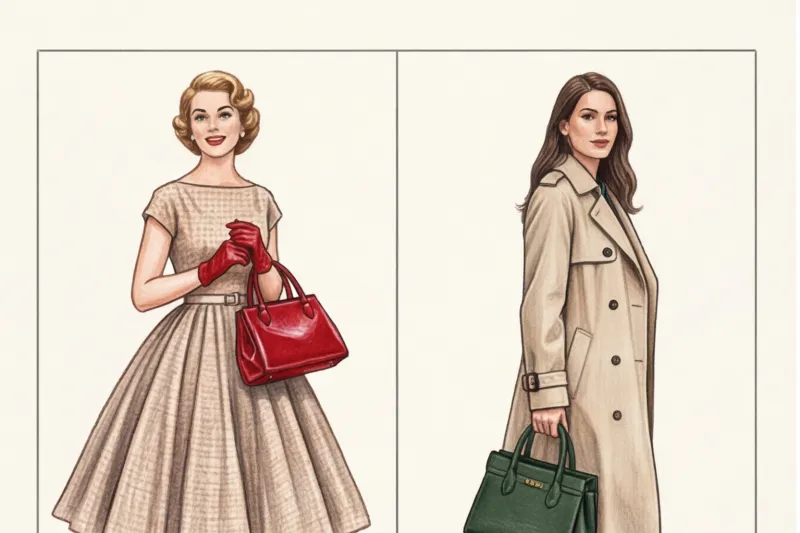
Over 12 years of working as a colorist and image consultant, I've heard the same phrase hundreds of times in fitting rooms. A client holds up a pair of luxurious olive pumps, sighs, and says, "Darina, they're perfect, but where will I find a bag to match them?" This fear of color mismatch paralyzes many women, forcing them to spend years exclusively buying boring black outfits.
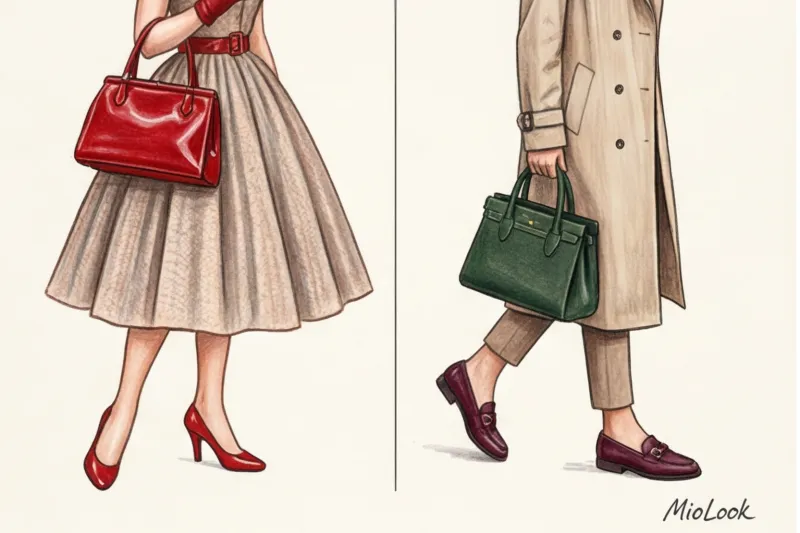
We have already discussed the image architecture and working with add-ons in more detail in our a complete guide to choosing accessories for clothing But today I want to address the hottest and most controversial topic. So, Should you match your bag to your shoes? in modern realities, or is this a hopelessly outdated rule that betrays a lack of taste?
Spoiler: there's no direct "yes" or "no" answer. Matching or mismatching colors isn't a matter of trends; it's your primary tool for commanding attention.
Where did this rule come from, and is it necessary to match your bag to your shoes today?
Let's take a quick historical tour. The perfect "match" of shoes, bags, and sometimes even gloves and hats wasn't an innate sense of style, but a brilliant marketing ploy of the 1950s. After World War II, leather goods manufacturers needed to boost sales. So they convinced women to buy accessories only in sets. Thus was born the concept that our mothers and grandmothers imbibed as the gold standard of elegance.
These days, glossy magazines often proclaim that perfect tone-on-tone matching is a strict anti-trend. But that, too, is a myth! If you look at the recent shows of The Row, Bottega Veneta, or Hermès (2024), you'll see flawless monochrome accessory sets. The only difference is the approach.
Imagine your image as a painting, and your accessories as its frame. According to research in the field of perception psychology (the so-called "Halo Effect"), about 70% of a person's attention when first assessing your status is focused on your shoes and bag.
- If the "picture" is complex: Whether you're wearing a printed dress, a layered outfit, or a bright suit, the "frame" should be calming. A bag and shoes in the same base color work perfectly here.
- If the "picture" is minimalistic: If you're wearing simple jeans and a white shirt, the frame should take center stage. Here, accessories in different colors will add the necessary dynamism.
Access to MioLook for €0.99 — one-time payment
A smart AI stylist will select the perfect look for every day and help you organize your wardrobe.
Get access — €0.99 onceTone on tone: when a perfect match works for status, and when it's cheap
I had a client, a top manager, who bought an incredibly expensive outfit: a bright red patent leather bag and matching red patent leather stilettos. When she paired them with a business suit, the look instantly became, as they say in fashion circles, "too much"—garish and even slightly vulgar. We replaced the patent leather bag with a matte suede one in the same shade of red. And a miracle happened: the outfit looked like a million bucks.
Why do identical colors and materials (for example, a black smooth leather bag and black smooth leather shoes) often ruin a look? You get the "flight attendant uniform effect." It looks overly polished, like you spent three hours getting ready. For more information on other subtle details that can ruin a look, I recommend reading the article about... which cheapens the image.
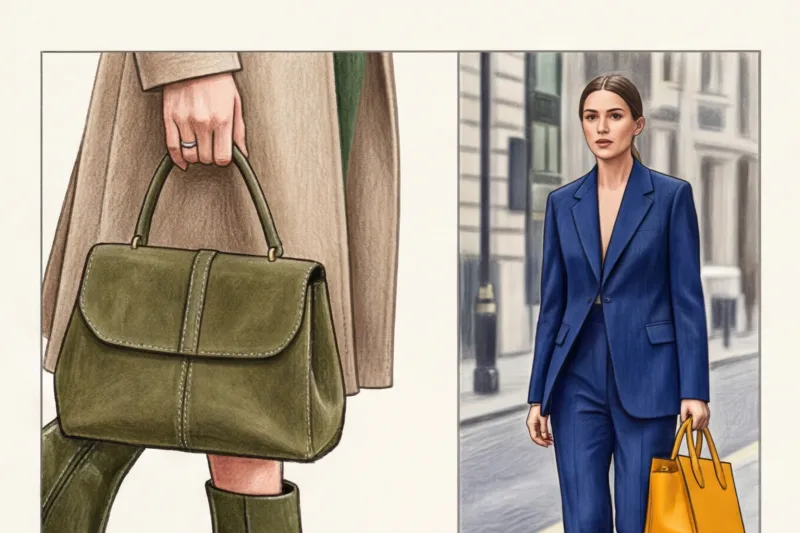
The main secret of stylists when choosing accessories of the same color is mandatory difference in textures Remember these winning combinations:
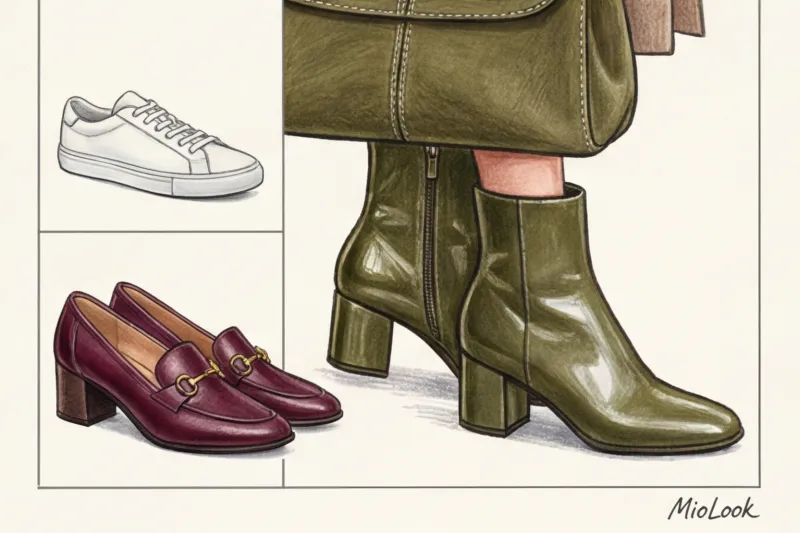
- Deep matte suede + shiny varnish;
- Smooth base leather + crocodile or python embossing;
- Dense textile (eg canvas) + soft grained leather.
The "old money" effect through monochrome accessories
The Old Money aesthetic has brought back the all-match look, but in sophisticated, sophisticated shades like burgundy, emerald, and chocolate. Even in the mass-market segment (for example, Massimo Dutti or COS), you can find stunning suede accessories for €100–€150 that will look luxurious thanks to the right color.
"When pairing with a monochrome look, always use the gradient rule: shoes should be one or two shades darker than your bag. This creates the right visual grounding for your figure and makes your silhouette more stable."
By the way, if you doubt your natural proportions and don’t know whether you need to visually lengthen your legs with dark shoes, I recommend studying the material on How to determine body proportions using AI.
Smart Contrast Rules: How to Pair Different Bags and Shoes
If we refuse to match tone-on-tone, how can we avoid turning into a Christmas tree? This is where the Itten Circle—a basic cheat sheet for any colorist—comes to the rescue.
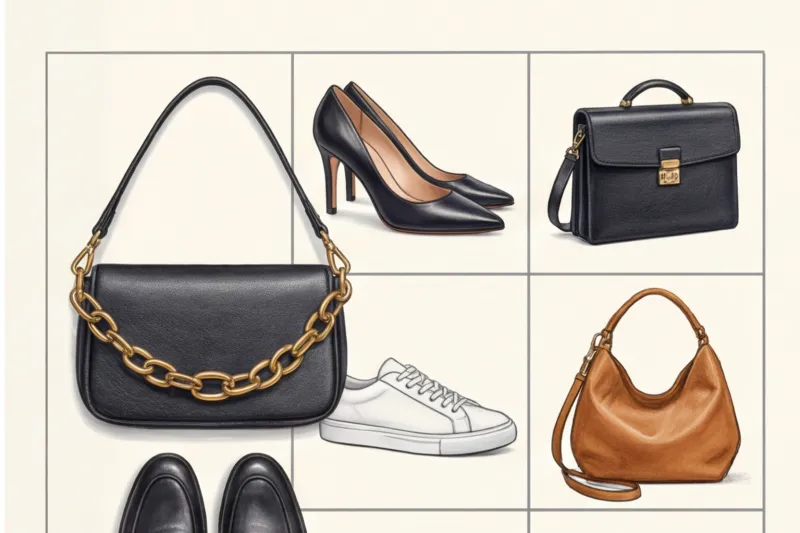
Instead of choosing a bag to match your shoes, choose them based on the principle of "temperature balance." There's a strict rule in color: don't mix overtly cool (for example, icy gray) and warm (mustard beige) shades in an accessory group unless you have a cohesive print in your outfit. They will clash.
How to apply the famous designer 60-30-10 rule in the wardrobe?
- 60% — the main color of your outfit (for example, a beige trench coat and milky trousers).
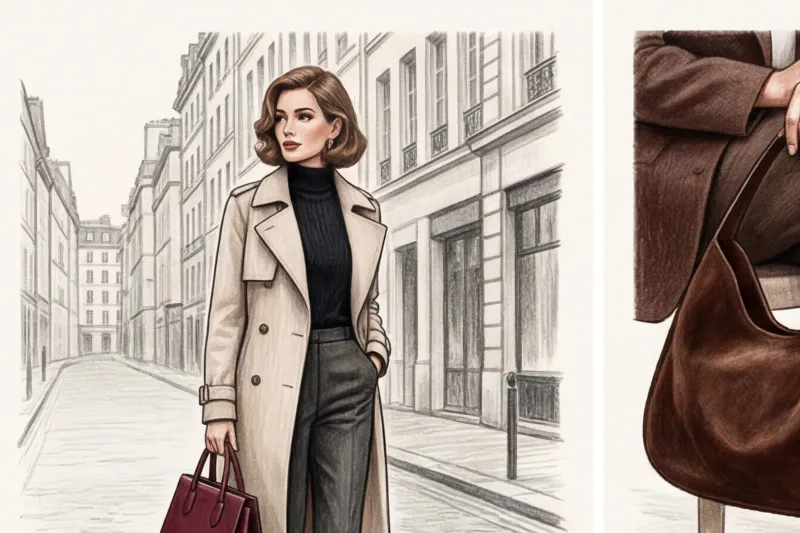
- 30% - additional color (black leather loafers and a turtleneck).
- 10% - color accent (bright cherry bag).
Ready to get started?
Try MioLook's free plan—no commitments required. Upload photos of your bags and shoes, and the AI will create dozens of new combinations.
Get access — €0.99 onceRoll call rule: look for an "anchor" in clothing
A contrasting accessory should never be left hanging. If your green bag doesn't go with your brown boots, it should find another pair—its own "anchor." This anchor could be a green element in the print on your blouse, a scarf, the frames of your glasses, or even the color of your nail polish!
One of my favorite techniques is sandwich technique The key is to alternate: light top + dark pants + light shoes + a dark bag. This draws the eye up and down your figure, visually elongating your height. And if you place an accent bag (like a crossbody) at your waist, it's a great way to shape your silhouette—we mentioned similar tricks in the guide. How to hide belly and love handles after 40.
Shape, style, and fittings: what people forget when focusing on color
Do you know the biggest mistake 80% of women make when buying accessories? They obsessively search for the perfect shade, completely ignoring the shape of the garment. Stylistic unity is more important than color unity.
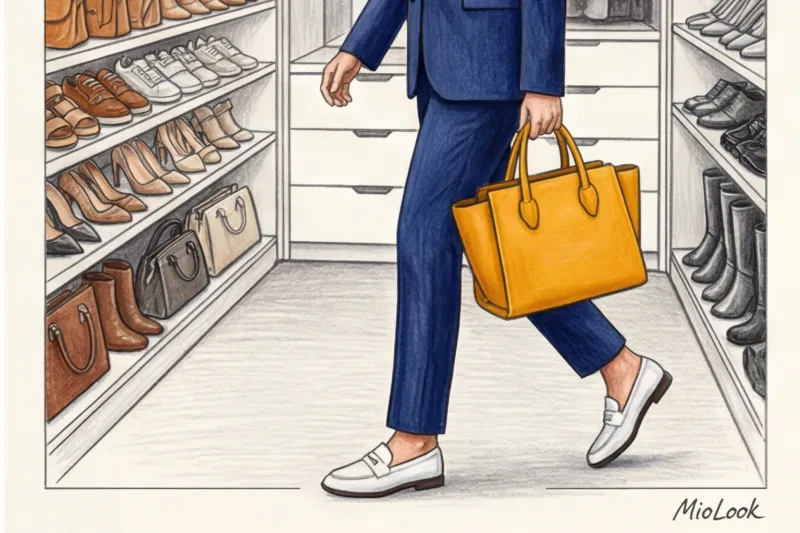
Even if you have perfectly matching powder-colored accessories, if it's a formal, framed tote bag and relaxed suede loafers, the look will fall apart. A formal look calls for structured footwear (pumps, structured loafers, pointed-toe ankle boots). A soft hobo bag or shopper looks natural with sneakers, Uggs, or ballet flats.
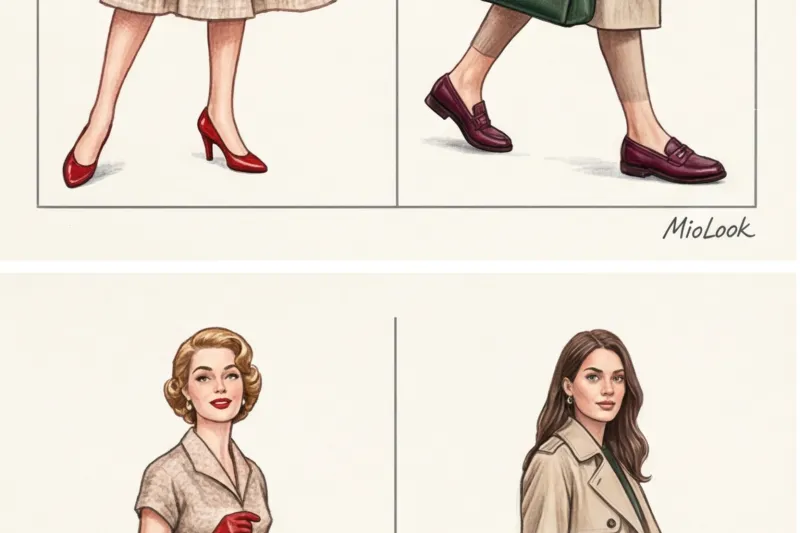
The second pitfall is metal fittings Just five years ago, wearing a bag with a silver chain and shoes with a gold buckle was considered a style crime. In 2024, the bimetallic trend is officially allowed. But there is an exception (when this DOES NOT work): If the hardware is chunky and inexpensive, consider adding a huge, shiny gold buckle on your shoes and a chunky silver clasp on your bag to make you look like a hardware store display. If you're mixing metals, consider one detail to be minimalist.
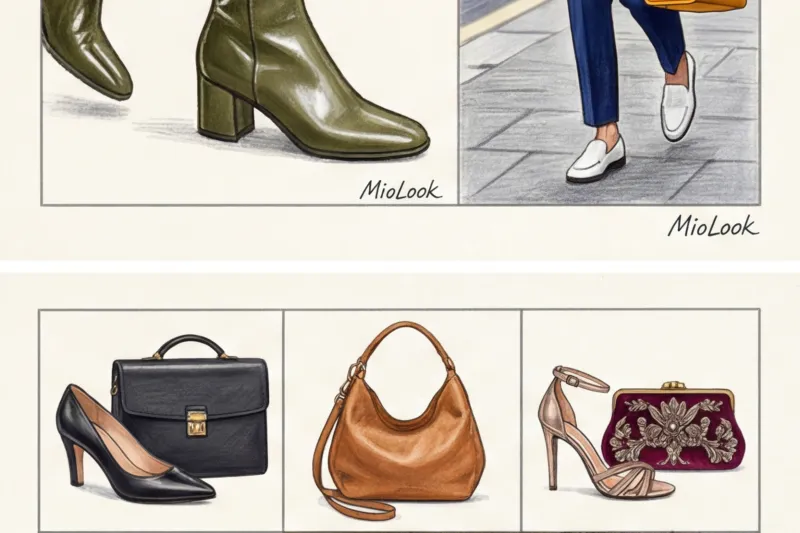
And don't forget about scale Chunky boots require balance. They should be paired with either a micro bag (a play on the sharp contrast of volumes) or a voluminous shopper. A classic medium-sized bag with a thin strap will look too small next to heavy boots.
Ready-made combination formulas: a cheat sheet from a stylist
To make getting ready in the morning easier, I've prepared three universal formulas. They work regardless of your budget, whether you're looking for basic mass-market styles for €50 or investment purchases starting from €500.
Formula 1. For the office and business meetings:
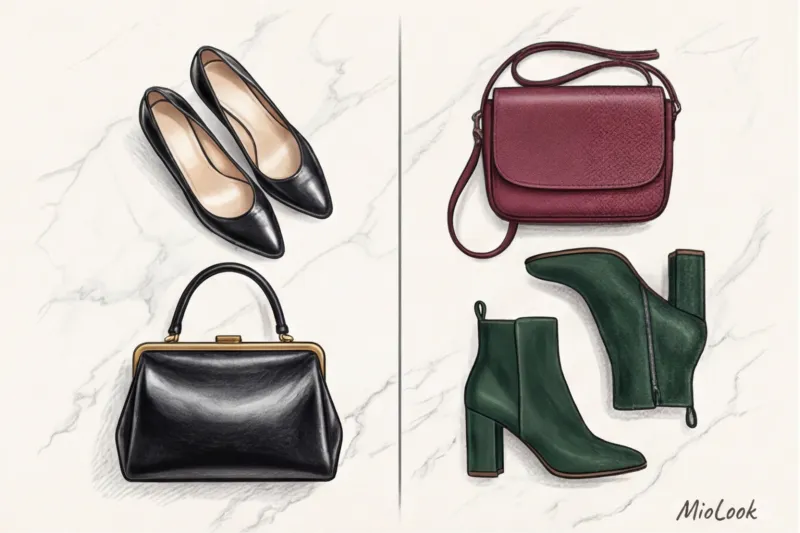
Basic shoes (black, graphite, or nude loafers/dresses) + a structured geometric bag in a deep shade (burgundy, emerald, dark sapphire). A neutral base inspires confidence, while a colorful, formal bag conveys expertise. All that's left to do is choose an elegant fragrance—you can find ideas in the article about creating the perfect perfume wardrobe.
Formula 2. Smart Casual (for example, for Friday at the office or brunch):
Printed or textured shoes (leopard, zebra, snake print) + a minimalist bag in the color of one of the spots on the shoe print. If the shoes have a black and brown leopard print, choose a sleek caramel bag without unnecessary embellishments.
Formula 3. Evening Out:
Metallic shoes (silver or gold) + a bag made of smooth satin or deep velvet. Metal acts as a neutral reflector of light, so the bag can be any color.
In the appendix MioLook You can take a photo of all your bags and shoes, and the built-in AI algorithm will suggest these and many other formulas based on what's already hanging in your closet.
Checklist: 4 questions before leaving home
According to McKinsey, the average modern woman makes 70 decisions just during her morning routine. Let's simplify this task. Before you step into the mirror, simply ask yourself four questions:
- What detail is the most important today? If you're wearing statement red Cossack boots, it's best to tuck your bag into a more subdued base. Two soloists on the same stage are shouting down each other.
- Do the styles match? Is there a conflict between a sports backpack and elegant ankle boots?
- If the colors of the shoes and bag are the same, do they have different textures? (Remember the "no flight attendant uniform" rule).
- Is there an "anchor" for contrasting accessories? Does your red bag match anything in your outfit (lipstick, print, belt)?
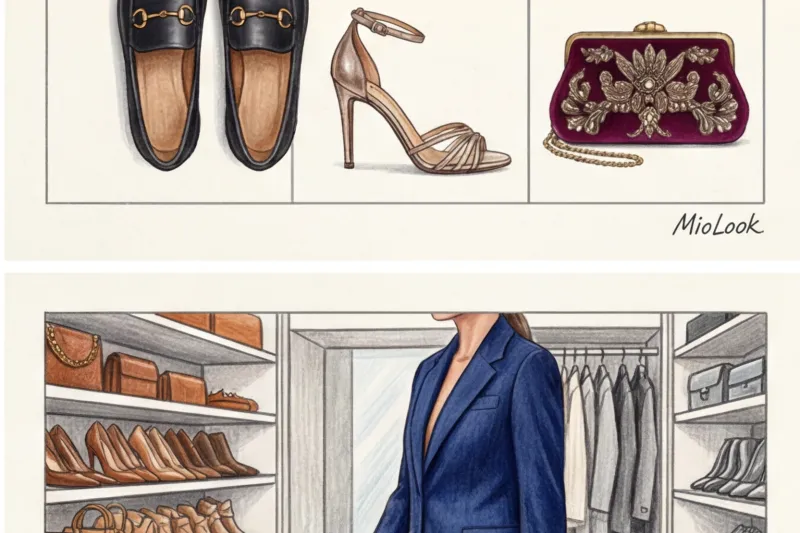
Accessories are the backbone of your style. The correct answer to the question "should I match my bag to my shoes?" is: only do so when you want to tone down an overly complex outfit. Otherwise, allow yourself to mix textures, play with color temperature, and break outdated patterns. The main rule of modern fashion is that clothes should complement your confidence, not the other way around!