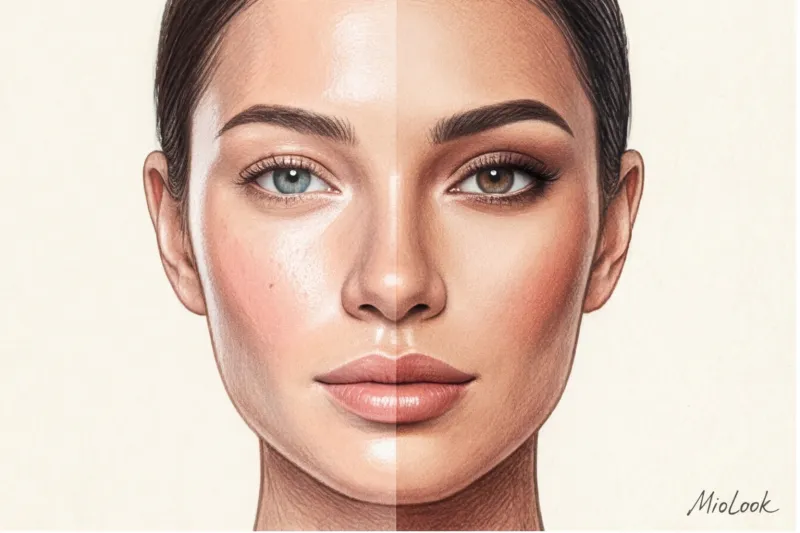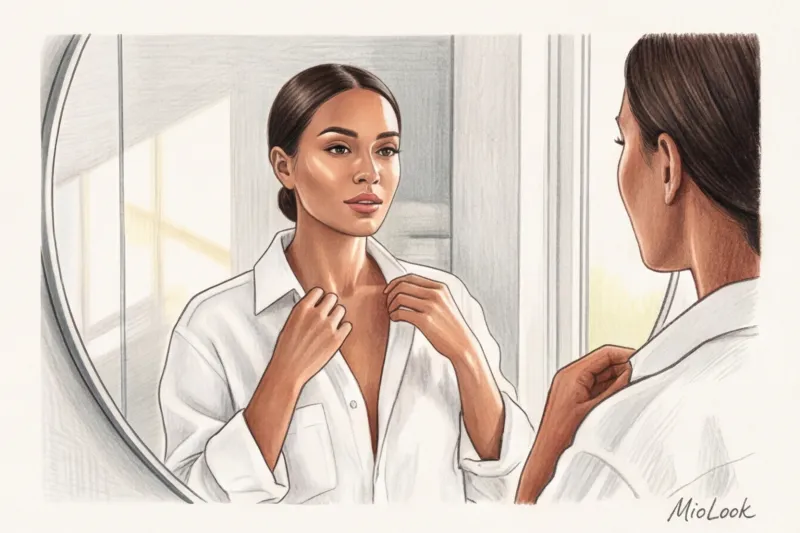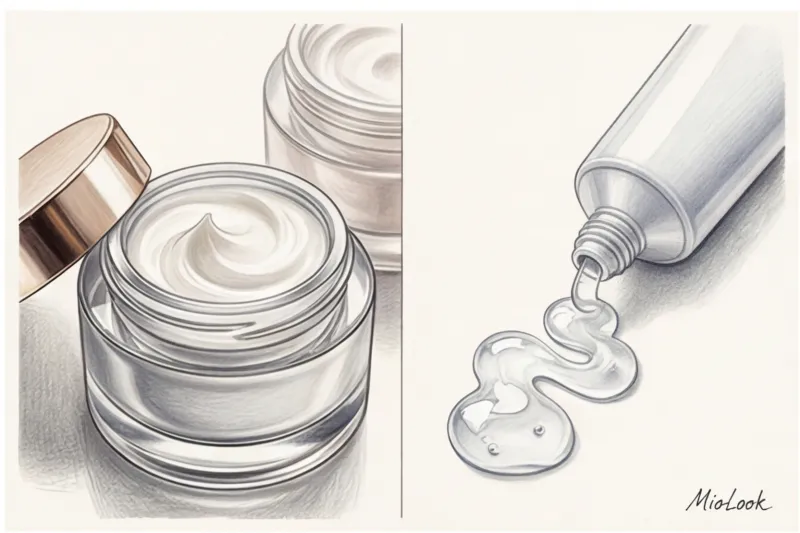
I'll never forget that moment at a closed business conference in Geneva. My client, a top investment bank executive, stood by the picture window in an impeccable Jil Sander suit worth around €2,000. The fabric flowed perfectly, the fit architectural. But when she turned to face the daylight, her entire "expensive" look fell apart in an instant. Her luxurious foundation turned blotchy and began to form tiny flakes on her cheeks and jawline.
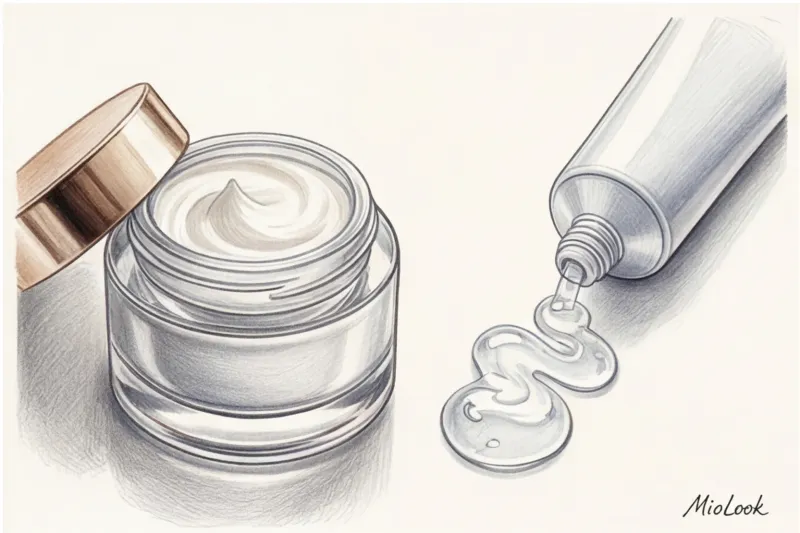
The reason? That morning, she applied a thick, mattifying primer under a light, hydrating foundation. The two textures clashed chemically right on her face.
People often come to me with the same question: Do you need a face primer or is cream enough? Everyday makeup? The beauty industry has been convincing us for years that makeup is unthinkable without a "base." Spoiler: this is one of the most successful marketing myths of the decade. For everyday office makeup, using a classic primer is often not only unnecessary but also detrimental to a classy look. We've covered in more detail why the foundation of beauty is laid before applying makeup in our A complete guide to basic facial skin care and the secrets of long-lasting makeup.
Makeup primer vs. moisturizer: what's the fundamental difference for a classy look?
In the world of style and personal image, there's a golden rule: status is determined by texture. You can wear a cashmere coat over a synthetic dress, but the cheap fabric will show through as you move. The same thing happens with leather.
A moisturizer is an investment in the very fabric of your face. A high-quality cream penetrates the stratum corneum, restores the lipid barrier, and nourishes cells. It builds the skin's architecture from the inside out. Well-hydrated skin naturally has a beautiful, taut texture and a light, healthy glow.
A makeup primer works differently. Its main purpose is to create an artificial, perfectly smooth film on the skin's surface. Think of rigid shapewear. Sure, it'll suck in your stomach under an evening gown, but you wouldn't wear it every day from 9 a.m. to 5 p.m., would you? Primer fills pores and the microrelief with silicones, creating a canvas for foundation. The problem is that it doesn't heal or truly moisturize (even if the tube says "hydrating") and remains on the skin 100% of the time you're wearing makeup.
Your perfect look starts here
Join thousands of users who look flawless every day with a smart wardrobe and AI stylist.
Get access — €0.99 onceDo you need a face primer or is daily cream enough?
Let me answer directly: for a daily trip to the office, business meetings, or business lunch, a high-quality moisturizer is more than enough.
According to a 2024 report by the analytical agency WGSN, the global trend toward "skinification" (focusing on skin health rather than concealment) has finally supplanted the fashion for heavy, multi-layered makeup. In high-end business circles, the "Instagram-worthy" matte mask of layers of skincare, primer, foundation, concealer, and powder has long been considered a faux pas. In daylight, this "pie" looks heavy and cheapens the look.

Over 12 years of working with business wardrobes and portrait shoots, I've noticed a clear pattern. Clients who, on my advice, ditched their daily heavy foundations in favor of premium moisturizers began receiving compliments about how they looked "rejuvenated" and "rested." The lack of a silicone film allows the skin to breathe, preventing the "greenhouse effect" and dehydration by the end of the workday.
Texture Conflict: Why Even Luxury Foundation Creases
Let's return to the story of the top manager and the creased makeup. Why does expensive foundation suddenly start to flake? The answer lies in basic cosmetic chemistry, which every professional makeup artist should know.
Over 70% of foundation creasing cases are due to a simple base conflict. Imagine trying to mix water and sunflower oil in a glass. They will repel each other. The same thing happens on your face.
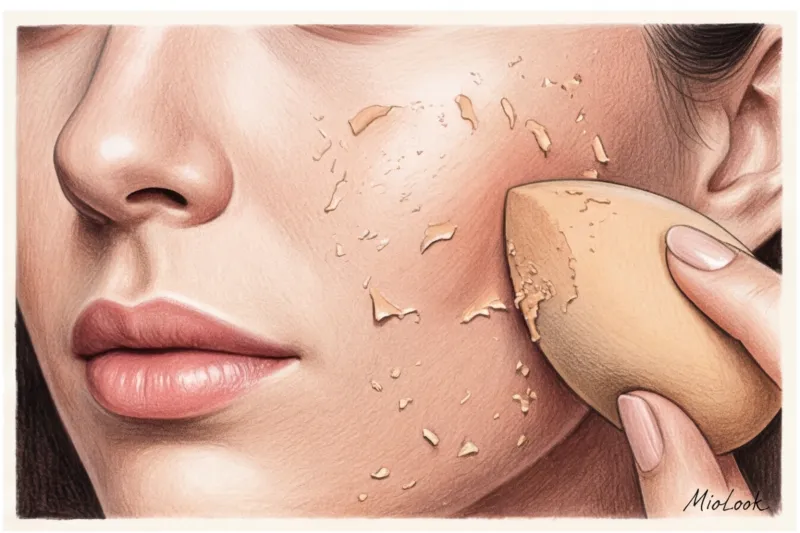
If you apply water-based foundation over a thick silicone-based primer, the water can't adhere to the slippery silicone film. Any attempt to blend the foundation with a brush or sponge will cause it to clump into those treacherous "pills." You can buy Armani foundation for €70, but if you use an unsuitable €20 silicone primer underneath, the result will look like it costs €5.
Moisturizer minimizes this risk. Within 3-5 minutes, it is completely absorbed into the stratum corneum, leaving the skin's surface hydrated yet natural. Foundation adheres to your skin. real skin, not a slippery bumper.

How to Read Ingredients: A Mini Guide for the Business Woman
To avoid textural disasters, learn to quickly scan ingredient lists (INCI) on packaging:
- Look for silicones: words ending in -cone , -methicone , or -siloxane (e.g., Dimethicone, Cyclopentasiloxane). If these are listed 2-4th on your primer's list, it's silicone-based.
- Look for water: if it comes first Aqua / Water / Eau , and there are no silicones in the top five, this is a water-based product.
- Palm test: Before purchasing, apply primer to the back of your hand, wait a minute, and then apply a drop of your favorite shade on top. Try blending vigorously with your finger. If flakes appear, the products are incompatible.
Access to MioLook for €0.99 — one-time payment
A smart AI stylist will analyze your appearance and select the perfect makeup and wardrobe, saving you time in the morning.
Get access — €0.99 onceWhen a primer is a necessity, not a marketing ploy
It would be unprofessional to say that makeup primers should be thrown out. Primer is a situational tool. It's the tuxedo of your makeup bag: you wouldn't wear it to coffee, but you can't go without it on the red carpet. Be sure to read our recommendations about Stage Makeup: How to Keep Your Face Looks Perfect.
I insist on using a primer in the following scenarios:
- Studio business photo session. Powerful pulsed flashes "cut through" any light tone and highlight the slightest shine and texture. Here, a mattifying T-zone primer saves the shot. We wrote about this in more detail in the article about images for a business photo shoot in a studio.
- Public speaking and TV broadcasts. Stage lights generate a tremendous amount of heat. To prevent your face from "smearing" during an hour-long speech, a silicone barrier is essential.
- Multi-hour events (12+ hours). Off-site conferences, corporate events with temperature changes (from an air-conditioned hall to a hot street).
- Specific skin problems. If you have clinically enlarged pores (post-acne) or severe rosacea, local application of a pore filler or green base for color correction is justified.

But that doesn't work if you're just sitting at a computer in a climate-controlled Class A office. There, quality care is your best friend.
Investing Wisely: Hybrid Skincare
For a busy businesswoman, time is the most precious resource. There's no time to apply five layers of makeup in the morning. Therefore, in recent years, leading makeup artists have been relying on hybrid products—so-called cream bases (Face Base).
These products combine the deep nourishment of a cream with the light adhesion of a primer, but without the heavy silicones. A legendary example that I often recommend to clients when sorting through their makeup bag. MioLook — Bobbi Brown Vitamin Enriched Face Base (around €65) or Charlotte Tilbury Magic Cream (around €90).
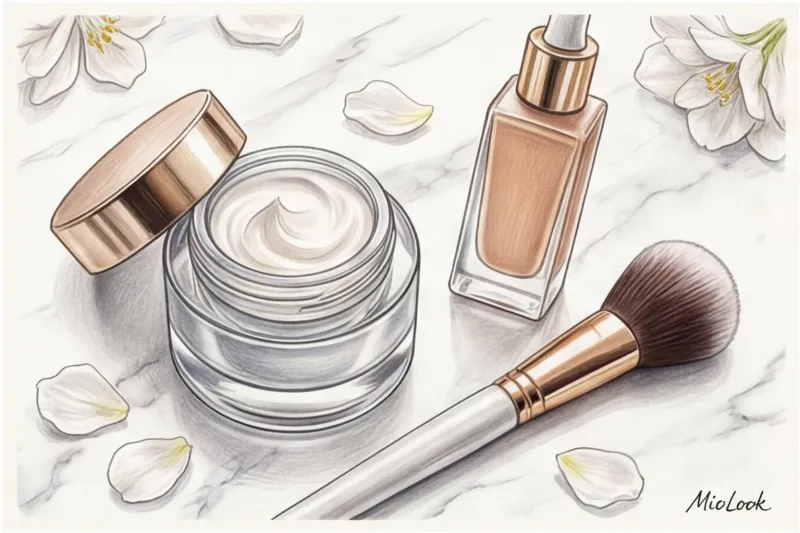
Let's calculate the cost-per-wear concept of your beauty wardrobe. You can buy an average moisturizer for €30 and a primer for €40. That's a total of €70. You spend an extra three minutes in the morning applying them one after the other, and by evening, you'll have clogged pores.
Instead, you'll invest €70-90 in a single premium hybrid cream. It replaces two steps, holds makeup perfectly, and, thanks to high-quality ingredients (peptides, oils, vitamins), improves skin texture over time. When used daily, you save both money and the look.
Checklist: How to prepare your skin for a high-status makeup look in 5 minutes
As a stylist, I love clear algorithms. Here's my Skin Prep morning routine, which I've developed over years of working on film sets. It takes 5 minutes and guarantees pampered skin all day long, without any primer.
- Step 1: Gentle cleansing. No squeaky-clean washing. In the morning, a gentle gel or foam without SLS is sufficient to preserve the lipid barrier.
- Step 2: Toning. Restore your skin's pH. Skipping this step will cause your expensive cream to work on restoring the pH balance rather than moisturizing.
- Step 3: Apply lymphatic drainage cream. Apply the cream with warmed fingers, following the massage lines from bottom to top. Light patting movements will reduce morning puffiness and "wake up" your face.
- Step 4: The Three-Minute Rule. A critical step! Never apply foundation immediately after applying cream. Give the product exactly 3 minutes to penetrate the skin. During this time, you can brush your teeth or choose accessories in the app. MioLook.
- Step 5: The Makeup Artist's Secret. Take a thin, single-ply tissue and very lightly press it onto your face (especially the T-zone). It will absorb any excess cream your skin hasn't absorbed. Your skin is now perfectly prepared for a light foundation.
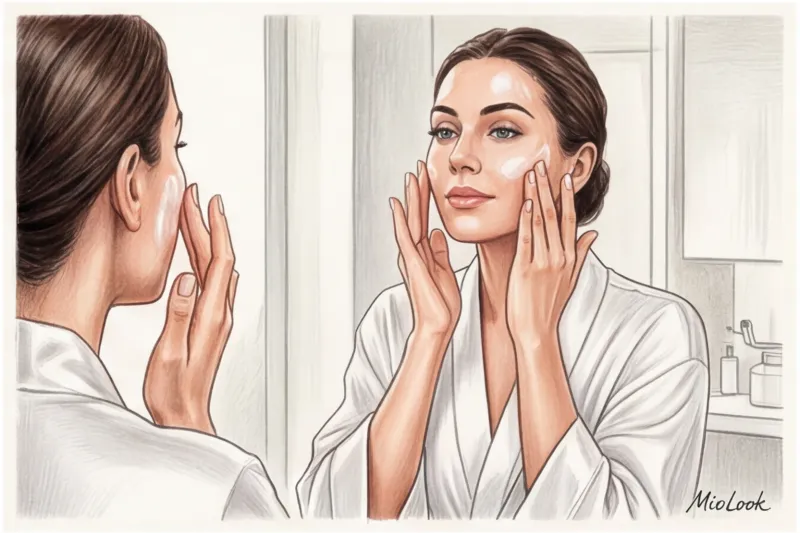
Bottom Line: Healthy Skin as Your Essential Business Accessory
Let's sum it up. Cream is for life, health, and long-term health. Primer is a professional tool for special stage or stressful occasions.

True status and elegance are always based on naturalness. Clean, healthy-looking skin looks far more valuable than the most elaborate yet heavy makeup. Your look is built from the bottom up: from proper skin nutrition to a perfectly tailored jacket. Take stock of your morning routine: remove unnecessary layers of silicone and invest in a jar of high-quality moisturizing hybrid. Trust us, your skin will respond with a radiance no highlighter can achieve.
Ready to get started?
Try the free plan—no commitments. A smart assistant for managing your wardrobe and choosing looks.
Get access — €0.99 once