A €1,200 Wardrobe and a Masked Face: Why Your Look Falls Apart
Picture this: you're wearing a perfectly tailored €1,200 Jil Sander jacket, impeccable hair, and a classy watch. You feel like you're in charge. But when you sit down at the negotiating table under the merciless fluorescent lights of the office, your whole look literally falls apart. Why? Because your foundation has sunk into your pores, creating the effect of a papier-mâché mask.
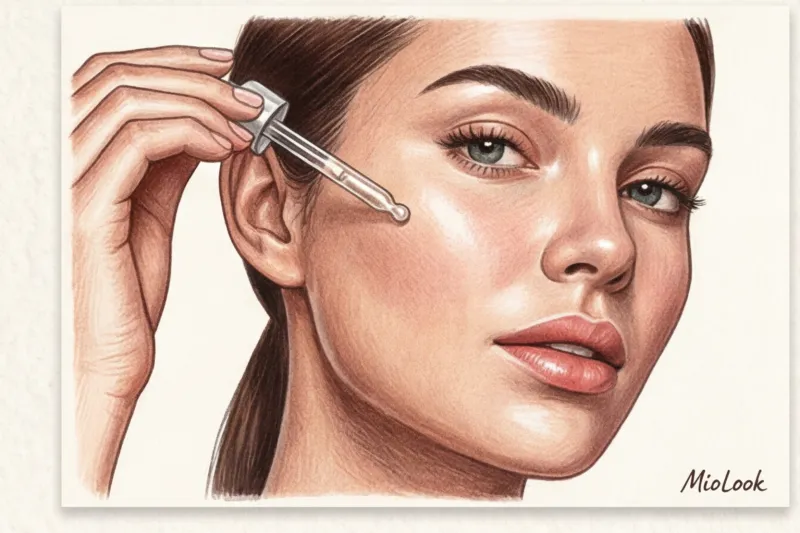
This is exactly what happened to my client, a top manager at a large IT company, a couple of years ago. Before an important meeting, she panicked and covered her face with a popular silicone primer, hoping for a miracle, but the chemicals backfired. By the middle of the presentation, her complexion had become blotchy.
As a stylist, I constantly tell my clients: clothes are just a frame. If the canvas isn't prepared, even the most expensive silk won't save the situation. If you're looking for a way, How to hide enlarged pores before applying makeup , forget about heavy plaster. We've already discussed the foundation of a beauty routine in more detail in our The Complete Guide to Basic Facial Skin Care: The Secret to Long-Lasting Makeup Today I want to share an architectural approach to skin texture that we use in commercial shoots.
Why Primers Ruin Your Makeup (And What to Do Instead)
Silicone pore-filling primers are perhaps the most persistent marketing myth in the beauty industry. Over 12 years of working on film sets, I've personally tested over 20 different makeup primers. What I've come to? A true, beautiful blur is achieved with water, not silicone.
According to reports from formulators for a professional publication Cosmetics & Toiletries (2023), approximately 80% of foundation creasing cases during the day are due to dehydrated skin underneath makeup and texture conflicts. When you apply a modern water-based fluid over a thick layer of dimethicone (a basic silicone), the two physically repel each other. You're trying to mix water and oil—it's the laws of basic chemistry.
The Illusion of Smoothness: How Silicone Works
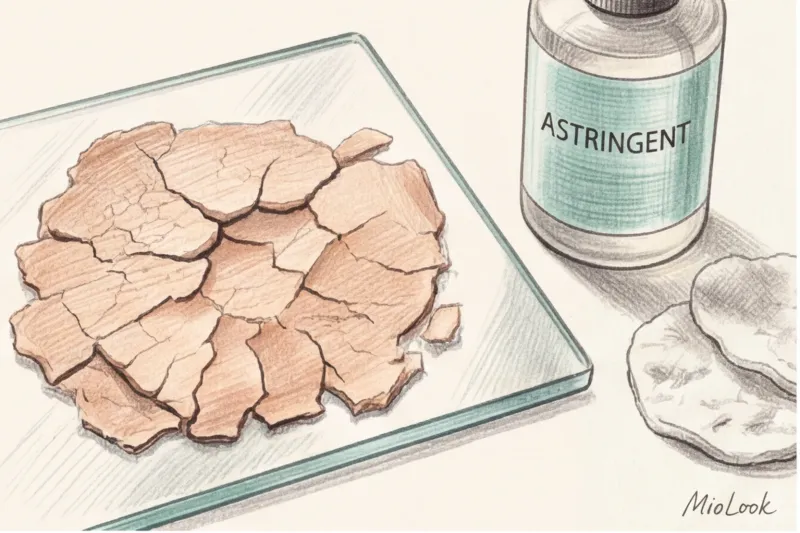
The mechanics of silicone grout are primitive: they literally penetrate the pores, physically leveling the surface. However, skin is a living organ, not a plaster wall. A thick silicone film instantly creates a greenhouse effect.
After just 2-3 hours, the sebaceous glands begin to frantically produce sebum, trying to break through this blockage and cool the epidermis. The result is predictable: foundation begins to fade and slide off the face in patches. This approach works only for a 15-minute photo shoot in a studio, but is absolutely unsuitable for a 10-hour workday.
The "Plump Sponge" Effect: Why Moisturizing Hides Pores Better
Dermatology is adamant: it's impossible to permanently shrink a pore; it's a genetically determined structure. But we can visually "tighten" it by increasing the turgor (density) of the surrounding tissue.
Imagine a regular, dry dish sponge. It's rough, and its pores are huge and noticeable. What happens when you hold it under running water? It swells, becomes firm, and the holes on its surface become visibly smoother. The same principle applies to our faces.
Multi-level hydration with serums containing hyaluronic acid (attracts moisture) and ceramides (retains it) pushes out the microrelief from the inside.
Access to MioLook for €0.99 — one-time payment
A smart AI stylist will select the perfect look based on your individual characteristics.
Get access — €0.99 onceHow to Conceal Enlarged Pores Before Applying Makeup: A Step-by-Step Skincare Routine
The makeup artists I work with before lookbook shoots (where cameras see absolutely everything) use a clear process. It takes exactly five minutes, but it saves the entire day.
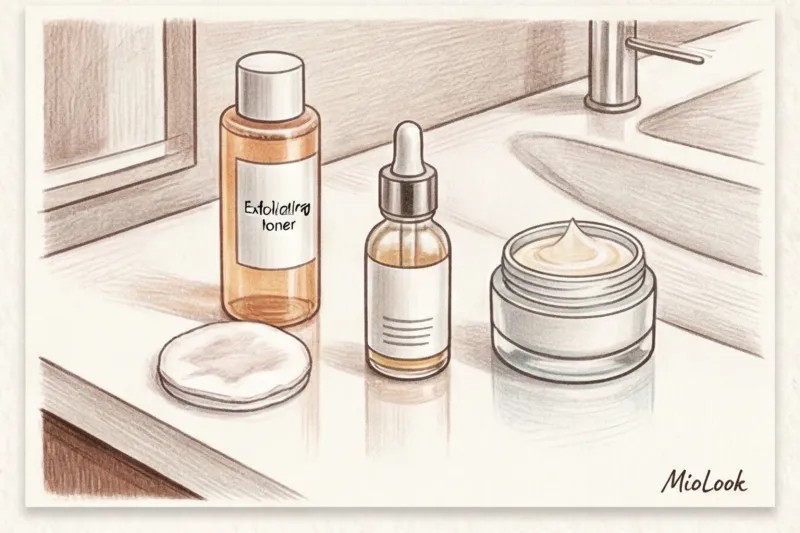
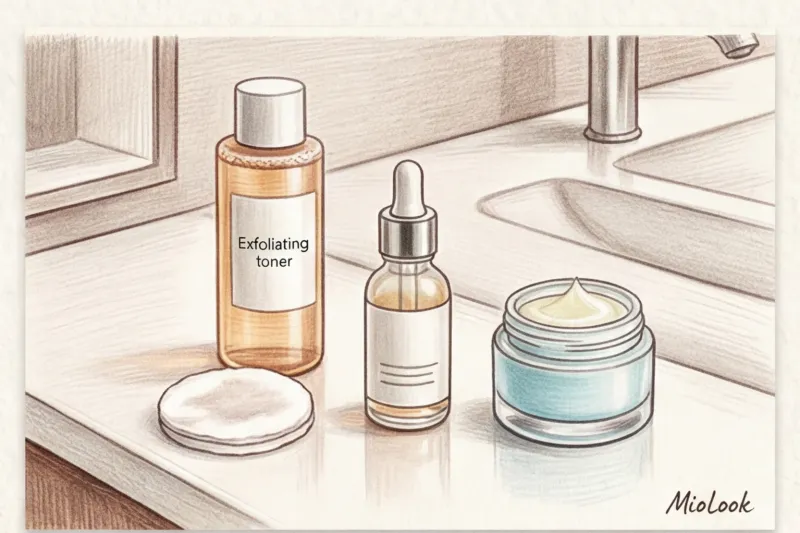
- Enzyme or delicate acid polishing. Dead skin cells at the edges of pores create micro-shadows, making them appear deeper. A gentle enzyme powder or toner with 2% BHA removes this barrier. Skin becomes more reflective.
- Toning with sebum-regulating effect. Look for niacinamide (vitamin B3) or zinc. They calm sebum production before it starts to ruin your makeup.
- Deep hydration with light textures. Avoid heavy mineral oil-based creams. Stick to lightweight emulsions and serums. Excellent basic options can be found in the €15–€25 range, while premium formulas will cost €60–€90.
When it does NOT work: This regimen has its limitations. If you have dry but porous skin (often a factor with aging due to collagen loss), you'll definitely need a finishing layer of lipid cream after the serum. However, for oily, porous skin, a light fluid gel will suffice.
Dot work with texture: the "trampling" technique
You bought a luxury serum for €120, but your pores still look large? Chances are, you're applying it incorrectly. Aggressive, smudging movements are the worst enemy of a defined complexion. By rubbing in the cream, you lift the microscopic vellus hairs on your face and leave the product on the surface.
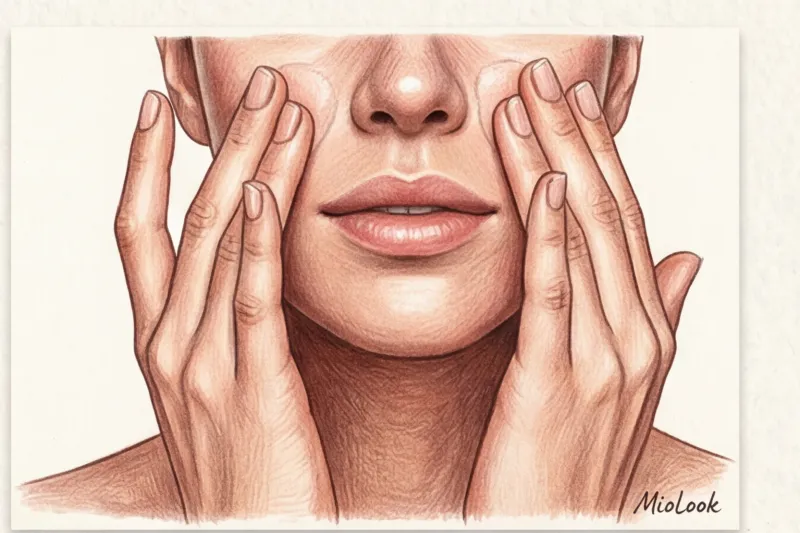
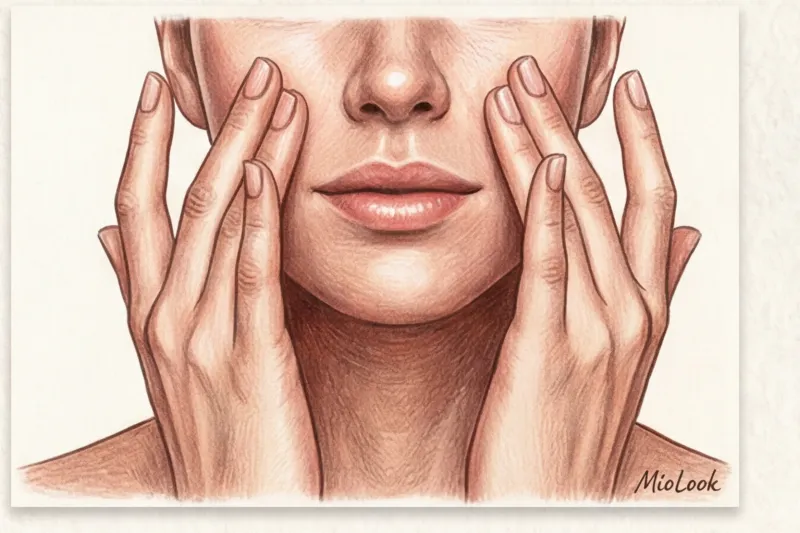
Try the technique press & roll (pressing and rolling):
- Warm a drop of the product in your palms.
- Gently place your palms on your cheeks, forehead and chin.
- Lightly press the product with your fingertips, as if “trampling” it into the microrelief.
What about silicone primer? If you have post-acne scars and can't live without it, apply it in a microscopic drop. exclusively Apply to the sides of your nose using patting motions. Do not spread it over your entire face.
Your perfect look starts here
Join thousands of users who look flawless every day with MioLook. Save your favorite beauty looks to specific clothing capsules.
Get access — €0.99 onceTemperature and time: the main hidden error
The key insight I picked up backstage at Milan Fashion Week: skin temperature affects foundation adhesion more than any primer. If you step out of a hot shower, steam your face, and immediately start applying makeup, it's a guaranteed disaster. Dilated blood vessels and pores from the heat will simply "eat" your makeup.
A life hack from the pros: use a cool quartz roller or cryospheres (keep them in the refrigerator) when applying the serum. The cold instantly constricts blood vessels, reduces morning puffiness, and provides physiological, rather than chemical, tightening of pores.
Another very important law is The 60-second rule According to the International Dermal Institute (IDI, 2022), this is how long each layer of water-based skincare requires to evaporate excess moisture and lock in the active ingredients. Apply toner? Wait a minute. Apply serum? Wait again. Otherwise, you'll end up with a messy, peeling effect instead of a beautiful glow.

Choosing and applying foundation for porous skin
Forget about completely matte, long-lasting foundations. They contain harsh absorbents (talc, titanium dioxide) that suck moisture from the epidermis and, within a couple of hours, turn your face into a chapped desert, emphasizing every pore, even the smallest one.
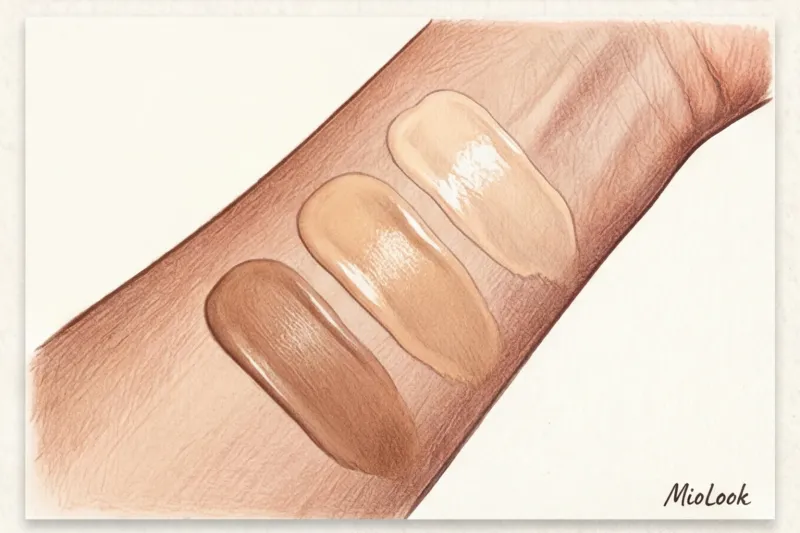
Your best choice is fluid textures with a delicate satin finish. They reflect light, creating the optical illusion of a smooth surface. We discussed in detail how the right, slightly dewy finish affects your perceived status in our article about Perfect makeup for a black dress.
Tools are everything. A tightly packed kabuki brush or rough application with your fingers will only clog pores with foundation, highlighting them with whiteheads. Your best friend is a slightly damp sponge or duofiber brush (with bristles of varying lengths). A damp sponge absorbs excess product, delivering just the right amount to your skin for a lightweight, weightless finish.
Micro-dusting completes the process. To seal the result without the unsightly "peach" effect (when powder settles on vellus hair), apply a fine translucent powder with a small puff. only onto the T-zone, using light pressing movements.
Ready to get started?
Try the free plan—no commitments. Start creating perfect looks with AI right now.
Get access — €0.99 onceChecklist: Express skin preparation 10 minutes before going out
I love systems and can't stand chaos. When you have an important meeting or dinner in an hour, there's no time for relaxing spa rituals. Here's my strict, time-tested schedule for busy women, proven over hundreds of gatherings:
- 00:00 – 01:00: Wash with a gentle gel. No squeaky-cleansing—you don't want to disrupt the lipid barrier.
- 01:00 – 01:30: Wipe your face with a niacinamide toner (use a cotton pad to remove any remaining tap water).
- 01:30 – 02:30: Pause 60 seconds.
- 02:30 – 03:30: Applying a moisturizing serum with patting movements (our press & roll technique).
- 03:30 – 04:30: Pause 60 seconds. This is the perfect time to go over your face with a cold roller.
- 04:30 – 05:30: A lightweight moisturizing fluid to seal in moisture.
- 05:30 – 07:30: Pause 2 minutes. During this time, brush your teeth or choose jewelry to match your outfit.
- 07:30 – 08:00: Spot primer (strictly on the wings of the nose, only if there is an urgent need).
- 08:00 – 10:00: Applying foundation fluid with a damp sponge.
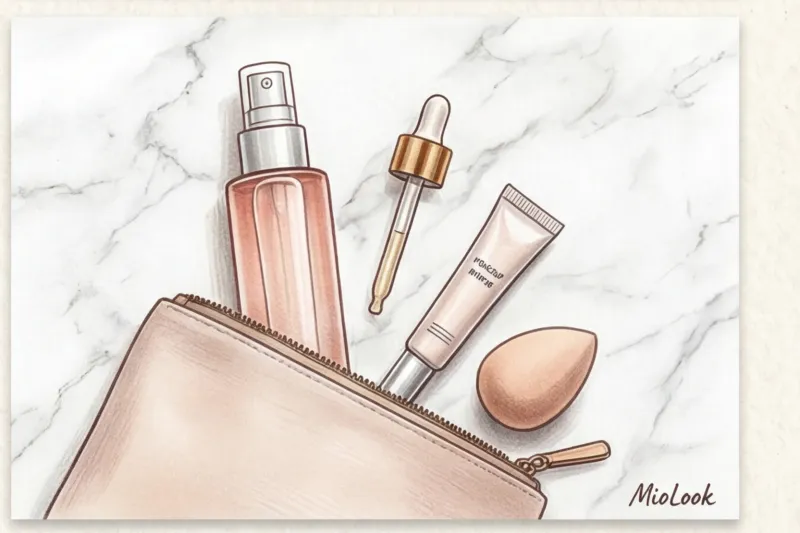
Perfectly smooth skin isn't about layers of makeup, but about proper physics and gentle chemistry. Stop trying to plaster your face with silicone like you're covering a wall before a renovation. Hydrate your skin, give the ingredients time to set, and use the right tools. Only then will your makeup look luxurious, natural, and last even at the end of the toughest day.