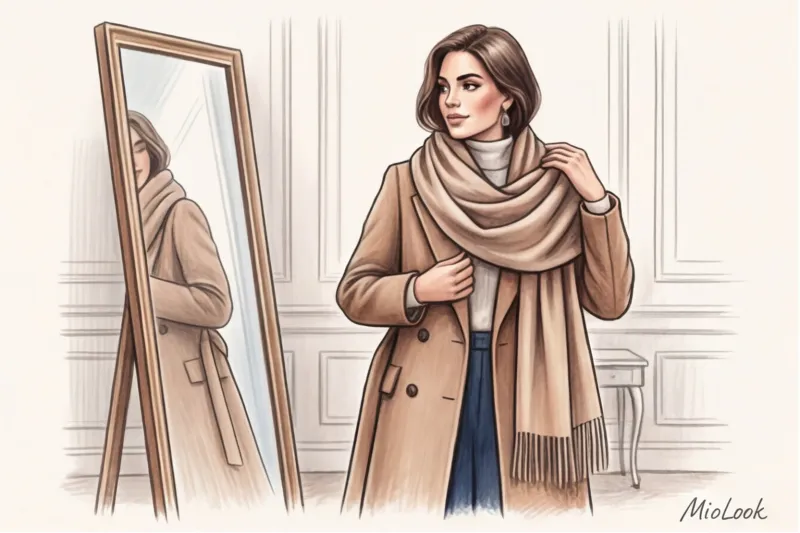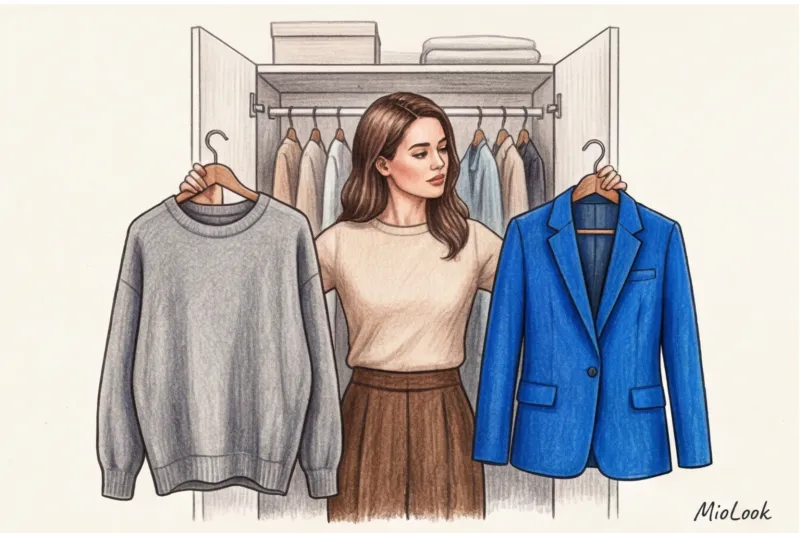

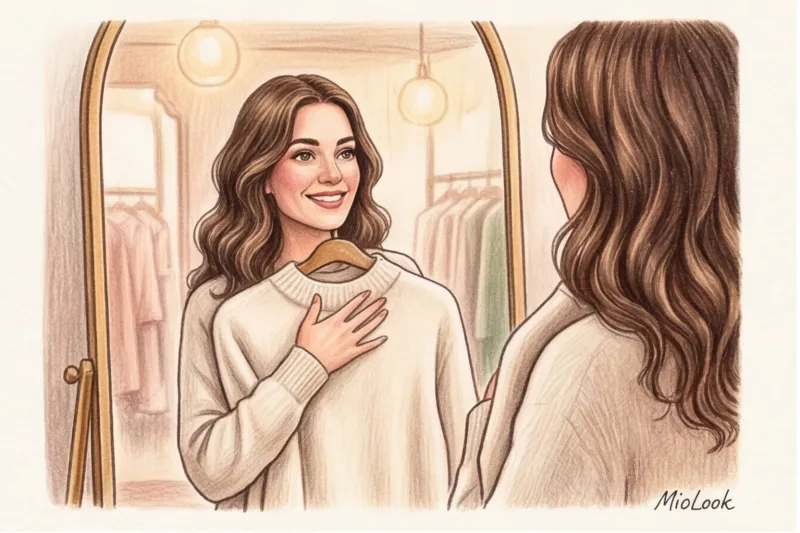
Imagine a typical morning. You open your closet, rummage through the hangers, pull out a pair of jeans you wore a couple of years ago, try to button them—and fail. At this point, even before you've had your morning coffee, your brain has already registered defeat. You put on your usual shapeless sweater and leave the house feeling guilty about your body. Sound familiar? In 12 years of working as a personal stylist, I've seen these morning micro-tragedies hundreds of times. But today we're not going to talk about how to "hide your hips" or "stretch your silhouette." We're going to talk about... How to love your figure with clothes , using wardrobe not as a means of camouflage, but as a tool of somatic therapy.
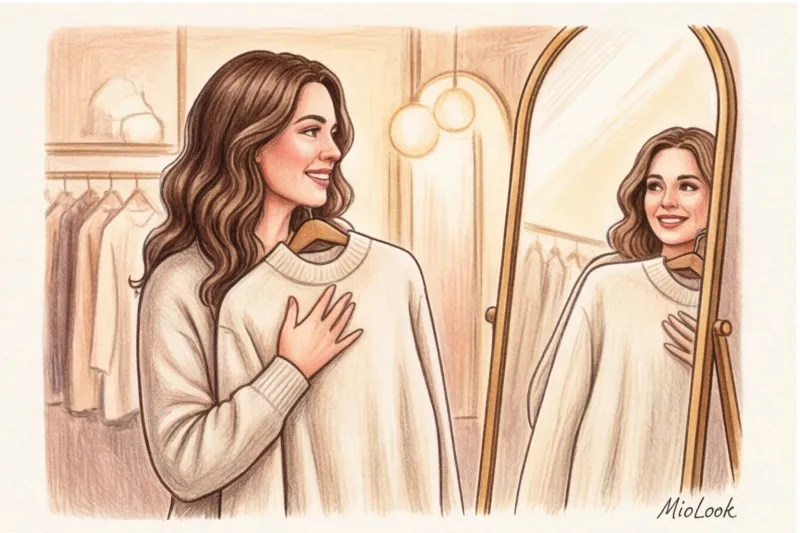
Wardrobe Trauma: Why Do We Fight Our Bodies in the Morning?
One of my clients, a successful top manager named Anna, had a separate shelf in her closet that we jokingly called the "skinny jeans museum." It contained items a size or two smaller than her current size. Every morning, Anna's gaze fell on this shelf. These items worked like a "clothes-reproach" — a physical reminder of the body she no longer has.
According to consumer behavior research (2023), almost 70% of women keep clothes in their closets that are too small for them, hoping to fit into them one day. This gap between our actual bodies and the "ideal" wardrobe drains cognitive energy even before the workday begins. You're not just choosing what to wear—you're losing a battle with your own reflection every morning.
In 2012, researchers from Northwestern University (USA) coined the term "Enclothed Cognition." They demonstrated that clothing directly influences our psychological processes. We discussed this mechanism in more detail in our a complete guide to the psychology of style If you wear something that's too tight or reminds you of an "imperfection" in your body, your brain literally receives an alarm signal.
The main myth of style: clothes should not "hide flaws"
For decades, the fashion industry has been pushing toxic geometry on us: "If you're an apple, wear this," "If you're a pear, hide your hips." The female body has been turned into a math problem to be solved, or a structural defect to be camouflaged.
Here is the most paradoxical conclusion from my practice: The shapeless, baggy, or all-black clothing that women use to "camouflage" actually increases body dysmorphia. When you hide in an oversized hoodie, your psyche receives the message, "I'm in danger, I need to disappear." Furthermore, the lack of clear structural boundaries in your clothing forces you to constantly slouch, trying to make yourself physically smaller.
"The somatic connection between the body and fabric is incredibly strong. Clothing that is too tight around the chest or waist physiologically increases cortisol (the stress hormone) levels because it mimics the shallow breathing experienced during panic."
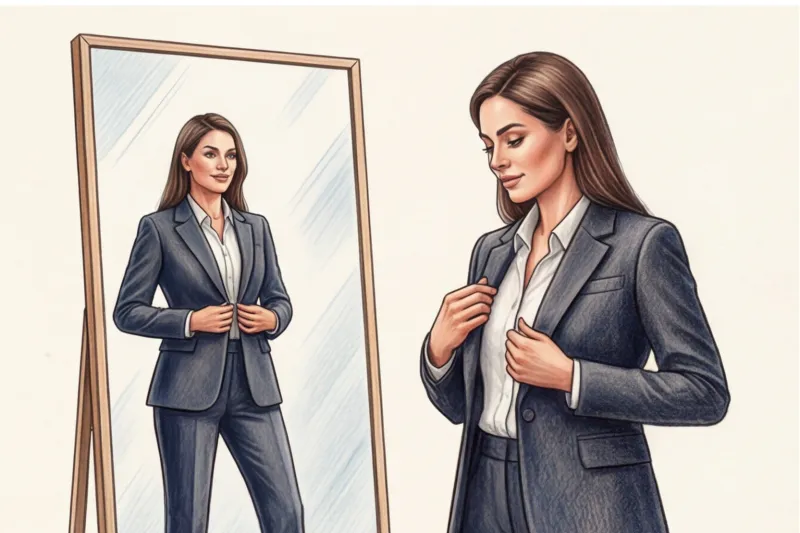
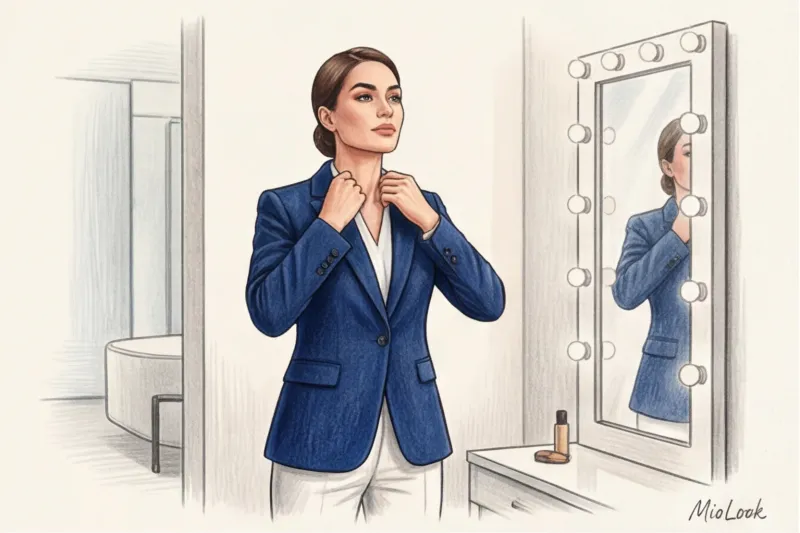
The paradigm shift is to stop asking the mirror, "How does this look?" and start asking yourself, "How does this feel on my skin? How does my posture change when I wear it?" A well-tailored, structured jacket acts as psychological armor—it gives you clear boundaries in space, forcing you to square your shoulders and feel supported.
Access to MioLook for €0.99 — one-time payment
A smart AI stylist will select the perfect look from your clothes, taking into account your comfort and mood. No "apples and pears" – just what suits you.
Get access — €0.99 onceClothes as Therapy: 4 Steps to Loving Your Body with Clothes
Reconnecting with your body through your wardrobe is a process that takes time. But there are concrete steps you can take today.
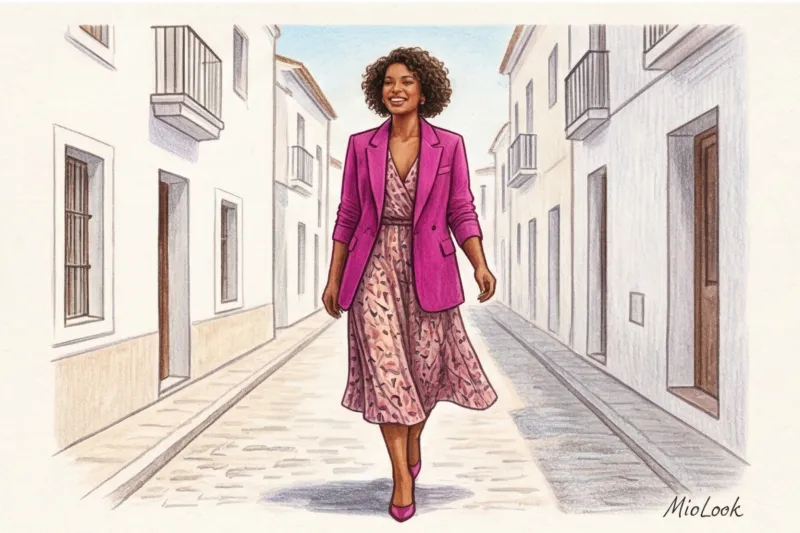
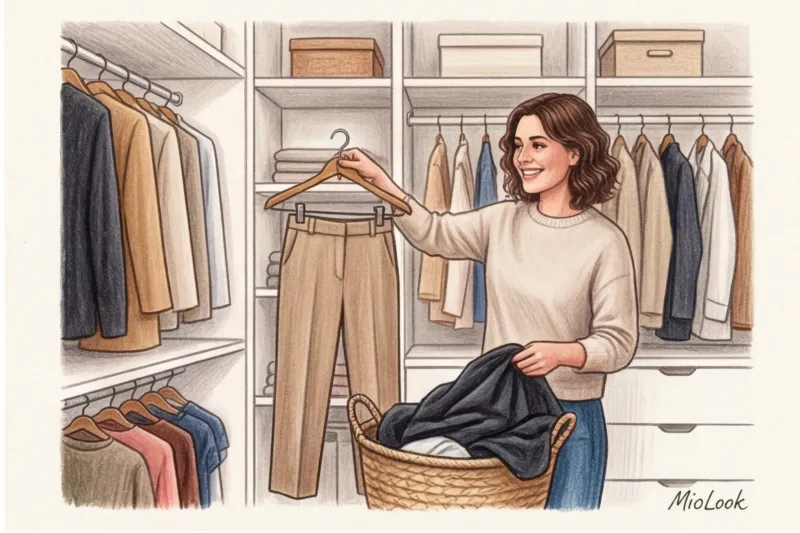
- Cleanup "Here and Now". Put all the clothes that are too small, too tight, too tight, or that make you feel guilty in boxes and put them out of sight. Your closet should only contain what fits you perfectly today. This is a basic respect for your current body.
- Sensorial Dressing. Dr. Dawnn Karen, founder of the Fashion Psychology Institute, describes the principle of Mood Enhancement Dressing in her 2020 book. She demonstrated that the tactile response of high-quality fabrics works like a soothing physical touch. Choose thick, flowing silk (from 19 momme), soft cashmere, or organic cotton with a weight of 180 g/m² or more.
- Search for "Silhouette of Power". Find a cut that physically prevents you from slouching. For many of my clients, this means wide-leg palazzo pants with a high but soft rise that allow for freedom of movement while also lengthening your stride.
- Creating a "safety capsule". Collect 3-4 outfits that don't require you to suck in your stomach after lunch. Put them in MioLook So on days when you wake up in a bad mood, you don't have to make decisions—the app will suggest a proven, safe option.
Size is just a number: a secret trick of stylists
Do you know what "vanity sizing" is in retail? According to a 2024 mass-market analysis, the actual physical measurements of a size "M" (Medium) can vary by an incredible 10 centimeters at the waist across different brands! Size is simply a technical designation for the manufacturer, not an assessment of your attractiveness.
Psychological freedom comes the moment you buy something in the size that suits you. sits , even if it's an XXL instead of your usual L. When I see a customer in the fitting room getting upset about the number on the tag of a perfectly fitting dress, I take a small gold scissors out of my purse and simply cut the tag off.
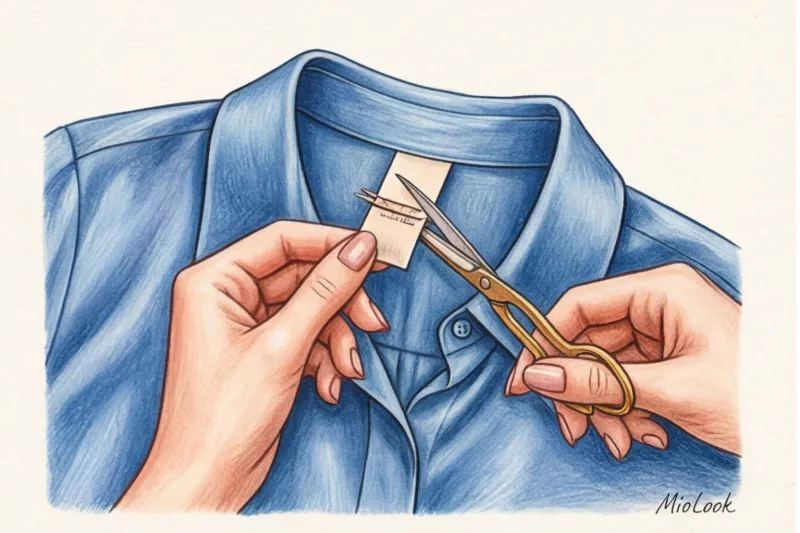
No label, no problem. Try this with your wardrobe. Physically removing the size tag is a surprisingly powerful therapeutic act.
The Mediterranean Approach: Image Formulas for Confidence
I've always admired the way Italian and Spanish women embrace their bodies. They don't try to squeeze themselves into the rigid confines of Scandinavian minimalism or hide their curves. Their style is built on sensuality, dynamism, and, most importantly, comfort. Here are three formulas that will help you incorporate this approach into your wardrobe.
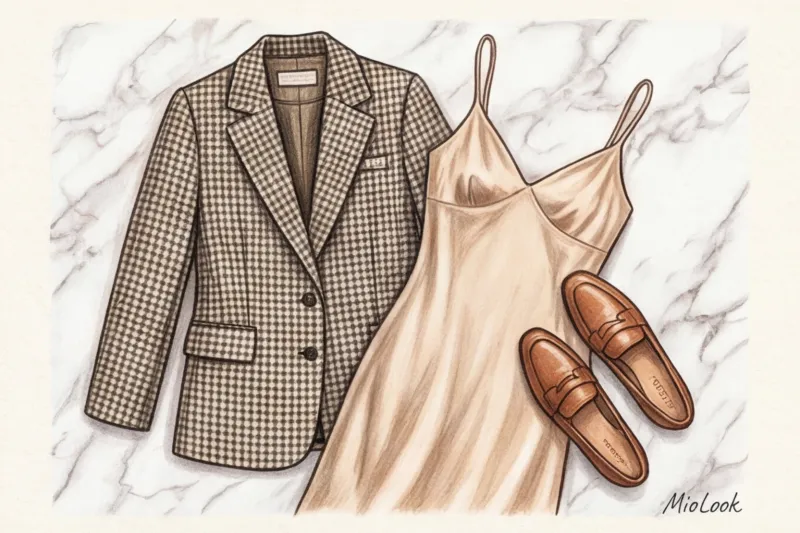
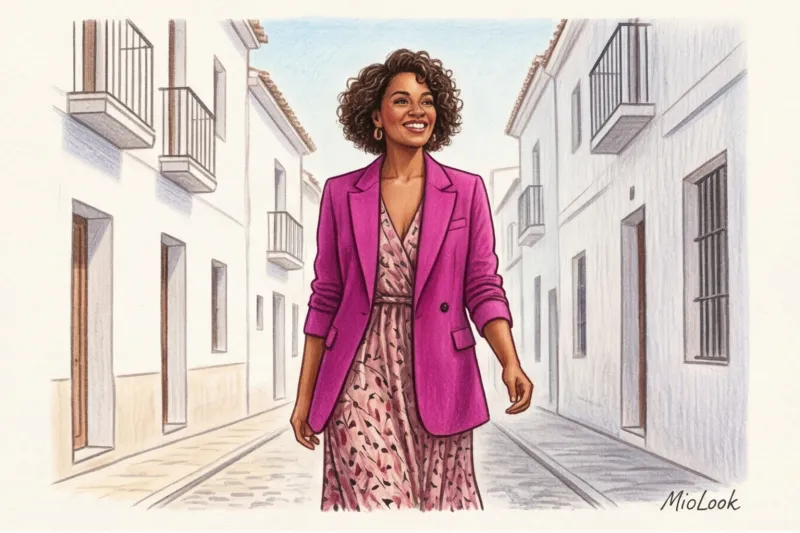
Formula 1: The Armor and the Flow.
Structured jacket (wool, tweed) + flowing slip dress (silk, viscose).
Psychologically, this combination works flawlessly. The jacket with its defined shoulders creates a physical boundary between you and the outside world—you feel collected and protected. And the flowing dress allows for unrestricted movement and reconnects you with your femininity.
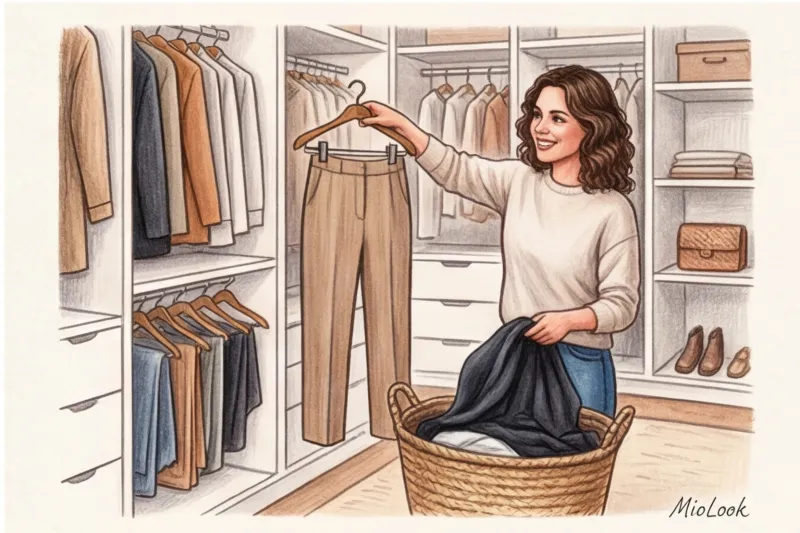
Formula 2: The Grounded Base.
Straight-leg, thick jeans (100% cotton) + soft, knitted top with exposed collarbones.
Heavyweight denim without elastane perfectly sculpts the figure, providing a sense of support in the lower body. Exposed collarbones (such as a bob or deep V-neck) draw attention to the face and bust, de-emphasizing the waistline, which can be a source of insecurity for many.
Formula 3: The Color Anchor.
A monochrome base (for example, everything in camel) + a bright accent cardigan.
Color directly influences dopamine. By choosing a single color vertical, you create a calm, unified silhouette, while a bold detail (like a terracotta or emerald sweater draped over your shoulders) shows you're not hiding, but making a confident statement.
Your perfect look starts here
Join thousands of users who look flawless and feel confident every day with MioLook.
Get access — €0.99 onceChecklist: Does your wardrobe improve your self-esteem?
Of course, I have to be honest: buying the perfect pair of pants isn't a substitute for a session with a therapist if you suffer from clinical body dysmorphic disorder (which is NOT the case). However, clothes are tools you use every day. And they can either support you or drag you down. Conduct a style audit based on these three questions:
- Can you eat a hearty lunch, sit in a chair, and take a deep breath in this image? If not, the item is sent to a box for recycling or donation.
- Do you spend your day tugging at your hem, adjusting your straps, or sucking in your stomach? Comfort is when you put something on in the morning and forget about it until the evening.
- Does this clothing reflect the woman you are today, or the woman you think you should be?
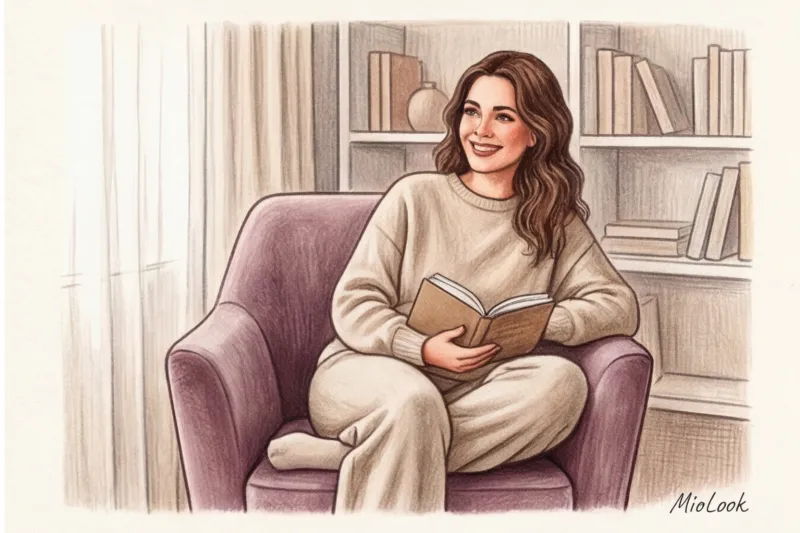
Your body isn't a work-in-progress to be hidden away until better times. It's your home. And that home deserves beautiful, comfortable, and perfectly fitting clothes right now. Choose clothes that embrace you, not those that criticize you.