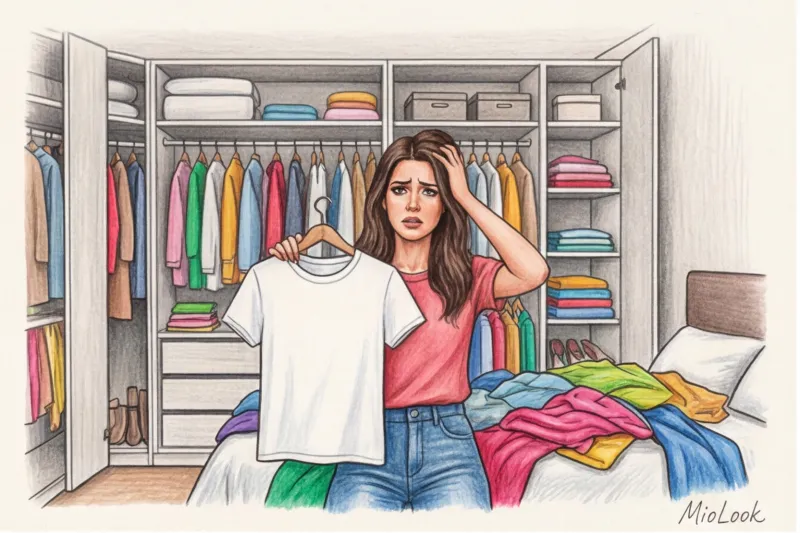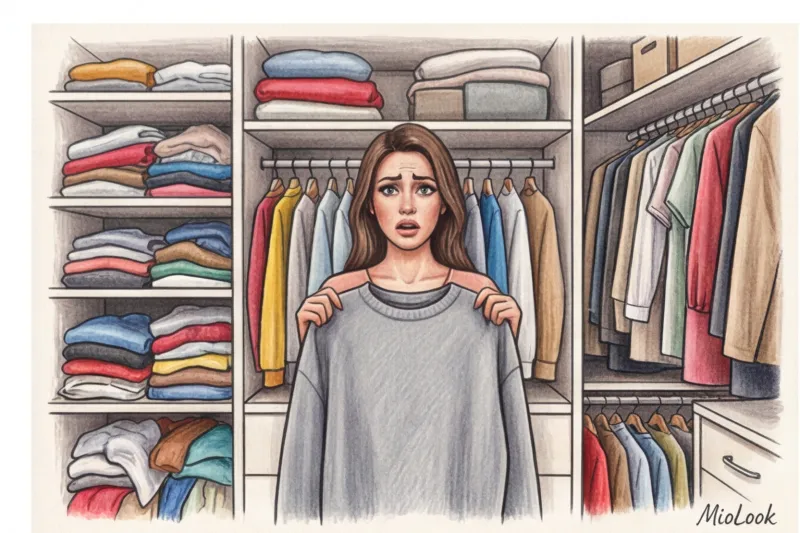
How many times have you stood in front of a packed closet with the overwhelming feeling, "I have absolutely nothing to wear"? And have you ever noticed how on certain days, your favorite, perfectly fitting dress suddenly becomes irritating, causing you to slouch and avert your gaze? It's not that you've gained weight overnight, or that the fabric has suddenly shrunk after washing. It's simply that the item doesn't align with your brain chemistry today.
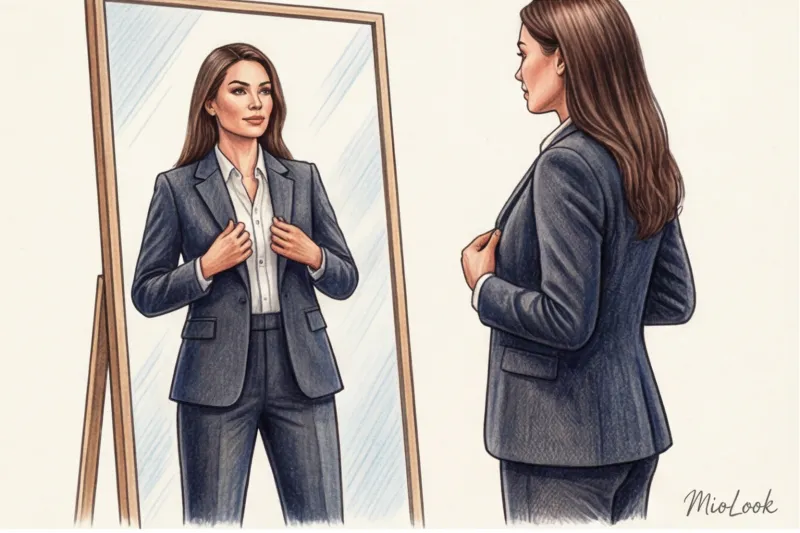
Deep psychology of clothing style — this is far from the banal advice from glossy magazines of the 2000s, along the lines of "red signifies aggression, while blue inspires confidence." It's a complex neurobiological interface through which we communicate daily with our subconscious. And to break the vicious cycle of meaningless purchases, we need to stop perceiving clothes solely as a tool for disguising flaws. We discussed the basic mechanisms of working with a wardrobe in more detail in our A complete guide on how to find your style and forget about rigid rules.
The Psychology of Clothing Style: How Your Clothes Change Your Brain Chemistry
For years, the fashion industry has convinced us that clothes are meant to impress others. But science tells us otherwise: clothes, first and foremost, change us. This phenomenon is called Enclothed Cognition (reified knowledge).
In 2012, Northwestern University researchers Hajo Adam and Adam Galinsky conducted a now iconic experiment. They gave subjects identical white coats. One group was told they were doctor's coats, the other were told they were painter's coats. Those who thought they were wearing "medical" coats showed a phenomenal increase in attention span and performed brilliantly on complex cognitive tests. The second group showed no improvement. The fabric was identical. The only difference was the symbolic meaning the brain assigned to the garment.
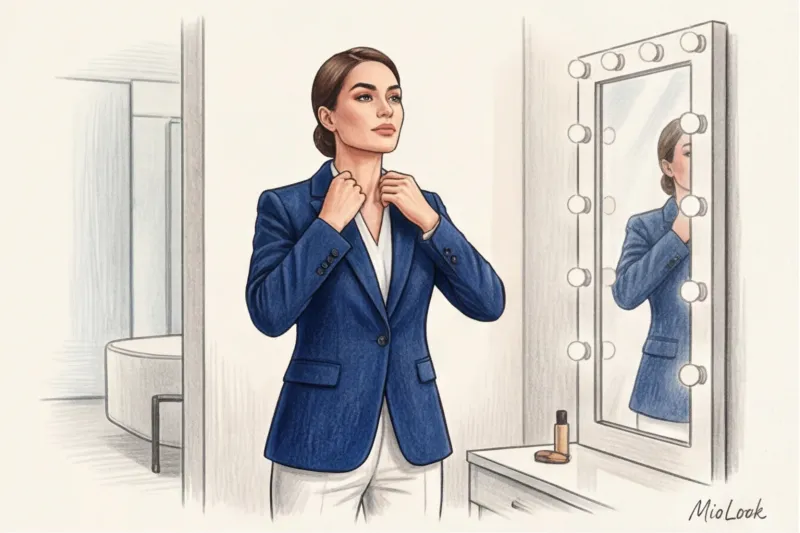
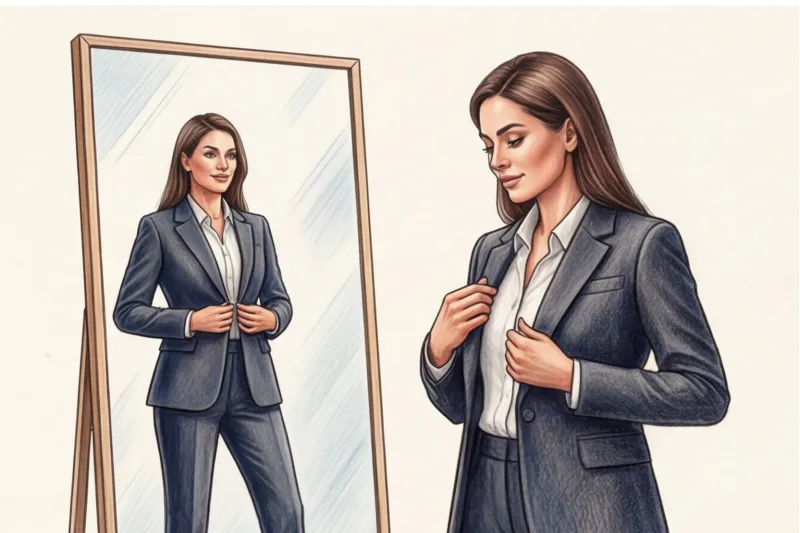
Let's apply this to our everyday wardrobe. When you put on an impeccably tailored Massimo Dutti jacket over a simple cotton T-shirt, it's not just your silhouette that changes. Your posture, the tone of your voice, and your willingness to assert yourself change. You literally take on the qualities you associate with that garment.
"Clothes aren't just something that hides our bodies. They're something that reveals our intentions. When you choose your outfit in the morning, you're choosing which version of yourself you'll let drive your life today."
This is why rigid personality typing systems (such as the Kibbe system or the 12 color theory) can be psychologically damaging. Imagine: a stylist has labeled you a "Soft Summer" with a romantic personality type and prescribed you to wear only ruffles, pastels, and floral prints. But what if today you have a tough conversation with the board of directors and need "armor"? By forcing yourself to wear someone else's role, dictated by the chart, you deprive yourself of psychological support.
Access to MioLook for €0.99 — one-time payment
A smart AI stylist will select the perfect look for every day and any mood.
Get access — €0.99 onceThe "Alien Wardrobe" Syndrome: Why We Buy Things We Don't Wear
A classic statistic says: 80% of the time, we wear only 20% of the items in our closet. Why do we obsessively ignore the other 80%? Over 12 years of working as a personal stylist, I've conducted dozens of emotional wardrobe analyses. And you know what's the hardest part? Not throwing out stretched-out T-shirts, but cutting the tags off those gorgeous €300 dresses that never saw the light of day.
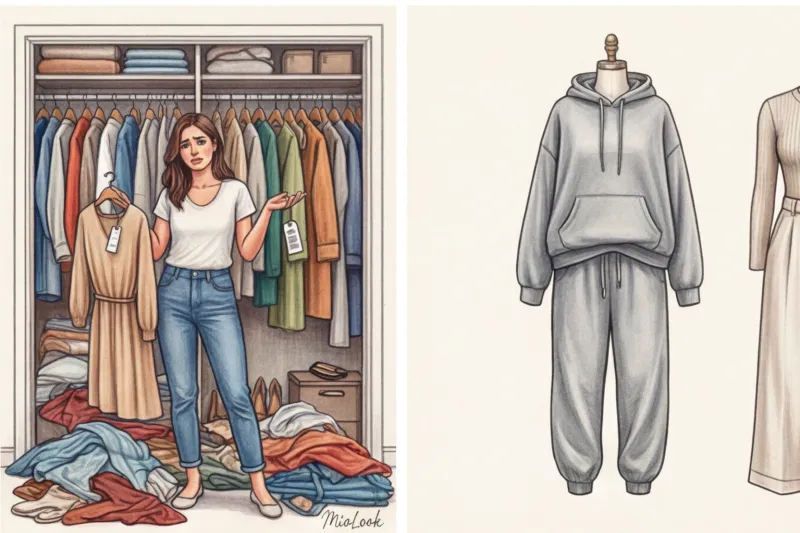
This is the trap of the "fantasy self." We often buy clothes not for the life we live, but for the one we dream of. A woman who works remotely and loves long walks with her dog buys up strict pencil skirts and stiletto heels. As a result, her real, living self has nothing to wear, and when she opens her closet, she feels nothing but guilt for the money she spent and her unfulfilled ambitions.
The situation is exacerbated by the toxic fast-fashion culture. Social media algorithms masterfully exploit FOMO (fear of missing out) triggers. Today, aesthetics are trending. mob wife , Tomorrow - office siren Mass-market brands like Zara and H&M instantly churn out these microtrends. You buy something to feel a sense of belonging, but it holds no emotional value for you. It's psychological junk food—it gives you a quick dopamine hit at the checkout, but leaves you feeling empty in the morning in front of the mirror.
The counterintuitive truth: hiding behind oversized clothes isn't self-care.
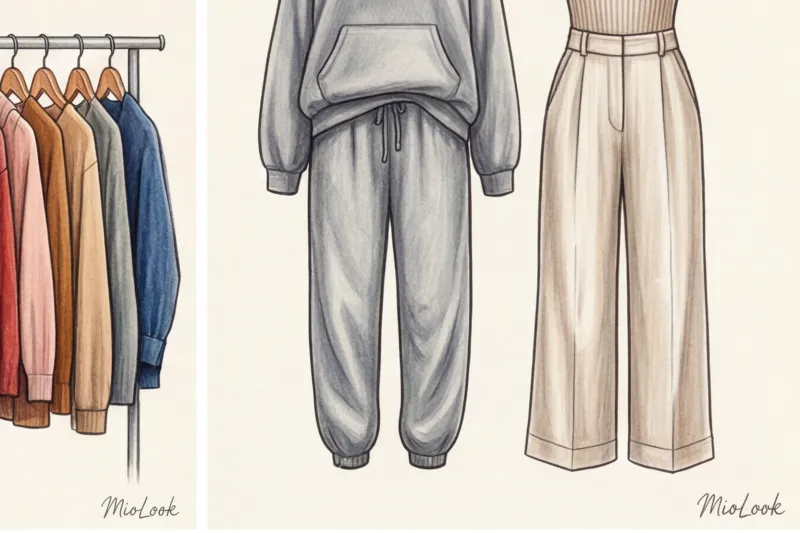
For the past few years, the myth has been cultivated that oversized tracksuits and oversized hoodies are the absolute pinnacle of self-love. We're sold the idea that comfort equals shapelessness. But as a stylist, I have a responsibility to voice the counterintuitive truth: constantly hiding in oversized clothes isn't self-care. It's often a psychological avoidance mechanism.
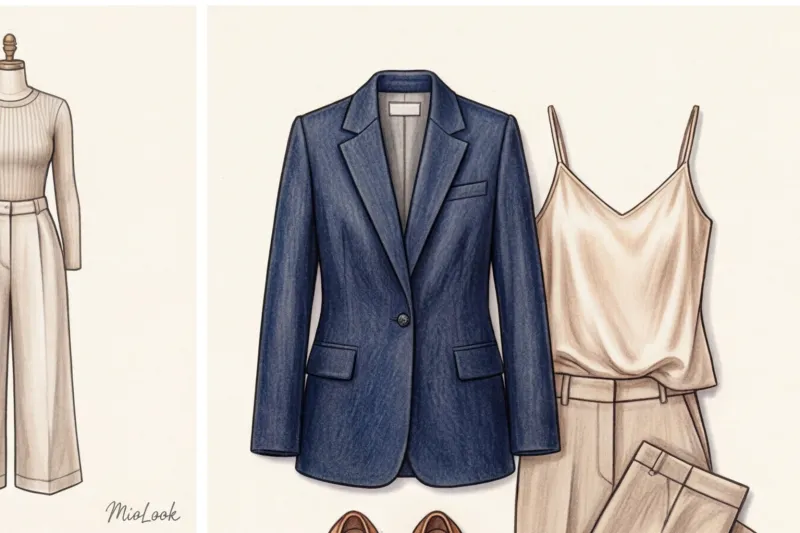
When we wear clothes for weeks that completely blur the contours of our bodies, we try to become invisible. A "cotton cocoon" effect occurs—the constant lack of structure in our clothing slowly but surely reduces our energy and ambition. Your brain receives the signal: "We're resting, we're safe, no need to strain."
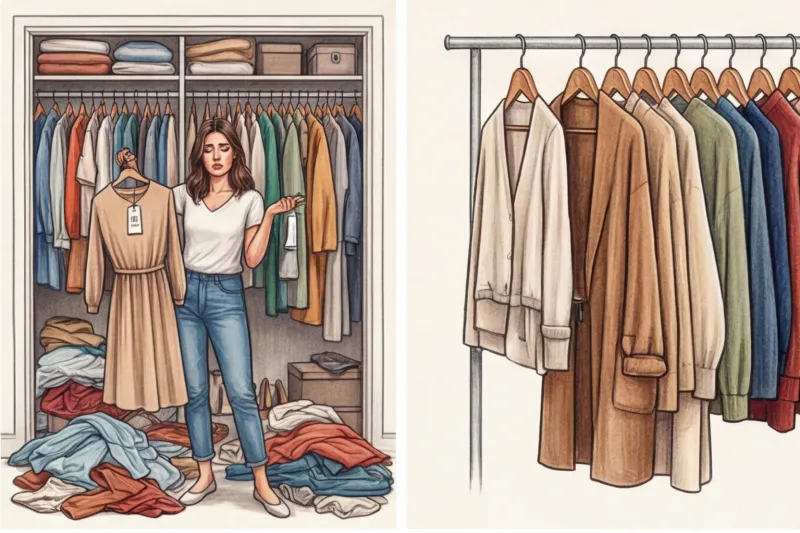
Does this mean you need to confine yourself to rigid corsets? Absolutely not. True, healthy comfort is the Mediterranean approach to style. Think of Italian or Spanish women: they choose wide, breathable palazzo pants made of thick linen and flowing, loose-fitting silk shirts. These clothes offer absolute physical freedom—they don't dig into your stomach after a heavy meal, and they're cool. Yet, they maintain structure, hold their shape, and convey status.
The Anatomy of Confidence: How to Create a Look That Works for You
It's time to abandon outdated attempts to squeeze yourself into fruit categories like "apple" or "pear." The formula for the perfect wardrobe is built on a balance of two opposites: Structure (your external authority) and Fluidity (your internal freedom).
My favorite, time-tested formula that works flawlessly for 90% of women:
- Structured jacket — a clear shoulder line instantly “pulls” the look together and declares your boundaries.
- A silk top or a quality basic t-shirt - gives a feeling of relaxation and sensuality close to the body.
- Straight jeans or trousers - a neutral base that does not restrict the step.
- Soft leather loafers — ground the look, adding intellectual chic without the pain of heels.
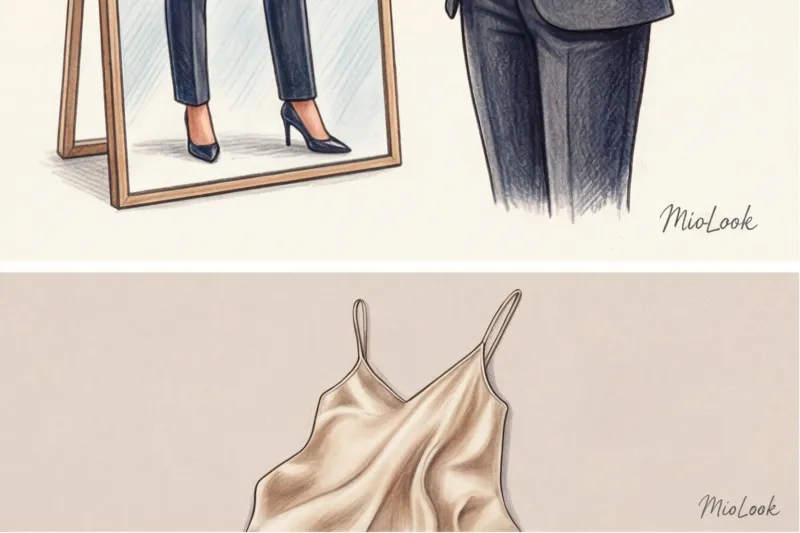
One of my clients, the CEO of a successful IT startup, came to me in utter despair. She felt like an impostor in the classic, stiff two-piece suits that, in her opinion, "a CEO should wear." Before a crucial round of investment, we completely changed our tactics. Instead of armor, we opted for a relaxed, deep chocolate-colored linen pantsuit and a thick silk top. She closed the deal brilliantly. Why? Because she stopped playing the role of "the strict boss" and allowed herself to be a confident woman in comfortable yet classy clothes.
Accessories also play a huge role. They act as powerful psychological anchors. A chunky vintage ring, a heavy watch, or a favorite pendant are all things you can touch during stressful negotiations. This tactile gesture grounds the nervous system and restores a sense of control.
Why tactility is more important than color
Dopamine dressing isn't just about bright colors, as is commonly believed. According to fashion psychology research, the tactile sensations of fabric directly influence hormone production.
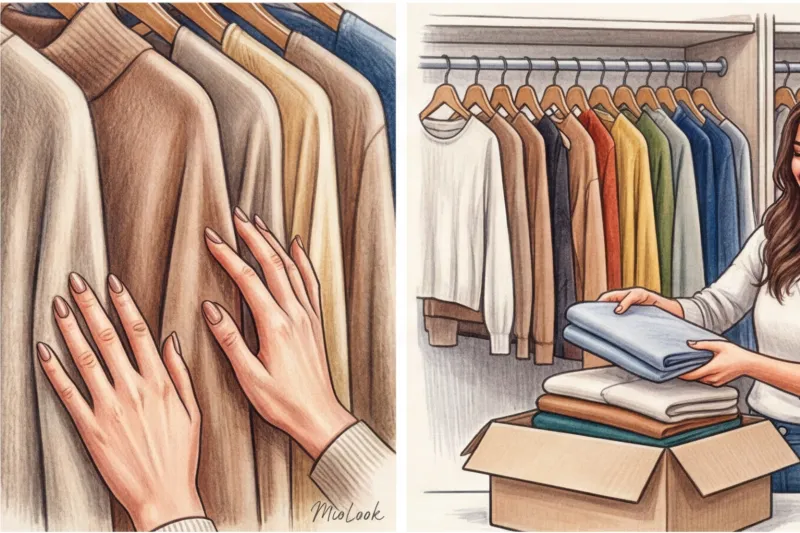
Rough, squeaky synthetics (such as 100% acrylic or cheap polyester) create micro-stress on the skin with every movement, imperceptibly increasing cortisol levels and irritability by evening. Conversely, the touch of high-quality cashmere, thick cotton (180 g/m² or more), or smooth silk stimulates oxytocin production. Your micro-expressions literally soften when your body feels good.
Ready to get started?
Try the free MioLook plan and organize your closet without commitment or stress.
Get access — €0.99 onceCloset Therapy: A Checklist for a Psychological Wardrobe Detox
To make your wardrobe work for you, you need to clear it of visual clutter and "guilt clothes" (gifts, bought for €200 on sale, too bad to throw them away). A structured approach will help. If you prefer a digital format, the ideal solution is Digitizing things in the MioLook app , where you can clearly see what goes with what. But we need to start with physical reality.
- Step 1: Inventory emotions, not things. Take out the item and ask yourself, "How do I feel when I wear this?" If the answer is "I feel fat," "I feel like a mouse," or "it's suffocating me," throw it in the donation bin immediately. No amount of money can justify the daily damage to your self-esteem.
- Step 2: The "today's body" rule. It's tough, but necessary: get rid of anything that's tight, won't fasten, or makes you want to "lose a few pounds for summer." Your closet should serve you as you are today, not punish you for eating a croissant. Keeping jeans from your college days is a form of psychological self-flagellation.
- Step 3: Pencil test. To get objective statistics, hang all the hangers in your closet with the hooks facing you. When you put something on and put it back, hang it with the hook facing away from you. After a month, you'll have a clear picture of your actual wardrobe. According to my clients, after a month of this test, about 60% of the clothes are just dead weight.
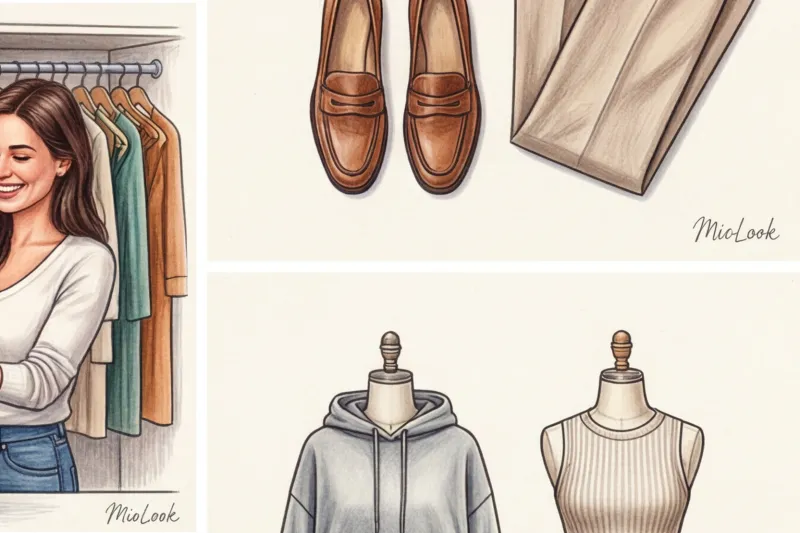
Fair limitation: This no-compromise detox can be challenging if you're in the midst of active weight loss (for example, after pregnancy). In this case, you don't have to throw everything out—simply vacuum-seal any unnecessary items and store them on high shelves so they're not an eyesore every morning.
Bottom line: Your clothes are a statement of your personality.
True, living style isn't born on the pages of trend books or in geometric charts. It emerges from the intersection of your unique personality, your daily tasks, and your ambitions. Every morning, when you open your closet, you're choosing more than just fabric to keep you warm. You're choosing your avatar for today.
Finding your style is a process of trial and error. Even as a professional, I occasionally make purchase mistakes, and that's perfectly normal. The key is to learn to listen to your instincts.
Right now, after reading this article, go to your closet. Find at least one item that no longer reflects your essence, that pulls you back to the past, or that makes you feel insecure. Take it off the hanger. Put it in a bag. You'll be surprised how much space—both in your closet and in your mind—will appear with just this one action.