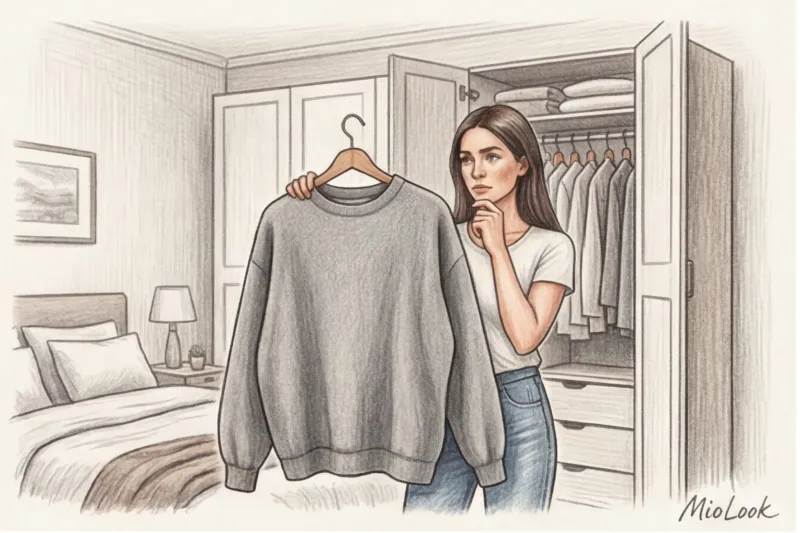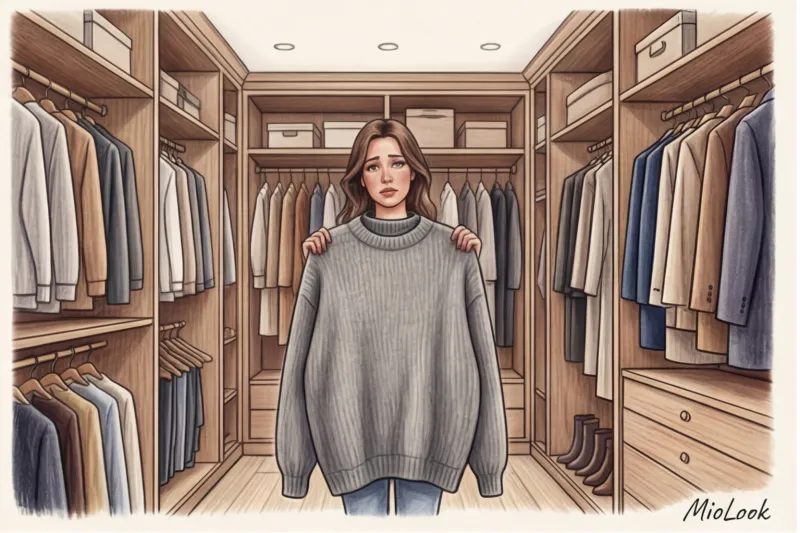
I often see the same scene in fitting rooms: a woman is unhappy with her hips or stomach and instinctively reaches for something three sizes too big. "I just want to hide it," she says, putting on an oversized, shapeless cardigan. But you know what the ultimate irony of styling is? Baggy clothes don't hide your flaws. They highlight them.
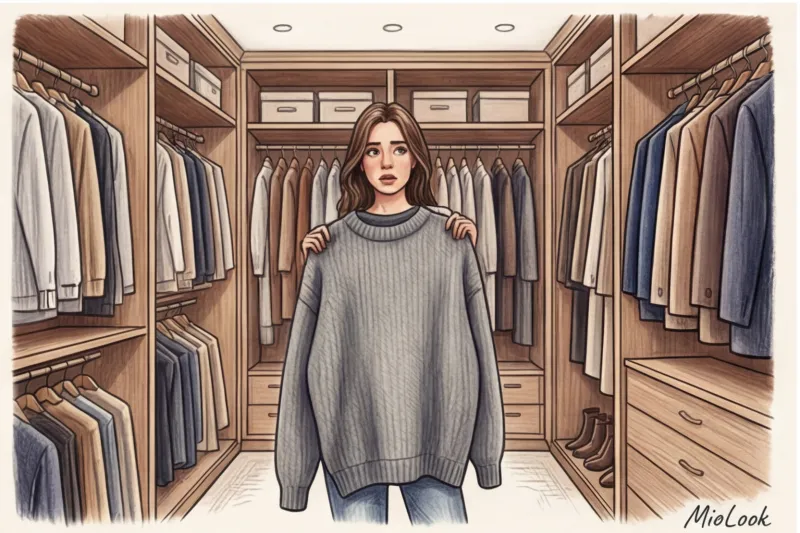
By depriving the figure of natural proportions, thin, cheap oversized clothes transform the body into a solid, massive block. You look larger and, worse, convey your insecurity to others. If you've been looking for a way to... How to stop wearing baggy clothes and to emerge from the shadow of our own complexes, we will have to start not with shopping, but with thinking.
I talked in more detail about how to learn to accept your peculiarities without trying to wrap yourself in a fabric cocoon in our complete guide to The psychology of style and wardrobe: how to accept your body Today we'll discuss the practical, architectural side of the issue: how to create a safe yet clear silhouette that will change your posture forever.
Wardrobe Psychology: Why Do We Hide Behind Oversized Clothing?
Your closet isn't just a place to store your clothes. It often becomes a repository of your fears. Have you ever wondered why, on days when we feel vulnerable, our hand instinctively reaches for our most stretched-out sweater?
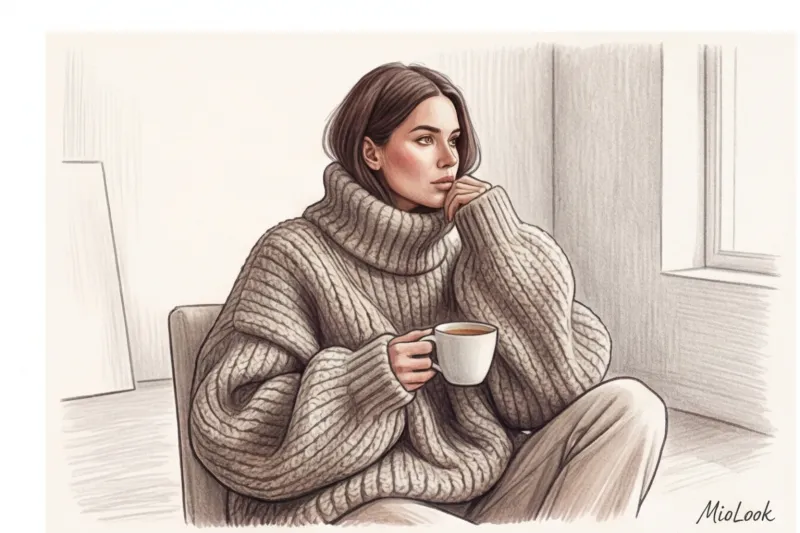
In 2012, Northwestern University researchers Hayo Adam and Adam Galinsky coined the term enclothed cognition (embodied cognition). Their research demonstrated a direct link between what we wear and our cognitive processes. Shapeless clothing acts as "covering clothing." By choosing an oversized hoodie, you physically signal your brain: "Hide, become invisible, don't show up."
The problem is, this emotional shield works against you. You don't become invisible—you become shapeless. This depressive behavior pattern is reinforced every time you choose a comfortable bag over a structured item.
The Illusion of Invisibility: How Voluminous Clothing Enhances the Silhouette
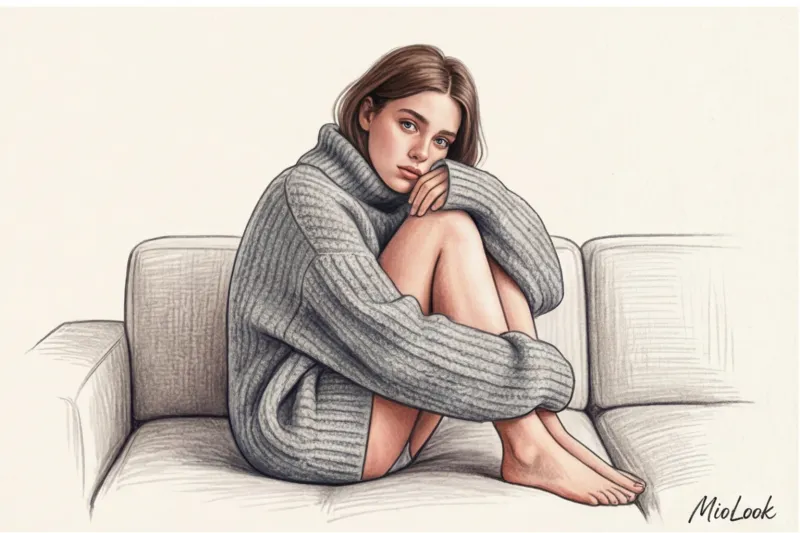
Let's look at the numbers and the optics. In my experience working with complex figures, I've come up with a rule of thumb: baggy, thin knitwear visually adds 3 to 5 kilograms. Why does this happen?
The human eye calculates proportions based on points of articulation—our narrowest points: waist, wrists, ankles, collarbones. When you wear hyper-oversized clothing, you blur these points. The brain of the person looking at you automatically infers your actual body volume from the outer edges of the fabric. So, if you're wearing a sweater that's 80 centimeters wide, you appear 80 centimeters wide.
Architecture instead of a bag: the secret to premium tailoring
While working in Milan, I constantly observed how Italian women dressed. They love delicious food and have luxurious figures, but you'll rarely see an Italian woman in a loose robe. Their secret lies in their architectural cut.
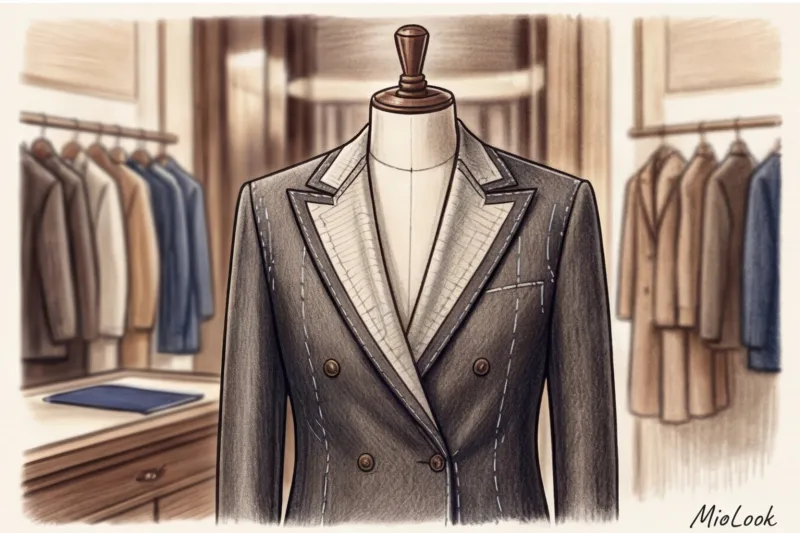
Premium brands like Armani or Brunello Cucinelli emphasize tailoring and seam stiffness, while mass-market brands emphasize shapelessness (because oversized suits are cheap to make and will flatter any figure). The true architecture of a suit lies in the inner details.
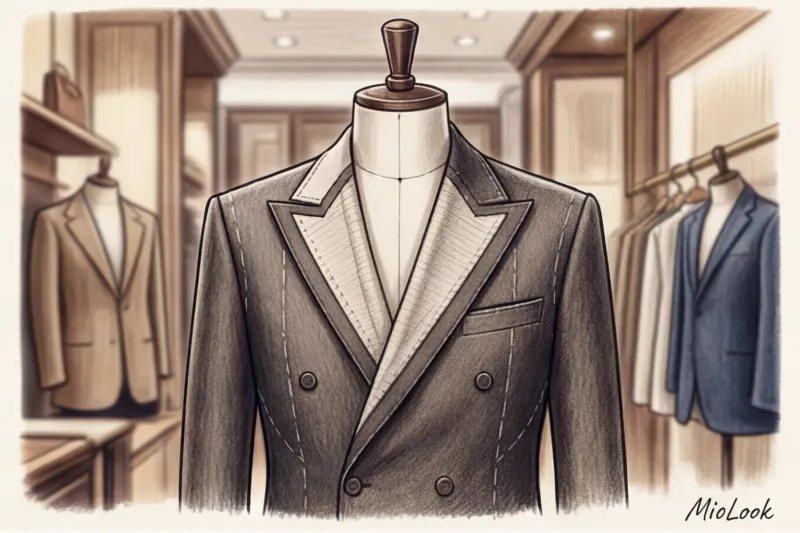
It is used in luxury jackets crinoline Canvas is a special layer of dense fabric between the lining and the main material, often made of horsehair or cotton. It allows the jacket to support your shoulders, create a straight back, and define a waist, even if you don't have one. You put it on, and it dictates the correct shape to your body, rather than sagging in sad folds.
Your perfect look starts here
Join thousands of users who look flawless every day with the smart MioLook algorithm.
Get access — €0.99 onceHow to Stop Wearing Baggy Clothes: A Step-by-Step Strategy
The biggest mistake women make when ditching oversized clothing is a radical switch to bodycon. This causes instant stress, and you immediately return to your favorite oversized hoodie.
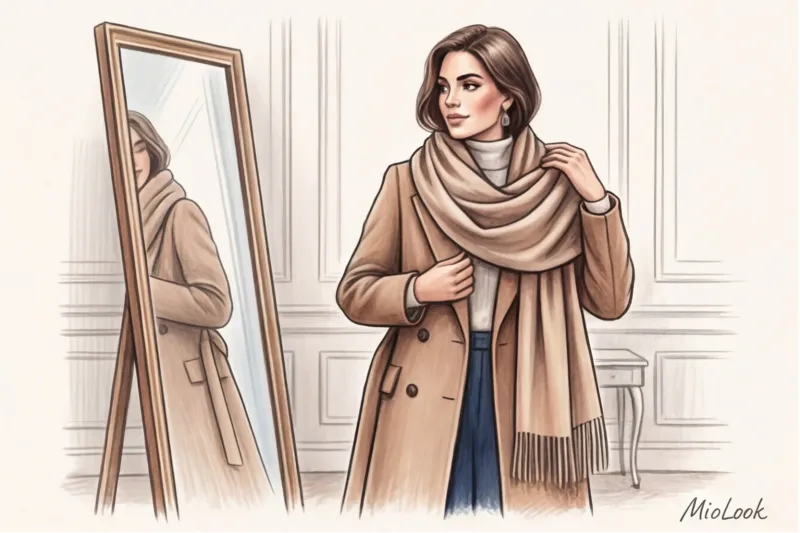
I remember my client Elena from Geneva. For years, she hid her beautiful feminine figure behind shapeless, chunky knit cardigans. Our strategy was gentle: we moved to the concept semi-fitted The main rule for a semi-fitted garment is to leave 1–2 centimeters of air between your body and the fabric.
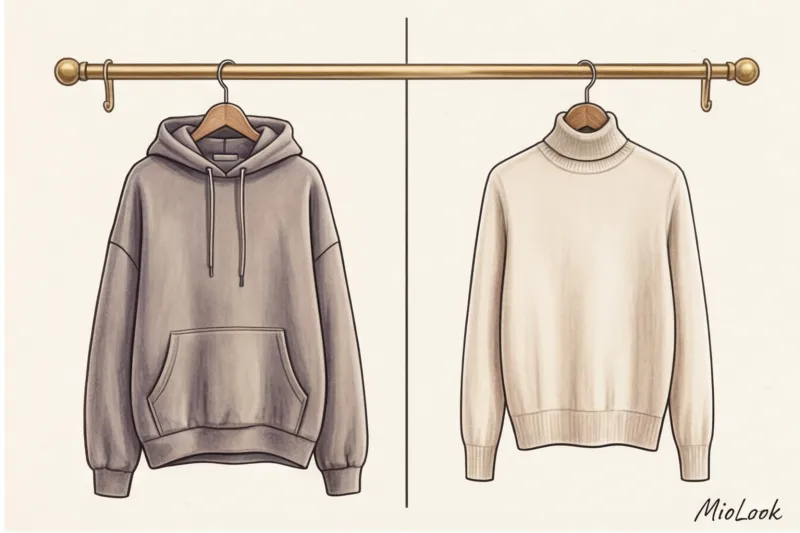
When Elena first tried on a structured Max Mara jacket made of thick camel wool with a perfectly tailored, semi-fitted cut, her posture physically shifted. Her shoulders straightened, and she gained confidence. The jacket didn't cling to her, but it set clear boundaries.
Focus on dense fabrics
This rule has one honest limitation: a semi-fitted fit absolutely does NOT work with thin, flimsy fabrics. Thin single jersey (the kind used for cheap T-shirts) or lingerie silk-satin will treacherously reveal every micro-relief of the body, the contours of the underwear, and the slightest crease.
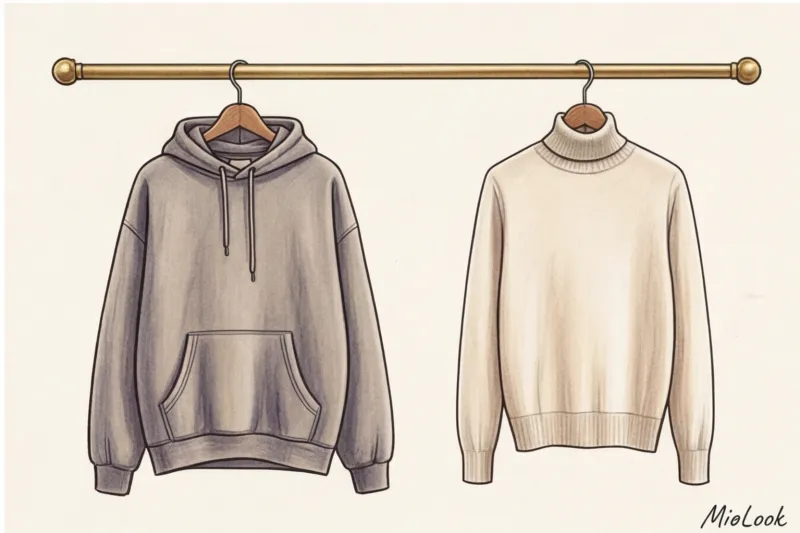
If you want to feel secure without resorting to oversize, invest in dense textures. Look for: heavy silk (crepe de chine), shape-resistant wool, tweed, denim without elastane, and cotton with a weight of at least 180 g/m².
Investing in the Basics: 3 Things That Will Build a New Silhouette
To stop hiding, you don't need to buy out half the store. Simply incorporate just three architectural pieces into your wardrobe, which will become your new foundation.
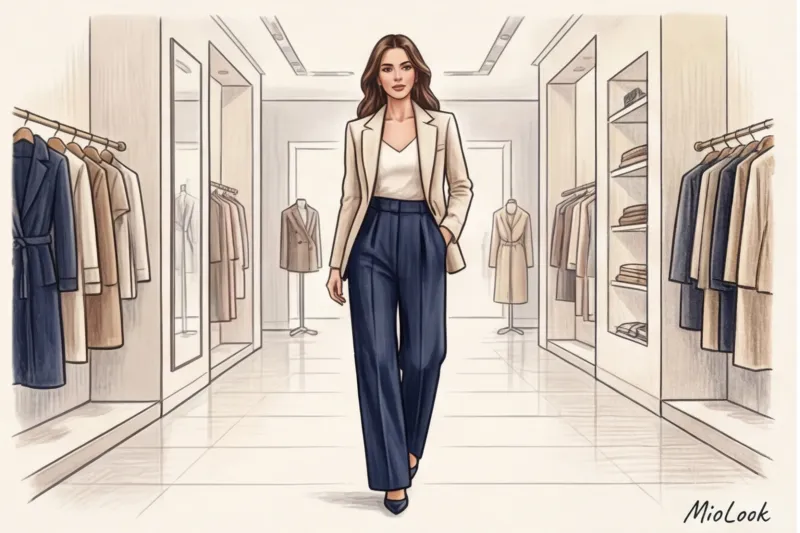
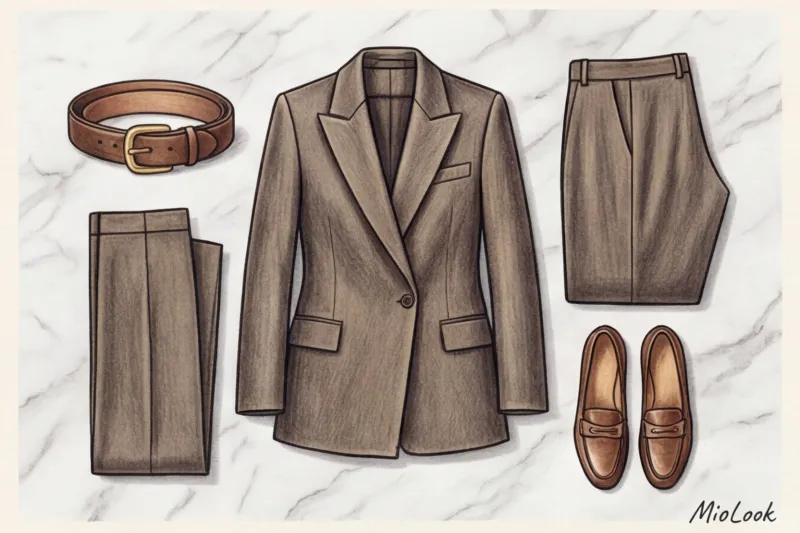
- Structured straight-cut jacket with defined shoulders. It pulls together any relaxed look. You can stick with your favorite soft jeans and a basic T-shirt, but if you throw on a well-padded jacket over it, the silhouette instantly becomes a statement piece.
- Palazzo trousers made of dense suiting fabric with creases. A smoothed arrow is a vertical line that visually elongates your height by several centimeters and makes your legs look slimmer.
- A shirt dress made of thick cotton (or an A-line midi skirt). The stiff collar and cuffs create those articulation points around the face and wrists, drawing attention to the graceful parts of the body.
Now let's do some wardrobe math (cost-per-wear). People often tell me, "A luxury jacket costs 50,000, and a mass-market hoodie costs 5,000. I'd rather buy 10 hoodies." But let's face it.
One perfectly tailored jacket that you'll wear 150 times a year to the office, dinners, and meetings will cost you 333 € per outing. Five cheap hoodies that will pill after three washes and turn you into a boxy teenager will only be worn 10 times each. Their cost per outing will be 500 €. You're overpaying for things that make you look worse.
Ready to get started?
Try the MioLook plan for free—no commitments required. Create your first structured capsule today.
Get access — €0.99 onceThe Biggest Mistake: Why the Oversized Trend Is Bad for You
It's important to draw a line here: there's designer oversize, and there's simply poorly chosen clothing. When Demna Gvasalia creates exaggerated volumes for Balenciaga, he meticulously balances the two. Designer oversize has a rigid shape. A mass-market piece from a brand, bought three sizes too big, simply hangs loose.
I'd like to share a counterintuitive insight: the trend toward total oversize is the worst thing that could have happened to women with body image insecurities. It's given them a legitimate excuse to stop working on their silhouette.
By hiding in a shapeless cocoon, you deprive yourself of your wrists, ankles, and the beautiful line of your collarbones. You deprive yourself of your figure. In the long run, hiding your figure behind baggy clothes is a form of daily emotional self-harm. Every morning, you remind yourself, "I'm not good enough to be noticed."
Checklist: Revisiting a Shapeless Wardrobe with MioLook
Knowing the theory isn't enough—it's time to move on to action. Getting rid of baggy clothes is emotionally difficult, so I suggest taking the process digitally and rationally with MioLook applications.
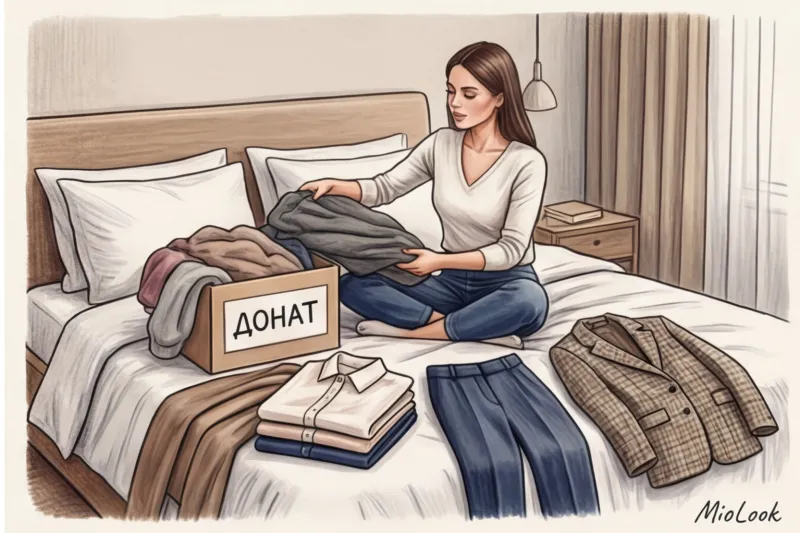
- Step 1: Digitization. Take photos of all your "cover-up items" (stretched cardigans, oversized hoodies, shapeless dresses) and upload them to your virtual wardrobe. Look at this collection on your smartphone screen. When your items are gathered in a single collage, the scale of the tragedy becomes clear much more quickly.
- Step 2: The Ruthless Sorting Rule. Keep exactly one large, comfortable item at home for outdoor trips or illnesses. Donate the rest of the bags to charity or recycle them.
- Step 3: Create new capsules. Use MioLook's AI algorithms to create new outfits based on those three investment pieces (jacket, palazzo pants, and a fitted dress).
- Step 4: Analytics. After a month, check your wear statistics in the app. You'll see how often you've started reaching for items that hold their shape and make you feel more confident.
Don't try to disguise imperfections with shapeless fabric. The best way to distract from what you don't like about yourself is to create a flawless, architectural silhouette around it. A high-quality cut isn't a luxury; it's your right to occupy your space with pride.