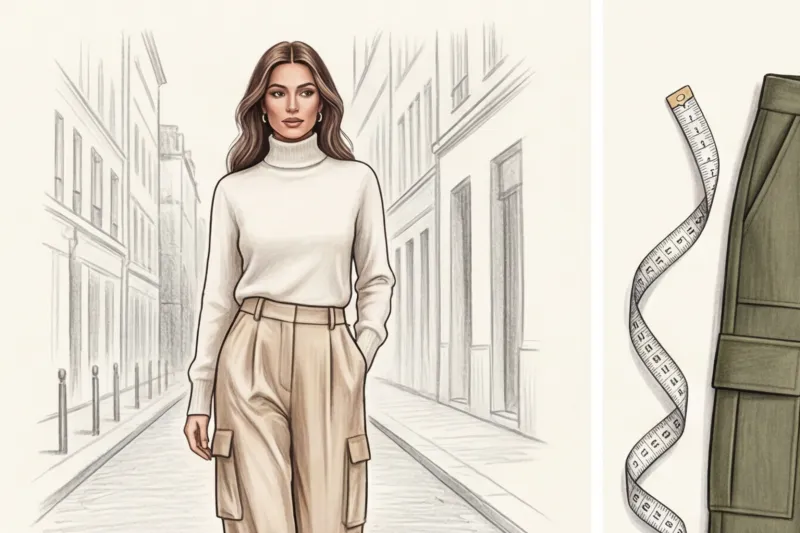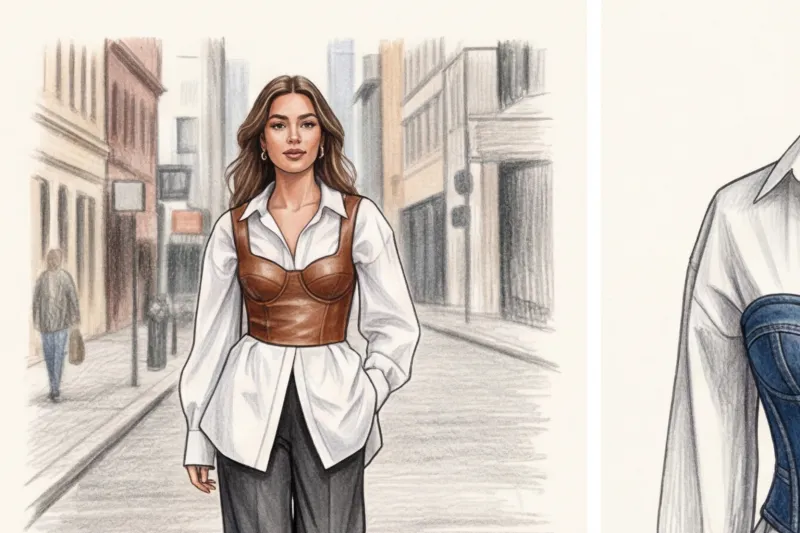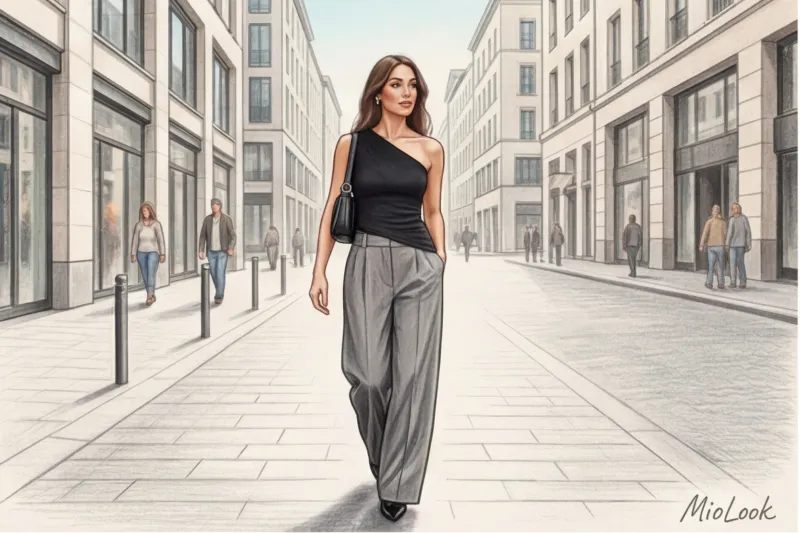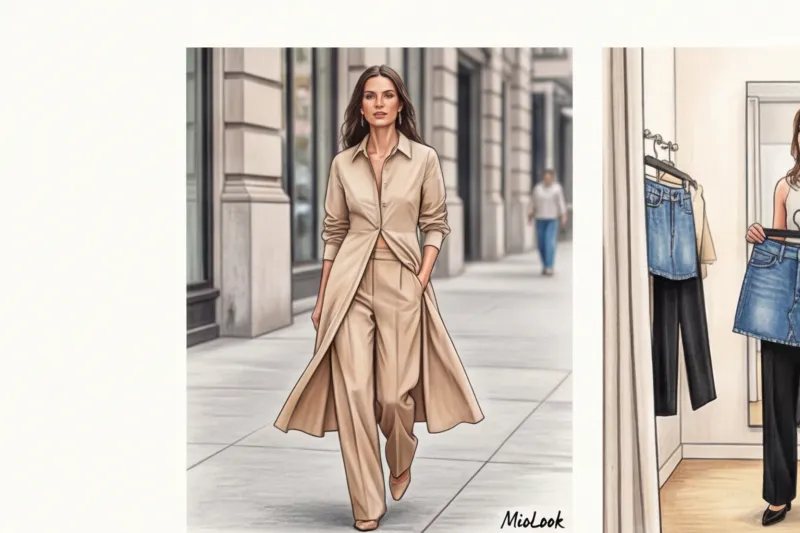
Remember the red carpet of the early 2000s? Hip-hugging jeans, a wide belt with a chunky buckle, and... a short knit dress on top. If your eye twitches nervously at the thought of these Ashley Tisdale looks, I understand. But let's be honest: dress over trousers trend It's officially back. Only this time, it looks less like childish teenage rebellion and more like expensive, mature, and intellectual fashion.
We have already discussed the phenomenon of the return of this aesthetic in more detail in our complete guide to Y2K style in clothing And today, as a stylist with 14 years of experience, I propose looking at this controversial combination through the prism of silhouette architecture and the strict mathematics of proportions.
Back in fashion: why the dress over trousers is a trend worth giving a second chance
Why complicate your life and layer things on top of each other? The numbers speak for themselves: according to a report from the Lyst platform (2024), search queries for the combination skirt over pants Sales increased by 140% in just one season. And it's not just about nostalgia, which always sells well.
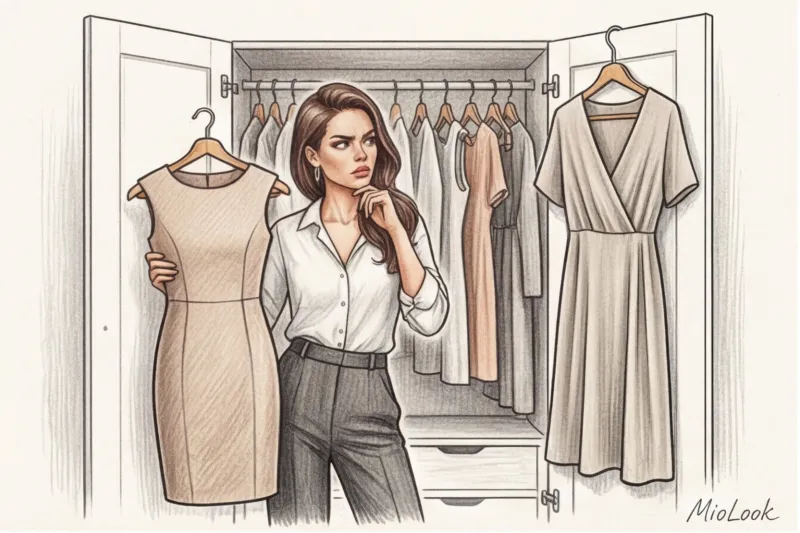
In my practice, clients (from young mothers to top managers) constantly complain about the same problem: "My closet is bursting with clothes, but I have nothing to wear." This trend is a completely free way to double the number of everyday looks. Layering solves the problem pragmatically. By wearing your favorite summer slip dress over your autumn wool pants, you increase your wardrobe versatility by 50%, dramatically reducing your cost-per-wear (cost per item).
Access to MioLook for €0.99 — one-time payment
A smart AI stylist will select the perfect look from your items and suggest new combinations.
Get access — €0.99 onceCorrecting Mistakes: Why We Looked Ridiculous in the 2000s, but Stylish Now
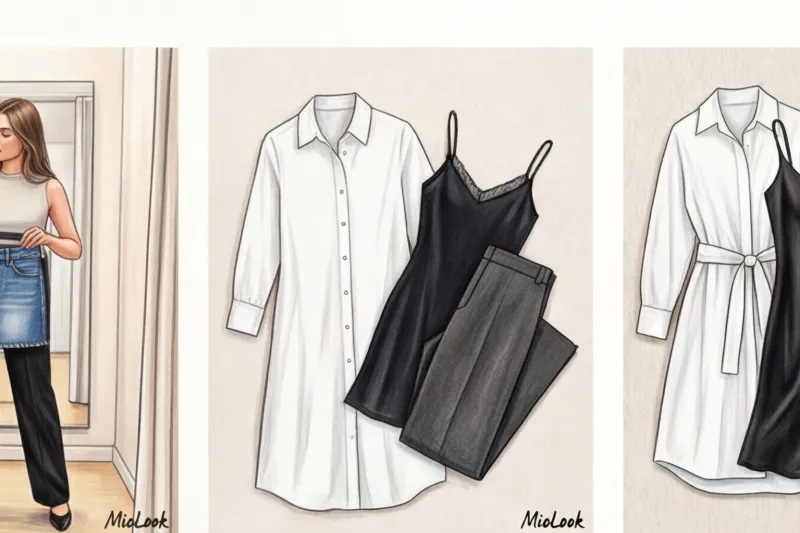
I'll be honest: in 2005, I made absolutely every mistake imaginable with this trend. In my freshman year, I proudly wore a tight, fuchsia bell-bottom tunic over extremely low-rise flared jeans. Why did it look bad? Because the focus was on aggressively revealing skin and creating a horizontal cut across the widest part of the hips.
"According to James Laver's law of fashion cycles, any trend takes about 20 years to go from being considered 'ridiculous' to 'cool.' We've just gone through that cycle."
Look at the latest collections from Jil Sander, The Row, or Proenza Schouler. Designers have reimagined this approach, shifting the focus from grunge to "quiet luxury." The key to 2024: pieces should look as if they were accidentally assembled with perfect geometry, not sewn together in a factory like a strange stage costume.
Silhouette architecture: how to wear dresses and skirts over trousers without looking like a "cabbage"
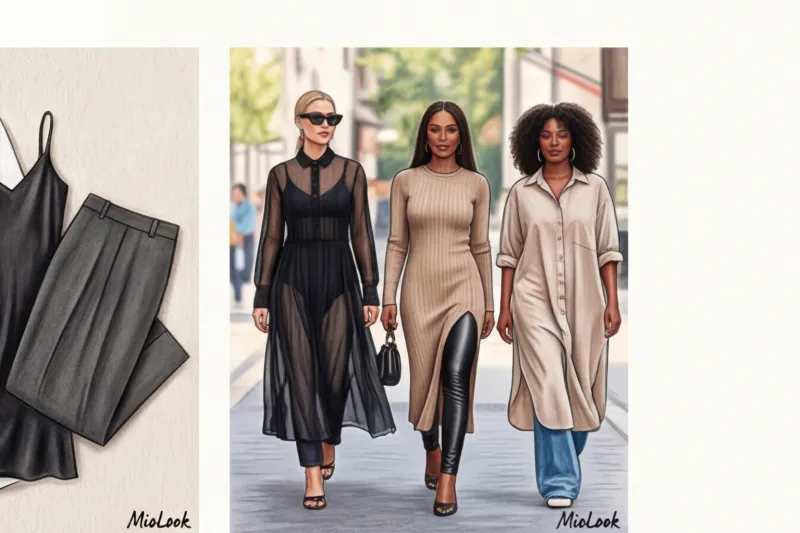
This is where the biggest myth of glossy magazines lies: supposedly, to wear a dress over trousers without looking fat, you need only skinny jeans. As a practicing stylist, I declare: forget this rule. Skinny jeans are the ones that ruin the modernity of a look.
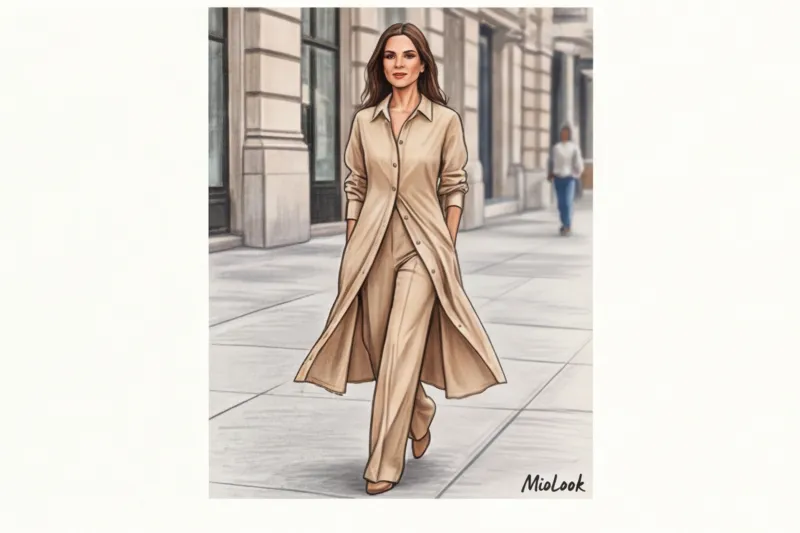
The most fashionable and figure-flattering combination today is a loose midi dress with high side or front slits paired with wide, flowing palazzo pants (or straight, tailored trousers). Why does it work? Wide, soft-fabric trousers visually extend the slit of the dress, elongating the waist and concealing curves, while skinny pants create a comical "sausage-in-dough" effect.
The Mathematics of Proportions: The 1/3 and 2/3 Rules
The human eye loves harmony, and harmony in styling is all about proper fractions. Remember these basic formulas:
- If you choose a long dress (midi or maxi), there should be a clear line visible from under the hem. 1/3 of the length of the trousers.
- If you're experimenting with a mini skirt over trousers, make sure the skirt takes up no more than 1/3 of the total length your legs from the waist to the floor.
- The waist should be clearly emphasized: use a medium-width belt or choose fitted dresses, otherwise you will turn into a rectangle.
Texture conflict: which fabrics work well together and which clash
An important and fair limitation: this trend is categorically It doesn't work , if the top layer is thicker than the bottom. Wearing a thick, chunky knit dress over thin linen trousers will create a sloppy silhouette—the lightweight fabric underneath will bunch awkwardly under the weight of the top.
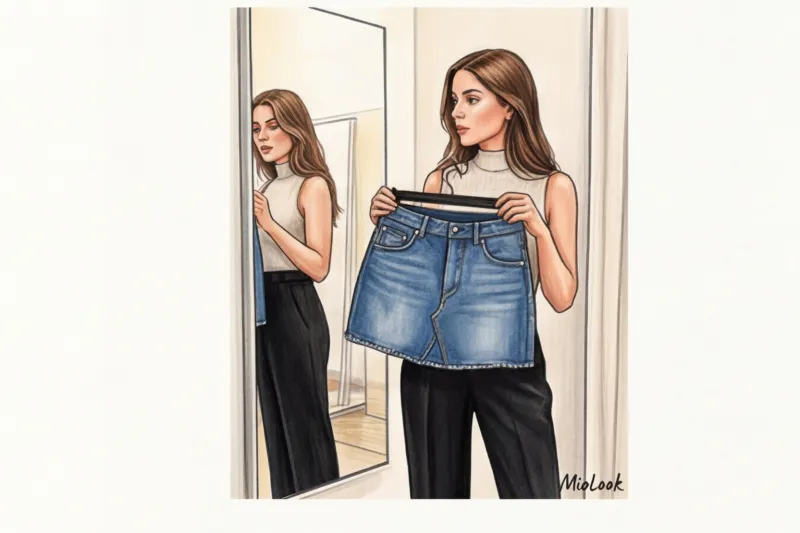
The rule of density is: the bottom layer is the foundation. Suit wool (from 300 g/m²), stiff cotton, or heavy denim will perfectly support flowing chiffon, smooth silk, or thin viscose on top.
5 Safe Formulas: Putting the Dress-Over-Trousers Trend into Practice
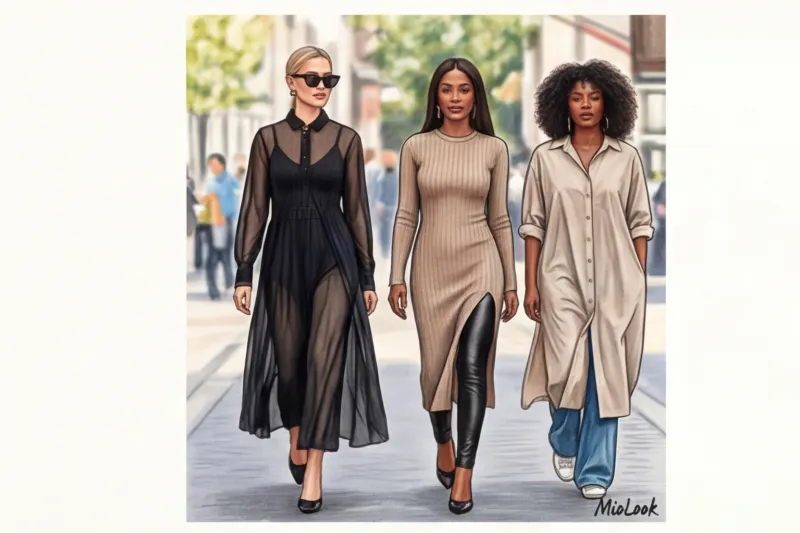
I always give my clients ready-made "cheat sheets" so they can practice at home in front of a mirror with basic wardrobe items before heading to the store. Here are 5 surefire combinations:
- Formula 1: Cotton midi shirt dress (opened from the waist down) + straight leg blue jeans + chunky leather loafers.
- Formula 2: A semi-transparent mesh skirt or lace dress + tailored suit trousers with creases + a voluminous men's-style jacket.
- Formula 3: A thin knit midi dress with an extremely high side slit + straight-leg leather trousers + pointed-toe ankle boots.
- Formula 4: Midi-length pleated skirt + wide tone-on-tone palazzo trousers (creating a complex architectural vertical).
- Formula 5: Silk slip dress + basic white thick cotton t-shirt (underneath) + wide-leg jeans + minimalist sneakers.
Your perfect look starts here
Join thousands of users who look flawless every day and save time in the morning with the MioLook app.
Get access — €0.99 onceOffice adaptation: will they let you into work dressed like this?
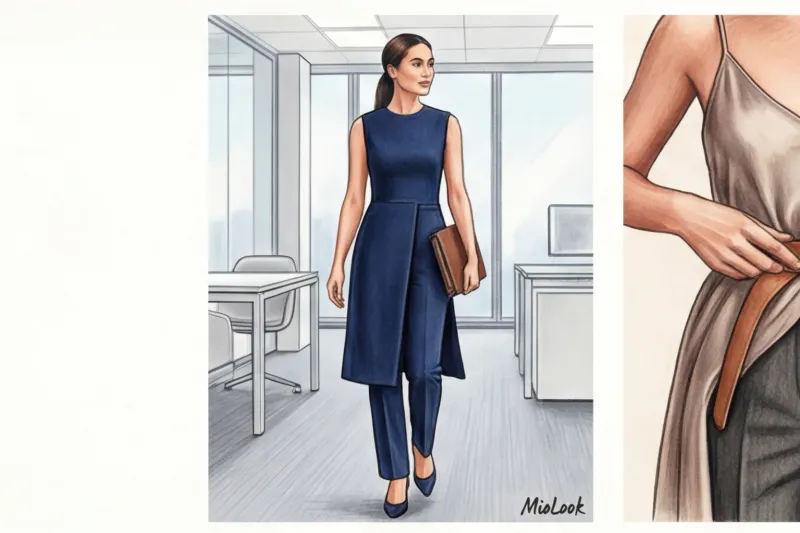
One of my clients, a finance executive, was genuinely horrified when I suggested she wear a skirt over trousers during a fitting. "Olena, we have a strict Business Casual policy, and the board of directors simply won't understand me." " she snapped. But we resorted to a stylistic trick.
I put together a total monochrome outfit for her: navy blue straight-leg suit trousers made of fine wool and a perfectly matching sleeveless midi shirtdress (we unbuttoned it almost to the waist). The effect exceeded all expectations. The next day, she received a ton of compliments from her male colleagues, who didn't even realize it was a "dress over trousers." They perceived the look as a complex, expensive designer suit from a concept store.
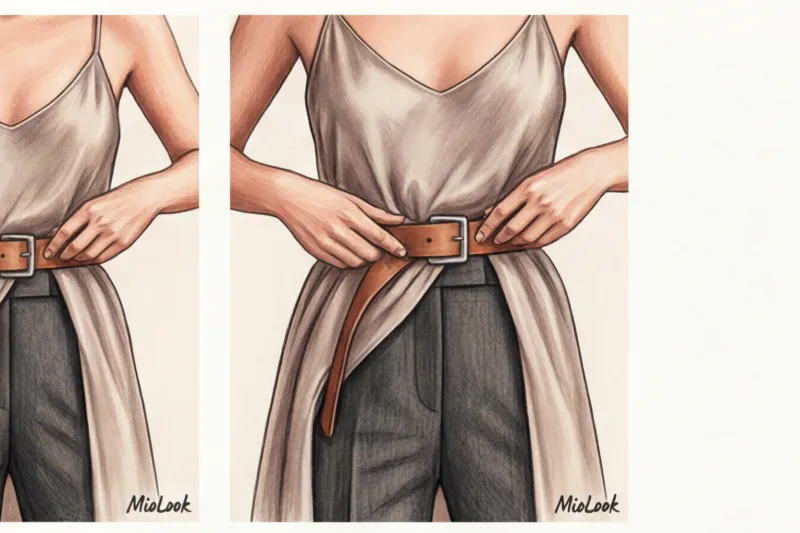
Monochrome is your key tool for legitimizing this trend in the office. If you use deep, elegant shades (dark chocolate, graphite, navy, burgundy) and plain fabrics, the look automatically becomes classy.
Stylist Checklist: 5 Questions to Ask Before Leaving the House
Before you step out in a layered outfit, check out my signature checklist. I always send it to my clients during their independent wardrobe audit:
- Is the narrowest part of my figure visible? If you hide your waist, wrists, and ankles under fabric, you'll look two sizes bigger. Reveal at least one area.
- Where does the hem end? Does the hem of your dress create a hard horizontal line across the widest part of your hips or calves? If so, try changing the length of your dress or unbuttoning more buttons.
- Does the bottom of the shoe make it heavier? These looks call for chunky sneakers, loafers with chunky soles, or pointed-toe heels. Elegant round ballet flats with thin soles will simply be lost under the volume of fabric.
- Am I moving freely? Walk around the room. Does the fabric of your dress get caught between your legs? Does it gather in unsightly folds in your groin when you walk?
- Do I feel confident? If you feel like slouching or hiding, take it off. Clothes should serve you, not the other way around.
The Courage to Be Different: Why You Should Try This Technique
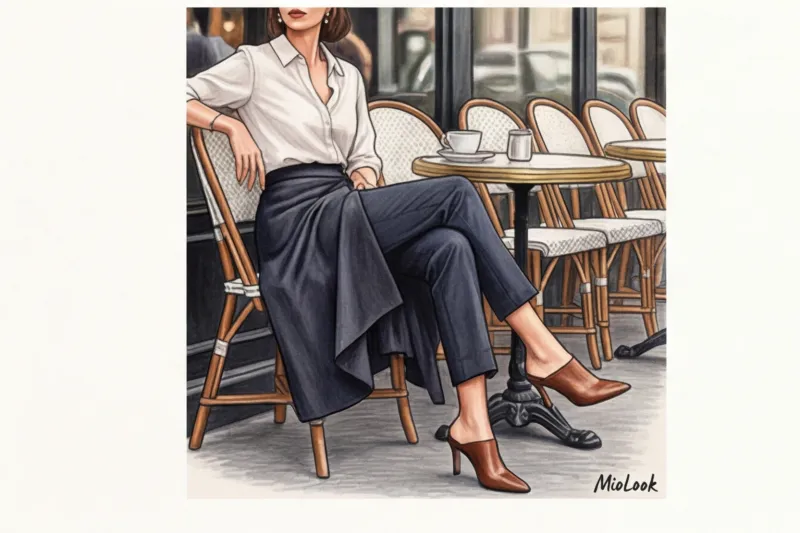
Fashion has long ceased to be a set of rigid, academic rules about "this is what you wear, and that's not what you wear." Today, your wardrobe is a construction kit for adults. A dress and trousers are no longer forced to exist in parallel, non-intersecting universes within your closet.
Yes, this trend requires a certain amount of courage and a keen eye. Perhaps the first couple of attempts in front of the mirror will seem strange. But once you master the delicate balance of proportions (the rule of thirds), pair textures (heavy on the bottom, light on top), and elongate your silhouette with monochrome, you'll reach a whole new level of style. You'll never want to go back to boring, predictable combinations, because you'll understand that managing your own impression is much more interesting than simply blindly following mass-market mannequins.
", "tags": [ "y2k style", "2024 trends", "smart wardrobe", "layering", "stylist tips", "capsule wardrobe", "smart casual" ] }