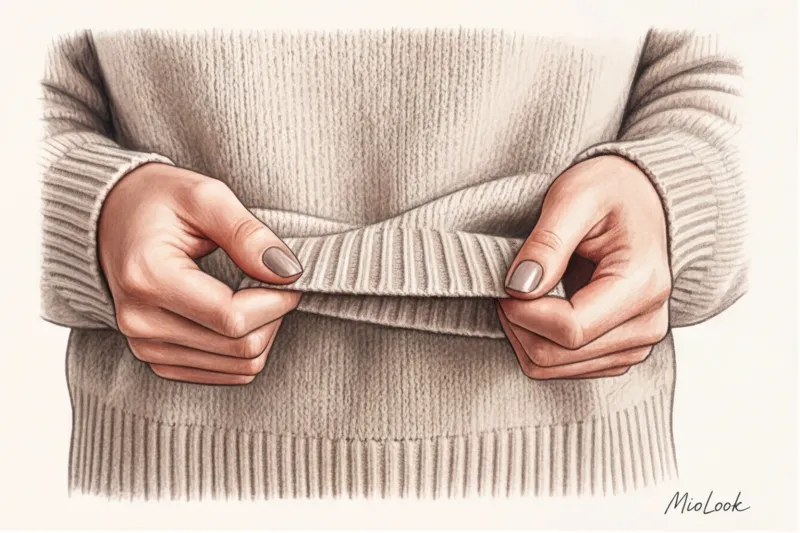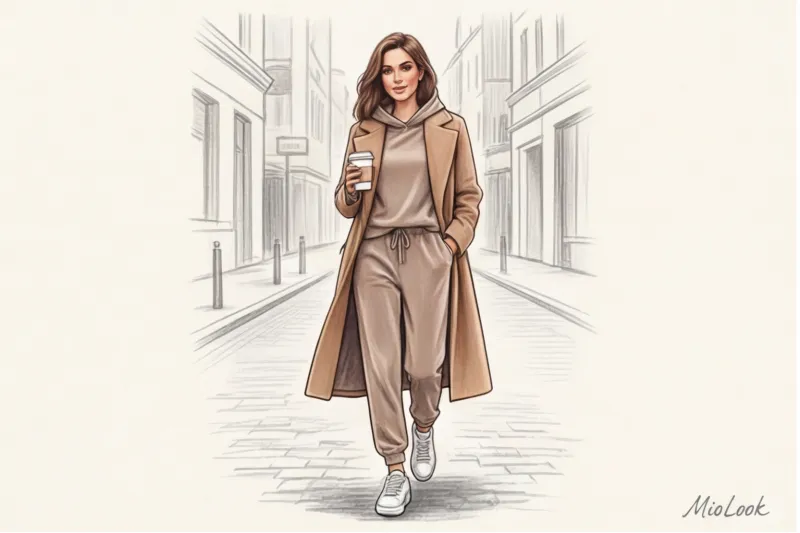
Last month, a client of mine, a CFO with impeccable minimalist taste, sheepishly pulled a plush olive tracksuit top out of her shopping bag. "Sofia, I know this looks like a prop from a 2004 music video, but I can't wear stiff jeans on the weekends anymore." This incident is far from unique. Over the past couple of years, the search query Women's velour suits are trending grew by 140%. We have officially entered the era of the 2000s renaissance. I wrote more about the mechanics of this phenomenon in our The Complete Guide to Y2K Style.
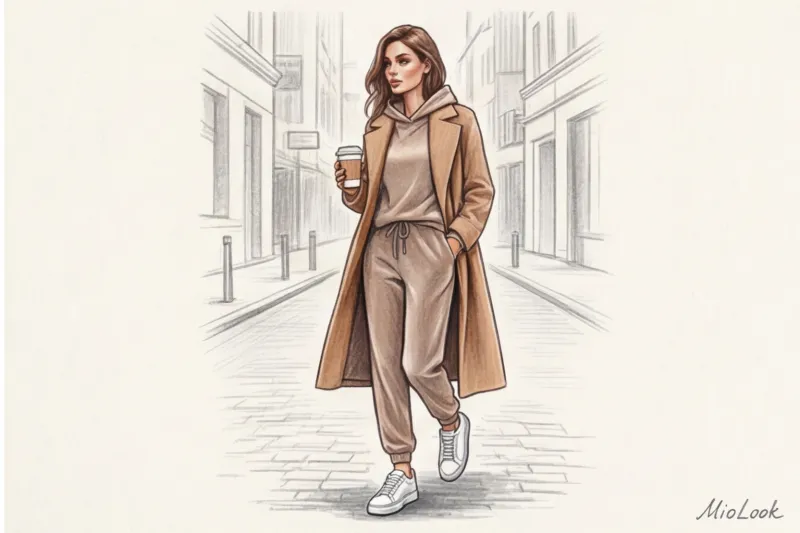
But today we're not talking about blind nostalgia. As a textile expert, I want to break down this complex trend down to the last molecule: why cotton quality is more important than rhinestones, and how to integrate this textured piece into a mature, expensive wardrobe without the risk of looking like a Paris Hilton clone from the era of The Simple Life.
Access to MioLook for €0.99 — one-time payment
A smart AI stylist will select the perfect look based on your appearance and wardrobe.
Get access — €0.99 onceThe Psychology of Comfort: Why Women's Velour Suits Are Back in Trend
According to the Lyst Index report for the first quarter of 2024, interest in textured loungewear has doubled. Why is this happening? The post-pandemic world has forever changed our relationship with clothing: we categorically refuse to sacrifice comfort. However, we are mortally tired of bland gray oversized hoodies made of smooth fleece. We are craving tactility and play of light.
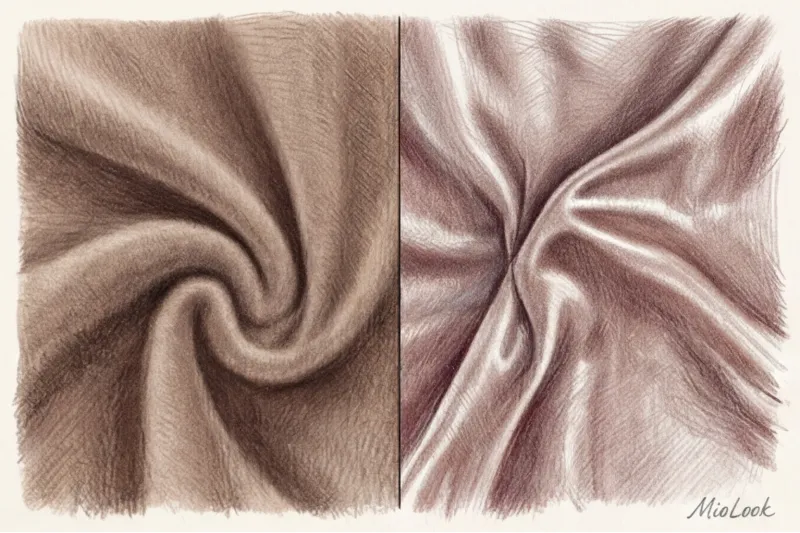
Velvet solves this problem perfectly. Thanks to the direction of the pile, it reflects light dynamically in different ways, creating deep, rich iridescence. It's the perfect compromise between the "I'm in my pajamas" feeling and the visual message of "I'm wearing a sophisticated designer piece."
Fabric Anatomy: How to Distinguish Cheap Velour from Luxury (A Textile Expert's Perspective)
Herein lies the most interesting part. Velour suits are mistakenly considered "cheap" clothing solely due to the dominance of mass-market clothing in the 2000s. The paradox is that high-quality cotton velour (essentially a close relative of velvet) has historically been a premium material. The problem arose when manufacturers began to replace cotton en masse with 100% polyester.
"The difference between cotton and polyester velour is the difference between a cashmere sweater and an acrylic imitation. Synthetics create a greenhouse effect and lose their appearance after the first wash."
When I'm shopping, I always teach my clients a simple "wrinkle test." Squeeze the fabric in your fist for 10 seconds. If, after releasing the wrinkles, the pile clumps together, leaving deep creases with a cheap, glassy sheen, it's a low-quality synthetic. If the pile quickly straightens out and the finish remains elegantly matte, the item is worth considering.
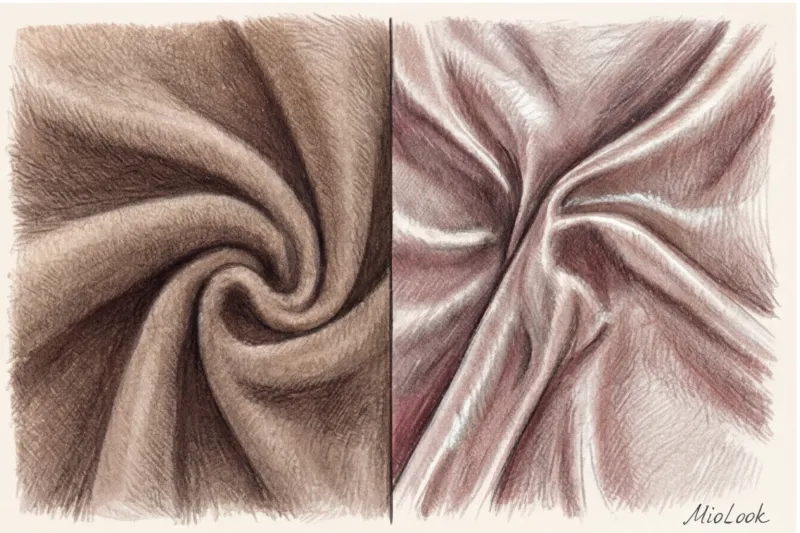
The ideal formula for long-lasting velour, developed by me over 12 years of studying compositions: 70-80% cotton and 20-30% polyester or elastane The synthetics are used here not to cut costs, but as a reinforcing frame. This is what prevents the suit from stretching at the knees and becoming bald at the elbows.
Paris Hilton vs. 2024: The Evolution of Cut and Status
Let's be honest: the way we wore velour twenty years ago looks like a caricature today. Extremely low waists revealing a strip of midriff, tight-legged flares, and giant rhinestones on the lower back—we're glad to leave all of this in the archives.
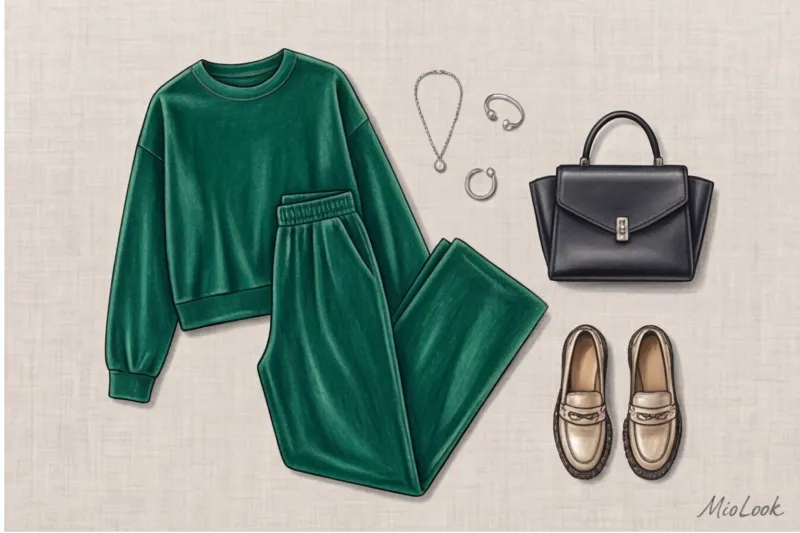
Modern cuts dictate completely different rules of silhouette design. Today, medium or high-rise fits (at the waist or just below) are in fashion, and trousers have evolved into wide, straight, wide-leg silhouettes. Sweatshirts have lost their flashy logos and form-fitting silhouettes—they're now loose hoodies or zippered sweatshirts with minimalist hardware. We're witnessing this material's transition from the category of "scandalous glamour" to the aesthetic of "relaxed, quiet luxury."
What to wear with a velour suit today to look expensive
The biggest mistake is wearing this outfit with Ugg boots. It's too literal a 2000s cosplay. For the piece to work in 2024, it needs a strong contrast in textures:
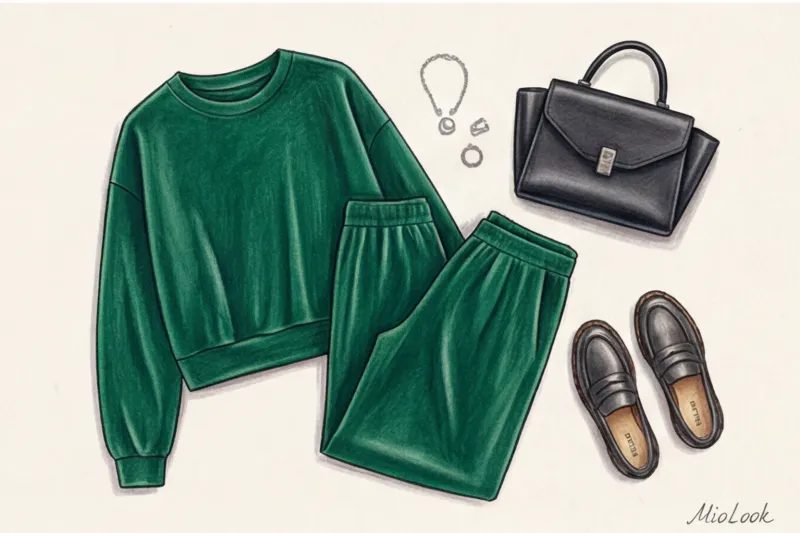
- Outerwear: Layer a structured, double-breasted wool coat or an oversized leather bomber jacket over a plush hoodie. The smooth, crisp fabric instantly ties together a relaxed bottom.
- Shoes: Swap out shapeless boots for minimalist leather sneakers (think retro tennis shoe style) or chunky loafers with thick soles.
- Accessories: A soft suit demands a solid geometric shape in the hands. A structured tote bag in smooth leather acts as an anchor, taking the look from "going to the gym" to "heading to brunch in Soho."
Your ideal image begins Here
Join thousands of users who look flawless every day with MioLook. Digitize your wardrobe in just a few clicks.
Get access — €0.99 onceEco-Footprint: Sustainable Fashion and Conscious Choices
As a sustainability expert, I can't ignore the hidden dangers of this trend. According to a 2023 Textile Exchange report, cheap polyester velour is one of the leading sources of ocean pollution. With each wash, this fabric sheds thousands of microscopic plastic fibers that aren't captured by washing machine filters.
What if you want to embrace the trend but are environmentally conscious? You have two options. The first is to search for the perfect vintage suit on resale platforms. The second is to invest in brands that use GOTS-certified organic cotton (Global Organic Textile Standard).
The lifespan of velour depends directly on its care. Regular washing "along with everything else" will kill the pile within a month. My golden rule of care: Always turn velour items inside out, wash them on a delicate cycle at 30 degrees Celsius without using harsh fabric softeners, and dry them flat. This extends the life of the plush fabric by at least three times.
Stylist Checklist: 5 Details for the Perfect Velour Suit
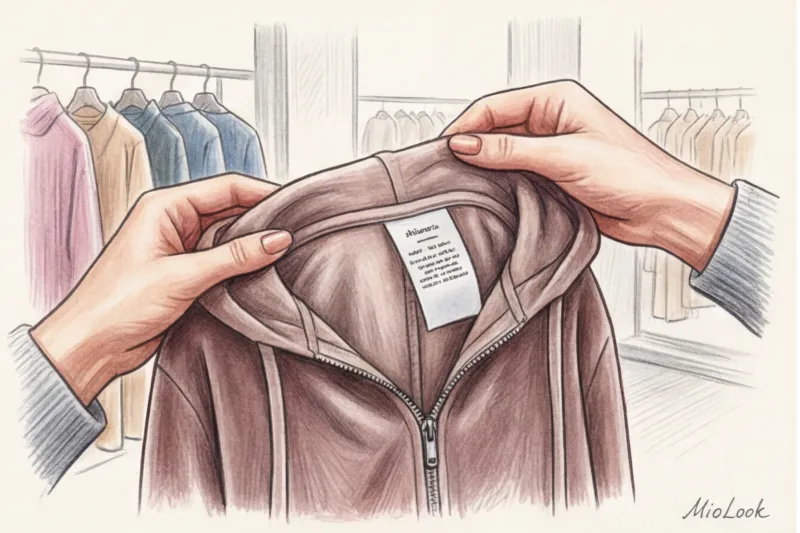
You're standing in the fitting room. How do you know if this particular style is a good investment and not a one-time purchase? Check the item against five points from my experience:
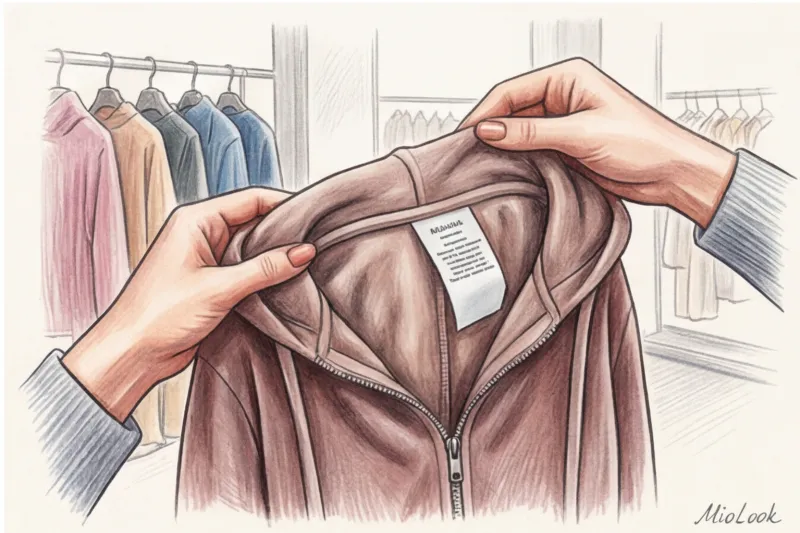
- Ingredients on the label: As we've determined, the minimum is 70% cotton. If polyester is the primary ingredient, return the item to the hanger.
- Quality of fittings: Look for a metal zipper, preferably covered with a fabric flap. Cheap plastic zipper will immediately give away the product's low cost.
- Drawstrings on the hood and waistband: They should be thick, heavy, and have metal tips (aglets). Thin rags tied in knots are a sign of skimping on parts.
- Belt design: The elastic should be wide (at least 4-5 cm) and stitched in several places, otherwise it will twist inside the fabric after the first wash.
- Pocket architecture: Avoid inseam side pockets on trousers—the density of the fabric will inevitably cause them to bulge, adding unnecessary bulk to your hips. A better choice is smooth-front trousers or neat patch pockets in the back.
Bottom Line: Should You Buy It Again?
Despite my love for textured fabrics, I have to be honest: this trend isn't for everyone. If your lifestyle consists of 90% meetings with a strict corporate dress code, or if you live in a region with a constantly hot, humid climate, a velour suit will simply become a dust collector on the back shelf. In such cases, it's better to invest in a good linen or silk set.
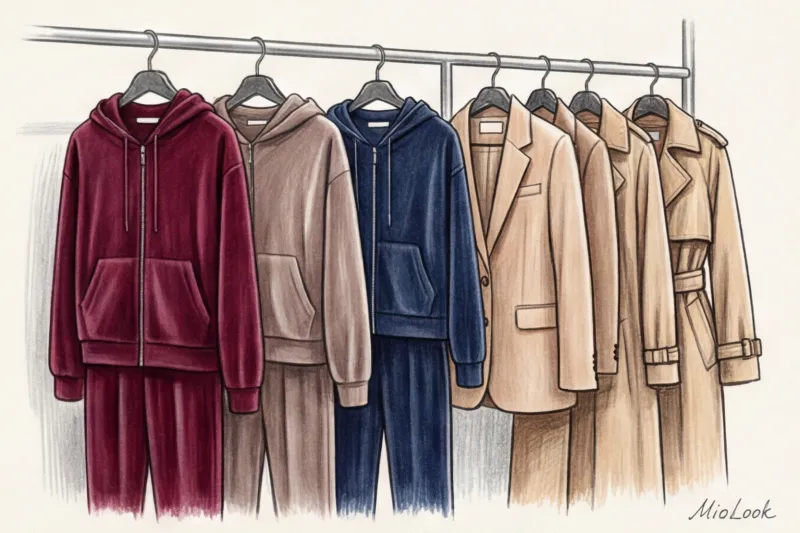
But if your basic wardrobe revolves around smart-casual style, if you travel frequently, work remotely, or are simply looking for a way to look put-together on a Sunday coffee stroll, a quality velour suit in a refined shade (pine, deep burgundy, graphite) will be a great investment.
Treat it not as a nostalgic toy from the 2000s, but as a fully-fledged, sophisticated element of a modern staple. Texture matters, and the right velour is the quickest way to add depth to your look without sacrificing comfort.