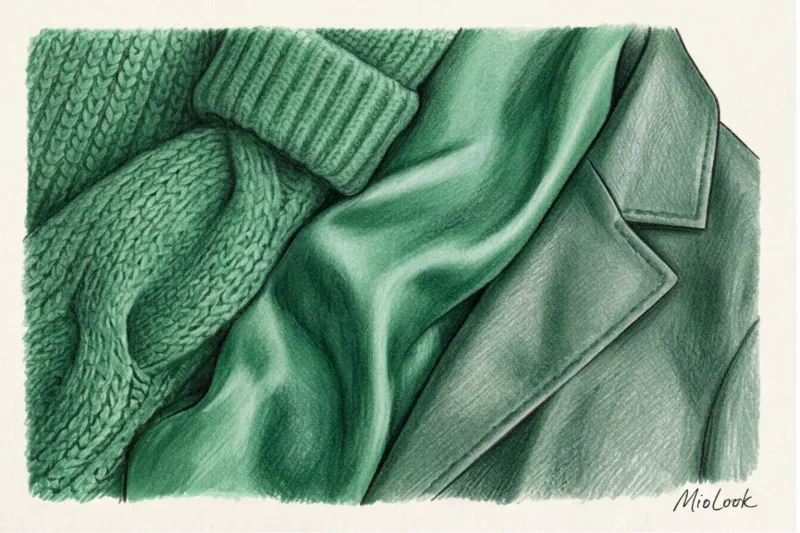
A client once came to me in utter despair: she'd spent three weeks trying to find a skirt that would match her favorite emerald viscose blouse tone-on-tone. When she finally found the perfect pair in smooth polyester and tried them on, the effect was disastrous. Instead of the elegant lady from the cover of Vogue, the mirror was filled with a giant green marker. Perfectly smooth, flat, and boring. That's when we swapped the smooth skirt for a textured corduroy a couple of shades darker, and the look instantly came alive.
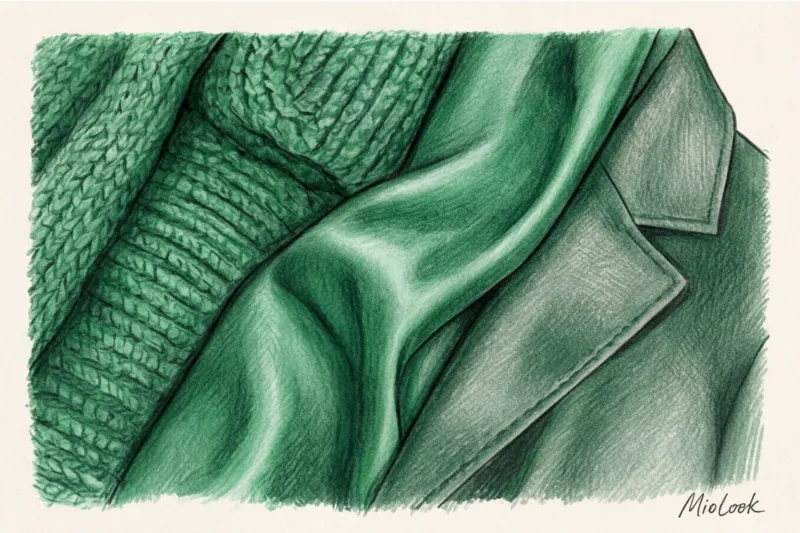
Composing monochrome look in clothing , most women make the same mistake: they look for identical shades. But true style lies not in matching pigments, but in textile engineering. The way different textures and the quality of dyes interact with light determines whether you look like a millionaire or like an employee in a uniform.
We have already discussed in more detail the psychology of color perception and the basic rules of coloristics in our a complete guide to the perfect color combinations in clothing Today we'll talk about the ultimate in aerobatics—how to make one color do the work of ten.
The Anatomy of a Monochrome Look: Why Texture Matters More Than Pigment
Let's look at fashion through the lens of physics. The color we see is simply light reflected from a surface. And how a fabric reflects this light completely changes the perception of the pigment.
According to data Institute for Color Research 62% to 90% of a person's first impression is based on color perception. But when you wear items of the same color, the other person's brain stops focusing on color contrasts and starts to perceive textures.
Natural silk has a smooth fiber structure that reflects 30-40% more light than matte sheep's wool. If you take a silk blouse and wool pants, dyed in the same vat with absolutely identical dye, they will visually appear to be two different shades. Silk will provide a shimmer and appear lighter, while wool will absorb the light, creating a deep, rich tone. It is this difference in light reflection that creates the luxurious look and depth that we so love about monochrome.
The biggest myth of stylists: why a perfect color match cheapens a look
Glossy magazines of the 2000s often wrote: “Make sure the shades in your monochrome match perfectly.” Forget about it. It’s one of the most outdated style rules , which today hopelessly ruins the wardrobe.
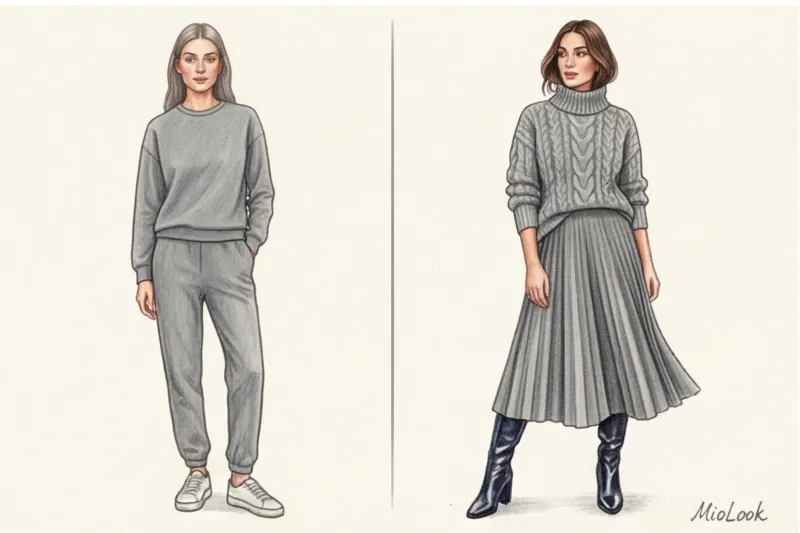
Trying to find identical pieces inevitably results in the effect of a tracksuit, pajamas, or a medical uniform. The outfit becomes flat, and the figure becomes a single blob of color without proportion or definition. There's simply nothing to catch the eye.
"The secret to a classy monochrome is tonal stretching and intentional mismatches. You take not just one color, but one color spectrum, and stretch it from light to dark."
I had a case in my practice: a client wanted to create a total red look for an important event. She bought red trousers and a red jacket in the same suiting fabric. It looked aggressive and heavy. We broke up this monolith by adding a thin cashmere jumper in a deep burgundy shade under the jacket, and for footwear, we chose cherry-red pumps. The look instantly became sophisticated, aristocratic, and alluring.
Your perfect look starts here
Join thousands of users who look flawless every day with MioLook. A smart AI stylist will help you create the perfect monochrome looks from your clothes.
Get access — €0.99 onceHow to Create a Stylish Monochrome: The Architectural "Rule of Three Textures"
Over 12 years of working with wardrobes, I've developed a formula that works flawlessly. I call it the "rule of three textures." For a monochromatic outfit to look like a work of art, it must contain three elements with different physical properties.
Base: matte and light-absorbing fabrics
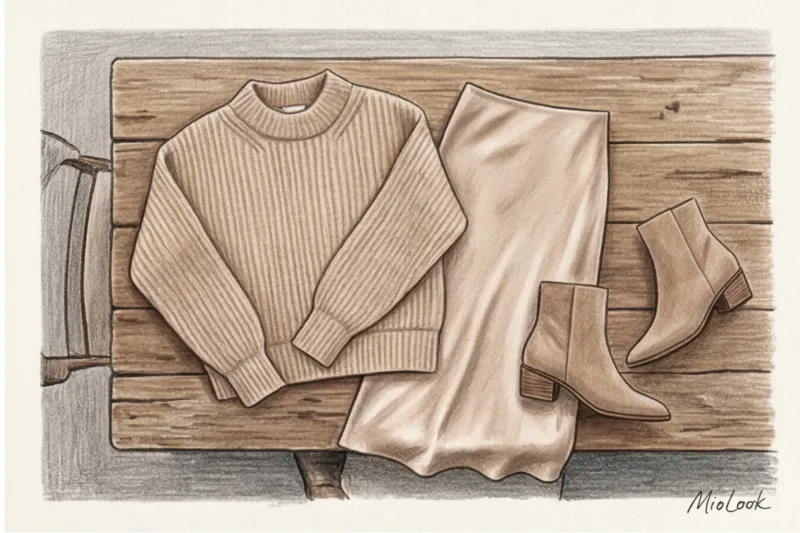
This is your foundation. Matte fabrics absorb light, prevent glare, and are excellent at concealing figure contours (especially around the waist and hips). These include organic cotton with a weight of 180 g/m² or more, fine suiting wool, linen, and dense matte viscose. Basic monochrome pieces usually take up the most space—for example, wide-leg trousers or a sheath dress.
Glare: Highly reflective materials
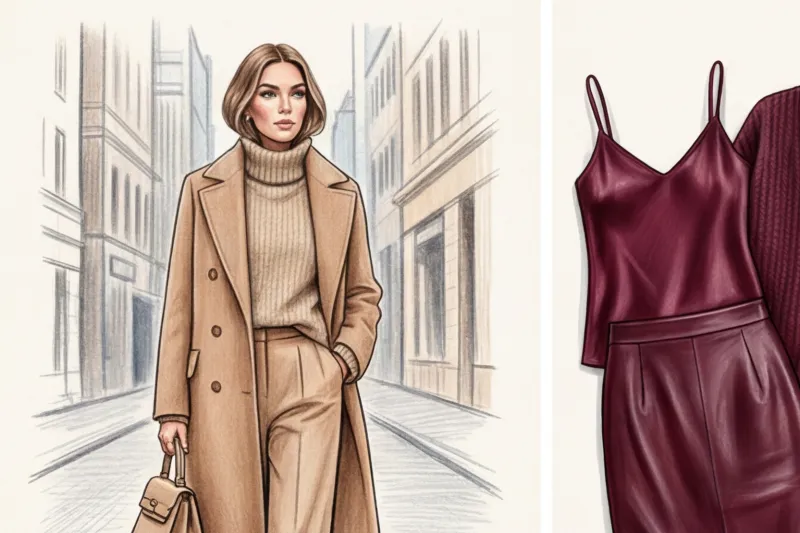
Highlights create dynamism. They draw attention to your best features and brighten your face. Use satin, natural silk (ideally, ethically sourced Peace Silk, which is produced without harming silkworms), faux leather, or viscose satin. A silk top under a matte jacket or a leather skirt with a cotton shirt are classic examples of how to properly apply highlights.
Volume: structured and pile surfaces
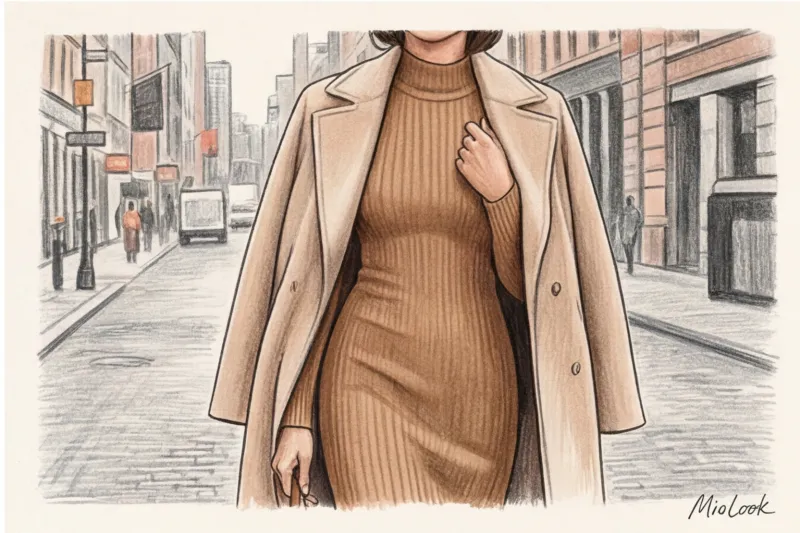
Without volume, monochrome looks "papery." We're looking for a 3D effect. Cashmere, bouclé, chunky knits, corduroy, and suede are all great options for this. Voluminous textures create a sense of coziness and luxury. A chunky knit sweater draped over a silk dress in the same shade is a guaranteed wow factor.
Investing in Color: Sustainable Dyes and Wardrobe Durability
You've put together the perfect total look, but after five washes, it's fallen apart: the cotton T-shirt has faded, while the polyester skirt remains vibrant. Sound familiar? The problem lies in the quality of the dye.
According to the report Textile Exchange (2024) Brands' transition to eco-friendly dyes (free from heavy metals and toxic fixatives) is a huge step for the planet, but it poses a challenge for color fastness. Natural fibers release pigment faster than synthetics.
How to check the quality of an item right in the store:
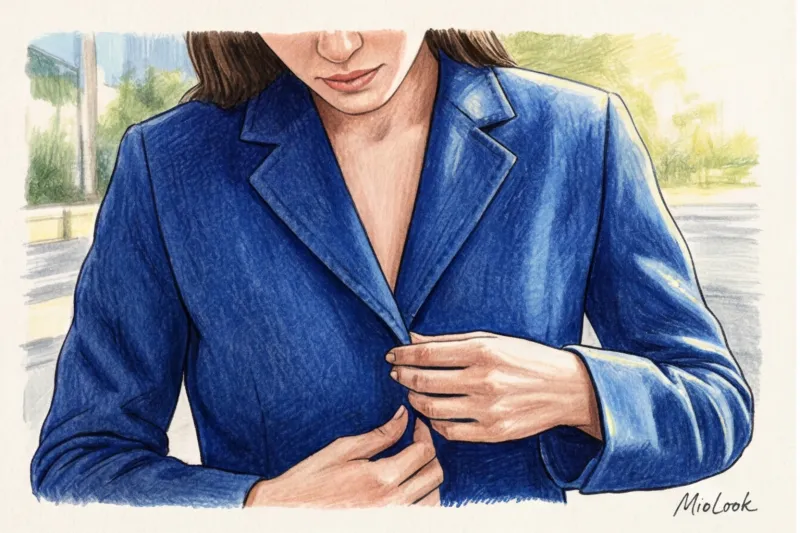
- Stretch the fabric at the seam. If the threads are lighter than the fabric itself or whitish spots are visible where the needle punctured the fabric, the item will fade after the first wash.
- Rub the fabric with a damp white cloth (in an inconspicuous area, such as an inseam). If a mark remains, the dye is unstable.
- Check the folds of the garment (shoulders, collar). Cheap dyes quickly wear off in areas of friction, forming micro-creases of a light color.
Fair Limit: This advice doesn't work for natural linen. Linen is physically unable to retain dark pigment for long due to the smoothness of its fiber. Therefore, I never recommend building a dark (black, navy blue) monochrome capsule wardrobe based on linen items—they will inevitably acquire a vintage, worn look.
Access to MioLook for €0.99 — one-time payment
A smart AI stylist will select the perfect look based on your color preferences and the textures in your wardrobe.
Get access — €0.99 onceTotal black, beige, and bright colors: the nuances of working with different palettes
Each color scheme behaves differently when creating a monochromatic outfit. What beige forgives, black never will.
The Treachery of Black Monochrome
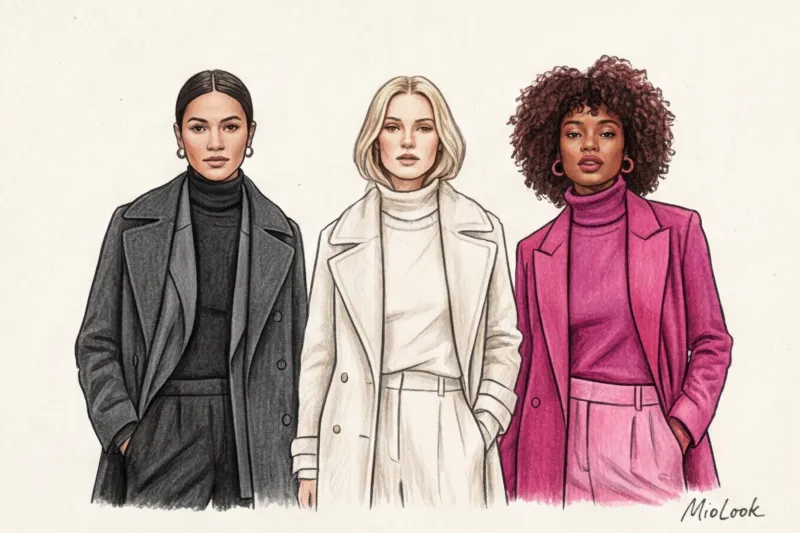
Did you know that pure black is virtually nonexistent in mass-market clothing? Black always has an undertone: blue, green, red, or brown. And when you wear pants with a green undertone to black with a sweater with a red undertone, you'll look a dirty brown in bright sunlight.
The main enemy of all-black is faded black denim. Pairing a brand-new black silk top with washed-out jeans will kill any elegance. If you're wearing a black monochrome look, make sure the color depth of your basic pieces matches.
Noble beige and Old Money aesthetics
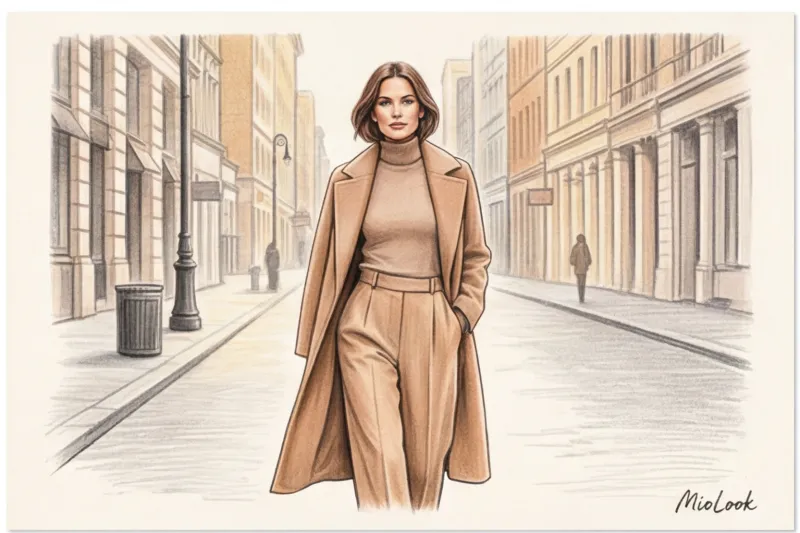
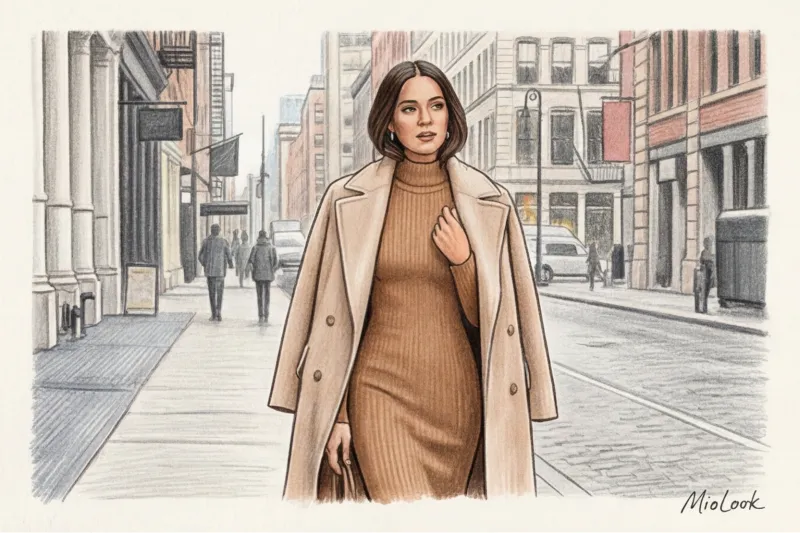
Beige monochrome is synonymous with "quiet luxury." But to avoid looking like a blob blending into the wallpaper, mix up the colors. Pair a cool taupe trench coat with a warm caramel sweater. And remember, weight: light fabrics should be thick. Thin beige knits that show through your underwear will instantly ruin the magic of a classy look.
Dopamine Dressing: A Bright Monochrome Look
According to the PANTONE Color Institute, the "dopamine wardrobe" trend (bright, cheerful tones) will remain with us until at least 2026. Fuchsia, electric blue, and emerald in a total look look stunning, but require strict tailoring.
The brighter the color, the more minimalist the shape should be. A bold monochrome doesn't tolerate ruffles, complex asymmetries, or excessive embellishment. Tone down the loud hue with a clean, architectural cut: straight-leg trousers with a pleated waist, a jacket with a sharp shoulder line, and a minimalist bag.
Checklist: Create a flawless monochrome look in front of the mirror
Let's get down to business. Here's the step-by-step process I use to create looks for my clients.
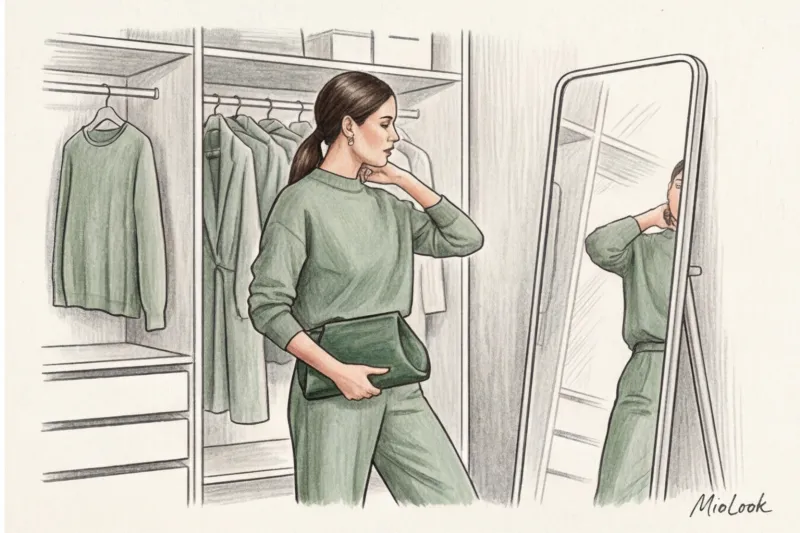
- Step 1: Selecting a base element. Start with the largest item. Let's say it's the graphite wool trousers.
- Step 2: Add contrasting texture. Take an item from the same color family but with a different weight. For example, a light gray silk blouse (highlight) or a dark gray cashmere cardigan (volume).
- Step 3: Check in natural light. This is critically important! Halogen lamps in store fitting rooms are incredibly misleading. Go to a window. Only natural light will reveal whether the undertones of your clothes clash.
- Step 4: Assess proportions. Monochrome elongates the silhouette (the vertical line of color), but can take away from its shape. Accentuate the waist with a belt or use a cropped top to define figure proportions.
Accessories and shoes: the focal points of a monochromatic outfit
A common question: should you match your shoes and bag exactly to your outfit? My answer is no, unless you want to look like a mannequin in a shop window.
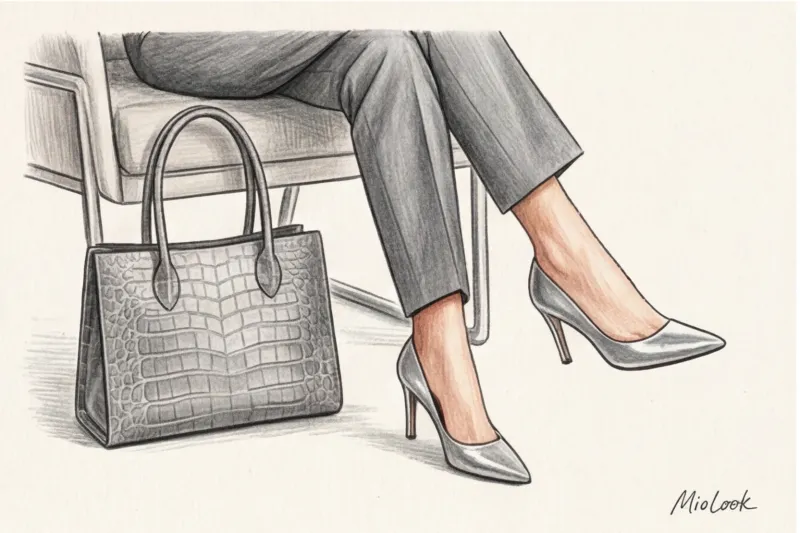
Shoes can complement the tonal flow (for example, dark chocolate boots with a beige suit) or serve as a contrasting accent. Burgundy or emerald pumps look stunning against a gray monochrome.
Don't forget about metal hardware. In a monochrome look, your belt buckle, bag chain, and jewelry become full-fledged participants in the color palette. Cool tones (gray, blue, cool beige) are perfectly accented by white metal, while warm tones (caramel, khaki, burgundy) are enhanced by yellow gold.
Ready to get started?
Digitize your wardrobe and let AI create flawless monochrome combinations every day. Try the free plan—no commitments.
Get access — €0.99 onceA monochrome look isn't like throwing a bucket of paint on someone. It's a complex interplay of shadows, highlights, volumes, and textures. Stop looking for perfect matches and start experimenting with materials. Buy one piece with an unusual texture in your favorite color, add it to your usual base, and you'll be surprised how deep and luxurious your reflection in the mirror becomes.