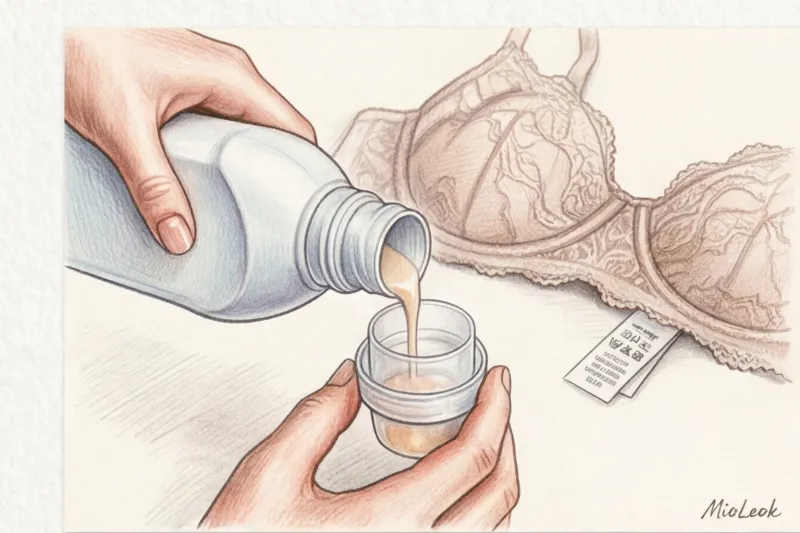
Let's do the math. The average price of a high-quality, smooth bra from European brands like Intimissimi or COS is around €40–60. The premium segment costs over €100. If you buy three basic sets and they lose their shape after six months, you're literally throwing away the cost of a great pair of leather shoes or a cashmere sweater.
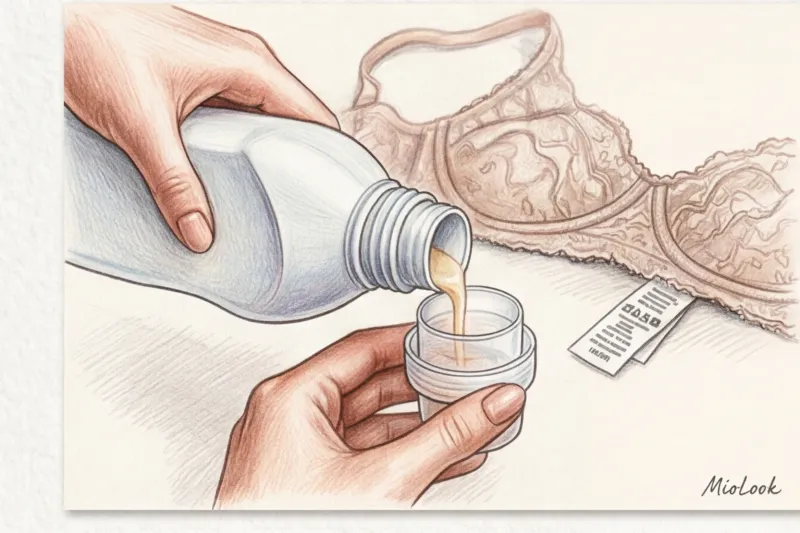
Over 12 years of working as a personal stylist, I've realized one thing: women often blame their figures for the fact that a silk blouse or thin knit turtleneck just doesn't fit right. Strange folds appear on the back, and the breasts appear sagging. But the problem is almost never the figure. The problem is a deformed lingerie framework. I discussed how to create this invisible foundation in more detail in the article. Basic underwear: the foundation of a perfect wardrobe.
How to properly wash your underwear isn't just a boring household chore. It's a financial investment and a key to preserving the "architecture" of your silhouette. Today, I'll explain how chemicals and gravity destroy your favorite items and provide a clear algorithm that will reduce the cost per wear of your underwear to just a few cents.
The Anatomy of Destruction: Why Your Expensive Lingerie Loses Its Shape in a Few Months
A couple of years ago, a client of mine from Berlin, in desperation, brought me a stunning Chantelle set for 150 euros for a wardrobe review. "Kasya, their quality has gotten so terrible; it stretched out in two months!" she complained. When I asked how she cared for it, it turned out the bra had been in the washing machine at 40°C, along with jeans and terry towels.
Basic lingerie is the technical framework of a wardrobe. It is made using polyurethane fibers—elastane (Lycra, Spandex). Elastane is essentially a high-tech rubber. According to research by the Hohenstein Institute (2023), washing at 40°C or higher reduces the lifespan of elastane fibers by exactly half compared to washing in cold water. Hot water literally melts these fibers. They lose their ability to shrink back, and the bra band remains permanently stretched.
Now add mechanical friction to the mix. Heavy, damp jeans in the drum act like sandpaper and a press all at once. They twist the underwires and break the molded cups. Never wash delicate items with heavy fabrics.
Fabric softener: the main enemy of your support
Here we encounter a major marketing myth. Advertising convinces us that fabric softener makes fabrics soft and fragrant. But for underwear, especially shapewear and support, fabric softener is a silent killer.
"The fabric softener doesn't penetrate the elastane fibers; it coats them with a dense silicone film. This film clogs the fabric's micropores, completely destroying its ability to wick away moisture and breathe. The underwear loses its elasticity and begins to accumulate sweat odors, which are then impossible to wash out."
The only effective cleaning products for the base layer of clothing are liquid gels without enzymes or optical brighteners. Regular dry detergents don't dissolve completely at low temperatures and leave micro-scratches on delicate fibers.
Access to MioLook for €0.99 — one-time payment
A smart AI stylist will select the perfect look based on your wardrobe and suggest which essential items need updating.
Get access — €0.99 onceHow to Wash Underwear Properly: A Realistic Guide from a Stylist
Let's face it: no one in their right mind would hand-wash all their clothes every day. We're all busy women. So our job is to find a reasonable compromise between gentle care and saving time.
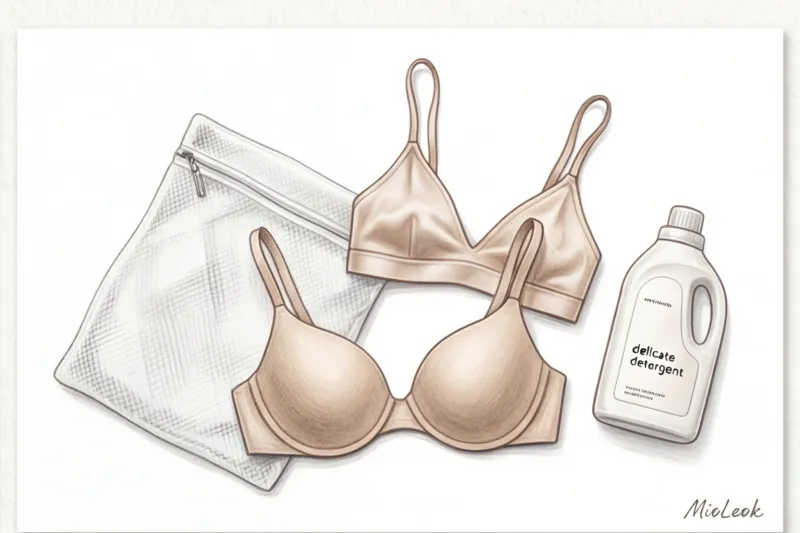
Before throwing things into the water, they need to be prepared. Here I'll share one of the most important professional life hacks, which for some reason few people know about: Never wash beige (nude) linens together with pure white ones.
Do you think these light shades won't affect them? Wrong. Laundry detergents for whites contain optical brighteners—special blue fluorescent particles. When they settle on beige pigments, they cause a chemical reaction that turns your expensive nude bra a permanent, dirty gray.
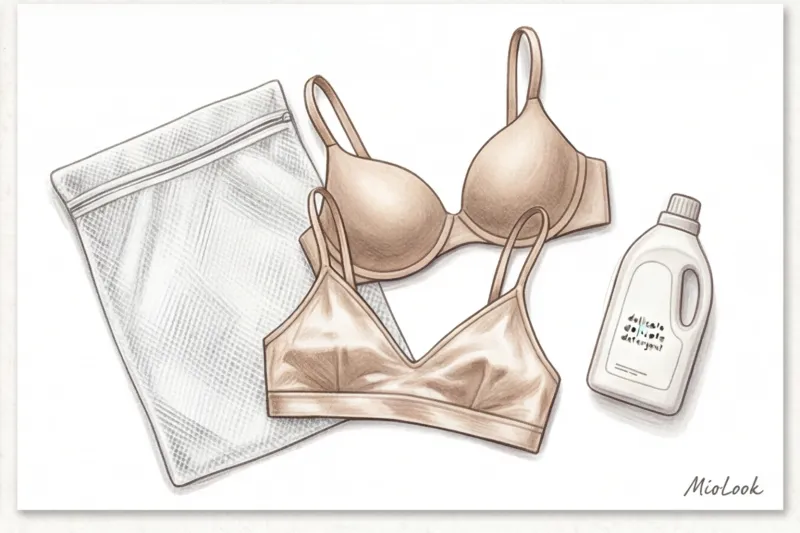
Hand washing: what is it really for?
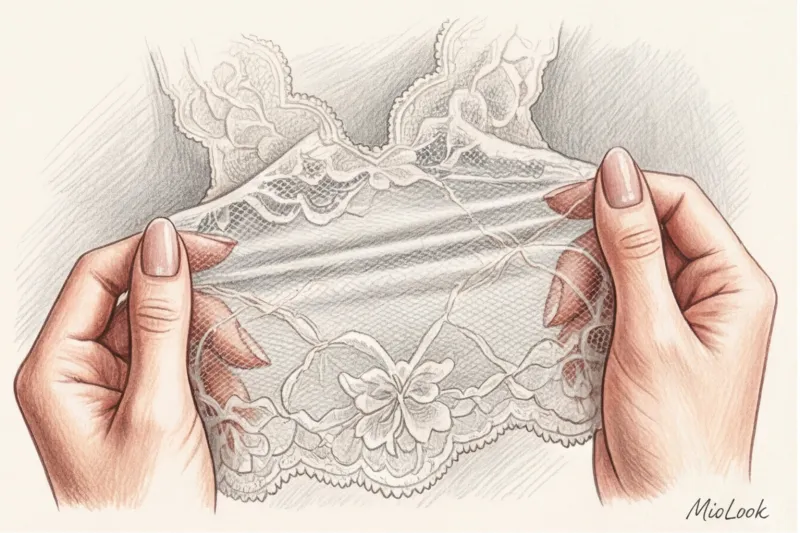
There are some items that the washing machine will inevitably destroy: bras with thin underwires (they can tear the fabric and get stuck in the drum), the finest French Chantilly lace, and natural silk. For these, I use the "soak and forget" method.
- Fill a basin with cool water (no more than 30°C).
- Add a drop of liquid detergent for delicate fabrics.
- Let the laundry soak for 15 minutes.
- Lightly squeeze the cups with your hands in the water (do not rub the fabric against the fabric under any circumstances!).
- Rinse with clean water and gently squeeze out excess moisture with a towel - without wringing.
Machine washing: how to minimize damage
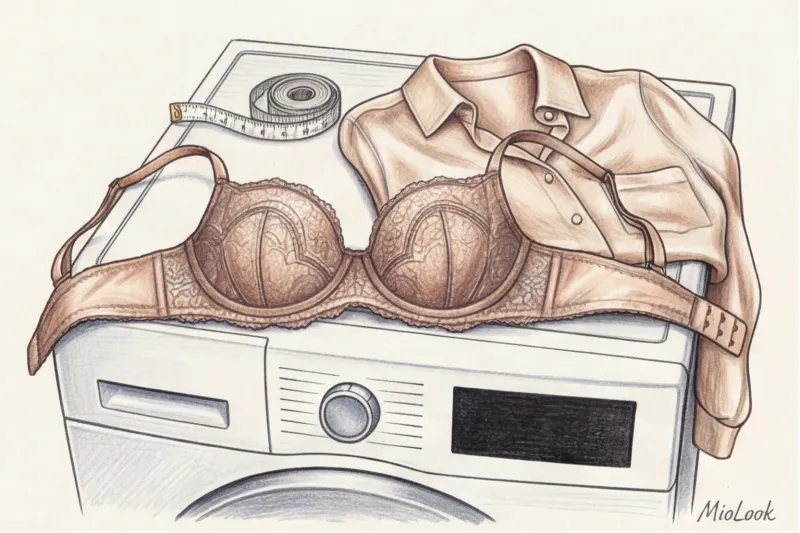
If you're looking for a way to properly wash underwear in a washing machine without any side effects, remember three parameters: bags, temperature, and spin.
Regular soft mesh bags are only suitable for panties. For bras, use rigid, framed spheres or cylinders made of dense mesh with plastic reinforcement. Before washing, be sure to fasten all the hooks on your bra—otherwise, they'll turn into harpoons that will tear the lace on adjacent items.
Set the cycle to "Hand Wash" or "Silk" only. Water should be cold (20-30°C). Spin at minimum, strictly no more than 400 rpm. And keep an eye on the load: washing a single bra in an empty 8-kilogram machine is just as damaging as in a completely full one. An empty drum will cause the item to bang against the walls too much.
Your perfect look starts here
Join thousands of users who look flawless every day with MioLook, effectively managing their capsule.
Get access — €0.99 onceDrying that extends the life of your sconces for years
Machine drying is a total no-no. If you've ever accidentally thrown a bra in the dryer, it's time to say goodbye. Elastane melted by high temperatures cannot be restored.
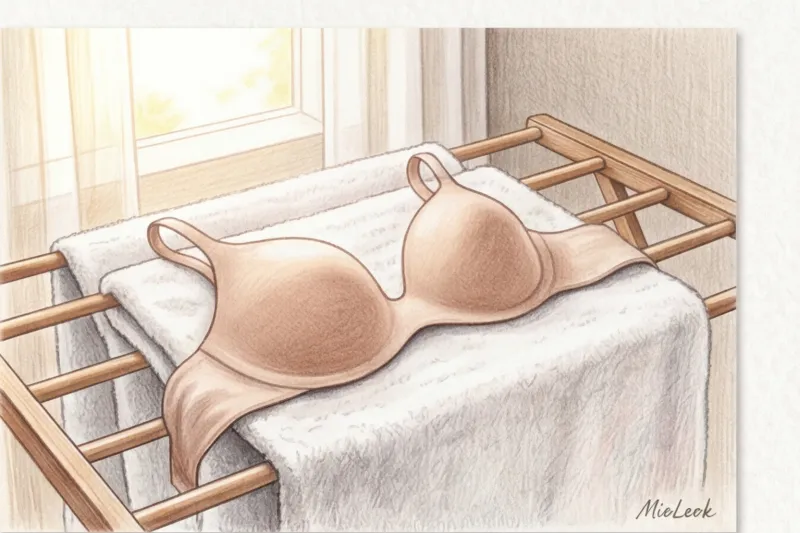
The physics of the drying process are very simple: wet foam or spacer (the breathable 3D material of the cups) weighs 3-4 times more than when dry. If you hang a wet bra to dry by the straps, gravity will do its work. Under the weight of the cups, the straps and band will stretch irreversibly after just a couple of washes.
What is the correct way:
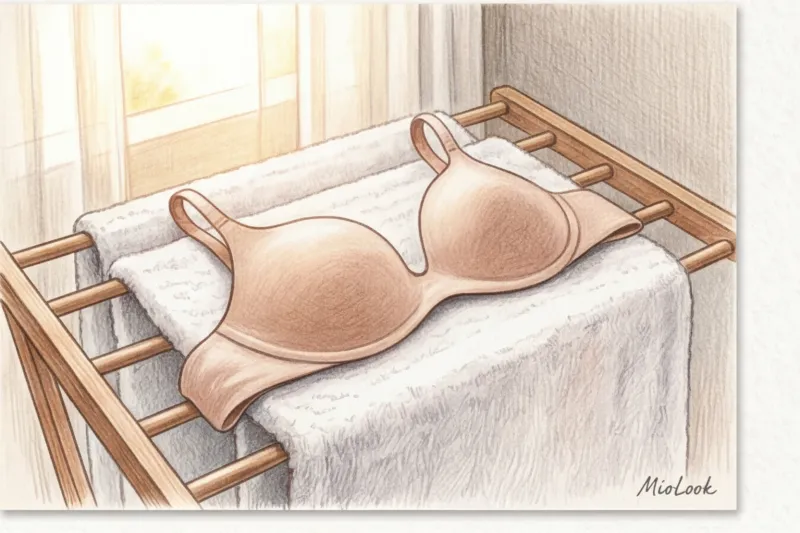
- The ideal option is to dry the laundry horizontally, laying it out on a clean, dry towel.
- An acceptable option is to place the bra over the drying rack rod strictly by the central part (the bridge between the cups).
If a dent or crease appears on a molded smooth cup after washing, don't wait for it to dry. Smooth it out with your fingers from the inside while the foam is still damp and pliable.
How often should you wash your bras? The 48-hour rule.
It's a well-established axiom that panties go in the wash after just one day of wear. But with bras, the rules change. Lingerie brand technologists (like the experts at Chantelle Group) are unanimous: washing a bra after every wear is just as harmful as wearing it for weeks.
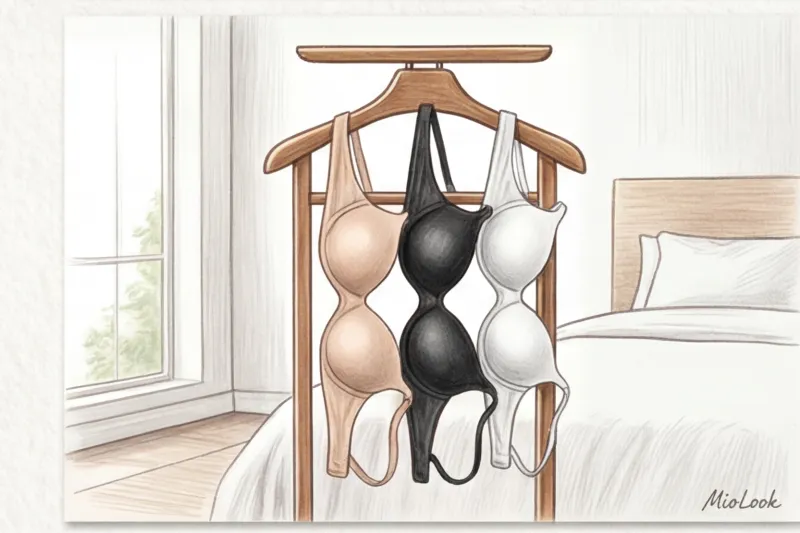
Works here 48-hour rule Elastane, which has been supporting the weight of your breasts all day and stretching with body temperature, needs time to recover. It takes 24 to 48 hours for the fibers to "shrink" back to their original state. If you wear the same favorite bra every day simply because it's comfortable, you'll wear it out within two months.
Fair limitation: This rule doesn't apply to sports bras or extreme heat. Sweat-soaked underwear should be washed immediately, as salts and acids destroy fabric faster than any washing machine.
For a basic wardrobe, I recommend the "1-1-1" rotation formula to my clients. You should have at least three basic smooth bras (for example, two nude shades and one black). You wear one today, one rests on a hanger, and the third is in the wash. The math is simple: three bras that are properly rotated will last twice as long as the same three bras worn one after the other until they're worn to holes. Organizing this rotation and tracking your usage is very easy with smart wardrobe feature in the MioLook app.
Linen Drawer Architecture: Storage Rules to Avoid Wrinkles
Remember those movies showing those perfect lingerie drawers, with the bra cups nested inside each other to form neat, round hemispheres? Forget it.
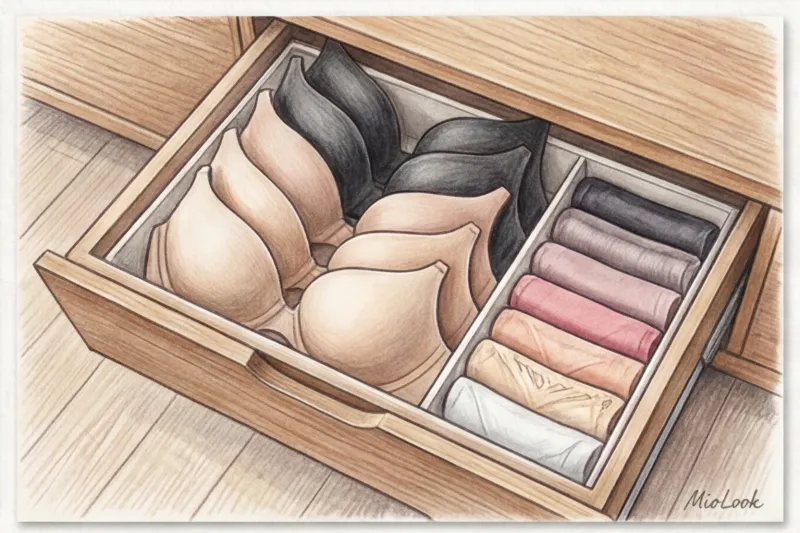
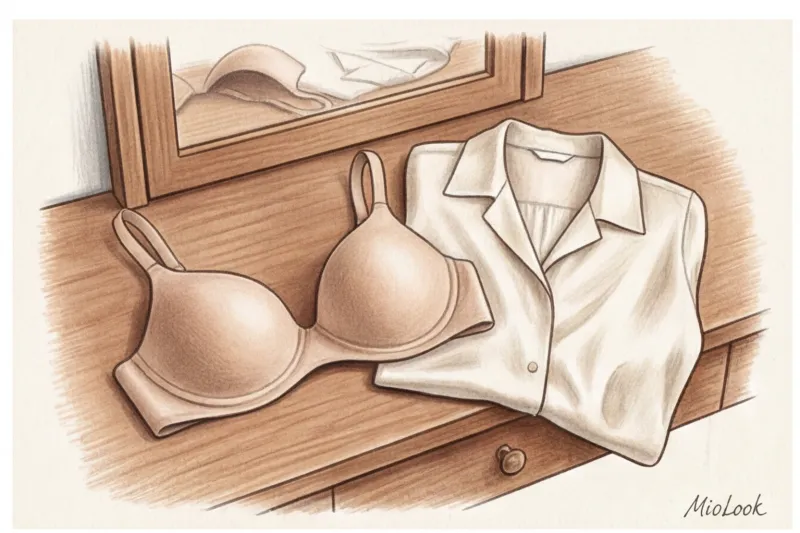
Folding cups requires turning one cup inside out. For smooth, molded T-shirt bras, this is a death sentence. Micro-creases will immediately form in the foam, which will then show through delicate knits or silk.
How to organize storage correctly:
- Molded sconces: We store them using the "matryoshka doll" (or "file folder") method. They should be laid out flat, one after the other.
- Bralettes and wire-free lingerie: They are great for folding using the Marie Kondo method - into compact squares vertically.
- Organizers: In my dresser, I use modular inserts made of thick felt (similar to the Ikea Komplement system). Fabric-padded dividers often wrinkle and don't hold the drawer frame together.
Personal tip: organize your underwear by gradient—from light to dark. Visually organizing your drawer saves me at least 5 minutes of morning preparation when I need to quickly find something. smart-casual office look.
Ready to declutter your closet?
Digitize your wardrobe with MioLook. Artificial intelligence will help you create capsule wardrobes and show you which items you wear most often.
Get access — €0.99 onceChecklist: Auditing Your Underwear (How to Know When to Throw Out an Item)
I can be strict with my clients during wardrobe review. No Max Mara dress will save the look if the bra underneath is misshapen, cuts into rolls, or doesn't hold up the breasts. Don't be shy about throwing out a base layer that's no longer working.
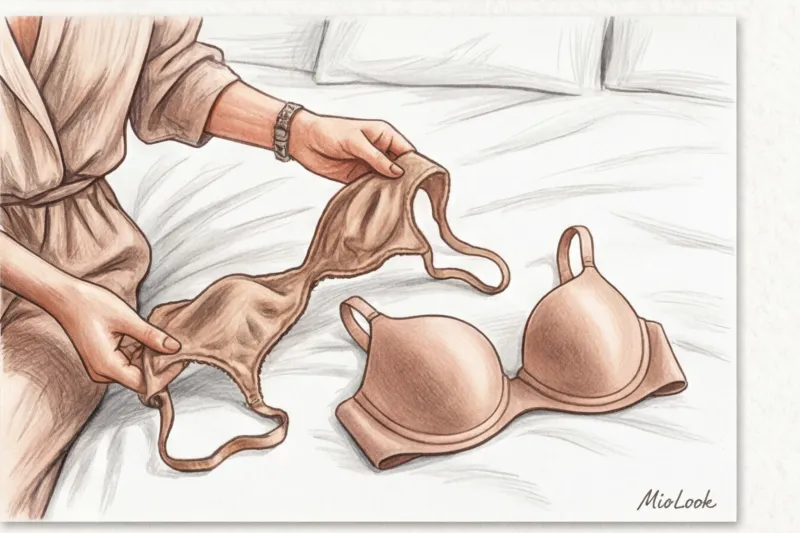
Run an audit using this checklist today. It's time to recycle your item if:
- The Belt is Dead: You fasten your bra on the tightest, last row of hooks, but the band still rides up your back onto your shoulder blades. The bra has lost its elasticity. (By the way, a new bra should always fasten on the loosest, outermost hooks!).
- Falling straps: You tighten the length adjusters to the max, but the straps still fall off your shoulders throughout the day. The elastane inside the straps is broken down.
- The "four breasts" effect or receding edges: The cups are deformed, their edges are moving away from the body or, conversely, are cutting in, creating an uneven texture under clothing.
- Sneaky Bones: The metal frame has broken through the tunnel tape or become bent. This isn't just unsightly; it's dangerous for the health of the lymphatic system.
Getting rid of damaged items is the first step to creating a functional capsule wardrobe. Read more about how to say goodbye to clothes without regret in this article. Closet Review: How to Get Rid of Outdated Items.
Treat your basic bras not as consumables, but as an investment. Proper washing in cold water, avoiding fabric softeners, and drying flat can extend the life of a quality bra from 6 months to 1.5–2 years. Take care of the foundation of your style, and your clothes will always fit perfectly.