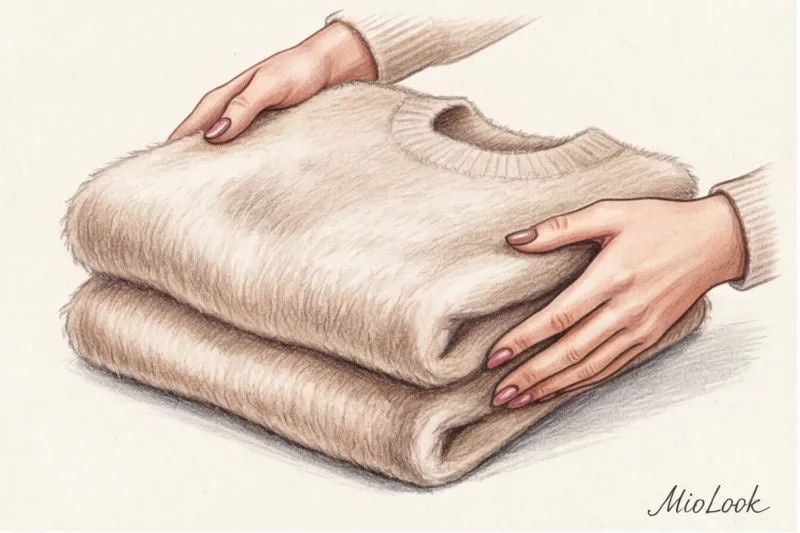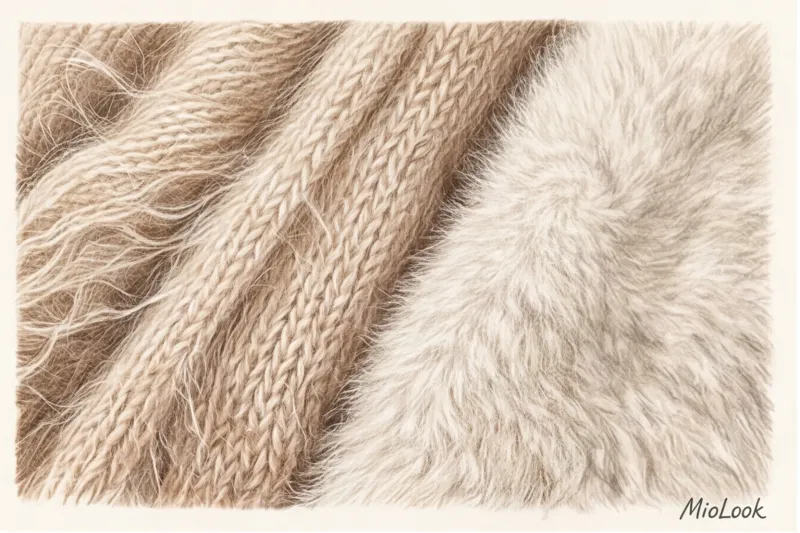
You know what question makes me, as a stylist, wince? "Darina, I washed my new fluffy sweater, and now it looks like a five-year-old's felt boot. What should I do?" Unfortunately, in 90% of cases, nothing. Felted wool is an irreversible chemical process. We've already discussed the anatomy of luxury fibers in more detail in our a complete guide to choosing quality cashmere , but buying is only half the battle.
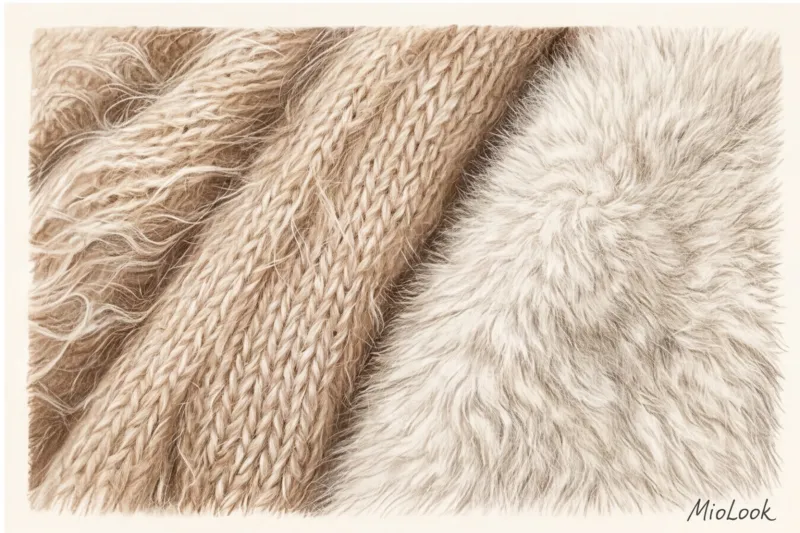
Today I want to once and for all address the question that causes the most panic when the seasons change: How to wash mohair and angora, so they stay like weightless clouds instead of turning into stiff felt. Spoiler: most advice from popular forums, especially regarding baby shampoo, will slowly kill your clothes.
The Anatomy of Down: Why Mohair and Angora Behave Differently
First, let's agree on some terminology. The fashion industry is a confusing place, and oftentimes, salespeople in mass-market stores don't even understand what they're selling. Knowledge of textiles is what separates a professional from an amateur, and it's what determines the anatomy of the perfect sweater.
Mohair Mohair is the wool of the Angora goat. Yes, goat. It's an incredibly strong, long fiber (10 to 25 cm) with a distinctive silky sheen. Mohair dyes extremely well, so garments made from it often have deep, rich colors. Mohair's main weakness is its tendency to stretch under its own weight.
Angora — This is the down of the angora rabbit. This fiber is fundamentally different: it's very short, hollow, weightless, and several times warmer than sheep's wool. However, due to its smooth structure, rabbit down physically cannot be securely attached to the thread. This is the source of the famous shedding effect (intensive hair loss), which drives many to despair.
This is why, although the basic washing rules for them are similar, the wearing and drying rules should be completely different.
A smart wardrobe on your smartphone
Tired of forgetting what to wear with your favorite mohair cardigan? MioLook will help you create the perfect capsule wardrobe for every day.
Get access — €0.99 onceThe Biggest Skincare Myth: Why Baby Shampoo Will Ruin Your Sweater
Last season, a client of mine brought in a luxurious €900 Marni cardigan for a wardrobe review. It was stiff, dull, and had completely lost its fluffy halo (that halo of fluff around the yarn). It turned out she'd been carefully washing it with expensive "tear-free" baby shampoo. That's the worst thing you can do to an animal fiber.
"Baby shampoo has a neutral (around 7.0) or slightly alkaline pH to avoid irritating a child's eyes. However, animal fibers require a slightly acidic environment (pH 4.5-5.5). Alkaline quickly opens the hair cuticle, washes out the natural lanolin, and causes the strands to mat."
Guidelines of an authoritative organization The Woolmark Company We are categorical: do not use human hair products or regular powders containing enzymes when caring for animal fibers. Enzymes, which are excellent at breaking down protein stains from food, also break down the protein structure of wool itself.

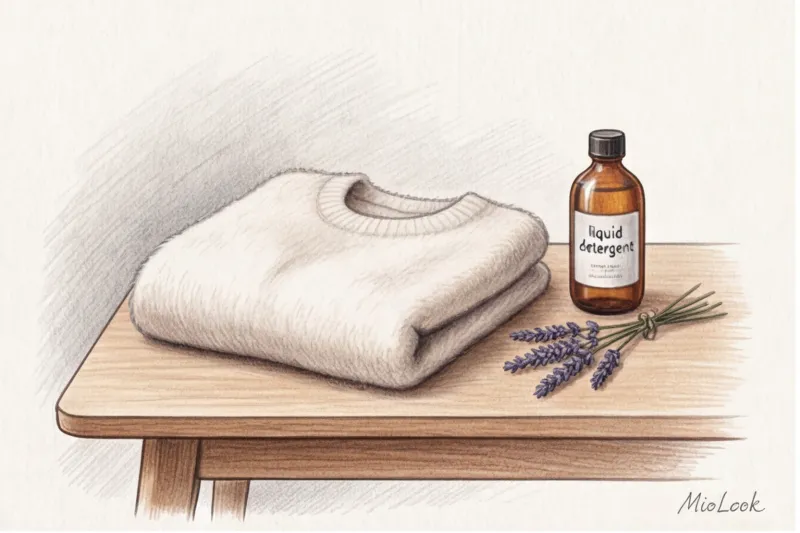
What you really need: Specialized liquid gels for wool (for example, Eucalan, Soak, or eco-friendly lines like Synergetic for delicate fabrics). They should definitely contain lanolin—an animal wax that coats the pile, making it supple and shiny.
How to hand wash mohair and angora: step-by-step instructions
If you want your item to last for years, hand washing is your only safe option. Here's how to wash mohair properly to avoid temperature shock.
- Preparation: Turn the sweater inside out. If there are removable accessories (brooches, heavy buttons), remove them.
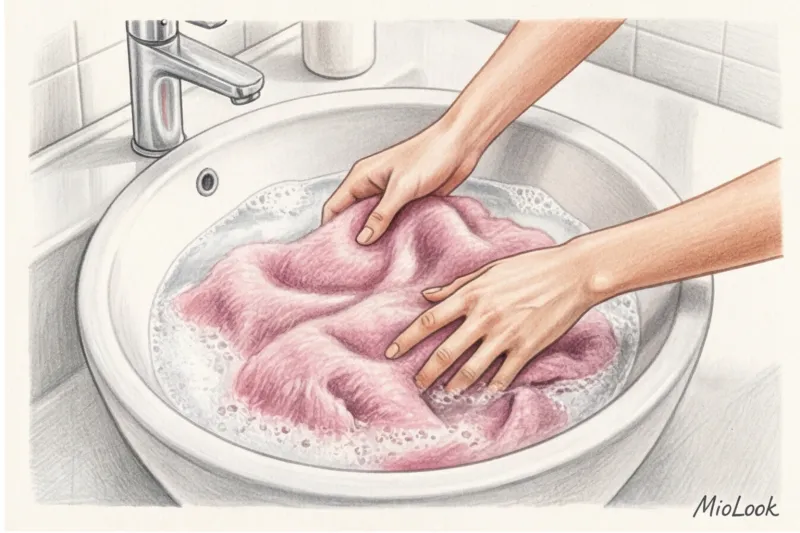
- Temperature Setting (Critical Step): Fill the basin with water that's exactly 20-30°C. It should feel cool, not warm. Important: The water used for washing and rinsing should be exactly the same temperature. Even a 10-degree difference will cause the hair cuticles to stick together tightly, which is what causes shrinkage.
- Dive technique: Dissolve the gel in water until it foams. Submerge the sweater. No rubbing, squeezing, or twisting! Imagine washing a kitten. Simply press gently down on the sweater, allowing the water to work through the fibers. Let it sit for 10 minutes.
- Rinsing: Gently gather the sweater into a ball (don't tug on the sleeves; wet wool weighs a ton and will deform in a second). Change the water to fresh water at the same temperature. Repeat the soaking process 2-3 times until all the foam is washed out. You can add a drop of special wool conditioner to the final water.
Can you wash fluffy knitwear in the washing machine?
I'll be honest with you. As a stylist, I have to warn you: if a sweater is dear to your heart (or wallet), don't risk it. But if you're not willing to spend time on basins, here's the harsh truth.
Mohair - with great caution, you can. Angora - never.
When loading mohair into a drum, follow three ironclad rules:
- Use only the certified Wool cycle (it simulates rocking in water without completely turning the drum over).
- The temperature is strictly cold (20°C).
- Turn off the spin cycle completely. It is the centrifugal force during spinning that drives the fibers into each other, turning the fluffy cloud into a dense felt boot.
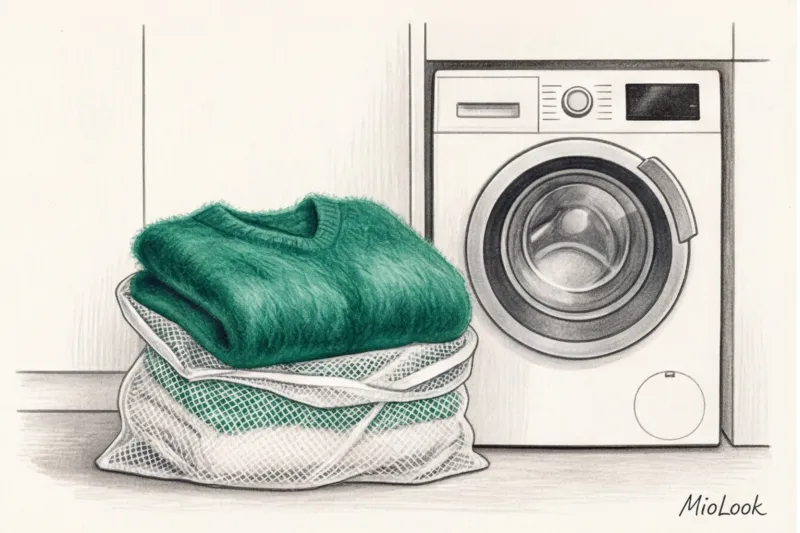
One more thing: always use a mesh laundry bag that's the exact size of the folded sweater. If the bag is too big, the sweater will flap around and become misshapen.
Organize your closet like a pro
Don't remember which items require delicate washing? Add care tags to each item in the MioLook app.
Get access — €0.99 onceDrying and restoring the halo: how to restore fluffiness to a sweater
Removing a wet, heavy, shapeless item from the water is half the stress. Now we need to remove the moisture. To do this, we use the "roll" technique.
Lay a large terry towel on the floor. Place the sweater on it, shaping it correctly (pushing the seams back into place). Roll the towel and sweater together into a tight roll and gently press it with your hands or even lightly stamp on it with your feet. The towel will absorb 80% of the moisture.
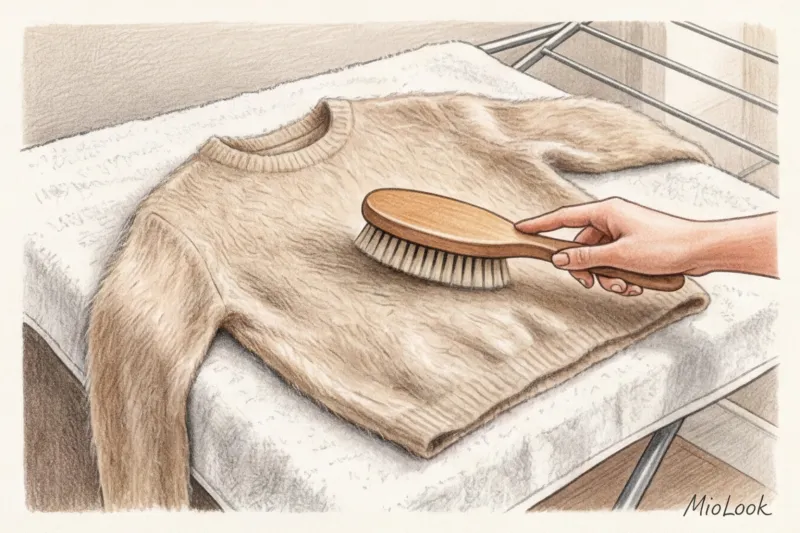
Then lay the item out on a dry towel or a special drying net away from radiators and direct sunlight (flat drying). Never hang damp knitwear on hangers! Mohair is guaranteed to stretch out in length, and you will get a dress instead of a cropped jumper.
Backstage stylist secret: To restore that fluffy "halo," your fur coat needs to be brushed. But you need to do this twice: while the coat is slightly damp (to direct the nap) and once it's completely dry. Use a soft-bristled brush or a wide-toothed comb. And please, no pet store slicker brushes—their metal teeth will simply rip out the precious fluff!
"It's shedding!": What to do if your Angora leaves lint all over your clothes
Remember how we talked about the smooth texture of rabbit down? Because of this, angora sheds at the slightest friction. It's impossible to completely stop this process (it's a matter of physics), but it can be controlled.
Over 12 years of work, I've tested many methods, but my personal freezer hack really does save my black wool coats from white angora lint. The cold causes the hair scales to contract, temporarily securing the lint to the warp threads.
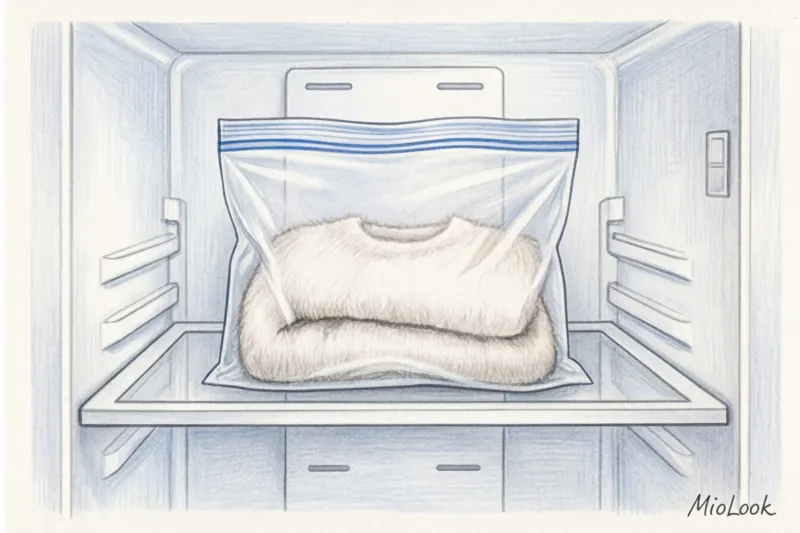
How to do it:
- Fold the dry angora sweater.
- Place it in a tight ziplock bag, squeezing out any excess air first.
- Place in freezer for 12-24 hours before wearing.
- Take it out, shake it well and put it on immediately.
Proper styling also plays an important role. office wardrobe without a strict dress code I always emphasize texture compatibility to my clients. Never wear angora with materials that attract wool, such as corduroy, velvet, or textured wool. Combine fluffy knits with smooth fabrics, such as natural silk, faux leather, satin, or denim.

Checklist: Routine care for fluffy knitwear between washes
Let's be honest: we wash our clothes too often. When it comes to luxury knitwear, the best way to wash it is to not wash it at all. Animal wool is coated with lanolin, which has powerful antibacterial and stain-repellent properties. The garment is literally self-cleaning.
- Airing instead of washing: If your sweater has absorbed the smell of a restaurant or perfume, simply hang it on the balcony overnight (protect it from moisture). The cool, fresh air does wonders.
- Working with steam: Run the steamer over the garment from a distance of 5-10 cm (avoid touching the fabric!). The hot steam instantly kills odor-causing bacteria and lifts the pile.
- Spot cleaning: Spilled coffee? No need to throw the whole sweater in the basin. Apply a drop of special stain remover to the stain, gently blot with a damp sponge, and dry.
- Storage: Store folded on a shelf only. Preferably in breathable cotton bags. And don't forget to put a cedar block or a lavender sachet nearby—moths love expensive mohair just as much as you do.

Create images playfully
Not sure what pants to wear with an oversized sweater? MioLook's AI stylist will suggest dozens of options based on your own items.
Create your first look in MioLookStylist's Summary: Investing Wisely in Knitwear
The beauty of textured knitwear requires care. According to the Garment Quality Institute, reducing the frequency of washing wool garments prolongs their pristine appearance by 3-5 times. When you buy an item of angora or mohair, you're buying more than just a garment, but a specific care ritual.
A quality sweater is an investment in warmth and style. Stop treating wool washing as a chore, like washing cotton T-shirts. Maintain the correct temperature, use the right detergents, and don't neglect brushes, and your fluffy pieces will look as if they just came off a mannequin in a boutique.