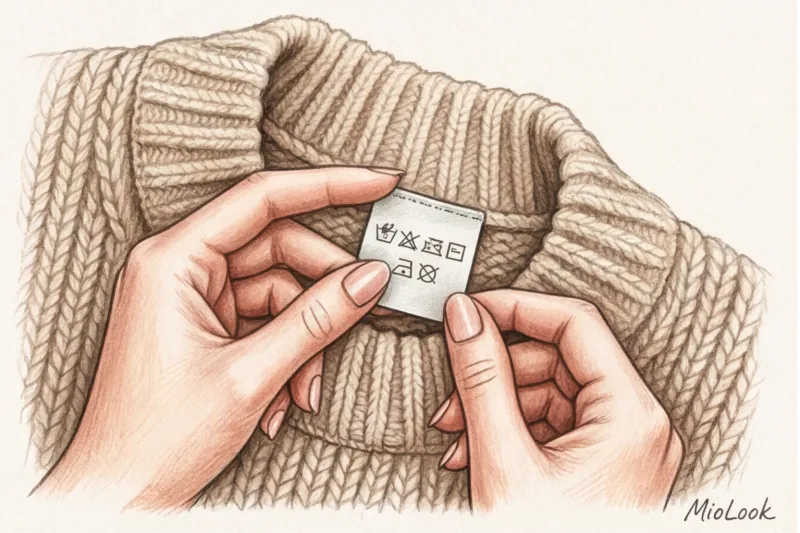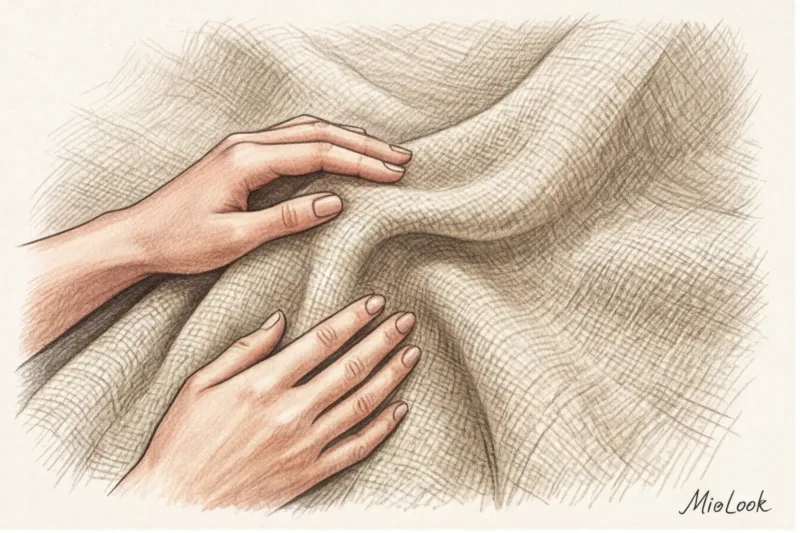
In 2021, a client of mine from Milan, nearly in tears, brought me a linen Armani suit worth around €1,200 for a wardrobe review. Originally flowing and flexible, it had become stiff, like thick cardboard. "I dry-clean it after every wear to keep it looking its best, but it only gets worse," she complained. This is a classic mistake. By trying to impose artificial stiffness on a natural fabric, we destroy its essence.
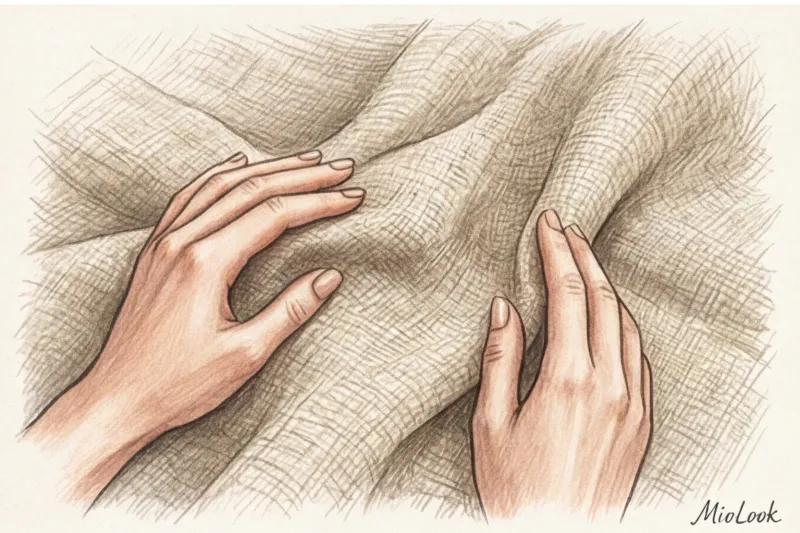
Instead of fighting linen's natural beauty, I suggest you master the "Mediterranean approach." This method teaches you how to wash linen so that it becomes softer, more refined, and more prestigious with each season, and you'll forever be free from the scorching iron's grip. In this article, we'll explore fabric chemistry, Italian drying secrets, and life-saving techniques for already-damaged items.
The Secret Foundation: Why Linen Gets Better with Every Wash
Many premium brands (such as Massimo Dutti or COS) are playing it safe and putting a logo on linen jackets. Dry Clean Only We talked about the manufacturers' tricks in more detail in our a complete guide to proper clothing care In fact, dry cleaning is the worst enemy of natural, undyed linen. Harsh solvents strip the fibers of their natural moisture, making them brittle.
The secret lies in textile chemistry. Flax fiber is held together by pectin, a natural plant resin. When exposed to warm water, this pectin gradually breaks down. This is why linen's paradox is that, unlike wool or cotton, frequent gentle washing doesn't wear it out but rather unlocks its full potential. My favorite linen shirt, bought six years ago for €50, now feels like expensive cashmere—solely because of the correct contact with water.
According to certification standards European Master of Linen (2023), high-quality linen can absorb up to 20% of its weight in moisture while remaining completely dry to the touch. This makes it an ideal temperature regulator, but it requires a special hydration regimen—that is, proper washing.
How to Wash Linen in a Machine and by Hand: Golden Rules
Caring for heavy linen suiting is completely different from caring for fine blouse fabric, but the basic preparation is the same. Before washing, be sure to fasten all buttons and turn the garment inside out. This will protect the outer surface from micro-friction.
The second ironclad rule: the drum should be no more than half full. Linen needs room to float. Overfilling the machine will subject the fabric to intense mechanical pressure, leading to fibrillation—the appearance of whitish creases that no iron can remove.
Temperature mode and speed selection
The temperature barrier for linen is 40°C. Anything above that will shock the fabric. At 60°C, the fibers will deform, causing irreversible shrinkage. If the item has not been pre-washed at the factory (look for the markings) garment-washed ), be prepared for it to shrink by 5-10% when it first comes into contact with water. This is physics, not a defect.
Spin speed is another critical factor. Aim for a maximum of 400-600 rpm. In my experience, 8 out of 10 complaints about "unable to iron" are due to customers spinning linen at 1000 rpm, literally pressing the wrinkles into the fabric.
Laundry Detergents: Why Powder Is Your Main Enemy
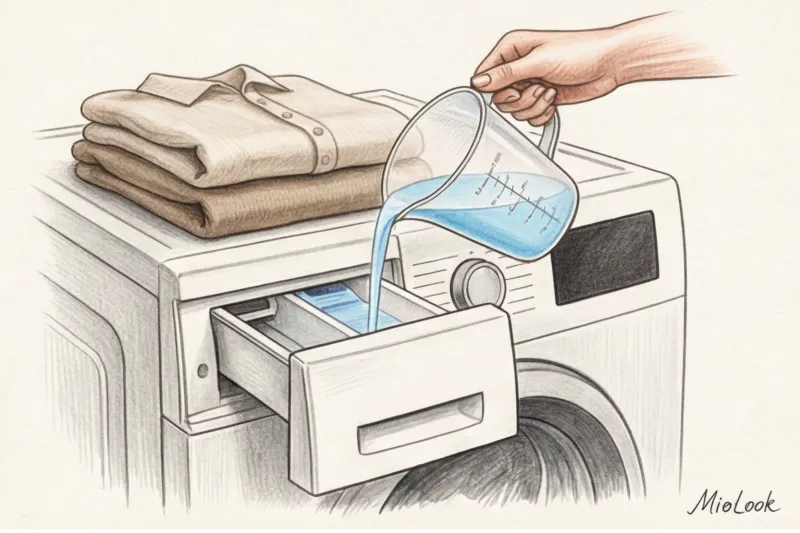
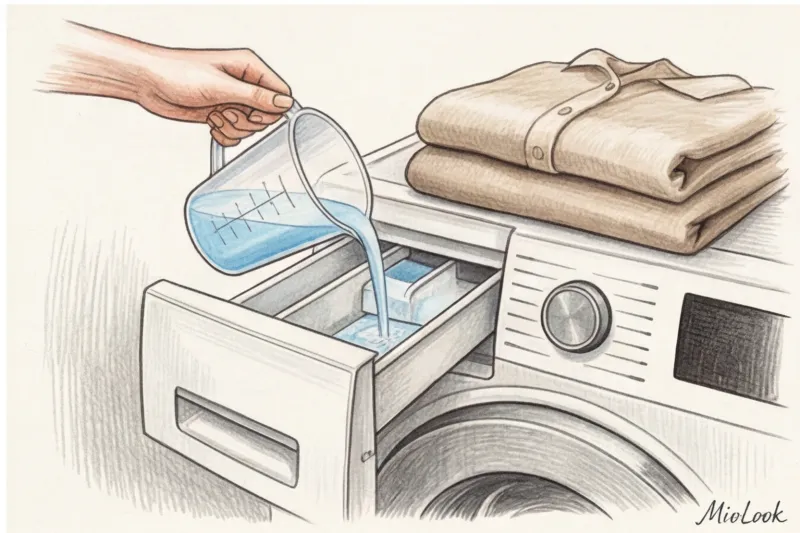
Dry laundry detergent is a death sentence for a linen wardrobe. Its harsh granules don't fully dissolve at 30°C, clogging the porous structure of the fiber and beginning to destroy it from the inside with every movement. Switch exclusively to liquid gels without optical brighteners (they leave stains on the fabric and ruin the natural matte undertone).
"The biggest myth about caring for natural fabrics is the need for fabric conditioner. It's detrimental to linen: silicones coat the fiber in a film, making the fabric feel slimy and unable to breathe," says Isabella García.
What should you do if you live in a hard water area? Use a well-worn, yet scientifically proven, remedy: add a tablespoon of regular white vinegar to the rinse cycle. The acetic acid neutralizes the alkaline detergent and acts as an ideal natural softener.
Tired of wondering what to wear?
Create the perfect capsule wardrobe without the stress. Our smart algorithm takes your lifestyle and seasonality into account.
Get access — €0.99 onceBeware of mixed fibers! If flax is not alone
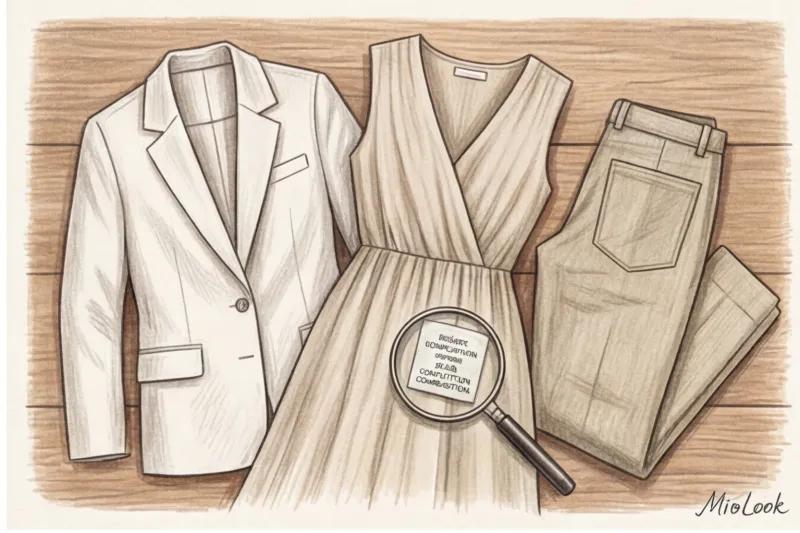
Pure linen is becoming increasingly rare. We often deal with blends, and here the weakest link rule applies: we wash not the "name on the label," but the most delicate component.
- Linen with viscose: Viscose gives linen a beautiful fluidity, but when wet, it loses up to 50% of its strength. Wash these items only on a delicate cycle, without wringing. Otherwise, the item will lose its shape and stretch out.
- Linen-cotton blend: The most low-maintenance duo. Cotton stabilizes the linen, preventing it from wrinkling too much. An excellent choice for mission capsule , as it can withstand standard machine washing at 40°C.
- Linen with silk: A luxurious yet delicate combination. Hand wash only in cool water (up to 30°C) with silk shampoo. No rubbing—just gentle squeezing motions.
There is one important exception where this advice doesn't work If a blended item has a complex cut (like a jacket with bonded lapels and shoulders), don't risk washing it at home. Water will permanently deform the bonded materials inside the jacket.
The Art of Drying: The Mediterranean Method
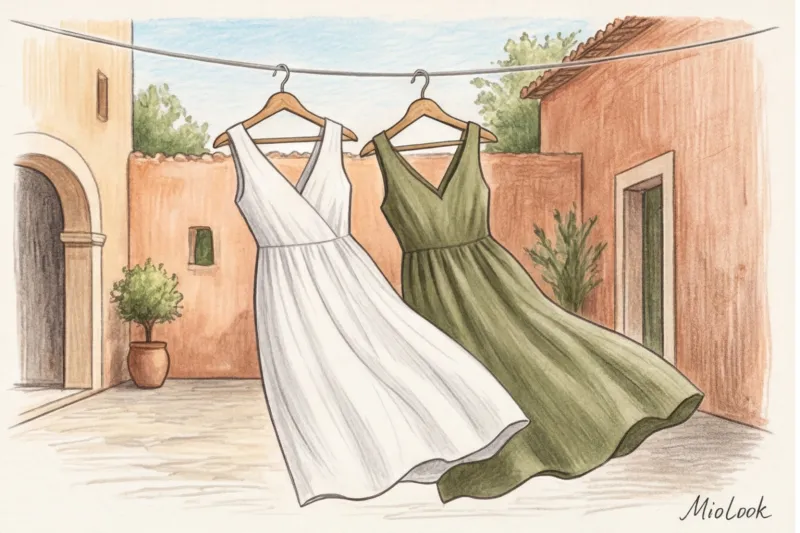
I spend a lot of time in southern Europe and love watching how Italian tailors care for their garments. You'll never see them throwing linen shirts in the dryer. Tumble drying is the number one killer of linen fibers. Hot air overdries the pectin, making the fabric brittle, and shrinkage can reach a catastrophic 15%.
The Mediterranean method involves the "wet shake" rule. After removing the garment from the machine (it should be fairly damp after a gentle spin), grab it by the shoulder seams and shake it vigorously 2-3 times. You'll see how 80% of the creases will smooth out naturally under the weight of the wet fabric.
Dry items only in the shade with a light draft. Direct sunlight will burn out the natural pigments of the fabric and turn linen into crisp cardboard. If drying at home, use wide wooden hangers to avoid creating long shoulders.
A tidy closet means tidy thoughts.
Digitize your belongings, plan your looks in advance, and track which wardrobe items require special care.
Get access — €0.99 onceTo iron or not to iron? Debunking the biggest myth about linen
There is a beautiful word in the Italian language Sprezzatura — a considered, elegant casualness. Perfectly ironed linen screams overdone. Moreover, a linen suit ironed to a crispness looks unnatural and even cheap, losing its rich texture. Have you ever noticed how aristocrats always look slightly rumpled on vacation? It's a sign of status slackness.
Of course, it's important to distinguish between a refined rumpled look and a sloppy creased look (as if you've slept in it). How can you achieve the former and avoid the latter?
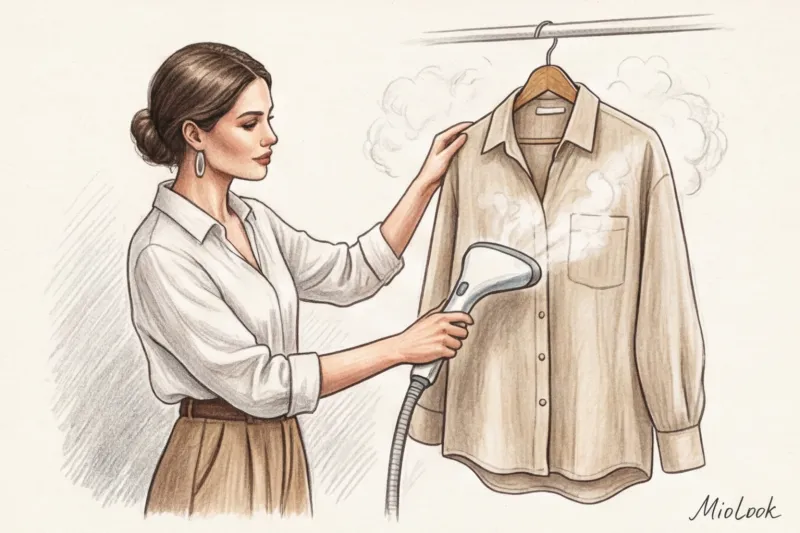
- Ditch the iron and use a steamer. A handheld or stationary steamer is a linen wardrobe's best friend. Steam moisturizes the fibers, relaxes them, and leaves that soft, natural wave.
- If you use an iron, do it on time. Ironing completely dry linen is pointless. Do it when the fabric is still slightly damp (or spray it generously with water from a spray bottle).
- Only from the inside. The hot soleplate of the iron leaves shiny glazes (shiny spots) on the face of the linen, especially on dark fabrics.
Storing Linen Items: Season by Season
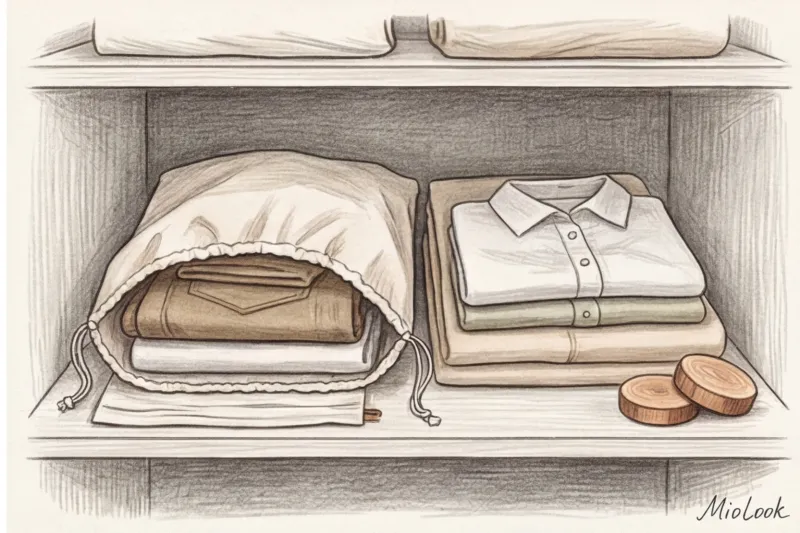
The change of seasons is a critical time for linen items. The first thing you should do when picking up your dry cleaners (if you have to go there) is remove the plastic covers. The plastic suffocates the linen, condensing micro-moisture from the air, and by next summer you'll have a scattering of yellow oxidation stains.
To protect against moths and dust, use only breathable wardrobe trunks made of unbleached cotton or linen. To avoid confusion about what's where, I recommend my clients use the virtual closet feature in MioLook - this way you will always know the composition of the seasonal capsules.
Heavy linen dresses, knitted linen tops, and knitwear should never be stored on hangers. Their own weight will stretch the fibers, causing the garment to become out of proportion. Carefully stack them on a shelf, placing a few cedar balls nearby to repel insects.
Stylist Checklist: A Quick Aid for a Linen Wardrobe

In my 12 years as a stylist, I've seen hundreds of ruined items. The good news is that linen fiber is quite durable, and many mistakes can be corrected at home.
- What to do if an item has shrunk? Fill a basin with cool water and dissolve 2-3 tablespoons of a good moisturizing hair conditioner. Soak the shrunken item for 15 minutes. The silicones in the conditioner will loosen the shrunken fibers. Then, gently, without overdoing it, pull the damp fabric in the desired directions with your hands and lay it flat on a towel to dry.
- How to restore softness to "stiff" flax? Give it a vinegar bath: half a cup of white vinegar per 5 liters of warm water. Let it sit for 30 minutes, then rinse. The smell will disappear as it dries, and the fabric will become incredibly pliable.
- How to remove sweat stains without chlorine? Chlorine bleach instantly burns natural pigments and weakens the fibers. A WGSN study (2024) confirms the trend toward eco-friendly care: use oxygen bleaches (sodium percarbonate). Make a paste with warm water, apply it to the deodorant stain for 20 minutes, and wash as usual.
Linen is a living material that demands respect. Allow it to wrinkle a little, breathe fresh air, and absorb moisture. By mastering these simple washing and drying rules, you'll no longer perceive linen items as a capricious element. wardrobe and start enjoying their luxurious, relaxed aesthetic every day.