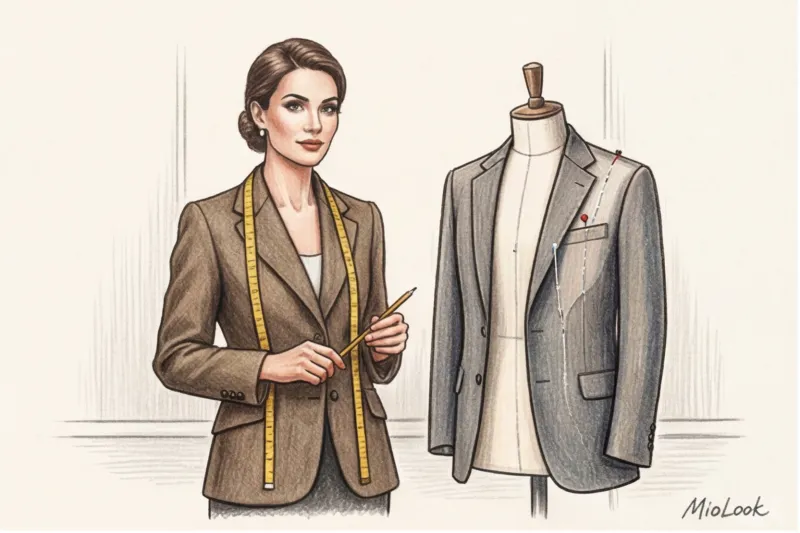
If you think upcycling means sewing a colorful patch onto old jeans or cutting up a T-shirt with dull scissors, forget it. Save the grunge and hippie aesthetic for festivals. Today, we'll be talking about something completely different.
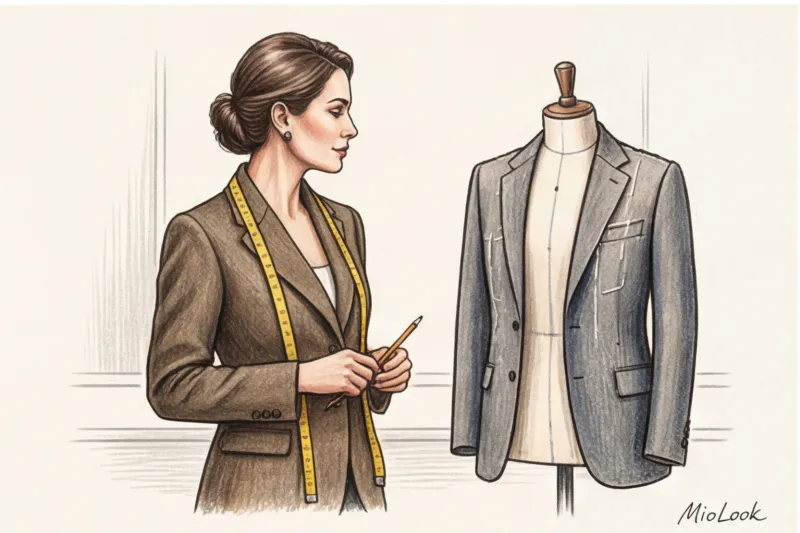
For me, as a stylist working in the premium segment, upcycling is not a way to save money. It's a high fashion tool, a method for creating a custom wardrobe at the highest level. bespoke (made to order). In an era when, according to the Business of Fashion (2024) report, the share of cheap synthetics in the mass market has reached a frightening 65%, finding the perfect wool or silk in a store becomes a quest. But in vintage shops, real treasures await. We've covered the art of finding the right basics in more detail in our The Complete Guide to Second-Hand Shopping.
Now I'll tell you, How to repurpose second-hand clothes so that it looks more expensive than any modern mid-range segment, and why the best upcycling is the one that is completely invisible.
The Art of Architectural Upcycling: Why It's Not a Sewing Class
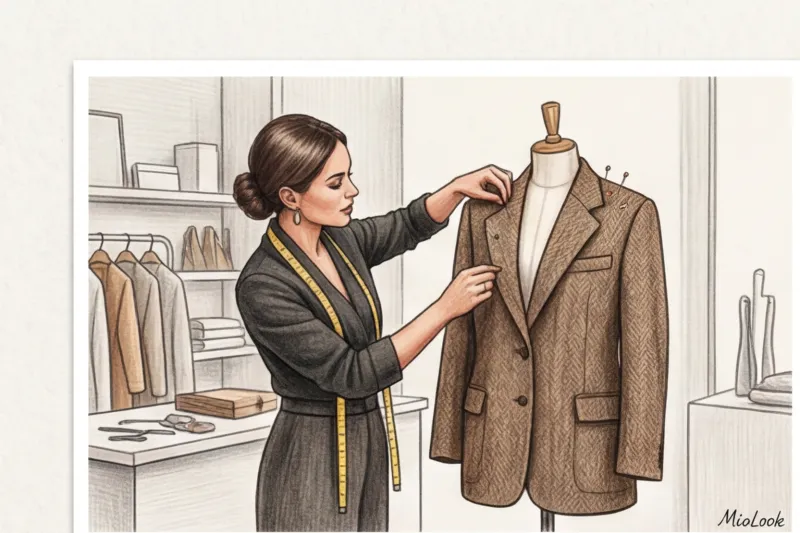
A common fashion myth is that a recycled item should look "creative"—with asymmetry, protruding threads, and garish details. I strongly disagree. Luxury always whispers. A garment should look as if it was custom-made by an expensive tailor, not altered by an amateur on the kitchen table.
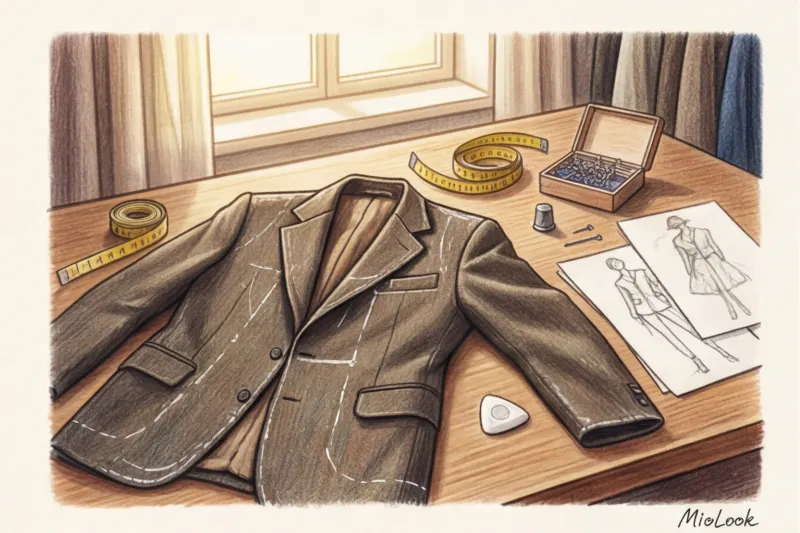
Last month, a client, the director of a Moscow art gallery, contacted me. She needed a prestigious, tightly structured jacket for an exhibition opening, but she was tired of the recognizable silhouettes of the designer suits worn by half her colleagues. We took an unconventional approach: we bought a massive 100% wool men's jacket from the 1980s at a vintage boutique. After my tailor completely redesigned the armholes and removed the enormous shoulder pads, we ended up with an architectural masterpiece that fits perfectly. The client received hundreds of compliments, and no one even suspected it was vintage.
"The subtle, meticulous work of a tailor is always valued higher than ostentatious handmade goods. A custom fit is true, quiet luxury."
A well-crafted alteration gives you access to fabrics currently found only in luxury house collections. The cost difference is colossal: purchasing and altering a high-quality vintage cashmere coat will cost approximately 15-20% of the cost of a new equivalent of the same weight.
Access to MioLook for €0.99 — one-time payment
A smart AI stylist will select the perfect look based on your preferences and wardrobe.
Get access — €0.99 onceHow to repurpose second-hand clothing: choosing the right base
When evaluating an item in a store, you shouldn't look at its current cut, but at the potential of the fiber. We can change the silhouette, but even a golden cut can't save a cheap fabric.
The main rule of upcycling: An item should always be 2-3 sizes larger than you. This is called the "plus size rule." We need some extra fabric (the so-called "air") to cut out a new silhouette, transfer darts, and create the right amount of ease. Outdated style rules We were taught to buy things to fit, but this is detrimental to alterations.
Fabrics that are worth your investment
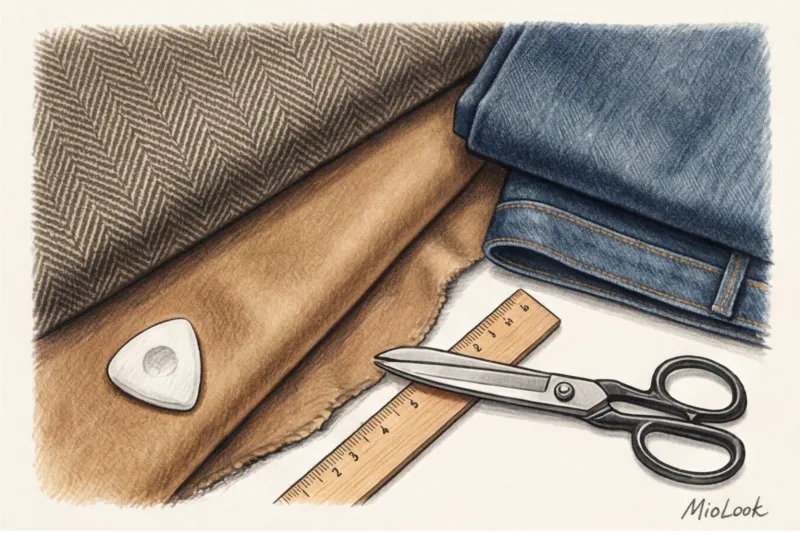
- Scottish tweed and heavy wool (from 350 g/m²): Look for items labeled Harris Tweed or pure new wool. If the fabric hasn't lost its shape or pilled after 20-30 years, it's practically timeless.
- 100% cashmere and camel wool: Pay particular attention to men's coats. They often have a thicker, more durable fabric than their women's counterparts.
- Vintage Heavy Denim: Old Levi's, Wrangler or Japanese denim (selvedge) jeans without added elastane.
Insider stylist tip: How can you check the quality of the thread right in the store? Rub the fabric lightly between your fingers in an inconspicuous area (like the facing). If the fibers immediately begin to fluff and separate, the fabric won't hold up to ripping—the seams will simply "come undone."
Things that are best left on a hanger
I'm always honest with my clients: there are some items that can't be saved. Don't buy for alterations:
- Thin, loose knitwear (it will unravel if you try to change the cut).
- Any items with a high spandex or elastane content (more than 5%). Over time, the elastane threads degrade, causing the fabric to lose elasticity and begin to bubble.
- Items that are too small or fit snugly. Spoiler alert: vintage clothing often has seam allowances trimmed by previous owners or at the factory to save money. It's nearly impossible to widen a garment beautifully.
Three key tips for stylishly updating second-hand items
To transform mothballed vintage into a trendy piece status capsule wardrobe , three point interventions are sufficient.
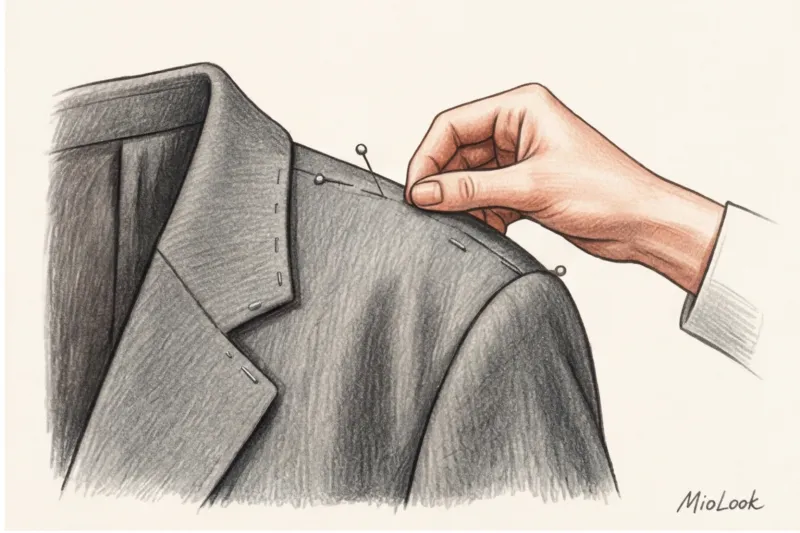
1. Modernization of the shoulder girdle.
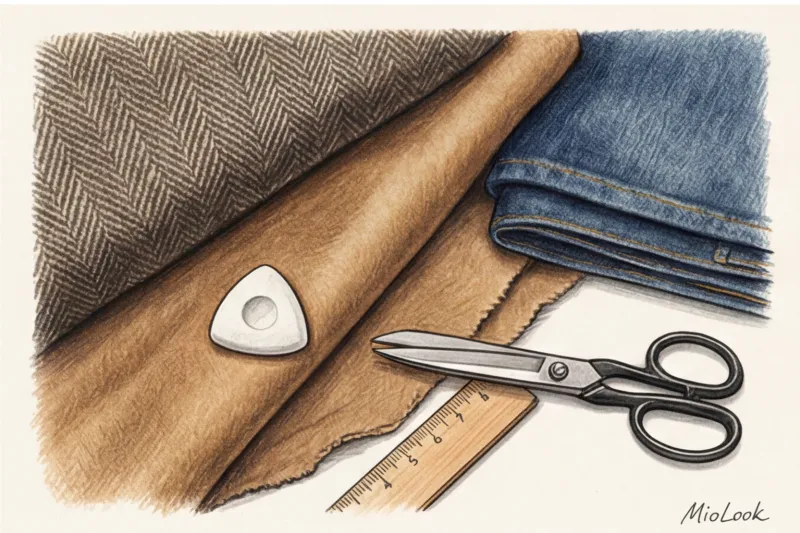
The shoulder line immediately reveals a garment's age. Those oversized foam shoulder pads from the '80s make the silhouette appear heavy. Replace them with thin, modern pads to create a sharp, sharp shoulder line in the style of Saint Laurent, or remove them altogether for a softer silhouette inspired by Neapolitan tailoring.
2. Working with proportions (crop silhouettes).
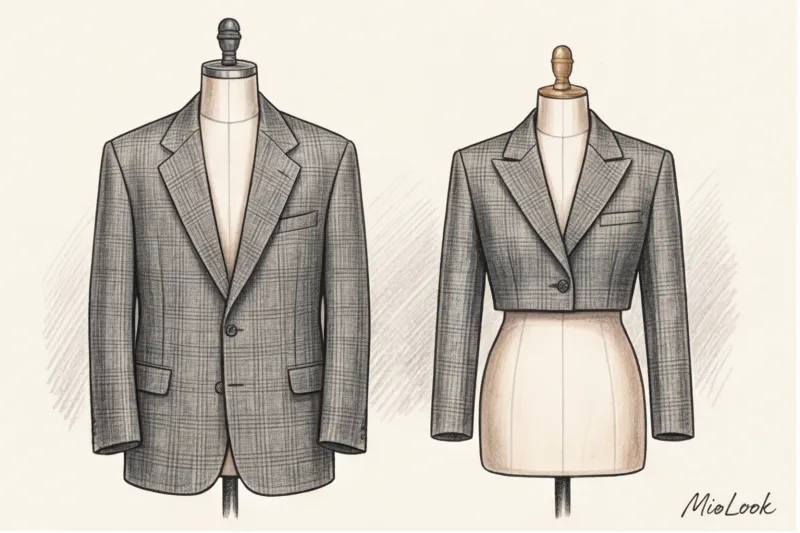
The long, straight jackets of the '90s often cut off the height. A radical shortening (to the waist or just below) instantly changes the balance of the figure. A cropped tweed jacket over a silk slip dress looks incredibly fresh.
3. Replacement of fittings (magic of details).
This is my favorite trick. Replace scratched plastic with horn buttons, mother-of-pearl, or cast metal buttons.
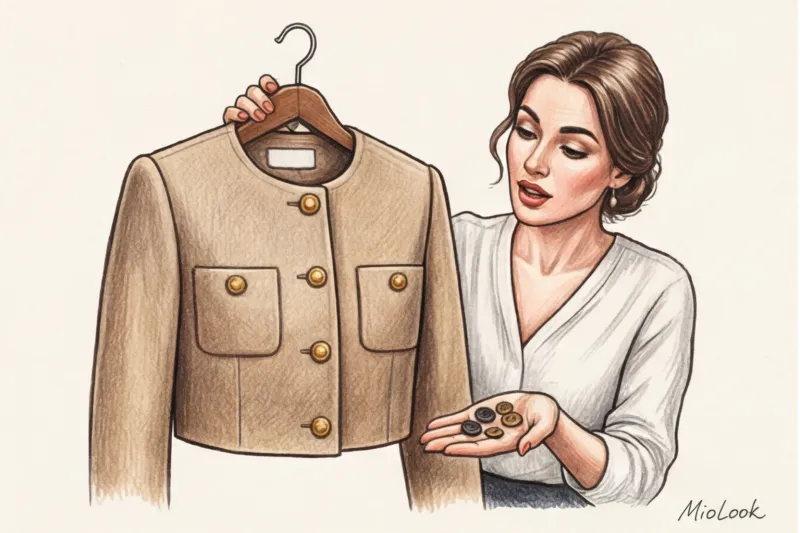
Example from practice: A client and I found a great basic sand-colored jacket for $20. The fabric was gorgeous, but the buttons were cheap, rust-colored plastic. We bought a set of chunky natural horn buttons for $30 at a specialty store. The result? A $50 jacket became visually indistinguishable from a $2,500 Celine runway collection. It's details like these that define... How to look expensive without gigantic budgets.
Your perfect look starts here
Join thousands of users who look flawless every day with MioLook. Digitize your wardrobe!
Get access — €0.99 onceInstructions: How to transform a men's jacket into a women's haute couture jacket
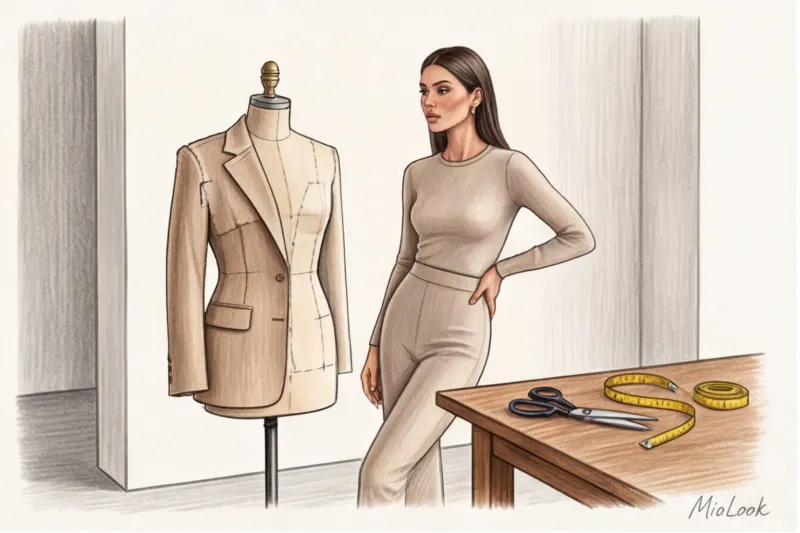
The transformation process requires an understanding of body geometry. Here's how the pros do it.
Step 1: Unraveling and removing excess volume
Instead of simply taking in the sides, the tailor rips the center back seam and the relief darts. This removes the "masculine" bulk around the shoulder blades and creates the correct curve along the back.
Step 2: Fitting the shoulder and armhole lines
The most challenging part. We use the principles of London's Savile Row tailoring: the armhole (sleeve opening) should be high and fit snugly under the armpit. This allows for freedom of arm movement, unlike cheap mass-market garments, which make the armhole wide for pattern versatility.
Step 3: Transferring the button line
To create an hourglass silhouette, we often move the buttons 1.5-2 centimeters, creating a slight asymmetry and an emphasis on the waist.
Step 4: Luxury Backing
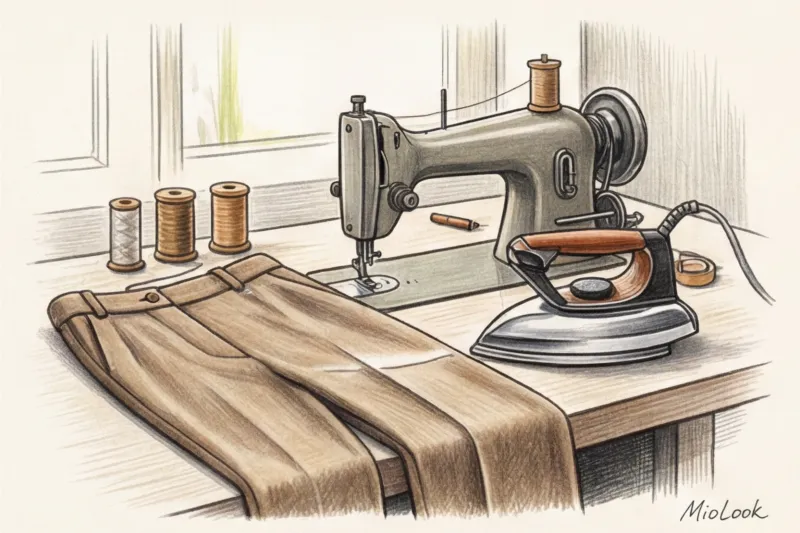
Sometimes a vintage lining is irreparably damaged. My favorite trick is to remove it completely (giving the jacket a deconstructed look) and finish all the inside seams with contrasting silk bias binding. French haute couture ateliers often use a closed "French seam" technique, where the edges of the fabric are tucked inside the seam itself. This backing looks even more beautiful than the right side.
The main mistakes beginners make when repurposing vintage items
Over 12 years of work, I've seen countless masterpieces ruined. What should you absolutely not do?
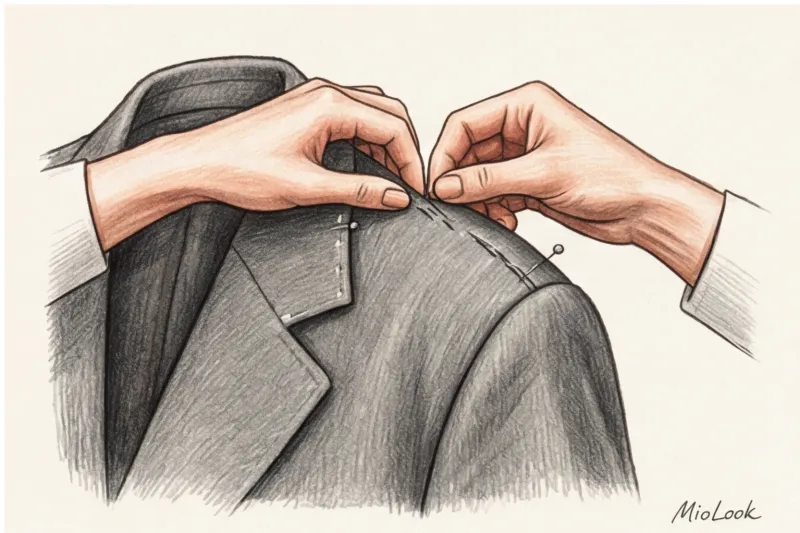
- Using contrasting cheap threads. The seams must be invisible. Purchasing a spool of high-quality silk or strong, tone-on-tone reinforced thread is a must.
- Ignoring the shared thread. Fabric has a direction (grain and cross grain). If an amateur tailor cuts the fabric without taking this direction into account when sewing trousers or a skirt, the garment will begin to treacherously "skew" and curl on the leg as you walk.
- Excessive passion for decoration. Trying to hide a stain or hole with garish embroidery, rhinestones, or lace instantly turns a potentially prestigious item into a school play project. It's better to darn it to match or alter the cut so the problem area is cut off.
My warning: Don't ruin your beautiful fur with unsuccessful home experiments. It's better to take one item to a professional and pay for the work than to ruin three items yourself by watching a five-minute video online.
Checklist: sew it yourself or take it to a premium tailor?
Let's be pragmatic. Let's categorize the tasks by difficulty level.
What can be done at home with minimal skills:
Replace buttons (use a strong thread and needle), shorten the hem of a straight dress or skirt, create a trendy raw edge on thick denim (just trim and pull out a couple of horizontal threads).
What equipment and qualifications are required (studio only):
Re-cutting armholes and fitting sleeves, working with a jacket collar (there is a complex system of backing the fabric with horsehair), fitting classic trousers along the center seam, working with a silk lining.
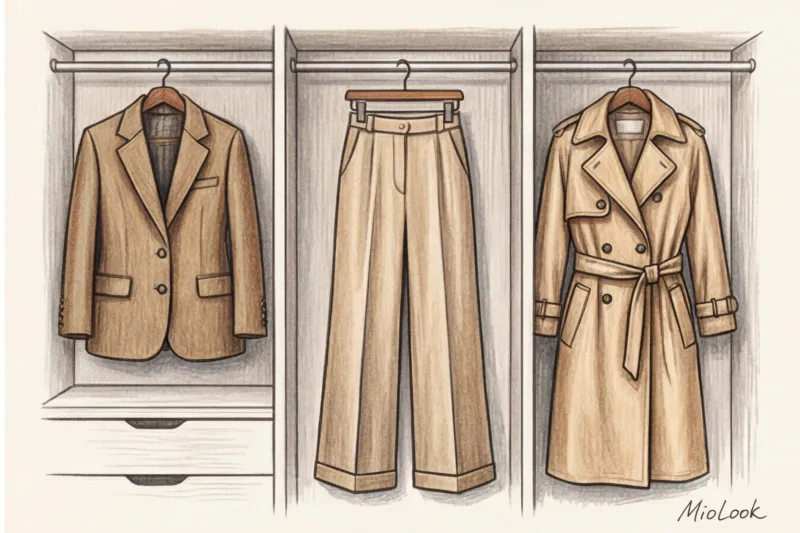
Think of it as an investment. The cost of a vintage cashmere blazer (say, $40) plus the cost of a skilled tailor ($100) = $140 for a piece whose boutique equivalent costs $1,500 or more. If you wear it 50 times per season, the cost-per-wear (CPOW) is only $2.80. It's a brilliant investment.
By the way, it is very convenient to track the frequency of use of things and calculate their payback in MioLook app Its smart algorithm will help you create the perfect capsule wardrobe , including your unique re-sewn finds.
Next time you pass a rack of men's jackets at a thrift store, don't turn away. There might be a modest giant of perfect tweed hanging there that, with a good pair of scissors, will become the crown jewel of your style.