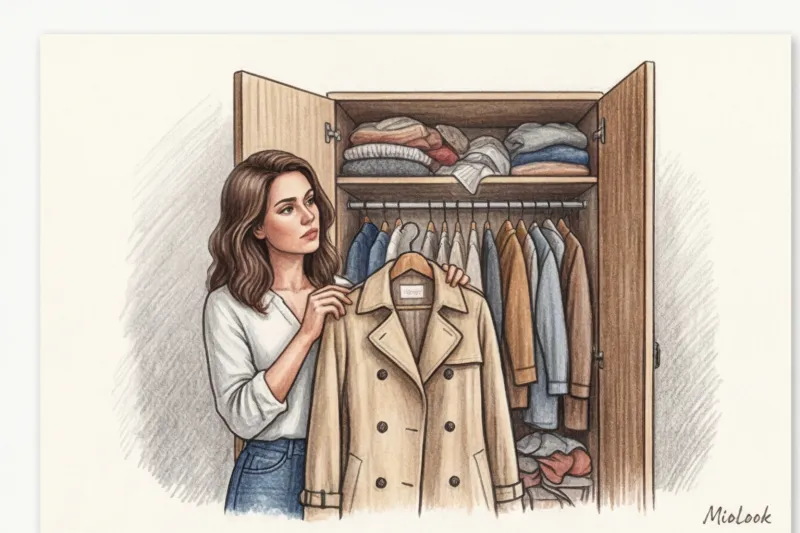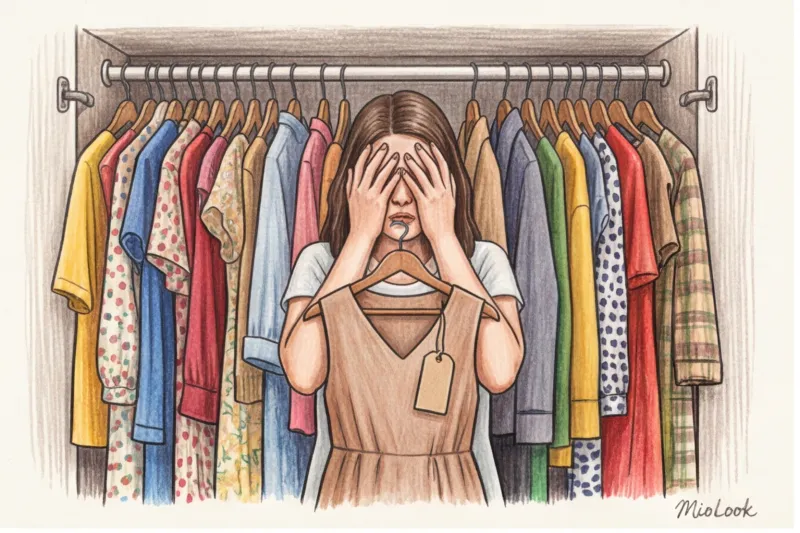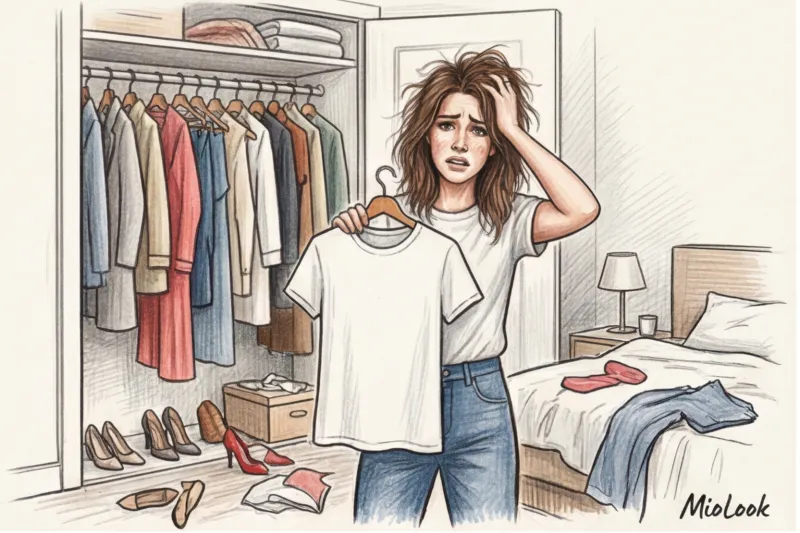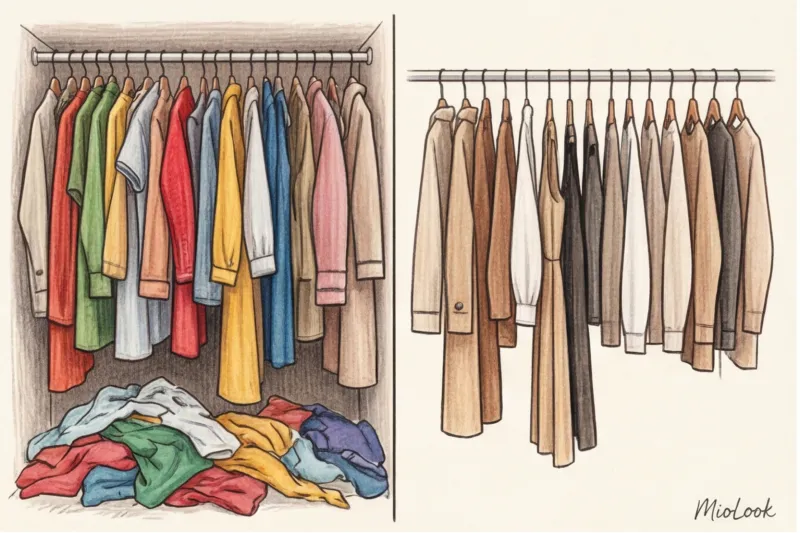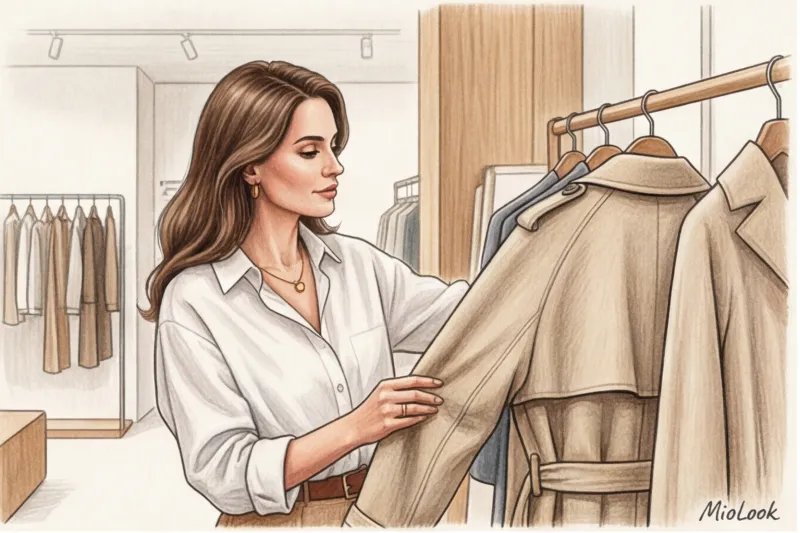
Let's be honest: if you threw out all your mass-market clothes right now and bought three expensive organic linen dresses, you wouldn't save the planet. You'd likely just spend a ton of money and be left with a wardrobe you have nowhere to wear. The present conscious consumption in clothing It's not about shopping at niche eco-boutiques. It's about math, discipline, and the ability to squeeze the most out of what's already been produced.
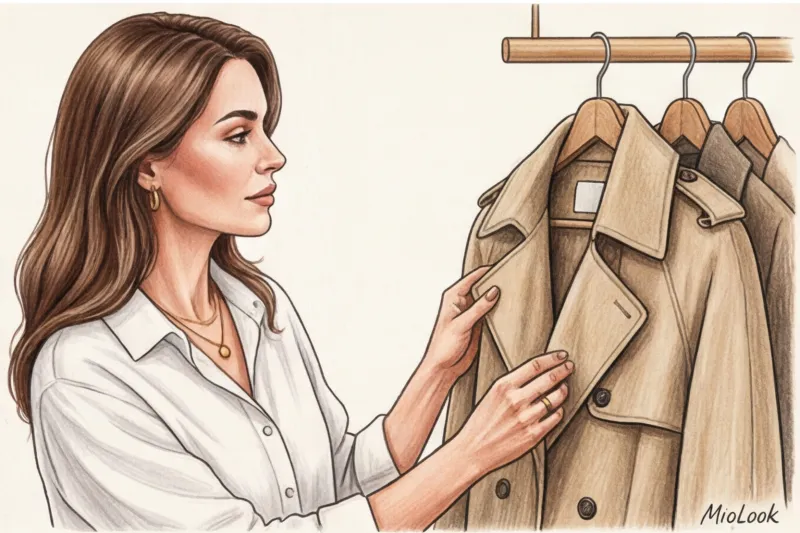
The most eco-friendly item in the world is the one already hanging in your closet. Wearing a fast-fashion polyester blouse 50 times is much more sustainable than buying a new ethical cotton shirt and wearing it twice. After 12 years of working as a personal stylist in Europe, I've learned one thing: sustainability and saving always go hand in hand, if you know how to count correctly.
What is conscious consumption in clothing really?
Today, almost every mass-market brand has a line with green labels like "Conscious" or "Eco." Marketers convince us that by buying a T-shirt made from recycled plastic, we're doing a good deed. This is the greenwashing trap. Brands profit from keeping you buying. new , just with a different sauce.
According to the WRAP UK (The Waste and Resources Action Programme) 2023 report, extending the life of any item by just 9 months reduces its carbon, water and waste footprint by 20-30%.
Mindfulness doesn't begin at the checkout, but the moment you decide to fix the zipper on your old jacket instead of buying a new one. It's a shift from quantity to functionality: every item should earn its place on the hanger. We don't need to give up fashion; we need to stop treating clothes like disposable napkins.
The main enemy of sustainability is emotional shopping.
The amount of "dead" clothes with tags in our closet is directly related to our emotions. We often confuse the physical need for clothing (I'm cold, I have nothing to wear to the office) with the psychological need for joy, comfort, or novelty.

One of my clients, Anna, was riding the wave of sustainable fashion craze and bought an eco-friendly capsule collection from an expensive Scandinavian brand for €1,200. The items were minimalist and high-quality, but they were completely out of step with her lifestyle as a freelancer with two children. A month later, she felt stressed, relapsed, and returned to impulsive purchases of brightly colored but cheap items. Why? Because shopping was a way for her to get a quick dopamine rush, not clothes. We discussed this mechanism in more detail in our extensive article about Emotional shopping and ways to stop buying unnecessary things.
The best rule I can give you is a 24-hour break. Added an item to your cart or picked it up in the store? Put it aside. If after 24 hours you still remember it and know how to wear it, buy it. 80% of the time, you won't even think about it.
Cost Per Wear Formula: How Stylists Calculate Real Costs
In a professional environment, we never look at the price tag of an item in isolation. We consider Cost Per Wear (CPW) — the price per wear. The formula is simple: divide the cost of the item by the number of times you wear it.
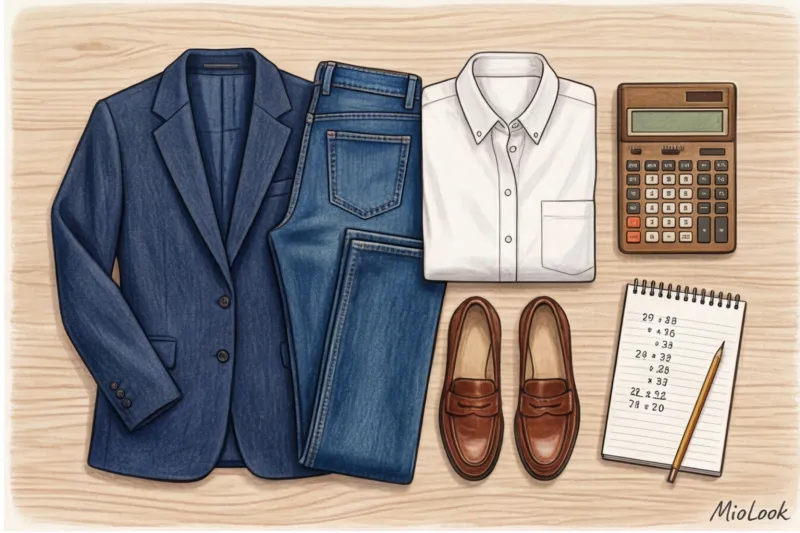
Let's do the math. A trendy rhinestone-embellished crop top from Zara costs €20. You wear it to a party and once on vacation. Total: €10 per outing. A pair of perfectly cut basic wool trousers from COS costs €120. You wear them to the office twice a week for six months (about 50 times). Total: €2.40 per outing. The trousers that seemed six times more expensive at the checkout actually cost you a quarter as much.
The McKinsey State of Fashion study (2024) reveals a frightening statistic: the average woman wears a mass-market item only seven times before discarding it. To avoid becoming part of this statistic and avoid keeping track of your calculations in a notebook, I recommend using digital tools. For example, by uploading your closet to MioLook smart wardrobe , you'll be able to automatically track which items you wear constantly and which ones are just hanging around, ruining your CPW stats.

Inventory: The First Step to a Smart Wardrobe
You can't start consciously consuming clothes by going to the store for the "right" basics. The first step is always a complete inventory of what you already own. Take everything out of your closets, dressers, and seasonal boxes and place it on your bed. Take stock of the scale.
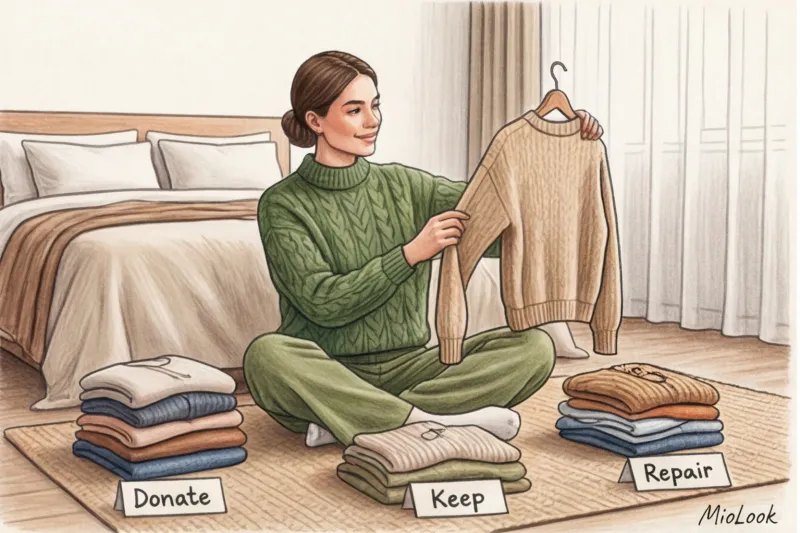
The European "three-pile" rule
When sorting through your clutter, divide your clothes into three strict categories:
- Bunch 1: I wear it all the time. This is your treasure chest. Study these items carefully: what is their cut, fabric composition, color? These are the ones that will reveal your true, not your imagined, style.
- Bunch 2: I doubt it. It's a nice item, but for some reason it's not being worn. Put them in a box and put them out of sight for three months. If you haven't thought about the skirt in the box during that time, don't hesitate to get rid of it. Important limitation: This rule does NOT apply to clearly seasonal items (down jackets, linen shorts) - their fate should be decided only in their season.
- Group 3: Definitely not. Items with stains that can't be washed out, hopelessly outdated styles, or clothes that don't fit properly belong in recycling, resale platforms, or charity bins.
Your perfect look starts here
Join thousands of users who look flawless every day with MioLook.
Get access — €0.99 onceHow to shop mindfully in mass-market stores: a practical checklist
Let's be realistic: most women won't stop shopping at H&M, & Other Stories, or Mango. And that's okay. Mass-market fashion can be part of a sustainable wardrobe if you approach it with a quality filter.
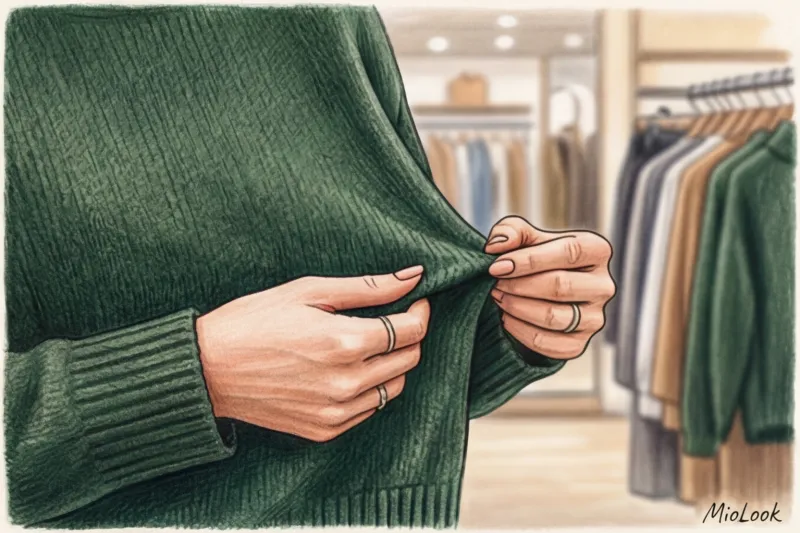
Here's my personal stylist checklist for choosing items in the budget segment:
- Translucent test. Hold a T-shirt or shirt up to the store's light. If the fabric is so see-through that the outline of your hand is visible, it will lose its shape after the third wash. Look for heavyweight cotton (at least 180 g/m²).
- Geometry check. Cheap brands often skimp on fabric by cutting it off the grain. Fold the garment in half: if the side seams twist while still on the hanger, the top will twist into a spiral after washing.
- Study of composition. Avoid 100% acrylic—it's the least durable synthetic and will pill within a week. Look for blended fabrics: viscose with 5% elastane, wool with 20% polyamide (for durability).
- Premium lines. Pay attention to collections like Massimo Dutti Studio or H&M Premium Selection. They're 20-30% more expensive than the main line (for example, trousers for €80 instead of €40), but the quality of the cuts and fabrics there is often comparable to the mid-up segment.
Caring for Your Things: The Hidden Secret to Conscious Consumption
We tend to think that clothes are damaged by wearing them. In fact, 70% of wear and tear occurs in the washing machine. Harsh detergents, high temperatures, and 1000-rpm spin cycles destroy fibers faster than friction against the back of an office chair.
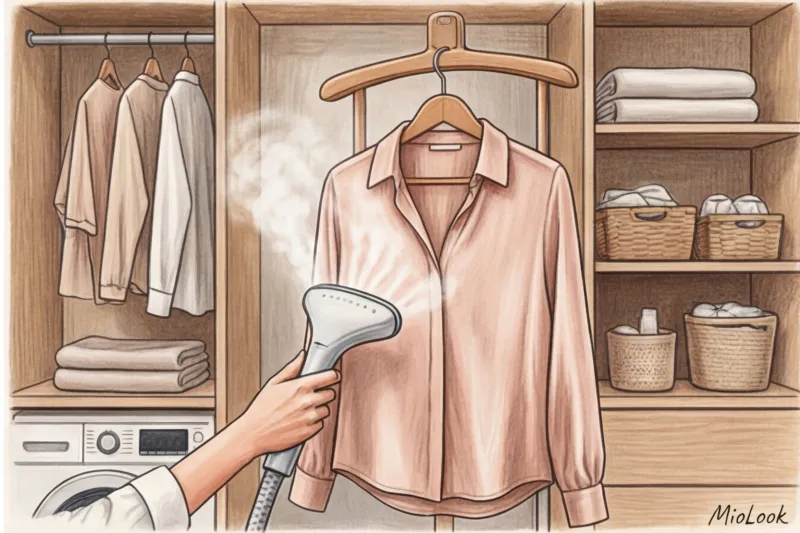
Try changing your grooming routine:
- Wash less often. Jeans, jackets and thick sweaters do not need to be washed after one wear.
- Buy a handheld steamer. Hot steam kills bacteria, eliminates odors (like those from restaurant food), and smooths out wrinkles. In 90% of cases, steaming a blouse is enough to make it look fresh again.
- Remove pilling from the machine. It's a €15 investment that will save you hundreds of euros. Even expensive cashmere pills where it rubs – a few minutes of machine washing and the sweater looks like the day you bought it.
- Store your knitwear properly. Never hang heavy sweaters on hangers—they'll stretch under their own weight and lose their shoulder shape. Store them folded on a shelf only.
The Final Test: 5 Questions Before Any Purchase
Conscious clothing consumption is the habit of thinking in images rather than in individual items. When you're standing in the fitting room, ready to pull out your card, ask yourself these five control questions:
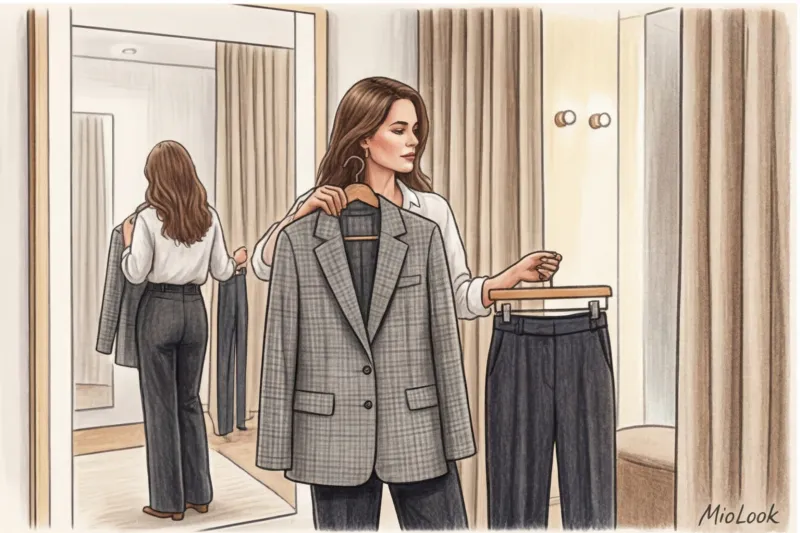
- Will I be able to create at least 3 looks with this thing from what already hanging at my place? (If you need to buy "just the right shoes and a top" to go with your pants, that's a bad purchase.)
- Am I willing to wear this item at least 30 times during its life in my wardrobe?
- Does this item solve my real problem (clothing for a new dress code, replacing worn-out jeans) or am I just tired after a hard week?
- Is it comfortable for me to sit, bend over, or raise my arms in? (A beautiful but uncomfortable item will always hang in the closet.)
- Do I want to care for this fabric? Am I prepared to dry clean this silk or gently hand wash it?
If you answered "no" to even one question, feel free to return the item to its hanger. Remember: a beautiful and functional wardrobe is built not on what you buy, but on what you consciously choose to avoid.