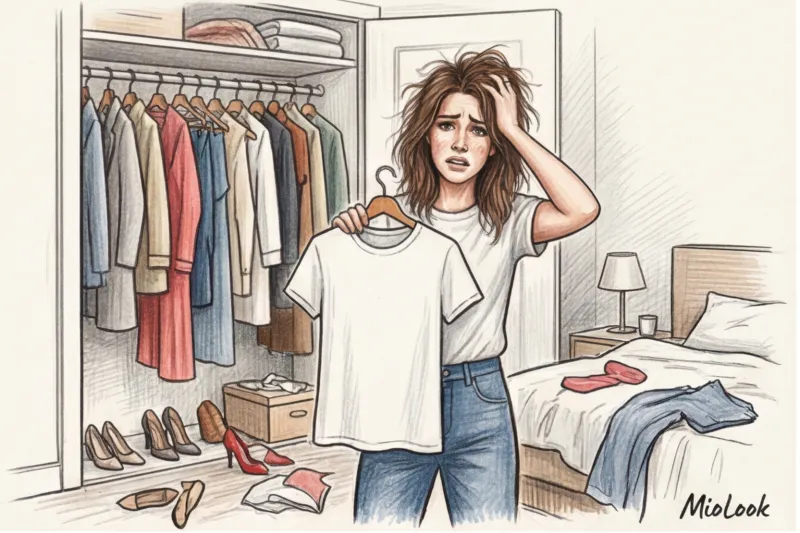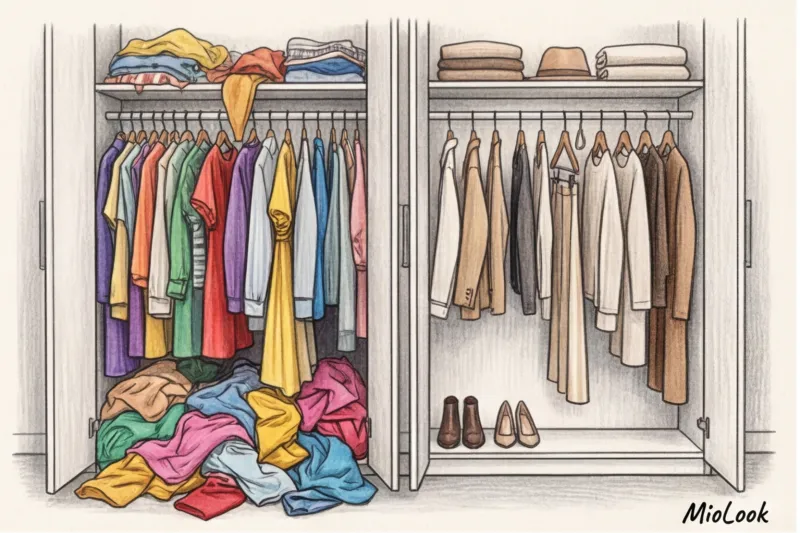
Over 12 years of working as a personal stylist in Europe, I've seen hundreds of closets bursting with clothes, but their owners still had "nothing to wear." One of my clients spent about €1,500 in a year on 40 impulse fast-fashion purchases. After a couple of months, her T-shirts were warped after washing, her knitwear was covered in pilling, and her ultra-fashionable tops were no longer flattering. When we shifted that same budget to 12 quality items, her morning stress disappeared forever.
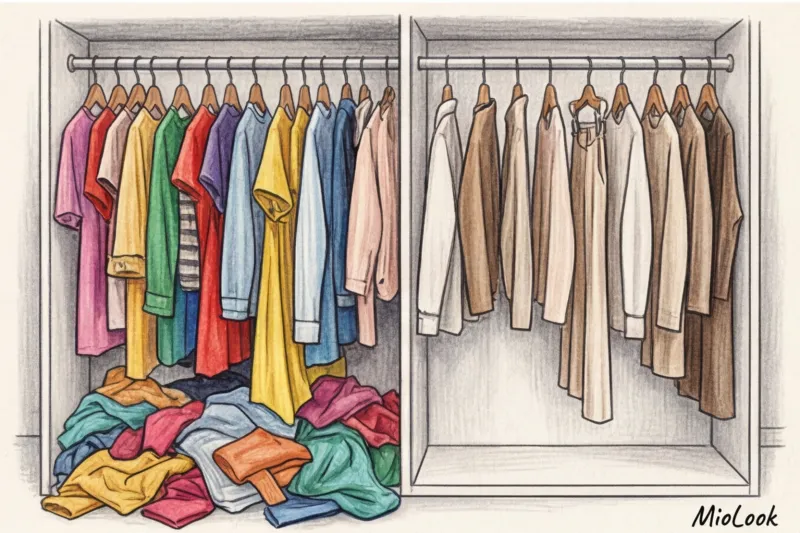
I've already covered in more detail how to build a database that won't go out of date in our detailed guide - Timeless clothing style: a wardrobe beyond trends Today we'll talk about the foundation of this approach.
Slow fashion: what it is in simple terms and why we're tired of trends
If you enter the query “ What is slow fashion? ", you'll likely find articles about global warming and saving the oceans. These are important, but for me, as a practicing stylist, slow fashion is primarily about regaining control over my appearance and budget.
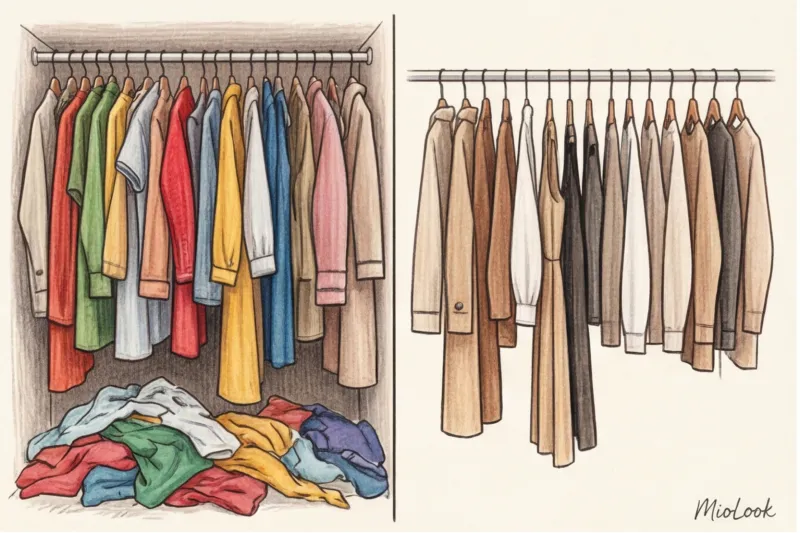
Fast fashion operates on the principle of 52 micro-seasons per year. Brands bombard us with new items every week, making us feel hopelessly behind trends. According to a 2020 report by the Ellen MacArthur Foundation, the lifespan of clothing has decreased by 36% over the past 15 years. We buy twice as much and wear things half as much.
Slow fashion is a rejection of this exhausting race. It's a concept where you build your wardrobe around yourself, your lifestyle, and your body type, rather than around what the mannequins in the store windows dictate this month. You shift from chaotic consumption to a format of 2-4 carefully thought-out seasonal capsules.
The main myth: "Slow fashion is expensive and only for the rich."
The biggest misconception I encounter is: "Katarzyna, conscious consumption means handmade linen dresses for €500 from niche eco-brands. I can't afford that.".
It's a complete illusion. Moreover, buying 100% organic cotton or recycled polyester every month for the thrill of it is still fast fashion, just disguised as green marketing. The slowest and most eco-friendly thing is the one that's already hanging in your closet.
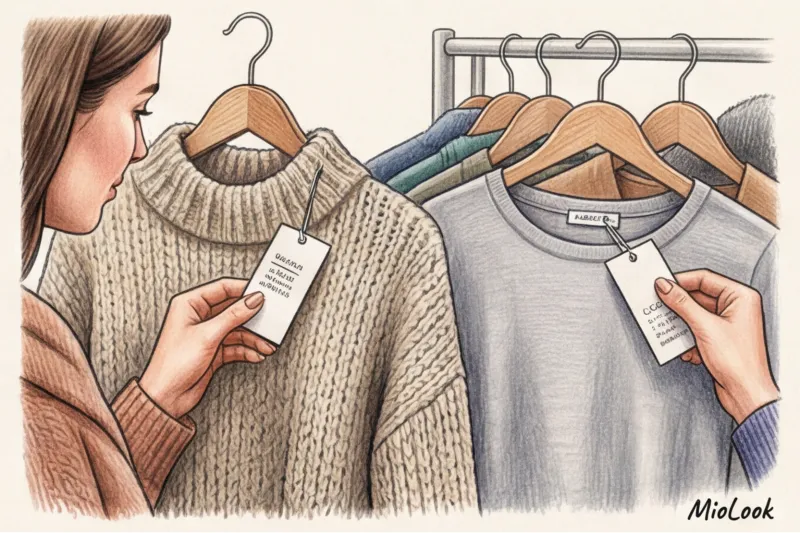
To prove that slow fashion saves money, professional buyers and stylists use metrics Cost Per Wear (CPW) — the price per exit. Let's calculate:
- Scenario 1: You buy an acrylic sweater of dubious quality for €30. According to a McKinsey study (2024), people wear such an item an average of 7-10 times before throwing it away or forgetting it in the closet. Let's say you wear it three times, after which it loses its shape. CPW = 10 €.
- Scenario 2: You invest in a basic 100% cashmere or thick merino wool jumper for €120. You wear it for three seasons in a row, 20 times per winter (60 times in total). CPW = 2 €.
A cheap item costs you five times more in actual use. Slow fashion is about math, not just ethics.
Ready to get started?
Try the free plan—no commitments required. Upload your items to the smart wardrobe and start calculating the real cost of each outfit.
Get access — €0.99 onceMass Market and Slow Fashion: How to Shop Smart at COS, H&M, and Zara
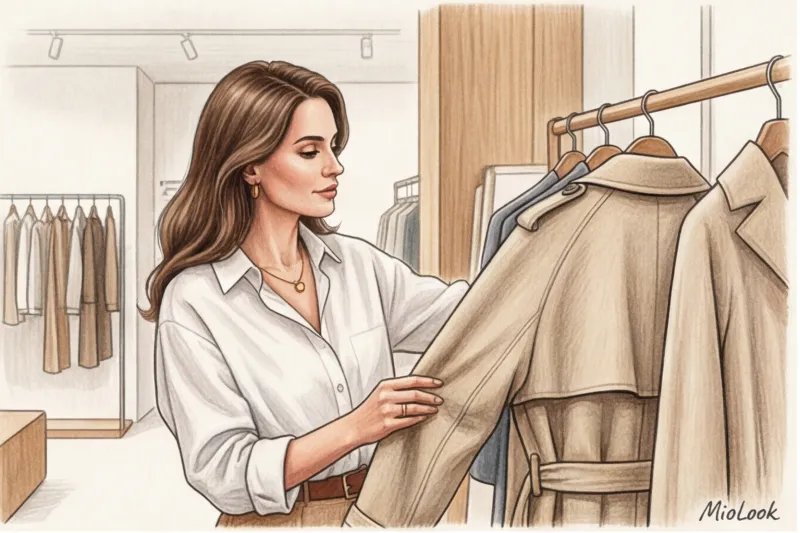
Is it possible to practice a mindful wardrobe while shopping at Zara or H&M? My answer: yes, absolutely. But only if you change your approach to shopping on the rails.
You need to learn to scan the store, ignoring disposable trends. Pay attention to premium lines: Studio or Origin at Zara, Premium Quality H&M. Brands like COS and Massimo Dutti have been building their collections closer to slow fashion principles from the start, offering more streamlined cuts.
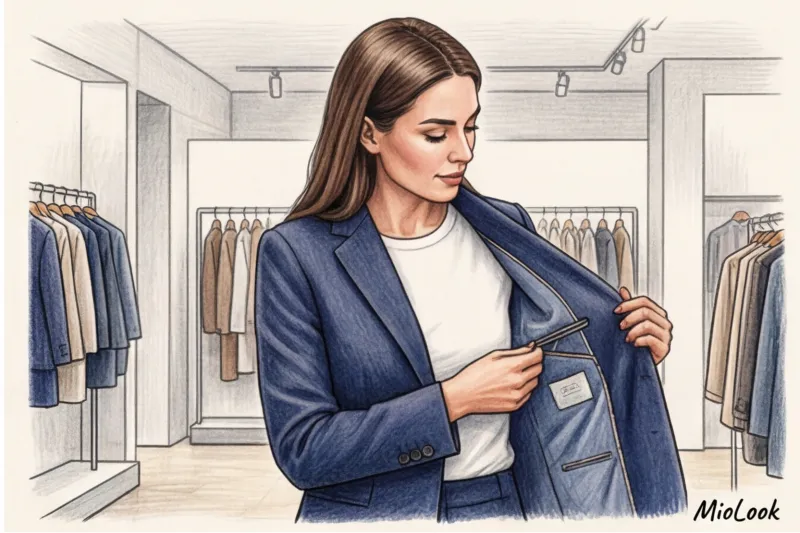
In my experience, I have developed a strict algorithm for checking any item in the fitting room:
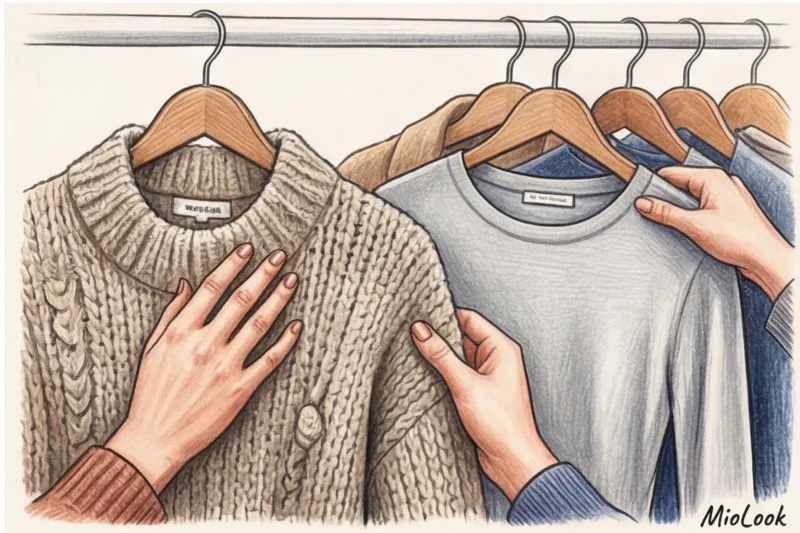
- Light test: Hold a cotton T-shirt or shirt up to a bright fitting room lamp. If you can read your phone messages through the fabric, it won't survive five washes. Look for heavyweight cotton (at least 180 g/m²).
- Pinch rule: Squeeze the fabric in your fist for 10 seconds and release. If it immediately develops deep creases that can't be smoothed out with your palm, you'll look unkempt within an hour of leaving the house. For everyday wear, look for viscose with a small percentage of elastane or a wool blend.
- Inspection of the reverse side: Seams should be closed or finished evenly with an overlock, with no loose threads. Pay attention to the lining—a high-quality jacket will have viscose, not "glass" polyester.
"This approach doesn't work if you're specifically going to the ultra-youthful trends department. Slow fashion in the mass market requires discipline: you're looking for basics, not a replica of the latest red carpet dress."
A Stylist's Checklist: How to Transition to Slow Fashion in 5 Steps
I'll share this algorithm with you during your first consultation. You can go through these steps on your own this weekend.
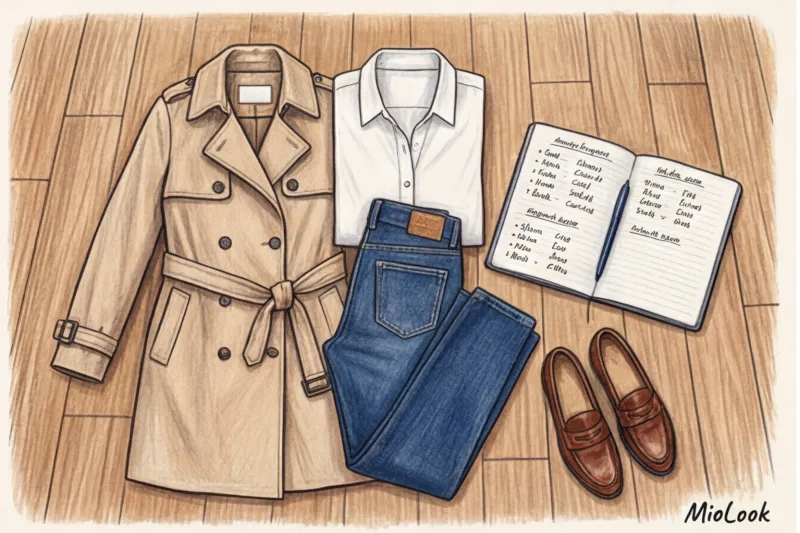
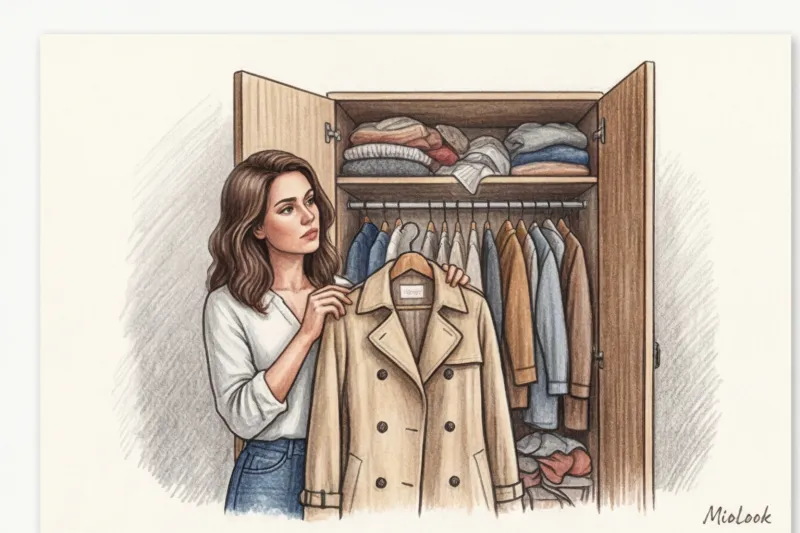
Step 1: Hard audit. Take everything out of your closet. Hang only what fits you perfectly right now (not when you lose 3 kilos). Anything that needs repair should be taken to a tailor. Anything you haven't worn for over a year should be resold, donated to charity, or recycled.
Step 2: The 30 Wears Campaign. When you're standing at the checkout with a new item, ask yourself honestly: "Will I wear this at least 30 times?" If the answer is "no" or "maybe for the New Year's office party," return the item to the rail.
Step 3: Test three images. A new item has the right to get into your wardrobe only if you can create at least 3 different outfits with it from what already exists in your closet. If you need new shoes and a top for a new skirt, that's not slow fashion, it's a trap. An app is ideal for this. MioLook — Upload a photo of an item from the fitting room to the virtual wardrobe and see how it fits with your database.
Step 4: Mastering second-hand and vintage. Many people are wary of secondhand stores because of the smell or stereotypes. But today, resale platforms (Vestiaire Collective, Vinted) offer premium items in perfect condition for 30% of the original price. The best finds there include men's jackets, cashmere sweaters, and silk scarves.
Step 5: Budget Transfer. Instead of buying four cheap t-shirts for the season for €15 each, buy one high-quality one for €60. Believe me, the difference in how it holds your collar and frames your figure will be dramatic.
Care as the hidden foundation of slow fashion
No one's saying you can ruin a €500 cashmere garment by washing it with harsh detergent at 60 degrees. The longevity of your wardrobe depends 50% on how you treat it.
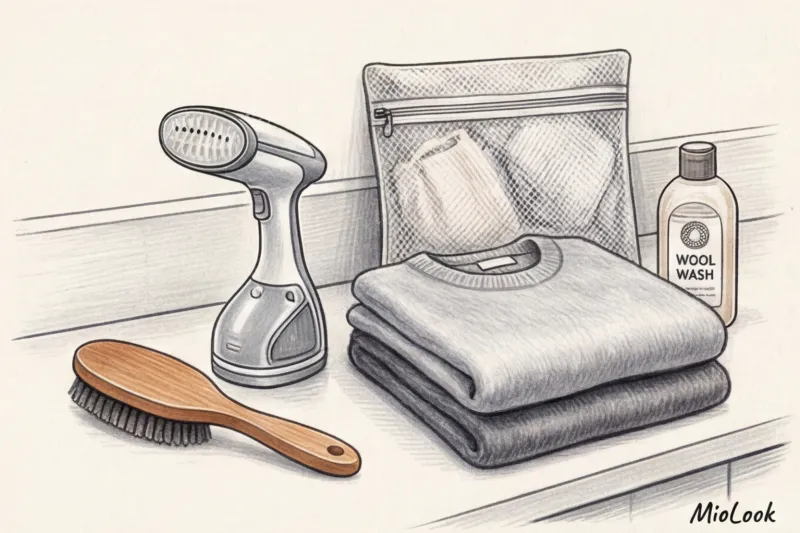
- Stop washing clothes after one wear. Jeans and wool sweaters should be aired outdoors. Frequent washing damages the fibers.
- Buy a lint removal machine (depilatory for clothes). It's a €15 investment that will bring half of your knitwear back to life.
- Replace dry cleaner wire hangers. They elongate the shoulders. Use wooden ones for heavy outerwear and thin velvet (flocked) ones for silk and viscose to prevent items from slipping.
- Invest in a handheld steamer. An iron burns away the micro-lint on fabrics, while a steamer gently straightens and refreshes them.
Your perfect look starts here
Join thousands of users who look flawless every day with this smart assistant. Organize your closet, plan your wardrobe, and create capsule wardrobes.
Get access — €0.99 onceTime Capsule: How Slow Fashion Builds Your Status and Personal Brand
A conscious wardrobe isn't just about being environmentally friendly; it's a powerful way to communicate your status. When you stop fussing over fleeting trends, your look takes on a sense of class and dignity.
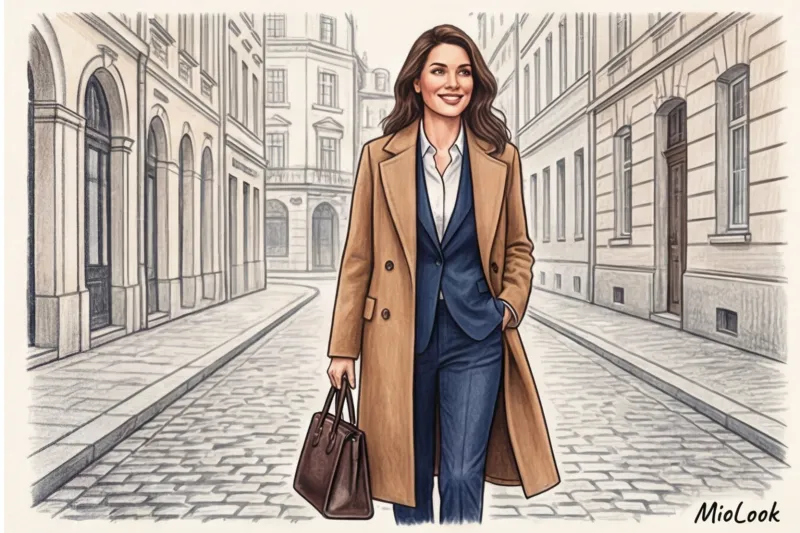
People subconsciously perceive the quality of fabric: the density of the material, the way it flows when walking (drape), the matte sheen of natural silk, or the correct fit of a suit. A business and professional wardrobe should be built exclusively on the principles of slow fashion.
For example, if you are racking your brain, What should a woman wear to a business dinner after work? With a perfectly tailored tuxedo or a thick wool sheath dress as your base, all you need to do is swap out your daytime tote bag for an evening clutch and add statement earrings. Fewer pieces equals more versatility and confidence.
Summary: Your Mindful Wardrobe Manifesto
Slow fashion is about self-respect. It's about understanding that your body deserves quality fabrics, and that your time is too valuable to waste on morning tantrums in front of your open closet and endless online sales.
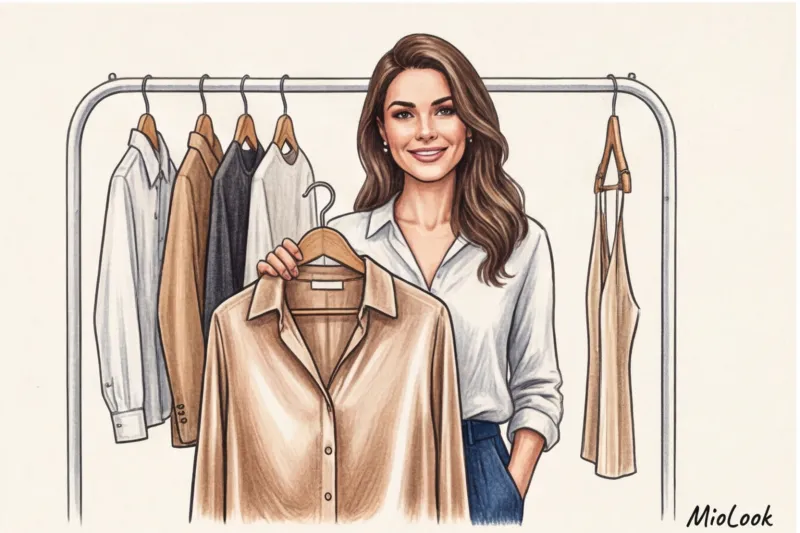
Don't try to change your habits overnight. Start small: set aside two hours this Sunday, sort out your hangers, and download the app. MioLook to digitize your database. Your goal isn't to buy another item, but to fall in love with the clothes you already own again and make them work to their full potential.