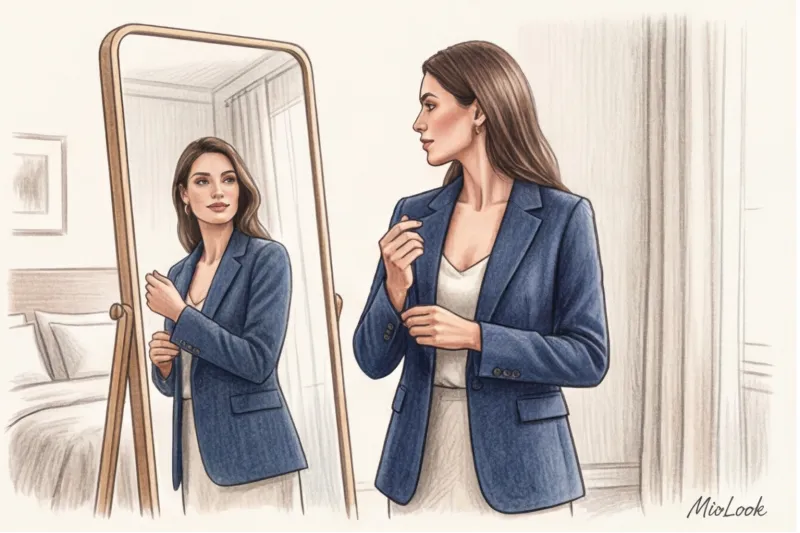
It's summer 2021. My client, Anna, is sitting in front of me on a café veranda in 30°C weather, tightly wrapped in a black knit cardigan. To my questioning look, she replies wearily, "I just hate my shoulders. I'd rather boil alive than have anyone see them." Sound familiar? Over 14 years of working as a stylist, I've heard the phrase How to hide chubby arms , from every third client. And almost always, women intuitively choose the worst possible option—trying to disguise the volume with a thick, dark "cover."
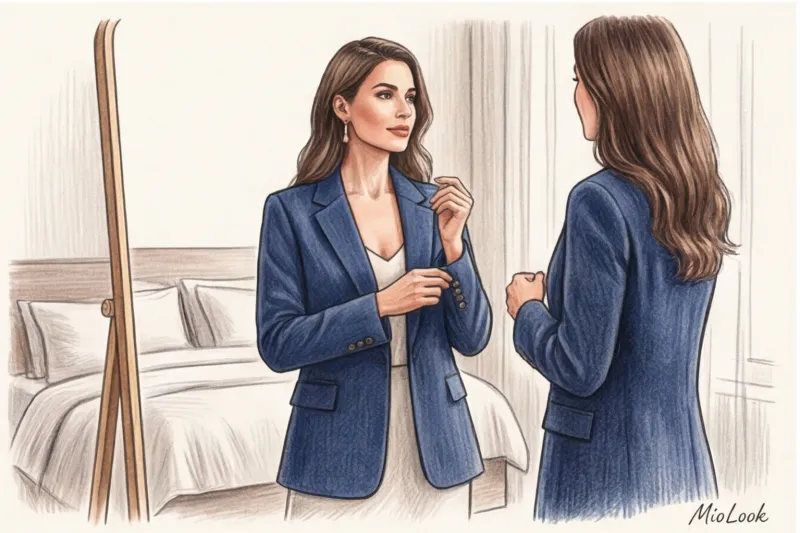
Instead of hiding the body under shapeless robes, I suggest using the laws of architectural cut and optical illusions. We discussed this in more detail in our a complete guide to visual body shaping Today we will work not as spies covering their tracks, but as directors: moving the lights, adding air, and directing the focus where we need it.
The Biggest Mistake: Why Trying to "Hide" Your Hands Makes Them Look Bigger
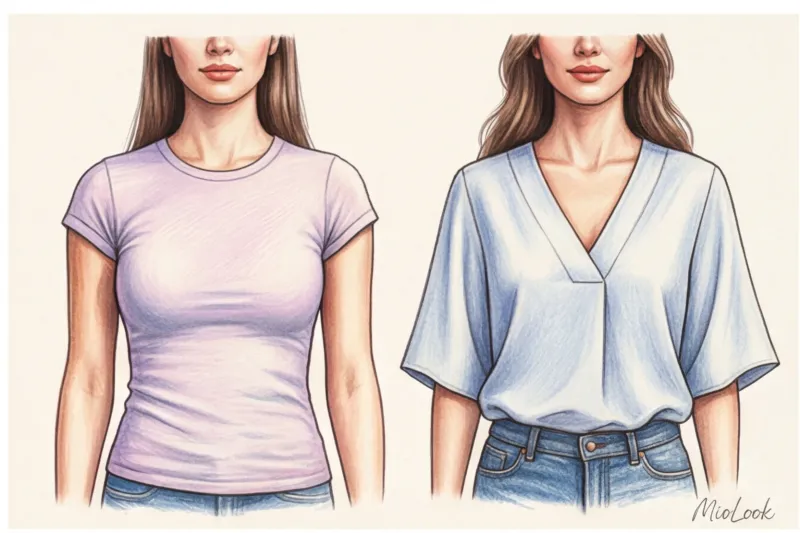
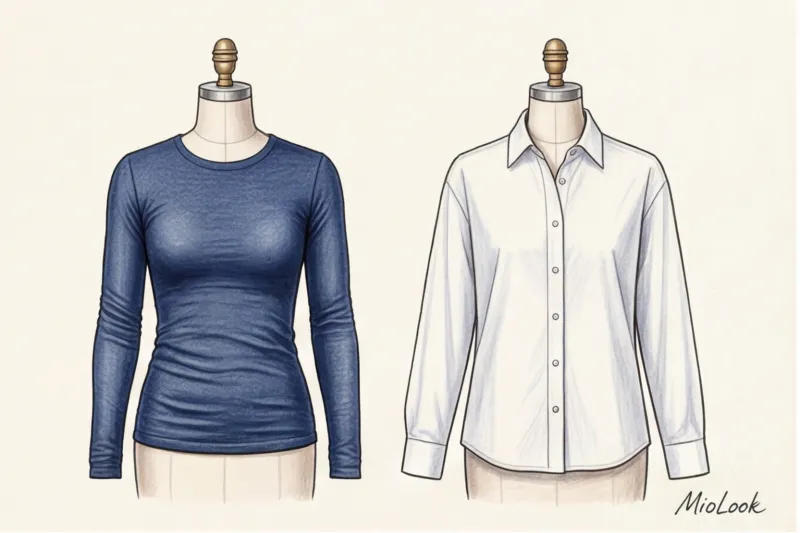
Let's dispel a popular but hopelessly outdated myth: "Everything problematic should be covered in black." As they teach in clothing design courses at Central Saint Martins, black is indeed slimming, but only when the fabric isn't stretched to the limit. If a thin knit tightly clings to a 40-centimeter bicep, others see exactly 40 centimeters, highlighted by the sheen of the stretched fabric.
This is where the most important concept of styling comes into play - air in clothes If there's not at least 1.5–2 centimeters of space between your skin and the fabric, your brain interprets the garment's dimensions as the dimensions of your body. By creating a rigid frame around your arm (for example, with a thick shirt), you trick others into thinking you have a fragile arm hidden beneath the fabric.
Don't forget about psychology either. Constantly tugging at your cardigans, crossing your arms, and slouching reveal insecurity louder than words. Clothes should allow you freedom of movement, not feel like a straitjacket.
Access to MioLook for €0.99 — one-time payment
A smart AI stylist will select the perfect look based on your proportions and preferences.
Get access — €0.99 onceDangerous styles: wings, lanterns and thin knitwear
Before building a new wardrobe, let's take stock and remove what's working against you:
- Cap sleeve: The absolute enemy of full arms. This sneaky style ends right at the widest point of your biceps, visually "cutting" it off and adding inches.
- Puff sleeves with elastic: This trend periodically returns to the runways, but in real life it adds bulk to the shoulder girdle, especially if the elastic cuts into the arm.
- Thin viscose and "liquid" polyester: Cheap knitwear (often found in the mass market in the under €20 segment) creates a “caterpillar” effect, emphasizing the slightest unevenness of the texture and seams.
Sleeve Architecture: 5 Styles to Stylishly Hide Full Arms
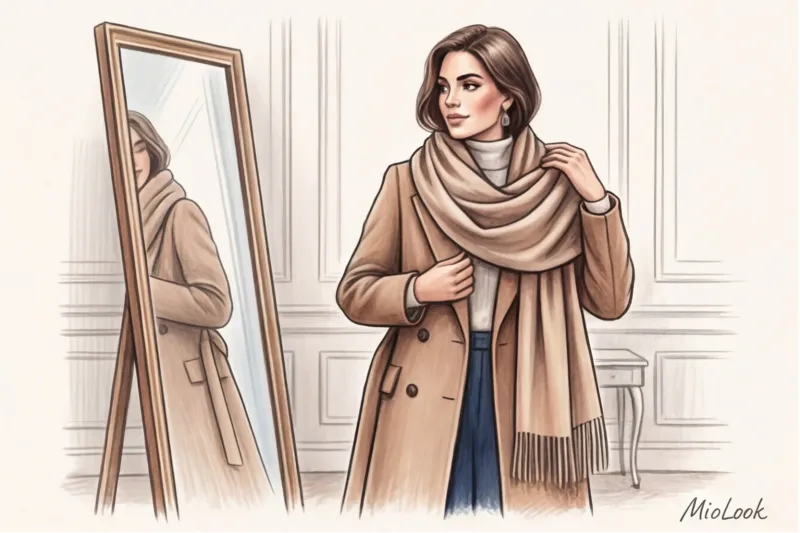
During my consultations, I always ask my clients to take selfies wearing different styles in the same lighting. The difference is striking. The main rule I've adopted for myself is: lower bound rule The sleeve hem creates a horizontal line that draws attention, so the sleeve should end where your arm tapers.
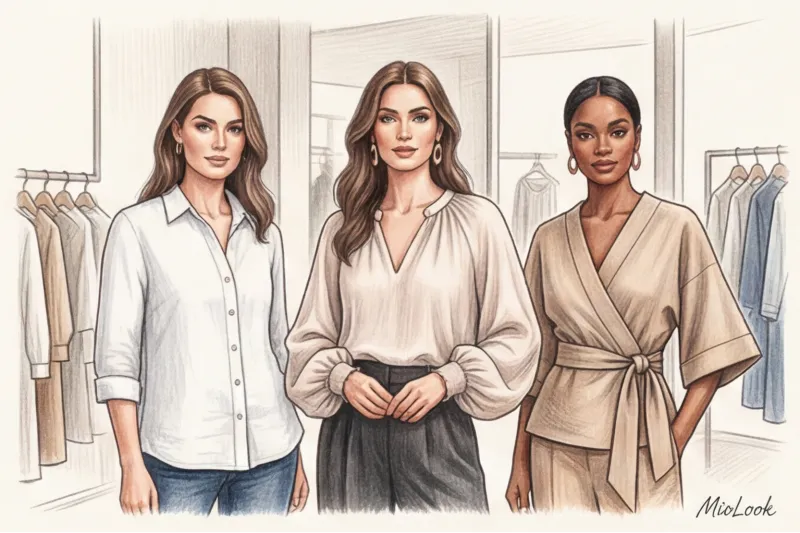
Here are 5 win-win architectural solutions:
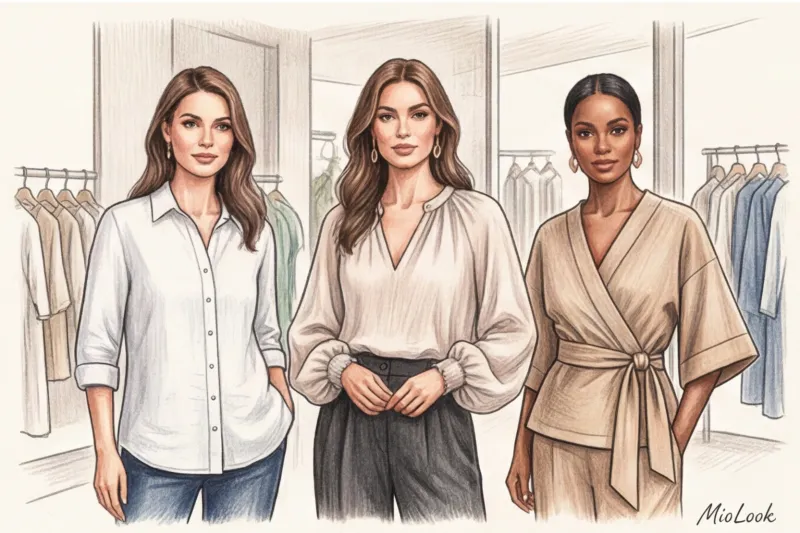
- 3/4 sleeve. A golden classic. It reveals the most graceful part of a woman's hand—the wrist and lower forearm. This creates the illusion of an overall slender silhouette.
- Structured straight sleeve to the elbow. It works perfectly on shirts made of thick poplin. It sits like a "house," creating a clean, straight line instead of rounded shoulders.
- Batwing sleeve (kimono). The soft drape under the armhole completely hides the real contours. But be careful (fair limitation): This style is not suitable for girls with very voluminous breasts (size D+), as it can create the effect of a monolithic square in the upper part of the body.
- Bishop sleeve. Wide throughout and gathered into an elegant cuff at the wrist, it looks bohemian and expensive, completely solving the volume problem.
- Sleeves with vertical slits. Diagonal or straight slits along the sleeve expose a narrow strip of skin, creating an elongating vertical line.
If you want to visualize how these styles will fit into your current wardrobe, upload photos of your items to MioLook , and the algorithm will suggest the best combinations for each day.
How to Hide Full Arms in Summer: Secret Styling Tricks
Summer is the most challenging time for those who are self-conscious about their arms. But I have a counterintuitive insight that often shocks my new clients: A properly exposed arm looks slimmer than one draped in poor fabric.
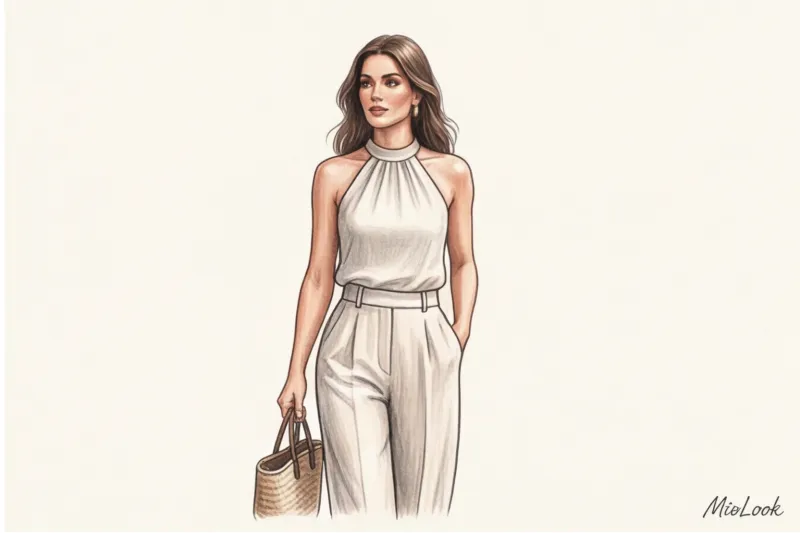
Forget about not being able to wear tank tops. You can! The secret lies in the armholes. Choose tops with a halter neck or wide straps (4-5 cm). Halter necks cut the shoulder diagonally toward the neck, visually narrowing the shoulder girdle. Thin spaghetti straps, on the other hand, will make the shoulders appear larger.
Another lifesaver in the heat is lightweight layering. Wear a high-quality silk or cotton top with wide straps and layer an unbuttoned linen or ramie shirt over it. This gives you two vertical layers (the shirt's brim), concealed forearms, and excellent ventilation. Read our article to learn how to adapt this technique for the office. Summer business attire for women in hot weather.
"The most important aspect of open tops is the right bra. If the armholes or straps dig into the armpits, they'll create bulges that ruin the whole look. Don't skimp on basic bras with a wide waistband and closed sides."
Your perfect look starts here
Join thousands of users who look flawless every day with MioLook.
Get access — €0.99 onceFabric is everything: textures that work for you
Even the most perfect cut will be ruined by poor fabric. According to the WGSN report (2024), the trend toward "structural minimalism" continues to dominate, which is only to our advantage. Clothes need to hold their shape.
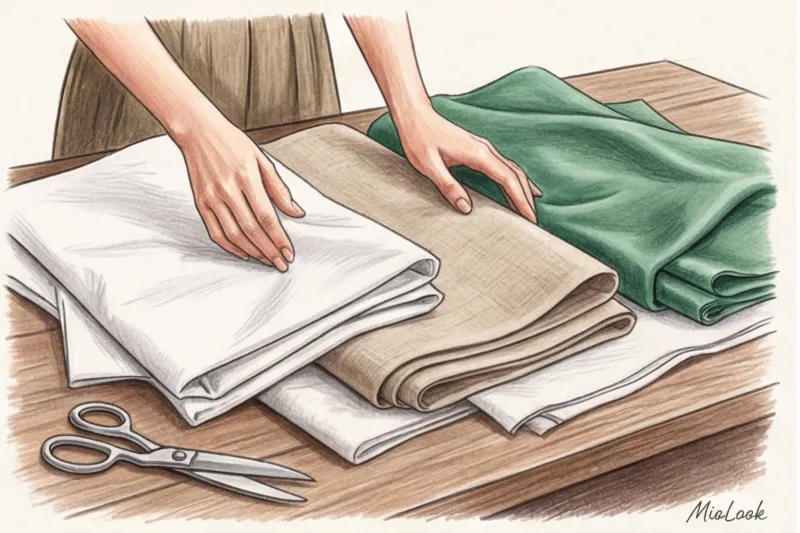
When shopping, pay attention to the weight. A basic cotton shirt that will solve your problem should have a weight of 180 to 200 g/m². International brands like COS, Arket, or Massimo Dutti offer such items in the €60–€100 price range. This is a great investment for a capsule wardrobe.
List of your best friends in the world of fabrics:
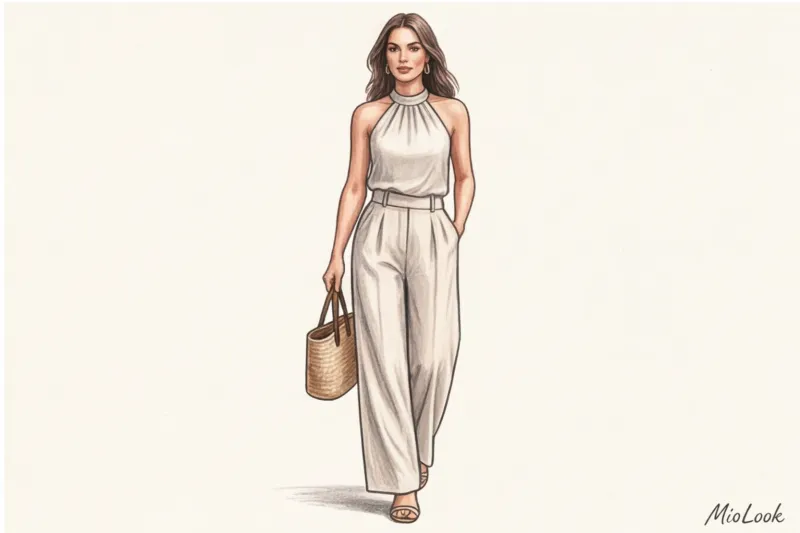
- Thick poplin and cotton: It stands firmly, does not sag, and hides everything.
- Linen with added viscose or silk: Pure linen wrinkles easily and sometimes becomes stiff, while the blended version produces a noble, heavy drapery.
- Cupro and Tencel: Fabrics that flow beautifully but have enough weight to not cling to the body.
- Matte dense silk (crepe de chine): Unlike shiny satin (which visually expands), matte silk softly outlines the silhouette without emphasizing volume.
Hocus Pocus: How to Distract Attention from the Shoulder Girdle
In styling, we constantly work with proportions. We can't physically remove the volume of arms, but we can "balance" it by directing the viewer's gaze elsewhere. This is the basis of visual correction.
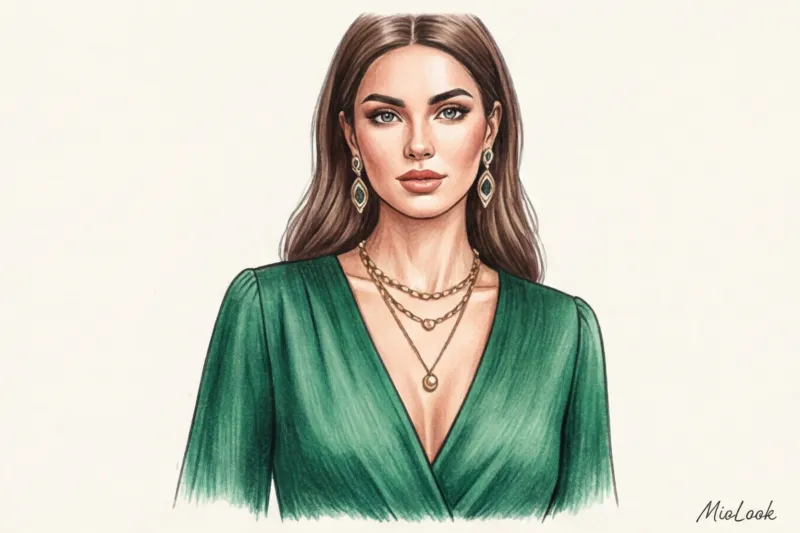
The first tool is the neckline. Deep V-shaped and U-shaped necklines are your best allies. They reveal the collarbone (one of the most graceful parts of a woman's body) and visually lengthen the neck. The eye automatically focuses on your most prominent feature, ignoring the periphery (like your arms).
The second tool is accessories. Accentuating multi-tiered chains, pendants, or large earrings. Want to learn more about choosing the right accessories? I recommend reading the article about How to combine glasses and earrings.
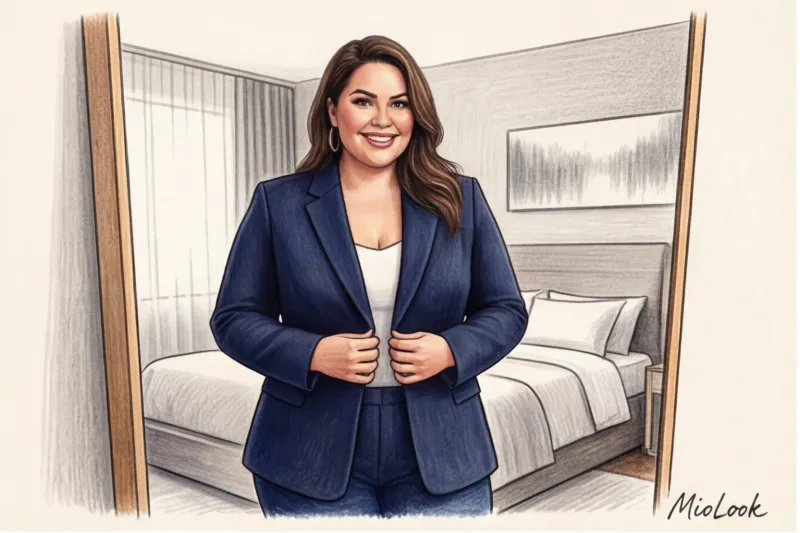
The third trick is to transfer the color and print to the lower half of the body. Keep the top neutral (for example, a navy structured blouse), and wear palazzo pants in a rich emerald shade or a skirt with a bold geometric print underneath. Well-chosen pants also work great. bags for plus size women , which are worn at hip level, balancing out the chunky top.
Checklist: The Perfect Top for a Girl Who Wants to Hide Large Arms
Save this short guide and refer to it every time you visit the fitting room. If an item doesn't meet at least three of these five criteria, feel free to return it to the hanger.
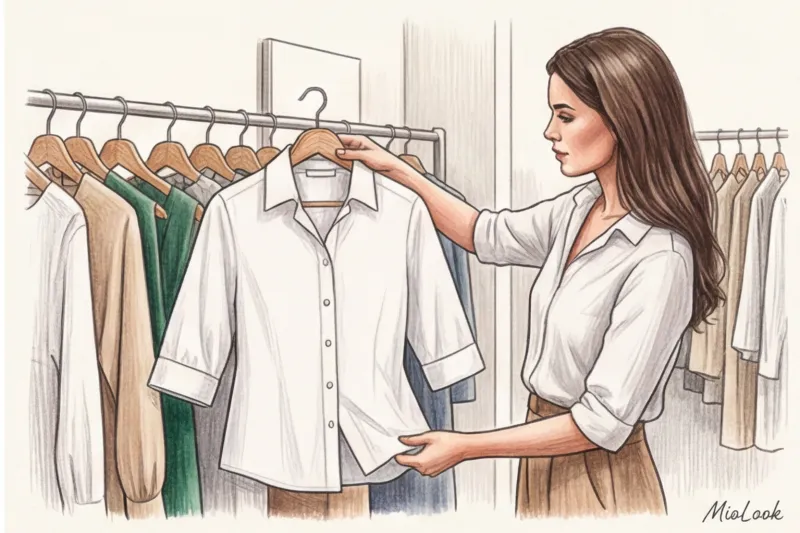
- Freedom of fit: Two fingers fit easily between your hand and the sleeve fabric.
- Fabric architecture: The fabric doesn't "flow" down your hand, but holds its own shape. If you pinch the fabric, it shouldn't feel thin like gauze.
- Bottom line: The sleeve ends above the elbow, 3/4 of the way down, or at the wrist. Never at the widest part of the bicep.
- Armhole: The armhole seam is located exactly at the joint, and does not hang down (unless it is deliberately oversized), and does not dig into the armpit.
- Portrait zone: The neckline reveals the collarbones or has a distinct V-shape.
Creating a harmonious wardrobe doesn't mean giving up beautiful things because of perceived flaws. It's about choosing what works for you. Your arms are beautiful; they hug the people you love and do so many important things. And the right clothes will simply help you feel more confident every minute of your life. Stop hiding behind boring black sweaters—allow yourself to wear structured, stylish, and breathable pieces!