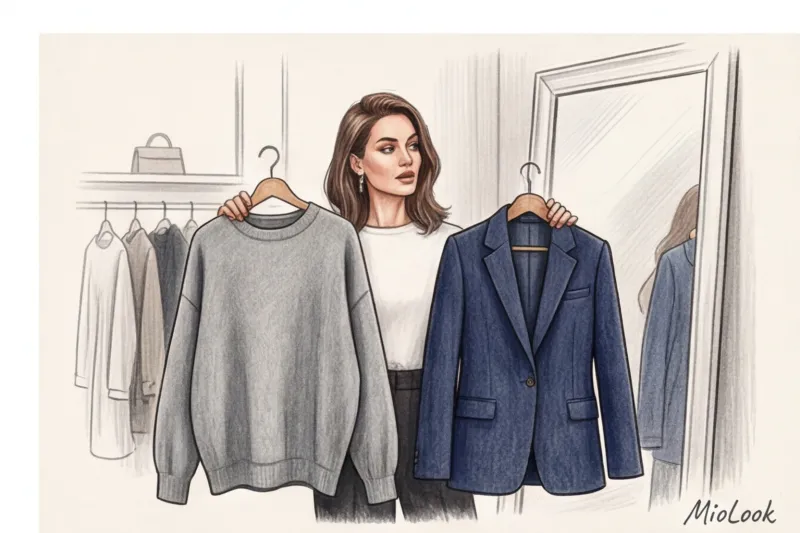
Over 12 years of working as a stylist and attending fashion weeks from Paris to New York, I've heard the same phrase hundreds of times: "Camille, I need something loose to hide my belly." And every time, I respond: to visually correct your figure, you need to stop hiding in it. This material breaks the main stereotype: that problem areas need to be covered in excess fabric. Today, we'll explore an engineering approach to silhouette construction.
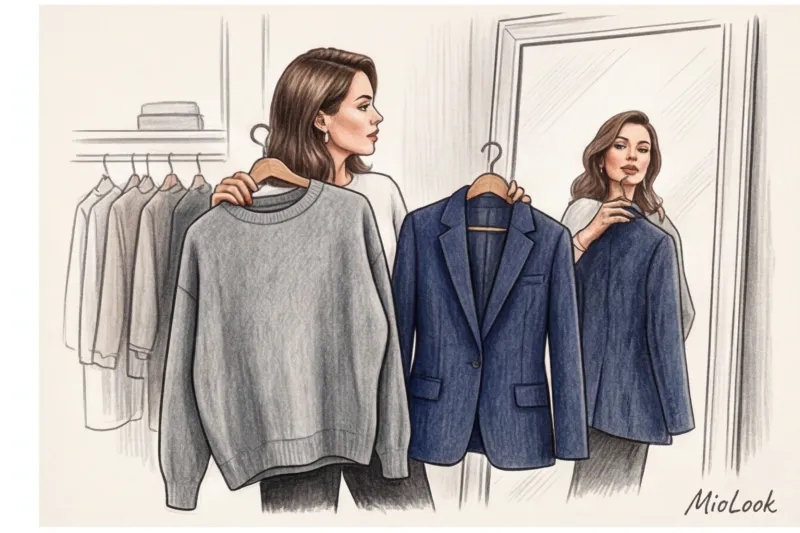
If you are looking for an answer to the question, How to hide your belly with clothes Forget about black robes. We'll be working with structured fabrics, proper fit, and guiding lines, drawing attention to the fabric rather than hiding it under layers of knitwear. We discussed the basic rules of proportions in more detail in our a complete guide to visual body shaping , and now let's focus on the most common problem.
The "Shell" Mistake: Why Oversized Clothes and Loose-Looking Pants Make Your Belly Even More Visible
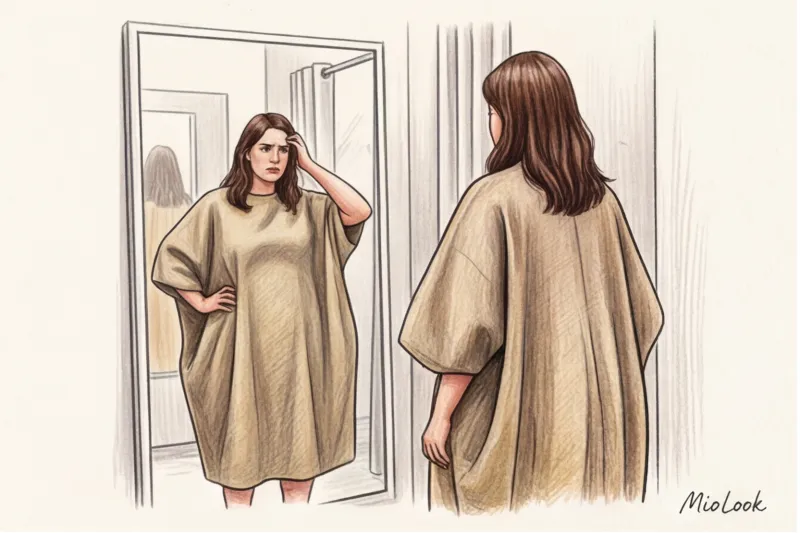
One of my clients, Anna, came to see me wearing a luxurious €800 Loro Piana cashmere sweater. She'd bought it two sizes too big to effectively hide her post-baby bump. The irony was that this soft, shapeless cocoon visually added 10 kilograms and erased her waistline.
How does our optics work? The human brain is lazy. When it sees a shapeless blob, it calculates the volume of the body beneath the fabric based on the widest point. If you're wearing an oversized sweatshirt, others will subconsciously assume your body fills it completely. A soft, curvy figure absolutely avoids additional softness. It needs a rigid, shape-defining "package."
Knitwear is a traitor: why soft fabrics highlight every contour
Thin viscose, flimsy cotton weighing less than 150 g/m², and cheap acrylic are your worst enemies. Even if you're wearing a loose-fitting T-shirt, the thin material will inevitably cling to every fold as you move. There's a huge difference between "fitting" and "contouring." Thin knits cling, revealing every detail. Heavy cottons contour, leaving a gap between the body and the garment.
Access to MioLook for €0.99 — one-time payment
A smart AI stylist will select the perfect look based on your body shape in just a few seconds.
Get access — €0.99 onceSilhouette Architecture: How to Hide Your Belly with Clothing Using Guiding Lines
Backstage at Max Mara shows in Milan, I often observed stylists altering models' proportions in five minutes. The key is creating artificial leading lines. It's the principle of theatrical spotlights: we decide where the viewer will look.
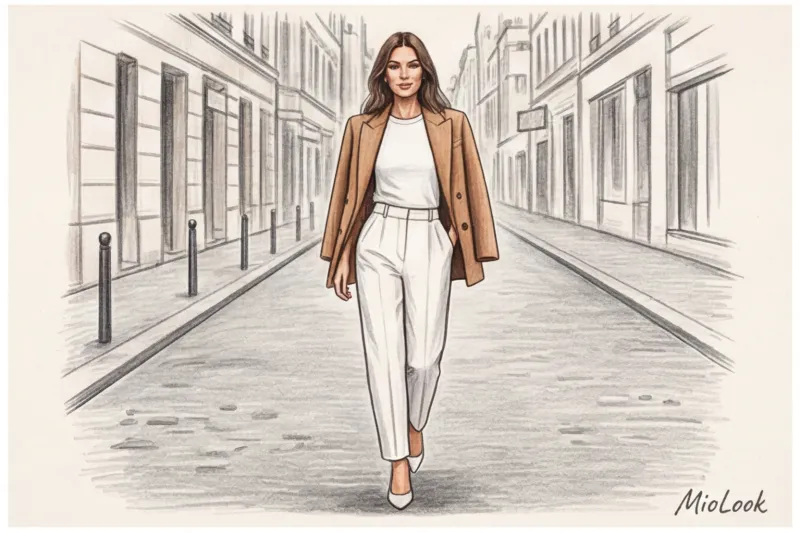
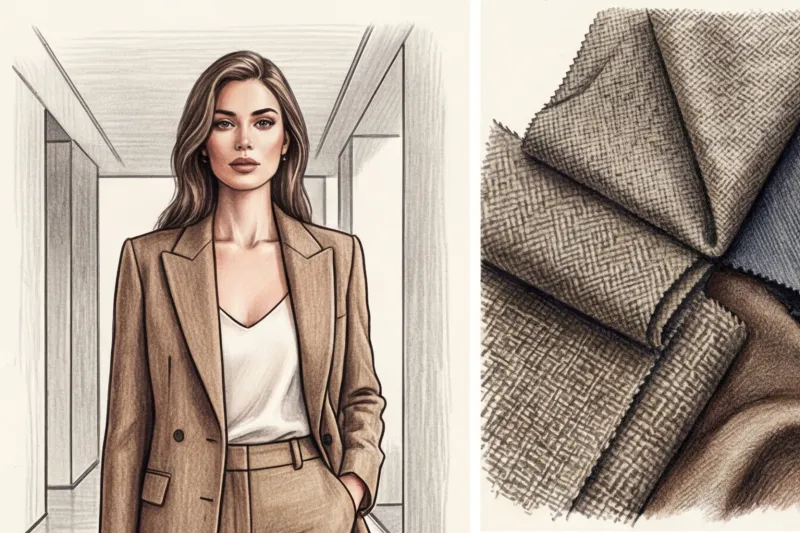
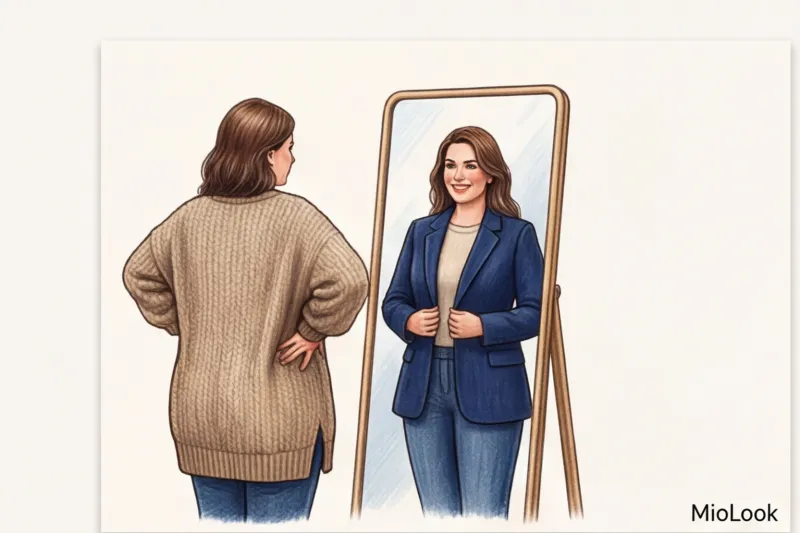
The most powerful tool is an unbuttoned jacket, a long vest, or a tightly knit cardigan. By layering an unbuttoned second layer over a basic T-shirt, you create two strong vertical lines that "cut off" the sides. The eye only perceives the width visible between the jacket flaps. To enhance the effect, use a vertical color scheme: a monochrome inner layer (for example, a graphite top and trousers) and a contrasting outer layer (a camel-colored jacket).
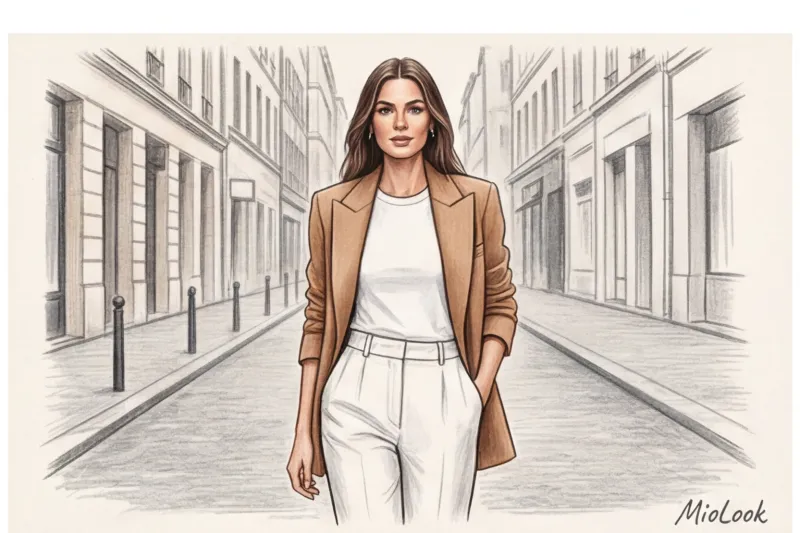
Diagonals and asymmetry are the best optical illusions.
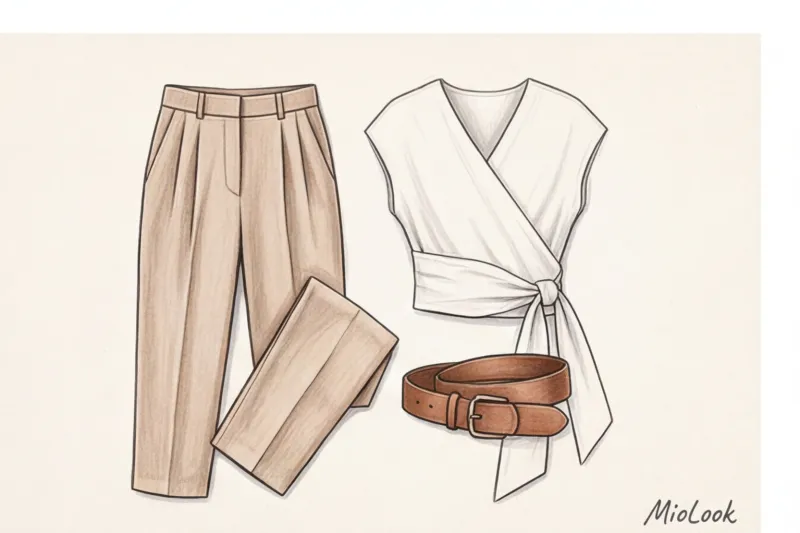
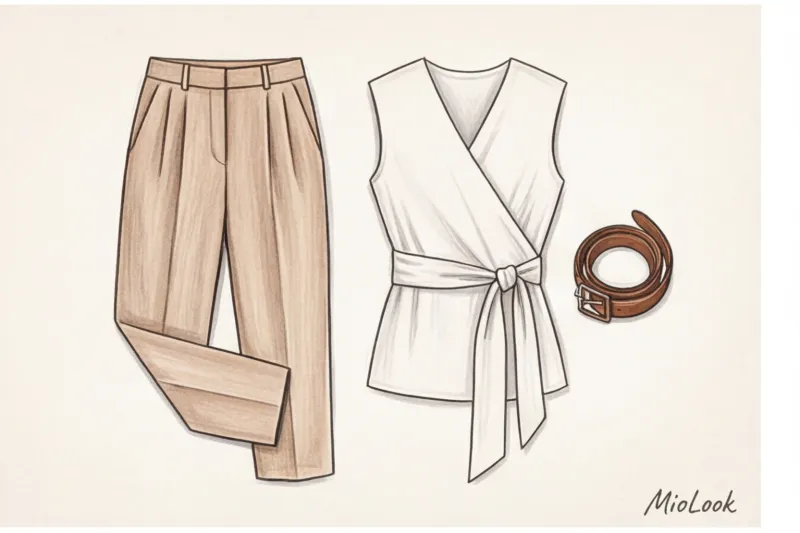
A straight horizontal line at waist level is the worst thing you can do to a protruding belly. It acts like the equator on a globe, emphasizing the widest part. Instead, use diagonal lines: wrap dresses, tops with asymmetrical hemlines, and diagonal draping. Diagonal lines draw the eye downward and to the side, ruining the illusion of volume.
Ideal styles: what to look for in stores to shape your waist and sides
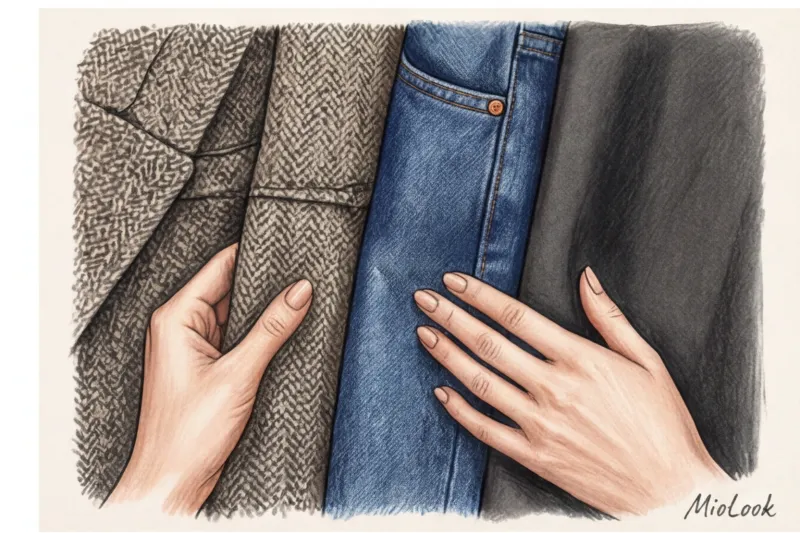
The foundation of a proper wardrobe is the perfect pair of trousers. Look for a high-waisted pair made of a thick fabric. Jeans should be 100% cotton (12-14 oz denim) or contain no more than 1-2% elastane. This material acts as a natural corset, cinching the lower abdomen.
"Architectural tailoring requires space. If there's no air between the body and the fabric, it's not clothing, it's bandages"—this principle of the great Cristóbal Balenciaga is more relevant today than ever.
Many people are afraid of pleated trousers, believing they make you look bigger. This is a myth. Proper pleats, starting from the waistband and pointed inward, create a relaxed midsection. When you sit down, the fabric doesn't dig into your body, but rather spreads out elegantly. But there is an important limitation here: This does NOT work if the tucks are stitched too low, at hip level - in that case they will actually turn into a bubble.
As for skirts, consider A-line silhouettes in thick leather, tweed, or denim, as well as straight styles with a deep slit. The slit again creates that all-important vertical line. A well-chosen accessory will help complement such a bottom, as we discussed in the article. How to choose the right women's belt for your figure.
Dresses and tops: from the perfect peplum to a semi-fitted look
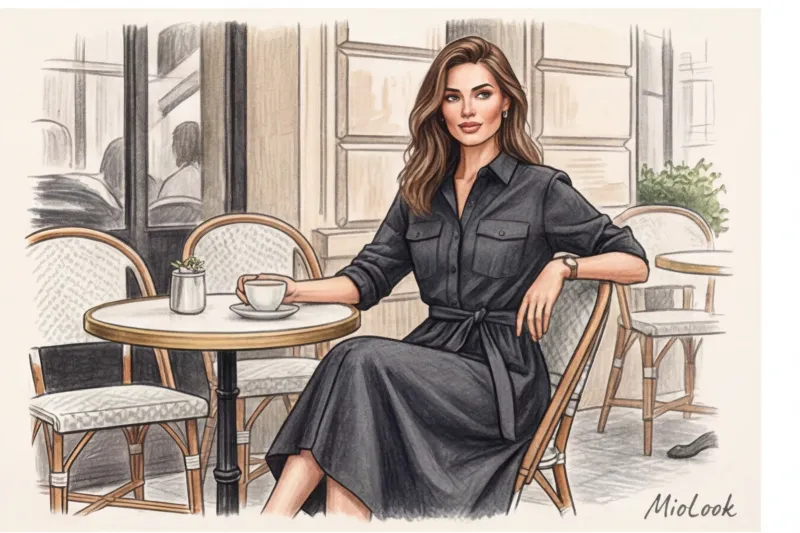
Shirt dresses in thick cotton are a surefire option. The key: don't tie the belt too tightly. The belt should just define the waist, leaving some room at the top and bottom. The peplum is also back in fashion, not the soft and wavy style of the 2010s, but a clean, geometric shape. It works like a micro-corset, perfectly covering problem areas.
Your perfect look starts here
Join thousands of users who look flawless every day with the MioLook app. Upload your items and get ready-made capsules.
Get access — €0.99 onceFabric engineering: density, texture and matte finish
According to textile reports from research company WGSN (2024), fabrics with a weight below 200 g/m² are physically unable to maintain their shape without being clinging to the body. The ideal weight for jackets, trousers, and skirts is between 250 and 350 g/m².
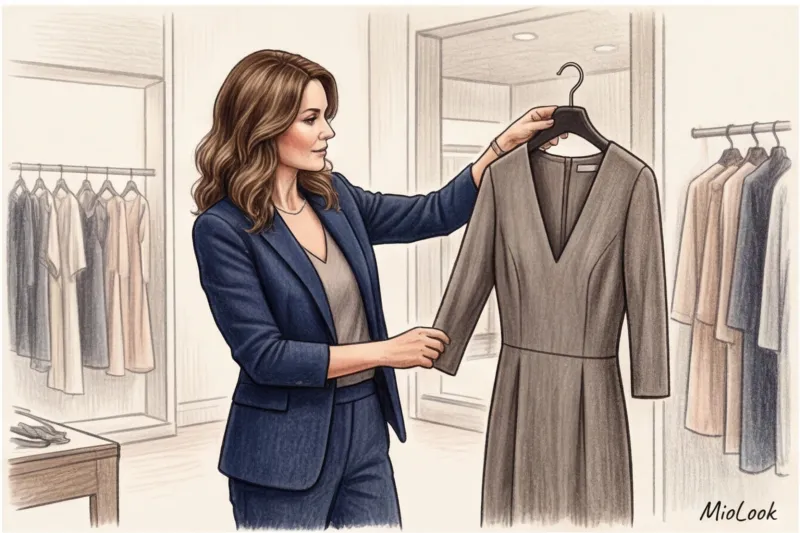
A garment should have its own weight. Try hanging trousers over the back of a chair: if they hang limply, like a rag, they'll hang loosely on you, clinging to your sides. If they retain the shape of the legs, go for it. Suit wool, heavy gabardine, and linen with viscose (to reduce wrinkling) are your allies. Even in the mass market, you can find a budget jacket for €50-70 that will hold its shape thanks to the right lining and the density of the crepe.
Another important consideration is shine. Satin, silk, sequins, and lurex are highly reflective. Any sheen visually increases volume by 10-15%. Matte textures, on the other hand, absorb light and conceal texture. If you really want a silk blouse, wear it under a matte jacket.
Lingerie Styling: When Shapewear Works Against You
The biggest mistake I see clients make before important events is trying to squeeze into shapewear that's two sizes too small. This creates a "squeezed dough" effect: the stomach may become flatter, but the bulk creeps onto the back, armpits, and thighs, creating new folds.
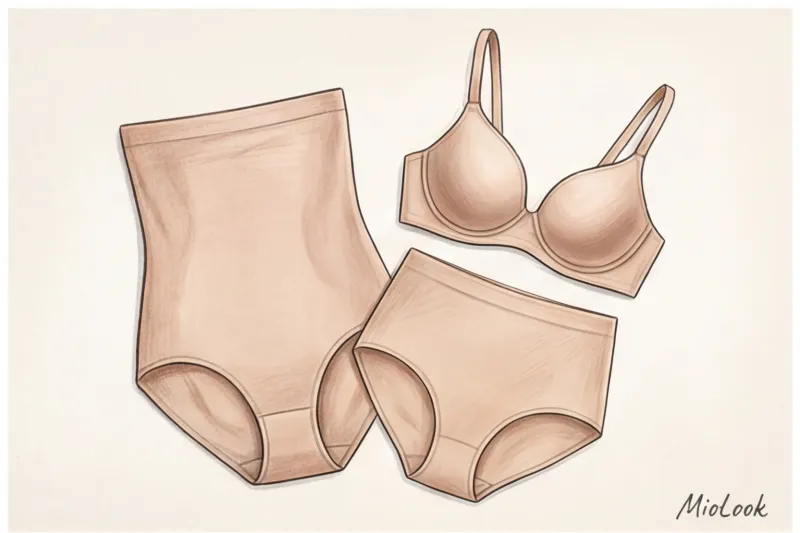
Basic underwear must end higher problem area. Seamless, high-waisted panties that reach up to the navel won't cut your stomach in half. But my main style secret lies elsewhere.
The distance between your bust and waist is critical. According to anthropometric studies, a visually slim torso requires a clear separation between these zones. A good bra that lifts your bust by the required 3-4 centimeters automatically elongates your torso, frees up your waist, and visually removes up to 2-3 kilograms of weight. Don't believe me? Check it out in the mirror.
Stylist checklist: creating a look that will make you forget about your belly
The perfect outfit is one that doesn't require you to control your breathing all day. To make sure you've put together the look correctly, run through this checklist before heading out:
- Density test: Does the item hold its shape on its own?
- Air rule: Is there a gap of at least 2-3 centimeters between your body and the fabric at the waist?
- Focus Shift: Where does the first glance fall? Draw attention away from your waist with a bold accent in the portrait area (large earrings, a silk scarf around your neck, interesting eyeglass frames) or statement shoes. If you love chunky boots, be sure to read Who suits chunky shoes? to balance the lower part of the figure.
Let's be honest: no cut, no matter how ingenious, will transform a size 50 into a size 42. And that's perfectly normal. Our goal isn't to deceive others, but to create a harmonious, balanced proportion that makes you feel in control. Trust the wardrobe math to the app. MioLook , choose thick fabrics, use guidelines - and you'll forget about having to suck in your stomach every time someone takes out a camera.