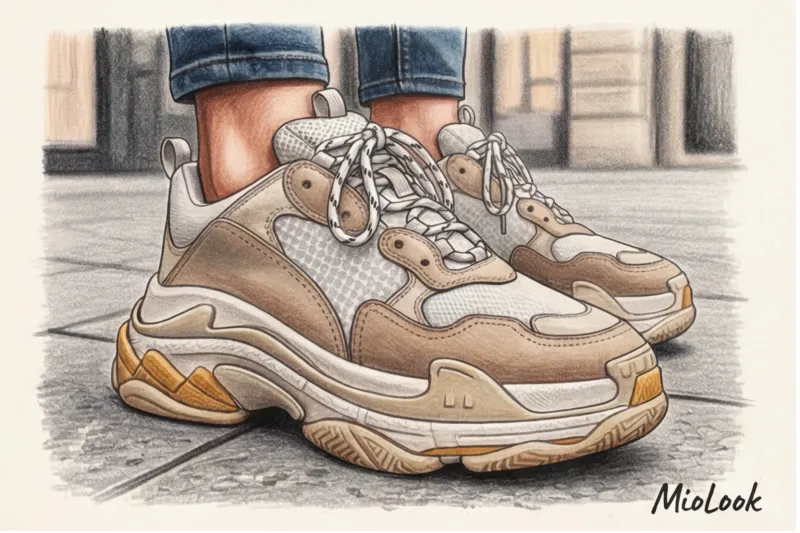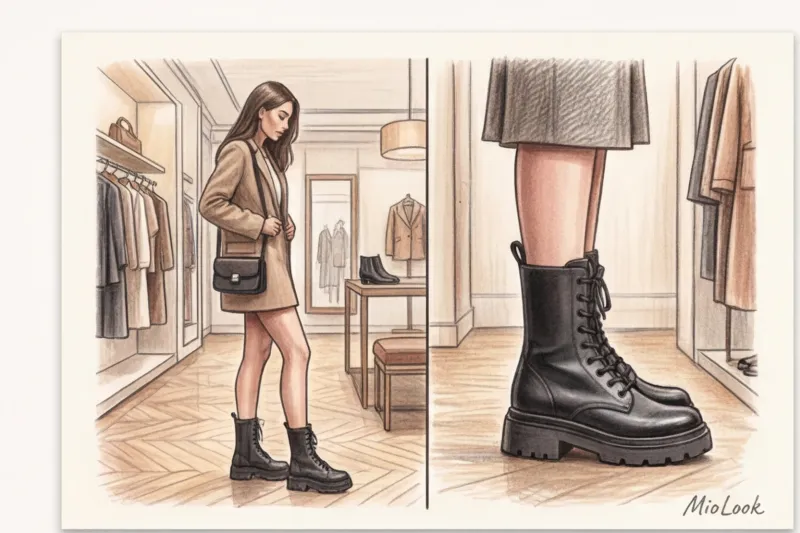
Have you ever noticed how the same pair of chunky boots can transform one woman into a fragile street style icon, while another looks squat and barely able to take a step? Glossy magazines have been telling us for years: "Buy tractor soles; they make your feet look like matchsticks." As a practicing stylist working with the premium segment, I have to tell the truth: this is a semi-myth.
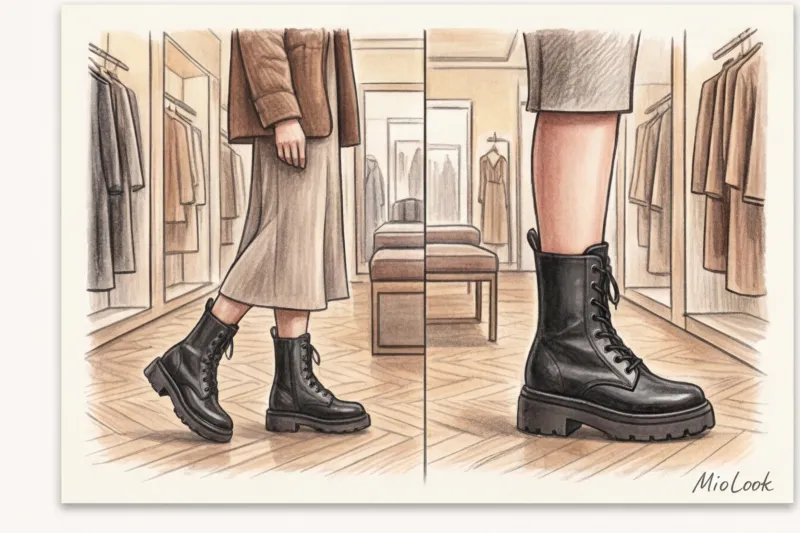
Answer to the question, Who suits chunky shoes? , lies not in blindly following trends, but in the strict laws of body architecture. If the visual weight of shoes isn't offset by the volume of outerwear or the right hem, you'll create an "anchor" effect, pulling your figure down. We've already covered the fundamental rules of proportion and optical tricks in more detail in our complete guide: Ideal accessories for your body type: selection rules Today we'll examine the anatomy of chunky shoes under a microscope.
Who suits chunky shoes: anatomy and visual illusions
The Ebbinghaus illusion underlies how we perceive volume: an object appears smaller when surrounded by larger objects. This is why a foot in a huge shoe is subjectively perceived as miniature. But the human eye perceives the entire silhouette, not just the ankle.
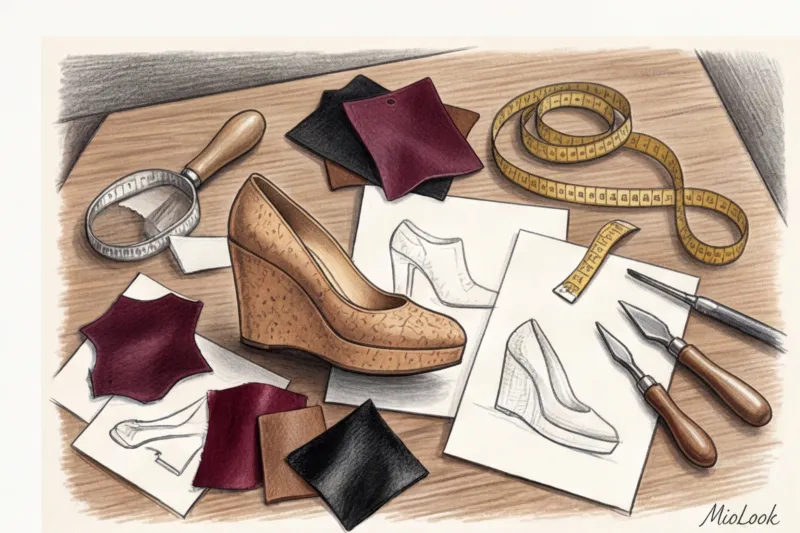
While working with Italian shoemakers in the Marche region (the historic center of Italian leather craftsmanship), I observed how craftsmen create lasts. They don't simply scale rubber. For the proper fit of chunky shoes, the width of your ankle is critical. If you have a thin ankle and delicate calves, chunky shoes with a wide shaft will truly create that "pencil in a glass" effect, emphasizing your fragility.
But if you have a thick, athletic calf or a wide ankle, shoes that end at the widest part of your foot will mercilessly "cut" it and add extra pounds. Here, careful attention to the shaft height is required—it should extend under your trousers or end just below the narrowest part of your calf.
Height and foot size: the mathematics of style
There's a golden rule for petite women (up to 160 cm tall). Many of my short clients instinctively gravitate toward 7-8 cm platforms, trying to appear taller. The result? A "puss in boots" silhouette. To prevent chunky shoes from swallowing up your height, limit the sole thickness to 3-4 cm.
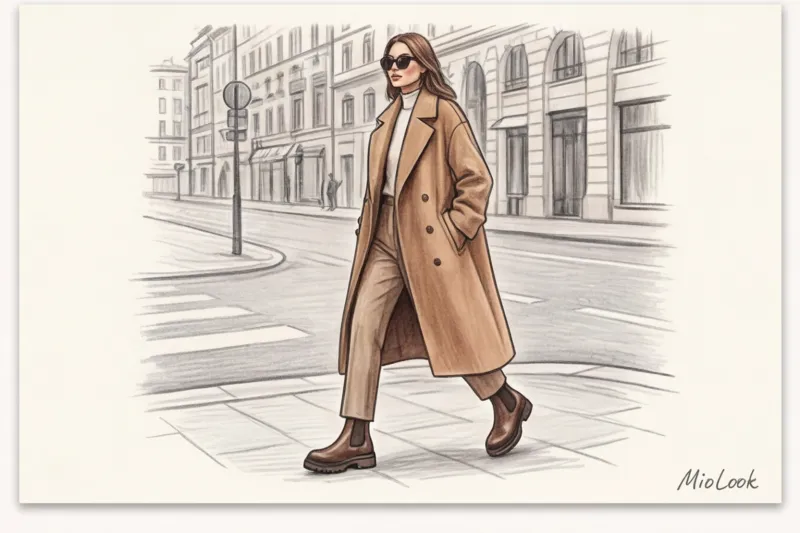
But for those with a foot size 40+, a flared sole is a real lifesaver. The chunky toe cap and protruding welt steal all the attention, visually reducing the actual length of the foot. In quality boots, a size 41 looks like a neat size 38, just with a fashionable "bump."
Your perfect look starts here
Join thousands of users who look flawless every day with MioLook. The smart AI stylist will help you balance your proportions.
Get access — €0.99 onceThe main myth: "A thick sole always makes your legs look slimmer."
Let's bust a major stylistic stereotype. The idea that contrasting chunky shoes always makes you look slimmer is a fallacy that has ruined dozens of looks.
I had a telling case in my practice. My client, Elena, with a feminine pear-shaped figure (narrow shoulders, voluminous hips), tried to hide her full calves with chunky Chelsea boots. She wore tight skinny jeans and heavy boots. The result was disastrous: a "dumbbell" effect developed. Her overly narrow knees, contrasting with her enormous feet and wide hips, made her lower half appear monumental.
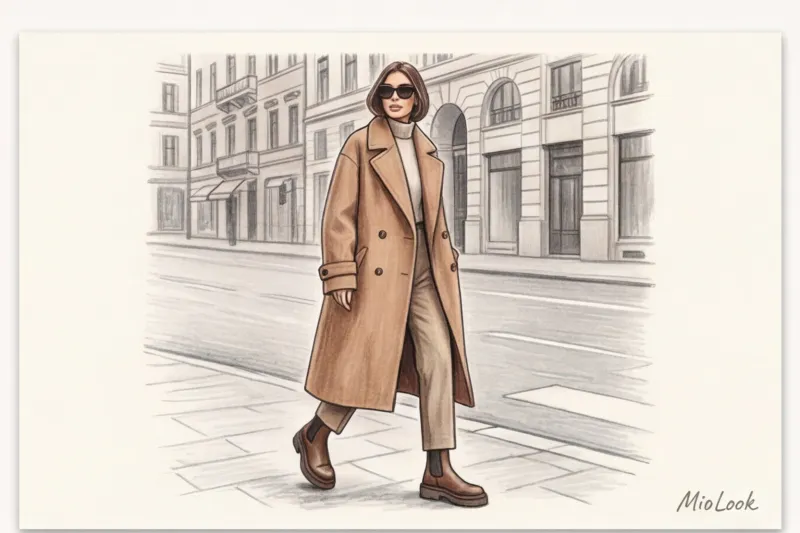
This is the "anchor" effect. When you wear heavy shoes with a tight bottom, all the visual weight falls downwards. The person's gaze involuntarily drops to your legs, making your hips appear wider than they actually are. Instead of a sharp contrast, figures with a strong hip profile need a smooth transition of volume—for example, straight jeans or flared trousers that fall softly onto a chunky toe.
How to Avoid Adding Weight to Your Lower Body: 4 Rules of Balance
At Milan Fashion Week, designers masterfully tackle the issue of visual weight. If you look at the Prada or Jil Sander collections, you'll never see heavy shoes on their own—they're always balanced.
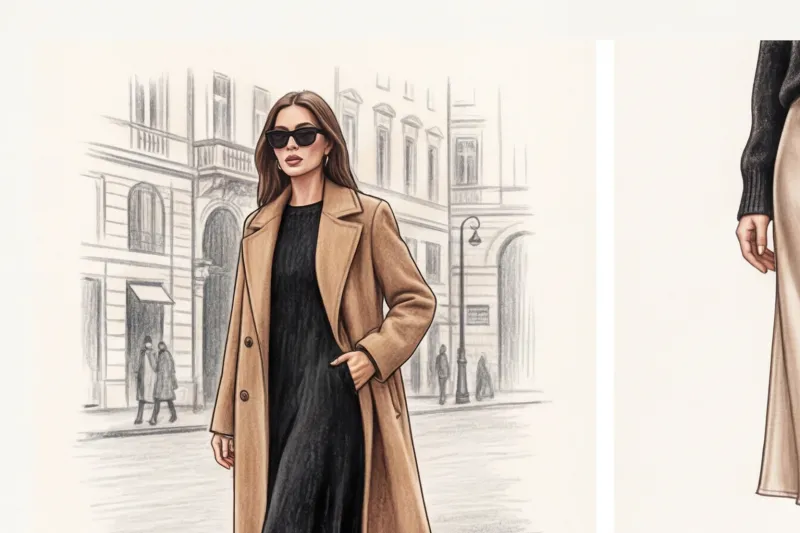
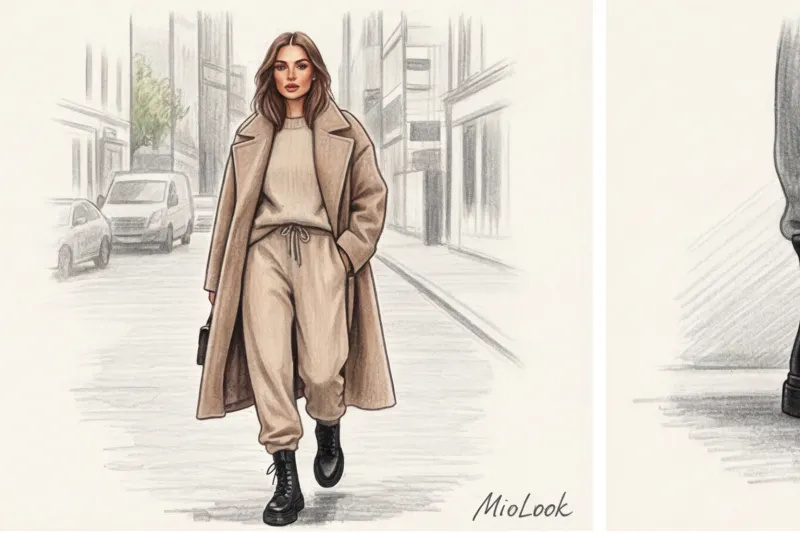
- Architectural top: If you have a strong base below, you need structure above. An oversized jacket with shoulder pads, a cocoon coat, a voluminous chunky knit sweater. We create balance between the shoulder girdle and the feet.
- Play of textures: My favorite styling trick: mix the rough calfskin of the boots with flowy fabrics like silk, chiffon, and satin. An airy skirt neutralizes the aggressiveness of the "tractor" boots.
- Single color vertical: Chunky black boots + black opaque tights (80 denier and higher) + a black skirt. This creates an endless leg line. Avoid nude tights with black boots—it'll cut off your height horizontally!
- Open ankles in warm season: If you're wearing thick-soled loafers in the spring, cropped trousers should reveal 2-3 cm of bare ankle. This is the point of assemblage, which shows off the graceful leg beneath the chunky shoes.
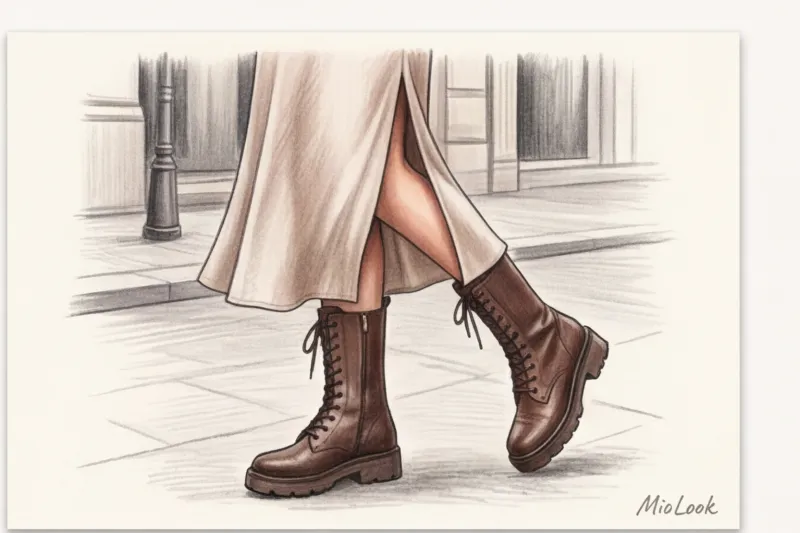
Length Matters: Working with Hems
The length of your skirt or trousers determines 80% of your success. If you choose a midi skirt, there should be at least 3-5 cm of visible leg (or tights) between the top of your shoe and the hem. If the hem overlaps the shaft of a bulky boot, your figure will instantly lose its airiness and become a rectangle.
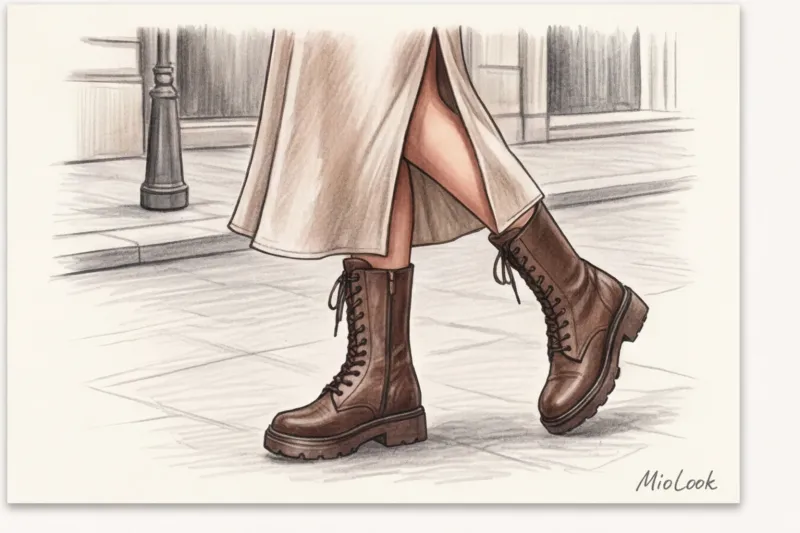
For maxi lengths (especially the trendy palazzo and wide-leg jeans), the rule is reversed: the leg should flow freely over the shoe, completely covering the shaft. Only the rugged toe and the edge of the thick sole remain visible. This is the perfect technique for elegant looks after 40 , as it lengthens the legs and adds status without losing comfort.
Ready to get started?
Try the MioLook free plan—no commitments required. Create your digital capsule and plan your looks in one click.
Get access — €0.99 onceInvesting in Quality: How Luxury Massive Shoes Differ from Mass-Market Products
This brings us to the most important question I often consult with clients about. Why do some chunky boots cost €80, while others cost €800? And is it worth the extra cost?
The answer lies in technology and your health. According to WGSN research (2024), premium consumers value orthopedic comfort as much as design. Cheap mass-market shoes use heavy rubber or dense polyurethane for their soles. A single shoe like this can weigh up to a kilogram! Wearing them puts enormous strain on your knees and lower back.
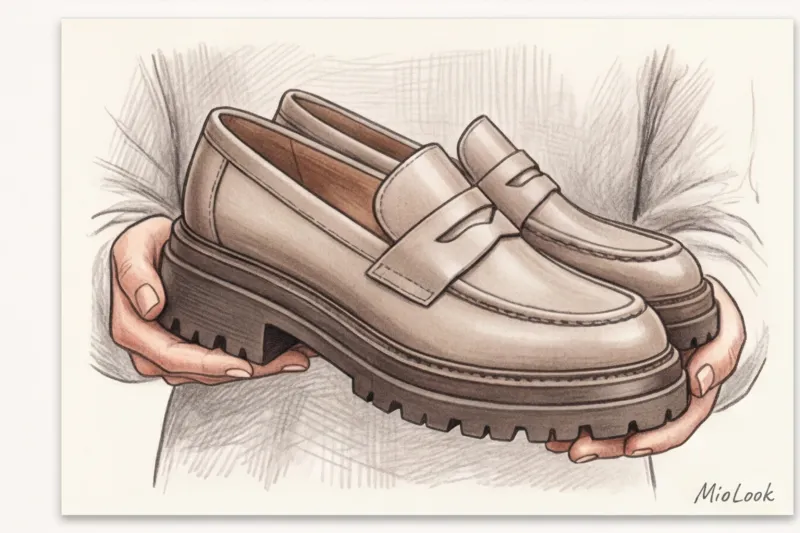
Luxury brands (Bottega Veneta, Prada, The Row) achieve gigantic volumes using innovative EVA (ethylene vinyl acetate)—an ultra-lightweight, shock-absorbing foam. The shoe looks like a solid rock but weighs no more than your slippers. Furthermore, the gold standard of quality is the use of patented Vibram soles, which guarantee impeccable traction and a correct foot roll.
"Three things give away the quality of shoes: the weight of the sole, the matte finish of the hardware, and the smell of the leather. The cheap shine of leatherette and jingling locks instantly ruin the status of the entire look, even if you're wearing an expensive cashmere coat."
Hardware is no less important. Where do inexpensive shoe manufacturers skimp? On zippers and eyelets. You can read more about these nuances in the article. 10 Signs of Cheap Clothing: Where Brands Cut Costs My advice: if your budget is limited (in the €100–€150 range), look for simple styles without unnecessary buckles, chains, or embellishments. The cleaner the design of chunky shoes in the budget segment, the more expensive they look.
Typical styling mistakes my clients avoid
Even the most expensive and lightweight pair can be ruined by improper styling. Here are the top three mistakes I regularly discuss during my consultations:
- Mistake 1: A tight, form-fitting silhouette with huge boots. A thin turtleneck + skinny jeans + chunky grinders. You'll create a disproportionate look, turning your feet into skis. Solution: throw a loose, menswear-style jacket over the turtleneck.
- Mistake 2: Cropped tapered trousers. If trousers taper to the bottom and end right above a chunky boot (without a gap), they visually split the leg in half at the most unflattering point. Replace them with straight, full-length styles.
- Mistake 3: Ignoring facial architecture. This is something few people talk about. If you have very small, delicate, romantic features (Kibbey's Gamine type), overly rough combat boots will overwhelm your appearance. Your face will simply be lost against the aggressive grunge backdrop. You're better off choosing loafers with a moderately thick sole rather than rugged combat boots.
Action Plan: Perfect Integration into a Status Wardrobe
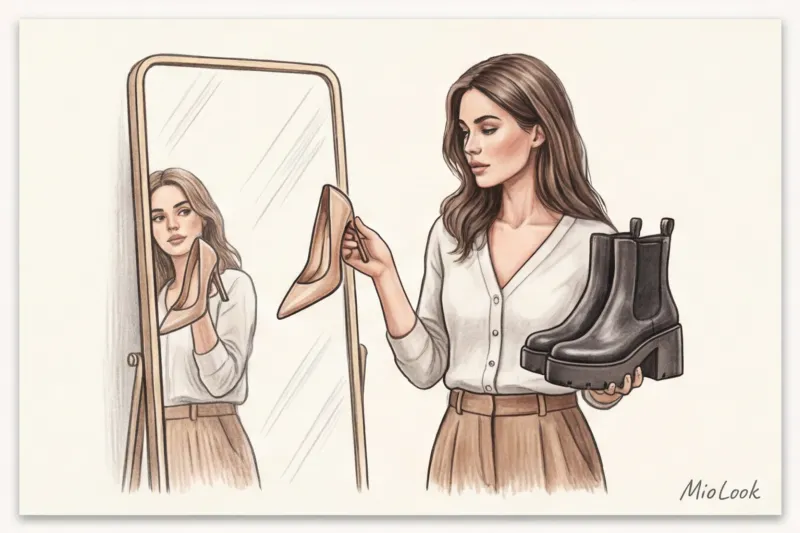
If you're just starting out with the chunky trend and are worried about making a mistake, start with basic loafers with a thick sole (3-4 cm). They're the safest, most elegant, and most versatile alternative to chunky boots. They fit perfectly with capsule wardrobe and do not violate the rules of the smart-casual dress code.
For a Friday at the office where everyone wears jeans but you want to look a little more put-together, pair these loafers with straight-leg trousers, a basic white t-shirt in a crisp cotton, and a structured blazer. This look is timeless and fashionable.
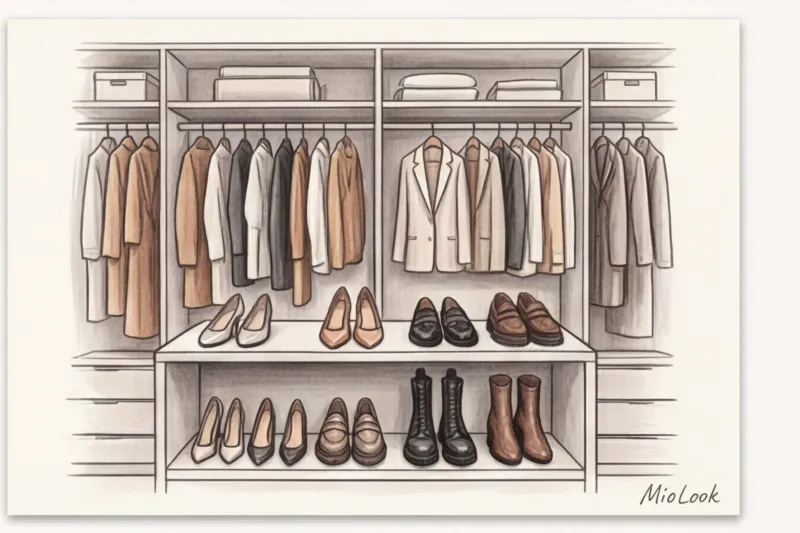
Chunky shoes aren't just a passing TikTok trend, but a powerful tool for sculpting your figure. They require mathematical precision in choosing the length of your trousers, assessing your ankle width, and balancing your top volume. If you're unsure whether the proportions in your closet will work, take a photo of the outfit with your phone. Use MioLook: Upload your items, and a smart AI algorithm will help you create balanced combinations where chunky shoes will work with your elegance, not against it.
Don't be afraid of volume—beware of poor proportions and cheap, heavy materials. Choose quality that respects your posture and play with contrasting architectural forms.