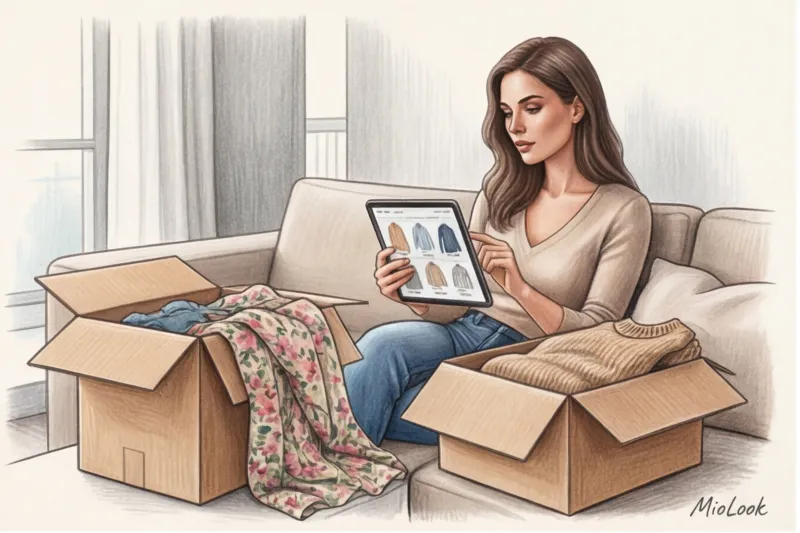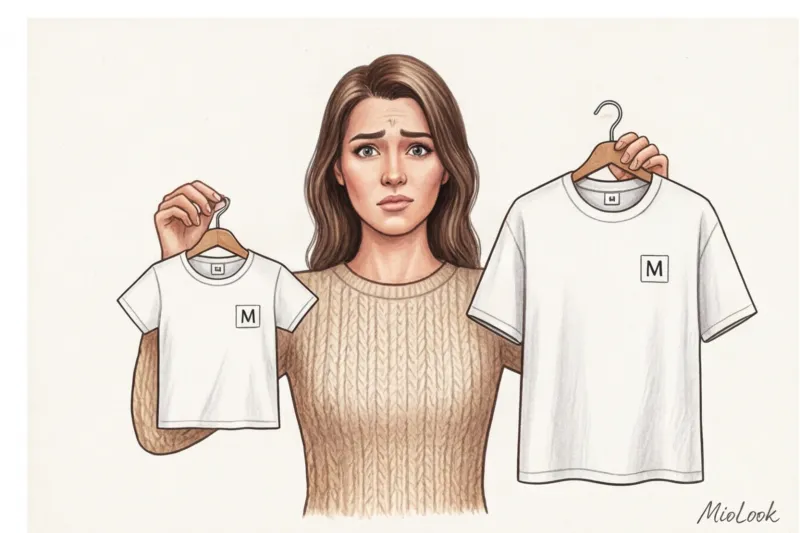
Last month, I was tearfully packing a stunning €300 wool coat from a Scandinavian brand back into its box. I ordered my usual size L, naively believing that international sizes were a constant. In reality, I sank into it like I was wearing a tent. And I'm not alone. We've already covered this pain and systemic errors in more detail in our The complete guide to buying clothes online without returns , but today I want to dig deeper. Into the very essence of the numbers on the tag.
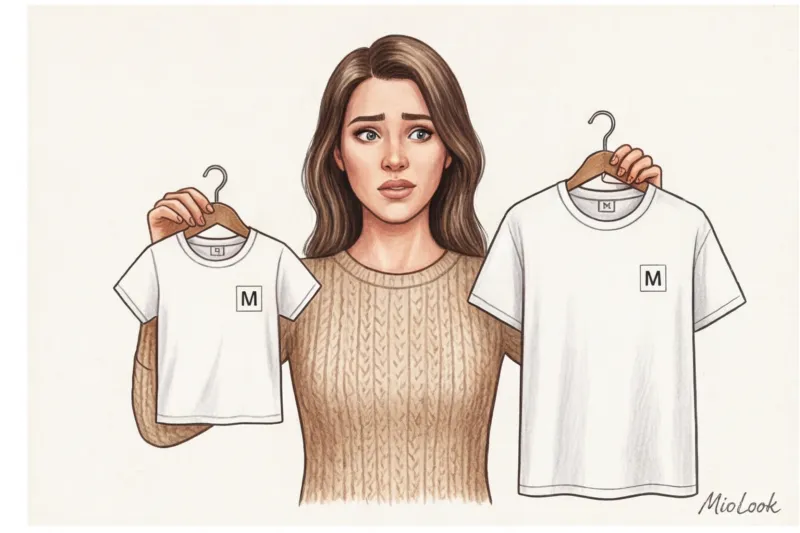
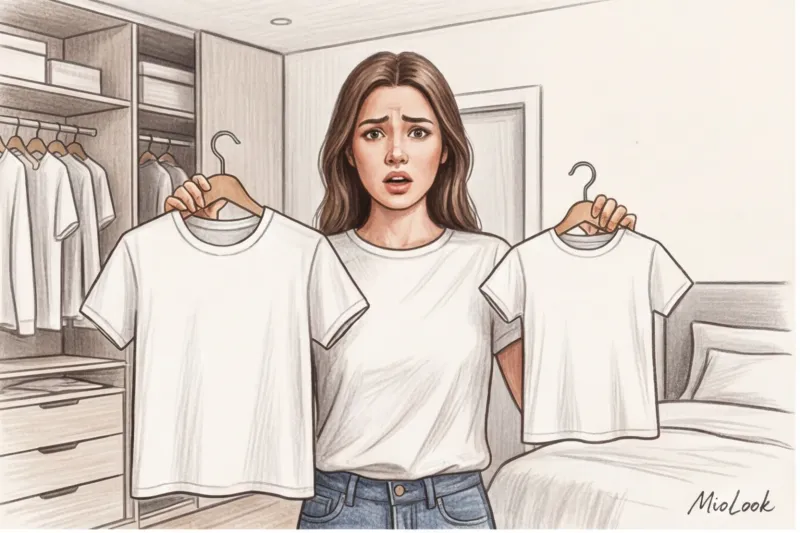
We're used to thinking of ourselves as "size M" or "a solid 44." But the harsh truth of online shopping is that your size no longer exists. What fit you perfectly five years ago may now be critically small or hopelessly large, depending on which continent the brand was made on.
Why Size Charts Lie (And Why Your Regular Size No Longer Exists)
According to the National Retail Federation (NRF, 2024), 30% to 40% of clothing purchased online is returned to stores. The main reason is that the item simply doesn't fit. Why does this happen if every website has a fit chart?
The answer lies in the phenomenon Vanity Sizing (Size vanity). Starting in the 1990s, brands began artificially lowering the numbers on their tags. According to a Washington Post study, the waist circumference of the standard American size 8 has increased by almost 7 centimeters over the past two decades. Marketers realized that a woman is more likely to buy jeans that fit her into a size S than those where she had to go for a size L. It's pure psychology.
Over 14 years as a stylist, I've thrown out dozens of size charts. One of my clients literally burst into tears in the Zara fitting room when a pair of size L trousers didn't fit her. Meanwhile, she had perfectly fitting Ralph Lauren size M items hanging in her closet. The letters on the tag are a brand's marketing tool, not an objective assessment of your body.
The Anatomy of International Standards: How to Translate European and American Standards into Russian Standards
The Russian size chart (GOST) has historically been based on the simplest and most logical principle: the half-chest measurement. If your chest measurement is 88 cm, your Russian size is 44. This sounds like a great foundation, but as soon as we enter the international market, this logic breaks down due to regional patterns.
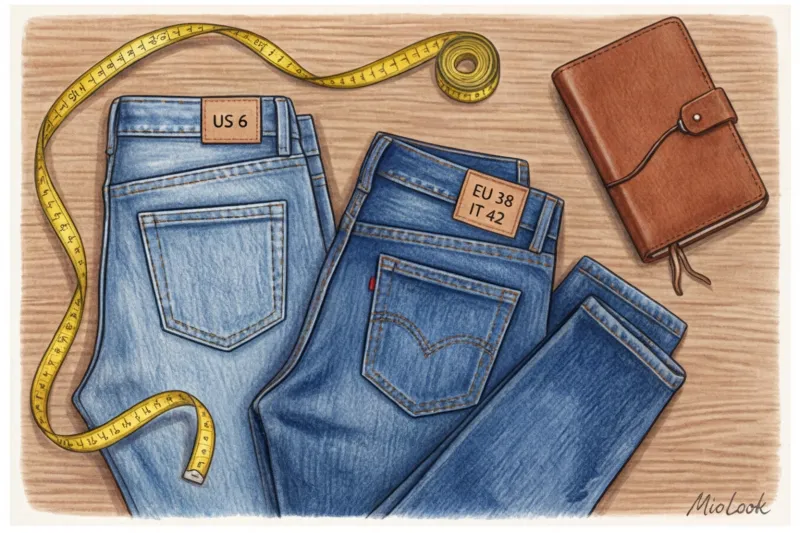
There's a universal formula floating around the internet: "Russian minus 6 = European." Forget it. It only works in a perfect vacuum. In reality, the brand's country of origin dictates proportions you won't find in any formula.
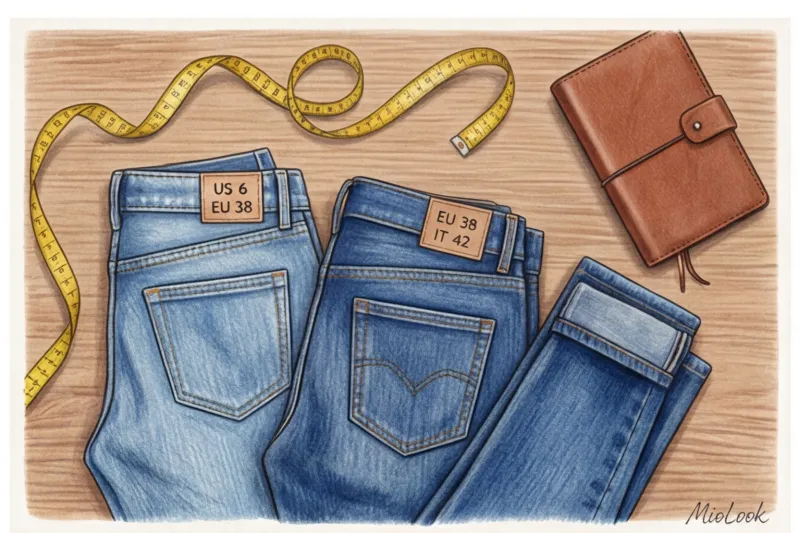
European sizes (EU/FR/IT/DE): a trap for beginners
Europe is not unified when it comes to cut. Patterns are developed based on the anthropometry of the local population:
- Italian brands (IT): The famous "small sizes." Italian cuts (for example, Armani or Pinko) are designed for a more petite frame. Always add two to the Italian size. So, an IT 40 is a Russian 42, and sometimes even a tight 40.
- French brands (FR): Maje, Sandro, and Sézane are tailored for a narrow chest and sloping shoulders. If you have an athletic figure or a broad back, you'll need to size up one or two sizes with French garments.
- German and Scandinavian (DE/Scandi): COS, Arket, Hugo Boss. Here, allowance for height and a loose fit reign supreme. A German size 36 often fits like a confident Russian size 44, and the sleeves will fit even women as tall as 175 cm.
American Sizes (US): Why Clothes Often Run Big
The American market is the birthplace of comfort and vanity sizing. If you order items from the US (Calvin Klein, Tommy Hilfiger), be prepared for a loose fit.
The standard conversion of American sizes to Russian sizes is US + 38 (sometimes 40). So, a US 4 is our 42-44. However, letter markings (S, M, L) in the US are always a size larger than European sizes. An American S is a classic European M.
Your perfect look starts here
Join thousands of users who look flawless every day with MioLook. Digitize your wardrobe and forget about returns.
Get access — €0.99 onceA stylist's top secret: how to determine your clothing size when shopping online
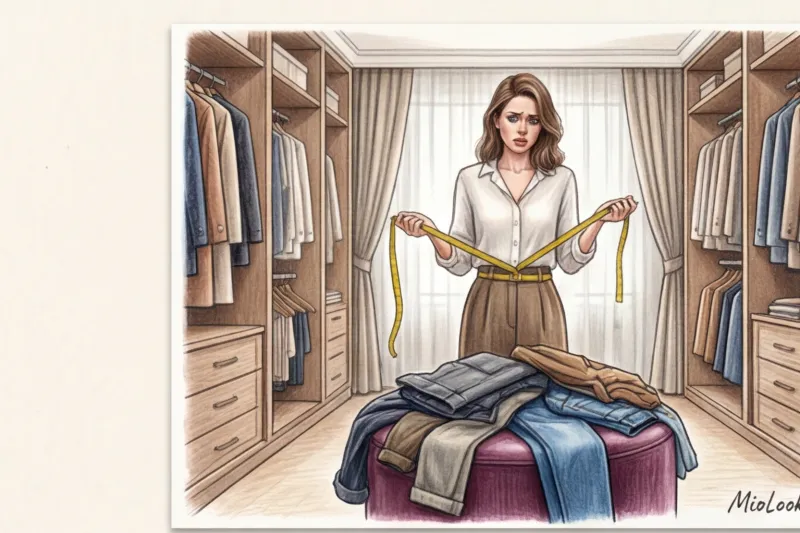
And now the most important revelation, which will save you hours of time and hundreds of euros in returns. Stop wrapping yourself with a measuring tape in front of the mirror. Exhaling, sucking in your stomach, and trying to find the widest point of your hips is a waste of time.
Your body is a 3D object. It's soft, it swells in the evening, it changes shape after lunch. When you measure yourself, you inevitably stretch the tape differently. Clothes, however, are made of flat fabric using rigid patterns. That's why I insist on the method Flat Lay Measurement (measured in unfolded form).
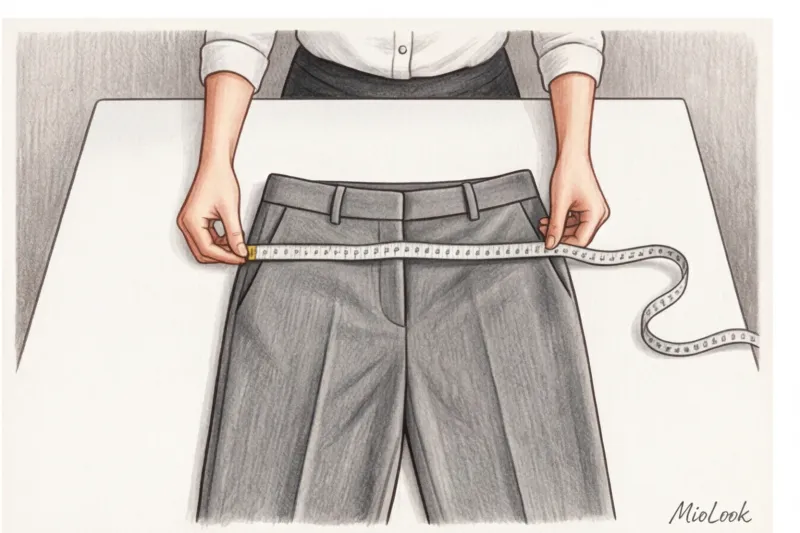
Here's how to professionally determine your clothing size when shopping online:
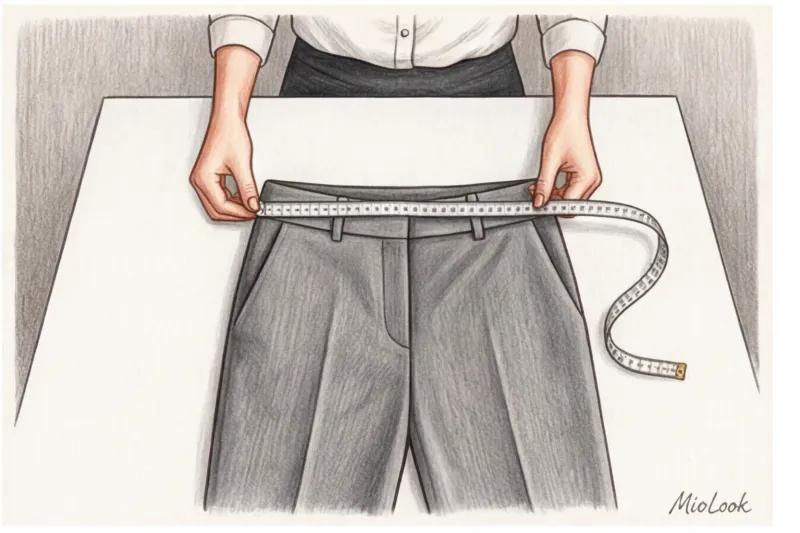
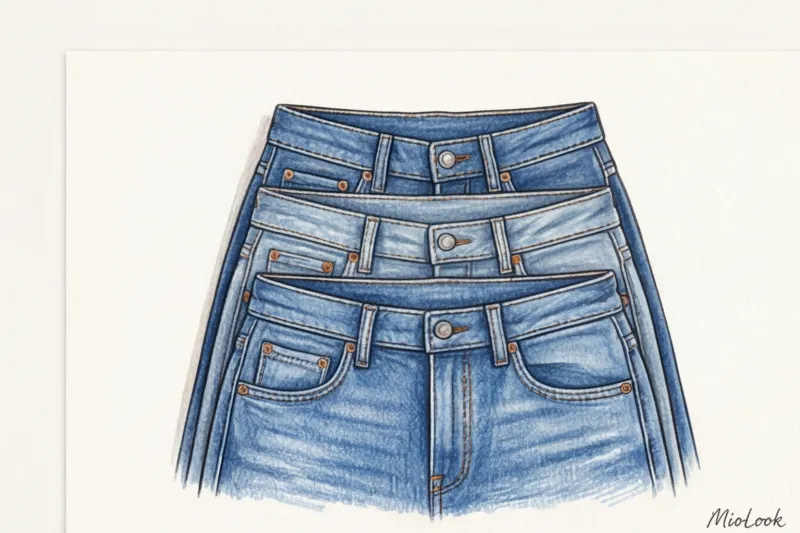
- Take your favorite, perfectly fitting trousers (important: no elastane or with a minimum content of up to 2%).
- Place them on a flat table with the button and zipper closed. Smooth the fabric with your hands, but do not stretch it.
- Measure your waist halfway (along the top edge of the belt).
- Measure half the circumference of your hips (approximately at the level of the end of the fly).
- Measure your inseam (from your crotch to the bottom of your pant leg).
"Your true size isn't your body measurements. It's the measurements of what your body feels comfortable in."
Now, when you open a Size Guide in a good online store, look for the switch between Body Measurements (body parameters) and Garment Measurements (product parameters). Compare your "flat" measurements with the second option. Do they match? You can take it.
Limitation: This method doesn't work well for bias-cut dresses or extremely stretchy sportswear. You'll have to rely on body measurements for these.
Reading Between the Lines: What Do Petite, Tall, Plus, and Curve Labels Mean?
The size letter is only half the equation. The other half is proportions. Many brands (ASOS, Gap, J.Crew) have introduced additional lines that save online shopping.
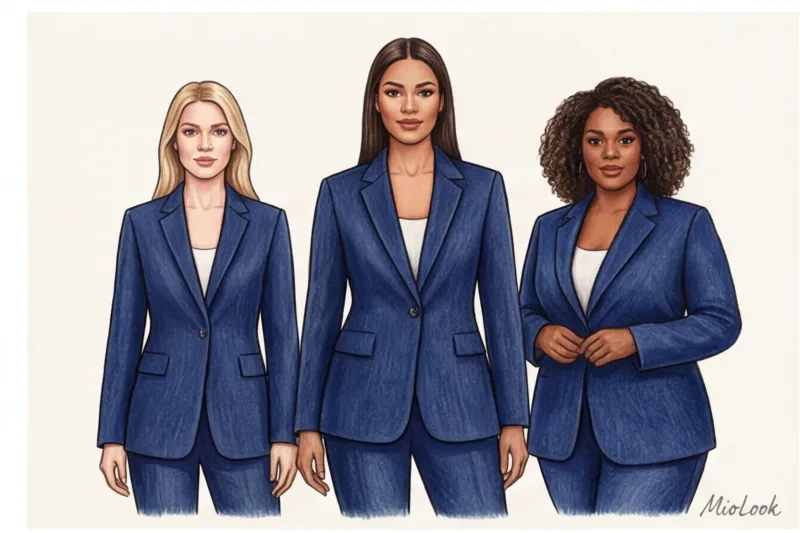
- Petite (for height up to 160 cm): The main misconception is that Petite pieces are simply shorter. No! If a petite woman wears a standard dress with a shorter hem, the waist will still be on the hips, and the bust darts will be pushed down. Petite patterns have proportionally shorter backs and armholes.
- Tall (for height from 175 cm): A lifesaver for those who are always short-sleeved. The waistline is lower, and the shoulder seam stays in place.
- Plus and Curve: These aren't just extended basic sizes. A good Curve line is constructed from the ground up: volume is added at the armhole (to prevent the sleeve from cutting into the armpit) and the correct balance between the waist and hips is achieved without creating a bubble at the back.
I was collecting recently capsule wardrobe Our client is 158 cm tall. She'd been buying Regular M dresses for years and constantly had them taken to the tailor to have the waist taken in. When we ordered a Petite L, the fit was phenomenal: the darts were right under the bust, and the waist was perfectly tailored.
Smart Shopping: How MioLook's Digital Tools Solve the Returns Problem
In 2025, storing your measurements in notes on your phone is so last century. I've digitized my wardrobe and now buy clothes in five minutes because the algorithms work for me.
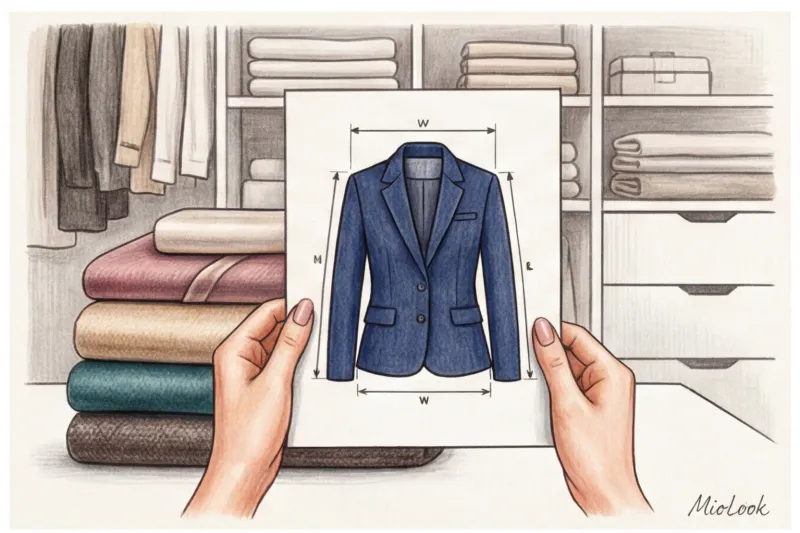
In the appendix MioLook You can not only create looks but also record the ideal fit of each item. By uploading your favorite jeans to your virtual closet and entering their flat measurements, you gain a powerful predictive analytics tool. When you find similar pants online, all you have to do is compare the store's figures with your digital standard in the app. No magic, just data.
Ready to get started?
Try a free plan—no commitments required. Upload your wardrobe to MioLook and start shopping online with confidence.
Get access — €0.99 onceChecklist: 5 steps before hitting the "Pay" button
Let's put theory into practice. To minimize the risk of returns (from 30% to zero), run the item through this checklist before purchasing:
- Check the size chart type. Make sure the Size Guide section lists the Product/Garment Measurements of the item itself, not the average measurements of an abstract person.
- Explore these models. Reputable stores always list the model's height and the size they're wearing (for example: "The model is 178 cm tall and is wearing a size S"). If a tall woman is wearing a knee-length dress, and you're 162 cm tall, the dress will fall mid-calf on you.
- Make allowance for the fabric. If the garment is 100% cotton or linen (no elastane), the flat measurements should be 1–2 cm larger than your actual waist measurement—otherwise, you won't be able to fit. If the garment contains 3–5% elastane, you can measure "zero" measurements.
- Check against the standard. Take out your ideal item of similar cut, measure it on the table and compare it with the website table.
- Search for code words in reviews. Don't read reviews that say "good blouse." Search for the words in the page search (Ctrl+F). "runs small" (undersized) or "runs large" (oversized). Three such reviews are statistics.
Finding the right size online has ceased to be a game of roulette since we gained access to precise measurements. Let go of the emotional attachment to the letters S, M, or L. Your best stylist is a measuring tape placed on your favorite jeans, and the ability to work with data, not brand marketing hype.