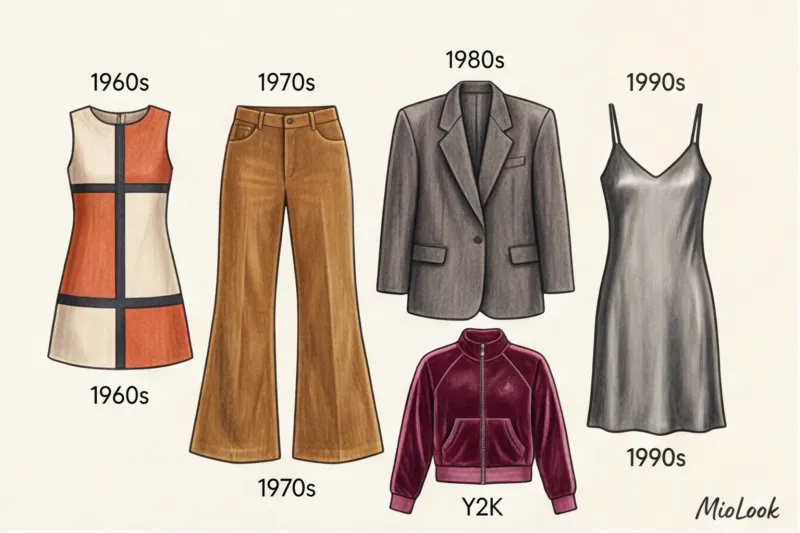
Why fashion always returns across decades: the 20-year rule
In my wardrobe review practice, there's one inevitable scenario. About two hours into the process, a client pulls out a pair of extremely low-rise jeans or a velour tracksuit from 2004 from the back shelf and asks in horror, "How could I even wear that?" And I invariably reply, "Don't throw it away. In six months, half the fashion influencers will be hunting for that item." This is how it develops. fashion by decade — this is not a random collective nostalgia, but a strict, mathematically predictable algorithm.
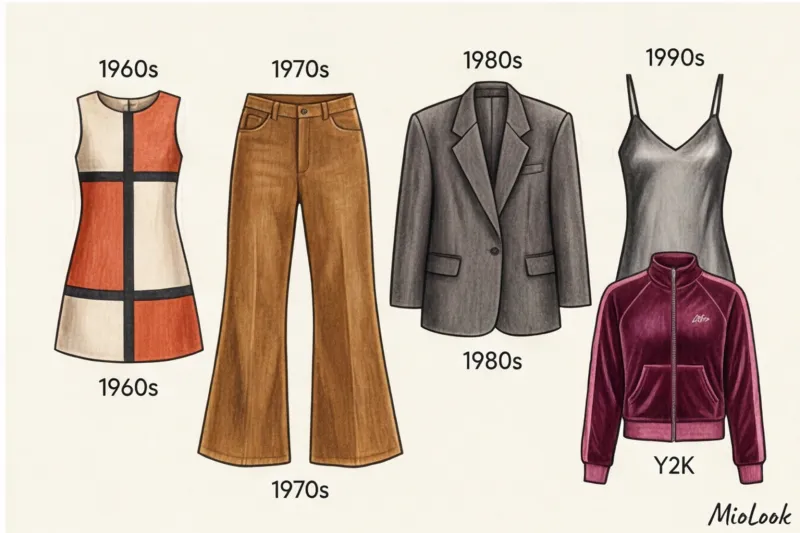
Back in 1937, costume historian James Laver formulated a law that still holds true today. According to "Laver's Law," every item undergoes a rigorous cycle of visual perception. A year after its peak popularity, it seems "tacky," 10 years later, "disgusting," 20 years later, "funny," and 50 years later, "vintage" and "romantic." This is why chunky sneakers or micro-glasses, which we all unanimously considered ugly ten years ago, suddenly become objects of desire again after undergoing a full cycle of rejection.
Behind this cyclicality lies simple psychology and demographics. Why has the basic cycle of trend returns historically been precisely 20-30 years? The answer lies in the age of fashion house creative directors. A designer who is now 40-45 years old and manages a brand with multi-million dollar budgets subconsciously (and sometimes quite consciously) draws inspiration from the era of his youth. The aesthetic codes that shaped his taste at 15-20 are now broadcast on the world's catwalks, creating a global trend from his teenage memories.
But while the fashion industry once obediently waited for two decades, today the rules of the game have radically changed. According to reports from the analytical agency WGSN (2023), the influence of TikTok and Instagram has not only accelerated the classic trend cycle—it's broken. Social media algorithms, which serve up content based on micro-interests, force aesthetics from completely different eras to coexist. Today, you can easily spot a woman in a formal attire in the same office. office siren straight from the 90s, a colleague in a voluminous shoulder jacket from the 80s (about how to choose fashionable outerwear (in this style, we talked about it in detail) and a student during an internship in a corset top, referencing the 70s.
As a stylist, I constantly deal with this visual chaos. Trying to buy key pieces from each decade is a surefire way to a cluttered closet, especially considering that a quality vintage or restyled piece now costs on average between €100 and €300. Instead of endless shopping, I recommend digitizing your essentials using the smart wardrobe feature in an app. MioLook and analyze which era's patterns dominate your shelves. Understanding this mechanism provides tremendous freedom: you stop being a victim of chaotic trends and begin to consciously invest in your personal style.
The 1960s: The Age of Minis, Geometry, and Space Futurism
Have you ever considered that until the middle of the last century, the appearance of an adult woman in the street with her knees exposed could cause a public scandal? Everything changed rapidly. The 1960s marked a real tectonic shift in the fashion industry. Baby boomers grew up and had their own money. Against the backdrop of active space exploration and a growing youth rebellion against the conservative foundations of the older generation, the so-called Youthquake (Youth earthquake). Girls categorically refused to dress like their mothers. London designer Mary Quant responded to this social demand. When in her boutique Bazaar Skirts that ended high above the knee appeared; this invention of the miniskirt became not just a trend, but a real manifesto of emancipation and freedom.
When studying the archives of costume history, I always emphasize one crucial fact: the 1960s radically changed the very approach to tailoring, giving women physical freedom. This decade literally killed the corset. Women finally cast off the shackles of the rigid hourglass silhouettes that dominated the 1950s. They were replaced by the A-line silhouette and loose, trapeze dresses. From a practical standpoint, this waist-skimming cut revolutionized ergonomics: in such dresses, one could breathe deeply, drive a car, run up the stairs, and dance the twist. Furthermore, the straight cut gave a powerful impetus to mass-produced clothing, as the A-line silhouette is much easier to fit onto different body types without the need for custom tailoring.
If we break down the DNA of '60s style into its components, we'll find a clear, mathematically precise list. At its core are strict geometry and color blocking—a direct consequence of space futurism. While engineers were building rockets, designers like André Courrèges and Pierre Cardin were creating the fashion of the future, experimenting with rigid shapes, vinyl, and silver fabrics. Today, we unmistakably recognize that era by specific markers: A-line silhouettes, trapeze dresses with contrasting geometric inserts, ribbed turtlenecks, thick colored tights and, of course, Mary Jane shoes with their characteristic strap on the instep.
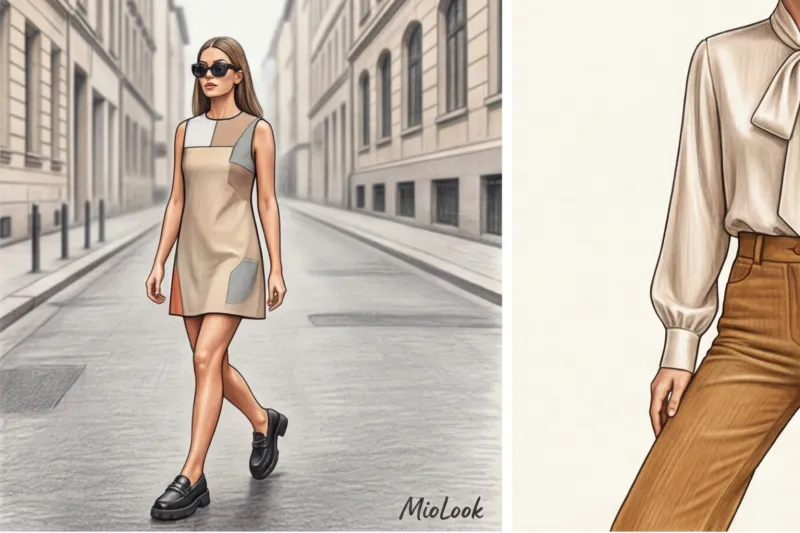
How to Wear '60s Trends Today (Without the Carnival Effect)
My main gripe with how many interpret retro is its visual excess. The most common mistake I regularly see is an attempt at over-the-top styling. When a girl wears a geometric A-line dress, accessorizes it with white go-go boots, creates a voluminous bouffant, and draws thick, graphic eyeliner, she looks like she's going to a costume party. It's too theatrical and, frankly, very aging.
A modern approach to style requires analysis: we incorporate just one historical detail into an image, juxtaposing it with completely modern essentials. The contrast of eras is everything to us.
- One thing rule: Take a pair of classic Mary Janes (a high-quality pair made of genuine leather is easy to find these days for €120-€200) and pair them not with a babydoll dress, but with modern wide-leg jeans and a basic oversized sweater. The masculinity and ruggedness of the denim will instantly take the edge off the shoe's childishness.
- Complex multi-layered: Another fail-safe trick is to use a ribbed turtleneck. Wear it under a minimalist sundress with thin straps or a crisp oversized shirt. You'll get a sophisticated, intelligent silhouette without the slightest hint of mothballs.
- Color block adaptation: Pairing large, localized pops of color works great today when paired with modern cuts. For example, pair a loose, rich blue jumper with straight-leg camel trousers, avoiding retro silhouettes.
The secret to successfully integrating vintage is balance. The more a piece screams its era, the more neutral and relaxed the rest of the piece should be.
If you're unsure what to pair your retro accent piece with, just upload a photo of it to MioLook app — algorithms will help assemble a relevant, modern capsule collection with it, deftly avoiding carnival clichés.
Access to MioLook for €0.99 — one-time payment
A smart AI stylist will select the perfect look.
Get access — €0.99 once1970s: Boho-chic, flares and the intellectual bourgeoisie
Researchers at the Costume Institute (New York) often call the 1970s the most eclectic decade of the 20th century. While the previous era was obsessed with space and synthetic materials, by the early 1970s, society was experiencing a profound fatigue with futurism. There was a powerful shift toward nature, craftsmanship, and natural fabrics. The palette shifted to earthy tones: terracotta, mustard, olive, and deep brown. The fashion of the era was shaped by two visually polar opposites: the relaxed escapism of the Woodstock festival with its freedom and, toward the end of the decade, the hedonistic glamour of the legendary New York club Studio 54, which gave us lurex and flowing tailoring.
But for us, as modern women building a functional wardrobe, the third trend of the 1970s—the so-called bourgeoisie style—is far more important. According to fashion historians, it was during this period that Yves Saint Laurent and the Parisian house of Celine laid the very foundation for the aesthetic we now call smart casual. They were the first to legitimize the combination of relaxed and formal: designers suggested wearing thin turtlenecks under men's shirts, paired comfortable A-line midi skirts with tall leather boots with sturdy heels, and introduced intelligent layering into fashion.
Let's dissect the DNA of this decade. Its key markers are architectural flared trousers, textured corduroy ribbing, heavy suede, flowing maxi dresses, and pussy-bow blouses. Unlike the rigid shapes of the '60s, the silhouettes of the '70s flow with the body. Flared trousers, for example, became a true salvation for pear-shaped figures—the flare from the knee brilliantly balances voluminous hips, creating harmonious proportions, especially when paired with platform shoes.
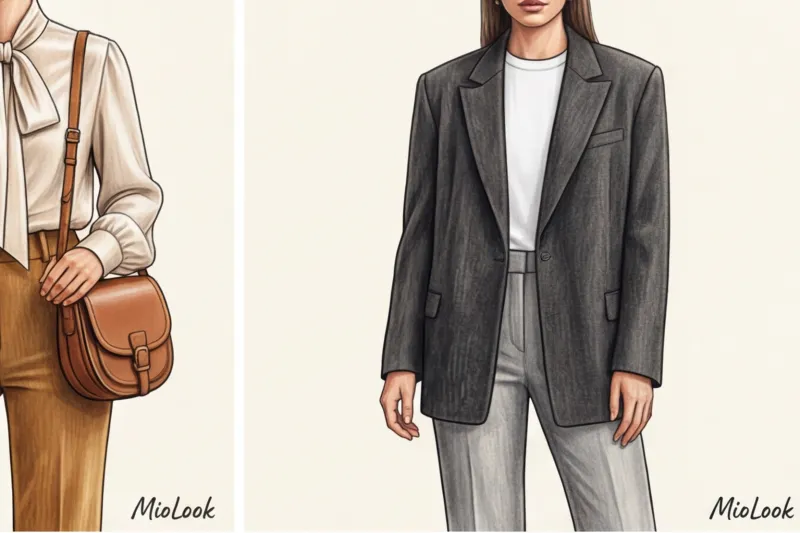
Adapting 70s style for a modern office wardrobe
Working with corporate clients, I often hear concerns like, "Wearing '70s clothes will make me look like a disco singer." And it's a fair fear, if you're going to style the era literally. However, certain elements from that decade fit seamlessly into the strict dress code, adding texture and a premium feel that's sorely lacking in flat office fabrics.
Instead of your usual sleek blazer, try pairing it with a corduroy jacket in a sophisticated burgundy, emerald, or chocolate shade. High-quality corduroy (excellent basic options can be found today in the €150-€250 range from mid-up brands) holds its shape beautifully, but looks much more sophisticated than classic wool. Pair it with a silk blouse with a bow. The ribbons don't necessarily need to be tied into a neat school bow—leave them hanging loose or tie them in a casual Parisian-inspired knot. For the bottom, tailored culottes or slightly flared trousers with creases are ideal.
The famous paisley pattern deserves special attention. It's an incredibly complex, hyperactive print that requires meticulous handling. My unwavering rule: pair complex 70s prints exclusively with a crisp, neutral, modern base. A silk paisley blouse will look luxurious with straight, heavyweight dark blue denim jeans or classic trousers, but is absolutely not recommended with a fringed suede skirt. To avoid such texture clashes, I recommend digitizing your pieces. Upload a photo of the printed blouse to MioLook , you can create virtual looks in just a few clicks and see which basic items from your closet it truly pairs with, without turning the outfit into a theatrical costume.
1980s: Power Dressing, Oversized, and Neon Boldness
According to sociological archives, it was precisely at the turn of the 1970s and early 1980s that the proportion of women holding leadership positions in the corporate sector experienced a historic leap. Women entered en masse the aggressive business world of Wall Street and large corporations, where for centuries the rules of the game had been dictated exclusively by men. Under these circumstances, clothing ceased to be simply an aesthetic choice—a pressing need for a status-confident appearance arose. They needed visual armor, a tool that, even before a woman uttered her first word, would convey authority and unshakable confidence. Thus arose the phenomenon we now call "the woman." power dressing ("power dressing").
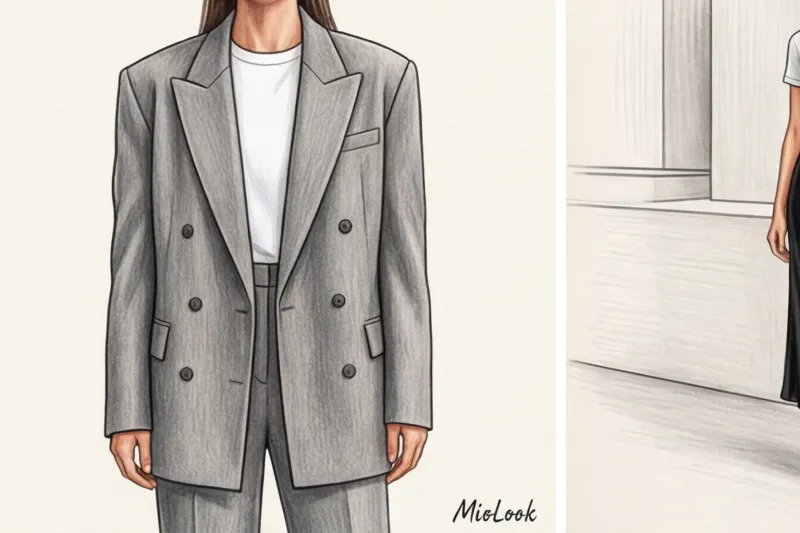
Dissecting the style DNA of this vibrant decade, we see a clear contrast between workwear and leisurewear. During the day, oversized shoulder pads and tailored double-breasted suits ruled the roost—designers like Thierry Mugler and Giorgio Armani literally reshaped the female silhouette, borrowing from masculine geometry. But outside the glass skyscrapers and offices, a neon-tinged audacity reigned supreme, fueled by MTV culture and the rise of aerobics. Aggressive stonewashed denim, bright, skinny leggings, and garish, oversized jewelry made of plastic or gilded metal—massive clips and chains visible from across the street—invaded everyday staples.
The '80s wardrobe is pure psychology. Clothes were used as a tool for space-occupying: the broader your shoulders and the brighter your colors, the more physical and visual space you take up in the room.
In my styling practice, I constantly use this historical code. When an expert client comes to me with the request "I want to feel more confident during difficult negotiations," the first thing we look for is the perfect man-made jacket. Believe me, this isn't just a nod to trends. A well-tailored oversized jacket made of a thick wool blend (I usually recommend budgeting between €250 and €400 for such an investment piece) works flawlessly. The clear, exaggerated shoulder line physically forces a woman to straighten her back. I've seen dozens of times how the body posture and even the timbre of her voice changes when a client wears such a piece—she literally "pulls" the entire look together.
Access to MioLook for €0.99 — one-time payment
Start creating perfect images with the help of artificial intelligence
Get access — €0.99 onceIntegrating the 80s into a personal brand wardrobe
Why is the inverted triangle silhouette (broad shoulders, narrow hips), born in the 1980s, experiencing such a powerful renaissance today? The answer lies in modern communication technologies. Half of our work is now captured through the lens of a smartphone or laptop camera. This architectural cut works perfectly in videos and during public speaking. Cameras tend to "eat up" volume and blur the contours of the figure. If you're performing in a soft, off-the-shoulder knit cardigan, your silhouette appears limp and relaxed. Bulky shoulder pads create a rigid frame for the face, focusing the audience's attention on you and conveying dynamism.
But modern power dressing requires a delicate balance. While forty years ago, a voluminous jacket was easily paired with a brushed finish and neon eyeshadow, today we're toning down the drama. The key is to tone down the active top.
- How to balance a voluminous top: Pair chunky jackets exclusively with elegant, straight-leg trousers or tailored straight-leg jeans. Avoid full skirts or oversized palazzos with oversized pants to avoid looking boxy.
- Shoes matter: To ground the look, complete it with minimalist footwear. Pointed-toe ankle boots, simple loafers, or classic pumps without unnecessary embellishment (no chunky buckles or platforms) will be the perfect contrast to the heavy top.
To avoid errors in proportions, I recommend testing combinations in advance. You can upload photos of your jackets and trousers to MioLook digital wardrobe , so the algorithm can help you assess how harmoniously the volumes are balanced before you leave the house. A well-designed 80s style is always a mathematical exercise in proportion, where one large form demands perfect emptiness around it.
1990s: Minimalism, Grunge, and the Birth of the Capsule
According to a global report by the analytics platform WGSN (2023), it's the silhouettes of the 1990s that generate the greatest commercial profits for fashion brands today—from affordable mass-market brands like COS to premium brands like The Row. Walk into any contemporary boutique, and you'll find that around 70% of the basic assortment is cut using patterns from thirty years ago. Why did this era become the most commercially successful period in the history of modern fashion?
The answer lies in a global social shift. In the early 1990s, the world was hit by an economic downturn, which instantly devalued the garish luxury of the previous decade. Society was simply tired of the need to constantly demonstrate status through enormous shoulder pads, neon colors, and kilograms of chunky jewelry. A demand for comfort and intellectual modesty emerged. In 1992, Marc Jacobs revolutionized fashion with his famous "grunge" collection for Perry Ellis, legitimizing stretched sweaters, flannel shirts, and rugged work boots on the runway. Concurrently, Helmut Lang, Miuccia Prada, and Gilles Sander began to shape what we now call pure architectural minimalism.
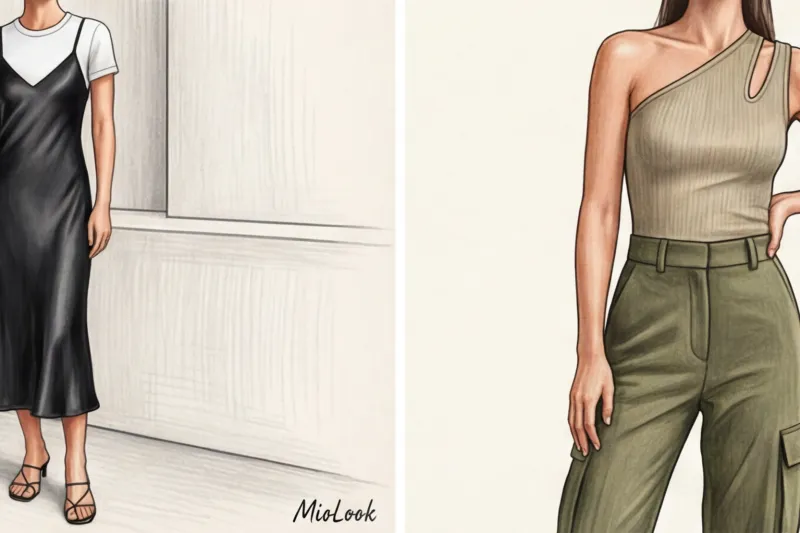
The DNA of '90s style is an uncompromising hymn to the purity of lines. Its key markers: flowing bias-cut slip dresses, straight vintage jeans, oversized men's shirts, chunky boots (like classic Dr. Martens), and total monochrome. This was the era of the birth of hidden luxury—that very early old money , when a simple grey cashmere jumper without a single logo was valued incomparably higher than a colorful designer suit.
Carolyn Bessette-Kennedy became the undisputed icon of this style. When clients ask me to help them put together a "pretty yet relaxed" wardrobe, I always pull out her archive photos. Carolyn masterfully wore basic white T-shirts with straight-leg Levi's 501 jeans, accessorizing them with oval sunglasses and a simple camel-colored coat. And her iconic silk slip wedding dress by Narciso Rodriguez (1996) forever changed the wedding industry, proving that a lack of embellishment is the highest form of elegance.
Why the 90s are the perfect foundation for modernity
In advanced stylist courses, the first practical exam often sounds like this: "Create the perfect monthly capsule wardrobe from just 10-12 items." The paradox is that 99% of truly effective and functional capsule wardrobes are built exclusively on the aesthetics of the '90s. This era gave us a universal urban uniform that forever blurred the rigid distinction between daytime and evening dress codes.
The secret to the incredible longevity of '90s trends lies in their austerity. The complete absence of unnecessary details (no ruffles, intricate embroidery, or accent hardware) means the piece is effortlessly memorable, meaning it can be worn endlessly, simply by changing the style. When the cut is as simple as possible, texture takes center stage. That's why a high-quality silk slip dress—I recommend budgeting €150–€250 for such an investment piece—will last for years to come.
In the morning, you pair it with a crisp white T-shirt (worn underneath) and Dr. Martins—a classic grunge look. During the day, you layer it with a chunky cashmere sweater, and in the evening, you accessorize with a tailored men's blazer and thin-strap sandals.
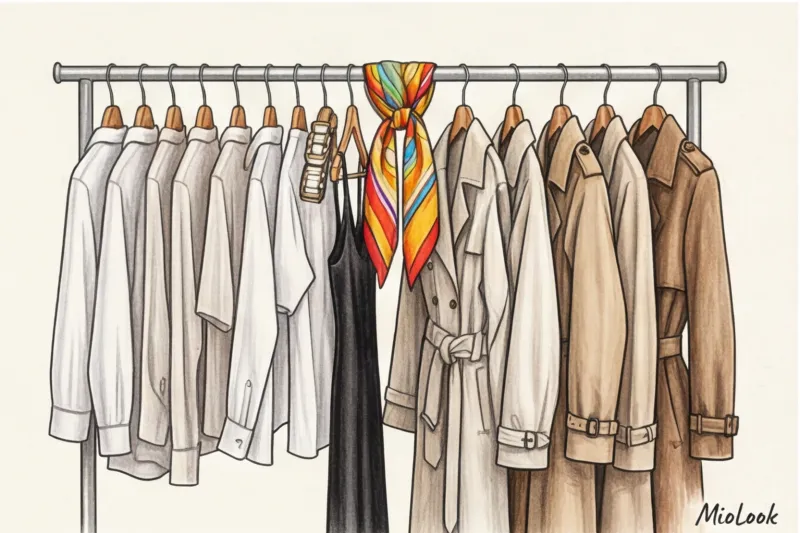
To build a modern, functional wardrobe based solely on the patterns of this decade, you'll need just five key elements:
- Straight jeans made of dense 100% cotton: strictly without elastane, the correct washed blue shade.
- White oversized shirt: made of crisp poplin, preferably bought in the men's department.
- Knitted tube dress: midi or maxi lengths in an achromatic palette (deep gray, black or milky).
- Leather biker jacket or oversized blazer: to create the right silhouette contrast with thin, flowing fabrics.
- Minimalist shoes: ankle boots, thick-soled loafers or kitten heel mules.
To be fair, I'll point out an important limitation: 90s minimalism is merciless when it comes to the quality of materials. Cheap, thin polyester or flimsy, loose knitwear will instantly ruin the magic of "quiet luxury," transforming the look from sophisticated to downright sloppy. This is a style where skimping on texture is absolutely not an option.
My favorite stylistic technique is to gather such a high-quality base and entrust the mathematics to technology. By loading these classic things into MioLook app , you'll clearly see how the perfect designer works. The "smart wardrobe" algorithm will easily generate over a hundred unique outfits from these ten basic items. The DNA of the 1990s is mathematically perfect: every detail was originally designed to fit perfectly with every other.
2000s (Y2K): Glamour, Cargo, and Technological Optimism
When global searches for "Y2K fashion" (Year 2000) soared nearly 400% in late 2021, respected fashion critics predicted this comeback would last no more than one season. They were wrong. The aesthetics of the 2000s didn't just linger on the runways—they fundamentally transformed the modern everyday wardrobe.
The transition into the new millennium was accompanied by unprecedented technological optimism. Fear of the Y2K bug gave way to the euphoria of the development of the global internet. This was the era of glossy exhibitionism, dominated by MTV videos, the first rhinestone-adorned flip phones, and Paris Hilton, who practically invented the influencer profession ten years before the advent of social media. Celebrity culture dictated an uncompromising rule: the brighter, sexier, and more visible, the better.
Analyzing archival footage from those years, the style's DNA is instantly recognizable. The era's defining characteristics were extremely low waists, baggy cargo pants, tiny crop tops, a total obsession with rhinestones, iconic baguette bags, and, of course, plush velour tracksuits (hello, Juicy Couture). The fashion of the 2000s was loud, sometimes childish, and completely devoid of the intellectual snobbery that reigned in the grunge-fueled '90s.
And here's where the main paradox arises. The most persistent stereotype I regularly have to combat in my consultations is this: "I'm 38 years old, and Y2K style only suits TikTok Zoomers." This is a fundamental misconception. You don't have to dress like a teenager in a Britney Spears music video to embrace the decade's energy. Well-adapted elements from the 2000s add that touch of ironic ease to a grown-up woman's wardrobe that instantly makes a look fresh and relevant.
Your ideal image
it begins Here
Join thousands of users who look flawless every day with MioLook.
Get access — €0.99 onceSafe Y2K Trends for Adult Women
Let's start with the fit. An extremely low waist that exposes the hipbone is a staple that can safely be consigned to the pop culture archives. To create a modern yet wearable silhouette, we're replacing it with a comfortable mid-rise—the waistband sits approximately two to three fingers below the navel. This cut maintains the relaxed vibe of the 2000s, visually elongating the torso, but without making you nervously tugging at your clothes every time you bend over.
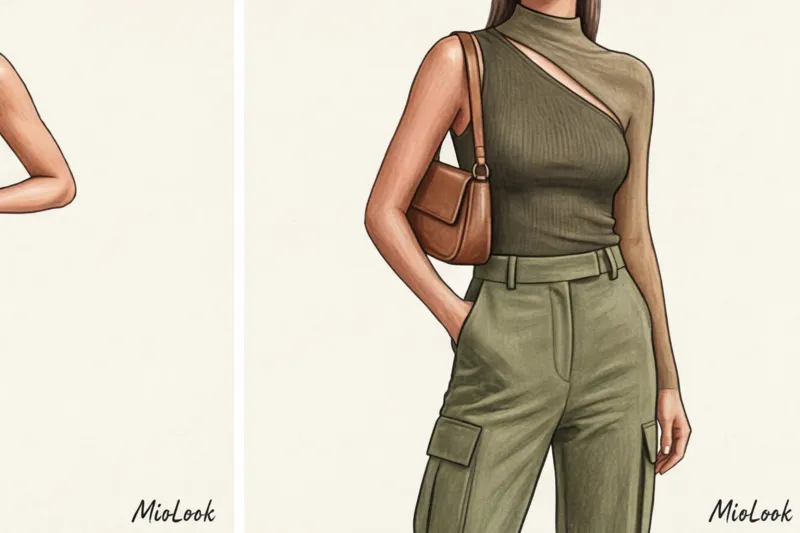
Cargo pants are an absolute must-have of the current decade, but the secret to their "coming of age" lies solely in their texture. We resolutely reject rustling, cheap nylon or thin cotton. The modern adaptation of Y2K demands noble materials. Choose cargo pants made of fine suiting wool, dense matte silk, or heavy, flowing cupro. An investment in such a high-quality staple typically ranges from €130–€250, but the return on investment is well worth it. Paired with a cashmere turtleneck or a tailored architectural jacket, these pants look not so youthfully bold, but classy and expensive.
As for crop tops, they're also easy to adapt for a 30+ wardrobe. The key styling trick here is the rule of partial overlap. Wear a minimalist crop top under a voluminous, unbuttoned jacket paired with high- or mid-waist trousers. You'll show just a thin strip of skin, which is intriguing yet perfectly appropriate for an urban environment.
The third safe and highly functional tool is micro-bags, particularly the iconic "baguette." This is a brilliant invention of the era: a compact shape with a short strap that fits snugly under the arm. Today, I highly recommend incorporating them as an elegant evening or everyday accent. The rigid shape of a baguette bag in smooth leather works perfectly as a visual counterbalance to bulkier items, bringing the silhouette together and adding definition.
If you're unsure how these items will fit into your current style, try taking photos of your items and uploading them to MioLook virtual wardrobe The app will help you create trial combinations with Y2K-inspired pieces, so you can evaluate proportions and contrasts before you leave the house. And remember the key rule: use glitter sparingly. Instead of the all-out rhinestone shimmer typical of the early 2000s, opt for just one subtle accent—for example, a top with subtle metallic thread or shoes with subtle glitter.
How to Mix Different Eras: A Stylist's Guide
The fastest way to transform an everyday outfit into a themed party outfit is to ignore the context of the time. When developing my personal style, I constantly encounter the same trap, which in the professional world is called the "wearing all your best at once" syndrome.
A woman buys a gorgeous pair of '70s flared trousers, adds a paisley-print blouse, and throws on a fringed suede jacket. Technically, all these elements work beautifully together, but visually, the result is a historical reconstruction. To avoid this effect, it's important to understand three fundamental principles of working with silhouettes of the past.
The Rule of Contrast: No Total Retro Looks
The main law of competent stylization sounds categorical: never combine items from the same historical era in one outfit If you've chosen extremely low-rise jeans with a Y2K aesthetic, the top should be decidedly neutral and modern. No rhinestone-embellished crop tops or sequined baguette bags in the same outfit. A retro piece should work like a soloist against a calm orchestra, otherwise the look will disintegrate into a series of clichés.
The golden ratio is 80/20.
In my experience, a strict mathematical formula has proven to be the most effective. Exactly 80% of your look should be comprised of this year's absolutely current, neutral base, and only 20% should be devoted to vintage or historical accents.
A vintage piece shouldn't dominate. It serves as an intelligent touch, demonstrating that you understand trends without falling blindly victim to them.
Let's say you've found a stunning, authentic '80s double-breasted jacket with exaggerated shoulders (a good vintage example made of thick, natural wool will cost around €70-120). To make it look classy and modern, the rest of the outfit needs to be impeccably basic: straight-leg jeans without embellishment, a simple white T-shirt, and minimalist architectural shoes.
Beauty Contrast: Why Modern Hairstyling Is Important
The third, and perhaps most critical, detail that many women forget is the paramount importance of current hair and makeup when wearing retro pieces. Nothing ages a look more than a period cut, enhanced by beauty techniques from the same decade.
- If you are wearing a 60s (A-line dress): Ditch the graphic Twiggy doll-like flicks and high bouffants. Opt for a light, slightly tousled hair texture and a "no-makeup" makeup look (clean girl aesthetic).
- If you're into 80s (power dressing): Forget about heavy draping (bright blush reaching to the temples) and voluminous curls. Gather your hair into a sleek low bun or a sleek ponytail.
- If you're wearing a 90s (slip dress): Avoid brown lipstick with a harsh outline, opting for fresh, radiant skin (glass skin).
It's the striking contrast between clothes with a history and a decidedly modern, fresh face that reveals a woman with impeccable taste. To avoid getting confused in the proportions of textures and styles, I always recommend putting together looks on the screen first. After uploading your basic and accent pieces, the "smart wardrobe" feature in MioLook , you will be able to visually assess the balance of your outfit and make sure that the 80/20 rule is perfectly observed, even before you open the closet door.
AI and the Future: How Technology Analyzes Retro Trends
According to a BoF Insights analytical report (2024), the implementation of predictive analytics in personal styling reduces the number of unsuccessful purchases by 38%. Artificial intelligence no longer simply sorts clothes by color or season—it has learned to read the history of an outfit. When sorting through a closet, the human eye is often fooled by a bright print or texture, while a neural network sees the "framework" of a garment. When algorithms (including those in apps like MioLook ) analyze the images you upload, capturing historical markers such as lapel width, rise height, and dart geometry. Based on this microdata, the system generates mathematically precise personalized recommendations.
Digitizing your wardrobe works like an impartial mirror. I recently insisted that one of my clients completely digitalize her closet. She was convinced her style was '70s boho-chic and constantly bought pieces with fringe and paisley print. However, the algorithm revealed the harsh truth: 72% of her most wearable, everyday pieces were clean, straight-legged pieces from the minimalist '90s. Understanding which era you physically own most radically changes your approach to style.
Relying on wardrobe statistics helps you save time and significant budgets. Instead of giving in to impulse and buying yet another one-time-only item on the wave of a fleeting viral microtrend on TikTok (let's face it, spending €150-300 on an authentic corset that you technically have nothing to wear with is a shameful financial mistake), you invest only in those historical silhouettes that support your digital base.
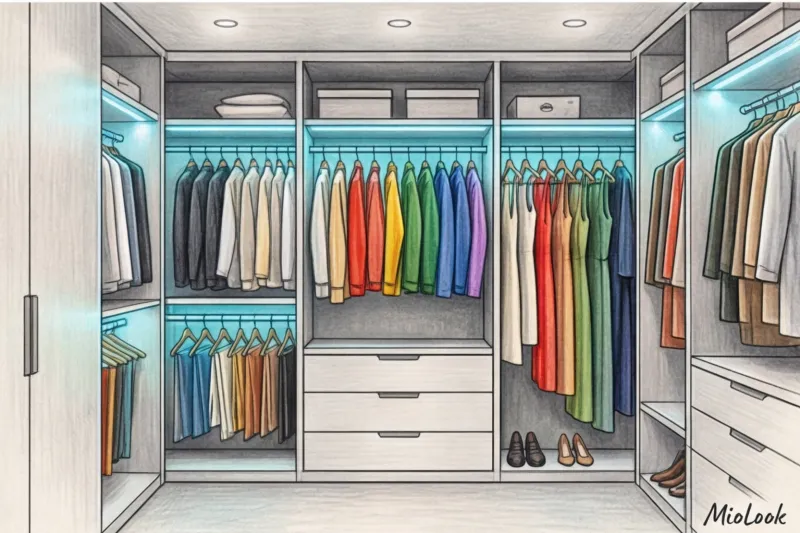
But what if you still want to experiment with a radically new aesthetic without risking your wallet? This is where virtual fitting rooms come into play, allowing you to try out unusual silhouettes from the past. Let's say you've been wearing fitted A-line dresses your whole life, but suddenly want to try the exaggerated power dressing of the '80s. AR technology allows you to "impose" this complex, voluminous cut onto your avatar. You can immediately see how the massive shoulder line changes your individual proportions, allowing you to make an informed purchasing decision, avoiding disappointment and tedious returns.
Checklist: How to Find Your Fashion Era
In advanced personal style consultations, we rarely begin by discussing runway trends. You know what question I ask first? "What clothes make you feel like an impostor?" It turns out that aesthetic discomfort most often stems from a stark conflict between your natural texture and the historical silhouette you're trying to "stretch" onto yourself.
To end the exhausting war with your wardrobe, we need a systematic, analytical approach. I suggest you go through three practical filters that will once and for all define your stylistic decade.
Step 1: Analyze body architecture and dominant silhouettes
Each era dictated its own unique cut, tailored to a specific geometry. Don't try to change your figure—just change the decade you're looking for inspiration from:
- A-line silhouette from the 60s: The perfect solution if you have a full bottom and don't like to accentuate your waist. Stiff A-line dresses and cropped coats create a clean, streamlined look. Buying a basic wool dress in this style (aim for between €120 and €180) solves the "nothing to wear" problem in a flash, without restricting your movement.
- Loose, straight cut from the 90s: It works brilliantly on rectangle-shaped figures or those with a petite frame. British fashion historian Cally Blackman emphasized in her 2022 lectures that the '90s legitimized the relaxed silhouette, freeing women from the obligation to create artificial curves. Minimalist slip dresses and straight, mid-rise jeans don't distort your natural proportions.
Step 2: An honest lifestyle audit
The second filter is your actual calendar, not some fantasy life you see on social media. The historical context of an item should 100% match your social schedule.
Building a career in a conservative corporate environment where you need to project strict expertise? The 80s are your absolute ally. Double-breasted jackets with exaggerated shoulders and statement accessories act as a visual signal of competence. A high-quality structured blazer in a dense blended fabric (a good long-term investment of around €250–€350) automatically ties together even the simplest outfit.
But if you freelance, run a creative agency, or spend your days endlessly traveling around the city, formal '80s attire will look overdone and comical. This is where the '70s, with its intellectual boho aesthetic (suede jackets, flowing blouses, soft corduroy), or the technologically advanced Y2K era come to the rescue. A pair of well-crafted cargo pants made of thick, premium cotton paired with a simple knit top will provide the necessary dynamic without sacrificing elegance.
Step 3: Practical Task – Closet Inventory
Enough theory. This weekend, I suggest you do a quick inventory of your current situation. Pull out 10-15 items from your closet that you wear most often—your actual everyday uniform, not your party dresses.
Lay them out in front of you and look at this capsule collection with the eyes of a historian. What dominates? Suede, an abundance of prints, and flared jeans? Congratulations, you're a child of the '70s. Simple monochrome, men's shirts, and chunky boots? Your style is the '90s. Cropped cardigans and low waists? You're drawn to the 2000s.
To avoid having to keep all this visual analytics in your head, I strongly recommend digitizing the process. When you upload your regular images to Wardrobe management section in the MioLook app Algorithms help visually trace your stylistic DNA. You'll immediately see on your smartphone screen where you lean toward relaxed Y2K and where a '90s-inspired structural foundation is missing to balance complex textures.
An important clarification: no one is forcing you to dress like a reenactor from a particular historical era. This is the most common stylistic trap that beginners fall into, turning their look into a theatrical costume.
Find your personal historical "anchor." Let 80% of your base be based on the decade that perfectly suits your figure and lifestyle. And reserve the remaining 20% for bold experiments with contrasting retro accents. After all, studying fashion by decade isn't about memorizing dry dates, but about masterfully managing your impression here and now.
Guide Chapters
Retro 90s hairstyles and hairdos: how to recreate them at home
Secrets to creating iconic retro hairstyles from a top stylist. Learn how to adapt trends from the 70s, 90s, and 2000s to suit modern hair and avoid common mistakes.
Trying on Vintage Clothing Virtually: An AI Guide
Buying vintage items online often leads to disappointment due to the unique patterns of the past. Learn how neural networks can help you evaluate vintage silhouettes before you pay.
90s Makeup: How to Wear Retro Trends Today
Brown lip liner and graphic eyeliner are back in style. We're talking to a personal stylist about how to seamlessly incorporate retro makeup into modern looks.
The evolution of jeans: how fashion has changed from the 1970s to today
Denim fashion follows mathematically precise cycles. We explain why trends return every 20 years and which old jeans are time to dig out of your closet.
How to wear vintage clothes with modern pieces
Vintage pieces can make your look unique or add a decade to your wardrobe. We'll show you how to skillfully incorporate retro finds into your modern wardrobe.
80s Style: Clothes, Jackets, and Power Dressing
80s style architecture is experiencing a renaissance. We explore how bold shoulders and oversized jackets can help visually shape the figure and accentuate the waist.
60s Style in Modern Clothing: Mini and A-Line Dresses
An A-line miniskirt isn't just a schoolgirl's staple; it's architecturally cut and elegant. We'll explore how to seamlessly incorporate '60s aesthetics into modern looks.
70s style clothing for women with a modern twist
How to wear flared pants, fringe, and suede today to look classy and not like a throwback. We'll explore the rules of modern styling for '70s fashion.
90s Style in Modern Clothing: How to Wear Trends
The real 1990s aren't a pop-culture caricature, but the foundation of "quiet luxury." We explore how to style the trends of that era.
Y2K Style in Clothing: How Adults Can Wear 2000s Trends
Worried about looking awkward in 2000s clothes? We'll show you how to adapt Y2K style to your adult wardrobe and look classy.