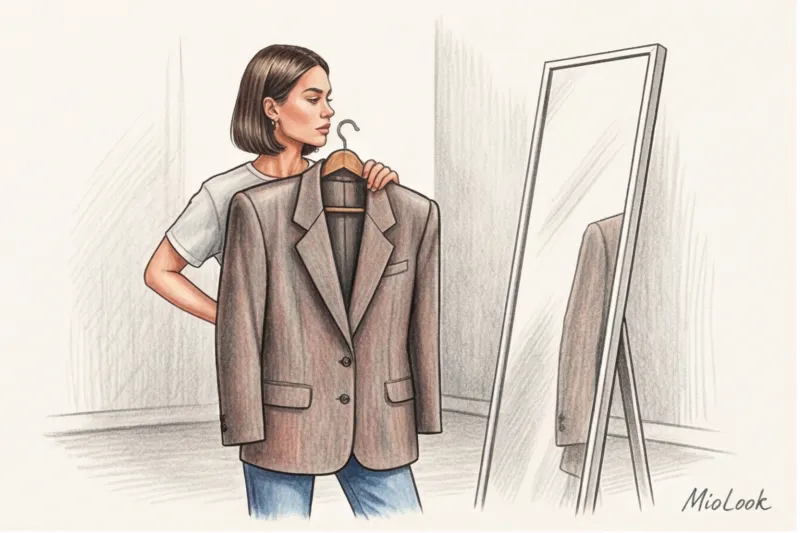
Buying vintage online is like playing roulette, where the bets are made exclusively in euros. Most articles about retro fashion read like the script of a romantic movie: you visit a curated boutique's website, find the dress of your dreams, steeped in history, and it fits you like it was tailored to your measurements. As a practicing stylist, I'll tell you the truth: 90% of the time, you're buying something with a weird sizing chart, a lingering scent of time, and a strict "final sale" policy.
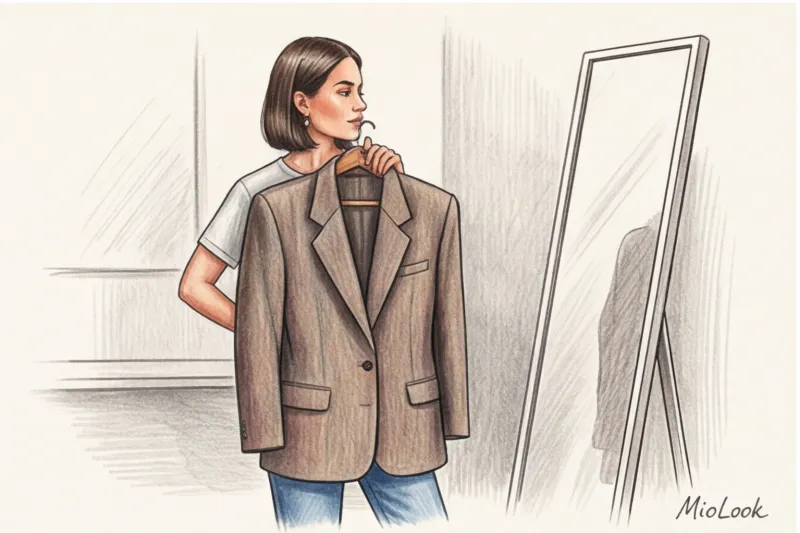
Right here virtual try-on of vintage clothes It's no longer just entertainment and is becoming a tool for rigorous risk management. Why guess whether a jacket from the '80s will make you look like a refrigerator when you can check it out in advance? We've covered in more detail why silhouettes of the past are so different from today's in our the complete guide to fashion by decade Now let's figure out how to use AI to avoid blowing your budget on things that will just end up hanging in your closet.
The Illusion of Nostalgia: Why You Need a Virtual Try-On of Vintage Clothing
One of my clients recently found a stunning 90s silk slip dress for €200. It flowed perfectly in the studio photo. But when the package arrived, it turned out the original cut from that era was completely unsuitable for today's athletic figure with a toned back. The dress was treacherously tight across the chest and baggy at the waist. Returning it was impossible.
According to WGSN analytics for 2024, up to 85% of authentic vintage online purchases are non-returnable. You assume all the risks, and the main one is the historical changes in sizing. The size marking on a vintage item means absolutely nothing in today's realities. For example, a size 46 (Italian 42) according to Dior patterns from the 1960s is a modern European 34 (our usual XS). You physically won't be able to squeeze into "your" size if it was made half a century ago.
"A common myth is, 'The sewing was better in the old days, so vintage clothes fit perfectly.' Yes, the fabric may be higher quality, but those clothes were tailored for a completely different lifestyle, corsetry, and posture. Without first visualizing your figure, you're buying a pig in a poke."
Also, consider the cost of alterations. A reputable European tailor will charge you €50–€80 to repair a complex knot or shorten the hem while preserving the original stitching. This can sometimes be as much as half the cost of the garment itself.
Your perfect look starts here
Join thousands of users who look flawless every day with MioLook. Try on any era online.
Get access — €0.99 onceHow neural networks help avoid the "costume party effect"
The main danger when styling vintage is looking like an extra in a period drama. If you wear a blouse with a Victorian collar from the '70s with a midi skirt from the same era, you'll no longer look modern.
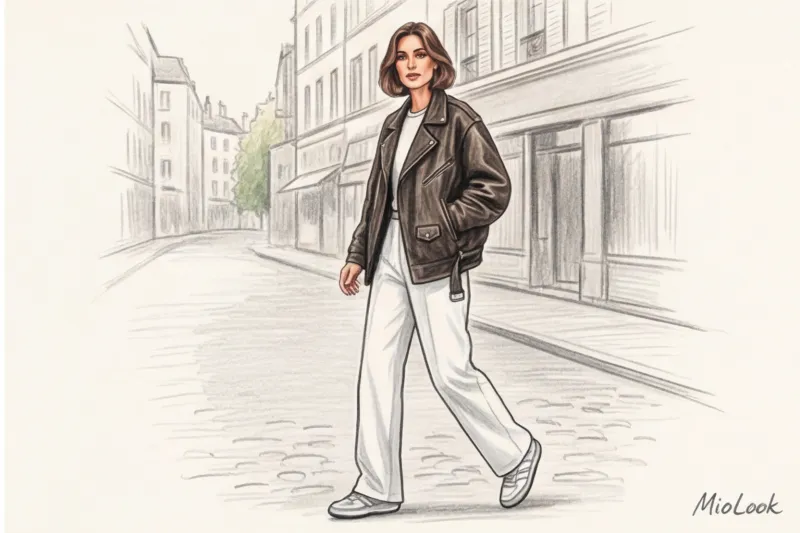
Over 12 years of working with wardrobes, I have come up with the following for myself: 80/20 rule A look should have no more than 20% retro aesthetics, with the remaining 80% being a strict modern base. And this is where AI shines. When I want to figure out whether a complex vintage piece is worth buying, I always simulate it on myself, pairing it with the most boring modern pieces.
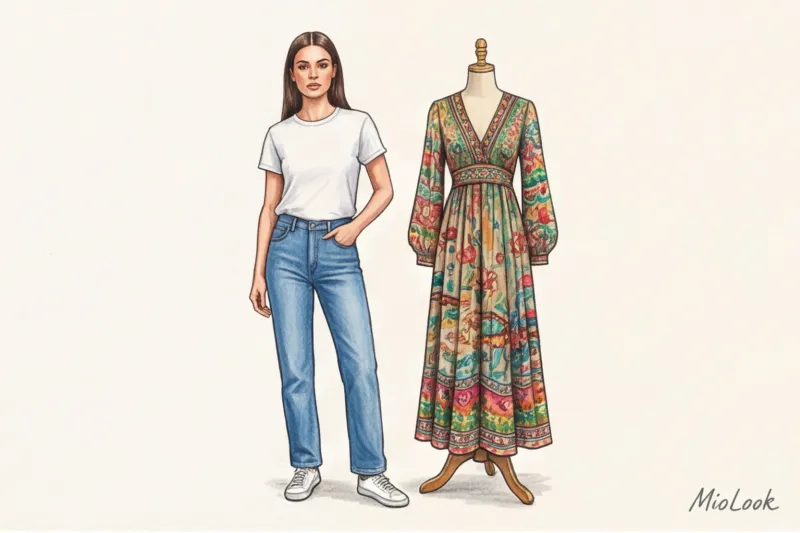
If I'm eyeing a luxurious boho coat, I virtually pair it with straight-leg jeans in the style of COS's basics or a white straight-leg T-shirt from Uniqlo. The AI immediately reveals the contrast between eras: whether the complex textures of the past will mesh with the simplicity of the present. If the item looks out of place even with the basics, I close the store tab.
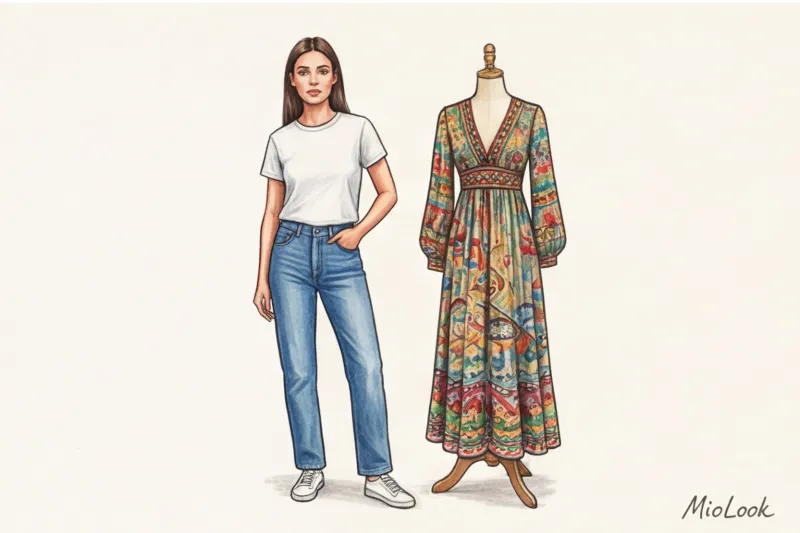
Testing major eras with AI before purchasing
Fashion is cyclical, and that's not just a catchy phrase. Back in 1937, costume historian James Laver formulated his famous law (Laver's Law), according to which any clothing goes through a cycle from "daring" to "ridiculous," and then, years later, becomes "romantic" and returns to trend again. Today online fitting rooms allow us to look into this cycle and select from it only what truly adorns a particular figure.
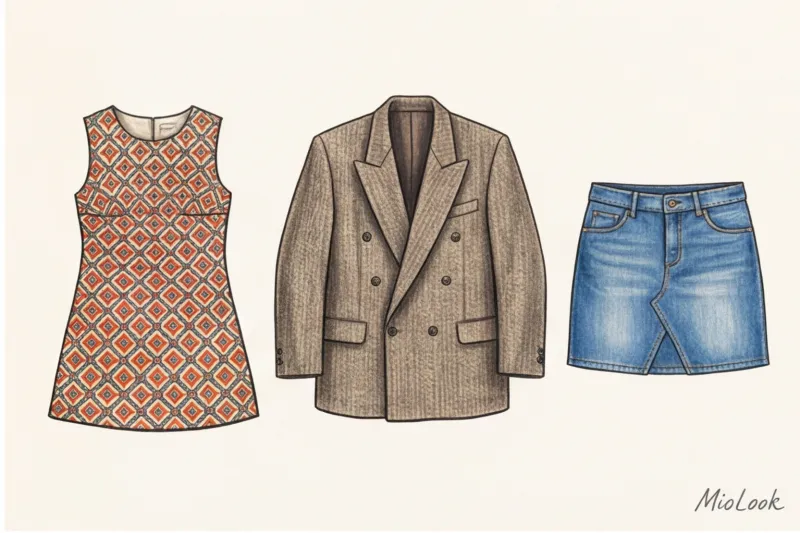
The 70s: Boho, Flared, and Tricky Proportions
The seventies are all about high waists, exaggerated collars with sharp angles, and an abundance of psychedelic prints. These proportions are ideal for women with longer torsos, as high-waisted flared pants visually elongate the legs.
But there's a catch. If you have a naturally short torso, authentic 70s jeans will make you look like you have "legs from your ears" but will completely eliminate your waist. By uploading your photo to the AI stylist, you'll immediately spot this distortion of proportions before you spend €150 on vintage Levi's denim.
80s and 90s: Power Dressing vs. Total Minimalism
My favorite era to incorporate into modern smart-casual is the '80s. The iconic oversized shoulder pads (power dressing) perfectly structure the look. In my practice, I often buy vintage men's jackets from that era. But be careful: if you're short or have narrow hips, the architectural cut of the '80s can make you look like an American football player.
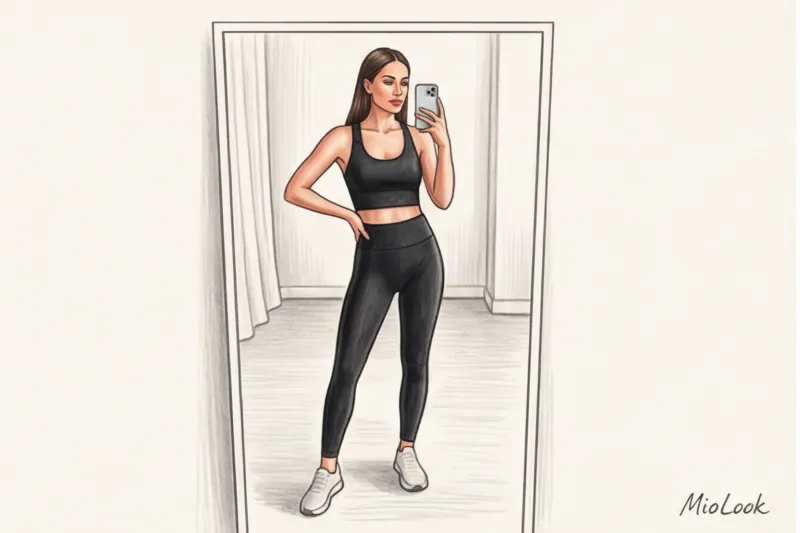
The '90s were a completely different story. It was the era of total minimalism and slip dresses. They were sewn on the bias and demanded a perfect fit. A virtual try-on will show you exactly how the fabric will hug your curves and whether it will highlight anything you'd prefer to hide with thick cotton.
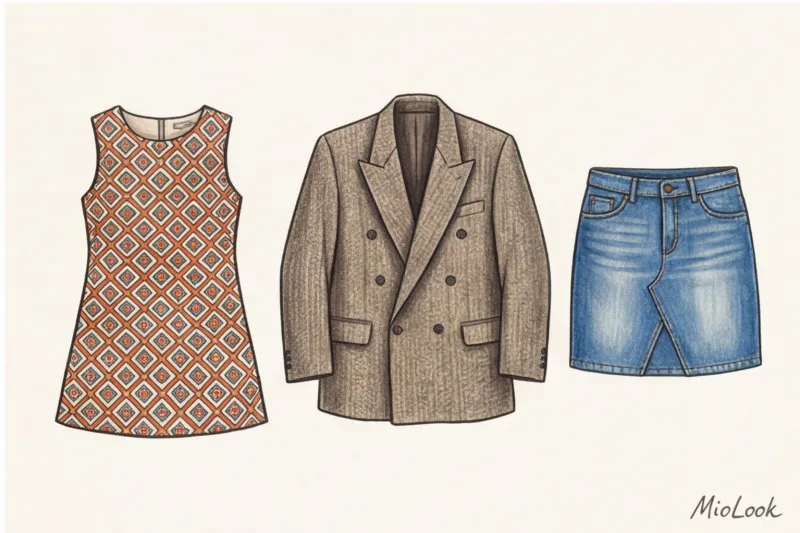
Y2K: Should You Bring Back the 2000s?
The Y2K trend, with its extremely low waists and crop tops, has taken over mass-market brands like Zara and H&M. But a modern adaptation is one thing, and authentic vintage from that era is quite another. A neural network will show you the real picture, without the filters of nostalgia: the low rise mercilessly cuts off the length of the legs.
How can women over 30 style this look without losing their status? Use AI to pair a vintage 2000s crop top with modern high-waisted palazzo pants. You'll maintain the aesthetic while maintaining the proportions.
Checklist: How to Upload Photos for Trying on Retro Looks
I'll be honest: virtual try-ons for vintage clothing have one major limitation. A neural network will show you the perfect silhouette, but it won't convey the tactile sensations. You won't know how itchy the authentic wool will be or what the item will smell like. However, it does mitigate visual and financial risks if you prepare the initial data correctly.
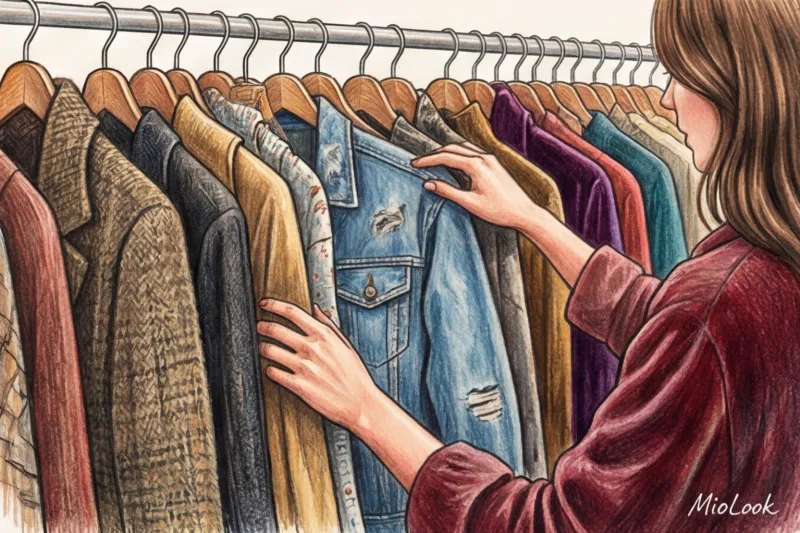
So that the algorithms MioLook To get the most accurate landing result, follow these rules:
- Clothes for the photo: No oversized clothing. Wear a neutral, form-fitting layer (biking shorts, a top, or leggings). The neural network should see the architecture of your body, not the folds of your T-shirt.
- Lighting: Stand facing a window. Even daylight without deep shadows will help the AI calculate volumes correctly.
- Angle: The camera should be positioned exactly at chest or waist level, parallel to the floor. Taking a mirror selfie from the bottom up will artificially elongate your legs, and the 1950s New Look silhouette will be completely unrealistic.
- Text hints: If the app allows you to specify a prompt, describe the texture. Authentic clothing was often made from denser materials. Specify "heavyweight vintage denim 14 oz" or "heavyweight natural silk" to help the neural network accurately simulate the drape.
Ready to get started?
Try the MioLook plan for free—no strings attached. Upload photos and try on iconic pieces from decades past.
Get access — €0.99 onceStylist's Summary: Investing Wisely in Vintage
Buying vintage is a wonderful investment in a unique, conscious wardrobe, but only if you approach the process with a cool head. A piece from the 1980s might cost €50 or €500, but its true value is measured only by how harmoniously it fits into your modern life.
Remember this simple process: find a unique item online → save a high-quality photo → upload it to the virtual fitting room → evaluate its proportions against your basic pieces → and only then click "Buy." Clothes should work for you, highlighting your figure, not serve as a museum-like hanger for historical costumes.