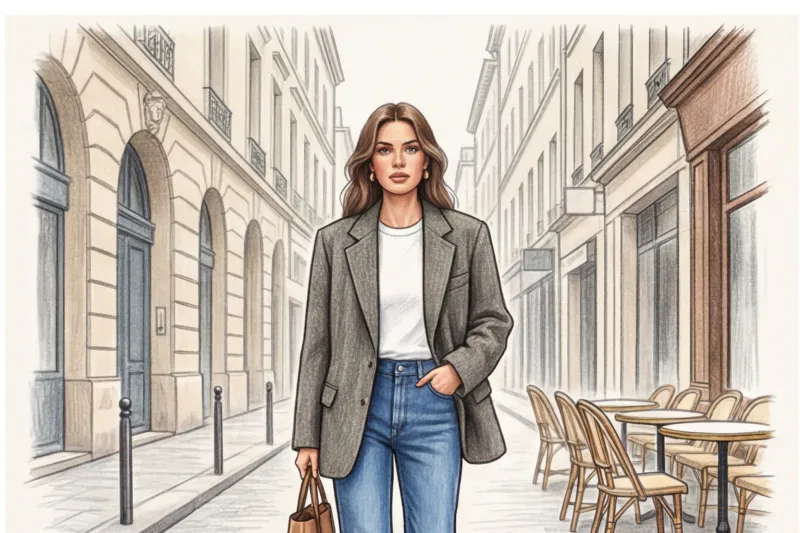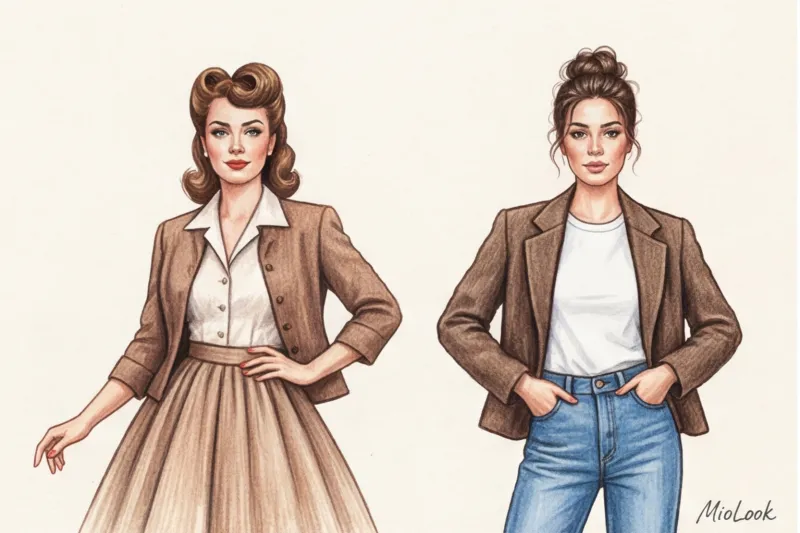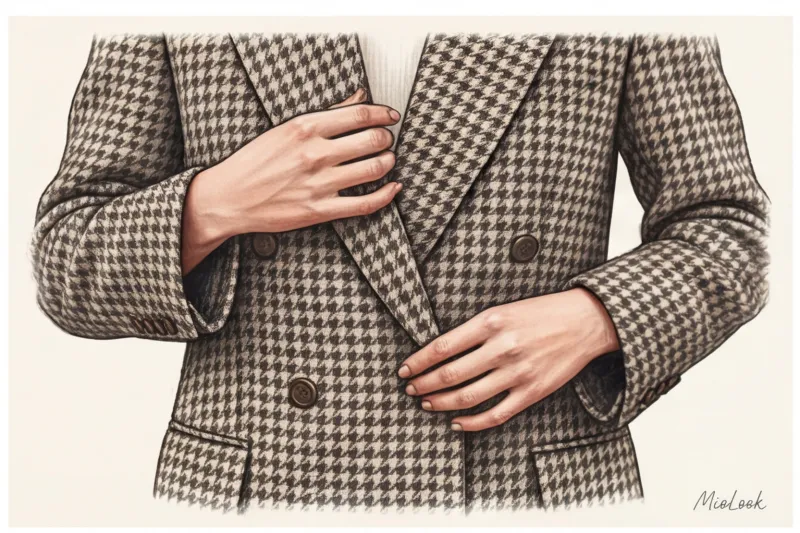
Three weeks ago, a client came to me with a stunning heirloom—an original Chanel tweed jacket straight from the 1980s. Gold buttons, perfect shoulder line, heavy silk lining. But there was one problem: when she wore it, the 32-year-old instantly transformed into a tired, venerable woman. She looked like she was heading to tea with the Queen of England in 1985, not brunch in the center of a modern metropolis.
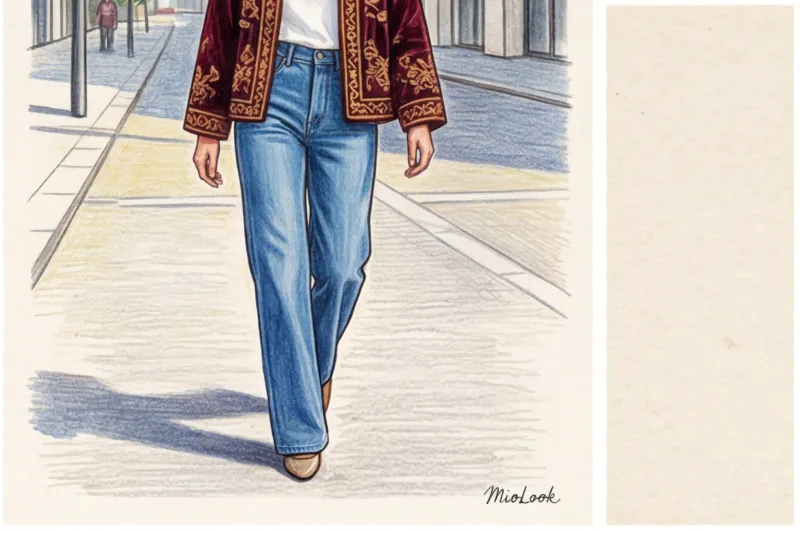
We took off her strict pencil skirt, put a jacket on over a ripped white 200 g/m² T-shirt, added wide-leg jeans and chunky sneakers. At that moment, a street style icon appeared in the mirror. It was then that I was once again convinced: the main secret to How to wear vintage clothes , lies not in the ability to select things from one era, but in strict, deliberate decontextualization.
We've covered in more detail why silhouettes of the past have such a powerful influence on our wardrobe today in our The complete guide to fashion across decades: from the 60s to Y2K And today, I, Isabella Garcia, will share with you mathematically proven formulas for integrating retro finds into a modern capsule wardrobe. Spoiler: you won't have to look like you just ran away from a costume party.
The 80/20 Ratio: The Gold Standard for Wearing Vintage Clothing
According to the analytical report ThredUp 2024 Resale Report The global market for secondhand and vintage clothing is growing three times faster than the mass market, and will reach a staggering $350 billion by 2027. Vintage has become the new heavy luxury. But along with its popularity has come a rise in my clients' biggest fear: looking out of place.
To avoid this, I use the ironclad rule of proportion: 80% modern base and 20% vintage accent The mathematics of style work flawlessly here.
If you're wearing a blouse with a Victorian collar from the '70s (that 20%), the other 80% of your look should scream modern. That could be architectural trousers from COS, simple square-toe shoes, and a complete lack of retro styling. A vintage piece should work as focal point (focal point), and not as part of a historical reconstruction. You can read more about how to build a base in the article about The Pareto principle and the creation of a smart closet.
Your perfect look starts here
Join thousands of users who look flawless every day with MioLook.
Get access — €0.99 onceStylization Formulas: How to Bring Eras Together Without Effort
Former Gucci creative director Alessandro Michele once brilliantly described working with archives as "creating beautiful anachronisms." We don't integrate a piece organically—we juxtapose textures, volumes, and meanings.
Formula 1: Sophisticated vintage uppers with modern minimalism
My favorite formula for clients looking to spice up their everyday casual look: choose a highly intricate, detailed top: a silk blouse with a huge bow from the '70s or a beaded cardigan from the '50s.
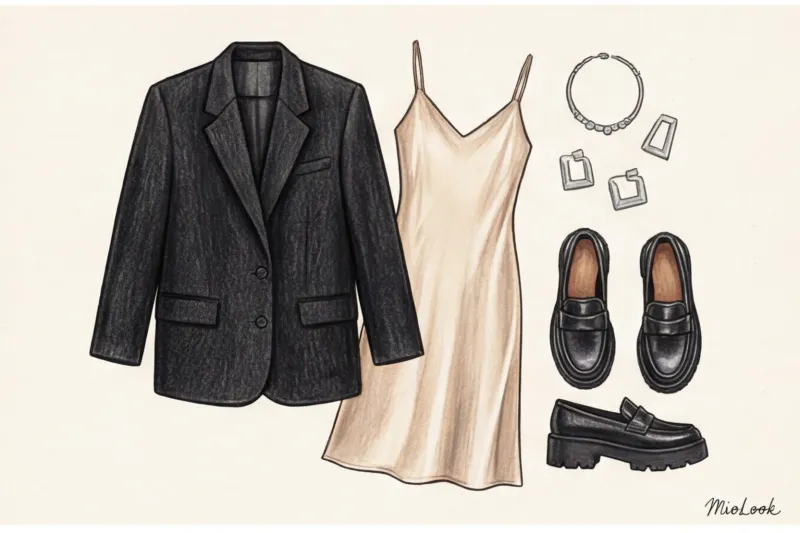
How do we counteract this? With straight, slightly baggy denim or matte faux leather trousers. Shoes are the anchor here—no dainty pumps! Just chunky loafers with chunky soles or minimalist white sneakers. The contrast between the overly decorative upper and the utilitarian lower creates that spark of modern style.
Formula 2: 2020s Strict Geometry + Retro Prints and Accessories
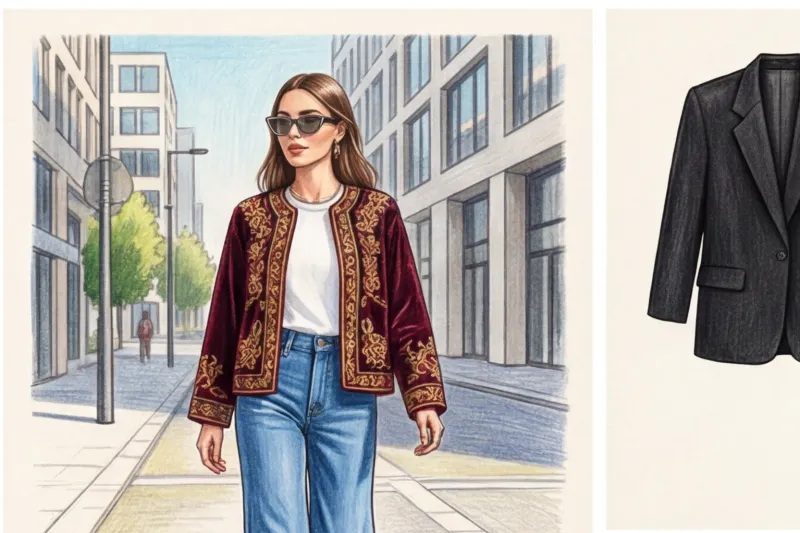
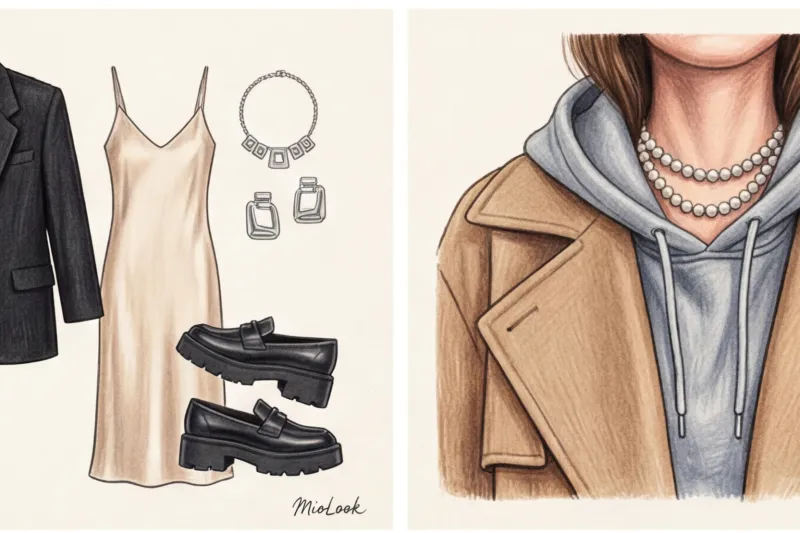
Here we're working in reverse. The look's foundation is strict, modern geometry: an oversized, straight-cut men's jacket (for example, from the current Massimo Dutti collections) and wide-leg trousers with a pleated waist.
"My personal Mediterranean style trick: a simple white ribbed top, slicked-back hair, and a pair of chunky gold clip-on earrings from the '80s (I recommend looking for vintage YSL or Givenchy). It looks so confident and expensive that no one will notice you're wearing regular jeans."
If you are unsure whether your personal combination will work, try it visualization function in MioLook — a smart AI stylist will help you assess the balance of proportions before you leave the house.
Secret Styling Trick: Decontextualizing Retro Items
Decontextualization is the act of stripping an item of its original historical and semantic context. This technique is what distinguishes a simply well-dressed woman from a street style influencer.
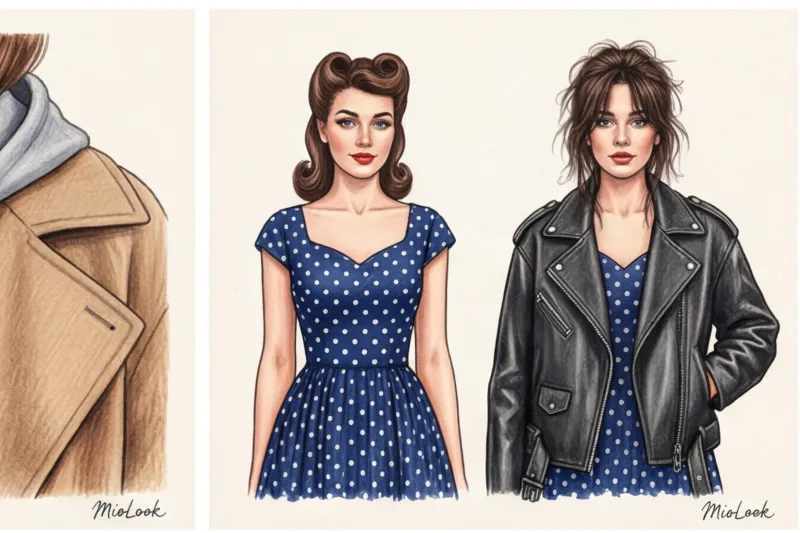
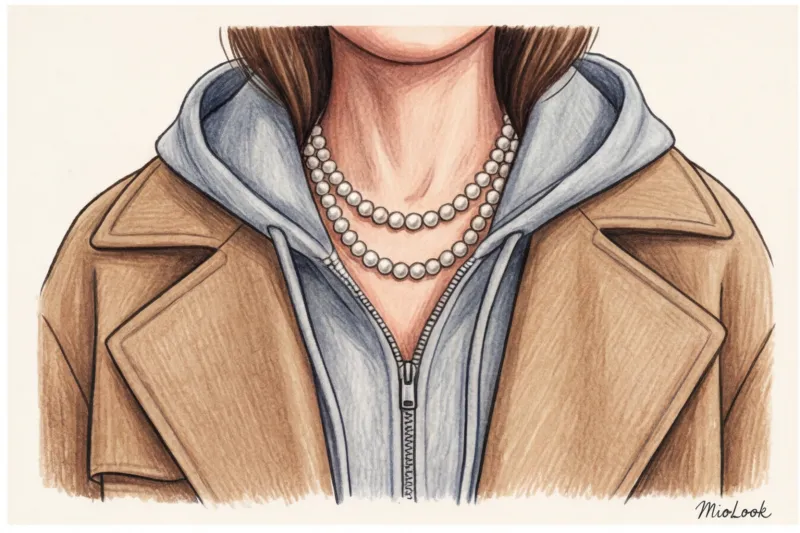
How do we usually wear a classic strand of pearls? With a sheath dress, pumps, and a tweed jacket. Forget it. Try layering vintage pearls over an oversized, faded gray hoodie, layering a structured trench coat over the top.
Another example: a '90s tracksuit top with contrasting stripes (Adidas or Fila). If you wear it with sweatpants, you're heading to the gym. But if you wear it under a formal navy blue two-piece office suit instead of a shirt, you're demonstrating the ultimate in ironic fashion. Contrast in meaning always works more powerfully than just color combinations.
Ready to get started?
Try the MioLook plan for free—no commitments. A smart assistant for your wardrobe.
Get access — €0.99 onceCommon Mistakes in Wearing Vintage Clothes (and How to Fix Them)
Over 12 years of practice, I've seen plenty of retro styling fail. Here are the three main pitfalls.
Mistake 1: Historical reconstruction of a beauty image
You bought a gorgeous polka-dot dress from the 1950s. Your hand instinctively reaches out to draw bold black eyeliner and apply red lipstick. Stop! This will instantly transform you into an actress from a burnt-out theater.
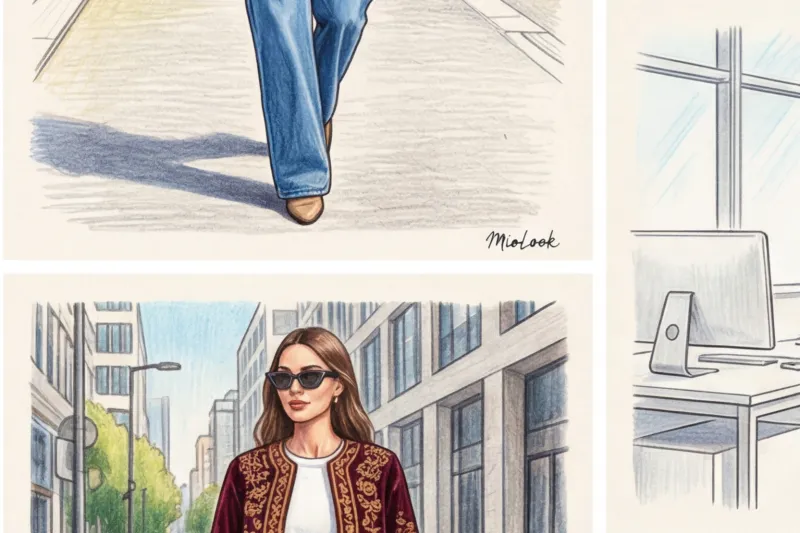
Solution: Retro clothes are needed Clean Girl Makeup (Damp skin, clear lip gloss, slightly brushed-out eyebrows) and a casual hairstyle, as if you just rolled out of bed. The older the outfit, the more modern your face should appear.
Mistake 2: Total restoration (or why scuffs are a luxury)
I often encounter a common myth: vintage items need to be restored to a brand-new state. Women take their '70s jackets to the dry cleaners asking them to completely paint over the scuffs on the leather, and polish antique brass to a dazzling shine.
This is a huge mistake! A subtle patina on metal, faded denim, or the refined creases on vintage leather are all markers of authenticity. They shouldn't be hidden; they should be emphasized by contrasting them with perfectly ironed modern textures (for example, wearing a distressed leather jacket over a crisp, white poplin shirt).
But there is an important limitation here: This approach doesn't work if the item is obviously torn, has yellow sweat stains, or emits a persistent musty smell. The line between "vintage chic" and "untidiness" is measured by the cleanliness of the item.
Mistake 3: Ignoring pattern changes
Women's figures in the 1960s and 2020s differ, as do fit standards. Armholes were narrower, waists were higher, and shoulder width was defined differently. Don't try to squeeze into a garment that doesn't fit you just because it's Dior from 1970.
Vintage in the Office: Integrating Retro into Business Dress Code
Is it possible to integrate items with a history into the strict corporate world? Absolutely. But you need to be very careful.
If you work within the Business Casual dress code (which we wrote about in detail in the article Smart Casual for Women: A Style Guide for the Office ), vintage is your legal way to stand out without breaking protocol.
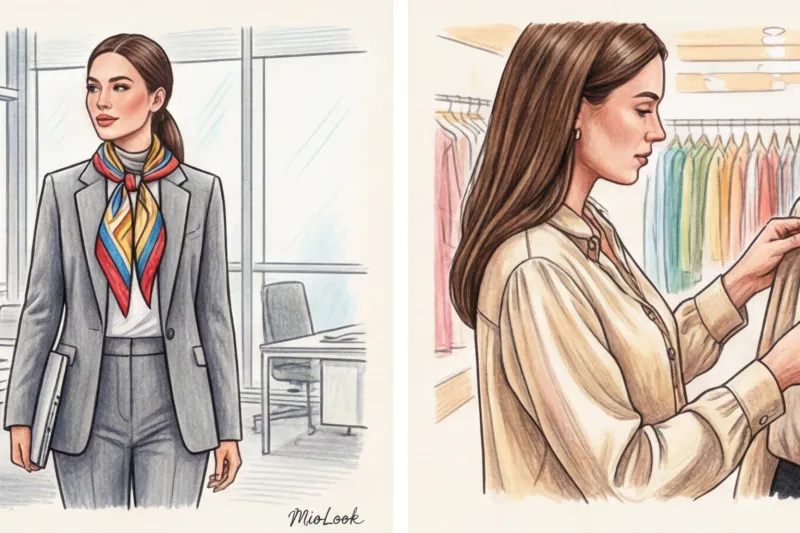
Accessories are a safe entry point. A vintage silk Hermès or Cartier bag casually draped over the handle of a modern, rigid tote bag. A men's mechanical watch from the 1960s on a slender woman's wrist. A geometric Bakelite brooch on the lapel of a modern, minimalist gray jacket. These are the micro-details that mark you as someone with a deep sense of style without making the hiring manager nervous.
Checklist: 5 Steps to Buying and Styling
Before you take your vintage boutique find to the checkout, run it through this professional filter:
- Smell and fabric test. Natural compositions from yesteryear often outperform modern mass-market options (vintage silk with a density of 22 momme is a treasure). But if the item smells like a basement that hasn't disappeared after the first dry cleaning, don't buy it.
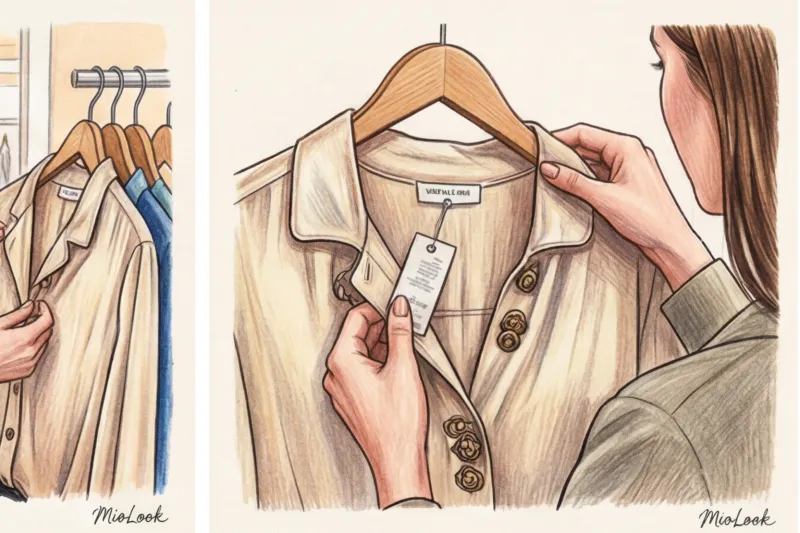
- Evaluation of fittings. Original buttons and working metal zippers (not cheap modern plastic) are a sign of a good investment.
- The rule of three combinations. Mentally create three images of clothing with this item, which already hanging in your closet. If it doesn't work, the item will become dead weight.
- Budget for a tailor. Never spend your last penny on vintage clothing. Budget €20 to €50 for tailor-made alterations: shortening the sleeves, rearranging the buttons, and tightening the waist. Fit is everything.
Vintage styling isn't about clinging to the past. It's a way to make your wardrobe voluminous, sophisticated, and completely unique. Stop treating old pieces with museum-like awe. Mix them with sneakers, hide them under oversized hoodies, and wear by day what you once only wore at night. After all, true style is born where strict rules end and your own personal game begins.