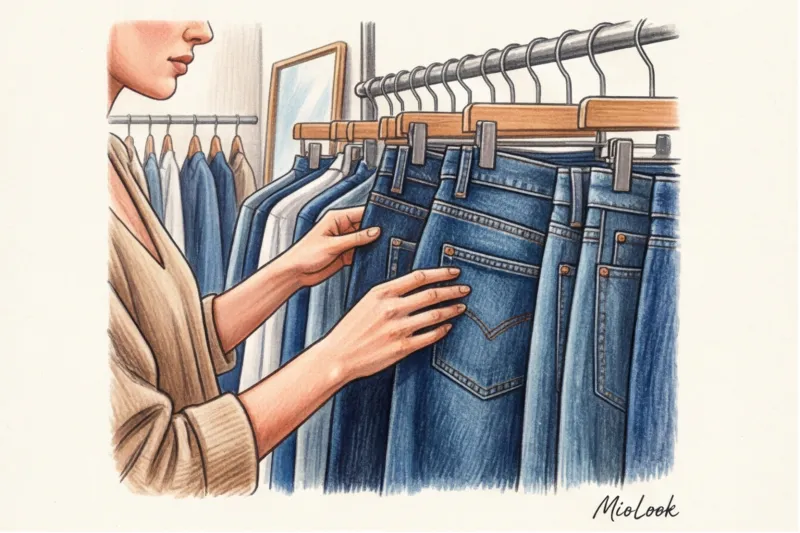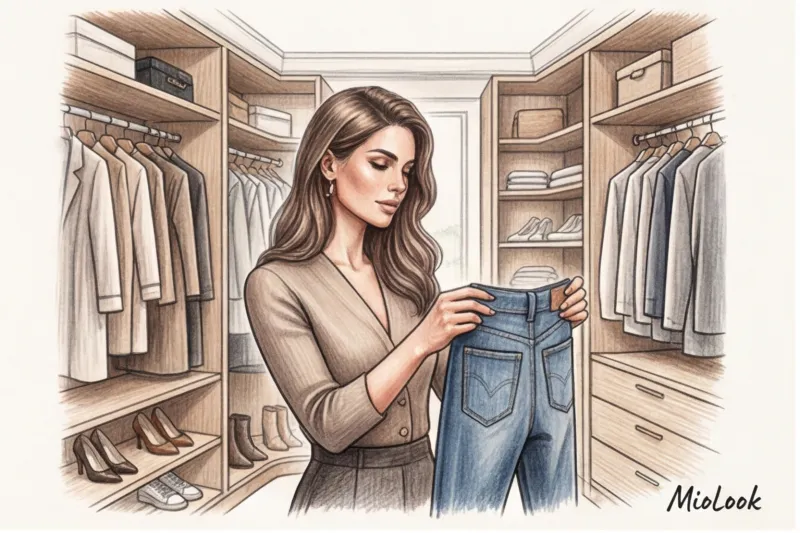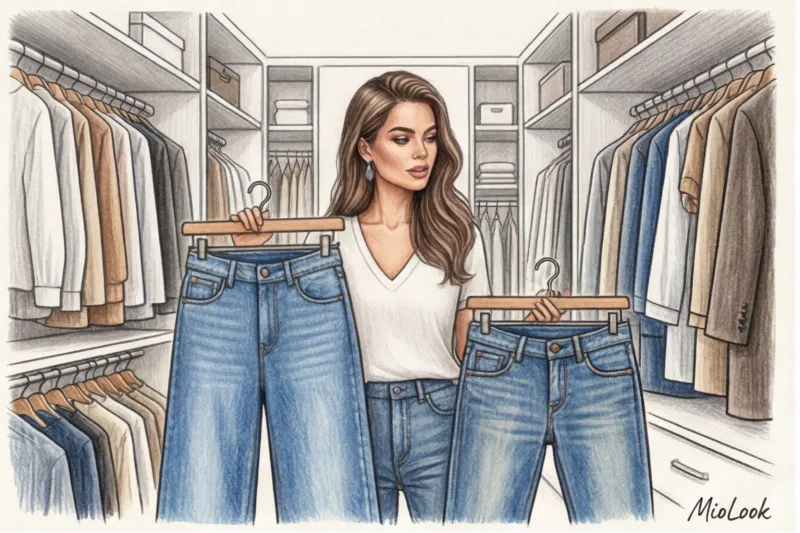
Last week, a client and I were going through her closet, and she pulled out a huge plastic bag with a resigned look. "Here are my skinny jeans from 2013. Should we throw them out since they're anti-trend?" she asked. Imagine her surprise when I told her to keep three pairs. Why? Because the evolution of jeans It's not a straight line from "outdated" to "fashionable," but a complex, mathematically predictable cycle. What seems hopelessly irrelevant today becomes a vintage find tomorrow. We discussed this phenomenon in more detail in our a complete fashion guide across decades and current trends.
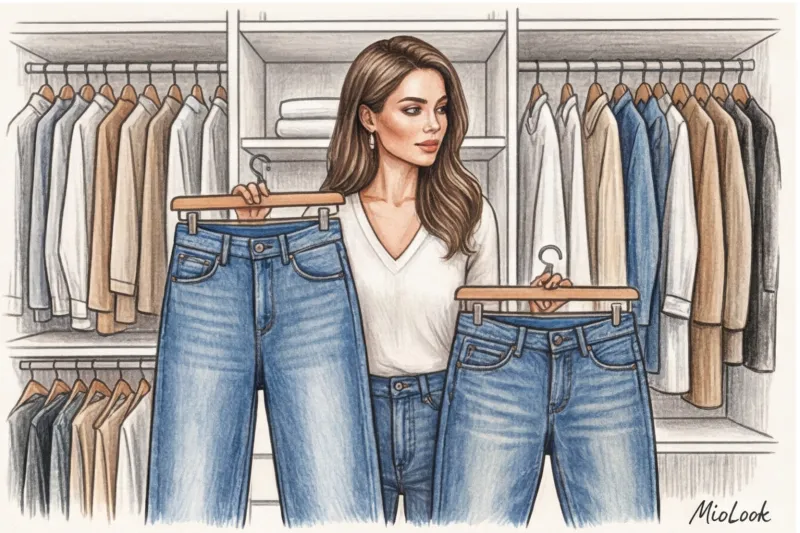
The Evolution of Jeans: Why We're Wearing What We Hated 10 Years Ago Again
Over 12 years of working as a personal stylist, I've noticed a pattern: women often buy the latest mass-market items, not realizing that they're exact replicas of things they discarded 15 years ago. Trends' comebacks follow a strict "20-30 year rule." This is linked to the age of brands' creative directors. When a designer turns 40, they inevitably begin to yearn for their youth—and the silhouettes of their youth return to the runways.
Back in 1937, fashion historian James Laver formulated the Law of Cycles (Laver's Law). According to it, the same item is considered "daring" in the year it was introduced, "hideous" 10 years later, and "romantic vintage" 30 years later. Understanding this law saves your shopping budget. You stop chasing the latest trends and start investing in the right silhouettes, understanding that fashion is simply reimagining the archives.
The 1970s and 1980s: The era of flares, acid-washed jeans, and the birth of the mass market
In the 1970s, denim finally ceased to be a strictly work uniform and became a symbol of social rebellion. It was then that flared jeans from the knee down and extremely high-waisted styles accentuating the waist emerged. By the 1980s, the industry had made a technological breakthrough: the invention of pumice stone washing for denim gave the world the famous textured acid wash.
It was then that the "Mom Jeans" phenomenon emerged. These were functional, loose-fitting trousers made of very heavy cotton, tapered at the bottom. The irony of the jeans' evolution is that in the '90s, teenagers considered this cut the symbol of "boring moms," while today, European mass-market jeans are breaking sales records by recreating this very archival fit.
Access to MioLook for €0.99 — one-time payment
A smart AI stylist will select the perfect look based on your figure and preferences.
Get access — €0.99 onceVintage cotton versus modern mass-market
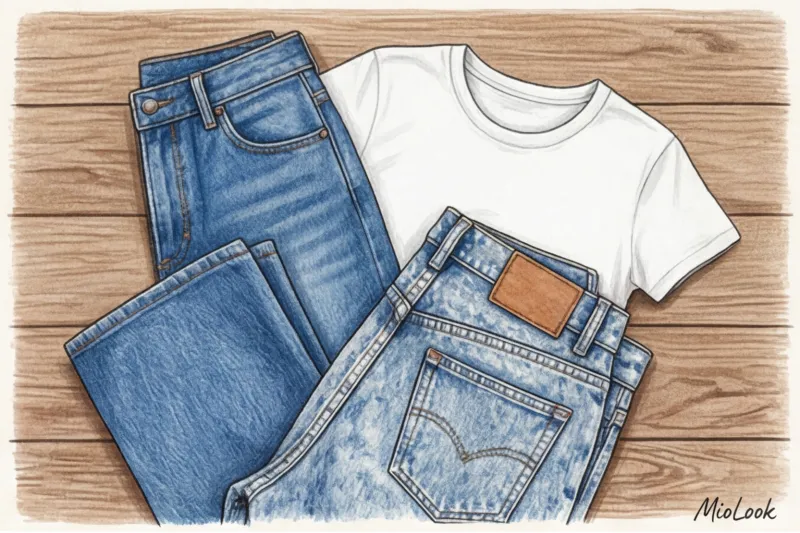
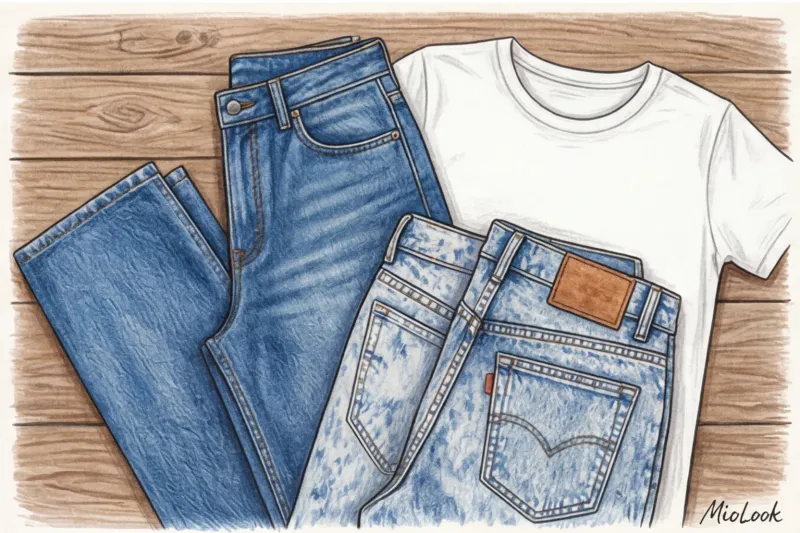
When comparing the fit of vintage Levi's 501s from a thrift store to modern straight-leg styles from H&M or Zara for clients, I always pay attention to the fabric weight. Authentic jeans from the '80s were made from 14-15 oz denim. They were literally "stiff" and required breaking in, but lasted for decades, beautifully fading at the creases.
Modern mass-market denim in the €30–€50 range uses 10–11 ounce denim. It's softer and feels more comfortable on the first try-on, but it doesn't hold its shape at all. For an authentic '80s-style fit, look for 100% cotton and a dense texture on the tag, even if the pants feel too stiff at first.
1990s and 2000s: Grunge, minimalism, and extremely low waists
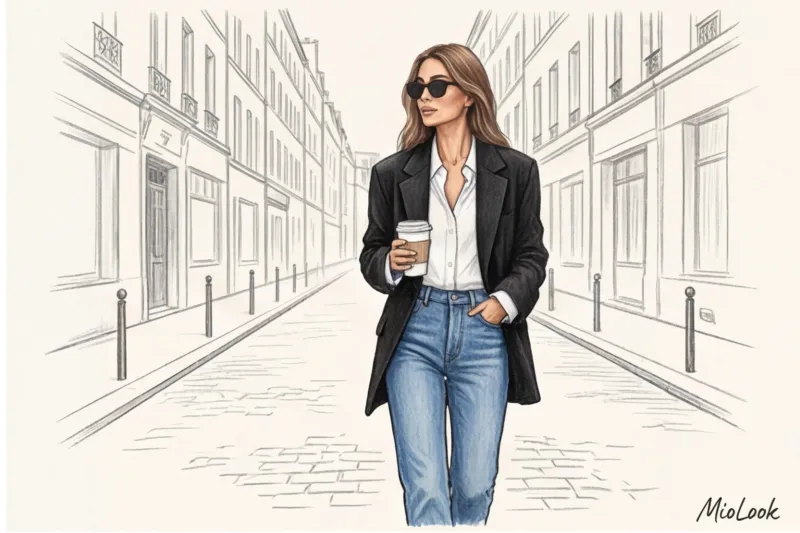
90s minimalism gave us the perfect basic: straight-leg jeans in a classic blue, unworn color. It's the cut that saves any situation today, whether it's Sunday brunch or Friday night dress code at the office. Brands like Massimo Dutti (in the €70-€90 price range) still build their essential lines on the very templates of 90s minimalism.
But then came the 2000s (the Y2K era), and pop culture took a radical turn. Carol Hornbuckle and other designers dropped waistlines to critical levels. The evolution of jeans entered a glamorous phase: rhinestones, embroidery, flared bottoms, and midriff-baring micro-rise jeans appeared. The silhouette became provocative and demanding of the figure.
How to Wear 2000s Low-Rise Dresses in 2024
Many of my clients panic when they see the return of the low-waist style in new collections. But there's a key caveat: today's low-waist style is a far cry from the clinging nightmare Paris Hilton wore in 2003.
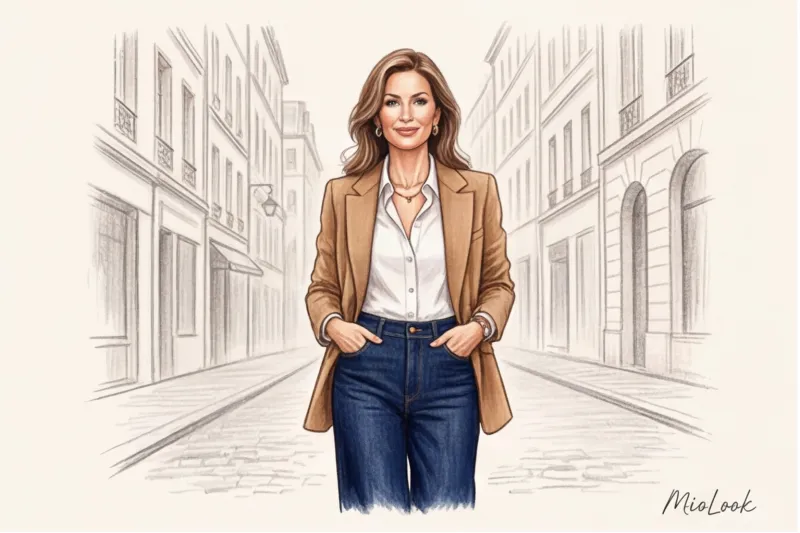
Today we don't wear tight-fitting Hip-hugging jeans. The current cut is baggy (baggy, very wide legs) with a relaxed fit at the hipbone. To adapt this trend to a grown-up wardrobe, balance the proportions: pair these jeans not with crop tops, but with a voluminous, structured jacket or a tucked-in men's shirt. This is a great technique for creating an elegant look. smart casual looks for women.
The 2010s: The Skinny Dictatorship and the Elastane Era
The 2010s can safely be called the technological revolution of stretch. The invention of new types of elastane led to the emergence of jeggings—a hybrid of leggings and jeans. The entire world was immersed in comfort, and the form-fitting skinny silhouette began to dictate the proportions of the entire wardrobe for the next decade.
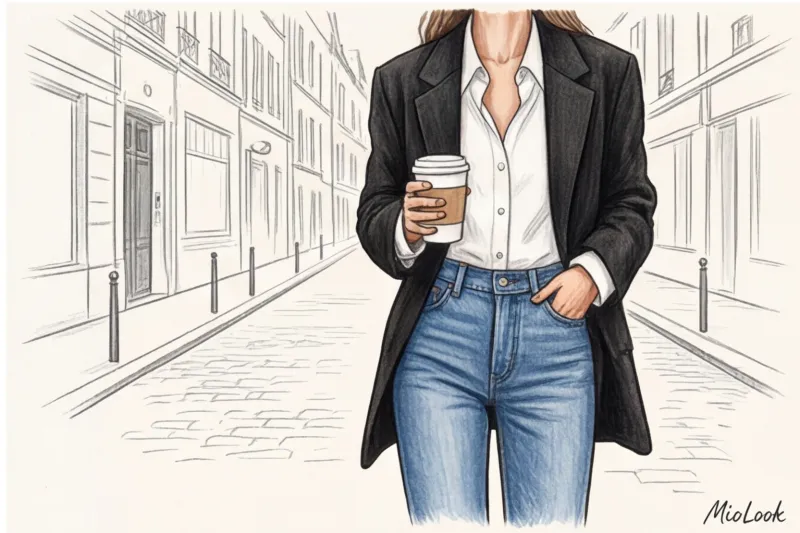
But we paid for this comfort with the durability of our clothes. In my experience, I constantly see jeans from the 2010s lose their shape after just a month of active wear.
"Jeans with more than 3% elastane are a waste of money. After 5-7 washes, the elastic fibers are irreparably damaged, and the fabric becomes misshapen at the knees and buttocks, turning a stylish garment into a sloppy one."
Your perfect look starts here
Join thousands of users who look flawless every day with MioLook.
Get access — €0.99 onceThe Myth of the "Death" of Skinny Jeans
Contrary to the headlines in glossy magazines, skinny jeans are not dead and will never go out of fashion completely. This is my main argument in debates with fellow stylists. The evolution of jeans has simply changed their status.
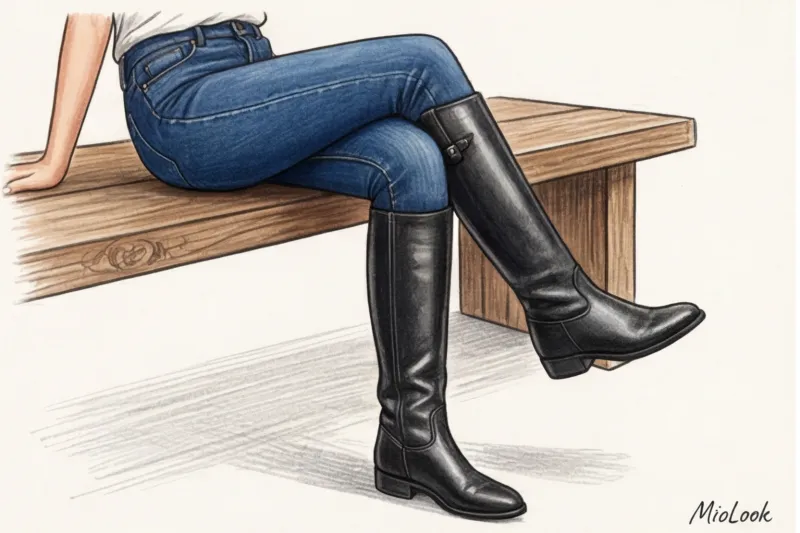
Skinny jeans have moved from the "hottest trend" category to the "functional essential." When the cold season arrives and we're throwing on oversized sweaters and thigh-high boots, no wide-leg jeans can handle the job better than a good old pair of skinny jeans. They act as the perfect, smooth base layer without creating unsightly creases in the shaft.
Our Time: Wide Silhouettes and a Return to the Archives
Wide-leg jeans and puddle pants are all the rage these days. According to a 2022 report from the respected fashion agency McKinsey on the development of the fashion industry, this relaxed silhouette is a direct response to pandemic demand. We've become unaccustomed to rigid structures and no longer want to tolerate the pressure of fabric on our bellies.
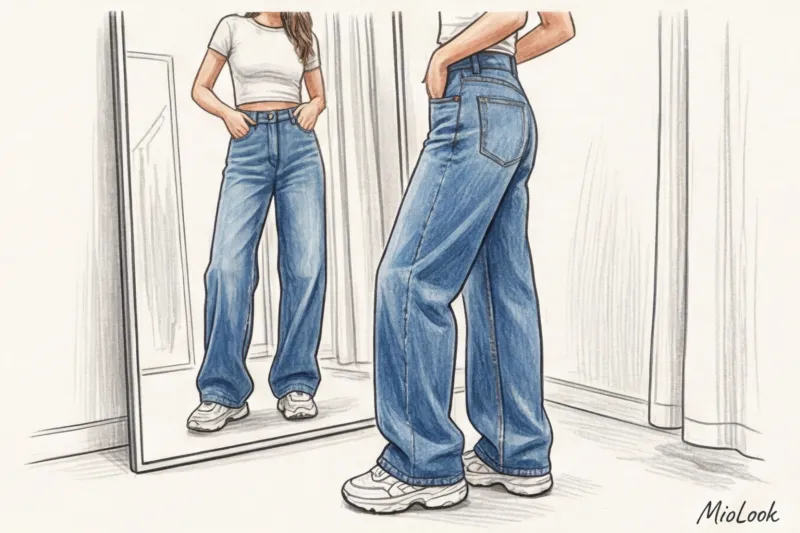
An interesting insight from behind the scenes of the industry: to create a trendy, relaxed silhouette, European brands like COS (where high-quality denim costs around €90–110) or &Other Stories often take vintage men's patterns from the '90s archives and simply reshape the waist to fit women's measurements.
Another important trend today is sustainability. We increasingly see labels containing recycled cotton and labels declaring the absence of toxic dyes. Water saved when washing denim has become a new industry standard.
Ready to get started?
Try the free plan—no commitments required. Start managing your wardrobe wisely.
Get access — €0.99 onceA Stylist's Checklist: How to Put Together a Timeless Denim Capsule
In order to collect the right capsule wardrobe You don't need to buy every seasonal trend. Denim basics are built on three pillars. Here's my tried-and-true formula that covers 99% of wardrobe needs:
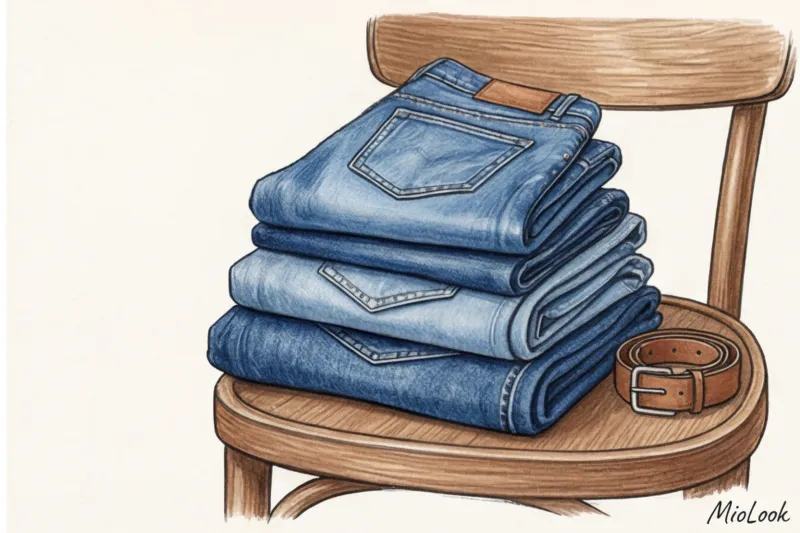
- Basic straight jeans (Straight) — your long-term investment. Choose a thick, 100% cotton, no elastane, classic blue color, and a fit that fits snugly at your waist. This pair will pair perfectly with a blazer, silk blouse, or any jumper. Budget €80–€150 for this pair.
- A trendy wide pair (Wide-leg or Baggy) — to create modern proportions. Since the trend for excessive volume may wane in 2-3 years, it's a good idea to buy a pair like this from a mass-market store (for example, Zara for €40-50).
- Functional skinny jeans — keep them in your closet exclusively for tucking into tall shoes. An important rule: always wear them with a voluminous top (an oversized sweater, a loose cardigan) to avoid the outdated "tight from head to toe" silhouette.
What you should definitely avoid: Avoid excessive decorative elements. Rhinestones, complex marbled finishes, and aggressive rips—all of these are signs of a fleeting microtrend. Quality basic jeans should look like you've been wearing them for five years, but they're still impeccable.
If you want to easily integrate denim into your everyday looks and stop second guessing yourself in the mirror in the morning, try digitizing your pieces with MioLook The app will tell you what to wear with straight jeans and what to wear with baggy jeans.
Remember: the perfect jeans aren't the ones hanging on a mannequin in the window of the fanciest boutique. They're the ones that make your legs look longer and make you feel confident and relaxed, even if that particular cut was invented exactly 30 years ago.