Do you know what the iconic "Rachel" haircut and the modern, luxurious blowout from TikTok have in common? The illusion of effortlessness. When Jennifer Aniston first appeared on screen with this flowing, voluminous texture, millions of women rushed to salons. What they didn't know was that the actress's stylist, Chris McMillan, required up to three hours of daily brushing to achieve this "mesh" look. Today, '90s-style hairstyles are making a comeback, but luckily for us, the chemistry of styling products and the physics of tools have changed forever.
As a practicing image consultant and colorist with 12 years of experience, I constantly see the same mistake. Women try to recreate retro volume with modern strong-hold hairsprays, only to end up with a permanent "helmet" on their heads. Unlike the typical advice of "backcomb and spray," today I'll tell you how to adapt the exaggerated trends of past eras to suit modern hair texture and face shape.
By the way, why are we so drawn to the aesthetics of the past? We discussed the cyclical nature of trends in more detail in our the complete guide to fashion by decade , where we discussed how the 20-year rule works.
The 20-Year Rule: Why '90s and 2000s-Style Hairstyles Are Ruling Trends Again
According to the analytical agency WGSN (2024), the return of Y2K and 90s grunge aesthetics isn't just millennial nostalgia, but a conscious choice by Generation Z, driven by social media algorithms. The hashtag #90shair is breaking viewership records, but what we see on our screens is radically different from what our mothers wore.
The psychology of perception works like this: what seemed ridiculous to us ten years ago (remember plastic clip-on clasps or corrugated fabric) looks ultra-fashionable today due to the change in context. The main difference between modern retro and pure vintage is texture. We only take silhouette , but we change the density of the hair due to new products.
"A modern hairstyle should always allow hair to move. If your hair doesn't move in the wind, it's not a style, it's an architectural structure"—that's the rule I tell every client.
Access to MioLook for €0.99 — one-time payment
A smart AI stylist will find the perfect look for your retro hairstyle.
Get access — €0.99 once70s aesthetics: from casual curtain bangs to voluminous disco
The 1970s gave us two polar opposite trends: the loose, slightly messy layers of the flower children (hippies) and the flawless, glossy volume of the Studio 54 regulars. It was during this era that Vidal Sassoon's precise geometric haircuts revolutionized the look. Stylists began to understand how layers can visually change the oval of the face and even rejuvenate.
From an image consultant's perspective, the '70s cascade is a brilliant correction tool. Properly placed layers at cheekbone level create a lifting effect, drawing attention away from a heavy jawline or asymmetry.
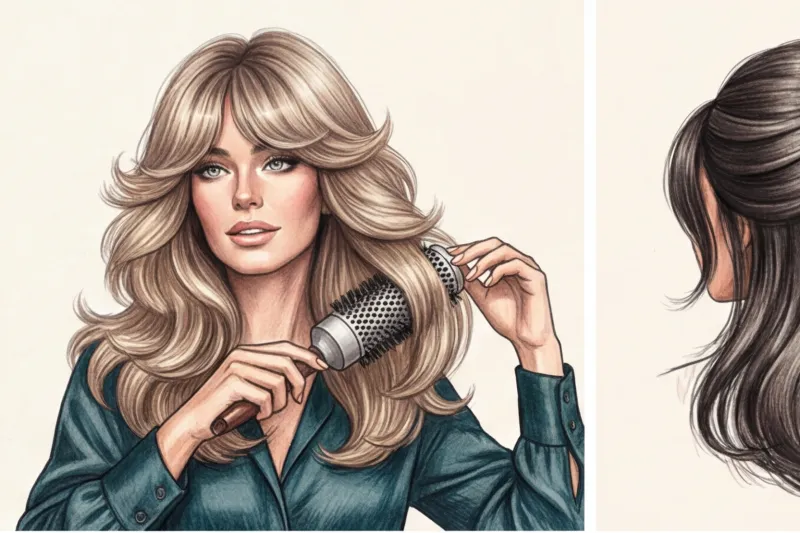
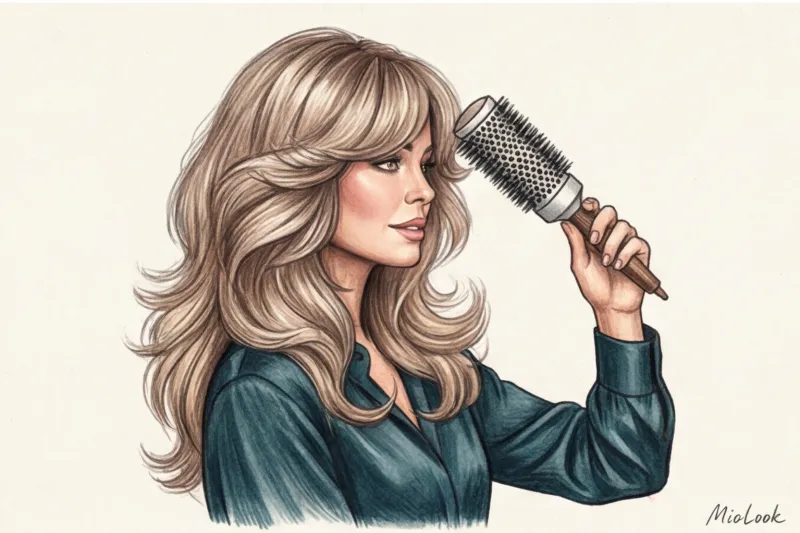
Farrah's Cut: How to Create Layered Hair Without the Helmet Effect
Farrah Fawcett's iconic hairstyle is built on movement that extends outward from the face. If you want to replicate it today without looking 15 years older, follow this simple rule: leave the ends slightly straight.
Curl only the middle section of your hair with a large-diameter curling iron (at least 32 mm). If you curl the ends inward, like they did in the 70s, you'll achieve the look of a Soviet TV presenter. If you have long bangs, I recommend checking out our tips on how to How to quickly style curtain bangs so that it fits organically into the overall mass of hair.
90s Hairstyles: Grunge, Supermodels, and Iconic Minimalism
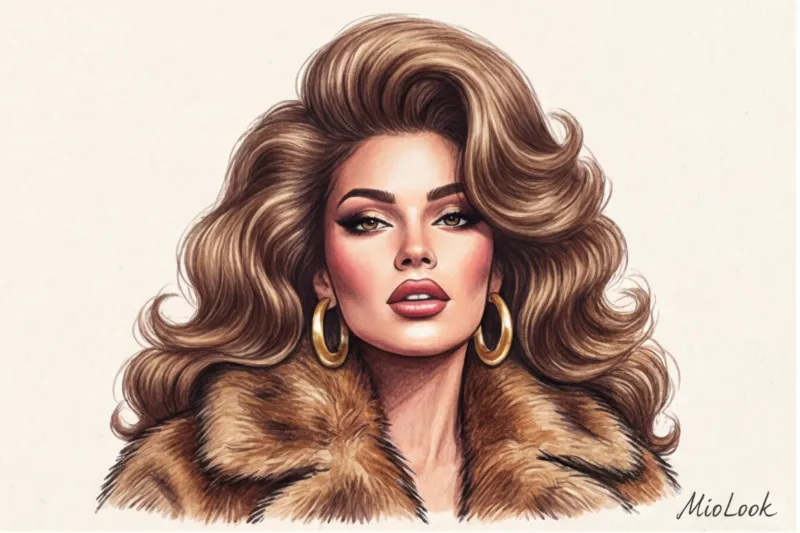
The 1990s divided women into two camps. On one side was the dizzying, luxurious volume of supermodels (Cindy Crawford, Claudia Schiffer). On the other was the deliberately sleek, expensive minimalism of Caroline Bessette-Kennedy, which today has been reborn as an aesthetic of "quiet luxury."
Here, I want to share a crucial insight as a colorist. Do you know why perfectly shaped '90s hairstyles often look cheap in real life? It's because of the color. The dense, monochromatic color of that decade (be it deep black, eggplant, or flat yellow blonde) looks dated today. A sophisticated modern color saves a vintage shape. Textured coloring using the airtouch or balayage techniques creates a play of shadows that adds volume to 90s-style hairstyles even without styling.
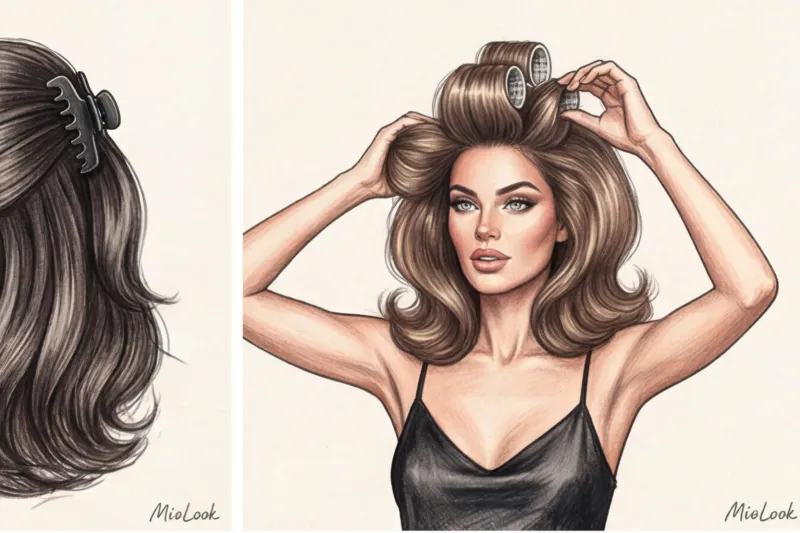
The Secret to a Voluminous Blowout: The Physics of Hair Cooling
One of my clients once came home in tears: she'd tried to replicate Cindy Crawford's hairstyle. She'd bought the strongest hairspray, backcombed her roots, and ended up with a stiff frizz. This is the biggest myth about '90s hairstyles.
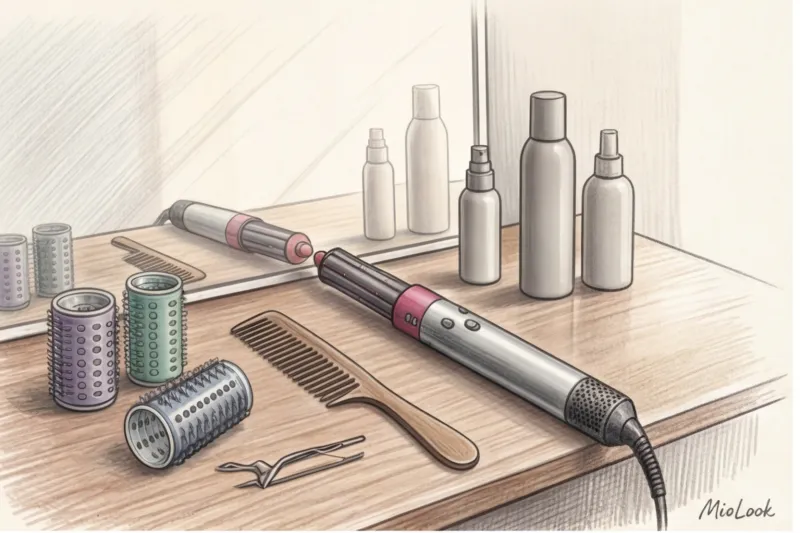
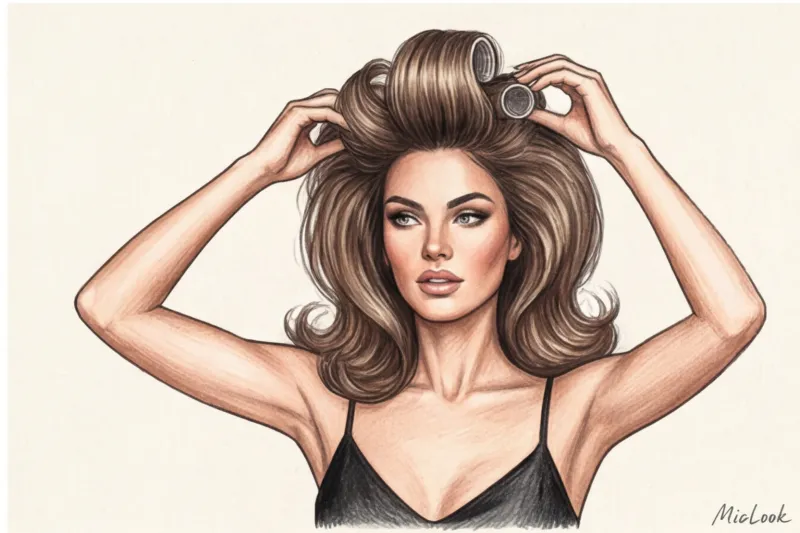
The volume of supermodels is not based on hairspray, but on the physics of hydrogen bonds in hair and large Velcro rollers. The hair takes and remembers its shape not at the moment of heating, but at the moment cooling.
Here's a step-by-step recipe for a proper blowout:
1. Apply a salt spray or thickening primer to damp roots (about What products provide maximum root volume? , we wrote earlier).
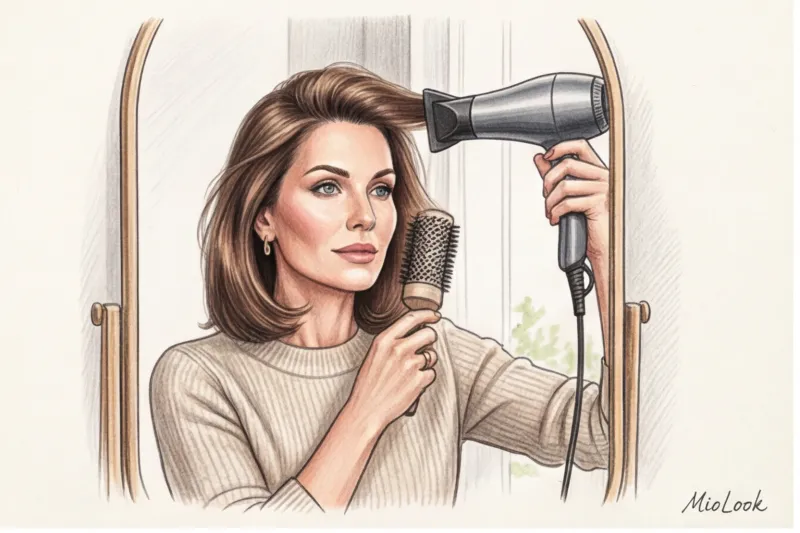
2. Heat the strand with a hair dryer using a brush, creating strong tension.
3. While the strand is still hot, wrap it around a large Velcro roller and secure it with a clip.
4. Be sure to let your hair cool completely (15-20 minutes).
5. Remove the rollers and fluff your hair with your hands using a drop of texturizing powder, not hairspray.
A sleek bun with loose strands: perfect facial geometry
If volume isn't your thing, consider a minimalist bun with two thin strands of hair hanging loose near the face. This '90s micro-trend is beloved by modern celebrities like Bella Hadid, and for good reason. Two vertical lines at the face visually narrow it and highlight the cheekbones.
The choice of parting is crucial here: if you have perfect symmetry, go for a straight, straight parting. If you have slight asymmetry (like 90% of people), choose a zigzag parting—it will distract attention from unevenness and add a touch of casualness, characteristic of Office Siren aesthetics.
Your perfect look starts here
Join thousands of users who look flawless every day with MioLook, choosing their makeup and hairstyle virtually.
Get access — €0.99 onceY2K: Crab buns, spike buns, and micro braids
The Y2K (Year 2000) aesthetic is aggressive pop glamour. Unlike the soft '90s, the 2000s were built on extreme texture contrasts: perfectly sleek, sleek roots and pointed, spiky ends.
The iconic spikey bun is back. But how can a grown woman incorporate Y2K elements into a smart-casual wardrobe without looking like she's stuck in adolescence? fair limitation , which fashion magazines often keep silent about: Y2K has a strong infantilizing effect.
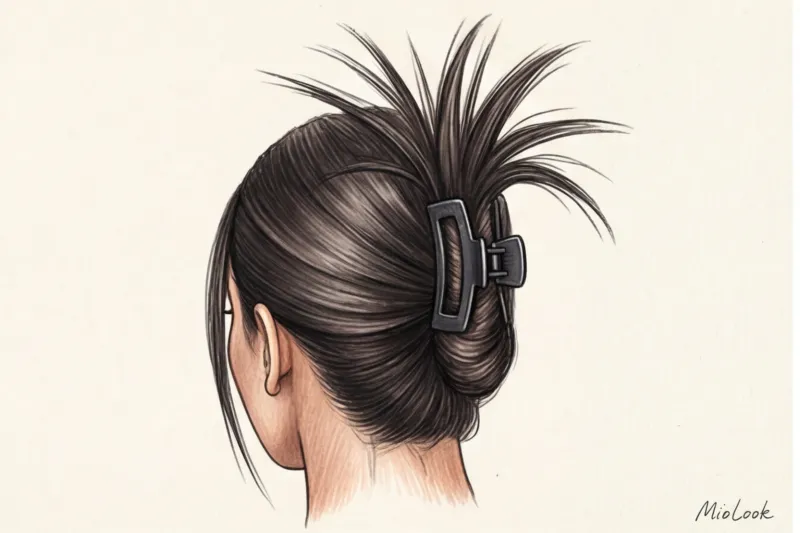
To adapt to the trend, we're changing the product chemistry. In the 2000s, spiky ends were created with strong-hold gel, which would dry into a crust and flake off in white flakes. Today, spiky buns are achieved with modern matte wax or texturizing paste. The hair remains spiky, but looks moisturized and vibrant.
The same goes for plastic clips. To make the clip look deliberately styled rather than screaming "I just got out of the shower," choose accessories with geometric shapes, matte textures, or metal clips without rhinestones. The hair at the back of the head should be pre-textured with dry shampoo to prevent the clip from slipping.
A stylist's toolkit: how to replace aggressive retro styling
If you look at the ingredients in mass-market styling mousses from the '90s, you'll be horrified. The high alcohol and cheap polymer content simply glued the cuticle together. Modern "effortless results" are more expensive, but they preserve hair health.
It's important to understand the difference in thermal effects. Old curling irons and flat irons heated to a maximum of 150–180°C and didn't distribute heat evenly. Women had to hold a strand of hair against the iron for 15 seconds, literally burning their hair white. Modern professional stylers heat up to 230°C in seconds and are equipped with temperature control sensors. A quick heating (2–3 seconds) at a high temperature with good heat protection is much less damaging to the hair than prolonged "baking" at low temperatures.
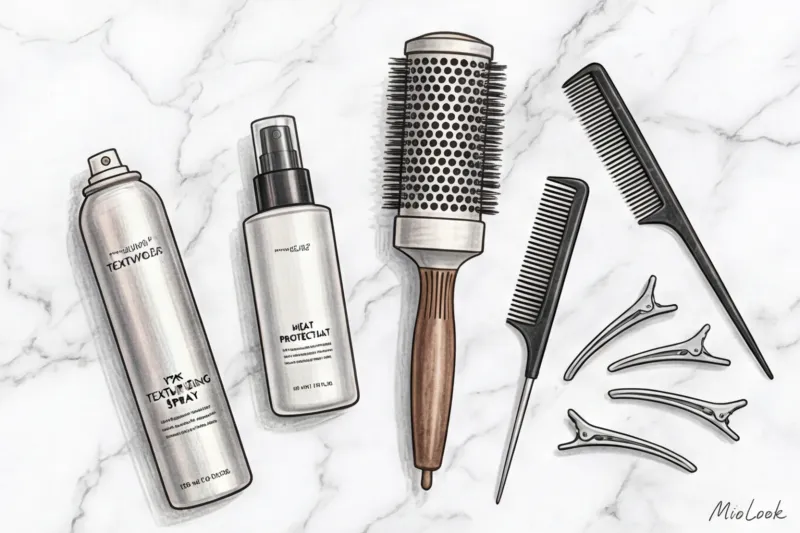
Here's a basic shopping list for creating quality retro styling at home:
1. Heat protection primer spray (range 20–40 €) – evens out hair porosity before styling.
2. Dry texturing spray (25–45 €) — a modern alternative to hairspray. Adds volume without clumping.
3. Brush with combined bristles (natural + nylon, from €35) - only it can polish a strand to the mirror shine necessary for a blowout.
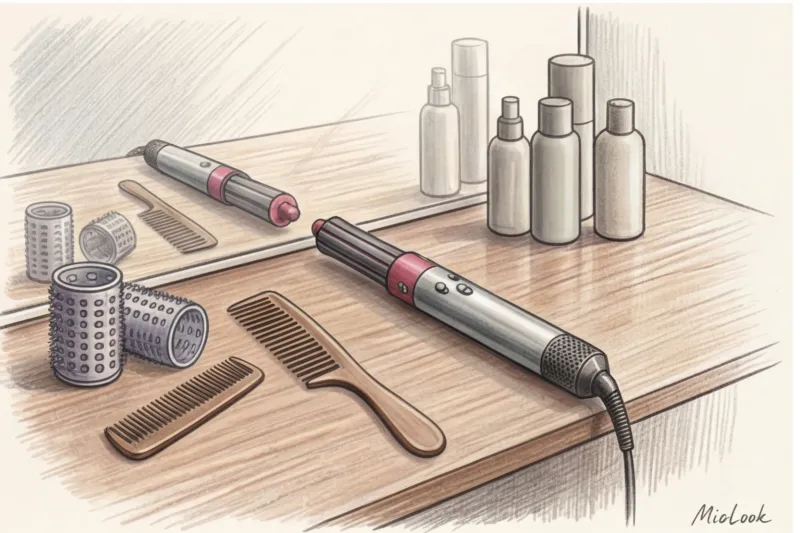
4. A set of large Velcro curlers (10–15 €).
If you're unsure whether a particular hairstyle will suit you, I highly recommend trying it out virtually. You can upload a photo of yourself to MioLook app and try on different retro silhouettes based on your individual face shape before you commit to a curtain fringe.
Checklist: How to integrate retro styling into a modern look
The most important rule for a stylist when working with historical eras is rule of contrast Never wear vintage clothing with a heavily retro hairstyle. Otherwise, you'll look like a performer at a theme party. The secret to style lies in the clash of eras.
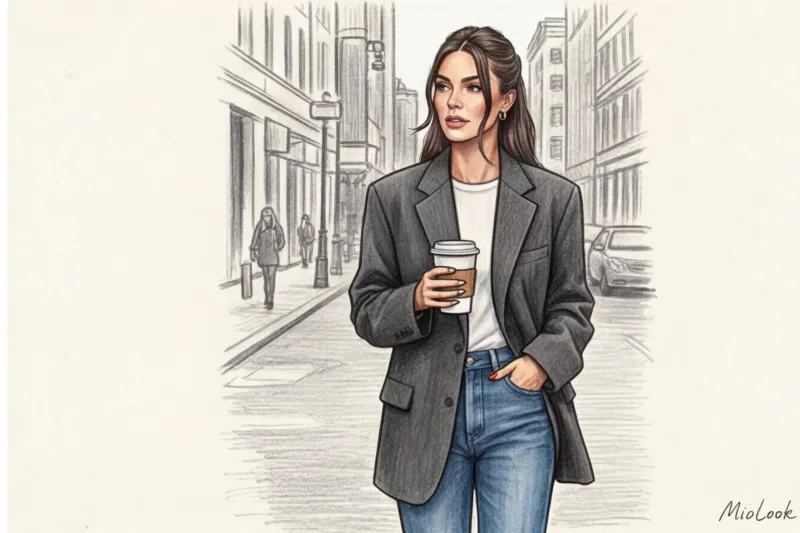
- Status formula: A voluminous '90s blowout hairstyle paired with a modern, oversized menswear-inspired pantsuit. The hair adds a hyper-feminine touch, the suit adds structure.
- The formula for Parisian chic: 70s hairstyle (Farrah's haircut) + perfect straight jeans, a simple white tee, and loafers. If you wore this hairstyle with a floral dress and flares, the look would become a cartoon. If you need ideas for daily styling , this option is ideal for a weekend.
- The Office Rebel Formula: A sleek, spiked Y2K bun paired with a crisp white button-down shirt is perfect for a jeans-and-white Friday at the office, but you want to look a little more put-together and edgy.
Don't forget about makeup balance. A bold retro hairstyle calls for a modern skin texture. Forget the thick matte powders of the last century—use lightweight BB creams and products that create a glow effect.
Past trends are returning not to be blindly copied, but to be played with by new rules. Stop fighting your hair texture with harsh hairspray. Arm yourself with modern texturizers, use curlers to cool your strands, and your hairstyle will look not like a blast from the past, but like the most precious style of the present.