Have you ever wondered why one 100% cashmere sweater for €300 becomes covered in treacherous pilling after a week, while another, bought for the same price, looks like new even five years later? Or why a white T-shirt looks like couture on one woman, and like a courier's uniform on another?
In 14 years of working as a personal stylist, I have learned one hard and fast rule: the cut can be brilliant, the color can be perfect for your color type, but if the fabric is cheap, the magic is ruined the second you start moving. When choosing expensive fabrics for clothing , you invest not in the label, but in how the item behaves dynamically.
I have already talked in more detail about the philosophy of a status wardrobe in our The Complete Guide: How to Look Expensive in Older Age: Stylist Tips In this article, we'll go beyond the clichéd advice of "buy silk and cashmere." I'll teach you how to evaluate weave density, fiber length, and yarn twist just like professional buyers do.
Why Expensive Clothing Fabrics Make All the Difference (Even with Simple Cuts)
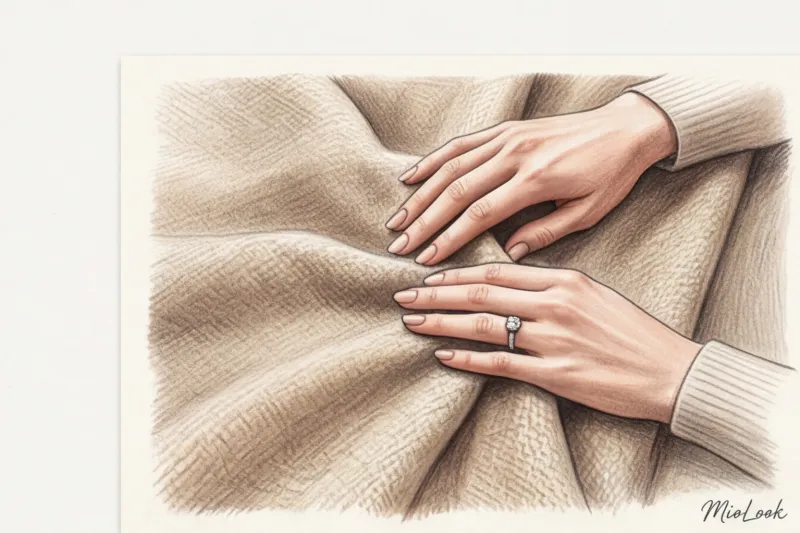
In stylistics, there's a concept called "visual silence." It's a state of mind where the eye has nothing to "catch" on in a negative sense: no crooked seams, no static electricity, no cheap shine. The texture of the material takes on a completely decorative role, replacing complex cuts and large logos.
I often use the term "architectural wardrobe" when working with executive clients. The idea is simple: fabric should shape the silhouette, not cling limply. Cheap viscose or loose cotton won't hold its shape. A garment might look acceptable when static in front of a fitting room mirror, but sit, stand, or walk—and the fabric reveals its true value through creases and loss of volume.
This becomes especially critical with age. Facial skin changes texture, and the portrait area requires a more refined, dense frame. Thin, translucent knitwear near the face visually accentuates every wrinkle, while dense, matte material acts as a good studio reflector, evening out skin tone.
Cashmere: How to Avoid Buying a Disposable Sweater for the Price of an Airplane Wing
One of my clients once came to a wardrobe review in tears: she'd bought a turtleneck with the proud "100% Cashmere" tag at a popular high-street store for €120. After three days of wearing it, clusters of pilling had formed under the arms and on the sides. Why was this? After all, the fabric was natural.
The secret lies in the classification of the raw material. According to the textile industry, there are three grades of cashmere:
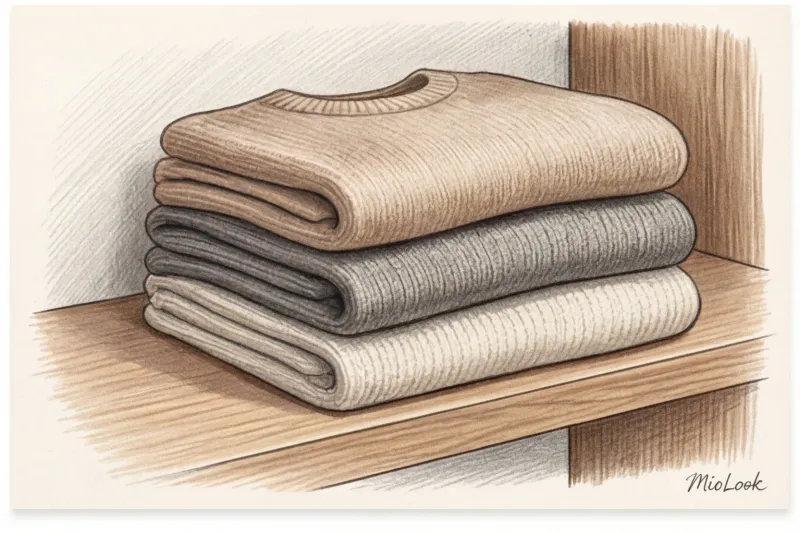
- Grade A: The most expensive down. Fiber length is 34–36 mm, thickness up to 14 microns. The long fibers are tightly interwoven, making this sweater virtually pilling-free.
- Grade B: The fibers are shorter (about 19 mm).
- Grade C: A waste product, the pile is very short. This is what "affordable" cashmere is made from. The short threads quickly unravel from any friction, forming those lumps.
The Pile Length Rule and the "Fuzziness" Myth
Here's some counterintuitive advice that goes against a buyer's instincts: Never buy cashmere that is too fluffy and soft from the display window..
Budget-sector manufacturers know we buy by hand. To make cheap (Grade C) cashmere feel luxurious, it's aggressively combed and treated with conditioners at the factory. Yes, it may be incredibly soft in the store, but its structure has already been destroyed. High-quality, long-staple, tightly knit cashmere may even feel slightly stiff at the time of purchase. It will only regain its true, creamy softness after 2-3 proper washes, when the fibers "open up" naturally.
Your perfect wardrobe starts here.
Forget about wasting time in front of your closet. Our smart AI stylist will analyze your items and create iconic looks in seconds.
Get access — €0.99 onceCare that will extend the life of cashmere by 10 years
I have to be honest here: even premium cashmere doesn't tolerate harsh use. It's not the kind of fabric you can wear under a stiff backpack or a coarsely woven seat belt day after day. This is a limitation of the material that you simply have to accept.
The biggest mistake is taking basic cashmere sweaters to the dry cleaner. Chemical solvents dry out the natural animal hair, making it brittle. The correct procedure:
- Hand wash in cool water (not exceeding 30°C).
- Using special shampoos for cashmere (or regular sulfate-free baby shampoo) is a great life hack.
- Dry exclusively on a horizontal surface on a terry towel, without wringing.
Silk: density that creates a status fluidity
Remember that unpleasant feeling when a silk skirt sticks treacherously to your tights, bunching up between your legs as you walk? This is a sign of a low-density fabric. Expensive silk has a "status fluidity"—it's heavy. It gracefully curves around the figure, creating beautiful vertical folds under its own weight, rather than clinging to the body.
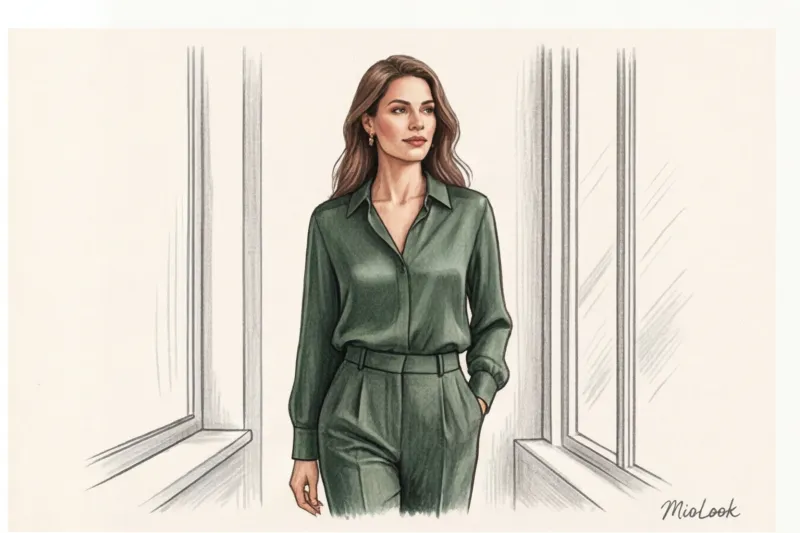
What is mommy and why is it important?
Momme (mm) is a unit of measurement for silk density approved by the International Silk Association. One momme equals 4.34 grams per square meter.
Many brands simply state "100% silk" without mentioning the density. This is critical for high-status clothing:
- Less than 12 mm: It's only suitable for lightweight scarves. If you make a blouse out of it, it will fall apart at the seams within a month.
- 16–19 mm: A great option for high-quality loungewear. By the way, we discussed in detail how to choose the right fabric for sleep in the article about Checklist before buying pajamas.
- 19–22 mm and above: The gold standard for statement blouses, slip dresses, and skirts, this fabric is completely opaque and lasts for years.
If the tag doesn't say "mommy," use a simple test: squeeze the fabric in your fist for a few seconds. Thick, high-quality silk will quickly unravel, leaving only soft, smooth creases. Cheap, thin silk will have small, sharp creases.
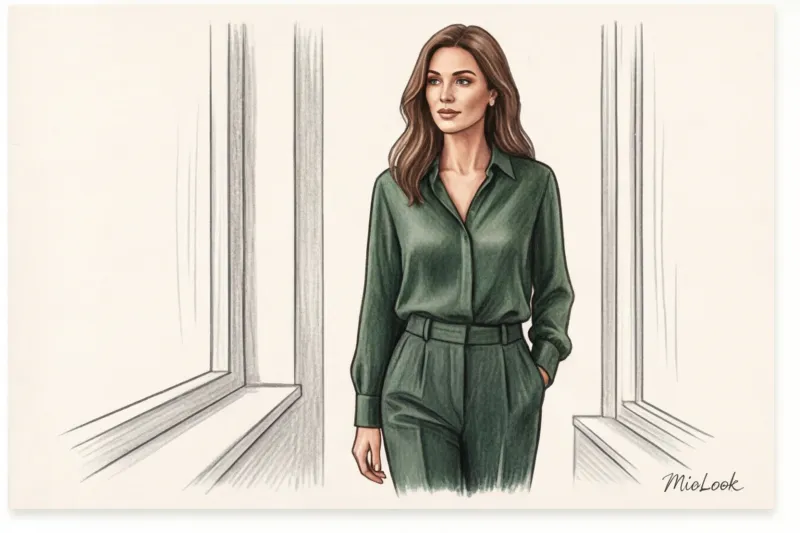
Matte vs. Glossy Silk in Everyday Wear
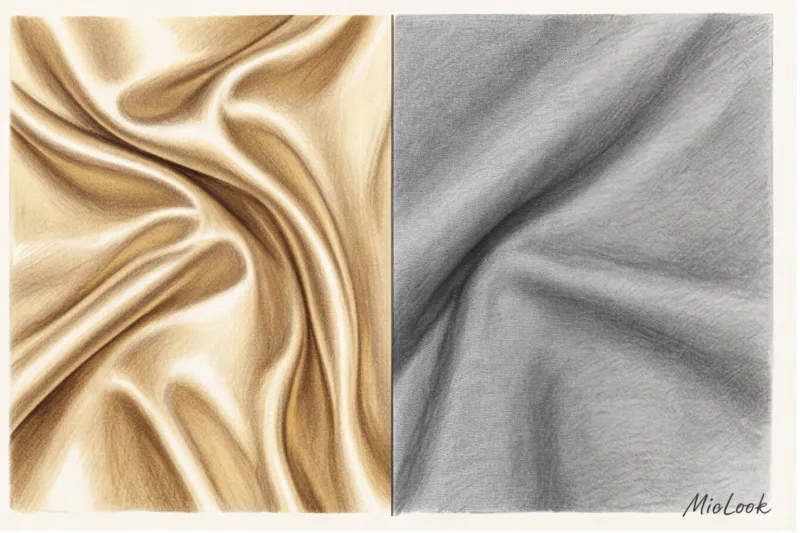
Another stylistic nuance: overtly glossy silk (satin weave) often looks out of place during the day, reminiscent of boudoir wear. If you want to integrate silk into your everyday wardrobe, look for matte textures like crepe de chine or the currently fashionable washed silk. They have a refined, muted sheen that doesn't glare in the sun and looks extremely modern.
Cotton: From a Basic T-Shirt to an Architectural Shirt
Why does one basic white T-shirt cost €10, while another costs between €80 and €150, and the difference is so obvious? It's all about staple length. Cheap cotton is machine-picked, causing the fibers to fray and become short. The fabric becomes loose, fades quickly, and warps at the seams after just one wash.
Premium cotton (Pima, Supima, or Egyptian Mako cotton) has extra-long fibers. The thread produced is thin but incredibly strong. The fabric acquires a light, almost silky sheen and remains shapeless for years, which perfectly fits the concept. Cost per wear formulas.
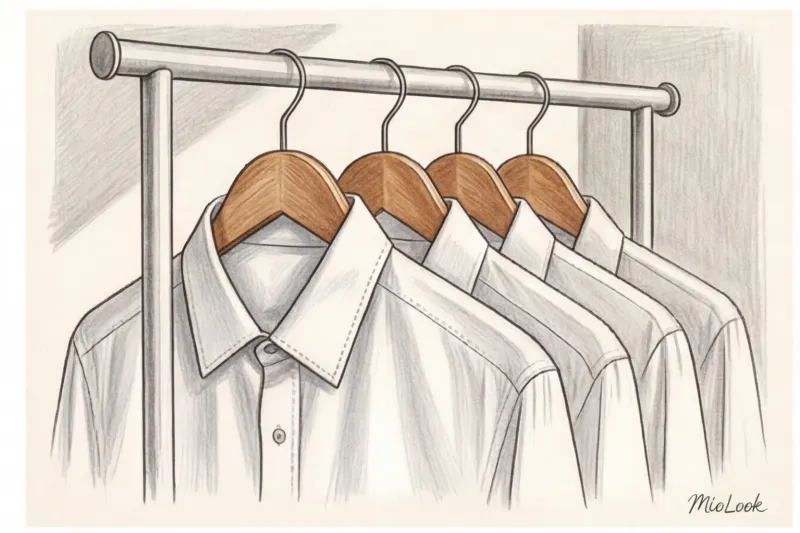
Light test and weave density
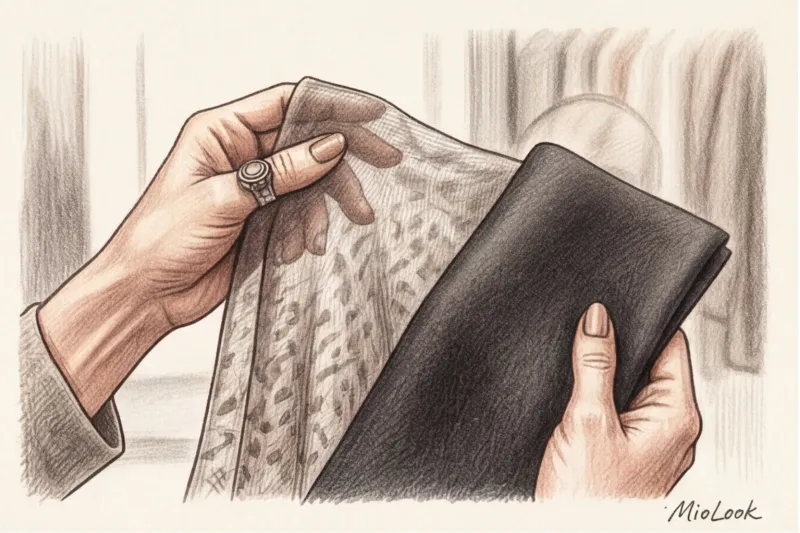
Every time I take a client into the fitting room to test basic shirts or t-shirts, I have them do the "light test." Place your palm under the fabric, from the back, and touch it closely. If you can clearly see your skin tone or the outline of your fingers, return the item to the hanger. The weight of the right basic cotton should be at least 160–180 g/m².
For an architectural shirt, rigid elements such as the collar and cuffs are critical. In a luxury shirt, these are reinforced with a high-quality adhesive, ensuring the collar sits straight and doesn't bunch up under the jacket's lapels.
Organize your closet like a pro
Stop buying things you have no way to wear. Upload your closet to MioLook and get ready-made outfit ideas for every day.
Get access — €0.99 onceUnobvious but expensive textures: wool, linen and the right blends
Perhaps the biggest myth I have to fight is this: "A status item must be 100% natural." This is a profound misconception.
Let's face it: 100% thin linen or cotton will leave you looking like a rumpled mess by the middle of the workday. It looks sloppy and instantly cheapens your look. According to WGSN, a 2024 analysis, premium brands are shifting their focus to "performance naturals"—natural fabrics with high-tech additives.
A well-blended fabric is a lifesaver. Adding 5-10% elastane, polyamide, or modal to trousers works like rebar in concrete. Synthetics prevent the natural fibers from stretching at the knees and bubbling at the back. The ideal blend for summer linen is a blend with viscose (for example, 70% linen, 30% viscose). This fabric retains the noble texture of linen but becomes softer, less prone to wrinkling, and flows elegantly.
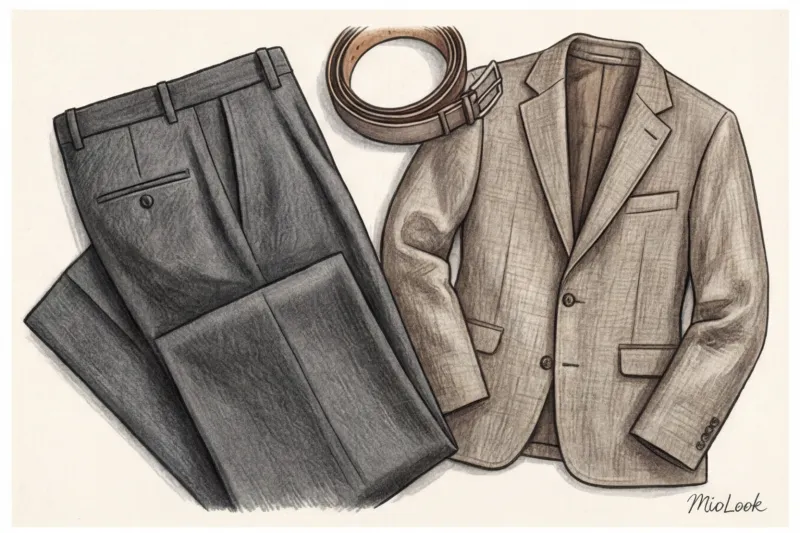
When it comes to suits, look for smooth worsted wool. Look for Super 100s, 110s, or 120s. This indicates the yarn's fineness: the higher the number, the finer and more elastic the thread. A suit made of Super 120s wool can be worn almost year-round; the fabric breathes and holds creases in trousers phenomenally well.
Stylist Checklist: How to Inspect Fabrics Right in the Store
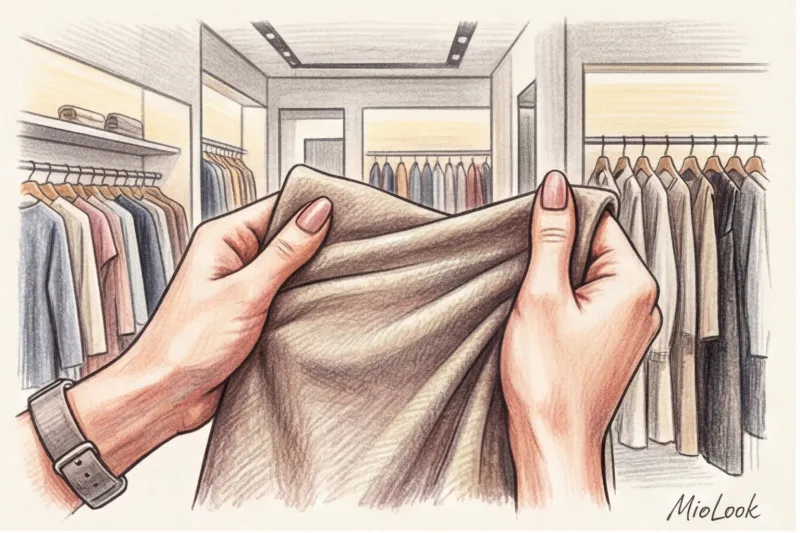
Theory is great, but how do you put it into practice in a store, surrounded by hustle and bustle and artificial lighting? Save this step-by-step algorithm that I use during every shopping experience:
- Crease test (10 second rule). Firmly squeeze the edge of the garment (preferably in an inconspicuous place, such as the hem) in your fist, hold for 10 seconds, and then release. If the fabric remains heavily wrinkled, the garment will require constant ironing and will be out of shape by lunchtime.
- Shape recovery test (for knitwear and blends). Stretch the fabric slightly with both hands and release. High-quality material will spring back instantly, leaving no "bubble."
- Stitch frequency estimation. Look at the seams. In cheap clothing, the manufacturer saves thread and time by using large stitches (2-3 stitches per centimeter). Expensive fabrics are always sewn with small, close stitches (4-5 stitches per centimeter), which prevents the seam from deforming under tension.
- Checking the lining. This is a litmus test of quality. A brand won't put an expensive lining in a cheap item, and vice versa. If you see gorgeous wool on the outside of a jacket, but the lining is stiff, squeaky 100% polyester, you're looking at a compromise that will make you sweat like a greenhouse. Look for a lining made of cupro or 100% viscose—they breathe, feel sleek, and look expensive.
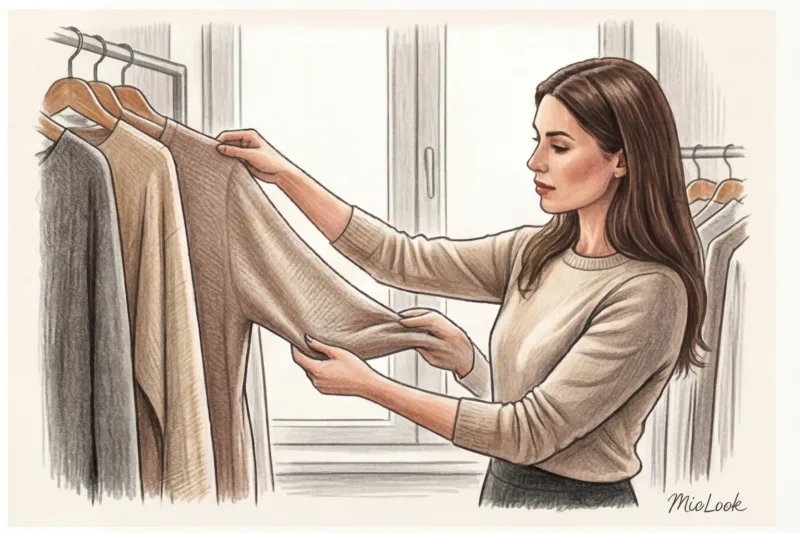
Choosing high-status materials is always a balance between aesthetics and practicality. Stop reading labels solely for the "100% natural" checkbox. Start trusting your hands: evaluate the density, weight, elasticity of the thread, and how the fabric interacts with light. These seemingly inconspicuous nuances create that elusive sense of luxury and confidence that logos can't fake. To avoid having to remember all these rules, you can always delegate the selection of the right textures to smart algorithms, for example, by uploading your best finds to your wardrobe. MioLook to create perfect capsules.