What does it really mean to “look expensive” as you age?
Do you know what phrase I hear most often during the first consultation? "Isabella, I want to understand how to look expensive without seeming like a woman who is trying too hard to impress." Over 12 years of practice, I've noticed an interesting paradox: the more money we pour into flashy trends, the "cheaper" the final result often looks. This is especially true for us, women of a beautiful, conscious age.
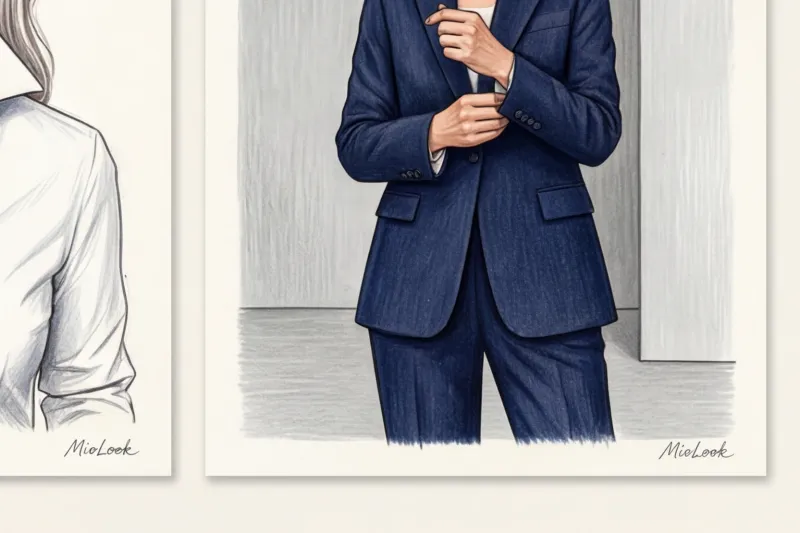
Expensiveness is no longer about the number of zeros on the price tag. According to the PANTONE Color Institute and WGSN analytics (2024), the global aesthetic focus has finally shifted to what the professional community calls "visual composure." This means confidence in every movement, premium fabric quality, and tailoring that's meticulously crafted to the millimeter.
Working with senior female executives—from IT company owners to bank top managers—I have developed a must-have concept "architectural wardrobe" This isn't just a pretty metaphor. Architectural garments literally construct the silhouette: they have a clear shoulder line, precise darts, and a fabric density that holds its shape. They act as a supporting frame. You can be tired in such a jacket after eight hours of negotiations, but the garment itself will still "hold face" for you.
Let's face it: at 20, you can wear a frivolous, thin viscose dress for €15, bought on a spontaneous sale, and it will look cute simply because of its youthful energy and natural contrast. But with age, the rules of the game change. "Cheap" textures become treacherously noticeable. Our faces, acquiring depth, charm, and character, begin to demand a completely different, more refined frame. Flimsy, see-through knits, crooked stitching, or cheap, shiny hardware now don't just "dull" your look—they visually emphasize fatigue, shadows on the face, and the natural signs of aging. Such clothes draw attention to their flaws instead of highlighting your figure.
My stylistic philosophy is largely based on the Mediterranean approach to status. In Italy and Spain, this is called effortless elegance Effortless elegance. A true woman can spend forty minutes in front of the mirror, but she'll emerge looking as if she'd simply thrown on the first cashmere sweater she saw and casually tied a silk scarf. The trick is to keep the effort strictly off-camera. No fuss in the look.
To achieve this effect, you need a perfectly organized closet. When we upload our clients' wardrobes to MioLook smart wardrobe , we first ruthlessly weed out items that look "fussy." We retain only those elements that can be combined with our eyes closed.
The main myth: "Expensive means brands, logos, and pearls."
One of my new clients recently showed up for a meeting wearing a heavy tweed suit, closed-toe shoes with large gold buckles, and a strand of heavy pearls. "I dressed Old Money, like everyone's recommending these days," she said proudly. The only problem was that this cliched ensemble visually added a good ten years to her age. She transformed from a vibrant, modern 45-year-old woman into a caricature from a British sitcom from the last century.
Old money style abhors literal and outdated copying. Status is often confused with mothballs or, even more dangerously, with logomania. It's important to remember the golden rule: flashy brands cheapen an image, especially in adulthood. A bag covered in monograms or a belt with a giant logo buckle screams: "Look, I spent €800!" This betrays insecurity. True status is always whispered. It works much more effectively. the rule of third thing in clothing , when you complicate a minimalist outfit with an impeccably tailored jacket or textured stole, rather than an abundance of recognizable logos.
Today, the fashion focus has completely shifted to "quiet luxury" and tailored tailoring. No one on the street should know what brand you're wearing. People should only notice the phenomenal fit of your trousers and the elegant matte sheen of your silk. I'll let you in on an open secret: a basic jacket from a mass-market store, professionally tailored at the waist for €30, will look like a million bucks. Meanwhile, a jacket from a renowned French house for €1,500, hanging on you like a sad sack, will only betray sloppiness. Luxury is affording clothes that are tailored to you, not trying to squeeze yourself into a fashion brand's mold.
The Anatomy of a Status Item: Fabrics and Fits That Don't Lie
Have you ever wondered why two seemingly identical basic turtlenecks look completely different on the body? The secret lies in a technical parameter that professional buyers are well aware of, but which boutique consultants tactfully omit. It's about the concept. GSM (Grams per Square Meter) which determines the physical density of the fabric.
When women ask me how to look expensive without spending thousands, I always start with the foundation: a well-designed silhouette can't be built on a flimsy foundation. Thin knits with a low count (less than 150 GSM) are absolutely the main enemy of a high-status wardrobe. They're not just see-through, they cling treacherously to the body, highlighting even the slightest unevenness of the skin, the contours of underwear seams, and slight morning puffiness. A high-status garment should sculpt the figure, not flow around it like a second skin.
"A professional fabric inspection takes exactly ten seconds. I call it the 'clenched fist rule.'"
At private shows and professional exhibitions like Première Vision in Paris, stylists always test fabrics by hand, and you can do the same in any store. The first test is for wrinkle resistance: squeeze the edge of a hem or sleeve tightly in your fist for ten seconds, then release. If the fabric remains wrinkled like a sheet of newspaper, the garment will return to the hanger. The second test is "weight." An expensive garment always has a noticeable weight on a hanger. This weight is determined by a high-quality lining, the tightness of the thread twist, and the correct interfacing in the lapels.
What's truly worth investing in? Investment textures have a special, elegant sheen and superb drape. Look for them on the labels. Mulberry silk — it doesn't shine with a cheap sheen, but rather shimmers delicately as you move. Look for dense cotton poplin, which literally crunches in your hands, real cashmere, and wool blends (the perfect balance for the mid-season—80% wool and 20% silk for suppleness). These materials create a visual calm.
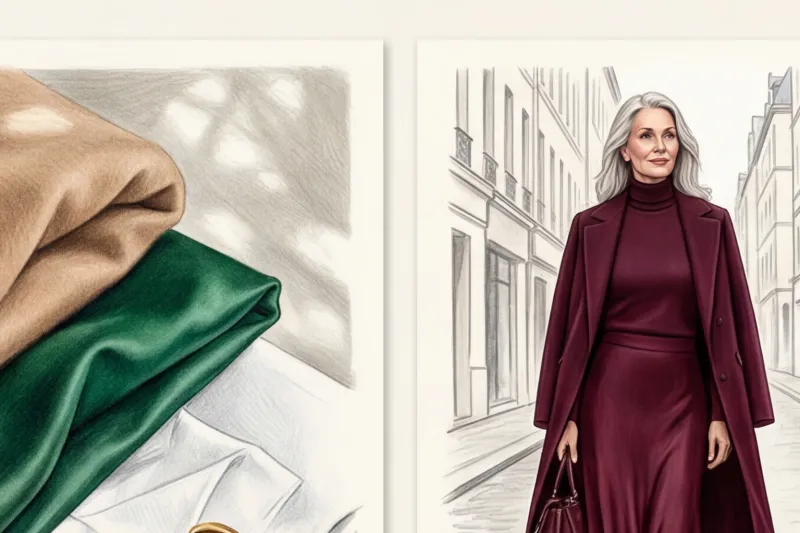
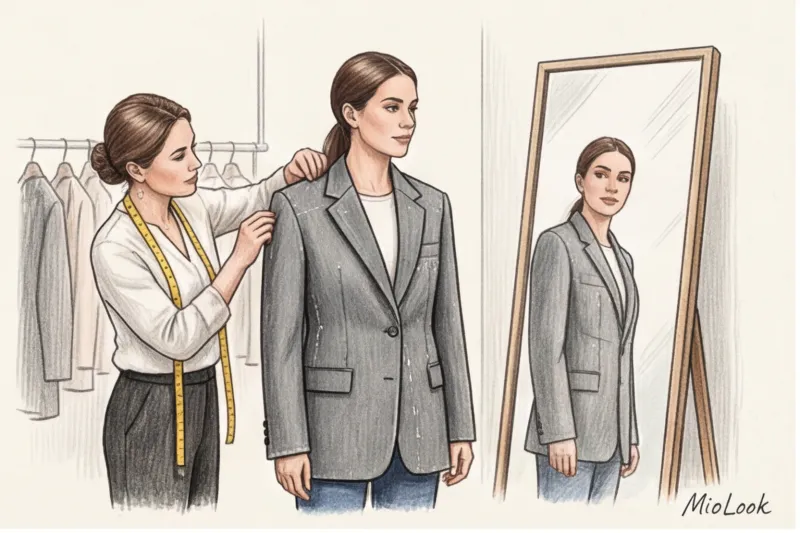
However, even the most luxurious cashmere will lose its luster if the garment doesn't fit properly. A 2023 study by the Institute of Color and Style confirms that 70% of a garment's impact depends on the shoulder line and the correct sleeve length. This is where the tailor's magic comes into play. I constantly prove to my clients the same fact: an €80 mass-market jacket, professionally tailored to your figure at a tailor's (which will cost an additional €20-30), will always look many times more expensive than a €1,500 exclusive designer jacket with a sagging armhole or a baggy back. Narrowing the waist, shortening the sleeves exactly to the wrist bone, and replacing plastic buttons with horn ones—these three steps will ultimately increase the luxury factor of any outfit.
Treacherous Materials to Avoid After 40
As we age, our bodies and faces acquire new, softer, and deeper lines. And here, a strict law of style applies: the softer our natural features become, the more rigid our clothing should be. This is why some familiar fabrics become real traitors over the years.
First and foremost, these are thin viscose and cheap, shiny polyester. These materials create unnatural highlights that visually distort the silhouette, adding unnecessary volume. Worse, their glossy texture mercilessly reflects light in the wrong places, highlighting age-related changes on the neck and creating an unflattering contrast with the face.
Flimsy ribbed knitwear deserves special mention. While it might look like a sloppy grunge look at 20, it simply becomes too tight for a mature figure. By midday, the material stretches at the elbows and knees, ruining any structure.
The solution is simple: replace them with structured alternatives. Instead of a flowing viscose blouse, choose a heavy cotton shirt, and instead of a thin, tight cardigan, opt for a structured tweed jacket. This simple texture swap can instantly erase signs of age and add a touch of class to your look.
Digitize your status wardrobe
Try MioLook for free: A smart AI stylist will analyze your clothes, filter out "treacherous" materials, and select the perfect look for any occasion.
Get access — €0.99 onceColor Palette: How to Look Noble Without Going Boring Beige
Let's debunk the biggest style myth of the last decade right now: the belief that a high-status woman must dress head-to-toe in beige. The clichéd "Old Money" style has conditioned us to think that sand, cream, and nude tones are synonymous with wealth. But in practice, blindly copying this trend often leads to the exact opposite effect.
According to the laws of physiological optics (based on Johannes Itten's fundamental color theory), light and warm nude shades that blend with skin tone deprive the face of natural contrast. Worse, an ill-chosen beige acts as a merciless reflector. Reflecting off the fabric, light falls on the face from below, treacherously highlighting the skin's microrelief: nasolabial folds, under-eye shadows, and even the slightest signs of fatigue. While a total camel look may look fresh at 25, after 40 it can visually dull your complexion and add a decade to your age.
"The desire to dress 'safely' in beige often backfires. As we age, our faces need not a pale backdrop, but a dignified, elegant frame that will restore their natural radiance without the need for heavy makeup."
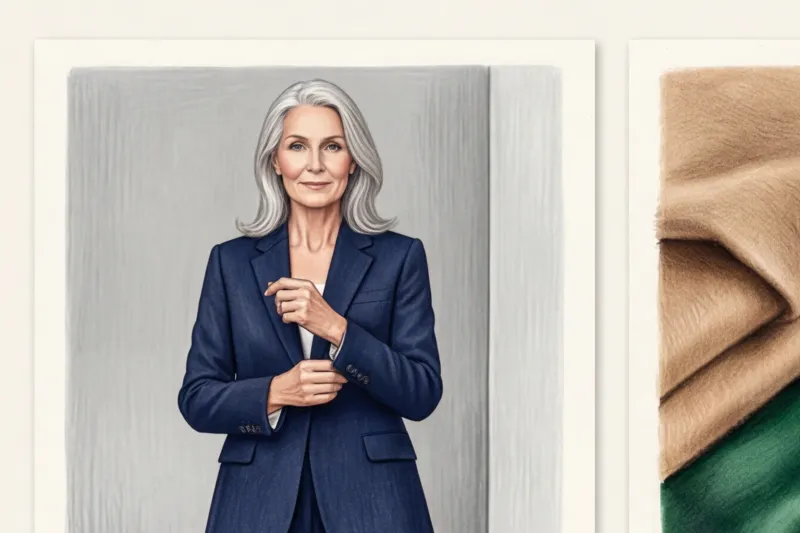
My absolute favorite for creating status is the "deep jewel tones" rule Consider the contents of an antique jewelry box: rich emerald, deep sapphire, noble burgundy, and rich dark chocolate (which has now triumphantly replaced black on Milan's catwalks). Research into color perception in fashion retail shows that the human eye subconsciously associates these pigments with luxury. A deep sapphire-colored piece, even in the mid-price range, will always look more expensive than its counterpart in a dull powdery shade.
But the real secret to looking expensive lies in the technique of complex monochrome. Assembling an entire look in a single color creates a powerful, continuous vertical line of color. This line optically elongates the silhouette, adding a few centimeters of height and subtly reducing bulk.
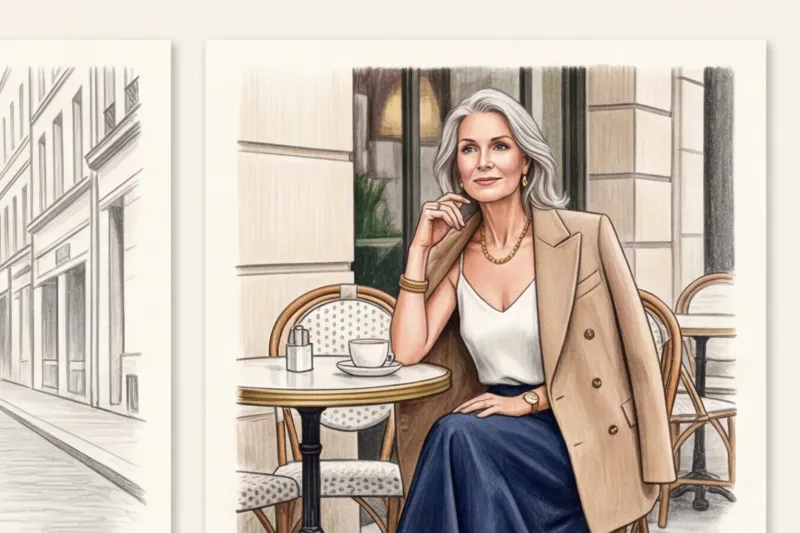
There is one critical nuance here that 90% of women forget: A status monochrome must be textured If you create an outfit entirely from matte cotton, you'll look like a worker in uniform. The formula for success is built on contrasting surfaces: rough + smooth + shiny. Imagine: a matte cashmere or wool-blend sweater, a flowing silk skirt, and sleek leather boots—all in the same shade of burgundy. Light refracts differently across different textures, creating volume and literally doubling the visual value of your outfit.
Putting together such outfits mentally can be tricky. To avoid making mistakes with color combinations (the difference between a "warm" and "cool" chocolate color can ruin the whole look), I recommend first digitizing your database. Upload your items to MioLook — a smart algorithm will help you create perfect textured monochrome outfits and suggest exactly what piece you're missing. It's much wiser to invest €100–€150 in a high-quality satin skirt that will complete your existing sweaters into a luxurious ensemble than to buy another boring beige cardigan.
Golden Formulas for a Status Wardrobe: Ready-Made Solutions
A 2023 study by British retailer Marks & Spencer confirmed a frightening figure: on average, we spend about 17 minutes each morning frantically rummaging through hangers. And the paradox is that the more clothes you have in your closet, the more intense the morning panic. But let's face it—looking expensive means, above all, exuding calm and confidence. And it's absolutely impossible to project that if you've been rushing around getting ready and wondering about your reflection until the very last minute.
That's why I categorically insist on implementing wardrobe formulas. These are mathematically proven, pre-tested combinations of cuts and textures. They free you from the "nothing to wear" problem and save you precious morning time. Below is my personal list of three foolproof formulas. They regularly save my clients before important negotiations or business lunches, when every minute counts. To ensure these schemes work smoothly, I always recommend digitizing your things once through the "smart wardrobe" feature in MioLook — so cheat sheets with ideal sets will always be on your phone.
Formula 1: Structured Jacket + Flowy Midi Skirt + Loafers
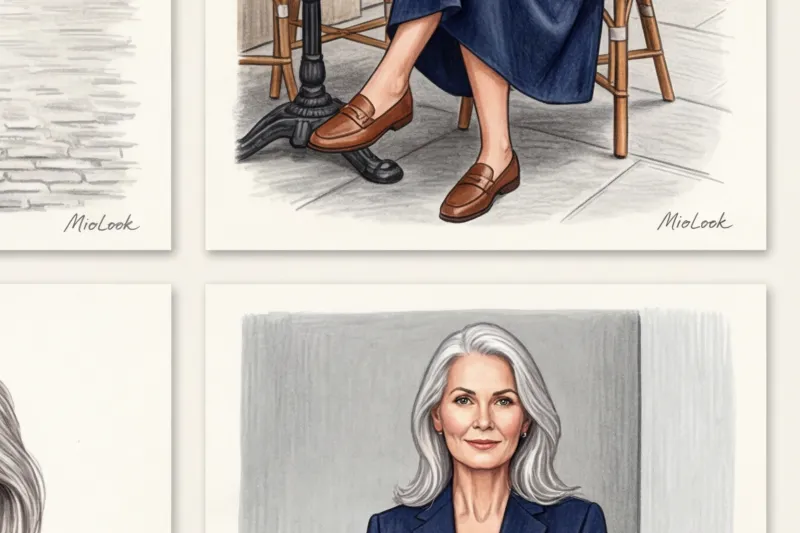
The secret of this combination lies in the brilliant contrast and that very Mediterranean concept. effortless elegance (effortless elegance). We take a strictly masculine, rigid form—a tailored jacket with a crisp shoulder line. It instantly ties the silhouette together, sets the tone, and establishes a businesslike demeanor. Then we deliberately tone down this formality with a flowing, feminine texture of a skirt made of thick silk or viscose.
This balance of masculine and feminine always looks sophisticated. Why midi? It's the most flattering length for a classy look in adulthood. It delicately covers the knee (an area that often reveals signs of aging), visually elongates the height, and leaves the most graceful part of the leg—the ankle—exposed. Add to this a pair of high-quality leather loafers with a moderately thick sole. Excellent grained leather models can easily be found in the mid-price range, ranging from €150 to €250, and they'll instantly add a touch of European polish to your look.
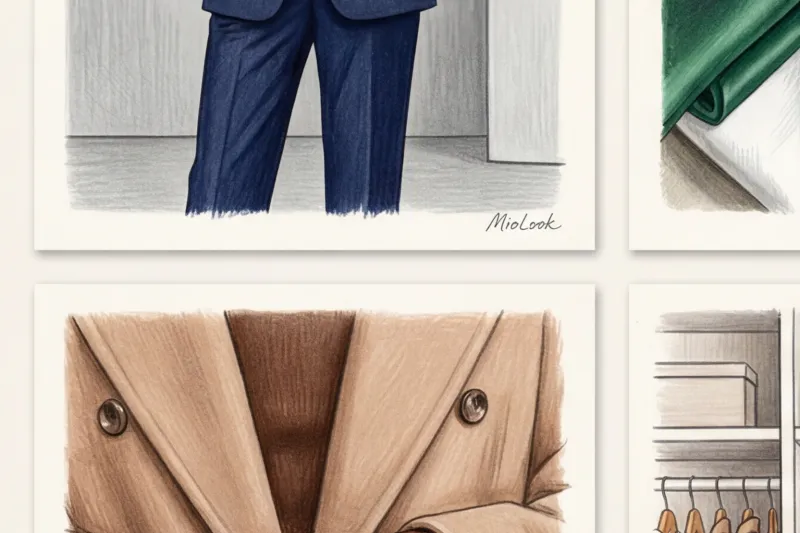
Formula 2: A loose-fitting monochrome pantsuit + minimalist sneakers or oxfords
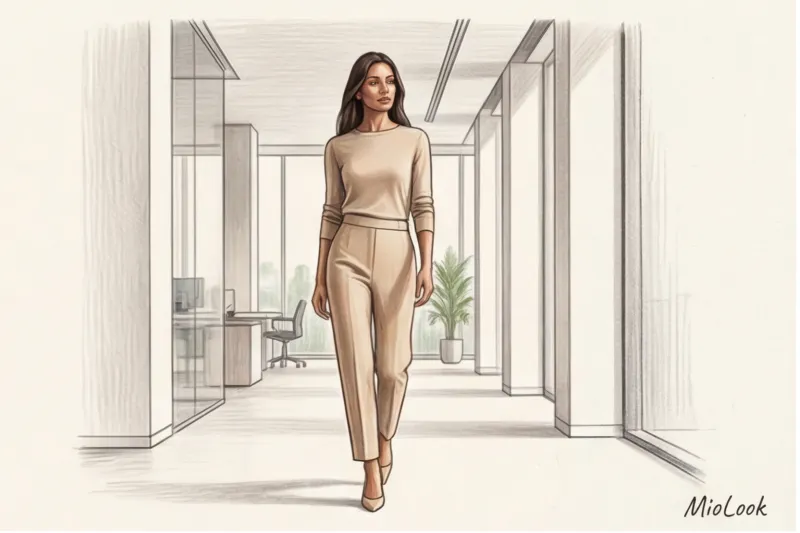
Forget the tight, sheath-style office suits of the 2000s that stifle your breath with the slightest movement. Today, high status is conveyed through absolute comfort. A loose-fitting pantsuit in a single, deep shade creates that unbroken vertical line that visually makes you look slimmer and taller.
But there's one pitfall here—the critical importance of the fit of the trousers. Choose styles with pleats at the waist: they add generous volume to the hips and create a beautiful, dynamic drape as you walk. A high waist will tuck in your midsection, and a full length (the leg should fall gently over the shoe with a single, elegant crease) will make your legs appear endless. The key to this formula is your shoes. To tone down the pretentiousness and avoid looking like you've tried too hard, choose relaxed options. Pure white leather sneakers without a single logo or smart Oxfords communicate, "I wore this chic suit simply because it's comfortable."
Formula 3: Chunky Cashmere Jumper + Straight-Leg Jeans + Statement Bag
As promised, the third formula is the perfect solution for casual Fridays. The main rule: cashmere or wool blends should retain a slight volume, and the jeans must be impeccable. No frayed edges, ripped edges, or unnecessary hardware. Just a classic straight fit, thick denim, and a solid indigo or graphite color. This minimalist duo works like a luxurious canvas, against which your high-status, rigid bag will shine.
Access to MioLook for €0.99 — one-time payment
Start creating perfect images with the help of artificial intelligence
Get access — €0.99 onceStatus Accessories: Where to Invest and Where to Save
According to the 2024 Business of Fashion report, leather accessories form the foundation of any premium brand's perception. This principle applies flawlessly to personal styling. I often repeat in my lectures: accessories are the supporting structures upon which the entire illusion of status rests. If they are chosen incorrectly, even the most expensive suit will disintegrate into visual noise.
The main financial secret to elegance lies in the strict mathematics of wardrobe planning. I encourage my clients to strictly adhere to the budgeting rule: 60% of the allocated funds should go to bags and shoes, and only 40% to clothing You can wear a completely basic, minimalist dress from a mass-market store for €60, but if you accessorize it with a flawless leather bag and well-made shoes, the entire look will visually "lift" to the level of your accessories. The opposite is merciless: worn-out shoes will instantly ruin the effect of a €500 cashmere sweater.
Let's move on to choosing bags. The first thing you should definitely avoid is soft, shapeless hobo bags. With age, when the silhouette requires visual structure, a more rigid form—the so-called "architecture"—is emphasized. A structured tote, baguette, or saddle bag acts as a frame. Choose matte or slightly grained leather (pebble leather)—it always looks more refined. Patent leather, on the other hand, often cheapens the look, attracts fingerprints, and develops micro-cracks over time.
As a stylist, I always assess the quality of a bag not by the logo on the front, but by subtle details that reveal the true cost of production. The main indicator is edge painting. A high-end bag has a carefully sealed leather edge in several thin layers, without any rubber lining. Another important factor is the lining. If the inside rustles with thin synthetic polyester, the bag will never feel prestigious. Look for brands in the €200–€400 price range that use thick cotton canvas or suede-like microfiber.
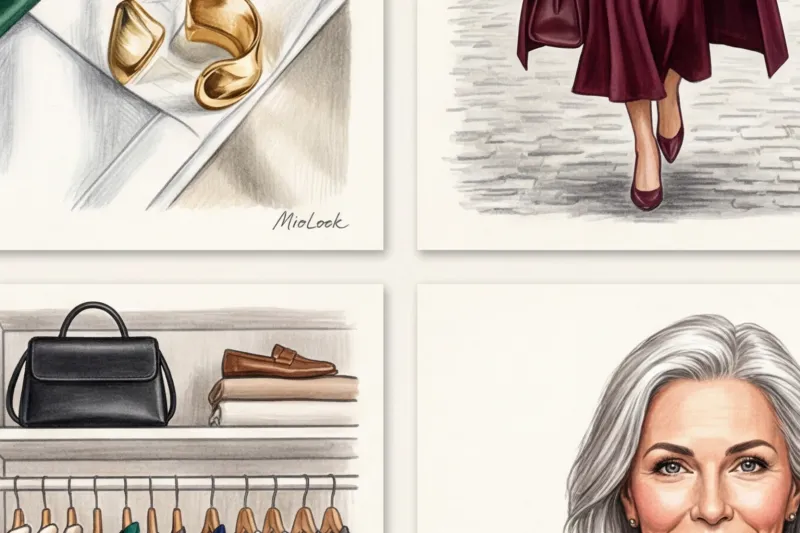
Shoes are an element that speaks for you even before you utter your first word. The perfect toe and quality hardware are crucial. A too-round, "doll-like" toe will make your foot look bulky and simplify your look. Choose a soft almond-shaped or slightly elongated square toe: they visually elongate your silhouette and add a touch of poise. Pay close attention to the metal. Shiny, easily scratched buckles made of thin alloy immediately scream "budget." The right hardware should be substantial, with a muted, slightly matte sheen.
When choosing jewelry for mature age, the principle applies "smaller, but larger" The biggest mistake is trying to decorate yourself with a scattering of tiny details. Thin chains and rings with tiny stones are lost against the backdrop of thick fabrics. Your status symbol is sculptural metal without inlays. Take inspiration from 70s minimalism: a large, smooth cuff on your wrist, massive drop earrings, or a single accent ring with intricate geometry. Smooth metal beautifully reflects light, highlighting the face and adding a conceptual touch to your look.
To figure out exactly what status details you're missing, I strongly recommend doing a quick audit. Take photos of your shoes and bags and add them to MioLook The app's visualization will instantly highlight any gaps: you'll immediately see if you have an overabundance of soft bags but not a single rigid shape to complete a refined look.
Well-groomed as a foundation: details that reveal class
On the sidelines of Milan Fashion Week, stylists often share a professional maxim: "Luxury doesn't start with the tag on the collar, but with the skin, hair, and nails." It's a harsh, but absolutely fair, rule. You can invest substantial sums—say, €800—in an impeccable cashmere cardigan, but expensive clothing simply doesn't work without a well-maintained base. Imagine a masterpiece housed in a cheap, cracked frame—even the artist's most brilliant brushstrokes will lose their value. With age, this contrast only becomes more acute. The carelessness that looks like bold grunge in your 20s, after 40, conveys nothing but fatigue and visually devalues any outfit, no matter how well-thought-out.
The first and most visible marker of status is hair. With age, we lose natural keratin, and the hair texture becomes more porous and matte. So forget about complicated, heavily sprayed hairstyles that hang motionless in the wind. Nobility demands a haircut with a clear, architectural shape that can be easily styled with a flick of the wrist, and a completely healthy, hydrated scalp. If you dye your hair, the pigment should be multidimensional, sparkling in the light. Dry ends or overgrown gray roots will instantly ruin the effect of even a premium trench coat.
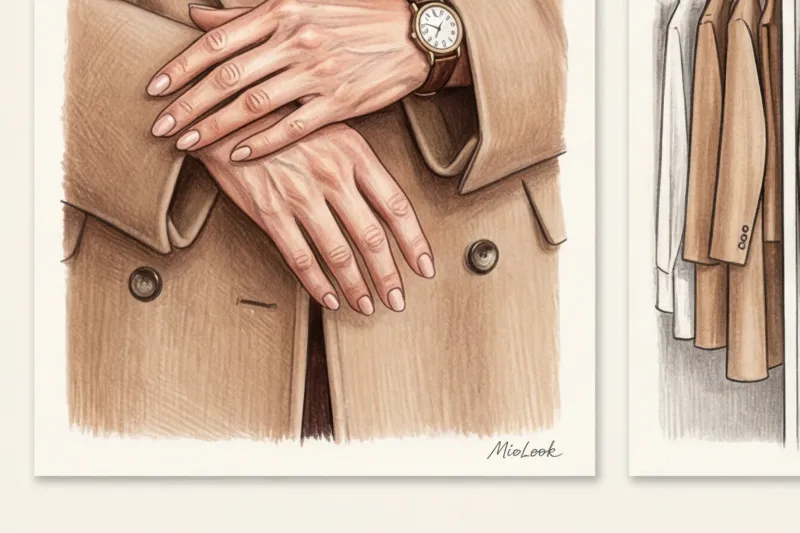
Next up are our hands, which are often the first to give us away. Today, the aesthetic of "clean hands" rules in high society (in professional circles, naked nails ), which has finally replaced complex nail art. Feel free to avoid painting, rhinestones, and overly bold designs. The look is short or medium-length, a soft square, impeccably trimmed cuticle, and a translucent nude. If you're looking for color, classic red or deep burgundy are your choice. These are timeless options that won't steal the spotlight from your embellishments or the elegant texture of your sleeve.
But my main, often most underrated secret lies in body movement. Head position and posture are the true markers of aristocracy. Just last month, a truly revealing incident occurred during a personal fitting. A client wore a superb €450 structured jacket, but in the mirror we saw a hunched figure: her shoulders were rolled inward, her neck was hunched. The jacket looked as if it had been carelessly sewn from cheap fabric. I asked her to take a deep breath, squeeze her shoulder blades together, lower her shoulders, and stretch the crown of her head toward the ceiling. And true stylistic magic occurred: the shoulder line fell into place, the diagonal creases in the fabric disappeared, and the overall perception of the dress's value instantly doubled. Proper body geometry makes any fabric fall exactly as the designer intended.
Your ideal image begins Here
Join thousands of users who look flawless every day with MioLook. Digitize your wardrobe and create iconic looks in just a few clicks.
Get access — €0.99 onceChecklist: Audit your wardrobe for "status"
Open your closet doors right now. What's your feeling? If it's a slight panic from the abundance of textures and the thought, "I have absolutely nothing to wear," you're not alone. According to a 2023 report by the independent platform Fashion Revolution, the average woman regularly wears only 20-30% of her wardrobe. And it's here, in these stashes of "just in case clothes," that the biggest threat to your style lies.
In my personal reviews, I often act as a tough but fair auditor. My golden rule: we don't buy anything new until we've ruthlessly audited the old. To understand, How to look expensive To live a stress-free life every day, you need to clear some space for "air." To do this, I strongly recommend digitizing your essentials using an app. MioLook - this will instantly reveal the real combination of the cabinet, and not the illusion that we hold in our heads.
I offer you a step-by-step plan for a self-inventory. Take out all the items from the current season, hang them on a separate railing, and run each one through my three professional filters:
Question 1: Does the item hold its shape on a hanger?
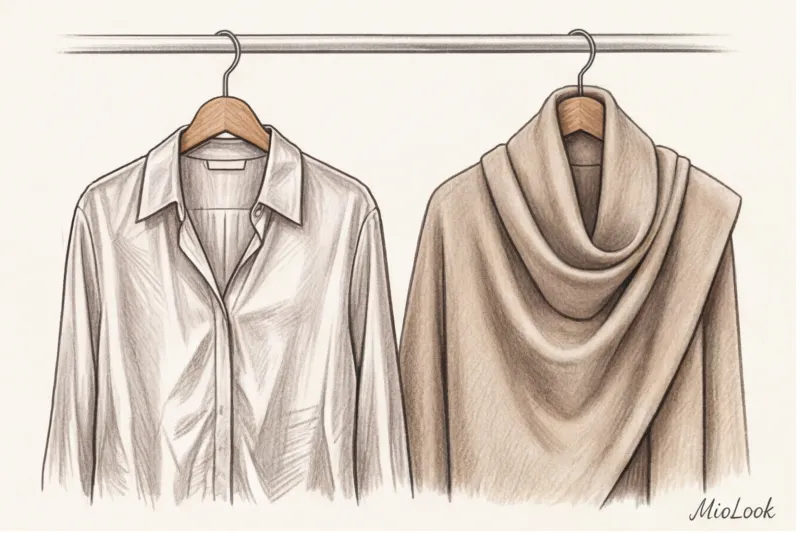
If a jacket, skirt, or cardigan slumps sadly on the hangers like a rag doll, it won't do any wonders on your body either. Statement clothing always has an internal structure. It should maintain its shape even when you take it off. Don't hesitate to put away loose knits and shapeless blouses, which make your silhouette look loose and tired.
Question 2: Can I wear this three different ways?
An expensive item is always a team player. Take classic wide-leg trousers made of a dense wool blend: you can wear them with a silk shirt for dinner, with a voluminous cashmere sweater for a walk, and with a tailored jacket for a meeting. However, if you're wearing a dress with a complex cut that only goes with a specific pair of shoes, it's a "selfish item." Such elements have no place in an elegant and smart capsule collection.
Question 3: Are there any pilling, snagging or faded areas on the fabric?
It sounds trivial, but it's the micro-wear that instantly ruins all the polish. Whitish seams on black cotton trousers, elongated elbows on a jumper, tiny pilling where a bag rubs against your thigh—all of these betray carelessness. No matter how much you love a sweater, if it's lost its original uniform texture, its status symbol is gone.
Cost-Per-Wear Strategy for Planning New Purchases
Once we've filtered out the unnecessary visual noise, a reasonable question arises: how to invest wisely in new positions? Here, I always apply the rigorous financial mathematics of fashion—the Cost-Per-Wear (CPW) concept.
The formula is simple: divide the cost of the item by the expected number of days you'll wear it. For example, a trendy, statement blouse from a mass-market store for €50 that you'll wear just twice to a corporate event will actually cost you €25 per outing. Meanwhile, an impeccably tailored, basic jacket made from premium fabric for €250 that you'll wear at least 50 times per season costs just €5 per outing!
It's a paradox, but the truth is this: looking classy doesn't mean spending astronomical sums on shopping. It means spending money wisely, investing in items where CPW's cold, hard math works to ensure your everyday flawless appearance.
Summary: Your Personal Plan for an Elegant Transformation
The famous glossy magazines dictate new "must-have" lists to us every month, but let's be honest: nothing cheapens the image of a grown woman more than the fussy desire to keep up with fleeting trends. The fast-fashion industry releases 52 micro-collections a year, deliberately creating a sense of missing out. But when we talk about how to look expensive, we are not talking about the number of current purchases, but about visual tranquility.
True elegance requires courage: it means completely abandoning the pursuit of trends in favor of finding your own unique style DNA. American stylist Allison Bornstein, in her 2023 book, beautifully articulated the "three-word method"—an approach in which you describe your ideal look with just three adjectives (for example: structured, relaxed, deep ). Once you define these aesthetic vectors, random items will simply stop appearing in your closet. You'll begin to assemble your wardrobe like a curator assembles an art collection: slowly, thoughtfully, and only what resonates with your essence.
I know that a major image makeover can be daunting. So my main call to action is: don't try to change your outfit in one day. Start with one truly high-quality piece that will become a style-defining foundation.
Whether it's a perfect wool jacket with a crisp shoulder line (in the €150-€300 range, you can find excellent options from brands like COS or Massimo Dutti) or a rugged, architectural leather bag without unnecessary hardware, this single item will act as a tuning fork: it will instantly elevate even basic jeans and a simple cotton T-shirt. To ensure the investment is worth it, check out MioLook — create virtual collages and see if you can fit this new item into at least five of your usual outfits.
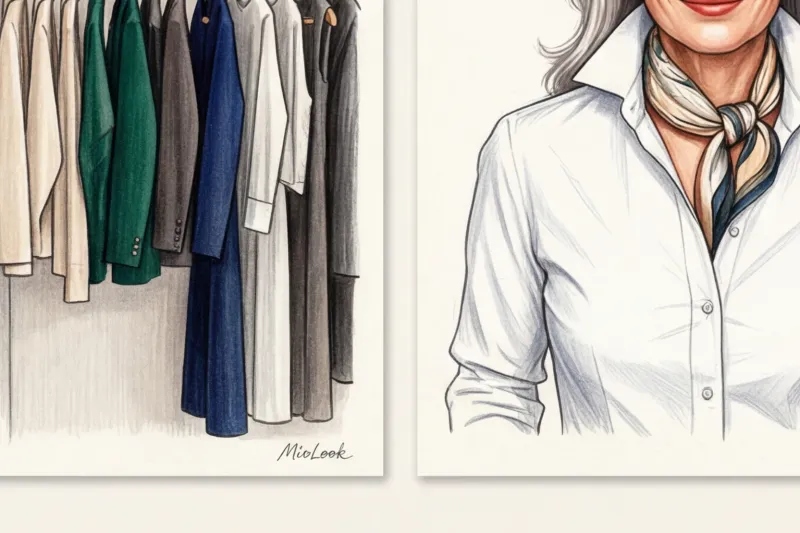
"Clothing is just a frame. If the picture inside is dull, no amount of premium silk framing will save the day."
At my private master classes, I always conclude with the same observation. The main secret to a status wardrobe is psychological. Looking expensive means feeling valuable. No cashmere sweater will work if you project an apologetic look and a hunched back. Luxury is your right to occupy space, your straight posture, a soft yet confident voice, and a complete acceptance of your age.
Your practical step for today:
- Unsubscribe from fast fashion brands' newsletters to clear your information space of visual noise.
- Write down three words that describe the woman you feel you are.
- Choose one item from your closet that most does NOT match these three words and put it out of sight.
Style is a fascinating journey to the real you. Allow yourself to sound noble.
Guide Chapters
How to Look Expensive in Winter: Outerwear and Accessories
The secret to a chic winter look lies not in logos, but in the right fabrics and cuts. Get stylist tips on choosing statement outerwear.
How to Look Expensive in Summer: Style Secrets in the Heat
Staying stylish at 30°C isn't about sacrifice, but about choosing the right fabrics and cut. We reveal the key secrets to an elegant summer wardrobe.
How to get rid of things that are getting cheap: Clean out your closet
The price tag doesn't matter if the fit or fabric is flawed. Learn how to properly clear your closet of clothes that ruin your look.
Expensive-Looking Hairstyles: Secrets to Luxurious Hair
The more effort put into styling, the cheaper it looks. Learn the key rule for classy hairstyles and the secrets to a flawless haircut.
How to Create Expensive Makeup: Minimalism and Even Tone
Expensive makeup isn't about an abundance of luxury brands, but rather the perfect complement to your style. We explore the rules of beauty minimalism and the secrets to a perfect complexion.
How to Wear Expensive Jewelry After 35
Heavy gold jewelry often adds age. Learn a stylist's secrets: how to choose and wear jewelry and costume jewelry after 35.
Shoes that look expensive: secrets to a luxurious look
Shoes are the foundation of your style. Learn how to choose shoes and boots that will add luxury and class to any look, regardless of price.
Expensive Clothing Fabrics: How to Choose Cashmere and Silk
A perfect cut won't save a garment made of cheap material. Learn how to evaluate the quality of cashmere, silk, and cotton like a professional buyer.
The Perfect Fit: Why a Tailor Matters More Than a Brand
Does an expensive suit fit worse than a budget one? Find out why the secret to impeccable style lies not in the brand's price, but in a visit to the tailor.
The Ideal Wardrobe for a Female Executive: Stylist Tips
True status isn't about price tags and logos, but about perfect fit and comfort. We explore the rules for creating an architectural wardrobe for top managers.
How to Choose Bags That Look Expensive: A Style Guide
Discover the secrets of design and fittings that will make your look look more luxurious. Find a statement bag without breaking the bank.
What cheapens an image: 7 major style mistakes
A high price tag doesn't guarantee status. Learn the 7 biggest style mistakes that mercilessly cheapen your look, and learn how to choose the right pieces.
How to Look Expensive on a Budget: Tips
Status isn't about price, but about the right cut and texture. Discover the secrets of smart shopping and upcycling techniques from a professional stylist.
Quiet Luxury: A Wardrobe in Old Money Style
Old Money aesthetics aren't just about buying expensive beige items. We discuss the main mistakes and rules for creating high-status looks with a professional stylist.
How to dress at 40 to look expensive and stylish
A wardrobe after 40 isn't about hiding your age, but rather about embracing your character. We'll explore which pieces detract from your authority, and which convey status.
Top 10: Colors that look expensive and prestigious
Nothing reveals a piece's value like its color. We'll explore 10 elegant shades that will instantly elevate your look.