
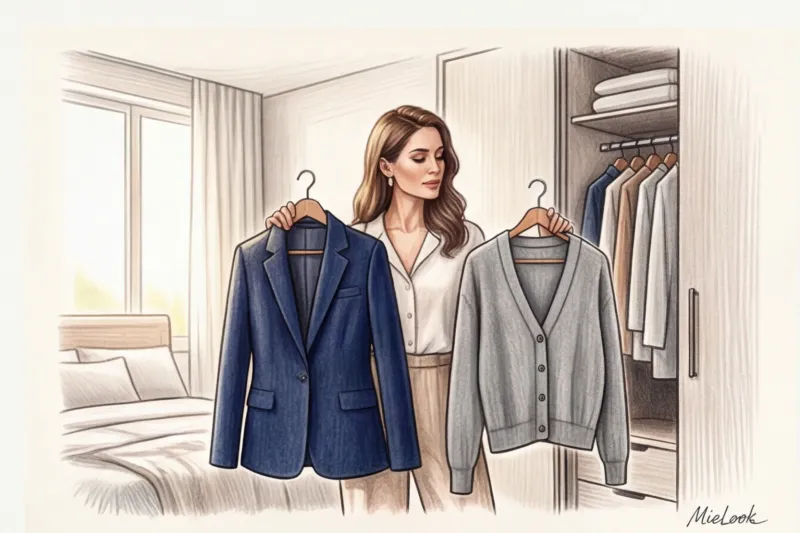
Think back to your last work call from home, when you sat in front of your monitor in a smart shirt, your favorite Mickey Mouse pajama bottoms hidden under the desk. You looked professional, but did you feel 100% focused? Probably not. Your brain stubbornly refused to concentrate, irrationally gravitated toward the couch, and sabotaged complex decisions. It wasn't because you were lazy. It was because your brain literally "read" the soft flannel on your legs and signaled, "We're relaxing."
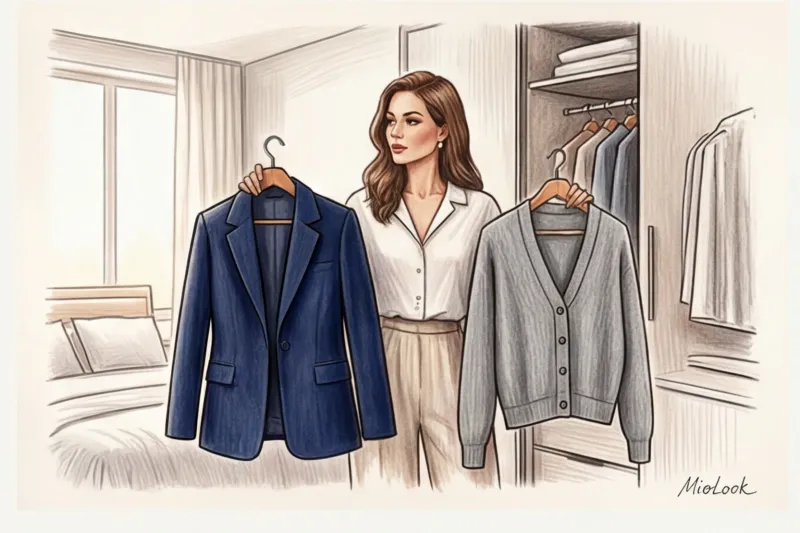
This phenomenon is called in psychology embodied knowledge (enclothed cognition). The idea is simple: we think not only with our heads, but also with our bodies. And what we wear directly programs our cognitive abilities. We discussed basic laboratory experiments with doctors' white coats in more detail in our a complete guide to the psychology of style But today we're going to step outside the lab. As a practicing stylist, I'll show you how to apply this neurohacking in real life and how to turn your closet into a control panel for your well-being.
Beyond the Lab: How Embodied Cognition Works in Your Closet
Over 12 years of working with clients' wardrobes, I've realized one important thing: trends come and go, but the way fabric interacts with your nervous system remains constant. The brain evaluates clothing through two channels: symbolic (what the garment signifies in society) and physical (how it makes you feel).
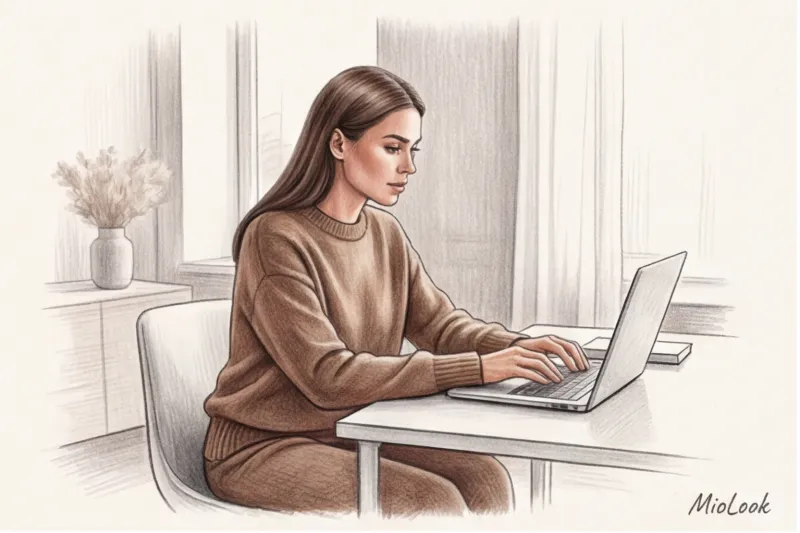
When you put on a cashmere sweater, your skin receptors send a signal to your brain of warmth, safety, and relaxation. Your nervous system slows down. You become more empathetic and gentle, but at the same time, you lose your grip and focus. Conversely, the thick cotton of a starched shirt creates a slight resistance to movement. This micro-discomfort acts as a constant alarm clock for your attention.
Understanding how embodied cognition works is far more important than being able to distinguish a new Prada collection from last year's. Because it gives you control over your own resource.
The Neuroscience of Cut: How Silhouette and Fabric Dictate Behavior
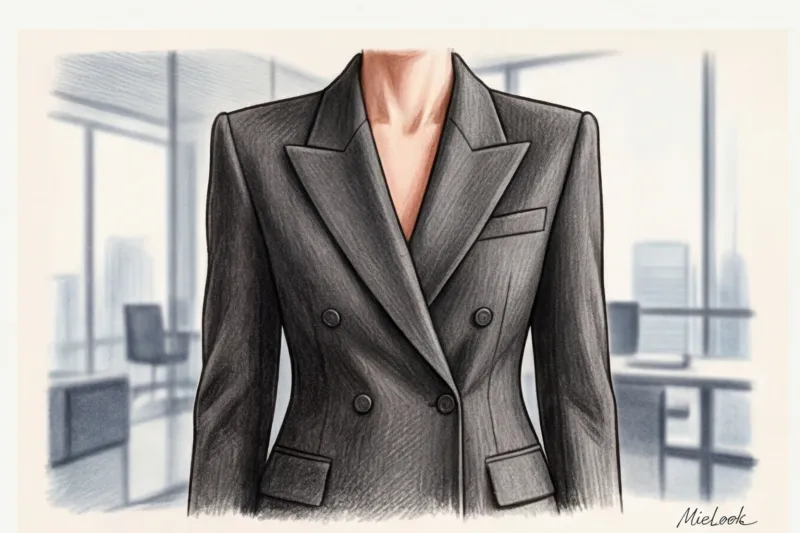
Embodiment theory proves that our motor skills and physical sensations are inextricably linked to our psyche. The silhouette of your clothing is a physical boundary you create between yourself and the world. By changing the rigidity of these boundaries, you change the algorithms of your mind.
Structured Forms: Focus, Boundaries, and Control
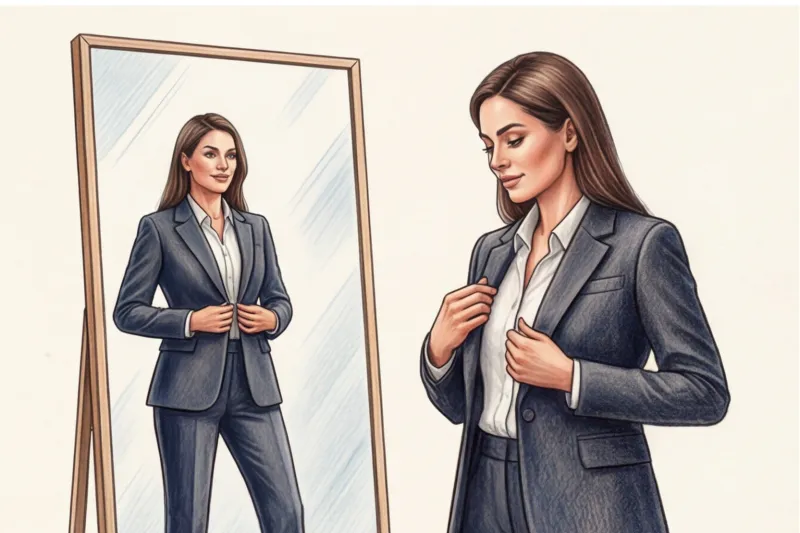
This category includes jackets with shoulder pads, heavy 14-ounce denim, leather pencil skirts, and rigid shoes. Feeling clear physical boundaries helps the brain establish equally clear mental boundaries. You stop being distracted by trivialities and find it easier to say "no."
"One of my clients, Maria, an IT director at a large company, suffered for a long time from impostor syndrome in boardrooms. She preferred soft knit cardigans to "go unnoticed." We experimented: we replaced the knits with double-breasted jackets with a crisp, architectural shoulder line, in the style of Massimo Dutti. After a month, she admitted that the structured jacket lowered her voice, and made it physically easier to parry her colleagues' attacks. The structure of the garment became her mental armor."
When it does NOT work: A stiff suit will work against you if you're planning a design thinking session or a candid conversation with your team. It will literally "frame" your ideas and create distance.
Soft and fluid textures: empathy and creativity
Silk, viscose, fine cashmere, loose-fitting palazzo pants. Relieving physical tension stimulates divergent thinking—the ability to find multiple, unconventional solutions to a single problem. A mind freed from constraints allows the imagination to flow freely.
It's the perfect choice for brainstorming, writing, or strategizing. But if your daily task is summing up the annual financial report or analyzing dry data, a flowing silk blouse will become your enemy. The lack of tactile boundaries will make you absent-minded, and you'll make more mistakes in your daily routine.
Access to MioLook for €0.99 — one-time payment
A smart AI stylist will select the perfect look for your daily routine. Create your capsule wardrobe consciously.
Get access — €0.99 onceThe Comfort Trap: Why Lounge Suits Are Killing Productivity
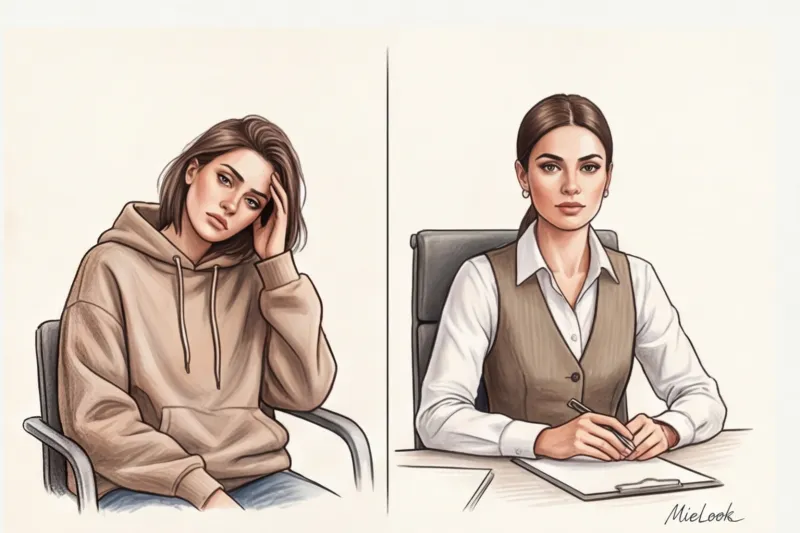
Here, I want to challenge the main modern trend—the all-encompassing craving for oversized and "cozy" fashion. We're used to thinking that maximum physical comfort frees up energy for work. This is an illusion. Constantly wearing hoodies and oversized joggers while working remotely slowly but surely sabotages your discipline.
It's all about the concept of "useful discomfort" or structural tone. In 2015, psychologist Abraham Rutchik of California State University (CSUN) published a groundbreaking study. He demonstrated that wearing formal business attire increases abstract thinking by 35%. Participants in the experiments wearing formal suits demonstrated a greater ability to think globally and strategically, while those in casual clothes tended to think in a more microscopic and reactive manner (only within the context of immediate tasks).
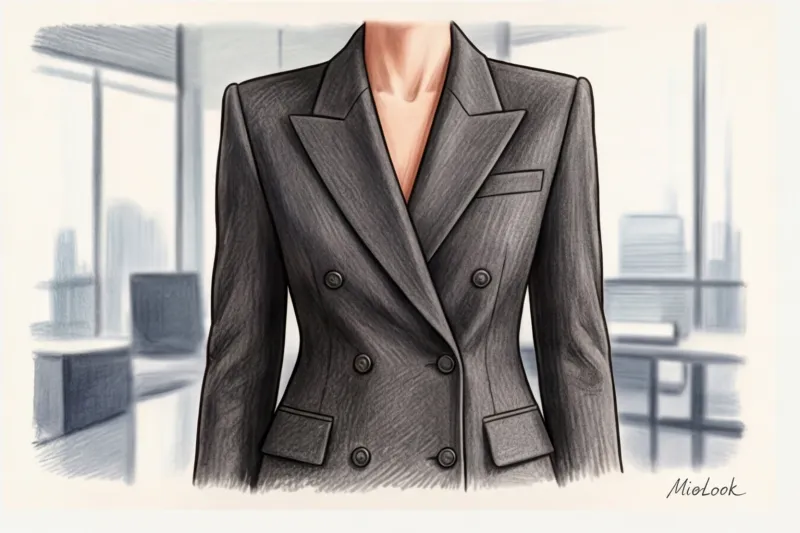
Log data Social Psychological and Personality Science (Michael Slepian's 2014 study) also confirms that business attire is directly linked to an internal sense of power and competence. When you work in a soft sweatshirt, your body sends a signal to your brain: "We're safe, we can relax." As a result, reaction time slows, and procrastination increases. My personal experience during quarantine showed the same: as soon as I swapped my lounge leggings for pleated trousers, the time it took to write an article was cut in half.
Color Codes: A Visual Catalyst for the Brain
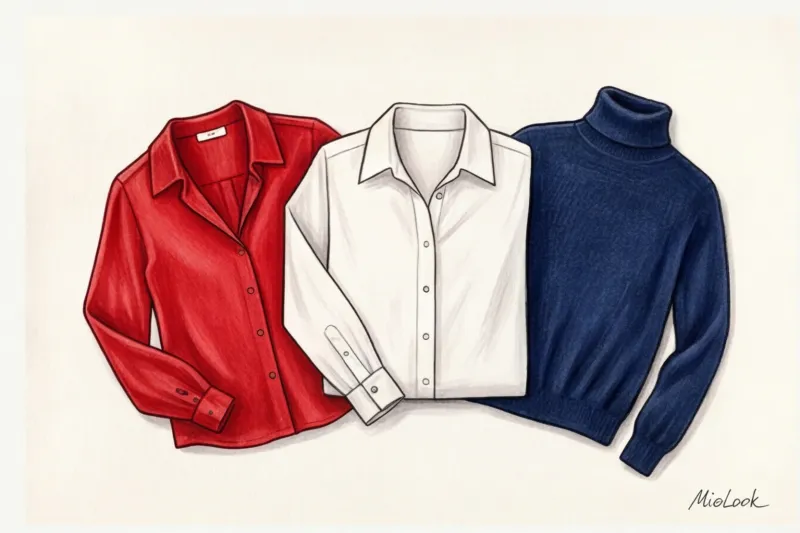
Reified cognition operates not only through form and fabric, but also through the optical signal we receive when looking at ourselves in the mirror (or through a Zoom window).
Achromats—black, white, gray—represent a "blank slate." According to the Pantone Color Institute, gray reduces emotional stress. If you're facing a difficult negotiation where you need to maintain icy calm and rely solely on logic, an all-gray look will act as a visual stabilizer for the nervous system.
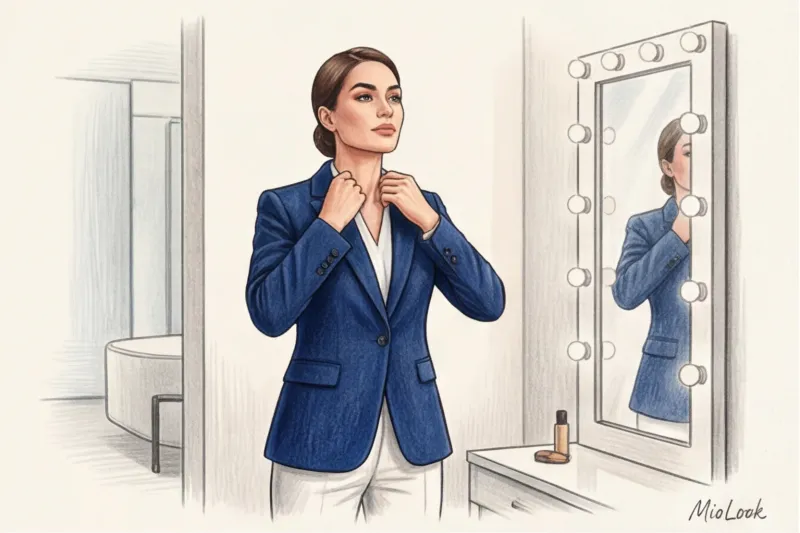
Rich, deep colors (cobalt, emerald, burgundy) stimulate. Consider PANTONE 19-4052 Classic Blue—historically associated with intellect and concentration. Red, on the other hand, increases heart rate: wear it when you need to instantly seize the upper hand in a room, but avoid it if you're going to a conciliatory meeting. By combining color and cut, you create the right cognitive cocktail: for example, soft silk (creativity) + deep blue (focus) = the perfect balance for presenting a creative project.
Wardrobe as a control panel: stylistic formulas for tasks
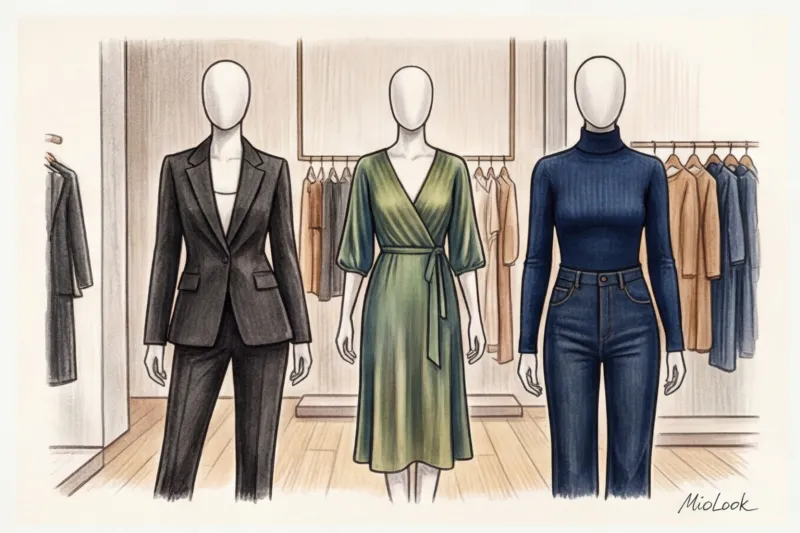
Theory is dead without practice. Below, I share my signature stylistic formulas—the very "cognitive uniform" we assemble with clients to achieve specific business goals. Try applying them this week.
Formula 1: For complex negotiations and project defense
- What to wear: A straight-cut trouser suit made of smooth wool (super 100s twist) + a cotton shirt + closed shoes with a hard toe (for example, classic loafers or oxfords) + a watch on a metal bracelet.
- How does this work: Shoes with hard soles change your gait pattern. Your stride becomes heavier and more confident. Your brain receives a signal to ground yourself. A smart suit switches you into "strategist mode," and the weight of a watch on your wrist subconsciously reminds you to keep track of time.
Formula 2: For creative work and idea generation
- What to wear: Loose palazzo pants made of flowing fabric (cupro, viscose) + a voluminous cotton or linen shirt worn untucked + soft suede loafers or minimalist sneakers.
- How does this work: Complete freedom in the waist and shoulders. No tight belts that compress the diaphragm. Breathing deepens, cortisol levels drop, and the brain switches to searching for unconventional connections. You literally "allow" yourself to think more broadly.
Formula 3: For Deep Work
- What to wear: Dark jeans made of dense raw denim + a smooth merino turtleneck that fits the figure.
- How does this work: A turtleneck creates a gentle compression effect. It's a physiological trick: the light, even pressure of the fabric acts on the nervous system like a calming embrace. It doesn't relax you to the point of sleep, but it filters out external stimuli, focusing all your attention on one point (the monitor). Thick jeans prevent you from slumping in your chair.
Your perfect look starts here
Join thousands of users who look flawless every day and manage their mood with MioLook.
Get access — €0.99 onceSmart Wardrobe Management: How to Implement These Principles
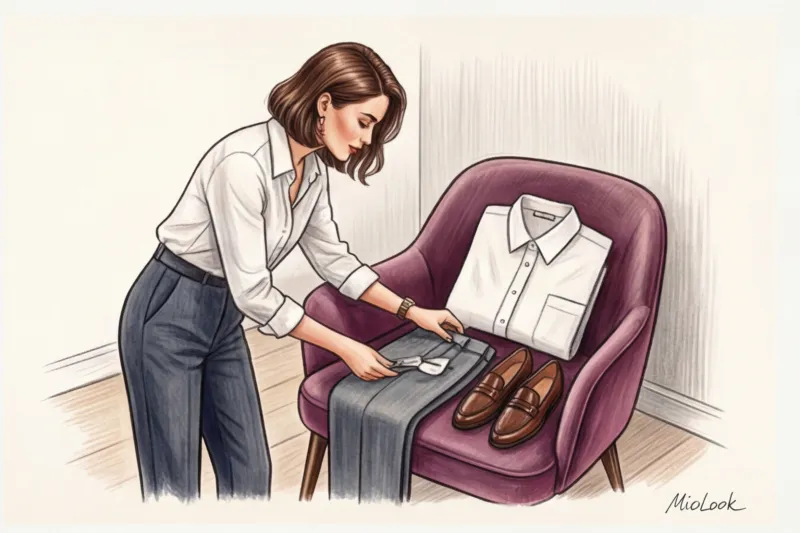
If you want embodied cognition to work for you every day, it's time to stop judging clothes solely by the criteria of "suitable/not suitable" or "fashionable/not fashionable." Introduce a new filter: "How does this item make me feel?"
The next time you clean out your closet, organize your clothes not by season, but by cognitive tasks. Create 3-4 capsules: "Focus and Discipline," "Creativity and Empathy," and "Confidence and Energy." To avoid getting lost in your clothes, I recommend digitizing your wardrobe. the "smart wardrobe" feature in MioLook , you can not only take photos of things but also assign them status tags. In the morning, when you have a difficult zoom to do, you simply open the app and choose a pre-made image from the "Focus" category.
The dressing ritual is especially important for those working from home. The act of shedding your lounge clothes and putting on your "work armor" serves as a trigger for the brain to switch roles. You close the door to household chores and open the door to professional productivity, even if you're physically still in the same room.
Conclusion: Your style shapes your mind
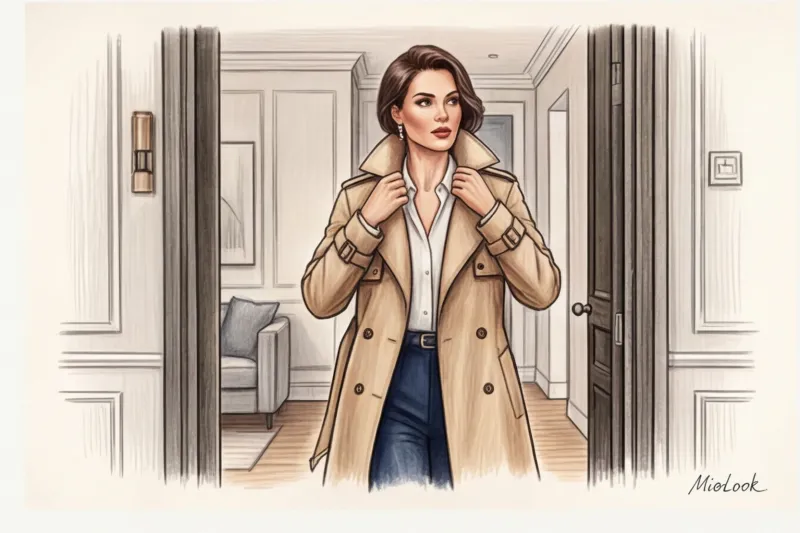
Fashion is often perceived as frivolous and superficial. But the science of embodied cognition proves that clothing is a powerful tool for biohacking and self-management. You don't just cover your body with fabric. You program your mind every day.
I have a little assignment for you tomorrow morning. Before you go to the closet, ask yourself one question: "Who do I want to be today, and will my clothes help me achieve that?" If you're lacking concentration, wear a thick, structured jacket. If you need to come up with a brilliant idea, choose a loose fit. Experiment with these boundaries, and you'll be surprised how obediently your brain follows your style.