
Last year, I conducted an experiment: for exactly six months, I tracked not only what I wore in the morning but also my confidence level throughout the day on a 10-point scale. The results were astonishing. It turned out that my most expensive, "status" blazer, made of stiff wool, consistently correlated with failed meetings and increased anxiety. Why? Its armholes were too tight, physically restricting my ability to breathe deeply and move my arms freely. I looked authoritative to others, but my body was in a panic.
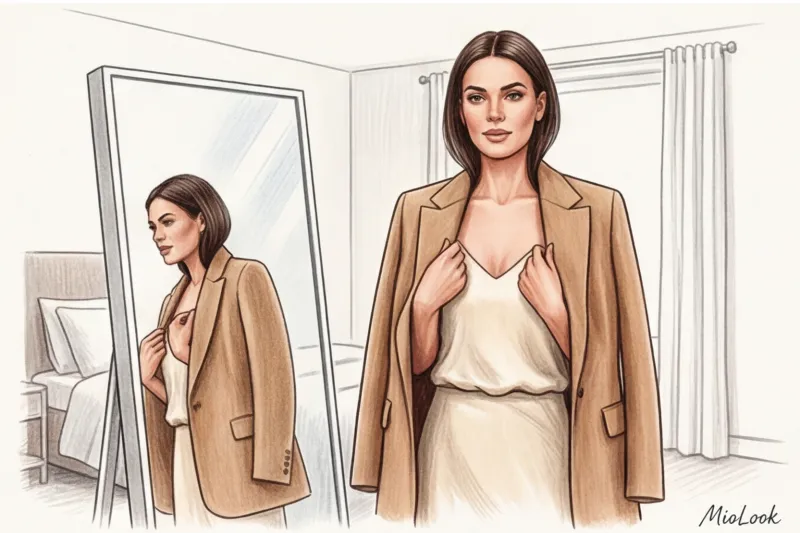
Correct clothes for self-confidence works completely differently than the glossy magazines of the 2000s taught us. We discussed the architecture of this phenomenon and how the brain interprets textures in more detail in our a complete guide to the psychology of style Today, we'll explore the purely practical side: how to put together a wardrobe that works for you, not against you.
Dressing for Confidence: Why Old-Fashioned Power Dressing No Longer Works
We're used to thinking that the formula "dress for your dream job" implies a rigid, armor-like suit. Classic power dressing from the '80s dictated its own rules: giant shoulder pads, stiff collars, and cinched silhouettes. This was thought to visually overwhelm competitors. But herein lies the main catch.
Neuroscience research reveals a counterintuitive fact: when clothing physically restricts your movement—a tight belt digs into your stomach, narrow shoes squeeze your toes, or a stiff collar prevents you from turning your head—your body perceives this as a physical threat. A micro-release of cortisol (the stress hormone) occurs. How can you feel confident when your autonomic nervous system is literally sending out an SOS signal?
"Modern confidence clothing is a tool that tunes your own neurobiology, not just puts on airs for others," and that's the mantra I repeat to every client.
The Evolution of Business Style: From Uniform to Authenticity
Over the past ten years, corporate dress codes have undergone a tectonic shift. We've moved from "status-based attire" to "personal effectiveness-based attire." No one wants "white collars" in the literal sense anymore—even conservative investment funds have abandoned starched shirts.
Authenticity has become the new currency. Today, at a boardroom, a man in a perfectly tailored cashmere sweater and loafers looks far more confident and prestigious than someone sweating in a tight three-piece suit worn only for formal occasions.
Access to MioLook for €0.99 — one-time payment
A smart AI stylist will select the perfect look for any work situation and save your favorite outfits.
Get access — €0.99 onceThe Neuroscience of Wardrobe: How Cut and Fabric Change Body Language
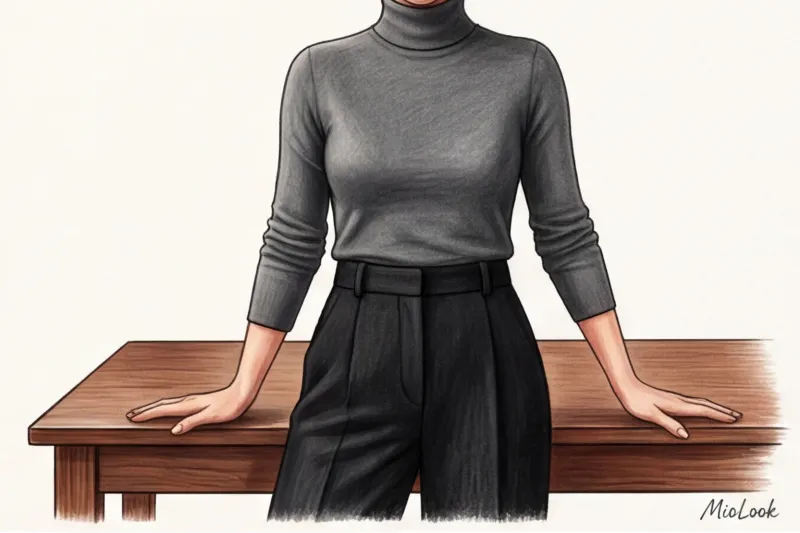
Consider social psychologist Amy Cuddy's famous study on "power posing." Open postures, a straight back, and relaxed gestures can reduce stress and boost testosterone, the confidence hormone. But ask yourself: how will you make a sweeping, confident hand gesture during a presentation if the seam on the back of your jacket rips ominously?
I had a telling example. One of my clients, a top manager in the IT sector with a rather strict casual code, complained of impostor syndrome during pitching sessions. She wore classic, heavy suits because "that's the way it's done in business." Once we swapped out the stiff jackets for structured, premium knitwear—thick merino cardigans and shape-stabilizing cashmere-blend turtlenecks—the magic worked.
Her body relaxed, her breathing deepened (the diaphragm was no longer constricted), her voice lowered, and her gestures became natural. She stopped wasting valuable cognitive resources on maintaining an artificial shell. Somatic comfort is the foundation of your charisma.
The "clothed cognition" effect in action: reprogramming thinking
We don't just wear things; we wear the meanings they embody. In 2012, Northwestern University researchers Hajo Adam and Adam Galinsky coined the term "enclothed cognition." Their experiment revealed something incredible: students who wore white coats (which they were told looked like doctors' uniforms) made half as many errors in cognitive tests of attention. The clothing literally changed how their brains worked.
Dr. Karen Pine went further in her work "Mind What You Wear." She demonstrated that we unconsciously adopt the qualities we associate with our clothes. How can you leverage this? Create personal "anchors" of confidence.
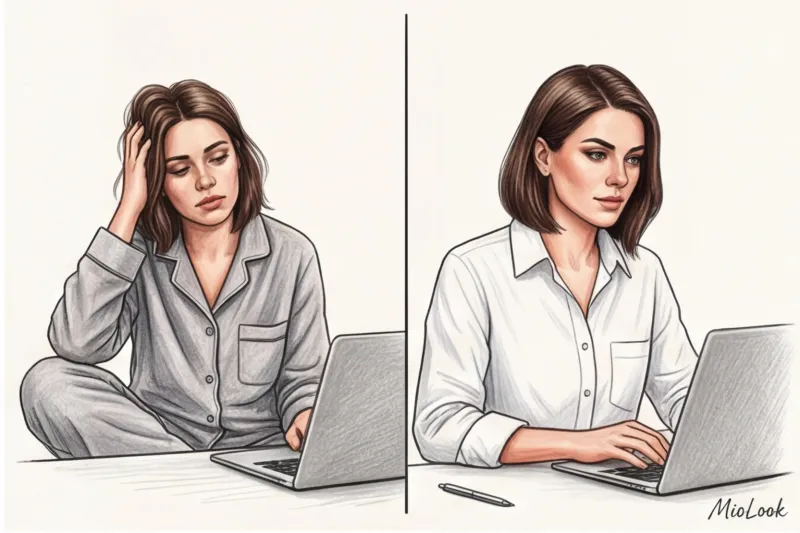
A dressing ritual is the fastest way to transition between social roles. Working remotely? Swap your soft joggers for straight jeans, and your hoodie for a cotton shirt. It takes exactly three minutes, but your brain will receive a clear signal: "Relax mode is off, we're switching to process management."
Dopamine Dressing vs. Strict Standards
But what if you work in a bank or law firm, where the dress code doesn't allow for experimentation? This is where the Dopamine Dressing method comes into play. You can integrate rich colors and textures in microdoses.
A silk scarf with an abstract print tied to the handle of a bag, or a hidden emerald lining in your basic dark gray jacket—these details work to your advantage. No one in the meeting room might notice the bold detail, but You You know it's there. This personal secret stimulates dopamine production and lifts your mood on a physiological level.
Your perfect look starts here
Join thousands of users who look flawless and confident every day with MioLook.
Get access — €0.99 onceHidden Confidence Killers: What You Need to Get Out of Your Closet ASAP
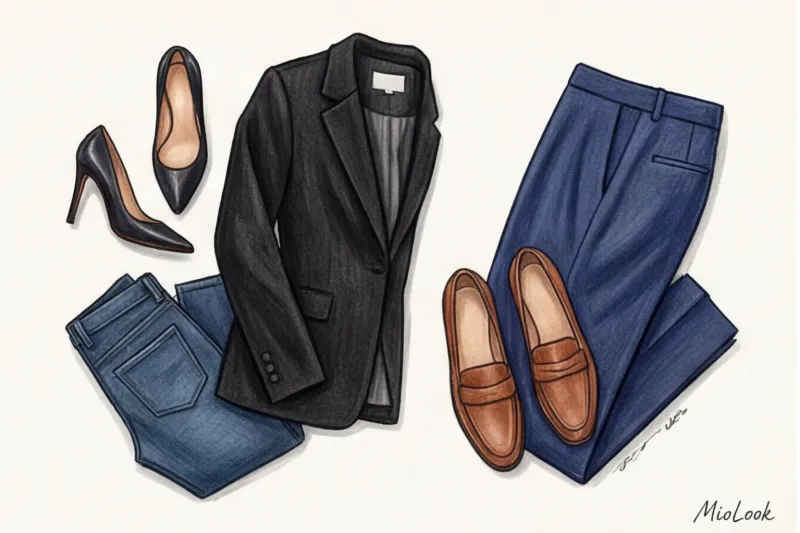
Have you ever noticed how much energy you spend trying to "control" unruly clothes? These are the so-called traitorous garments. A pencil skirt that constantly rides up when you walk, or a silk blouse whose buttons treacherously pop out at your chest with every breath. Every second you think not about your profit charts, but about whether your underwear is showing.
Another silent killer of self-esteem is the "I'll definitely lose weight for this dress" syndrome. Storing premium trousers a size too small in your closet isn't motivation. It's a daily visual reproach. By wearing something that's objectively too small for you right now, you project a sense of self-consciousness all day long.
A fair limitation: this advice doesn't always apply. For figures with a pronounced waist-to-hip difference, finding the perfect fit in mass-market clothing is nearly impossible (the pants will always bulge in the back). In this case, the rule is simple: buy a garment that fits the widest part of your body and take it to a tailor. This is an investment in your confidence that will pay off on your very first interview.
5 Modern Wardrobe Elements That Convey Status and Power
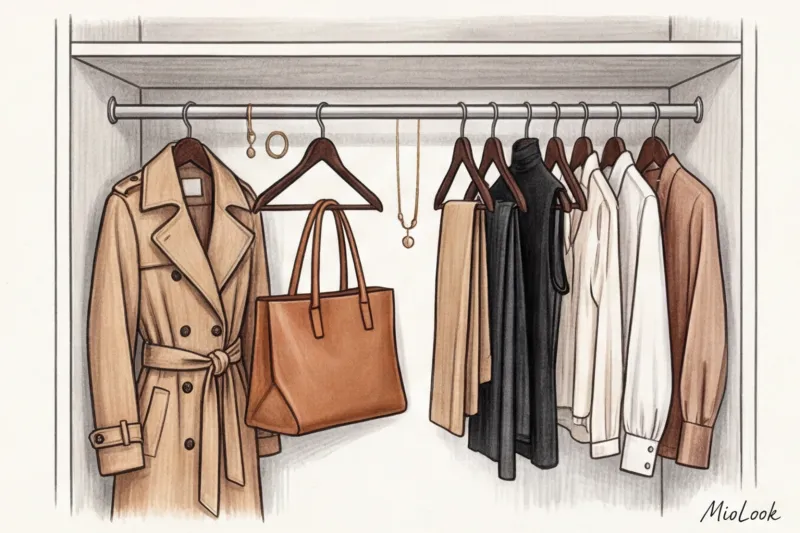
As a stylist, I often see the same mistake: trying to look prestigious through an abundance of logos. But true professionalism is conveyed through lines, purity of color, and quality of texture. Here are five elements that work flawlessly in any corporate environment:
- Structured jacket made of plastic fabric. Forget thin polyester. Look for heavy cotton (180 g/m² and above), high-quality suiting wool, or a viscose blend with 5% elastane. The jacket should be well-shaped around the shoulders, but still allow you to comfortably hug your shoulders.
- Monochrome set. By wearing items of the same shade (for example, a graphite sweater and graphite pants), you create a continuous vertical line. This visually elongates your silhouette and focuses the other person's attention on your face and words, rather than on the contrasting transitions in your clothing.
- High-quality, status-conscious footwear with a comfortable fit. Leather loafers, oxfords, or ankle boots with a stable block heel (no higher than 5 cm). A wobbly gait in stilettos is the antithesis of confidence.
- Architectural decorations. Instead of a scattering of tiny chains that tangle your hair, choose one or two statement pieces with crisp geometric designs. For example, sleek drop earrings or a minimalist, wide bracelet in matte metal.
- Perfectly fitting trousers (wide-leg or straight). A full length or subtle pleats at the waist with a mid- to high-rise create a feeling of solidity and comfort. You can sit down freely, cross your legs, and not worry about your belly.
How to Digitize Your Confidence: The MioLook Approach
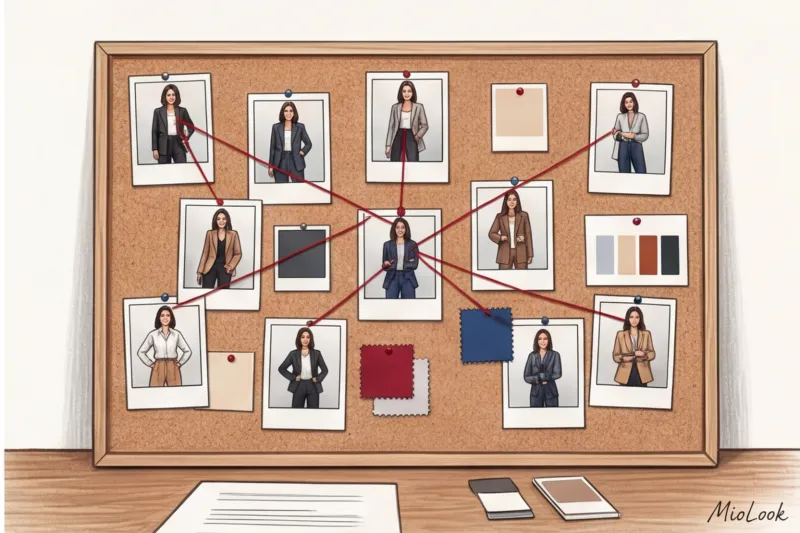
Decision fatigue is a real cognitive phenomenon described by social psychologist Roy Baumeister. Our brains are only capable of making a limited number of quality decisions per day. If you spend 20 minutes every morning battling your closet ("I have nothing to wear," "This skirt doesn't go with this shirt"), you're wasting resources you could otherwise use to come up with brilliant answers at your morning meeting.
That's why I'm a fan of a systematic approach and digitalizing my closet. MioLook smart wardrobe , you can create and save a lookbook of your most affordable outfits in advance. The app eliminates morning panic and, more importantly, helps you calculate your Cost Per Wear.
Data analysis is sobering. You'll quickly realize that a flashy $30 blouse from a mass-market retailer, which you wore once and spent the entire evening sweating in the synthetic material, cost you more than a $150 premium poplin shirt that you comfortably wear once a week to all your important meetings.
Ready to get started?
Try MioLook's free plan—upload your wardrobe and let AI create confident looks for you.
Get access — €0.99 onceChecklist: How to put together an outfit before an important event
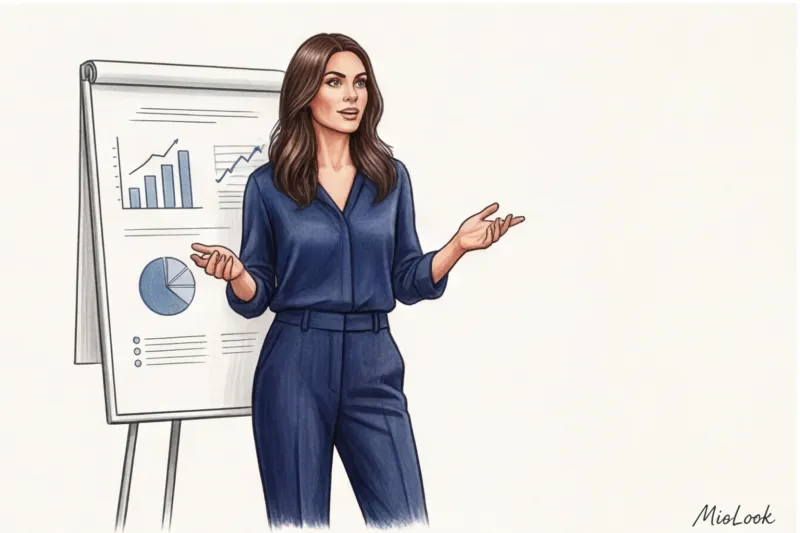
Now let's move from theory to practice. Tomorrow you have an important interview, a startup pitch, or a difficult conversation with your boss. Before you leave the house, run through this quick checklist of your outfit:
- Somatic comfort test. Reach up with both arms, as if you were reaching for a book from a high shelf. Sit on a chair. Lean forward. Is there any pressure anywhere? Do you need to tug or adjust anything? If so, you've passed the test.
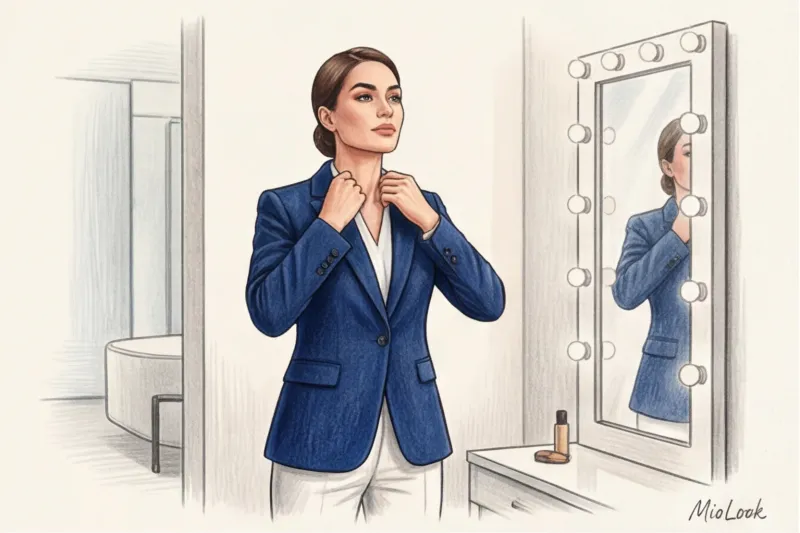
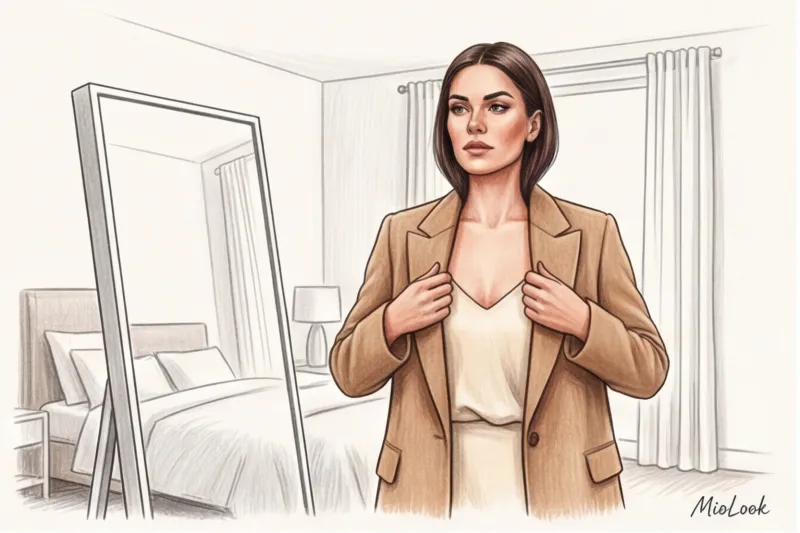
- Symbolic correspondence. Look in the mirror. Does this image convey the expertise you're trying to sell? Do you feel like an expert in these clothes?
- Checking the details (the devil is in the details). Check your shoulders for dandruff or dust, make sure your knitwear is free of pilling, and sponge your shoes. Cleanliness speaks volumes about respect for your conversation partner.
The most important style paradox I've learned over the years is this: The best clothes for confidence are those you completely forget about the moment you close the front door behind you. If you don't think about what you're wearing during a presentation, then your look has worked 100%.