If you ask a random person to describe a dramatic style, you'll almost certainly hear a litany of tired clichés: aggressive stiletto heels, corsets, lots of black leather, leopard print, and red lipstick. This 2000s stereotype is so ingrained that many of my clients shudder at the suggestion of adding a little "drama" to their wardrobe. But they shouldn't.
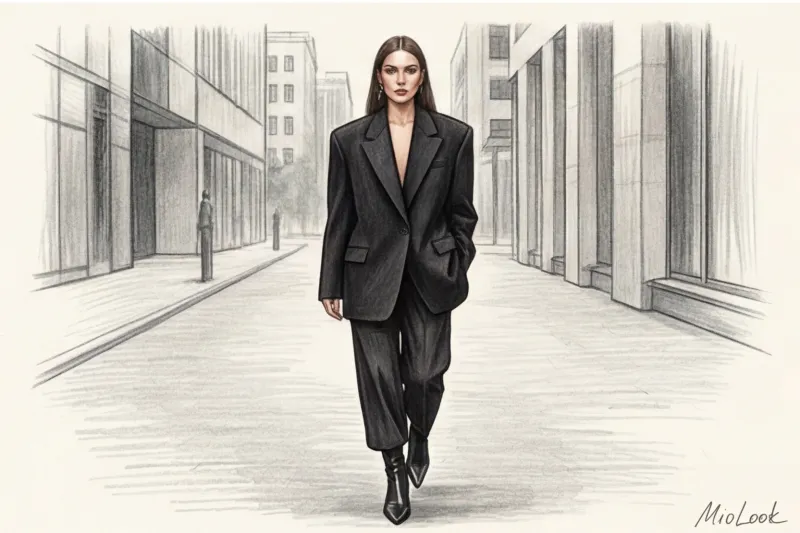
Today, true drama isn't about overt provocation, but about intelligent tailoring. It's about wearing clothes so they convey confidence even before you speak. We've covered how basic stylistic trends are formed in more detail in our complete guide. Women's Clothing Styles: How to Find Your Look In this article, I'll show you how to integrate "pure" architectural drama into a modern wardrobe, making it appropriate for both the office and everyday life.
What Dramatic Clothing Really Is (And Why It's Not Just Leather and Leopard)
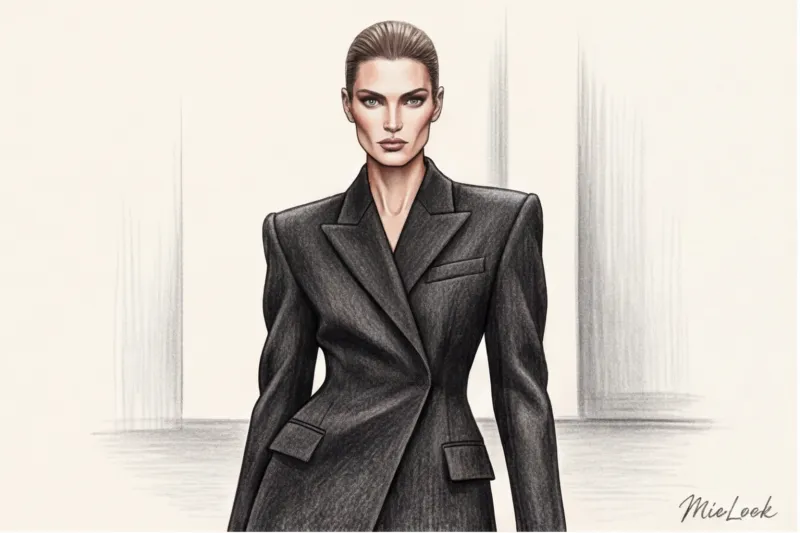
Over 14 years of stylistic practice, I've developed a clear rule: modern drama isn't built on outrageousness, but on three pillars: scale, geometry, and texture contrast. Forget about the "vamp" look. Today, this style can be achieved even in subdued beige shades, as long as the garment has a strong shape and exaggerated proportions.
According to Lyst's 2024 analytics report, searches for pieces with accent shoulders and power dressing elements increased by 42%. People are tired of the shapeless knitwear of the pandemic era, but they also don't want to return to the rigid confines of uncomfortable clothing. The industry responded by creating a "wearable" drama.
"The difference between theatrical drama (for the stage and red carpet) and everyday drama is the level of adaptation. Theatrical drama screams, while contemporary urban drama asserts itself with confidence."
How does this translate into practice? Instead of a sheer, low-cut blouse, there's a voluminous, thick cotton shirt with an asymmetrical collar. Instead of patent leather thigh-high boots, there are matte leather ankle boots with an extremely square toe. It's not the exposed skin that draws attention, but the intricate design of the garment.
Who is this style for? (Spoiler: not just extroverts and femme fatales)
Traditionally, the dramatic style is considered the preserve of extroverts who love to be the center of attention. In the archetype system, it is often attributed to the Ruler, the Magician, or the Rebel. But my experience proves the opposite: paradoxically, it is introverts who benefit most from dramatic elements.
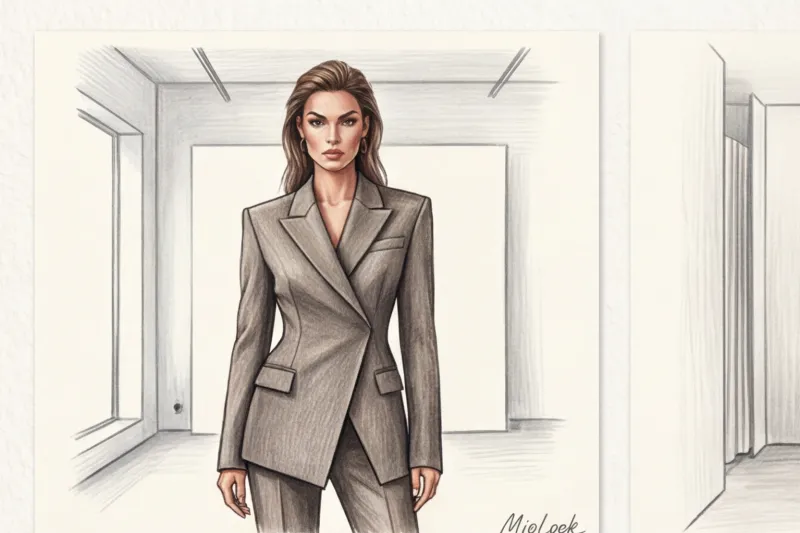
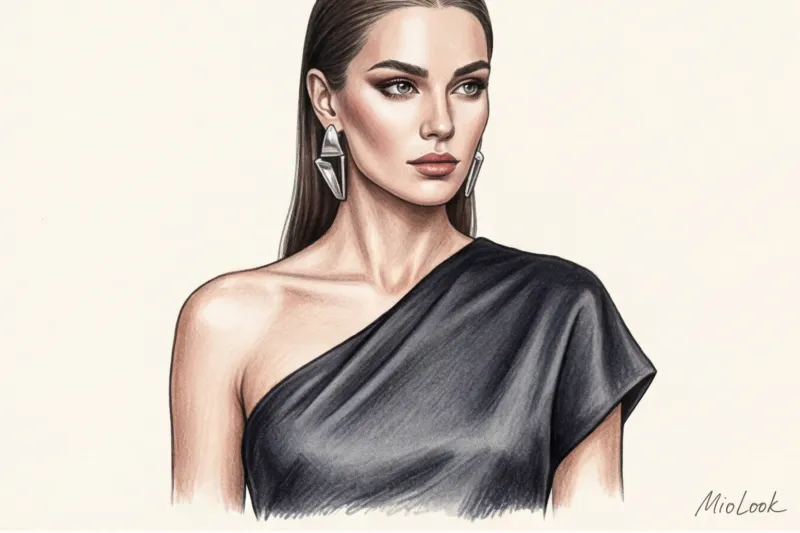
Several years ago, Anna, a brilliant financial analyst, approached me. She was a classic introvert: at boardrooms, her ideas often went unnoticed until someone else voiced them loudly. We didn't change her personality; we changed her "armor." I replaced her soft, shapeless cardigans with structured jackets with peak lapels and added large, cool metallic jewelry.
The result? Her clothes began to work for her. A strong shoulder line is subconsciously interpreted by others as a sign of authority and status. The dramatic element in the look acts as a shield: it maintains distance and makes others take you more seriously, even if you're just sitting silently with a notepad.
The Death of Clean Styles: How to Wear Drama in the Age of the Hybrid Wardrobe
Dressing head-to-toe in the same style is considered bad form these days. If you wear leather pants, a one-shoulder top, stiletto ankle boots, and a chunky necklace all at once, you'll look like you just stepped out of a '90s music video. Furthermore, the statistics from my clients are relentless: 100% of the time, maintaining a dramatic style in everyday life leads to wardrobe burnout in just one season.
Report McKinsey State of Fashion confirms: we live in an era of style hybridization. The modern woman's primary desire is comfort without sacrificing status. And here the golden 80/20 rule of style comes into play.
How the 80/20 rule works:
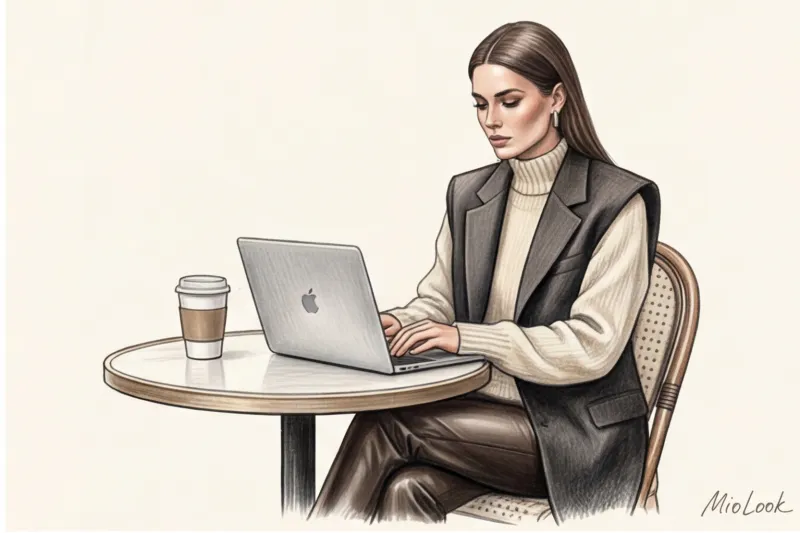
- 80% of the image consists of a high-quality, neutral and comfortable base (straight jeans, cashmere sweater, basic T-shirt).
- 20% of the image is given over to style-forming dramatic elements (pointed-toe shoes, a sculptural bag, a jacket with an exaggerated cut).
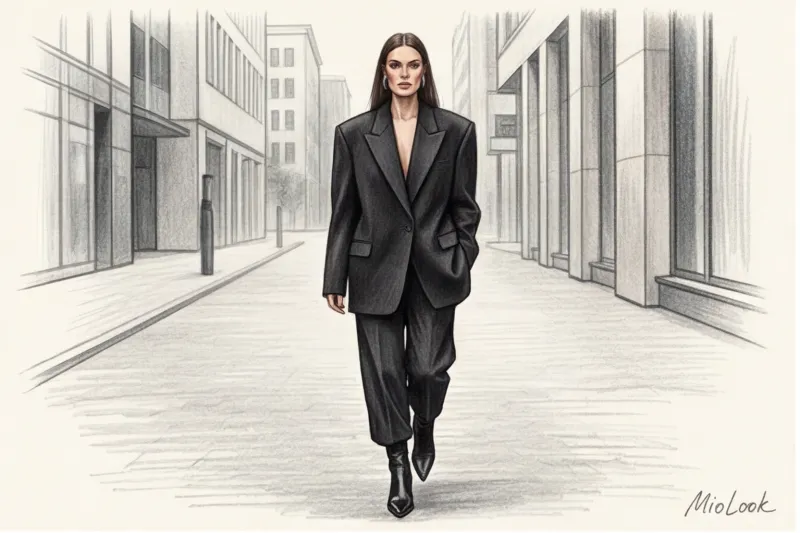
This approach allows for complex mixes. For example, drama pairs well with sport: wear relaxed joggers with an architectural jacket and heeled ankle boots. Or with minimalism that veers into the avant-garde, where clean lines and complex fabric textures.
Access to MioLook for €0.99 — one-time payment
A smart AI stylist will select the perfect look based on your preferences and help you effectively implement the 80/20 rule into your wardrobe.
Get access — €0.99 onceOffice Drama: How to Spice Up a Business Dress Code Without Breaking the Rules
If you work in a corporate environment with a dress code, you can still use dramatic techniques. The key is to shift the focus from the cut of the main garment to the details and accessories. Here are three legitimate ways to beat boredom:
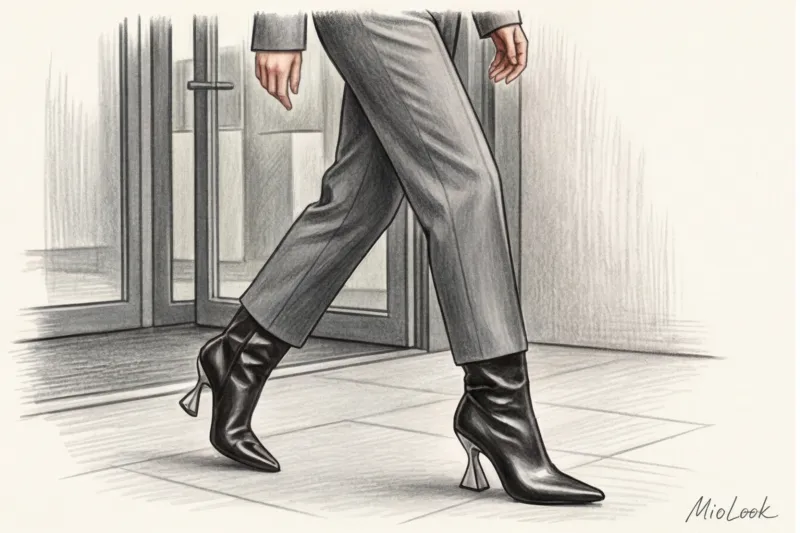
- Sculptural shoes. Replace your usual round pumps with shoes with an exaggeratedly pointed toe (knife boots) or shoes with an unusual, architectural heel.
- Dosed asymmetry. Wear a top with an asymmetrical, yet closed neckline under a formal office suit. Once you remove the jacket, the look instantly gains character.
- Smart color block. Instead of the usual monochrome, use contrasting combinations of two deep shades (for example, emerald and wine, graphite and cobalt).
5 Key Pieces for a Modern Dramatic Capsule
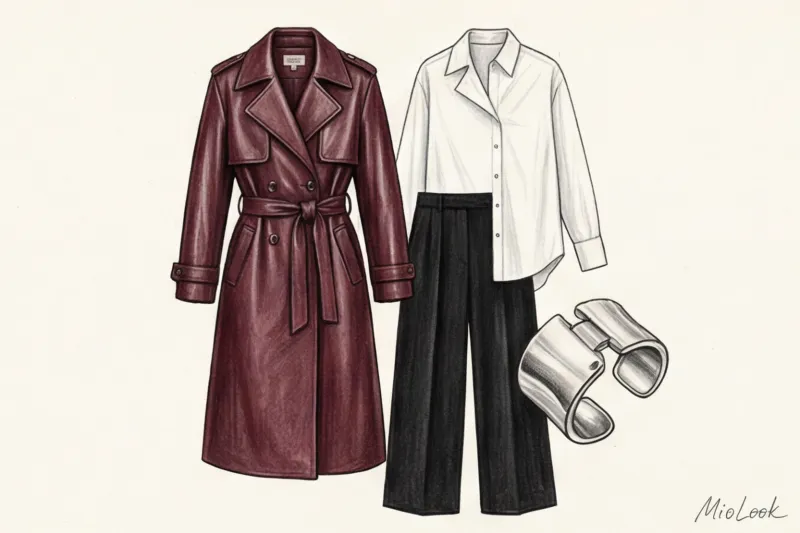
If you want to try this style, you don't need to buy out half the store. Adding five smart investment pieces to your wardrobe is enough. They'll cost around €200–€500 per capsule if you mix mid-market brands like COS or Massimo Dutti with local brands.
1. Structured jacket (over-tailoring)
The key piece in your arsenal: your shoulders should be wider than your natural width, and the cut should be crisp. An important detail: this jacket should be long and cover your hips.
2. A leather item of the correct cut
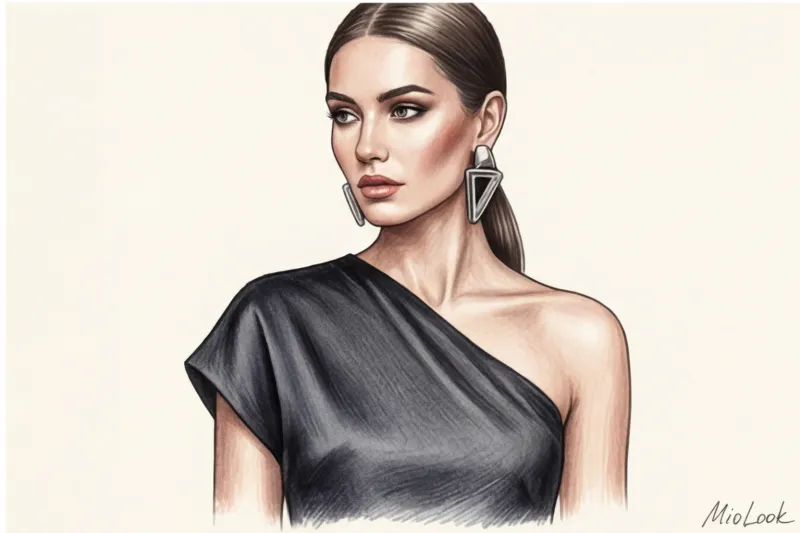
These are NOT skinny leggings. Opt for wide-legged palazzo pants in matte faux leather, a tight A-line midi skirt, or a leather shirtdress.
3. Blouse with complex geometry
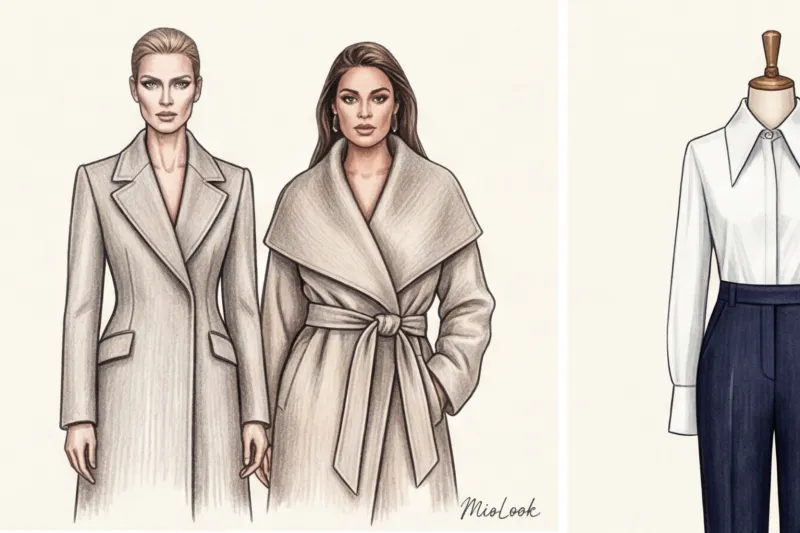
This could be an exaggeratedly large collar, elongated cuffs or asymmetrical hem The less decoration (ruffles, rhinestones) it has, the more expensive it looks.
4. Shoes with rigid geometry
Ankle boots or shoes with a square, chopped toe or, conversely, an elongated, pointed toe. No soft, round-toed ballet flats—they instantly dampen the drama.
5. Sculptural decorations
Avoid a scattering of small chains in favor of one massive accent: a wide, smooth cuff bracelet made of silver or gold metal or large monolithic earrings.
Important limitation: Dramatic style absolutely abhors flimsy, cheap fabrics. Thin viscose or loose knits won't hold their shape, and instead of architectural appeal, you'll end up with a sloppy look. Choose cotton with a weight of at least 180 g/m², dense suiting wool, and shape-retaining silk.
Your ideal image begins Here
Join thousands of users who look flawless every day with MioLook. Take photos of your items, and the AI will create stylish capsule collections.
Get access — €0.99 onceCommon Mistakes: How to Avoid Turning into a Theatrical Actress
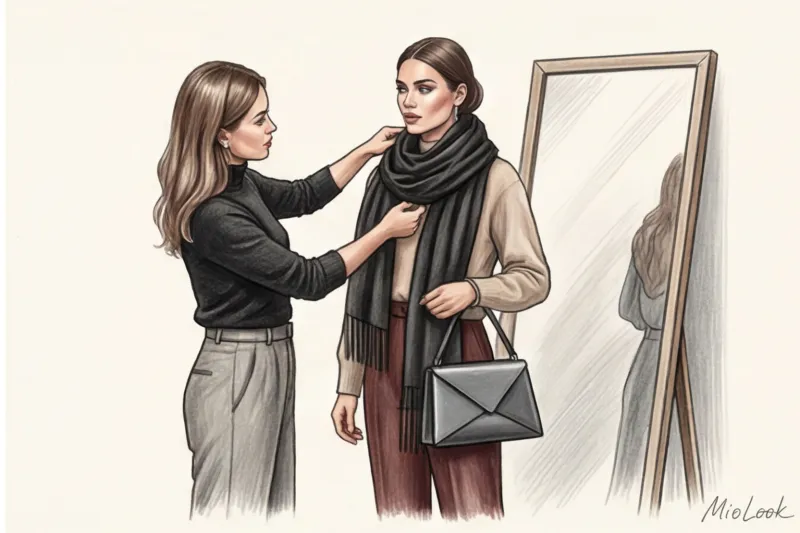
In eight out of ten wardrobe analyses I conduct, I see the same picture: stunning, complexly cut pieces hanging in the closet with tags still attached. Clients buy them in a burst of inspiration, then are afraid to wear them for fear of looking "too much." This usually happens because of three style mistakes.
Mistake 1: Too many accents.
If you're wearing metallic leather pants and an asymmetrical top, skip the red lipstick and over-the-knee boots. A dramatic piece needs some breathing room and a neutral backdrop, otherwise the look will fall apart.
Mistake 2: Ignoring context.
A dramatic maxi dress with sharp shoulders looks out of place on a Sunday morning at the neighborhood bakery. Scale it down: basic jeans and chunky geometric glasses are enough for morning coffee.
Mistake 3: Cheap fittings.
Shiny gold plastic buttons, flimsy zippers, and rhinestones ruin the "expensiveness" of an architectural cut. If your budget is limited (for example, you found a perfectly tailored jacket at a mass-market store for €50), immediately replace the buttons with high-quality horn or metal ones at a tailor's.
Checklist: Create your first stunning look tomorrow
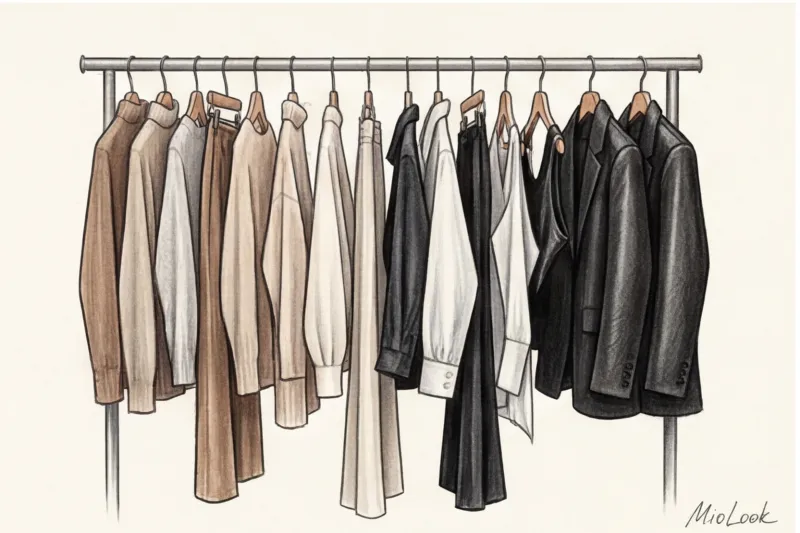
You don't have to wait for a special occasion to incorporate dramatic style. You can put together your first look tomorrow morning using items you likely already have in your closet.
Step 1: Create a canvas. Choose the simplest, most basic item from your wardrobe. It could be a pair of wide-leg gray jeans or classic black trousers with a crease.
Step 2: Add the "sharp" element. Layer a black, structured, tailored jacket or a leather shirt over a basic T-shirt. Leave it unbuttoned.
Step 3: Shift the focus down. Wear shoes with the sharpest toe you have. This detail, peeking out from under your wide-leg trousers, will set the rhythm of the entire look.
Step 4: Calm the portrait area. No complicated styling required. A sleek low ponytail or a casual bun, clear, glowing skin, and minimal makeup will balance out the harshness of the outfit.
Dramatic fashion isn't an innate gift of femme fatales, but simply a stylistic tool. Boldness in clothing choices is a muscle that can and should be trained. Start with one accent piece, feel how it changes your posture, and let your clothes say, "I know what I want."