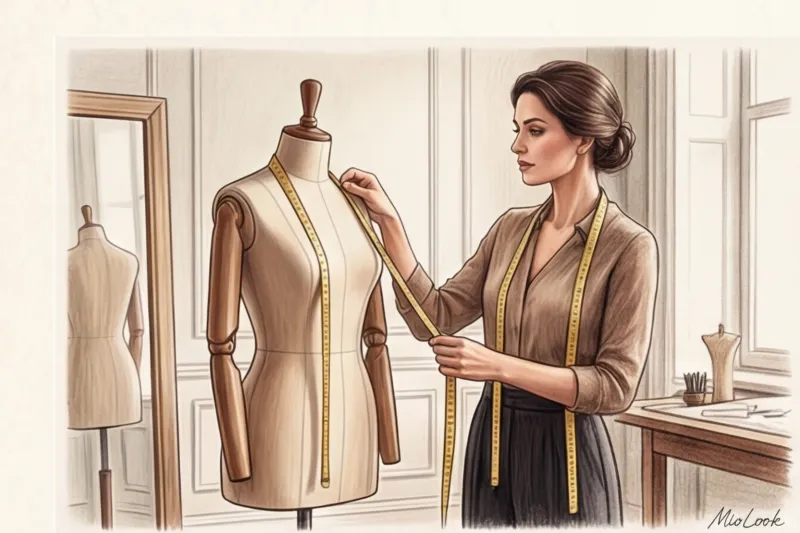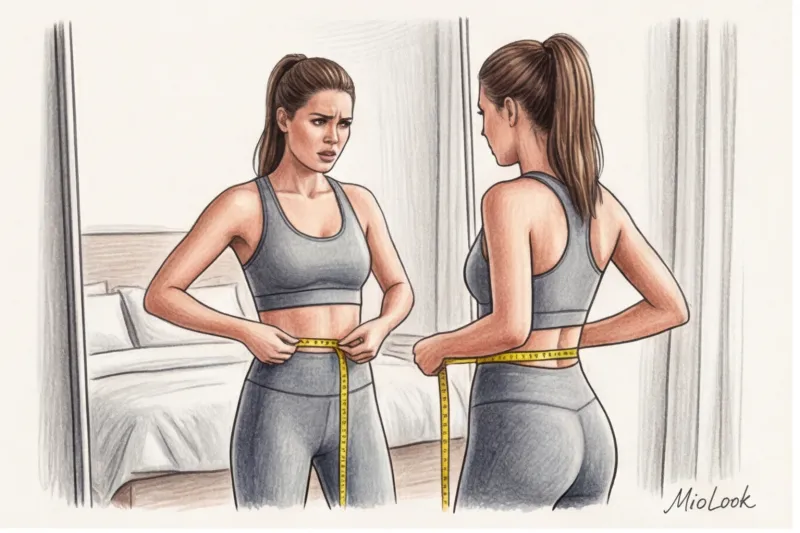
Throw away your measuring tape. Seriously, do it right now. After 12 years of working as a personal stylist and shopper in Europe, I've learned one absolute truth: measuring yourself manually in front of a mirror at home is the worst way to discover the truth about your body.
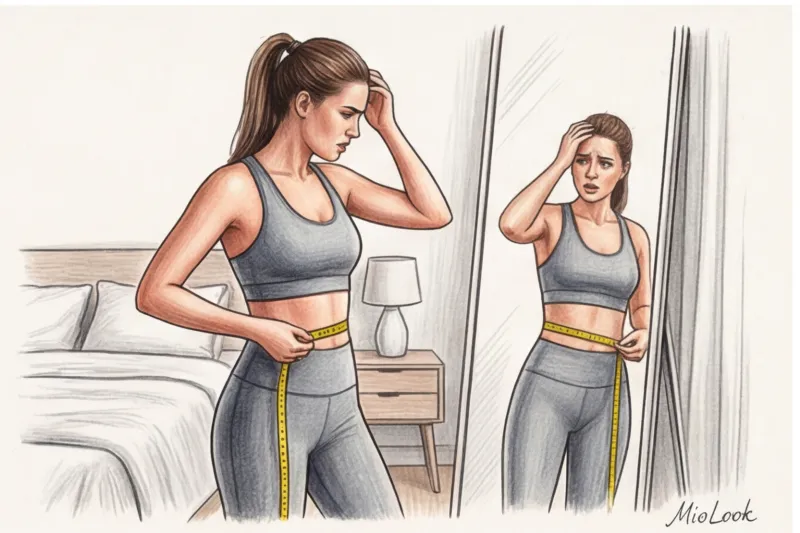
Why? Because you reflexively suck in your stomach. You unconsciously straighten your back in a way you never would in real life. You look at yourself from an angle that distorts perspective. As a result, you get numbers that have nothing to do with how a pair of trousers from the new Massimo Dutti collection for €89 would fit on you.
That's why today Determine your body type from a photo online Using neural networks isn't just a technological amusement, but a harsh practical necessity. The algorithm's dispassionate geometry is free of our complexes. Incidentally, this subjectivity applies not only to shape but also to color: we often see in the mirror what we're accustomed to. We discussed this phenomenon in more detail in our a complete guide to determining color type using a neural network.
The Death of the Tape Measure: Why We Can't Measure Ourselves
According to a large-scale study by the Alvanon anthropometric institute (2023), which creates 3D size standards for the fashion industry, approximately 80% of women misidentify their body type when self-diagnosing. We tend to deliberately exaggerate our perceived flaws.
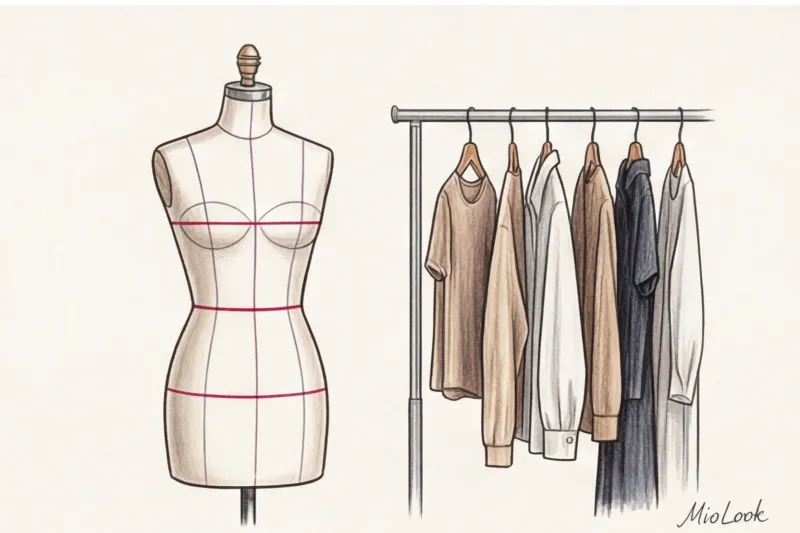
If a woman considers her hips to be wide, she'll stretch the measuring tape to the widest part, ignoring the overall proportions of her skeleton. The average physiological error in measuring the waist at home is 3 to 5 cm. Five centimeters is the difference between a European size 38 and a European size 42! This is a huge gap that separates you from a perfectly fitting garment.
Crooked Mirror Syndrome: How Lighting and Angle Change Proportions
Our perception in a fitting room or at home is catastrophically dependent on the physics of light and mirrors. Have you ever noticed that a floor mirror, slightly tilted toward the wall, makes you look slimmer and visually lengthens your legs by 10-15%? It's a simple optical illusion. Meanwhile, harsh overhead lighting in the bathroom, on the contrary, casts shadows, making your hips appear larger and your shoulders heavier.
Unlike our brains, neural networks aren't subject to emotion. They analyze a flat image, constructing a mathematical model where the important factors aren't how you felt about your morning croissant, but rather the strict relationships between lengths and angles.
Access to MioLook for €0.99 — one-time payment
A smart AI stylist will select the perfect look based on your actual proportions.
Get access — €0.99 onceMath Instead of Fruit: How AI Analyzes Proportions
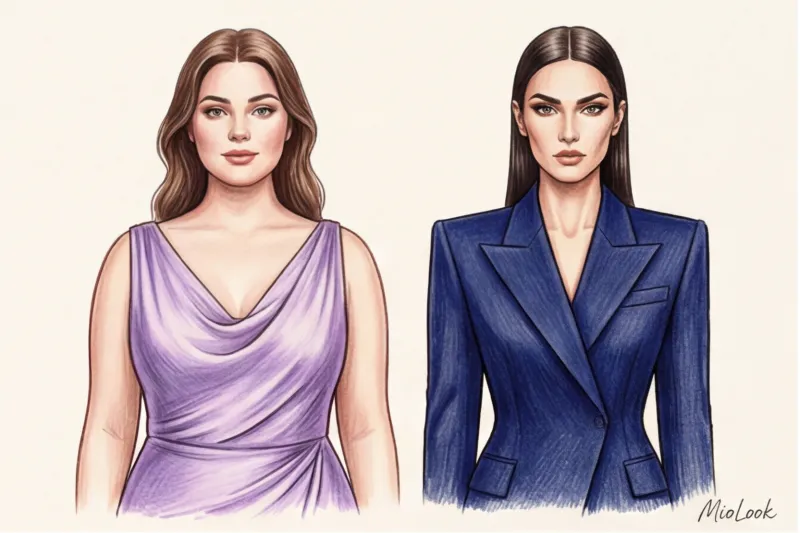
I sincerely hate the "apple-pear-inverted triangle" body type. We are women, not fruit salad. This glossy classification is hopelessly outdated and completely useless in the fitting room. Artificial intelligence doesn't think in terms of fruits—it thinks in terms of the geometry of professional tailoring patterns.
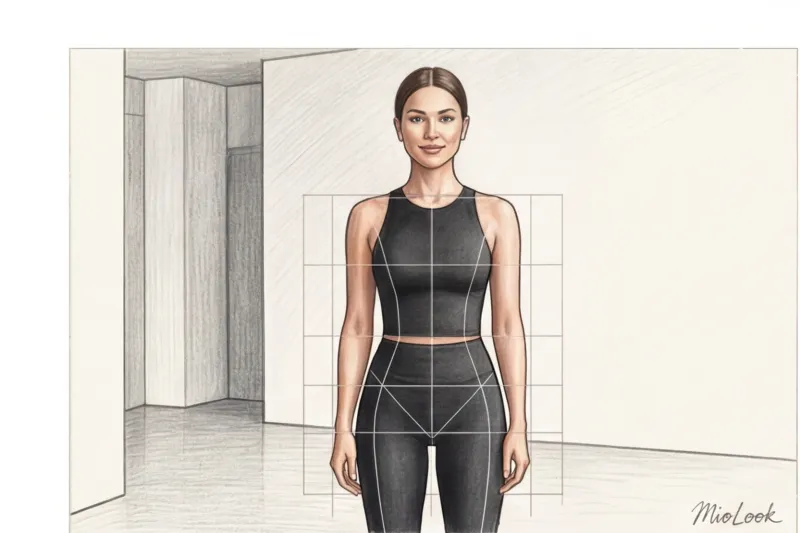
How does a high-quality algorithm work? In a fraction of a second, a neural network identifies up to 50 key anthropometric points on your body. The algorithm finds the extreme points of the acromion (shoulder joint), locates the trochanter of the femur, and calculates the true waist curve.
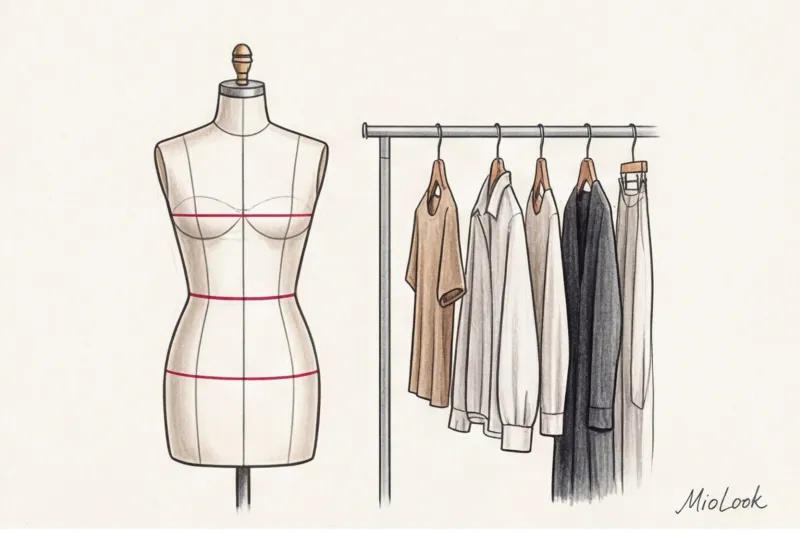
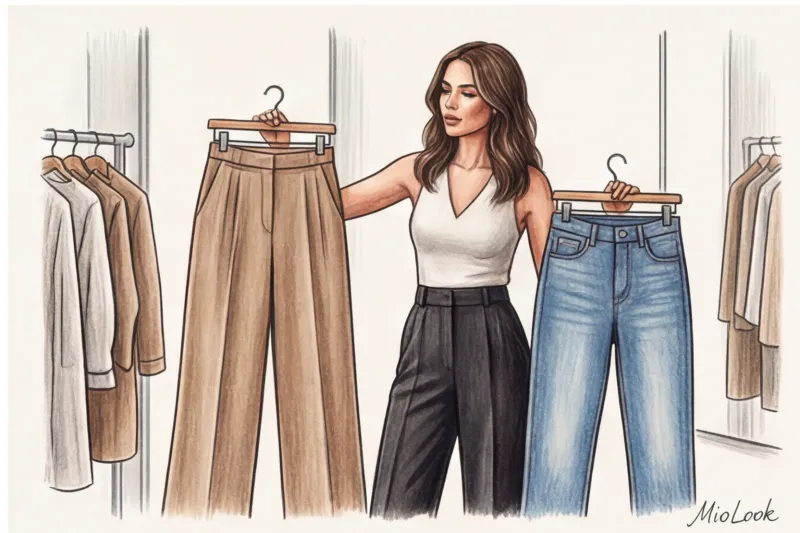
For the perfect fit of basics, it's not the circumference in centimeters that matters, but the ratio of your torso to your leg length. For example, if you have a long torso and slightly shorter legs, Zara's popular Marine Straight super-high-rise jeans (around €39) will fit you perfectly, creating balance. But if you have a shorter torso, these same jeans will "eat" your waist, so you'll need mid-rise trousers from COS (in the €79-€99 range). AI detects this balance instantly. In this context, A neural network will help you choose a clothing style better than a stylist , because it eliminates the human factor.
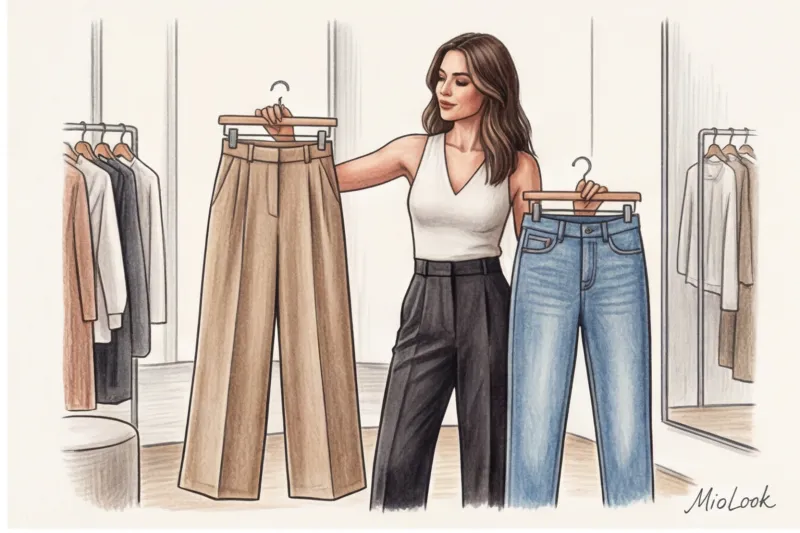
Case Study: 10 Years in an Inverted Triangle Body
I had a client named Anna in my practice. For ten years, she lived with the utter conviction that she had broad "swimmer's shoulders" and narrow hips. She classified herself as an "inverted triangle" and stubbornly hid her top in baggy, oversized linen shirts and hugged her legs in skinny jeans, all to somehow emphasize her femininity.
"We uploaded her photo to a proportion analysis app while we were sorting through her wardrobe. The results shocked Anna: the algorithm produced perfect hourglass proportions. Yes, she had a clear, even shoulder line, but her hip width compensated for it millimeter for millimeter."
The problem was that Anna was looking at herself in the mirror half-turned, focusing only on her shoulders. As soon as we swapped out her shapeless knitwear for architectural, fitted jackets from &OtherStories (around €130) and straight, full-length trousers, her figure took on a prestigious, expensive silhouette. For ten years, she'd been spending money on things that made her look boxy, simply because of a misdiagnosis.
Your perfect look starts here
Join thousands of users who look flawless every day with MioLook.
Get access — €0.99 onceInstructions: How to Properly Take a Photo for a Neural Network
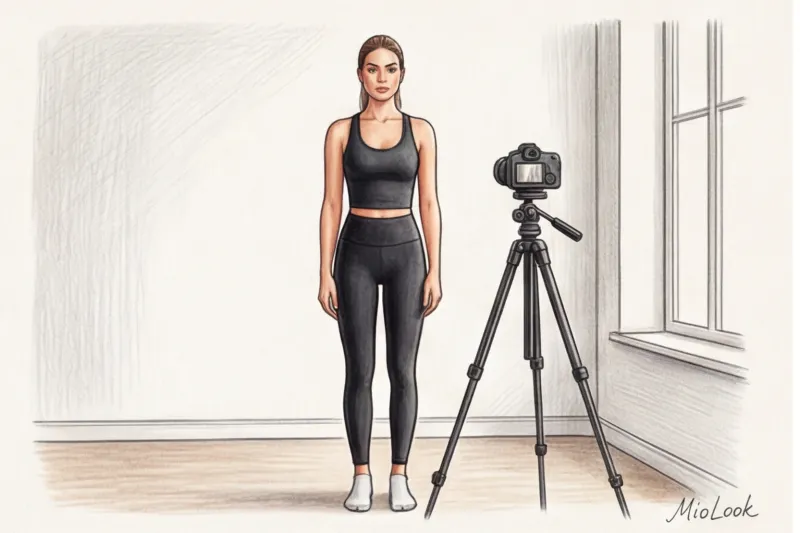
To determine your body type from a photo online with maximum accuracy, you need to be a blank canvas for the algorithm. If you feed the AI poor source material, it will produce poor results. Here's my checklist for the perfect photo that we use with our clients:
- Preparing clothes: No oversized clothing. Wear fitted leggings and a basic top (a tank top) or a swimsuit. The clothing should contrast with the background—avoid wearing black leggings against dark furniture.
- Light and background: Stand facing a window (natural daylight). There should be a plain wall or closed door behind you. Colorful wallpaper or scattered objects in the background will confuse the neural network. You can learn more about common pitfalls in the article about mistakes when photographing clothes for an app.
- Camera positioning: This is critically important! The phone should be placed on a tripod or shelf exactly at the level of your belly button. The phone should be tilted at a precise 90-degree angle to the floor. The distance to the camera should be 2-3 meters.
- Pose: Stand up straight with your feet shoulder-width apart and your arms slightly away from your body (so the algorithm can see your waistline). Don't suck in your stomach. Breathe.
The main rule: Mirror selfies are strictly prohibited! When taking photos in a mirror, a smartphone lens creates a strong perspective distortion (a "fisheye" effect), magnifying the part of the body closest to the camera.
What to do with the result: smart shopping and pattern adaptation
With precise geometric analysis from AI, you're no longer a pear-shaped figure. You're now the owner of a low-hip, elongated torso. What does this mean in practice?
You start saving a colossal amount of time in shopping malls. When you walk into H&M or Massimo Dutti, you scan the rails with your eyes and immediately eliminate 70% of the unsuitable items. You know for sure that your ideal jacket should end either 3 cm above the widest point of your hip, or cover it completely—but never cut right down the middle of your thigh (a common mistake that adds an extra 5 kg).
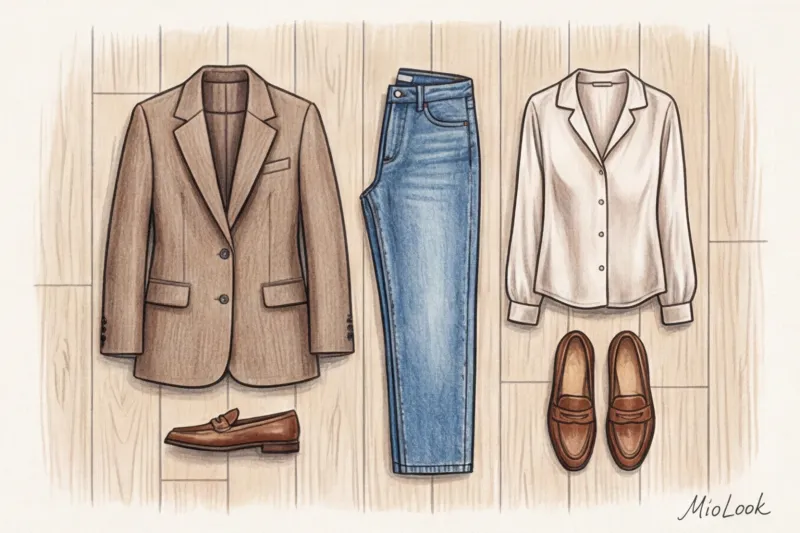
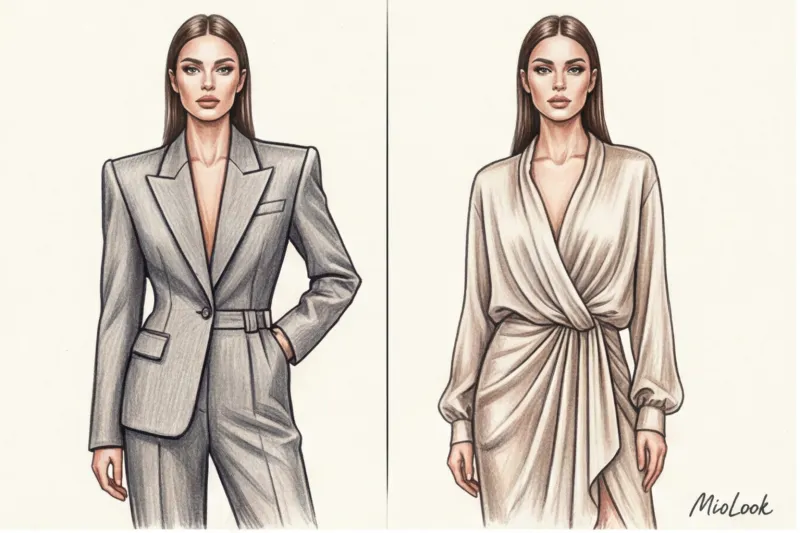
Proportion data is the foundation for creating a smart wardrobe. You stop buying random trendy pieces that look good on a mannequin and invest only in pieces that complement your personal geometry. This is a great help. Smart capsule calculator app , which integrates data about your figure into the clothing selection algorithm.
Top 3 Mistakes That Break Your Algorithm (and How to Avoid Them)
Let's be honest: artificial intelligence is brilliant, but it has limitations. It doesn't have X-ray vision and only works with the visual material you provide it. Here are three fatal errors that will cause a neural network to give an incorrect diagnosis:
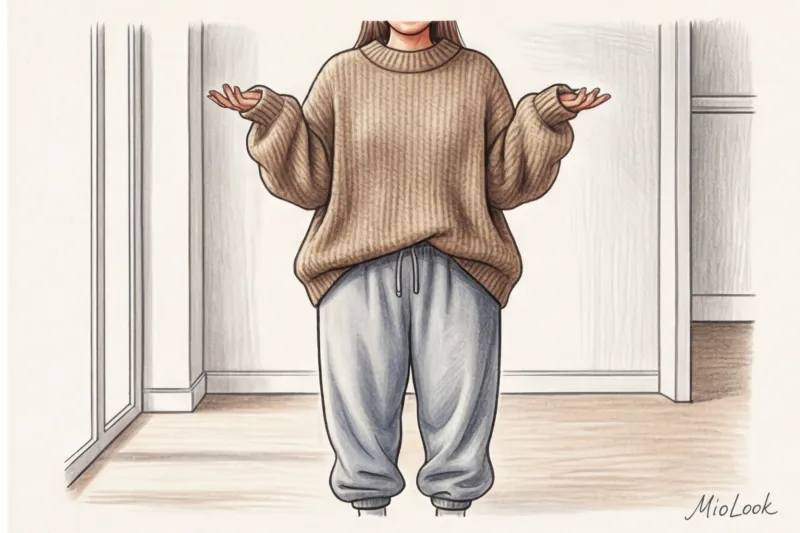
- Oversized clothing. If you take a photo wearing your favorite oversized hoodie and trendy wide joggers, the algorithm will evaluate the contours of the hoodie, not your body. It will honestly say you're a meter-by-meter rectangle.
- Shooting from bottom to top or top to bottom. If you place your phone on the floor, propping it up against the baseboard, your legs will appear endless in the photo, and your head will appear tiny. The AI will assume you have phenomenally long legs and recommend clothes that will distort your proportions in real life.
- Color fusion. Black leggings against a dark gray sofa will turn your legs into an invisible spot for the scanner. The AI simply won't find the line of your thighs.
To sum it up, knowing your true, mathematically accurate physiology is a superpower. When you stop tilting at windmills over imaginary flaws and start working with your actual body architecture, shopping turns from stress into pure pleasure. And if you're ready to go further and completely rethink your style based on this new knowledge, try image change app - it will help you visualize new silhouettes on your now accurately measured figure.