The Cost of One Mistake: How Two Centimetres of Fabric Can Ruin Your Budget
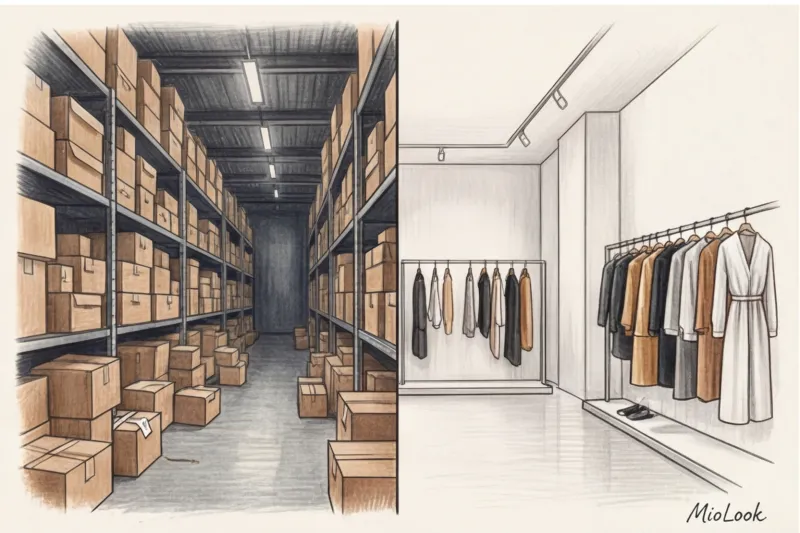
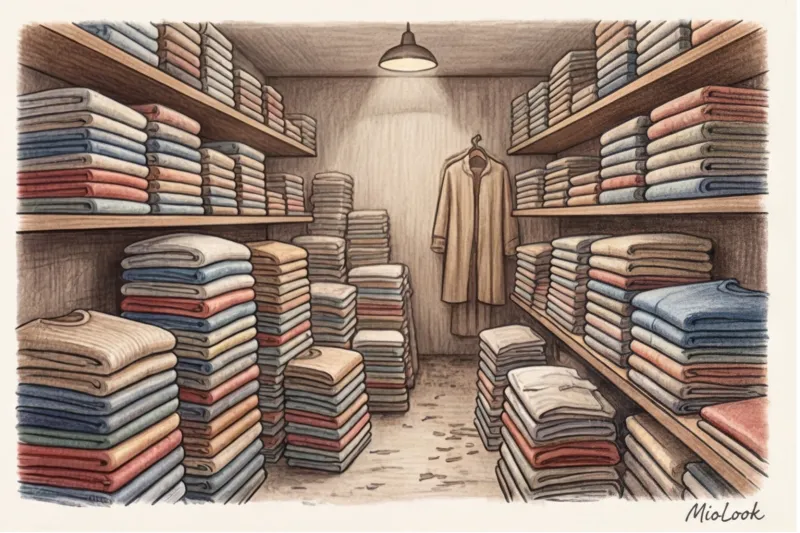
Three years ago, the owner of a fairly successful chain of boutiques approached me for consulting. He was desperate: a shipment of two hundred classic black trousers was stuck in the warehouse. The buyer was confident of success, after all, "black trousers are a timeless classic; people always buy them." But they hung around for a season, then a second, then a third.
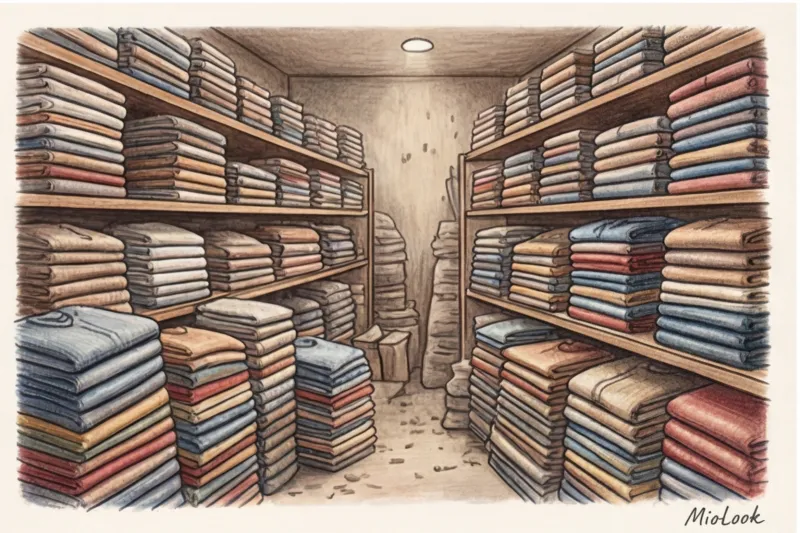
I arrived at the warehouse, picked up the pants, and immediately realized what was wrong. The waistline was exactly 2 centimeters lower than the silhouette women had already begun to seek after the mass transition to high-waist pants, and the leg width was tapered toward the bottom, even though the world was already looking toward wide-legs. A perfectly tailored, high-quality item made of excellent wool blend had become a dead stock due to a flaw in the pattern. We've covered the technologies that are saving the industry from such failures in more detail in our article. The complete guide to analytics for the fashion business.
That is why a well-built assortment matrix of a clothing store It's no longer a matter of buyer's intuition. It's math. Today, I, Isabella Garcia, want to talk to you about how artificial intelligence is changing the rules of the purchasing game, combining cold, data-driven calculations with our passionate love of style.
Why the classic clothing store assortment matrix no longer works
For decades, we've been taught the golden rule: 70% of your assortment should be basics, 20% should be trendy seasonal pieces, and 10% should be ultra-fashionable trends. Forget that formula. In the age of microtrends and fast fashion, it's hopelessly outdated.
The problem with the traditional approach lies in "intuitive" purchasing. A buyer looks at an Excel spreadsheet and sees: last May we sold 500 beige trench coats. Therefore, we need to order 550 this May. But historical analysis doesn't take into account context. Perhaps a popular influencer wore that trench coat last spring, or the weather was unusually rainy. Relying solely on the past inevitably results in a "scorched earth" effect, where illiquid assets freeze working capital.
According to McKinsey's "The State of Fashion" report (2024), approximately 30% of all clothing produced globally is never sold at full price. A third of your budget ends up on racks marked "70% off" or, worse, in the trash. To avoid this, brands are implementing smart algorithms. By the way, if you want a comprehensive approach to profitability, I recommend reading this article about How to increase the average order value in a clothing store using cross-selling.
The Myth of the "Eternal Base": A Trap for the Fashion Business
The most dangerous misconception I encounter is the belief in the safety of a basic wardrobe. Many brands (especially in the mid-price range of €50–€150) try to survive by making the same basic T-shirts and jackets for years.
"The basic white shirt of 2018 and the basic white shirt of 2024 are two completely different things. The volume, the shoulder line, the fabric density, the collar shape all change."
AI notices this micro-evolution of silhouette better than the human eye. Global lifestyle changes—for example, the transition to remote work—have made stiff suiting fabrics obsolete in just a few months. Buying "safe" items in huge quantities is the biggest risk, because basic items also have a shelf life.
Artificial Intelligence as the New Key Buyer: How It Works
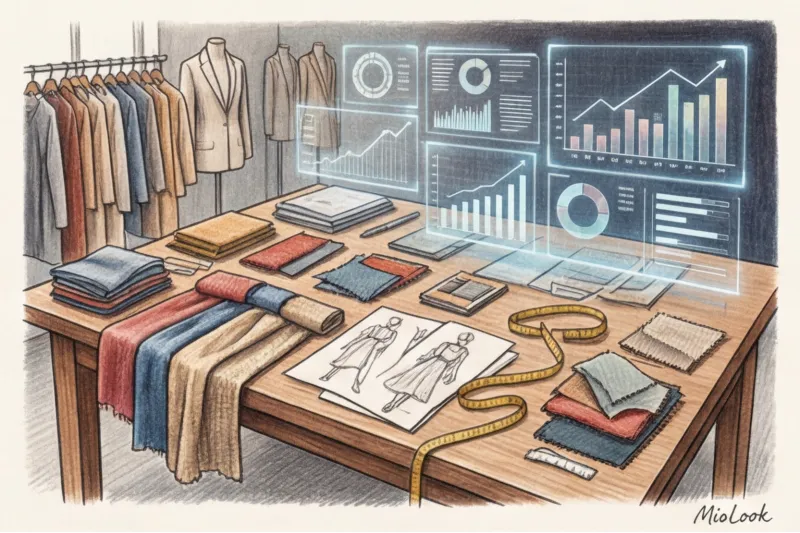
The transition from historical analytics to predictive analytics is a quantum leap. AI doesn't ask, "What did we sell yesterday?"; it calculates, "What will they want to buy tomorrow?"
To do this, neural networks collect a colossal amount of data: search queries, social media activity, macroeconomic factors, and even long-term weather forecasts. But the real magic happens thanks to computer vision. Algorithms scan millions of street style photos from fashion weeks in Paris, Milan, and Copenhagen. They break down the images into pixels, analyzing shades, textures, and lengths.
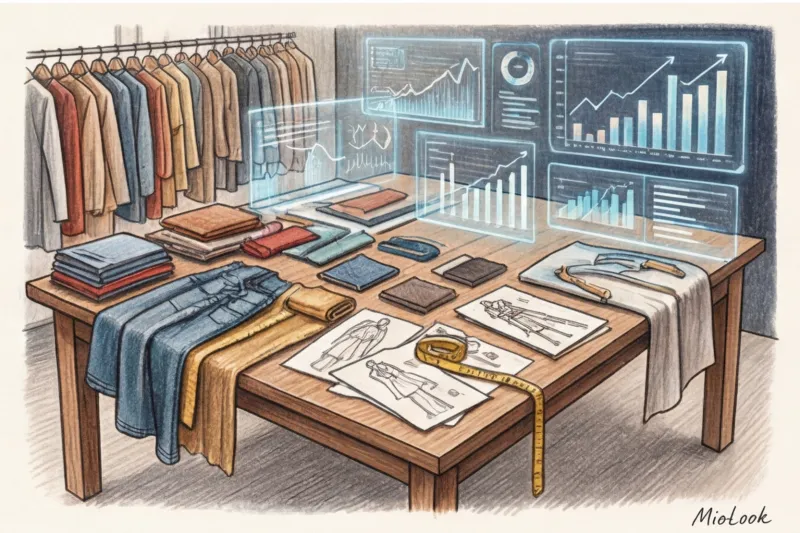
A striking example from recent practice: major fashion conglomerates using AI predicted a massive boom in the deep color "burgundy" (cherry red) almost eight months before it appeared in mass-market stores like Zara or COS. While regular buyers were hesitant, the algorithm clearly showed an upward trend. Read about how else technology is changing retail in the article about personalization in e-commerce.
The Perfect Procurement Formula: How AI Saves the Budget from Illiquid Assets
One of the biggest mistakes in product assortment development is creating a single matrix for the entire chain. The product assortment matrix of a clothing store in a bustling financial district of a metropolis and in a quiet residential area are two different universes.
AI helps achieve pinpoint localization. It optimizes the depth (number of units per SKU) and breadth (variety of styles) of the assortment for a specific location. Moreover, the algorithms build a matrix based on the principles of creating the perfect capsule collection. As a stylist, I always say: items should "sell" each other. If you hang a luxurious linen jacket for €180 in the living room, there should definitely be a perfectly matching silk top for €60 hanging nearby. We discussed this principle in detail in the guide. on creating a capsule wardrobe.
Furthermore, the AI enables dynamic pricing. Instead of waiting until the end of the season to offer a dramatic 50% discount, the system can recommend a price reduction of just 5% right now, noticing a drop in interest in a particular model. This preserves your margins.
Intelligent size distribution
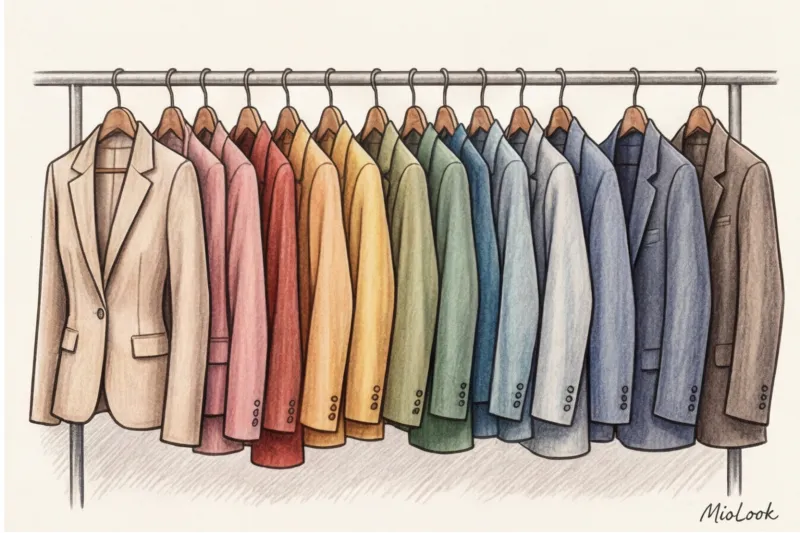
The era of blind 1-2-2-1 allocations (one XS, two S, two M, one L) has come. This allocation generated massive losses for decades.
The AI analyzes anthropometric data for a specific sales region. It knows that in Nordic countries, demand for sizes L and XL+ is historically higher, while in Asia, the matrix should shift toward XS and XXS. Intelligent size distribution reduces inventory costs by up to 40% (WGSN data, 2023).
Your perfect look starts here
Join thousands of users who look flawless every day with MioLook.
Get access — €0.99 onceCreativity vs. Analytics: Will Neural Networks Kill the Design and Styling Professions?
There's a fear swirling in the industry: "AI will make all fashion identical, meticulously crafted, but soulless." I'll be honest: that's a myth.
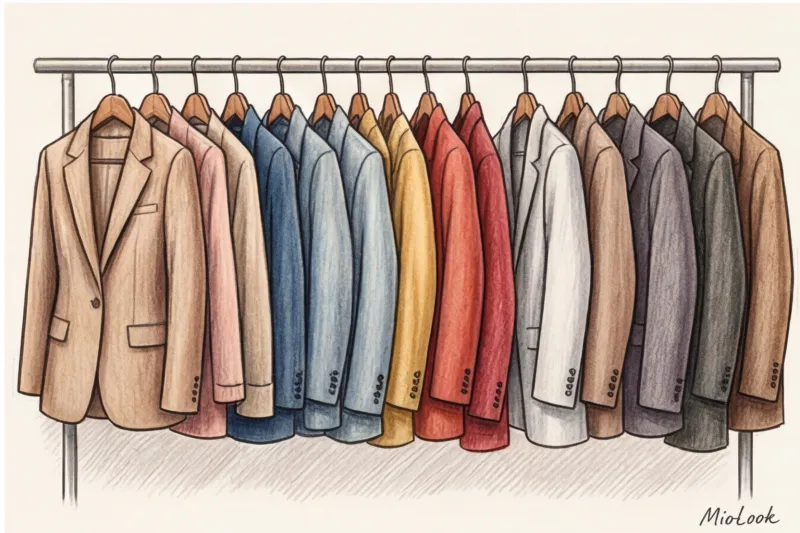
As a practicing stylist, I'm not afraid of AI; I adore it. A machine can never replace empathy. A neural network won't look a client in the eye and say, "You look gorgeous in this dress; it highlights your personality." But a machine will ensure that the right dress, in the right shade and size, is guaranteed to be in stock.
This is where the key synergy between humans and algorithms lies. AI takes over the routine calculations of the commercial database, hedges risks, and frees up budgets. And with the savings, the designer can indulge in bold creative experiments. Analytics provides the canvas and paint, and we humans add emotion, Mediterranean passion, and charisma.
When does AI not work? Algorithms often fail to capture the imagination of entirely new, avant-garde forms (such as deconstructivism), for which there is simply no historical data or visual patterns in the past. Here, the visionary's intuition still reigns supreme.

Checklist: 5 Steps to Implementing AI Analytics for Inventory Optimization
Transitioning to a data-driven approach doesn't happen overnight. If you're a fashion business owner, here's a step-by-step, no-nonsense plan:
- Data digitization. AI feeds on data. You need to digitize absolutely all historical sales, returns, and inventory for at least the past two years. Read on. How to reduce clothing return rates to keep your data cleaner.
- Systems integration. Link your warehouse ERP system with your CRM and loyalty programs. The algorithm should see a correlation between blouse purchases and customer profiles (age, purchase frequency, average order value).
- Micro-testing. Don't commit your entire budget to AI at once. Test predictive tools on a narrow range of products—for example, just seasonal outerwear (coats and jackets) or denim.
- Changing the team's mindset. This is the most difficult stage. Buyers with 15 years of experience will resist machine decisions. It's important to train the team to read dashboards and trust the numbers more than their own instincts.
- Real-time monitoring. Fashion no longer operates in two seasons. The fast fashion cycle requires matrix adjustments every two to three weeks based on current demand.

The MioLook Ecosystem: How User Wardrobe Data is Changing Retail
Where does the purest and most honest analytics come from? Not from the catwalk, but from the real closets of ordinary women. This is where solutions like virtual fitting rooms and smart wardrobes come into play.
When users digitize their things in MioLook app Algorithms (in an anonymized form) analyze real wardrobe contents. If the system sees that tens of thousands of women own wide-leg jeans but desperately need cropped cardigans to create a harmonious look, this becomes a direct signal to retailers.
By understanding exactly what elements are missing from your target audience's personal capsules, you create a matrix for 100% confirmed demand. And integration virtual fitting room on the website Helps customers understand the fit in advance, reducing returns.
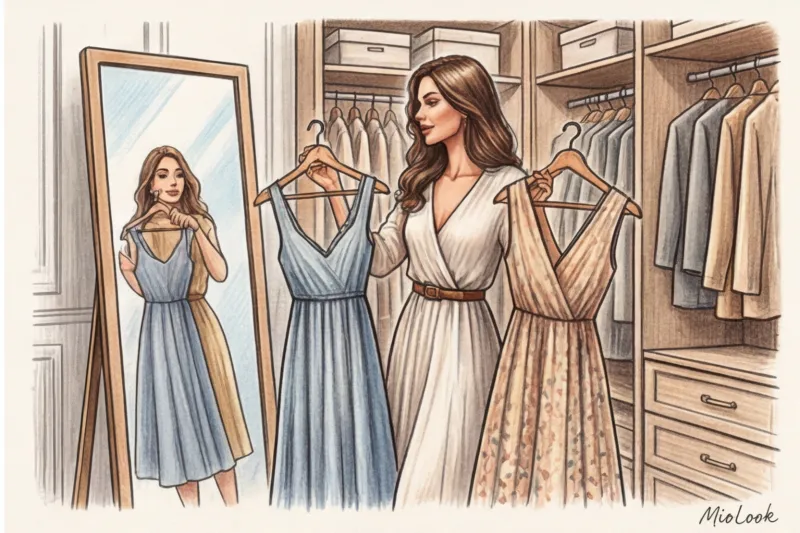
The product matrix of the future isn't an Excel spreadsheet. It's a living, continuous dialogue between brand and customer, translated into the language of algorithms. Artificial intelligence doesn't take away fashion's soul; it simply removes excess clutter from its warehouses, leaving us with space for pure style.