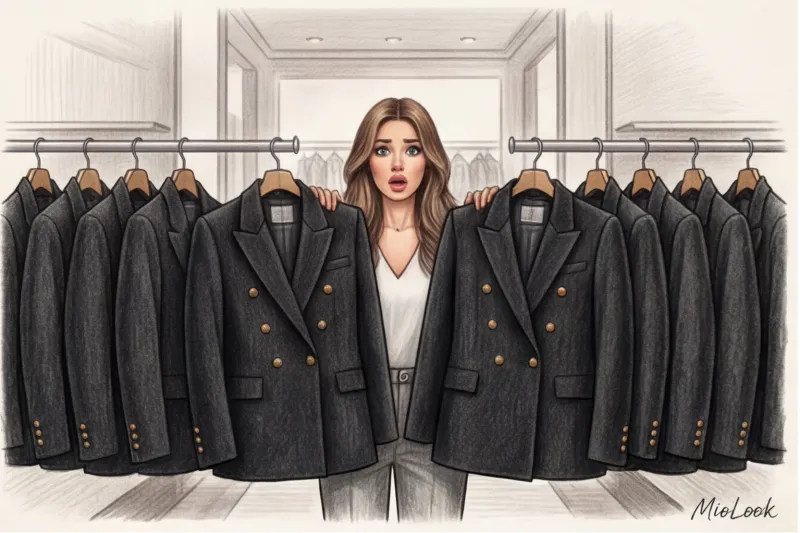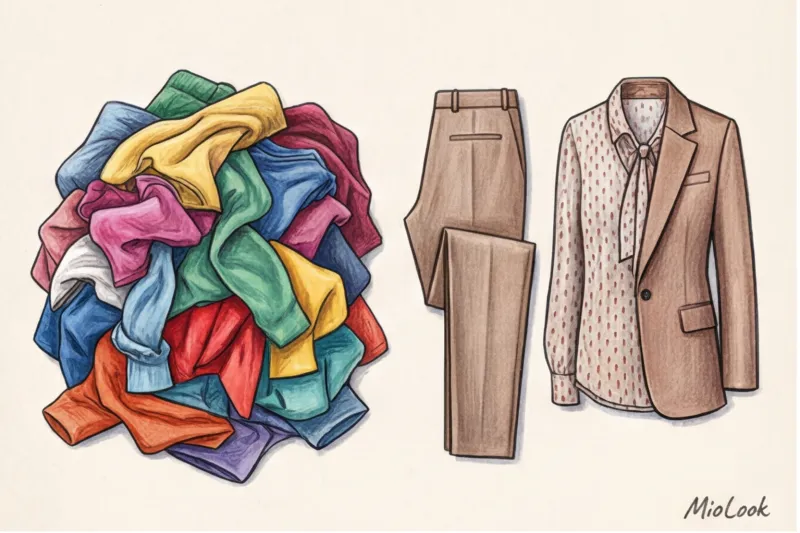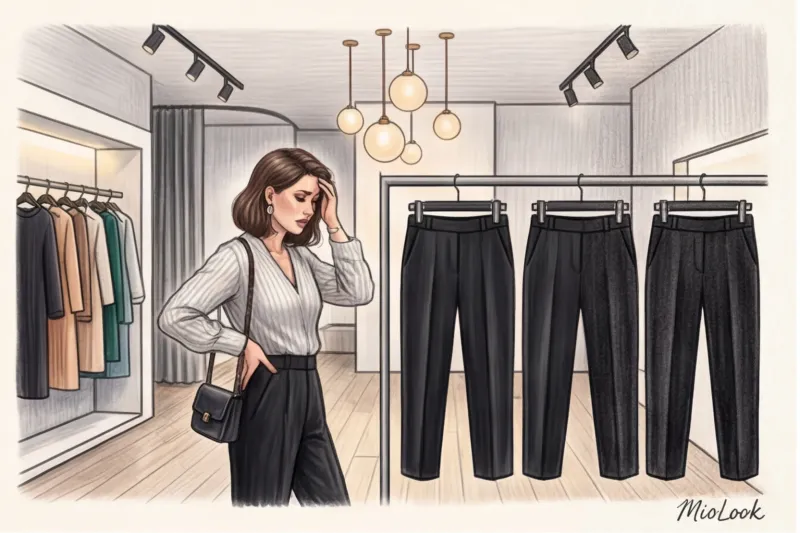
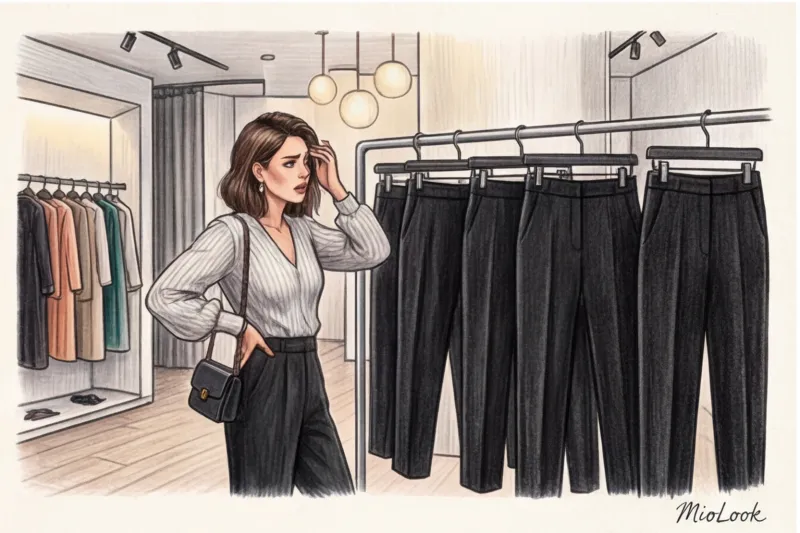
Five years ago, an incident occurred in Paris that forever changed my understanding of the psychology of shopping. My client was looking for the perfect black jacket for business dinners. A consultant at a luxury boutique brought her five gorgeous, but nearly identical, black jackets from different designers. She was confused, tired of nitpicking the shoulders, and left empty-handed. The next day, I brought only one black jacket to the fitting room, but I paired it with an emerald silk top, structured palazzo shoes, and simple loafers. She bought the whole set without a second thought.
If you're an e-commerce business owner looking for a working method to increase the average order value in your clothing store, forget about classic marketing funnels and A/B testing of buttons for a moment. The problem with most online stores is that they're trying to digitize their inventory, but what they need is to digitize the mindset of a personal stylist. We discussed this paradigm shift in more detail in our article. The Complete Guide to Personalization in E-Commerce.
The Paradox of Choice: Why Old Cross-Selling Methods No Longer Work
The "Similar Products" block is killing your sales. I'm ready to repeat this to every retailer at any industry conference. Counterintuitive? Yes. Most marketers believe that giving customers more options increases their chances of making a purchase. But in practice, if a woman has already set her sights on an oversized white shirt, showing her eight more white shirts at the bottom of the page won't make her buy two.
This visual noise causes decision fatigue. The brain begins to waste energy comparing collar and button shapes. Ultimately, the customer decides to "think about it until tomorrow" and simply closes the tab. According to the McKinsey State of Fashion 2024 report, over 70% of consumers expect hyper-personalization from brands, not endless labyrinthine catalogs.
The shopper of 2010 could spend hours scrolling through marketplaces searching for "that one" item. The shopper of 2024 lives in a time crunch. She demands ready-made solutions. Over 12 years of working in fashion journalism, I've seen a clear trend: the brands that take responsibility for the customer's choice, rather than shifting the burden of styling onto them, win.
Your ideal image
it begins Here
Join thousands of users who look flawless every day with MioLook.
Get access — €0.99 onceHow to Increase the Average Order Value in a Clothing Store: Shifting from Items to Scenarios
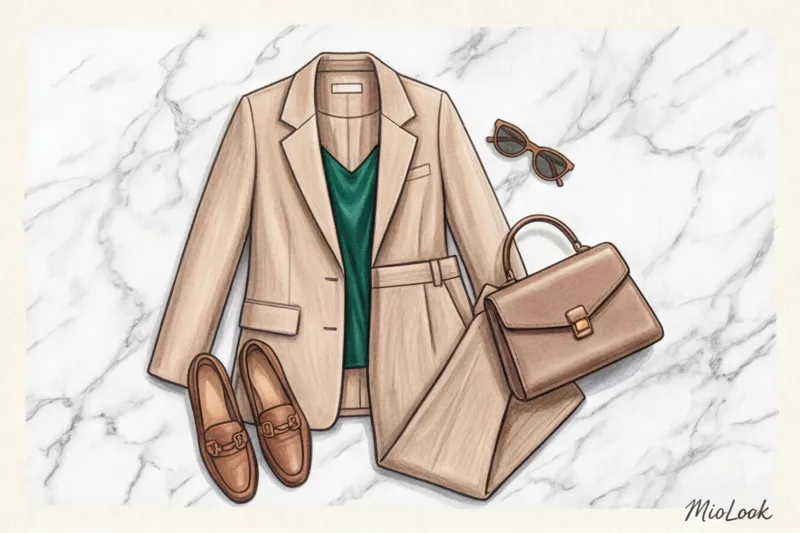
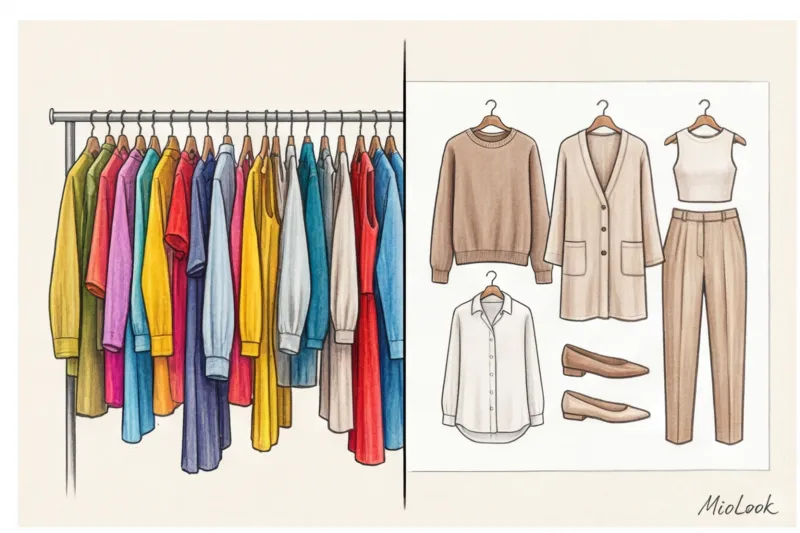
The main secret of personal stylists, which leading online boutiques are slowly but surely implementing today, is that we never just sell a skirt or a sweater. We sell confidence on a Friday date, status at a business meeting, or comfort on a Sunday trip out of town. This is a fundamental shift from an item-based model to an outfit-based one.
In my experience, this capsule approach works flawlessly. Let's take a basic cotton trench coat from the mid-range (like COS or Massimo Dutti for €150-200). If the store's algorithm suggests "other coats" in the recommendation block, you'll only delay your purchase.
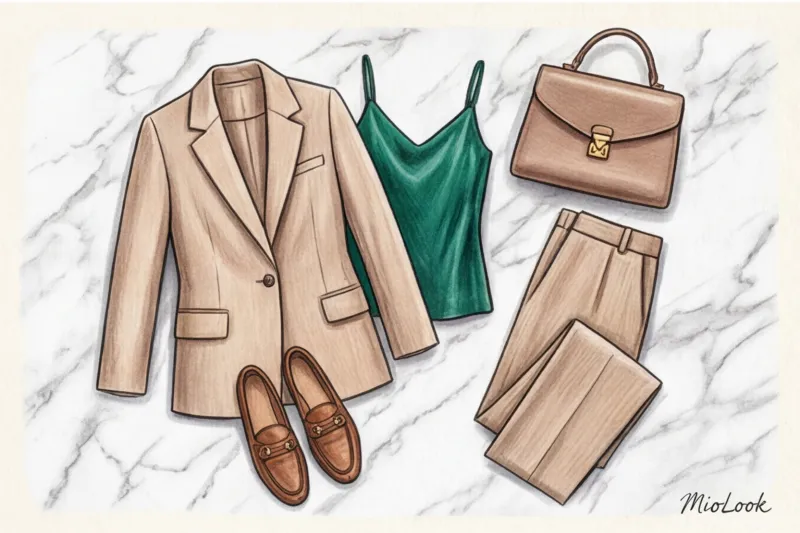
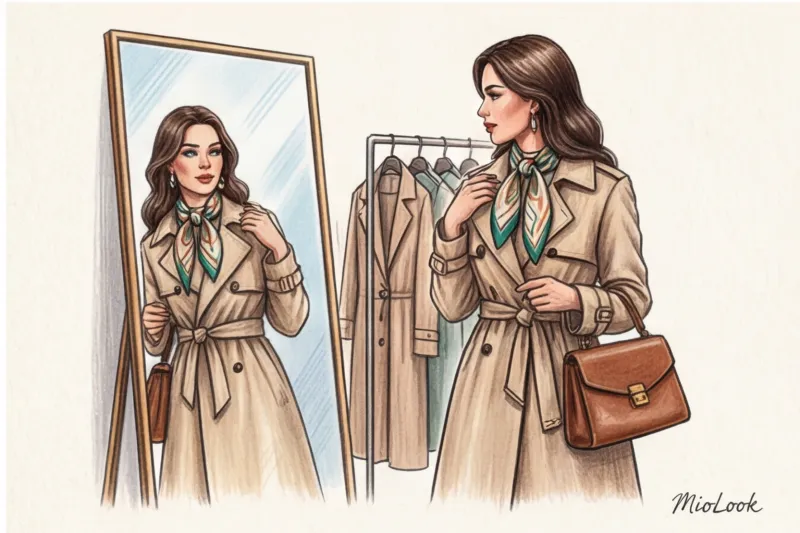
But if the recommendation system shows how the same trench coat looks with a silk scarf, well-fitting jeans, and leather loafers, creating a Parisian chic aesthetic, the customer is highly likely to add the entire set to their cart. Three harmonious pieces are perceived not as an aggressive upsell, but as expert care. You can read more about how such a database is built in our article about capsule wardrobe.
Complete the Look Algorithm: Assembling Looks Like a Stylist
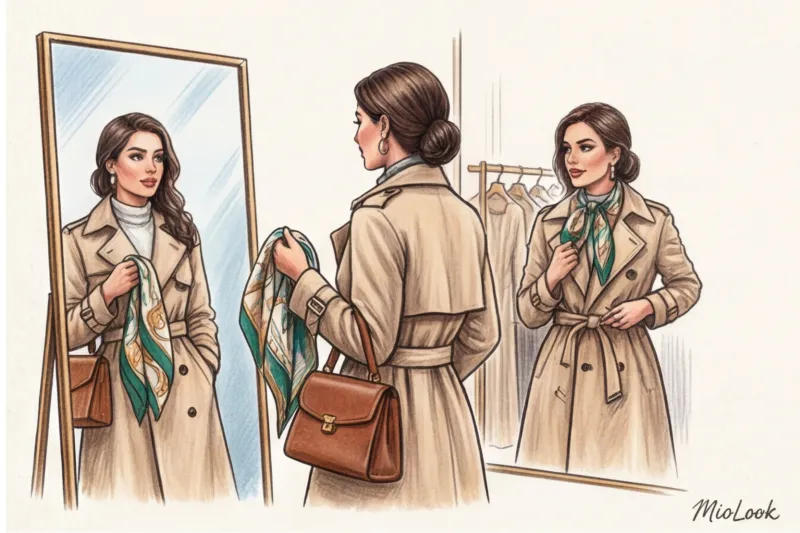
The statistics are relentless: the "Complete the Look" algorithm increases the average order value by 20-30% more effectively than the dull "Frequently Bought Also" block. But for it to be profitable, artificial intelligence must understand the principles of styling taught in European fashion schools.
A smart algorithm must take into account three key parameters:
- Proportions and silhouette: For a chunky, chunky knit sweater, the AI should suggest a structured pencil skirt or straight jeans, not baggy palazzo pants.
- Color harmony: The system should be able to construct monochrome stretches (beige - camel - chocolate) or use complementary colors according to the Itten circle.
- Tissue temperature: We never mix thin summer linen with dense winter wool weighing 400 g/m².
Situational recommendations: selling according to dress code
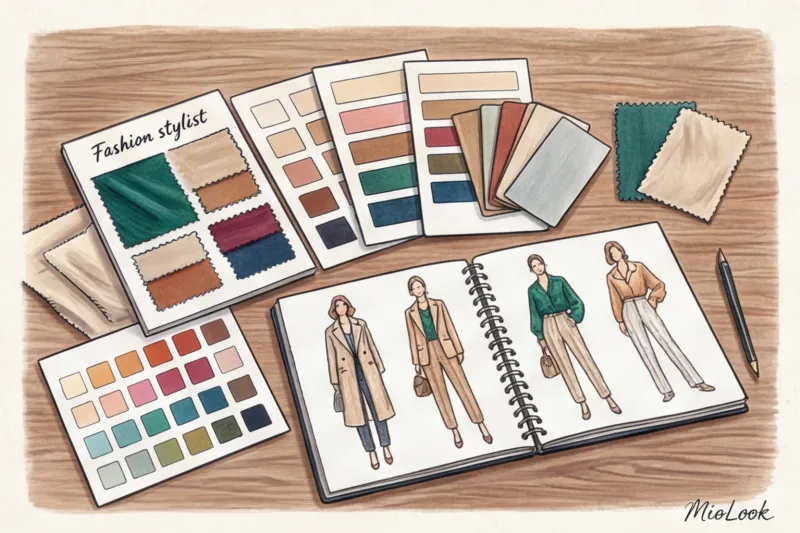
Catalog tagging is a blind spot and a weak point for 90% of stores. You label your products technically: "dresses, midi, viscose, blue." But your customer thinks differently. She visits your website with the query "what to wear to an interview at an IT company with a casual dress code."
Set up situational tags: “For the office without a strict dress code,” “Theatre premiere,” “Long flight” (by the way, for the last category we have an excellent analysis of what What fabrics don't wrinkle? ). When a customer clicks on a dress tagged "Evening Outfit," the system should automatically pull up accent chandelier earrings and a miniature clutch. Situational relevance sells accessories better than any discount.
AI Styling Tools: What to Implement in Fashion E-Commerce Right Now
A large-scale study by Vogue Business for 2023 revealed that the integration of AI stylists into retail is no longer a marketing gimmick for PR articles, but a pressing need to maintain market position. Customers are becoming more demanding, and the cost of attracting traffic is rising. Squeezing the most out of every visit is becoming a matter of survival.
First, you need intelligent basket analysis. If a customer adds a formal pantsuit for €350, the algorithm shouldn't push €5 sports socks on her just because they're "frequently purchased." It should suggest a classy silk blouse or a leather belt. The context of the purchase is more important than click history.
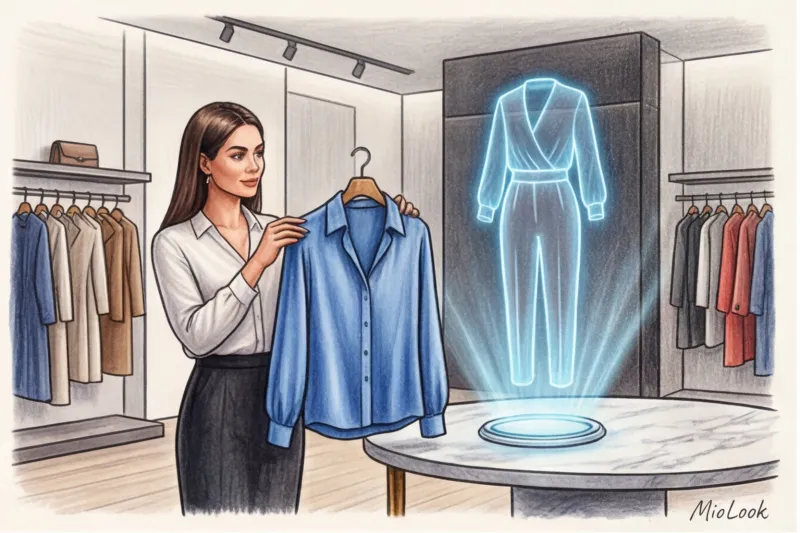
Secondly, implement integration with wardrobe management systems. A great example of this approach is technology MioLook applications , which allows you to digitize your personal capsule wardrobe. Imagine if your online store could analyze a customer's existing wardrobe and offer only those items that are objectively needed to create new looks. This would take your UPT (Units Per Transaction) rate to stratospheric levels, because the customer sees that the purchase is 100% justified.
Try MioLook for Business
A smart AI stylist will choose the perfect look for you and help your clients create the perfect capsule wardrobe.
Get access — €0.99 onceCostly Personalization Mistakes: How Algorithms Can Drive Customers Away
Let's be completely honest: a bad, irrelevant recommendation is much worse than no recommendation at all. I regularly test recommendation widgets from mass-market and premium platforms, and sometimes the results are professionally terrifying.
"An algorithm that seriously suggests a €15 plastic hair clip for a premium €500 cashmere sweater isn't just making an algorithmic mistake—it's devaluing your flagship product in the eyes of the customer."
Avoid the three most damaging automation mistakes:
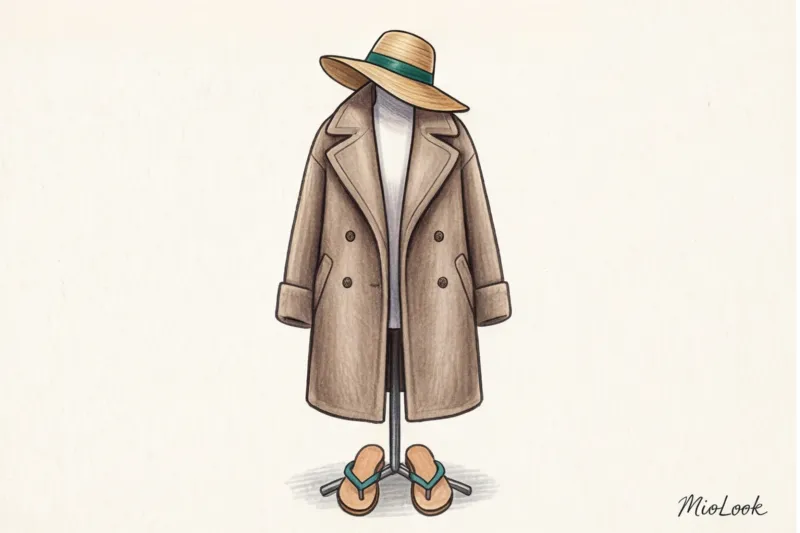
- Stylistic dissonance. A suggestion of summer beach sandals to pair with a heavy double-breasted wool coat. The customer immediately realizes they're dealing with a soulless script, and their trust in the store's expertise plummets.
- Ignoring the price segment. You can't mix items from sale carts with items from the new premium collection in the same virtual capsule. This disrupts the flow of consumption.
- Digital amnesia. There's nothing more annoying than a brand that aggressively asks me to buy basic white sneakers as an add-on when I already bought them from you exactly a week ago.
It's important to state a clear limitation here: smart recommendations are absolutely useless if your PIM (Product Information Management) or catalog is a mess of tags. Artificial intelligence can't create magic out of thin air—it relies on tagged data. If the fabric texture isn't specified, AI won't be able to find a harmonious look.
Checklist: Auditing Your Referral System
How can you tell if your current cross-selling system is working against you? Conduct a quick self-audit right now using this professional checklist:
- Checking the logic of the lower blocks. Go to the card for your best-selling product. Scroll down. If you see five products of the same color and style, immediately change the widget logic to "Complete the look." You're losing money due to choice paralysis.
- Tagging depth analysis. Do you have tags for styles, seasons, occasions, and archetypes? Can you filter in one click? Business wardrobe for a 40-year-old woman If not, the algorithm has nothing to work with.
- Offer Timing (Customer Journey). On the product page, we confidently suggest a second layer (a jacket over a top). However, in the cart, we only offer small accessories that don't require much thought (belts, scarves, basic jewelry). Offering complex shoulder pieces at the checkout stage is not recommended—it will provoke hesitation and cart abandonment.
Summary: The future of retail lies in algorithmic empathy
Algorithms of the future don't simply mathematically compile dry tables like "people also bought this." They adopt a human perspective on design, understanding the subtle laws of color harmony, textural contrasts, and visual aesthetics.
Introducing an AI stylist to your online store isn't just a quick way to increase your average order value. It's a fundamental tool for building long-term loyalty through technological empathy. Customers will always return to a store where their ideal look has already been created for them, eliminating the morning panic of opening their closet. Stop selling disparate items—start selling complete, confident style.