
Do you know what the most common, yet subtle, mistake brands make when launching an AI fitting room is? They send the algorithm their most precious, beautiful, and atmospheric photos. Those same lookbook shots that garner thousands of likes on social media and make customers fall in love with the brand.
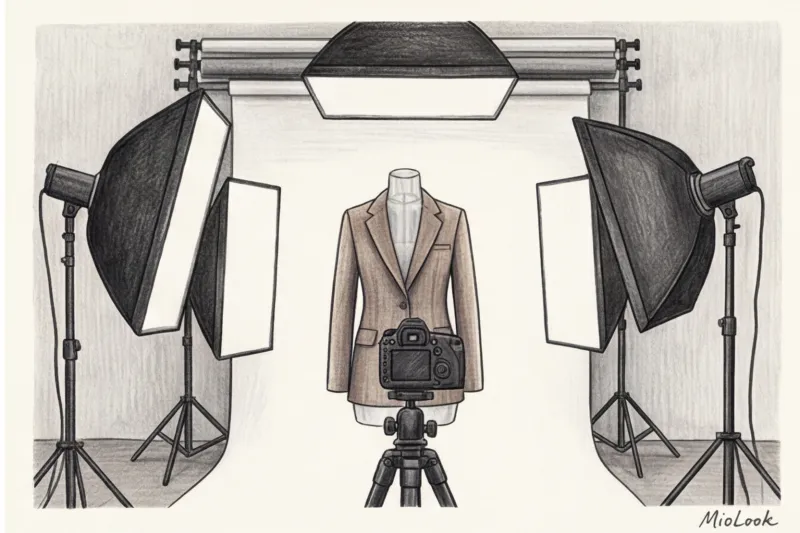
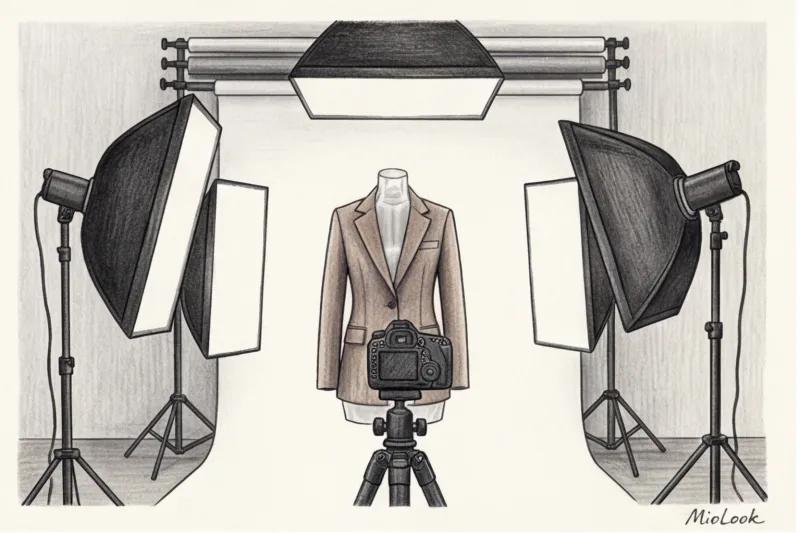
But here's the harsh truth of the fashion-tech industry: the best-selling photos are the worst material for neural networks. To create high-quality Photos of clothes for a virtual fitting room , you'll have to forget everything you learned in commercial photography courses. Artificial intelligence wants your "most boring," flat, and realistic shots with all the natural creases in the fabric. We discussed the architecture of such solutions in more detail in our The complete guide to virtual fitting rooms for e-commerce.
As a techno-stylist at MioLook, I translate the language of fabric, drape, and fit into machine code every day. In this article, I'll show you the inside story of AI algorithms: why creativity breaks virtual fitting rooms, and how to properly digitize your inventory to reduce return rates.
The Illusion of a Pretty Picture: Why Lookbooks Are Unsuitable for AI
Let's be honest: the difference between a sales photo and a technical photo is colossal. The former conveys emotion, dynamism, and lifestyle. The latter conveys stark details, strict proportions, and geometric cuts.
Last year, one of our partner brands at MioLook sent us around 500 stunning campaign photos. It was a shoot featuring a top model in dynamic poses on the streets of Milan. The brand spent over $5,000 on the production. The result? Our AI was able to correctly recognize and assign exactly zero SKUs to the virtual avatar.
"Neural networks don't understand the aesthetics of hands casually tucked into pockets. For the algorithm, a hand covering the waistline of trousers indicates that the trousers have a hole or a complex asymmetrical detail there."
The main enemies of neural networks in commercial photographs:
- Occlusion Problem: The model's crossed legs prevent the algorithm from understanding the pant leg width. The flowing coat tails distort the garment's true A-line silhouette.
- Complex posing: When the model bends, the fabric forms unusual folds. The AI will capture this asymmetry as the garment's basic cut.
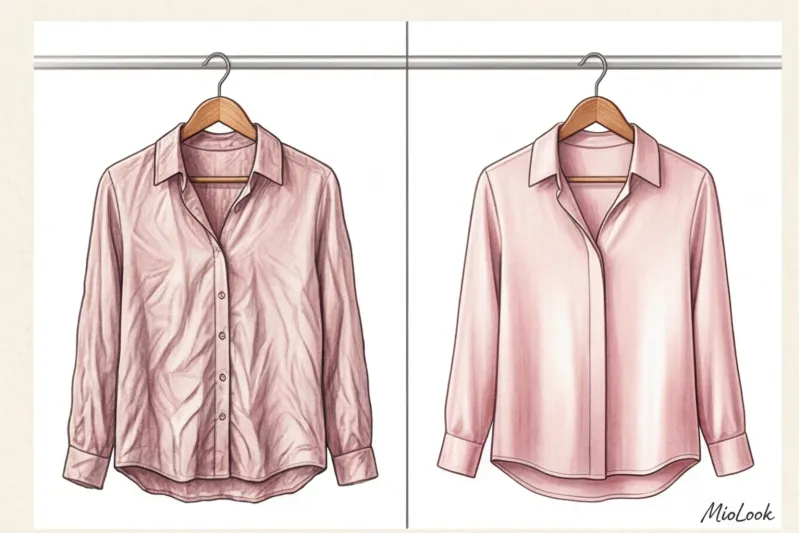
- Aggressive retouching: Designers often stretch silhouettes and blur natural wrinkles in fabric in Photoshop. But it's these micro-shadows from the folds that tell the algorithm about the density and behavior of the material!
Let me clarify right away: classic 2D digitalization, which we'll discuss below, doesn't work for everything. If you have a collection of translucent organza or complex deconstruction in the spirit of early Margiela, flat photographs won't cut it; you'll need full-fledged 3D scanning. But for 95% of everyday commercial wardrobes, the methods described below are an ideal and scalable start.
Correct clothing photos for a virtual fitting room: a technical standard
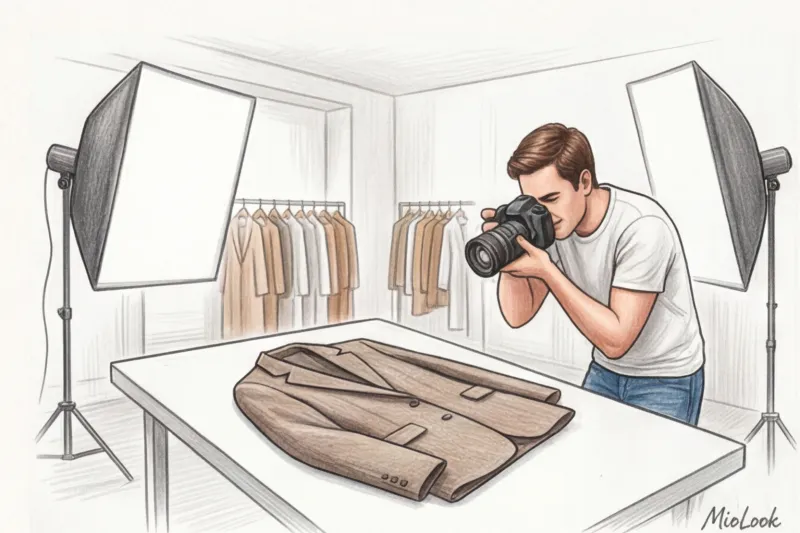
The basic principle of preparing a dataset for AI is as follows: an item must be photographed as if it were already being worn by an invisible person. The algorithm needs to see the stored volume, not just a piece of cloth lying on the floor.
That is why technology has become the gold standard for e-commerce. Ghost Mannequin (invisible mannequin). The garment is removed on a special disassemblable mannequin, the parts of which are then removed during post-processing. The result is a three-dimensional garment with a visible interior (for example, a tag on the back of a shirt).
Digitize your style wisely
Try MioLook for free: A smart AI stylist will select the perfect look based on the right data.
Get access — €0.99 onceIf you want to MioLook or any other AI fitting room has perfectly fitted your item to the user, your photographer needs to submit the following mandatory set of angles for each item:
- Strict full face: The camera is strictly centered, level with the middle of the product. No tilting the lens up or down—this distorts the proportions (making the bottom or top appear longer).
- Strict profile (side view): Vital for assessing ease allowances around the bust and buttocks.
- Back: Without this angle, the AI will simply “draw” the back part symmetrically to the front, which is fatal for items with a complex back cut.
- Inside view (optional, but desirable): Helps the algorithm understand the presence of a lining, the texture of the seams, and the density of the edge.
Light, color, and background: how to avoid confusing the algorithm
The human eye easily distinguishes dark blue from black, even in dim light. For computer vision, things are more complicated. According to a WGSN study (2024), 68% of online returns of colored clothing are due to color differences between the color on a smartphone screen and in real life.
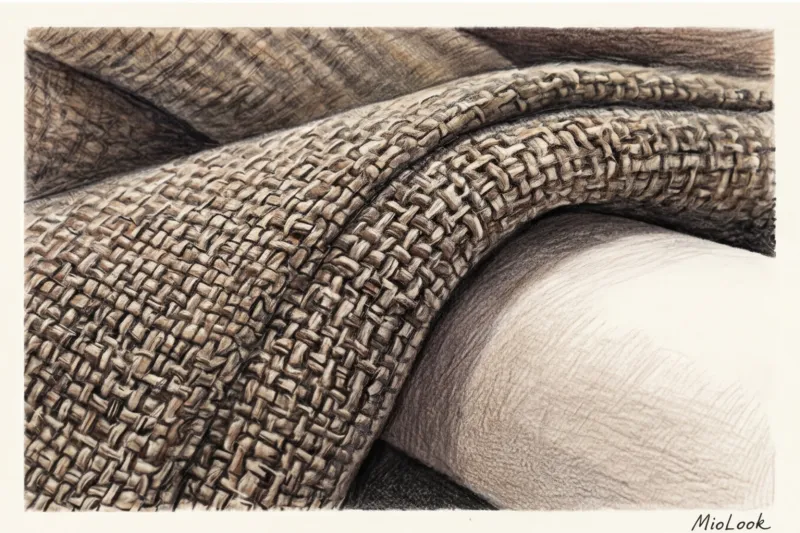
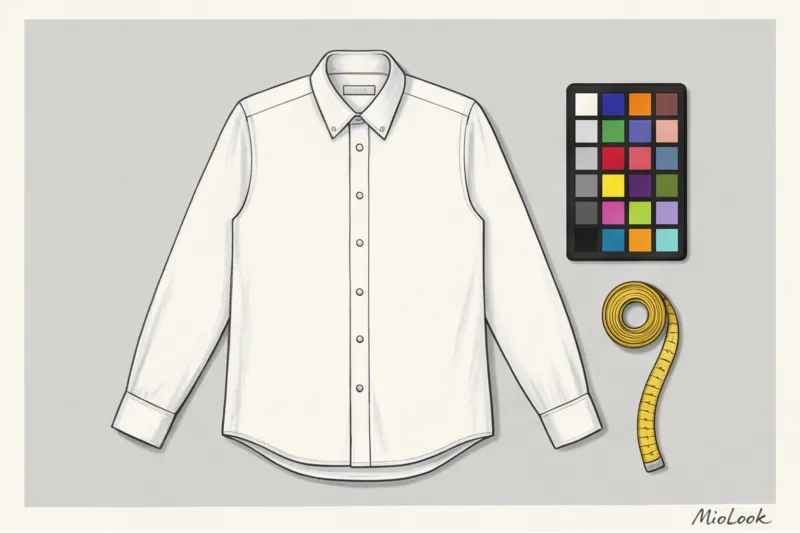
To avoid this, the background should be strictly matte, neutral gray (ideally RGB 128,128,128) or pure white, without vignettes or gradients. The lighting should be absolutely shadowless. Dramatic, hard light, so beloved in fashion shoots, creates deep shadows. The neural network's depth sensors interpret a black, contrasting shadow on a white shirt as a change in shape or a neckline.
And the most important rule of color calibration: the obligatory use of a palette Color Checker in the reference frame. Only in this way can the AI hardware correctly balance the white balance and accurately render the color tone, which is critical when users are choosing clothes to match their skin tone.
Invisible Data: Digitizing Fabric Texture and Physics
This is where things get interesting. A photograph is great at showing shape, but it's completely silent when it comes to the weight and physics of the fabric. The same double-breasted jacket made from stiff linen and soft, flowing viscose will fit dramatically differently. How can an algorithm understand this difference if the patterns look identical in the photograph?
I had a revealing case in my practice at MioLook. We integrated a large capsule of complex knitwear. On the mannequin, the garments looked structured, but on real people, the fabric stretched significantly under its own weight, changing the garment's length by 5-7 centimeters. As a techno-stylist, I had to manually mark up the parameter for the database. stretch factor (extensibility coefficient).
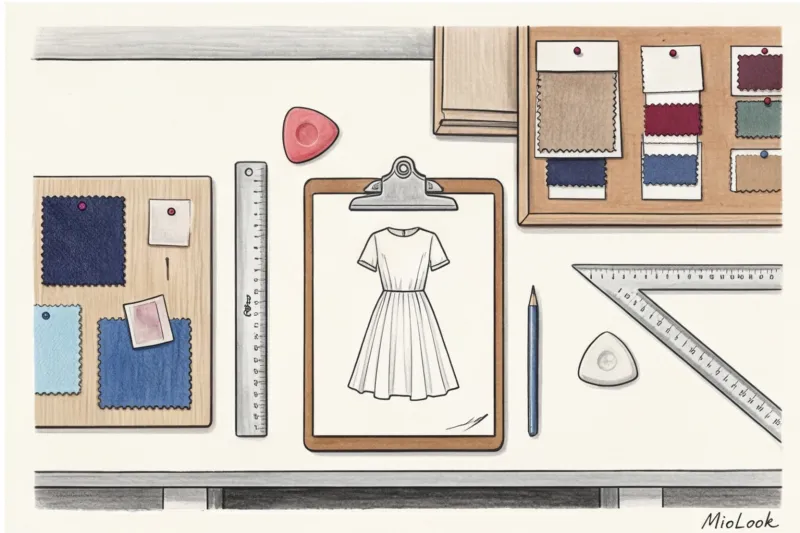
To ensure a realistic virtual fitting experience, in addition to photos of the clothes in the virtual fitting room, the algorithm is fed metadata:
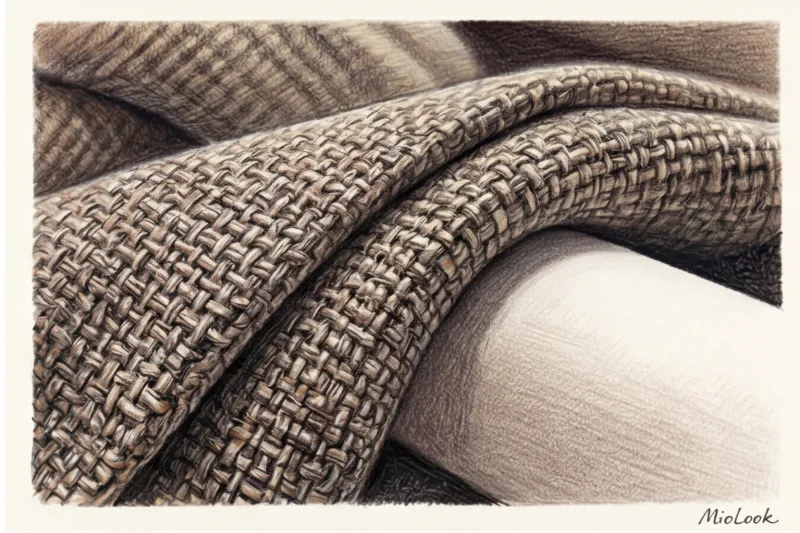
- Macro texture: Close-up shots where AI "sees" the weave of threads. Tweed, silk, and bouclé have unique light refraction patterns.
- Fabric density (GSM): Grams per square meter. This parameter tells the neural network's physics engine how heavy the folds will be when the avatar moves.
- Rigidity: The ability of a fabric to hold its shape (whether it stands upright or flows softly).
Checklist: Preparing a Product Card for Uploading to AI
For online store content managers, digitizing a catalog can be a logistical nightmare unless a strict naming and data collection system is established. If you upload 10,000 photos to the database with names like IMG_9942.jpg , the algorithm simply won’t understand what product they refer to.
Here is a step-by-step action plan for assembling a complete data package for 1 SKU:
- File name standardization: Use a rigid structure. For example:
[SKU]_[Color]_[Angle].jpg(BLZ001_Navy_Front.jpg). - Creating an accurate Size Chart: Forget the standard "S, M, L" measurements. Neural networks need numbers. If it's a size M, the database should say: chest circumference: 98 cm, sleeve length from shoulder seam: 62 cm, shoulder width: 41 cm.
- Attributing details: Adding the presence of shoulder pads, the type of fastening (a zipper pulls the fabric together differently than buttons), and the material composition (for example, 95% cotton, 5% elastane) to the meta tags.
Your perfect look starts here
Join thousands of users who look flawless every day with MioLook's intelligent algorithms.
Get access — €0.99 once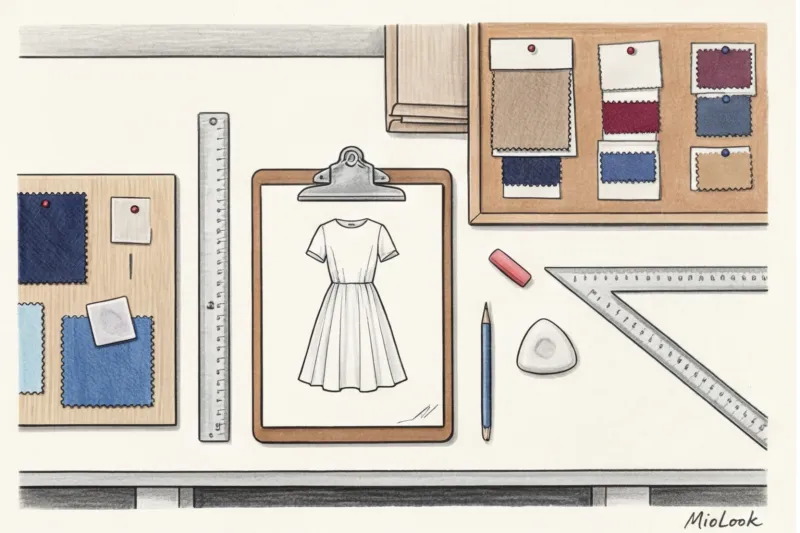
Where to start: a smart digitization strategy for your product range
If your catalog contains 5,000 items, the thought of re-shooting on an invisible mannequin can cause panic. Don't try to digitize your entire catalog at once. The Pareto principle works well in fashion tech: 20% of your inventory correctly digitized will solve 80% of your returns problems.
According to a McKinsey analytical report (2024), more than 70% of online clothing returns are due to poor fit issues. Customers are using the practice en masse. bracketing — they order the same item in three adjacent sizes, knowing in advance that two of them will be returned.
Priority #1 for digitization: Items with the highest return rates. These typically include trousers with a tailored waist, fitted jackets, and sheath dresses. If your store offers tailored items, dress code for a female manager Where the shoulder fit is crucial, start there. Give the client the opportunity to virtually try on this complex cut.
Priority #2: Basic items that generate the bulk of sales and serve as a canvas for cross-selling. Classic white shirts, basic turtlenecks, straight-leg jeans. These are the foundation. If you correctly digitize the simple elements black and white dress code , the AI will be able to assemble dozens of flawless capsules from them automatically.
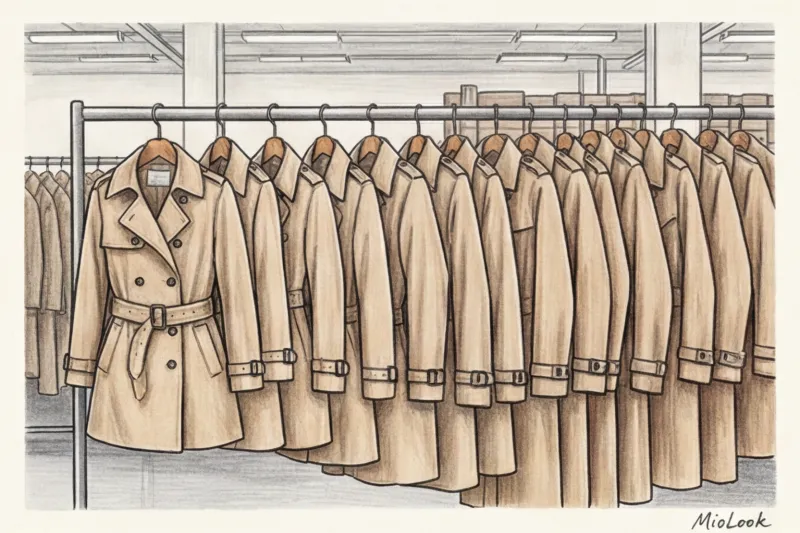
Digitizing your product range isn't just a new production expense. It's a literal translation of your garments from the language of visual aesthetics to the language of precise mathematical algorithms. And the cleaner, simpler, and more technical your source data is today, the more personalized, precise, and magical the fitting experience your customers will receive tomorrow. Start small: take 10 of your absolute bestsellers, photograph them on an invisible mannequin strictly according to the specifications, add precise pattern measurements in centimeters, and test the results.