You know what the biggest lie in the fashion industry is? We still take customers at their word. Over 12 years of styling and consulting, I've realized one thing: what a client says in marketing surveys and what she actually wears in a rush at 8 a.m. on a Tuesday are two completely different universes.
We talked in more detail about the industry's global transition to digital in our The Complete Guide to Analytics for Fashion Business: AI and Trend Forecasting But today I want to address the most common mistake designers and marketers make. We'll talk about how to conduct a competent analysis of the target audience of a clothing brand , relying not on pretty questionnaires, but on ruthless behavioral data from virtual fitting rooms.
Why Classical Target Audience Analysis for Clothing Brands No Longer Works
Let's be honest: the demographic approach is dead. The profile of "woman 25-35, average income, lives in a metropolitan area" no longer provides any useful information. Today, a 28-year-old IT product manager and a 45-year-old mother on maternity leave can have identical style preferences. Both will buy the same oversized jacket for €180 at COS and wear it with a basic white T-shirt.
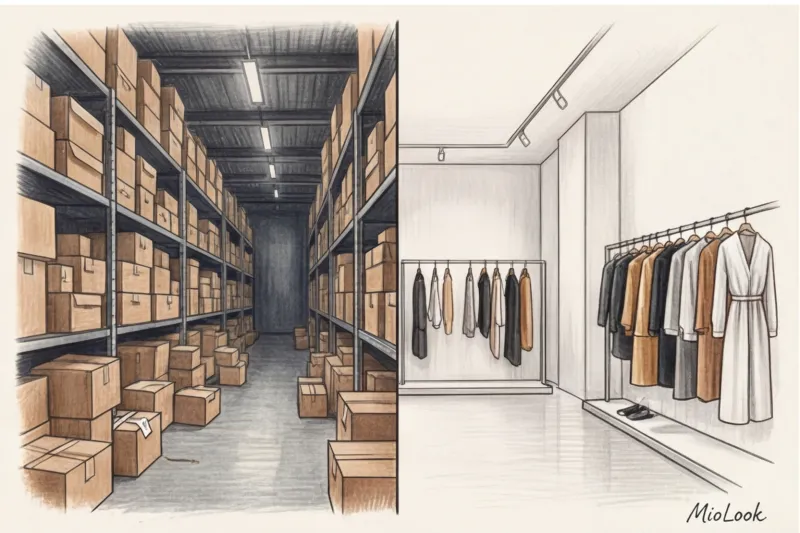
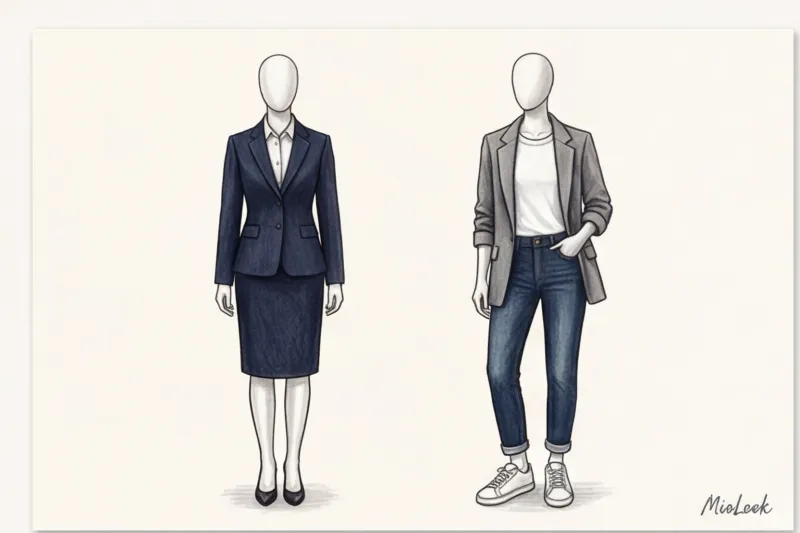
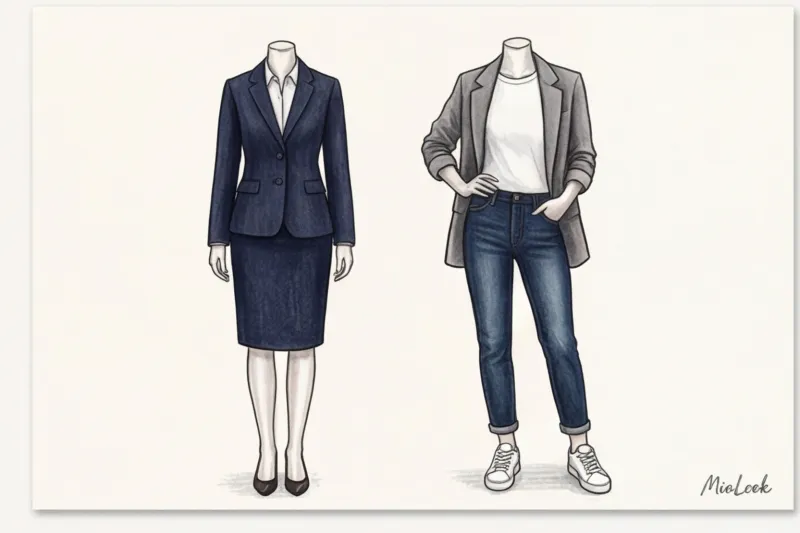
The second problem is the illusion of focus groups and the "fantasy self" phenomenon. Several years ago, I was consulting for a local brand with a mid-up-scale check. The marketers conducted a large-scale survey: clients unanimously demanded formal pantsuits for the office. The brand produced a magnificent capsule collection. The result? The collection ended up sitting in the warehouse, dead weight.
The girls described their "ideal version," which wears silk blouses and heels. But the real analysis of their wardrobes through MioLook revealed the truth: 80% of the time, they pair jackets with joggers, knit tops, and chunky sneakers. This classic analysis of a clothing brand's target audience led to severe overproduction because the brand listened to words rather than tracked actual actions.
Virtual fitting rooms as a key source of Big Data for the fashion industry
The industry is accustomed to analyzing purchases: what sold and what didn't. But this approach only answers the question "what?" It doesn't address the "why?" The real goldmine of data lies in the analysis. fittings It's crucial for us to know what the client tried on, spent a long time in front of the mirror (or smartphone screen), but ultimately DID NOT buy.
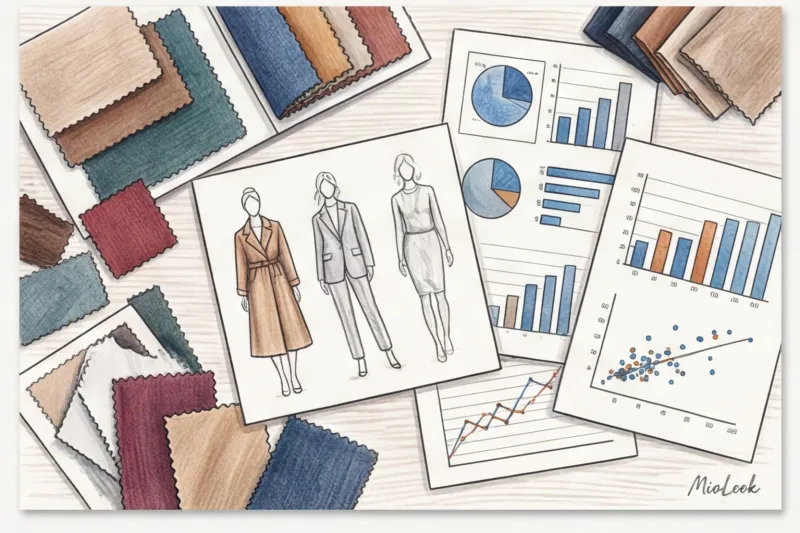
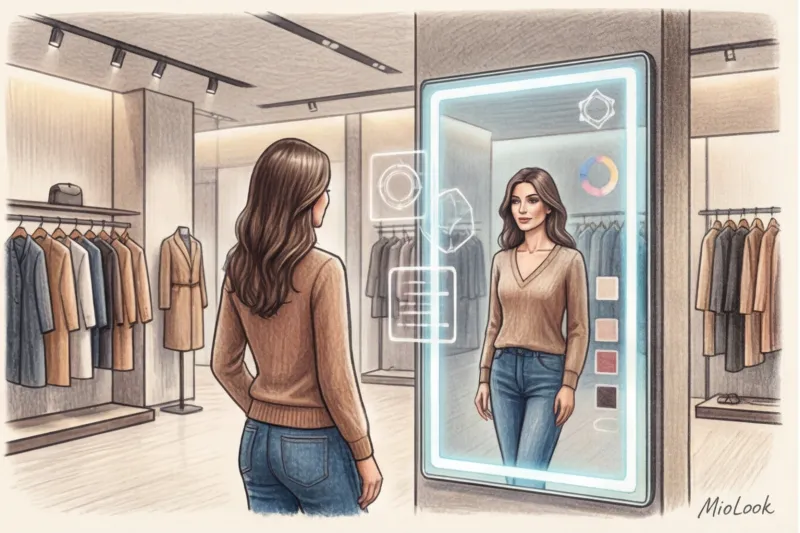
This is where AI-powered wardrobe behavioral analytics comes into play. When a user uploads a photo to a virtual fitting room, the algorithm records hundreds of micro-interactions.
"We no longer wonder if the audience will like this fuchsia shade. We upload a 3D model of the sweater to the app, give it to a focus group, and simply see how often they add it to their virtual weekly looks."
Tools like MioLook digitize a user's taste. They create a dynamic profile: what colors a person tries on most often, whether they avoid prints, what textures they try to combine. This is no longer simple. business casual for women In theory, this is a mathematically precise cross-section of a real wardrobe.
Access to MioLook for €0.99 — one-time payment
A smart AI stylist will select the perfect look based on real data from your wardrobe.
Get access — €0.99 onceWhat insights about shoppers are hidden in a digital fitting room?
The digital fitting room is more than just entertainment widget for a clothing website It's a spy glass that allows you to peer directly into your client's closet without intrusive surveillance. Let's explore two key metrics that completely change the approach to creating collections.
Stylistic patterns: what people actually wear your clothes with
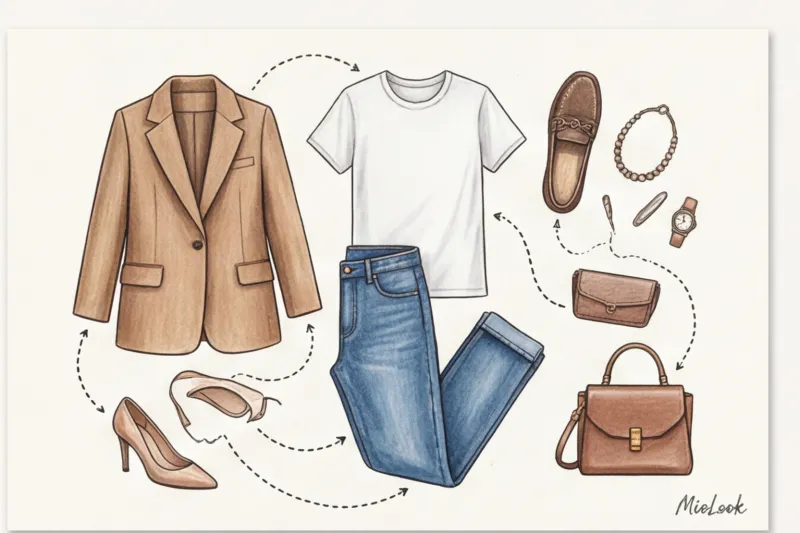
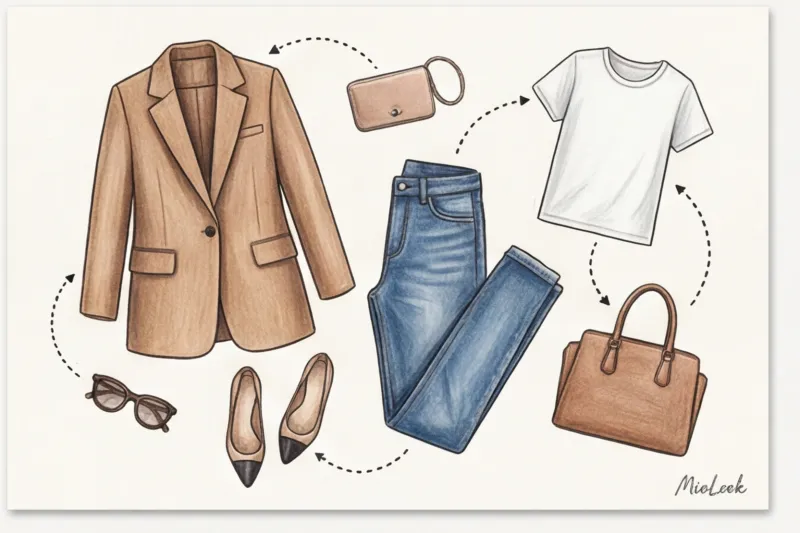
Cross-styling analysis is my favorite tool. Imagine: you create a long jacket as part of a strict dress code. You spend the budget on a catalog shoot where a model poses in this jacket and a pencil skirt. And AI analytics of virtual fitting rooms shows that 70% of users integrate your jacket into street style looks with ripped jeans and a hoodie.
What does this mean for business? You need to urgently update your social media and website styling! Moreover, AI helps identify anchor items for your audience. If your client's wardrobe staple is thick, straight-leg jeans, there's no point in offering her romantic chiffon blouses that don't pair well with those jeans. Instead, offer her structured cotton shirts with a weight of at least 180 g/m².
Analysis of size chart and actual fit
Have you noticed how often trousers that look perfect on a mannequin gather unsightly folds during the first real-life try-on? Virtual data reveals a colossal discrepancy between standard sizing (S/M/L) and real women's figures.
Algorithms detect "blind spots" in patterns. If statistics show that 60% of customers reject palazzo pants after the first virtual try-on (seeing a realistic projection of their figure), the problem isn't the color. The problem is that the difference between your waist and hips in size M (EU 38) is 24 cm, while for your real customer it's 30 cm. The pants simply don't fit.
From Intuition to Numbers: How AI Data Saves Budgets and the Environment
Let's move on to some hard financial figures. According to McKinsey & Company's State of Fashion (2024) report, approximately 30% of all clothing produced globally never finds a buyer and ends up in landfills or incinerated. This isn't just an environmental disaster; it's billions of euros lost in fabric.
But when a brand uses AI to analyze its target audience, the situation changes radically. Gartner Retail Tech Trends research confirms that the use of AR and virtual try-on technologies reduces the level of returns By 30–40%. The client can see in advance whether the item clashes with their wardrobe or is out of proportion.
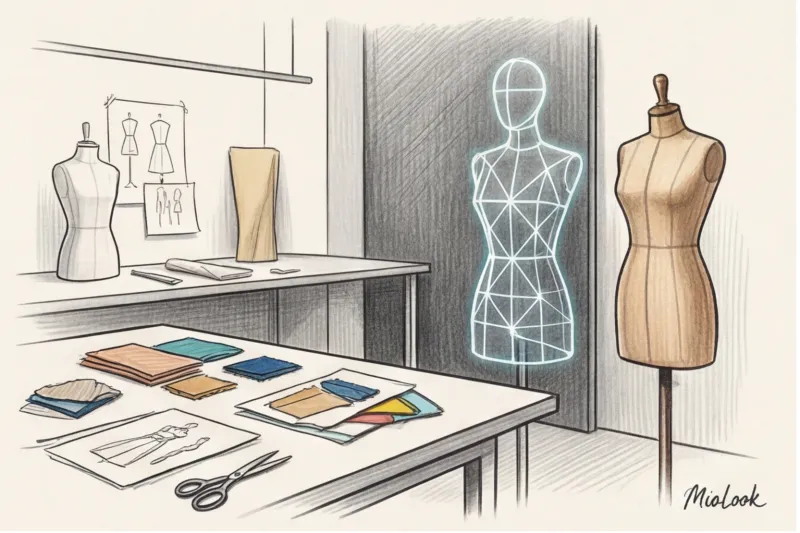
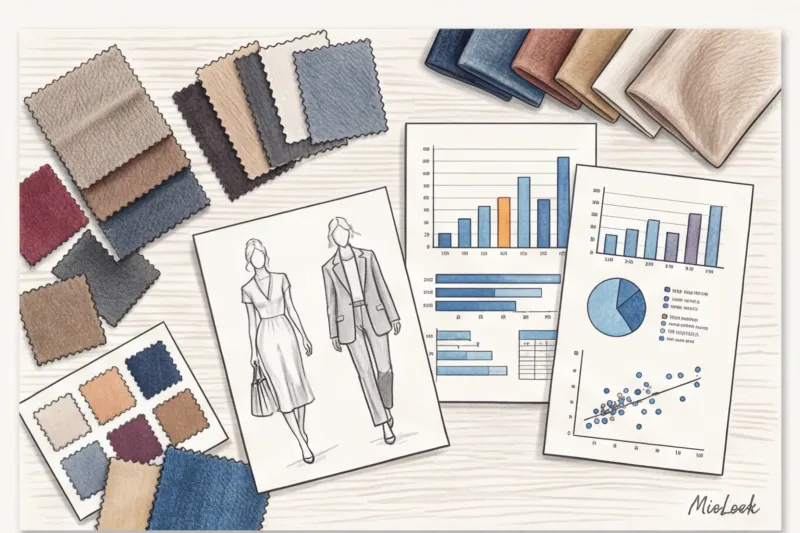
Another powerful tool is a data-driven approach to fabric procurement. Before ordering kilometers of expensive Italian silk, a brand can create 3D renders of three dresses and upload them to a virtual fitting room. If the "virtual pre-order" shows a high conversion rate for a dress made of dense matte viscose, while the glossy silk is ignored, you've just saved tens of thousands of euros on raw material procurement.
A step-by-step checklist: integrating data analytics into your brand's business processes
Theory is great, but how can you put it into practice next season? Here's a concrete action plan for brand owners and marketers that I use during audits.
- Step 1: Integrate the virtual fitting room. Embed an AR fitting room into your e-commerce website or create a digital brand capsule in specialized styling apps. This is the entry point for data collection.
- Step 2: Analysis of "abandoned fitting rooms". Start collecting data not only on abandoned carts, but also on cancelled fittings. Conduct A/B testing of prints. before sewing Load the AI with two versions of a trench coat: a classic beige one and an olive one. See which color your audience adds to their collages more often.
- Step 3: Adjusting the production matrix. If analytics show that your audience is women looking for comfortable dress code For stretchy fabrics, eliminate stiff corset tops from your wardrobe. Replace them with thick, structured knits containing 5% elastane.
- Step 4: Adapting visual content. This is the direct path increase the average bill If you see users pairing your €120 cardigan with wide belts, immediately add photos of the style to your catalog and suggest the belt in the "Customers who bought this item also bought" section.
Your perfect look starts here
Join thousands of users who look flawless every day with MioLook.
Get access — €0.99 onceMyths and Reality: What AI Can't Tell You About Your Customer (Yet)
As much as I love technology, I have to be honest: AI isn't omnipotent. Virtual fitting room analytics are a powerful compass, but they're not autopilots. This method has its own severe limitations.
Firstly, analytics is no substitute for tactility. An algorithm can predict that a textured knit sweater will be a hit this season. But AI can't tell you how comfortable the fabric feels on the skin. If you skimp and replace merino wool with squeaky acrylic, no perfect fit on a 3D avatar will save the item from being returned after a physical try-on.
Secondly, the emotional connection with the brand is not digitized. The numbers show it perfectly "What" people want to wear (for example, a cropped trench coat). But the art of a creative director is to explain "Why" They should buy this trench coat from you. Without the human factor, without talented stylists and visionaries, a brand turns into a soulless factory churning out generic basic clothing.
The era of intuitive launches and blind faith in surveys is over. Today, in-depth analysis of a clothing brand's target audience is based on users' actual actions in a virtual environment. Stop asking customers what they want to be. Give them a digital wardrobe and simply observe who they really are. This will save you years of work, tons of stress, and tens of thousands of euros each season.